Chipotle mayo and chipotle aioli are close cousins, and the practical difference comes down to garlic. Aioli traditionally puts garlic and oil front and centre, while mayo is a neutral, egg-based emulsion that carries whatever flavour you add. In modern kitchens and on most menus, the two overlap so much that the names are often used interchangeably.
TL;DR:
- Call it chipotle mayo when chipotles season mayonnaise; reserve aioli for an oil emulsion where garlic leads, with a sharper flavor.
- For either sauce, start with less adobo than you expect because heat builds as it rests; add lime for brightness or crema to soften it.
- Use pasteurized eggs in raw egg aioli, especially when serving pregnant guests, and keep homemade sauces refrigerated at or below 40°F.
- Do not leave perishable sauces unrefrigerated for more than two hours, or one hour in hot weather; use a cooler outdoors.
- Choose the smoother, milder mayo for sandwiches and wraps, while garlic forward aioli pairs better with seafood and fried foods.
Table of Contents
- What do cooks mean by mayonnaise and aioli today?
- What goes into each sauce?
- How do they taste and feel different?
- How do you make each one at home?
- How do you store these sauces safely?
- When should you call it aioli, and when mayo?
- Where should you use each sauce?
- Why we make our sauces in-house
- Skip the blender and taste our house-made sauces
- FAQ
- Sources
What do cooks mean by mayonnaise and aioli today?
The two words started in different places, and that history explains why labels feel so loose now.
- Traditional aioli: a garlic and olive oil emulsion, pounded until it turns thick and glossy. No egg is needed in the classic version.
- Mayonnaise: egg yolk, oil and an acid such as lemon juice or vinegar, usually with mustard to help it hold together.
- Modern aioli: very often built on egg yolk, or simply flavoured mayonnaise with garlic stirred in. Authoritative food writing notes that these modern variants commonly include egg or are effectively flavoured mayonnaise.
- Why menus say “aioli”: the word signals craft and a stronger garlic note. Chef Kenji López‑Alt has observed that the term is often misapplied, and that many restaurants use it to dress up a standard flavoured mayonnaise.
Commercial mayo tastes mild on purpose. That blank canvas is exactly why it works so well as the base for smoky chipotle.
What goes into each sauce?
Here is a checklist you can use to spot or build either one.
- Chipotle mayo: mayonnaise (store-bought or homemade), chipotle chiles in adobo, and a squeeze of lime or a splash of vinegar. Sour cream or crema is optional.
- Chipotle aioli: a garlic-forward base, either garlic and oil or an egg-yolk aioli, plus chipotles in adobo or chipotle powder, and lemon or lime.
- Emulsifiers: egg yolk and mustard keep the sauce stable. Garlic and olive oil change both flavour and texture.
- Texture shifters: sour cream or crema thickens the sauce and softens the heat. Extra oil makes it looser and richer.
If you want to understand the chiles themselves, our piece on chipotle vs adobo explains how the canned sauce changes a recipe. For the dairy swap, see our guide to sour cream vs crema.
How do they taste and feel different?
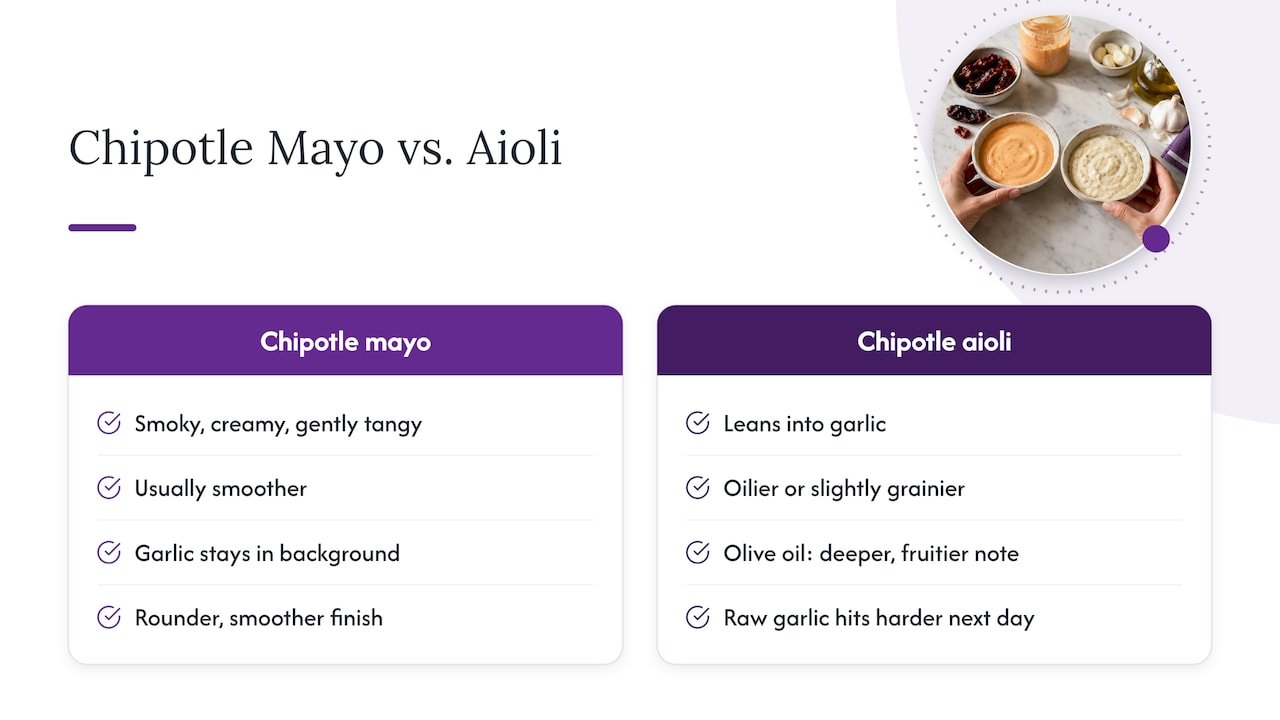
Chipotle mayo is smoky, creamy and gently tangy. It is usually smoother, and the garlic stays in the background. If you have wondered whether chipotle mayo is spicy, the answer depends on how many chipotles and how much adobo sauce go in. Start small and build up.
Chipotle aioli leans into garlic. A hand-made version can feel oilier or slightly grainier, and olive oil adds a deeper, fruitier note. Raw garlic also tends to hit harder the day after you make it.
Because so many aiolis are really mayo in spirit, you will often find the two taste nearly identical. When a menu says aioli, expect a bit more garlic bite. When it says mayo, expect a rounder, smoother finish.
How do you make each one at home?
Both are quick. Start with less adobo than you think you need, since the heat builds as the sauce rests.
- Chipotle mayo: stir together mayonnaise, a few chipotles in adobo (finely chopped or blended), and a squeeze of lime. Serious Eats suggests an immersion blender for a smooth result, with optional sour cream.
- Classic aioli: crush garlic with salt in a mortar and pestle, then work in olive oil drop by drop until thick.
- Egg-yolk aioli: put a yolk, garlic, lemon juice and a pinch of salt in a jar. Blend with an immersion blender while pouring in oil slowly. Serious Eats recommends mixing canola and extra-virgin olive oil for balanced flavour and texture.
- Make it chipotle: blend in chipotles in adobo, or a pinch of chipotle powder for finer heat control.
- Balance: taste, then adjust with lime or lemon for brightness, or sour cream for a milder, thicker finish.
Pro Tip: Always start with the yolk and garlic, then add the oil a few drops at a time. Pouring fast at the start is the surest way to split the sauce.
How do you store these sauces safely?
Egg-based sauces need care, especially when raw egg is involved. Health Canada’s guidance is clear on the essentials:
- Use pasteurised egg products when a recipe calls for raw eggs, or heat the mixture to a safe temperature.
- Keep perishable sauces at or below 4°C (40°F).
- Don’t leave them out between 4°C and 60°C (40°F to 140°F) for more than two hours, or one hour in hot weather.
- Heading outdoors? Pack sauces in a cooler with ice packs. Health Canada also suggests preferring vinaigrettes when refrigeration isn’t available. A tested option is this panela vinaigrette.
For pregnant guests, Health Canada advises avoiding raw or lightly cooked egg products, so pasteurised eggs matter here.
Health Canada’s rule of thumb: perishable food should never sit in the temperature danger zone of 4°C to 60°C (40°F to 140°F) for more than two hours.
Homemade sauces have no preservatives, so keep them cold and use them within a few days. When in doubt, throw it out. Our note on fresh salsa storage shows the same cautious approach.
When should you call it aioli, and when mayo?
A simple rule keeps labels honest. If garlic is the dominant flavour and the sauce is built around garlic and oil, call it aioli. If it is mayonnaise with chipotle stirred in, call it chipotle mayo.
On a menu, pick the name that sets the right expectation for texture and garlic intensity. “Smoky chipotle mayo” promises creamy and mild. “Roasted garlic chipotle aioli” promises a sharper garlic kick. Either way, clear wording beats clever wording.
Where should you use each sauce?
Both sauces work almost anywhere you would reach for a dip or spread.
- Best pairings: fries, burgers, fish or shrimp tacos, grilled vegetables and roasted potatoes.
- Choose aioli for: seafood and fried foods, where a strong garlic note cuts through richness.
- Choose mayo for: sandwiches and wraps, where a milder, smoother spread lets other fillings shine.
- Easy swaps: soften the heat with crema or sour cream, or try toum when you want an intense, fluffy garlic alternative.
Why we make our sauces in-house
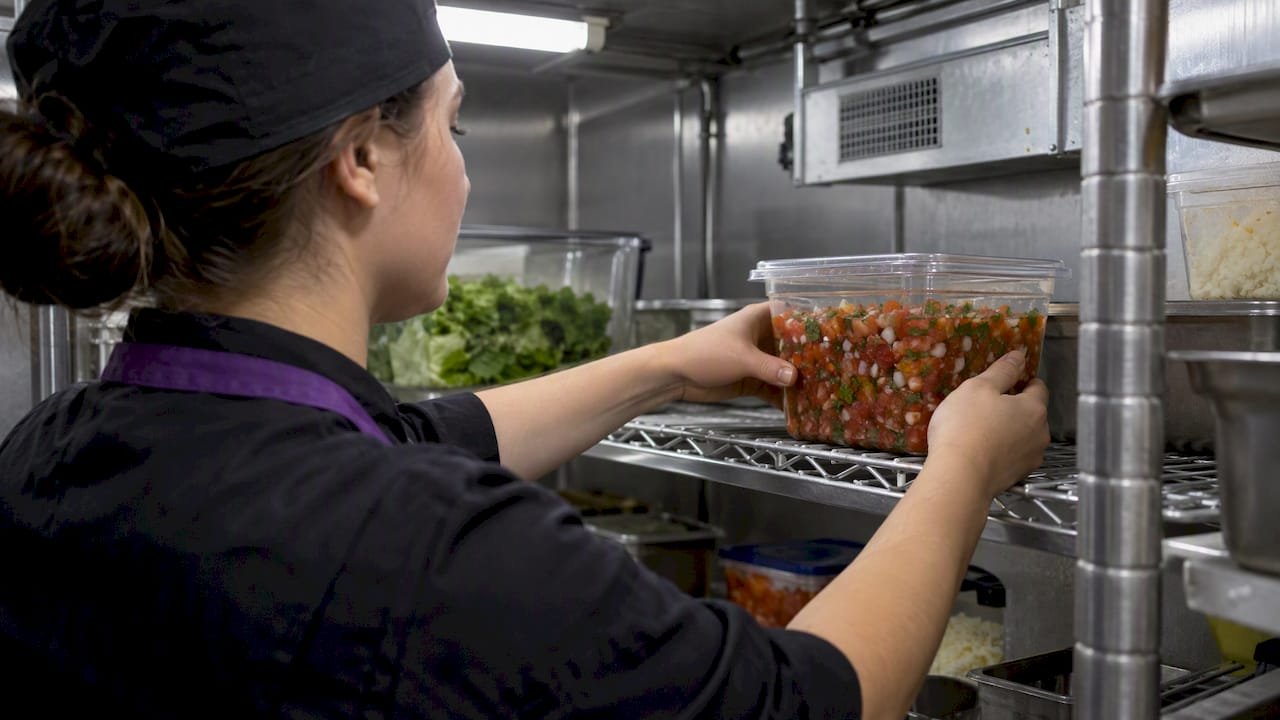
In our kitchens, we prepare condiments from scratch every day, and that habit shapes how we think about sauces. Making them ourselves means we control freshness, balance the heat and garlic, and stay mindful of the dietary needs our guests bring with them. A sauce made this morning simply tastes different. If you’re curious, we’d love you to taste the difference at one of our restaurants or through catering.
— Austin
Skip the blender and taste our house-made sauces

If you would rather enjoy craft flavour without the prep, we make our salsas and condiments fresh each day. You can see what is available and how we think about them in our house-made salsa story.
- Browse the full range on our menu.
- Feeding a group? See our catering options.
- Order for pickup or delivery and add a sauce to your next burrito or taco.
FAQ
Which is healthier, aioli or mayo?
Neither wins outright, since both are oil-based and calorie-dense. The difference comes down to the recipe, the oil used and the portion size. Making your own lets you control the ingredients.
Is aioli basically mayonnaise?
Often, yes. Traditional aioli is garlic and olive oil, but many modern versions use egg yolk and are essentially garlic mayonnaise. The main practical difference is a stronger garlic flavour.
What can I substitute for chipotle mayo?
Blend sour cream or crema with chipotles in adobo and a squeeze of lime for a lighter, tangier sauce. A chipotle aioli works too, with a bit more garlic bite.
Is chipotle mayo just spicy mayo?
Not quite. Chipotle mayo gets its smoky heat from chipotle peppers in adobo, while spicy mayo may use sriracha or other hot sauces. Both start with a mayonnaise base.
Sources
- Canada
- Health Canada reminds Canadians of important summer food safety tips – Canada.ca
- Mashed
- Aioli vs. Mayonnaise—The Difference Between These Condiments
- Two-Minute Aioli Recipe