Cilantro lime rice tastes noticeably brighter than plain rice, and it earns its place under rich, slow-cooked meats. Nutritionally the two are close: the herb and citrus add almost nothing, so the base grain and added fat decide the outcome. Pick long-grain basmati or jasmine with lime zest for burrito bowls, and keep plain rice for delicate mains. At Burrito Splendido, we offer customizable bowls.
TL;DR:
- Short grain rice turns sticky, while brown long grain needs more water and a longer cook than white; follow its package timing.
- Rinse and briefly toast the rice, then let it rest covered for 10 minutes before folding in lime zest, juice, and cilantro.
- Cilantro and lime add almost no calories, so brown rice supplies more fiber than white, while extra calories mainly come from butter or oil.
- Refrigerate cooled rice soon after cooking and eat it within a few days; add fresh lime and cilantro after reheating to restore brightness.
Table of Contents
- 1. How do cilantro and lime change the flavour of rice?
- 2. Does cilantro lime rice change the nutrition?
- 3. Which rice works best for cilantro lime rice?
- 4. How do you make restaurant-style cilantro lime rice?
- 5. How should you serve cilantro lime rice?
- 6. How do you store and reheat it?
- 7. Why do we feature cilantro lime rice?
- 8. Want to taste the difference?
- 9. FAQ
- Sources
1. How do cilantro and lime change the flavour of rice?
Plain rice is a blank canvas. Cilantro lime rice adds bright, acidic and herbaceous notes that make a simple bowl taste like it came from a restaurant kitchen. Three things do the work:
- Acid: lime juice gives sharpness, while the zest carries the aromatic oils. Fold both in after cooking, because lime cooked into the rice makes the grains gummy and dulls the flavour.
- Herb: chopped cilantro adds a fresh, green lift. Including some of the tender stems gives a stronger herbal punch than leaves alone.
- Fat and toasting: frying the dry grains briefly in oil or butter, the pilaf technique, develops a richer savoury flavour that plain steamed rice lacks.
Culinary writers credit the balance of fat, salt and acid for the addictive quality of restaurant-style rice. That balance matters most under rich carnitas or barbacoa, where the acid cuts through the fat. With delicate fish or a subtly sauced dish, the lime and herb can crowd the plate, and plain rice is the smarter pick.
Pro Tip: Zest the limes before you juice them, and stir the zest in with the juice once the rice has rested.
2. Does cilantro lime rice change the nutrition?
Barely. Cilantro and lime add almost no calories, so the real differences come from what sits underneath and what you stir in. Extension specialists note that the healthiness depends on preparation: whole-grain brown rice raises the fibre, and herbs and citrus keep the dish flavourful without excess salt or fat.
- Base grain: brown rice brings more fibre than white, at the cost of a longer cook time. White rice is lighter and softer.
- Added fat: a knob of butter or a glug of oil is where extra calories sneak in. Olive oil and a lighter hand keep it trim.
For the best of both, cook brown long-grain rice, then add lime, cilantro and a modest splash of oil. If you are watching calories in a whole meal, our burrito nutrition guide shows where the bigger savings hide, and the fillings usually matter more than the rice.
3. Which rice works best for cilantro lime rice?
Choose long-grain rice. Rice varieties differ in starch, and long-grain types are higher in amylose, which tends to give fluffy, separate grains that suit burrito bowls. Short-grain rices are higher in amylopectin and turn sticky, so skip them here.
- Basmati: noted for its nutty aroma, it gives a slightly drier, more elegant grain.
- Jasmine: plumper and softer, with a floral quality that pairs well with lime.
- Brown long-grain: a good whole-grain option, but it needs a longer cook and a little more water than white, so follow the package timing rather than the white rice clock.
4. How do you make restaurant-style cilantro lime rice?
You need 1 cup long-grain white rice, 2 cups water, 1 tablespoon butter or olive oil, the zest and juice of 2 limes, about ½ cup chopped cilantro and salt to taste. A tested community recipe uses the same proportions and works with brown rice too.
- Rinse the rice until the water runs mostly clear.
- Melt the fat in a saucepan and briefly toast the drained rice.
- Add the water and salt, bring to a boil, then cover and cook on low until tender.
- Rest the pot off the heat, covered, for 10 minutes.
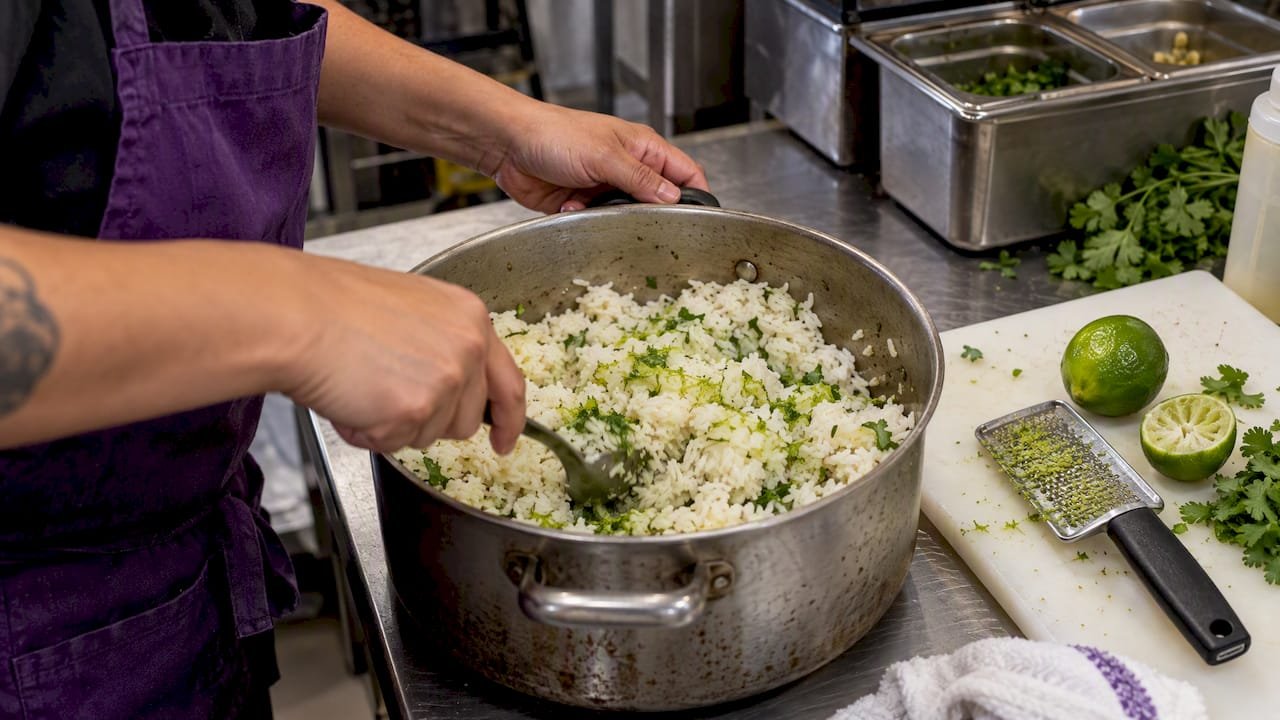
- Fluff with a fork, then fold in the lime zest, juice and cilantro.
In a rice cooker, toast the rice in the pan first, then cook as usual and fold in the finish. If the rice turns gummy, the usual causes are skipping the rinse, too much water or stirring while it cooks. A garlic clove softened in the oil adds a savoury layer, and a little butter gives the classic restaurant richness.
Pro Tip: Always add the lime after cooking. Heat flattens its brightness.
5. How should you serve cilantro lime rice?
Match it to food that wants a lift:
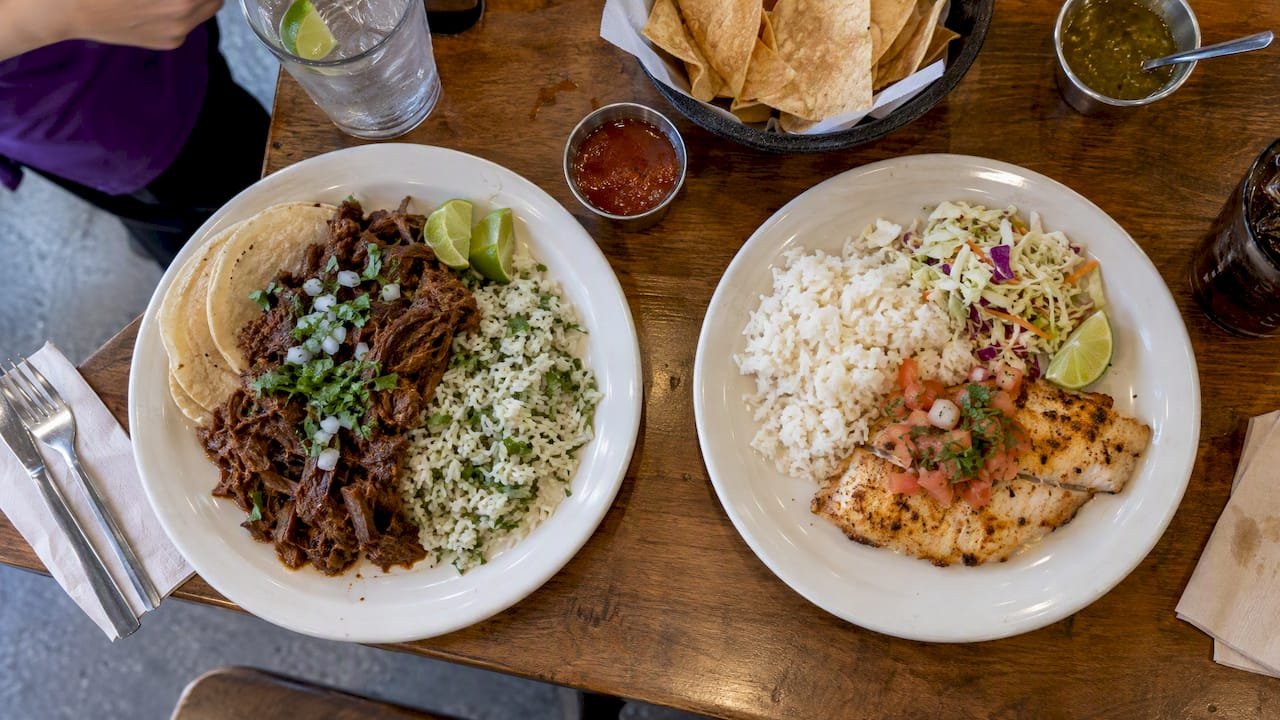
- Slow-cooked carnitas or barbacoa, where acid cuts the richness
- Grilled chicken, steak or shrimp
- Black beans, corn salsa and guacamole in a burrito bowl
- Street-style tacos, as a side
A simple bowl build is rice, beans, salsa, a protein and a spoonful of guacamole. Our burrito bowl vs burrito breakdown covers how rice fits into each format. Keep plain rice when the main dish already has a subtle sauce you want to taste. If you would rather skip rice entirely, see our rice-free burrito options.
6. How do you store and reheat it?
Cool the rice quickly and refrigerate it soon after cooking. Eat refrigerated rice within a few days, and freeze portions in flat bags for longer storage.
- Microwave: add a splash of water, cover and heat until steaming.
- Stovetop: warm in a pan with a little oil, breaking up clumps.
- Oven: cover a tray with foil for larger batches.
Rice can be made ahead and reheated. Add fresh lime and cilantro after reheating to bring the brightness back. Dried-out rice revives with a spoonful of water and a few minutes under a lid.
7. Why do we feature cilantro lime rice?
We cook everything from scratch, and rice is no afterthought. Our approach is fresh, local and made daily, and a bowl needs brightness to stand up to slow-cooked proteins like our Carnitas and Barbacoa. Cilantro and lime do that job without a deep fryer or heavy sauces, keeping the plate lively. If you are ordering, ask our team about menu options, or browse the menu to see how we build our bowls. At home, the method above gets you remarkably close.
— Austin
8. Want to taste the difference?
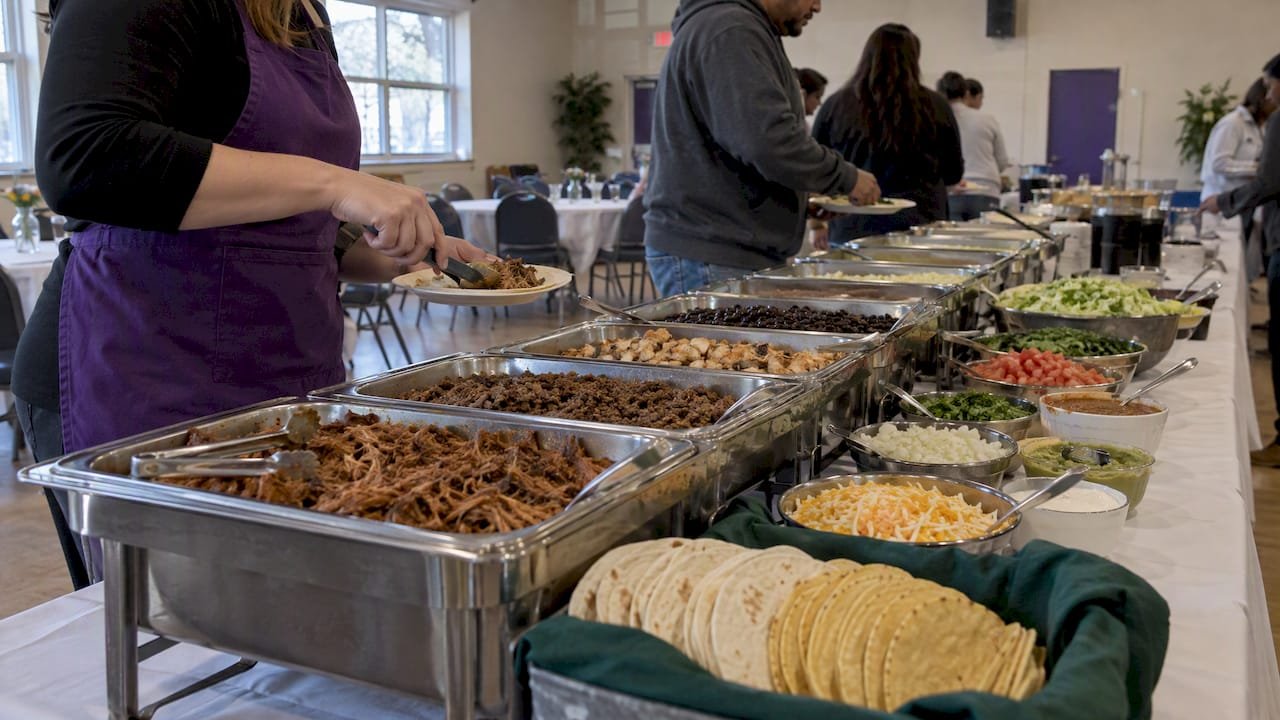
Skip the stovetop and let us do the cooking. Order a bowl from our menu, made from scratch with Manitoba-sourced ingredients, or plan a group order through our catering page.

9. FAQ
What kind of rice is best for cilantro lime rice?
Long-grain rice such as basmati or jasmine is best. Its higher amylose content keeps grains separate and fluffy, which suits burrito bowls. Avoid short-grain rice, which turns sticky.
Is cilantro lime rice healthier than plain rice?
Not by much. The herbs and lime add almost no calories, so the base grain and added fat matter most. Brown rice raises the fibre, and a light hand with oil keeps the dish lean.
When should you add the lime to the rice?
Add it after cooking. Cooking lime into the rice makes the grains gummy and dulls the flavour. Fold in zest, juice and cilantro once the rice has rested.
Can you use lemon instead of lime?
Yes, in a pinch. One veggie burrito bowl recipe says lemon can substitute for lime, though the flavour will be slightly different.
For a broader look at grain choices, a quinoa vs rice comparison adds useful protein context.
Sources
- Cilantro Lime Rice Recipe
- Host a Healthy Fiesta: Cilantro Lime Brown Rice with Steak Tacos | USU
- Cilantro-Lime Rice Bowl | Cuisine Solutions
- How to Make Chipotle Rice Just Like the Restaurant | Epicurious