You can order egg-free Mexican food in Canada. Start with simple dishes built from corn or flour tortillas, grilled or braised meat, beans, rice, fresh salsa and cheese. Then tell the kitchen about your egg allergy and ask how each item is made. Egg is not in most traditional Mexican cooking, but it turns up in a few sauces, batters, dressings and desserts. Restaurants are also not required to list allergens on a menu, so the conversation matters more than the menu text.
This guide shows where egg hides, what to say when you order, how to read labels on packaged foods, and how egg-free differs from vegan. It also covers how we handle dietary requests at Burrito Splendido.
TL;DR
- Simple builds (a bowl, tacos or a burrito with plain proteins, beans, rice, salsa and vegetables) leave the fewest places for egg to enter. Ask about sauces, dressings, batters and desserts.
- Say “egg allergy” rather than “no egg, please”. It tells the kitchen this is a safety matter and not a preference.
- Ask how the food is prepared, even for dishes you have eaten before. Shared utensils, pans and surfaces can pass egg into your meal.
- Egg-free is not the same as vegan. Cheese, sour cream and meat can all be egg-free, while a vegan menu will not always cover every other allergen you need to avoid.
- If you carry epinephrine, carry it every time you eat out, and leave if you doubt that a safe meal can be made.
Table of Contents
- Where egg can hide in a Mexican meal
- What to say when you order
- Cross-contact: the part the menu cannot tell you
- Egg-free versus vegan: what changes when you order
- Reading labels on packaged Mexican-style foods
- A practical egg-free build, step by step
- Perspective: how we think about allergy-aware ordering
- Order egg-free at Burrito Splendido
- Ordering for others: kids, teams and events
- FAQ
- Sources
Where egg can hide in a Mexican meal
Mexican food looks like an easy fit for an egg allergy. Tortillas, beans, rice, grilled meat and salsa are not usually egg dishes. Egg shows up in the extras and in the cooking method.
Health Canada’s egg reference lists mayonnaise, creamy dressings, battered and fried foods, tartar-type sauces, glazes, soups or broths, and meat products with fillers as possible sources. The Canadian Food Inspection Agency adds that egg allergy can involve both the white and the yolk, and that egg is common in batters, pastries and binding ingredients.
Here is how that maps onto a typical Mexican menu.
| Menu area | What to ask about |
|---|---|
| Creamy sauces and dressings | Whether the base is mayonnaise, aioli or another egg-containing sauce. Ask about “chipotle mayo” or “creamy” anything in particular. |
| Battered or breaded items | Whether fish, vegetables or chicken are coated in a batter or breading that includes egg. |
| Fried items | Whether the fryer oil and equipment are shared with battered foods. |
| Meatballs, sausage or ground meat mixes | Whether egg or fillers are used as a binder. |
| Soups and broths | Whether noodles, egg garnish or enriched stocks are used. |
| Breakfast dishes | Eggs are the main ingredient in many Mexican breakfast plates, so choose something else or ask about shared griddles. |
| Desserts and baked goods | Many contain egg. Food Allergy Canada advises caution with desserts because they so often do. |
None of this means these items always contain egg. It means these are the places where a question is worth asking.
What to say when you order
Food Allergy Canada’s dining-out guidance is clear and practical. Use it as your script.
- Check ahead. Read the restaurant’s website, menu and any allergy policy before you go. If you can, phone and speak to a manager or chef.
- Name the allergy. Say you have an egg allergy and what must be avoided. Make clear it is not a preference.
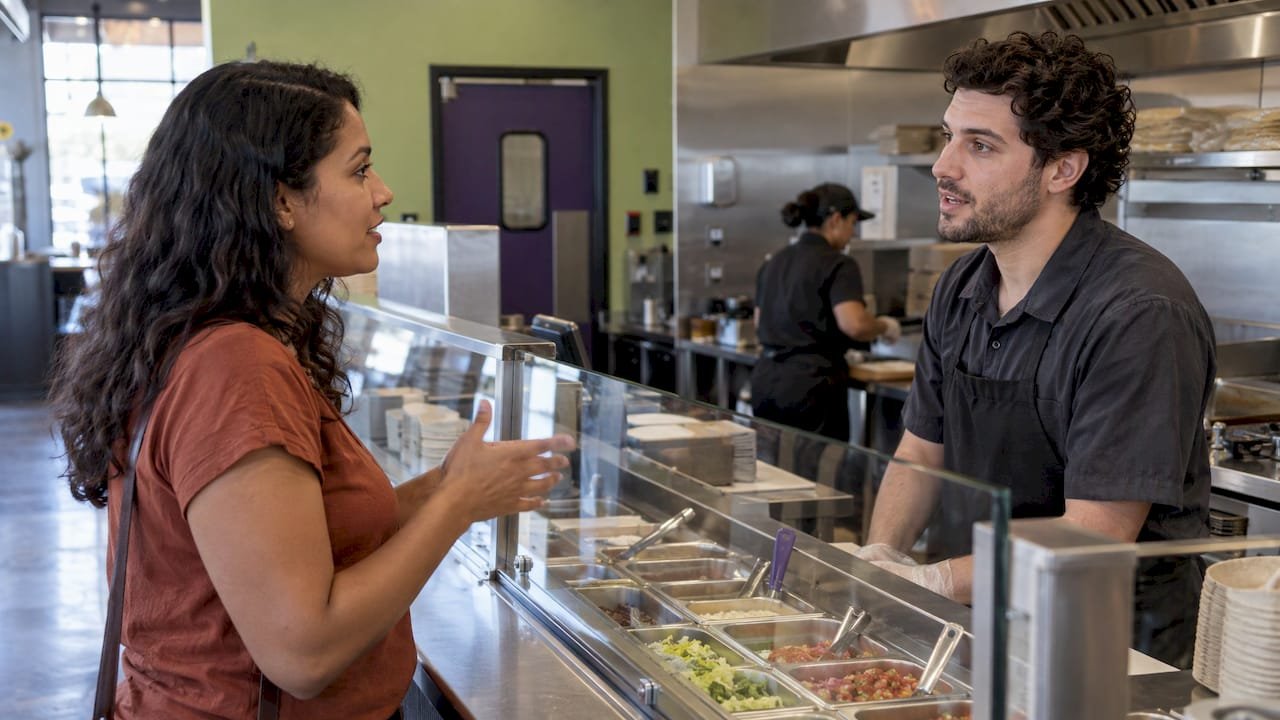
- Ask how the food is made. Ask about ingredients and preparation every time, even for a dish you have eaten before. Recipes and suppliers change.
- Keep it simple. Choose menu items with few components.
- Go early. A quieter kitchen has more time to take care with your order.
- Avoid salad bars and buffets. Shared serving spoons and open trays make cross-contact easy.
Asking works better with specific questions than with a general “is this safe?” A few to keep ready:
- Does this sauce or dressing contain egg, mayonnaise or aioli?
- Is anything in this dish battered, breaded or bound with egg?
- Are the proteins seasoned or mixed with anything that includes egg?
- Will my meal be prepared with clean utensils and a clean surface?
- Is the dessert or sweet item made with egg?
If an answer is vague, ask again or ask for the manager. Questions to put to staff when preparation details are uncertain are covered in more depth in this guide to vegan and gluten-free ordering, and the same habit applies to egg.
Safety steps that go beyond the order
Food Allergy Canada recommends carrying an epinephrine auto-injector (two is recommended) whenever you eat out. Health Canada’s egg guidance says that if you have been prescribed epinephrine, carry it at all times, and that allergists advise against eating when you do not have it with you. If you doubt that the kitchen can make a safe meal, Food Allergy Canada’s advice is to find another restaurant. Talk to your allergist about your own action plan, including what to do after an accidental exposure.
Cross-contact: the part the menu cannot tell you
An egg-free recipe can still be unsafe if egg gets into it during preparation. Health Canada notes that cross-contamination can happen in restaurants through equipment, utensils and hands. It also advises making sure whoever prepares your food knows about your allergy, so they can take care with utensils, pans, cutting boards and counters.
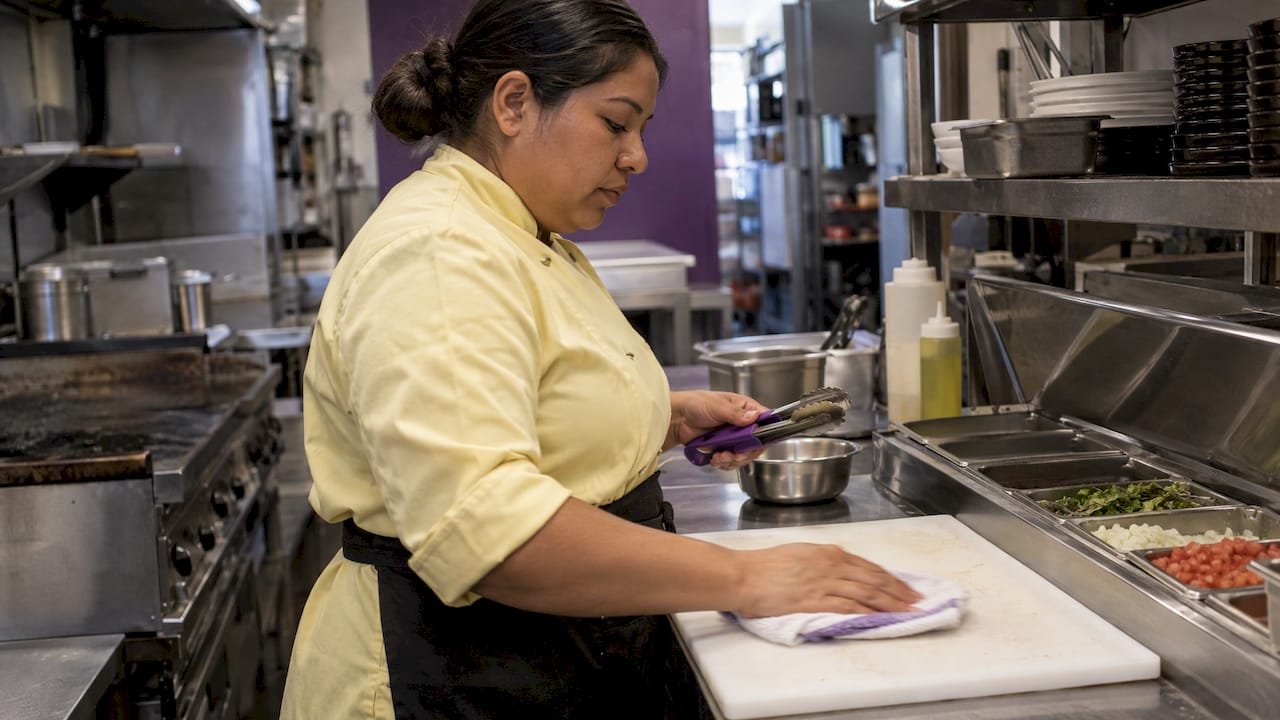
Allergies Québec, quoted in the Food Allergy Canada material, adds that trace amounts can be enough to trigger a severe reaction. Its suggested kitchen practices include preparing the allergen-free meal before the others, using new sponges and freshly cleaned cloths, and not reusing fryer oil contaminated by allergens. Cooking does not make the risk go away either: allergen proteins are not destroyed by cooking or cooling.
In practice, this makes three things worth asking about:
- Shared griddles and pans. Ask whether your protein or tortilla is cooked on a surface that also cooks egg dishes.
- Fryers. A fryer used for battered food can carry egg into everything else cooked in it.
- Utensils and gloves. Ask for a clean pair of gloves and clean tools for your order.
Egg-free versus vegan: what changes when you order
People often assume that a vegan order is the safe shortcut for an egg allergy. It is a useful starting point, and it is not the same thing.
- Vegan excludes all animal products. That removes egg, dairy, meat and honey. An egg-free order only has to exclude egg, so cheese, sour cream, chicken, pork and beef are all fair game if you are not avoiding them for other reasons.
- Vegan is a food philosophy, not an allergy protocol. A vegan label tells you what the recipe is meant to contain. It does not always tell you what else shares the pan, the grill or the fryer. Ask the same preparation questions you would ask for any allergy.
- Vegan substitutes can bring their own ingredients. Plant-based mayos, dressings and desserts vary by recipe, and you may be avoiding other allergens too. Read and ask.
- Egg-free gives you more choice. Because dairy and meat are usually fine, you can build a more filling meal with a protein and cheese, which matters if you eat for fitness or high protein.
If your order needs to be egg-free and also free of something else, tell the kitchen everything at once. We cover the dairy side in dairy-free ordering at Mexican restaurants, and the corn and nut side in our corn-free and nut-free ordering guide.
Reading labels on packaged Mexican-style foods
If you buy salsa, tortillas, sauces or frozen meals from the grocery store, Canadian labelling rules help. Egg is a priority allergen, and Health Canada says egg in a prepackaged product must be declared in the ingredient list or in a “Contains” statement right after it. The CFIA says allergens must be declared using specific source names such as “egg”, even when they come in through a component of another ingredient.
A few points to keep in mind:
- “Contains egg” and “may contain egg” both mean do not eat it. Food Allergy Canada says to avoid products carrying either statement.
- “May contain” is a precaution about cross-contamination. The CFIA explains that it signals possible unintended presence after reasonable measures to prevent it.
- Restaurant food is different. Under Canadian labelling regulations, prepackaged individual portions served by a restaurant with meals or snacks are exempt from ingredient declaration. A sealed sauce cup at a restaurant may carry no allergen list, so ask.
The last point is why asking in person matters. A restaurant meal comes without the label protection you get at the grocery store.
A practical egg-free build, step by step
Here is how to assemble an order that keeps the number of unknowns low. Always confirm each item with the kitchen before you order, since recipes differ from place to place.
- Choose a format. A bowl, taco or burrito all work as a base. If you are unsure which suits you, our comparison of burrito bowl versus burrito shows how each handles different diets.
- Pick a plain protein. Grilled, braised or slow-cooked meat, or beans, with simple seasoning. Ask whether anything is added as a binder or glaze.
- Add rice, beans and vegetables. These are generally simple, but ask about stocks and seasonings.
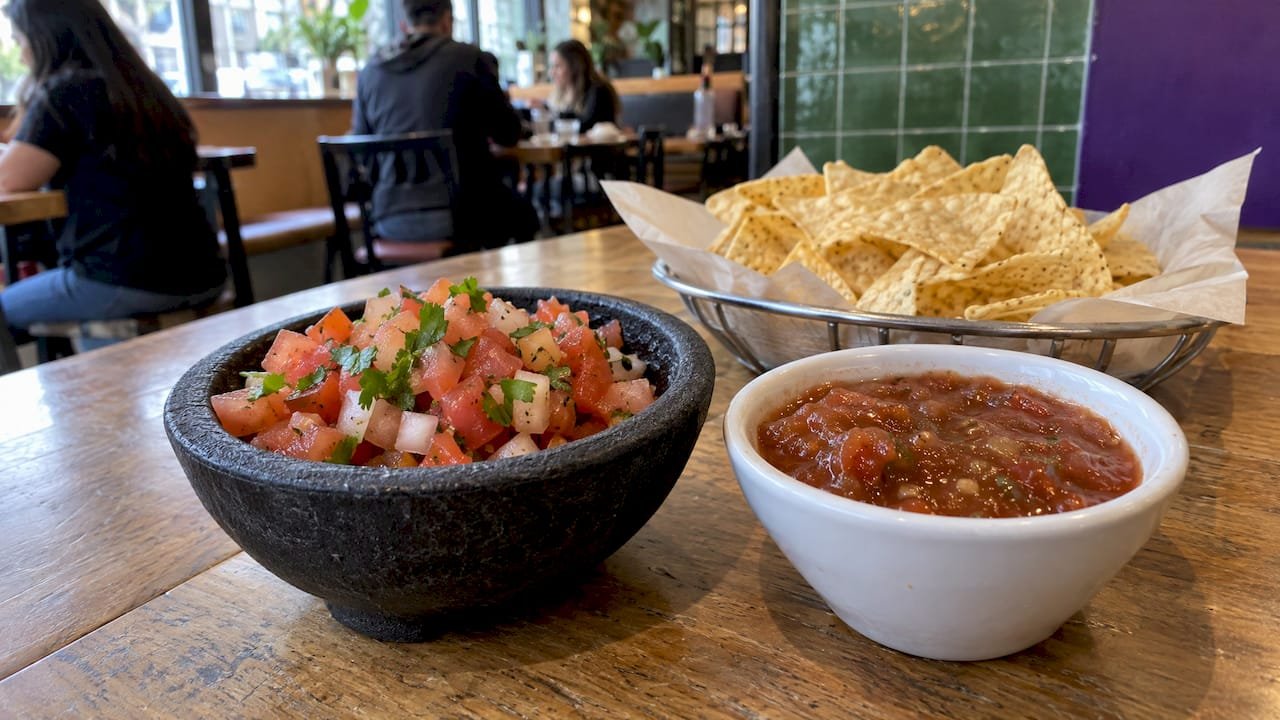
- Choose salsa over creamy sauce. Fresh salsa is a simpler ingredient list than a creamy drizzle. Ask about the creamy ones before you add them.
- Skip anything battered or fried unless the kitchen confirms what is in the coating and the oil.
- Finish with fruit or a drink rather than a baked dessert, unless the kitchen confirms the dessert recipe.
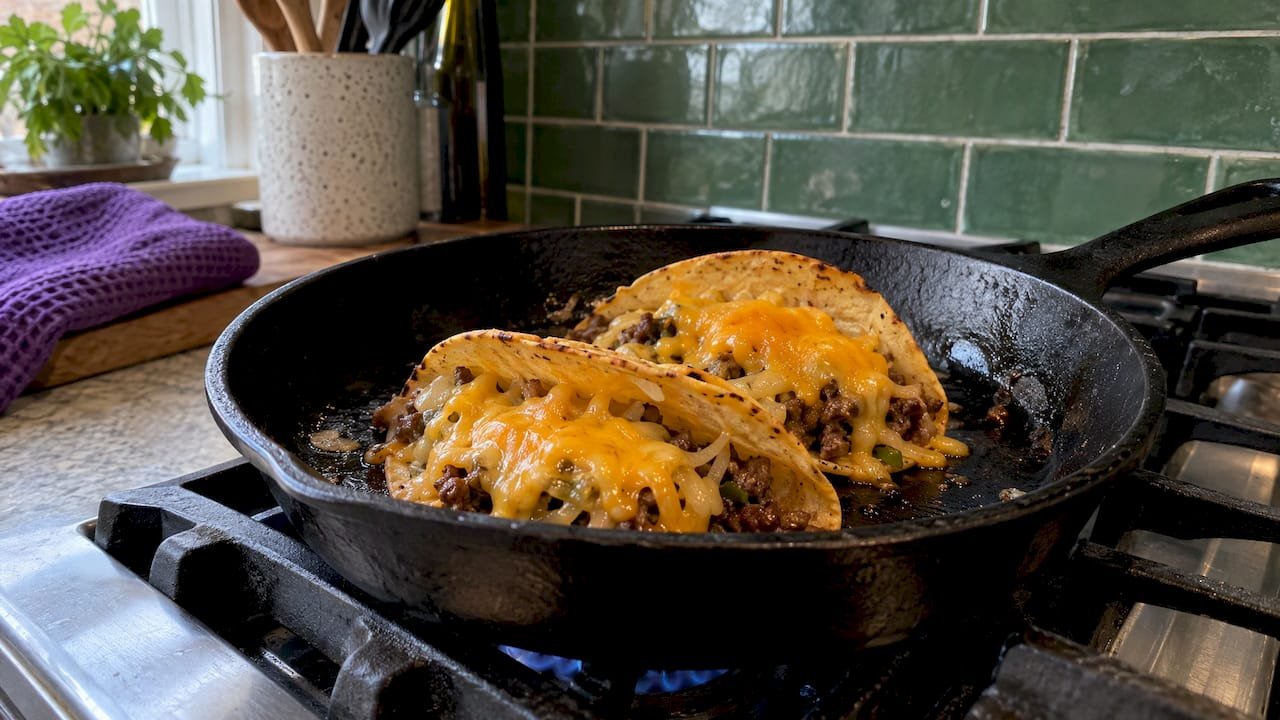
Tacos are a good example of a dish you can build from a short list of components. Our guide to choosing the right tortillas and ingredients shows how few things a taco actually needs.
Perspective: how we think about allergy-aware ordering
We built Burrito Splendido around a from-scratch kitchen, where items are prepared daily and our proteins, such as carnitas, barbacoa and adobo chicken, are slow-cooked and hand-pulled in house. For a guest with an egg allergy, that style of cooking is a good starting point, because we know what goes into what we make and we can talk about it.
We are also a deep-fryer-free kitchen. For anyone worried about shared fryer oil and battered foods, that removes one of the most common cross-contact questions before you even ask.
Our menu is built to be inclusive, with options for gluten-free, vegan, vegetarian, keto and paleo diets, and our staff are trained to handle specific dietary needs and cross-contamination concerns. Our advice is simple: tell us about your allergy when you order, name egg specifically, and ask us about any sauce or sweet item you are unsure of. We would much rather answer ten questions than have you guess.
Eating out with an allergy takes some planning, and a kitchen that welcomes the questions makes it far easier.
Austin
Order egg-free at Burrito Splendido
We make burritos, “naked” burrito bowls, street-style tacos, quesadillas and salads, with house-pressed tortillas made from 100% Manitoba-produced flour. Our staff are trained to handle dietary needs and cross-contamination concerns, so tell the person taking your order that you have an egg allergy and what to avoid. Our team can take you through the ingredients in each item.
See the full menu to plan your order, or visit us to find your nearest Manitoba location.
Planning a group meal? Our catering options include Burrito Express, Burrito Express Deluxe and the Bueno Burrito Bar. When you book for a group that includes someone with an egg allergy, tell us at the time you order so we can plan the menu around it.
Ordering for others: kids, teams and events
Egg allergy is common in children, and group meals add complications: shared platters, serving spoons moving between dishes and guests who do not know what is in each dish. A few habits help.
- Order the allergy-safe meal first. Food Allergy Canada’s catering advice for operators includes scheduling the preparation of non-allergen items first, following cleaning and sanitizing. Ask your caterer whether they can do this.
- Label and separate. Ask for the egg-free items to be clearly marked and served with their own utensils.
- Pass on the details. If a parent, coworker or teammate is ordering for the person with the allergy, make sure the exact words (“egg allergy”) reach the kitchen, not a paraphrase.
- Use online ordering notes carefully. Food Allergy Canada’s consumer research recommends that restaurants offer allergen disclosure in online ordering. Where there is a notes field, put your allergy there, and phone the restaurant for anything complex.
For a weekly routine rather than a one-off order, our healthy Mexican meal workflow can help you plan ahead.
FAQ
Is Mexican food usually egg-free?
Many traditional dishes, such as grilled meats, beans, rice, salsa and corn tortillas, are not built around egg. Egg can still appear in creamy sauces, batters, fillers, breakfast plates and desserts. Always ask the kitchen about each item rather than relying on the cuisine’s reputation.
What should I say when I order with an egg allergy?
Say you have an egg allergy, say what has to be avoided, and make clear it is not a preference. Then ask how the food is prepared and whether utensils, pans or surfaces are shared. Do this every time, even at a restaurant you know.
Is a vegan Mexican order automatically safe for an egg allergy?
A vegan recipe is designed to leave out egg, but it does not guarantee safe preparation. Shared equipment and substitute ingredients still need a question. Tell the kitchen about your allergy rather than relying on the label alone.
Do restaurants have to list egg on the menu?
Not for restaurant meals. Food Allergy Canada notes that restaurants are not required to list priority allergens for menu items. The labelling rules that require a “Contains” statement apply to prepackaged foods, so ask about ingredients and cross-contamination in person.
Sources
- Dining out, Food Allergy Canada
- Eggs: a priority food allergen, Health Canada
- A priority food allergen: eggs, Health Canada (PDF)
- Allergen Infographic 2025, CFIA (PDF)
- Tips for avoiding common allergens in food, Health Canada
- Allergen Management for Food Businesses, Food Safety Canada
- List of ingredients and allergens on food labels, CFIA
- Before you shop: food allergies and allergen labelling, CFIA
- Egg, Food Allergy Canada
- Regulations to enhance the labelling of food allergens, Health Canada
- Recipe for Success: Consumer Experience Report, Food Allergy Canada (PDF)