Chipotle is a smoked, dried jalapeño, sold whole or as powder. Adobo is a style of marinade or sauce built on dried chiles, vinegar, and spices. “Chipotles in adobo,” the canned product most cooks reach for, combines the two: smoked peppers packed in a tomato-vinegar-garlic purée, which is exactly why the names get tangled together.
TL;DR:
- Dried chipotles range from 2,500 to 8,000 Scoville heat units, so add them gradually when cooking for people sensitive to spice.
- Use powder or whole dried pods when you want smoke without extra liquid; choose canned peppers for marinades or sauces that also need tang.
- One canned pepper roughly matches one teaspoon of powder for heat, but powder lacks adobo’s acidity, so add vinegar or citrus to sauces.
- Refrigerate opened peppers in an airtight container for about a week, or freeze the purée in small portions for longer storage.
Table of Contents
- What chipotle is: forms, flavour and heat
- What adobo means: Mexican adobo and regional differences
- What ‘chipotles in adobo’ is and why labels cause confusion
- How they differ: flavour, heat, texture and culinary role
- Practical cooking uses and substitutions
- Storage, buying and sourcing
- How we use chipotle and adobo in our kitchen
- Quick takeaway and practical recommendation
- FAQ
- Sources
What chipotle is: forms, flavour and heat
Chipotle starts as a ripe jalapeño that’s been smoked and dried rather than used fresh. The smoking process is what separates chipotle from every other dried chile on the shelf, and it’s also why the name only applies to jalapeños treated this way, not to peppers that are simply sun-dried.
You’ll run into chipotle in three main forms:
- Whole dried pods, often labelled morita (smaller, fruitier, reddish-brown) or meco (larger, darker, more intensely smoky)
- Ground chipotle powder, made by grinding the dried pods, useful as a dry seasoning or rub
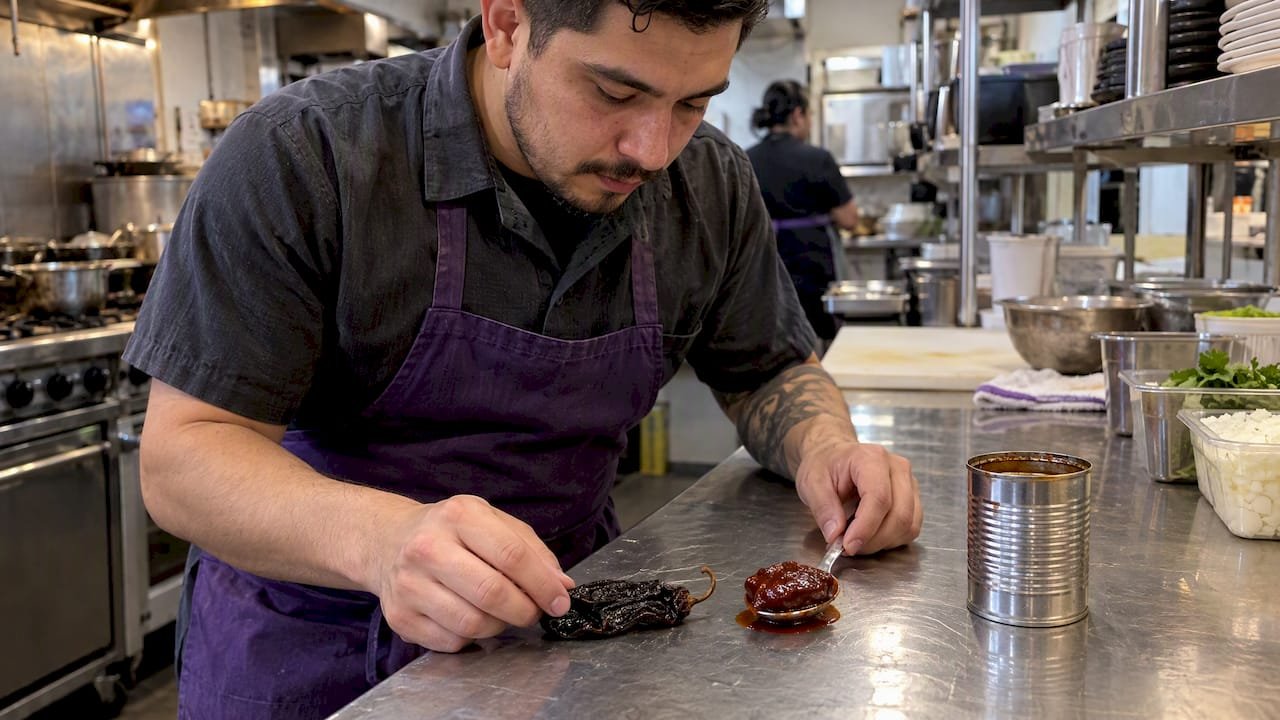
- Canned or puréed chipotle, almost always packed in adobo sauce rather than sold plain
Flavour-wise, chipotle brings a smoky, woodsy backbone with notes that can lean toward tobacco, chocolate, or campfire char depending on the variety. Morita tends toward brighter, fruitier smoke, while meco delivers a deeper, more savoury intensity, a distinction worth knowing when you’re deciding which dried chipotle type to buy for a given dish.
Dried chipotles generally fall in the 2,500 to 8,000 Scoville heat units range, a wide spread that means two chipotles from different batches can taste noticeably different in heat even when they look alike. That variance is normal for a dried chile product and worth keeping in mind if you’re cooking for someone sensitive to spice.
The smoking itself does more than dry and preserve the pepper. Research on smoke and flavour chemistry shows that wood smoke interacts with a pepper’s natural sugars and compounds during the smoking process, generating new flavour molecules that produce those tobacco, chocolate, and campfire-like notes. That’s the chemical reason chipotle tastes nothing like a plain dried jalapeño: the smoke doesn’t just sit on the surface, it changes the pepper’s flavour at a molecular level.
What adobo means: Mexican adobo and regional differences
Adobo isn’t a single recipe. It’s a category of marinade or sauce that varies a lot depending on where you are and which cuisine you’re cooking.
In Mexican cooking, adobo typically refers to a pastelike marinade made from dried chiles, blended with vinegar or citrus, garlic, and warm spices like cumin or oregano. It’s used to coat meats before cooking, to braise proteins slowly, or as a finishing sauce. This is the adobo you’re tasting when you order adobo chicken or see “chiles in adobo” on a menu.
Outside Mexico, the word shifts meaning entirely:
- Filipino adobo is a cooking method, typically meat braised in vinegar, soy sauce, garlic, and bay leaf, with no relation to chile paste at all
- Puerto Rican adobo usually refers to a dry seasoning blend, often including garlic powder, oregano, and black pepper, rubbed onto meat before cooking
- Spanish adobo, the term’s origin, historically described a vinegar-based preservation marinade
Because the same word covers a chile paste in one country and a dry spice rub in another, it helps to think of adobo as a method or category rather than one standardized ingredient. When a recipe says “adobo,” the context, Mexican, Filipino, or otherwise, tells you what’s actually in it.
What ‘chipotles in adobo’ is and why labels cause confusion
The canned product labelled “chipotles in adobo” is where most of the confusion starts, because the name folds both words into one item sold on supermarket shelves.
Inside the can, you’ll find smoked, dried chipotle peppers submerged in a tomato-vinegar-garlic purée, a combination Serious Eats describes as a pantry staple that works as a marinade, sauce, or condiment on its own. The two components do different jobs:
- The peppers supply the smoke and the bulk of the heat
- The adobo sauce contributes acidity, a touch of sweetness, and body, rounding out the sharp smokiness of the chile itself
Canning and soaking also change how the peppers behave compared to their dried state. Once a chipotle sits in liquid, it rehydrates and softens, which affects both texture and how quickly you taste the heat. Some cooks note that the sauce surrounding canned chipotles can make the heat feel sharper and more immediate than a rehydrated dried pepper eaten on its own, likely because the acidity in the sauce carries capsaicin differently across the palate.
This matters in practice: a recipe that calls for “one chipotle in adobo, minced” is really asking for a small amount of soft, sauce-coated pepper, not a dry pod, and swapping in a dried chipotle without adjusting for moisture and acidity will throw off both the texture and the balance of the dish.
How they differ: flavour, heat, texture and culinary role
Once you see chipotle and adobo as two separate components that happen to get bottled together, choosing which one to reach for gets a lot easier.
- Flavour: dried or powdered chipotle gives you pure, concentrated smoke; adobo sauce on its own is tangy and savoury, more of a flavour binder than a star; the canned combination gives you both at once, layered and complex
- Heat dynamics: dried chipotle releases heat gradually as it rehydrates in a dish, while the canned product’s sauce delivers heat that feels more immediate and lingers longer on the palate
- Texture and function: dry pods or powder work best as a background seasoning that doesn’t add moisture; adobo paste acts as a binder or marinade base; the canned product is the convenient middle ground when you want both smoke and sauce in one scoop
For the cooking job itself: reach for chipotle powder or a whole dried pod when you want smoke without extra liquid, like in a dry rub or a pot of chili where you’re already managing moisture. Reach for the canned chipotles in adobo when you’re marinating meat, building a crema, or finishing a sauce that benefits from both smoke and tang in one step. Our salsa heat levels guide breaks down how different chile forms behave once blended into a sauce, which is useful if you’re trying to dial in heat precisely.
Pro Tip: If a recipe just says “chipotle” with no mention of adobo, assume it means the canned version unless it specifies dried or powdered.
Practical cooking uses and substitutions
Getting the measures right is the difference between a dish that tastes balanced and one that’s either flat or blisteringly hot.
As rough equivalencies: one canned chipotle pepper with a bit of clinging sauce is roughly equal to one teaspoon of chipotle powder for heat, though you’ll lose the tang the adobo sauce provides. One tablespoon of the canned purée (pepper and sauce blended together) is a reasonable starting point for most marinades or a pot of chili serving four to six people. One whole dried chipotle pod, rehydrated in hot water for 10 to 15 minutes, is roughly equivalent to one canned chipotle pepper, minus the adobo sauce’s acidity and sweetness.
When you don’t have the canned product on hand, a few substitution formulas work:
- Ketchup, liquid smoke, and fresh jalapeño: blended together, this mimics the tomato base, smokiness, and heat of canned chipotles in adobo, though the real product’s layered complexity is hard to copy exactly
- Ancho chile plus smoked paprika: gives you smoky depth with little to no heat, a good swap when you want the flavour without the spice
- Chipotle powder plus a splash of vinegar and a pinch of sugar: recreates some of the adobo sauce’s acidity and sweetness when you’re working from powder alone
If you’re adjusting the canned product’s intensity, dilute the purée with a little stock or water for a milder marinade, or reduce it on the stove for a few minutes to concentrate it for a finishing sauce. A touch of panela, unrefined cane sugar, can round out the acidity in a homemade adobo if you find it too sharp.
Pro Tip: When substituting powder for canned chipotle in a sauce, add a small amount of vinegar or citrus juice to replace the acidity the adobo sauce would otherwise provide.
Expect a noticeable flavour shift any time you swap forms: powder alone will taste flatter and less complex than the canned version, and skipping the acid adjustment is the most common reason a substitution tastes off.
Storage, buying and sourcing
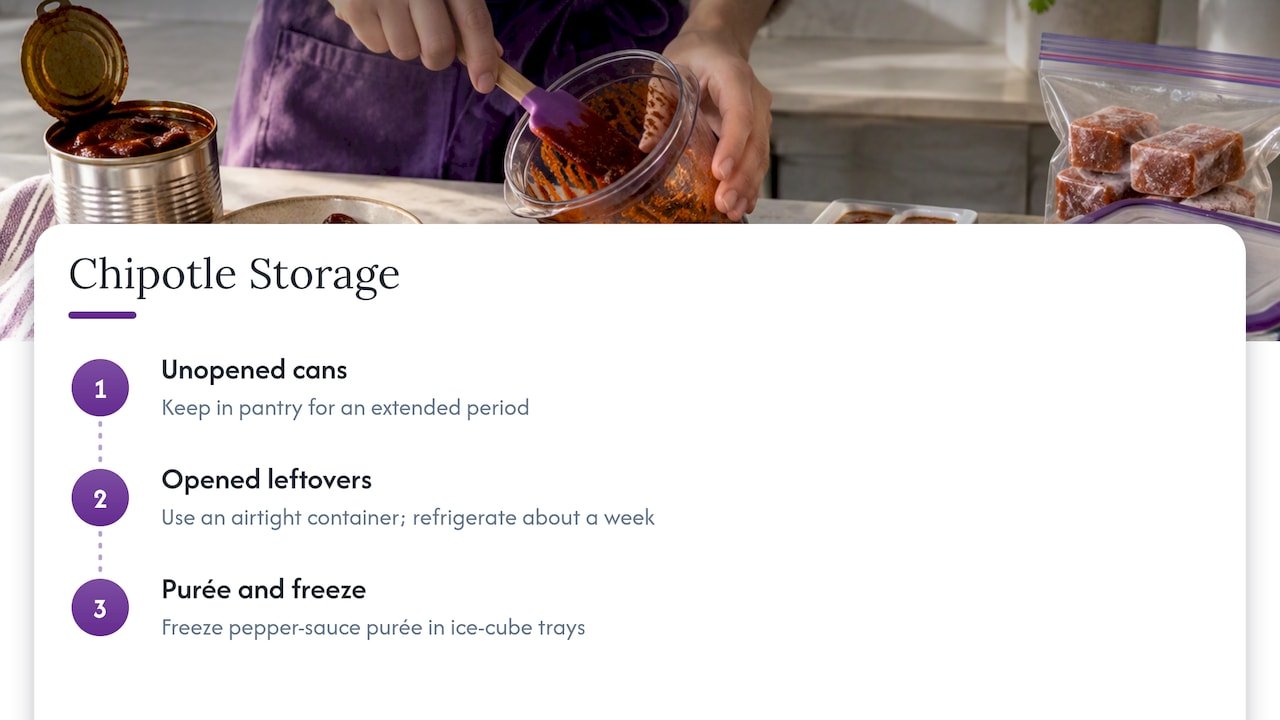
Unopened cans of chipotles in adobo keep well in the pantry for an extended period, but once opened, transfer any leftovers to an airtight container and refrigerate, where they’ll stay good for about a week. For longer storage, purée the remaining peppers and sauce, then freeze the mixture in ice cube trays or small portions. This freezing method is a practical way to avoid wasting a half-used can, and frozen portions thaw quickly when you need a tablespoon for a sauce.
Dried whole pods and chipotle powder keep for months in a sealed container stored somewhere cool and dark. Watch for a loss of aroma or colour fading as signs the dried product is past its best.
You’ll typically find canned chipotles in adobo in the canned goods or international foods aisle of most supermarkets, with a wider selection at Latin grocers. Dried pods are more often found at ethnic grocers or ordered online. When buying, check the label for added sugar or preservatives if you’re after a cleaner ingredient list, and choose morita over meco if you want a fruitier, milder smoke rather than an intense one.
How we use chipotle and adobo in our kitchen
We prepare adobo chicken as one of our slow-cooked, hand-pulled proteins in our from-scratch kitchen. We work with pureed chipotle in several applications:
- Blending it into marinades for proteins that need a measured, consistent level of smoke and heat
- Adding it in small amounts to crema and sauces, tasting as we go to balance acidity against the sauce’s natural tang
- Adjusting heat and sweetness for each batch, since dried chile products vary from one lot to the next
Our sourcing emphasizes local ingredients, and we store opened products under airtight, refrigerated conditions according to professional kitchen standards. If you want to see adobo chicken in a finished dish, our guide to adobo chicken walks through how the marinade comes together at home.
Quick takeaway and practical recommendation
The question isn’t really chipotle or adobo, it’s which job you’re doing. Want background smoke without added moisture: reach for the powder or a whole dried pod. Marinating a protein overnight: adobo paste or the canned version does the work for you. Need to bind or enliven a sauce quickly: the canned chipotles in adobo, blended or minced, cover both smoke and tang in one step. Buy the can when convenience matters most; keep dried pods or powder on hand when you cook chipotle often enough to justify rehydrating from scratch.
— Austin
FAQ
What can I replace chipotle in adobo with?
A blend of ketchup, a few drops of liquid smoke, and minced fresh jalapeño approximates the smoky, tangy profile of canned chipotles in adobo. Ancho chile with a pinch of smoked paprika works well when you want smokiness without much heat.
Do Mexicans use adobo?
Yes, adobo is a common Mexican preparation, typically a pastelike marinade made from dried chiles, vinegar or citrus, garlic, and spices. It’s used to marinate, braise, or finish proteins like chicken and pork, and it differs from the adobo used in Filipino or Puerto Rican cooking.
Can I use chipotle powder instead of chipotle in adobo?
Chipotle powder can replace canned chipotle for dry heat and smoke, but it lacks the tang and body the adobo sauce provides. Add a splash of vinegar or citrus and a small pinch of sugar to compensate when substituting powder in a recipe that expects the canned product.
Can you eat chipotles in adobo?
Yes, canned chipotles in adobo are fully cooked and ready to eat straight from the can, whether minced into a sauce or used whole as a condiment. They’re a versatile pantry item that works in marinades, salsas, soups, and sauces without any additional cooking required.
Sources
- Adobo | Description, History, Variations, & Uses | Britannica
- Everything you can do with a can of chipotles in adobo
- PubMed article on smoke and flavour chemistry
- Chipotle pepper