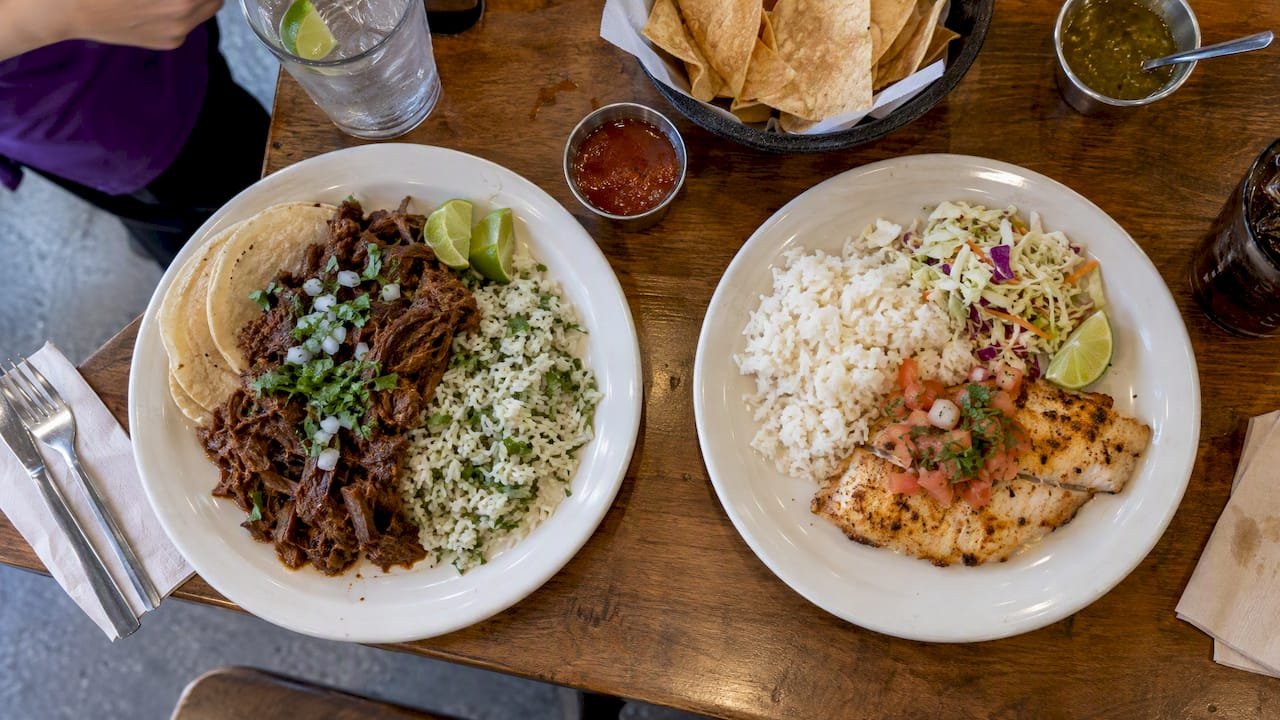
The best walleye taco starts with a thin, cracker-coated fillet pan-fried until the crust turns golden, then piled onto a warm tortilla with a lime-laced slaw and a chipotle-lime crema. You can swap in a pan-seared blackened version or fire up the grill for a smokier result using the same fish and toppings. Cook the walleye to a minimum internal temperature of 70°C (158°F), and serve it in warm corn or flour tortillas for the best texture.
TL;DR:
- Cooking walleye to an internal temperature of at least 70°C (158°F) with a thermometer ensures proper doneness and prevents overcooking or dryness.
- Using a cracker coating in a well-heated skillet with butter provides crispness without the mess of deep-frying, making it more forgiving for home cooks.
- Selecting neutral oils like canola or avocado is crucial for blackening or high-heat cooking to avoid burning or smoke point issues.
- Walleye is versatile for dietary needs, with gluten-free and low-carb substitutions like corn tortillas or lettuce wraps maintaining flavor and texture.
- Proper heat control and avoiding overcrowding are key factors for achieving crisp exterior and moist interior, rather than relying solely on coating type or color for doneness.
Table of Contents
- Ingredients and equipment you will need
- How to cook and assemble walleye tacos step by step
- Common mistakes that ruin fish tacos
- Substitutions for gluten-free, dairy-free and low-carb diets
- Serving ideas, sauces and pairings
- Food safety, storage and reheating
- How Burrito Splendido applies from-scratch technique at home
- What actually matters when you cook walleye tacos
- Prefer to order your walleye tacos instead?
- Where this recipe’s guidance comes from
- Sources
- FAQ
Ingredients and equipment you will need
Plan on 170 to 225 grams (6 to 8 ounces) of skinless walleye fillet per person, so four servings call for roughly 700 to 900 grams (1.5 to 2 pounds) of fish. Run your fingers along each fillet to check for stray pin bones before cooking, since walleye tends to hide a few near the lateral line.
For the cracker coating you will need:
- 500 grams (about 4 cups) of crushed saltine-style crackers, seasoned with paprika, garlic powder and a pinch of cayenne
- 2 large eggs whisked with 60 millilitres (¼ cup) of milk for the egg wash
- 125 grams (1 cup) of all-purpose flour for dusting
- 60 millilitres (¼ cup) of neutral oil, plus a knob of butter for the pan
For the lime slaw: 400 grams (about 4 cups) of shredded green and red cabbage, one grated carrot, the juice of two limes, 30 millilitres of olive oil, and a pinch of salt. For the crema: 125 millilitres (½ cup) of sour cream or Mexican crema blended with one chipotle pepper in adobo and the juice of one lime. You will also need 8 to 12 small corn or flour tortillas.
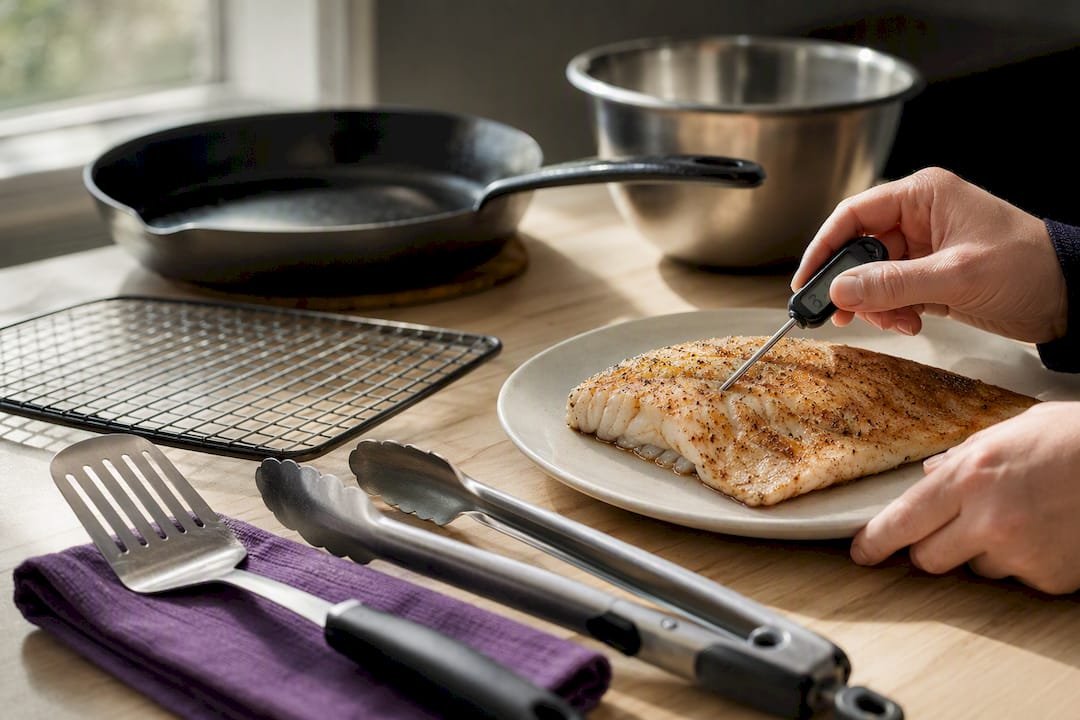
Beyond a mixing bowl and a sturdy skillet, the tools that matter most are a digital instant-read thermometer, a fish spatula or wide tongs for flipping delicate fillets, and a wire rack for resting the cooked pieces so the coating stays crisp instead of steaming on a plate.
How to cook and assemble walleye tacos step by step
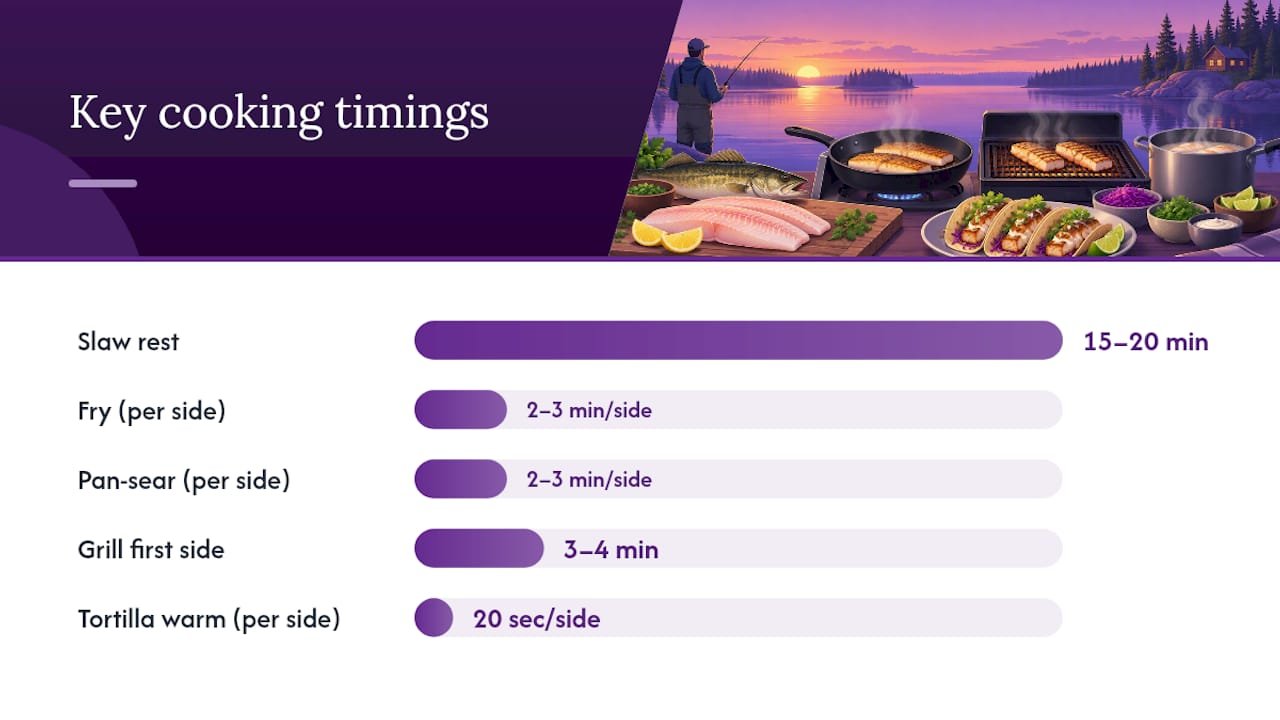
Start your mise en place by patting the fillets dry, setting up three shallow dishes for flour, egg wash and cracker crumbs, and shredding the cabbage and carrot for the slaw. Toss the slaw with lime juice, oil and salt first and let it sit while you cook, since 15 to 20 minutes of resting softens the cabbage slightly without turning it limp. Blend the crema ingredients next and refrigerate until you plate.
Cracker-coated pan-fry method:
- Cut walleye fillets into taco-sized strips, about 4 centimetres wide.
- Dust each strip in flour, dip in egg wash, then press firmly into the cracker crumbs so the coating clings evenly.
- Heat the oil and butter in a heavy skillet over medium heat until it shimmers.
- Fry the strips for about 2 to 3 minutes per side, turning once the edges look golden, until the crust is deep gold and the fish flakes easily.
- Transfer to a wire rack to rest for a minute before assembling.
Pan-seared or blackened stripe method: Rub the strips with a blend of smoked paprika, cumin, garlic powder and a touch of brown sugar, then sear in a hot, lightly oiled cast-iron pan. A Manitoba outdoor recreation centre’s recipe pairs seared walleye strips with a wild blueberry-jalapeño salsa, cooking each side for about 2 to 3 minutes over fairly high heat until the spice crust darkens without burning.
Grill or char method: Heat the grill to create a hot zone and a cooler zone, brush the fillets lightly with oil to prevent sticking, and lay them over the hot side skin-side down if any skin remains. Flip only once the fish releases cleanly from the grates, usually after 3 to 4 minutes, then move to the cooler zone to finish through without drying out. Foodland Ontario’s grilled walleye recipes treat the fish as a quick-cooking, mild option that pairs naturally with fruit-based salsas rather than heavy sauces.
Across every method, check doneness with the flake test: press a fork gently into the thickest part and look for the flesh to separate into opaque layers. For certainty, insert a digital thermometer into the thickest section and confirm it reads at least 70°C (158°F), the minimum Health Canada sets for cooked fish.
To assemble, warm tortillas in a dry skillet or directly over a gas flame for about 20 seconds per side until pliable. Layer slaw first, then the fish, then a drizzle of crema, and finish with a squeeze of fresh lime right before serving so the acid does not wilt the toppings too early.
Pro Tip: Rest cooked fish on a wire rack instead of a paper-towel-lined plate: the airflow keeps the coating crisp instead of trapping steam underneath.
Common mistakes that ruin fish tacos
Small errors turn a great piece of walleye into a soggy or dry taco, but most are easy to fix once you know what to watch for.
- Crowding the pan drops the oil temperature and stops the coating from crisping, so fry in batches of two or three strips at a time.
- Warming tortillas too early lets them dry out or turn tough before assembly, so warm them last, right before you plate.
- Skipping the taste test on your slaw dressing often leaves it flat, so adjust lime and salt just before serving rather than trusting the recipe blind.
- Using a thin nonstick pan for blackening limits the heat retention needed for a proper crust, so reach for cast iron or heavy stainless steel instead.
- Relying only on colour to judge doneness leads to overcooked fish, so confirm with a thermometer rather than guessing from appearance.
- Choosing an oil with a low smoke point, like unrefined olive oil, causes burning at the higher heat blackening requires, so use a neutral oil such as canola or avocado oil.
Substitutions for gluten-free, dairy-free and low-carb diets
Walleye tacos adapt easily to most dietary needs without losing their character. For a gluten-free version, swap the saltine crumbs for crushed gluten-free crackers or gluten-free panko, and lean on corn tortillas, which are naturally gluten-free and hold up well when warmed briefly in a dry skillet.
- Dairy-free crema comes together by blending ripe avocado with coconut yogurt or a plain plant-based yogurt, plus lime juice and a pinch of salt for balance.
- Low-carb eaters can skip the tortilla entirely and build the tacos in large lettuce leaves, or use a low-carb tortilla in place of flour or corn.
- If walleye is hard to find or out of season, whitefish and cod share a similar mild flavour and flaky texture, making them reliable stand-ins in this same recipe.
- Vegetarian households can rework the slaw and crema over grilled cauliflower or jackfruit strips for a similar textural contrast, though the cook times will differ.
Serving ideas, sauces and pairings
A good salsa or crema turns a solid walleye taco into a memorable one, and there is room to experiment beyond the basic chipotle-lime crema.
- A wild blueberry-jalapeño salsa adds sweetness and heat, an approach used in pan-seared walleye taco recipes from Manitoba.
- Mango or corn-peach salsa brings a fruitier contrast that suits the grilled version particularly well.
- A classic pico de gallo, chopped fresh with tomato, onion, cilantro and lime, keeps things simple when you want the fish to lead.
- For sauces, try an avocado-lime crema for a cooler, creamier finish, or a yogurt-caper crema for a tangier bite that pairs nicely with blackened fish.
Serve alongside a simple rice pilaf, grilled corn, or a black bean salad, and pour a crisp lager or a lime-forward sparkling water to match the citrus notes on the plate. For a family dinner, set up a build-your-own taco bar so everyone can layer their own portions to taste.
Food safety, storage and reheating
Cook walleye to a minimum internal temperature of 70°C (158°F), checked with a digital thermometer inserted into the thickest part of the fillet rather than judged by colour alone.
Health Canada’s mercury assessment finds that average mercury levels in walleye run somewhat high compared with low-mercury fish, similar to canned albacore tuna, and while regular consumption generally would not exceed the methylmercury provisional tolerable daily intake, pregnant people and frequent consumers should follow moderation guidance and vary their fish choices.
Refrigerate leftover cooked walleye within two hours of cooking, store it in a sealed container, and eat it within three to four days. Reheat gently in a skillet or oven until it again reaches 70°C (158°F) throughout, rather than microwaving, which tends to make the coating soggy.
How Burrito Splendido applies from-scratch technique at home
Burrito Splendido presses its own tortillas daily using 100% Manitoba flour and runs a deep-fryer-free kitchen, habits that translate directly to a home cook’s stovetop. Warming tortillas just before serving, blending fresh salsa in small batches rather than days ahead, and building in easy swaps for gluten-free or dairy-free eaters are all techniques the kitchen relies on, and all apply just as well to a walleye taco night at home.
What actually matters when you cook walleye tacos
Most walleye taco advice online fixates on the coating, but the crust matters less than people think. The real variable is heat control: a properly heated pan or grill zone determines whether you get a crisp exterior and a moist centre, or a dry, overcooked fillet with a nice-looking crust hiding a mediocre bite.
The conventional wisdom also oversells deep-frying as the only route to crispness. A cracker coating in a well-heated skillet with a little butter gets you there without the mess or the extra oil, and it is more forgiving for a first attempt than trying to manage a pot of hot oil.
If you take one thing from this recipe, prioritize the thermometer over the clock. Walleye fillets vary enough in thickness that a fixed cook time will fail you more often than it helps, while a reading of 70°C (158°F) never lies.
— Austin
Prefer to order your walleye tacos instead?
If cracker-coating and thermometer checks sound like more effort than your weeknight allows, Burrito Splendido’s menu includes tacos built the same way we cook at home: fresh, from-scratch, and never out of a deep fryer. For a group gathering or an event, the catering menu covers everything from a casual Burrito Express spread to a full Bueno Burrito Bar, so you can skip the grocery run entirely and still serve a made-to-order meal.

Check the menu for what is available near you, or reach out about catering for your next get-together.
Where this recipe’s guidance comes from
Safe cooking temperatures and thermometer guidance come from Health Canada’s safe internal temperatures infographic, while mercury and moderation context comes from Health Canada’s mercury risk assessment. Grilling technique and salsa pairing ideas draw on Foodland Ontario’s grilled walleye recipes.
Sources
FAQ
Is walleye good for tacos?
Yes, walleye’s mild flavour and flaky texture make it a strong choice for tacos, especially with a light coating or a quick sear that keeps it from drying out. Its firmness also holds up well on the grill, unlike softer white fish that can fall apart.
What is the best way to prepare fish for fish tacos?
Cut the fillet into even strips so it cooks through at the same rate, then choose a light coating such as crushed crackers or a spice rub rather than a heavy batter that can overwhelm the fish. Cook until it reaches a minimum internal temperature of 70°C (158°F), checked with a digital thermometer.
What’s the best way to cook walleye?
Walleye responds well to pan-frying with a cracker coating, pan-searing with a spice rub, or grilling over direct heat, and all three methods work for tacos. The right choice depends on whether you want a crisp crust, a smoky char, or a lighter texture.
What are the common mistakes when making fish tacos?
The most frequent mistakes are crowding the pan, which stops the coating from crisping, and warming tortillas too far ahead so they turn tough by the time you assemble. Guessing doneness by colour instead of checking with a thermometer is another common misstep that leads to dry, overcooked fish.