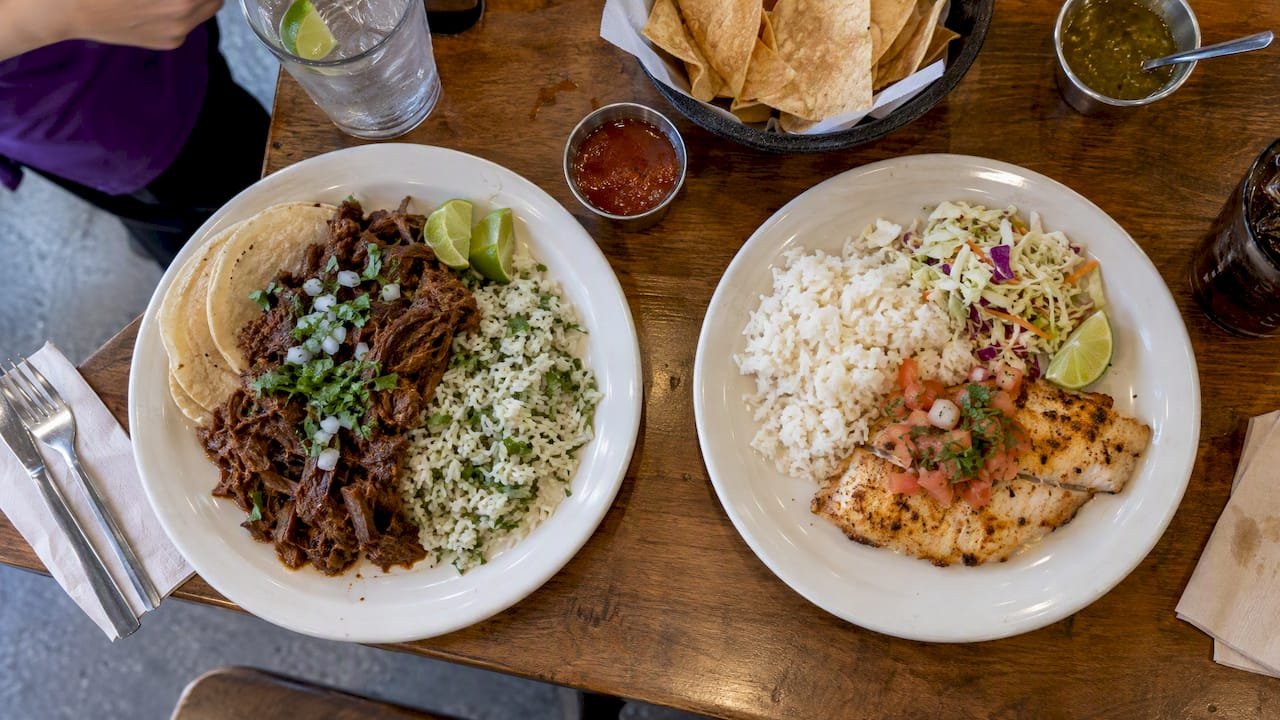
Every great taco balances seven topping roles: something acidic, something creamy, something crunchy, something with heat, something herbaceous, a cheese, and a filling. Pick three to five toppings per taco rather than piling on everything, and mix one classic with one unexpected choice. Below you’ll find those toppings grouped by role, plus the hosting and food-safety details that make a taco bar run smoothly.
TL;DR:
- A taco benefits from balancing roles such as acid, creaminess, crunch, heat, herbaceousness, cheese, and filling, rather than piling on toppings.
- Building a taco spread requires offering 2-3 tortillas per person, with fillings and toppings proportioned carefully and kept at proper temperatures for safety.
- Labeling spicy toppings separately and offering allergen swaps such as corn tortillas and plant-based sauces helps accommodate dietary restrictions.
- Preparing salsas and pickled items days in advance enhances flavor and simplifies setup, while reheating proteins ahead saves time and maintains quality.
- Using separate bowls for toppings and keeping hot and cold items at correct temperatures prevents cross-contact and food safety issues.
Table of Contents
- Why topping roles matter more than topping lists
- The full taco toppings list by category
- How to set up a taco bar without running out or getting sick
- Kitchen-tested tips for warming, holding, and swapping toppings
- Allergen considerations and swaps for common toppings
- There’s no single “correct” way to top a taco
- Skip the prep with a Burrito Splendido taco bar
- Sources
- FAQ
Why topping roles matter more than topping lists
A pile of toppings only works when each one is doing a job. Acid cuts through fat, crunch adds contrast to soft fillings, and heat wakes up flavours that would otherwise sit flat. Thinking in roles instead of ingredients is what separates a taco that tastes composed from one that tastes like a fridge clean-out.
Here’s what each role does and one topping that fills it well:
- Acid or bright: Lime juice or pico de gallo cuts richness and lifts every other flavour on the taco.
- Creamy: Guacamole or crema cools down heat and smooths out drier fillings.
- Crunchy: Shredded cabbage or radish adds texture against soft tortillas and tender meat.
- Heat: Pickled jalapeño or a salsa roja brings warmth without overwhelming the other toppings.
- Herbaceous: Fresh cilantro adds a green, slightly citrusy note that ties fillings together.
- Cheese: Cotija adds a salty finish without melting into the other toppings.
- Filling: Braised pork or roasted vegetables anchor the taco and set the direction for everything else.
A simple pairing rule: fatty fillings like carnitas need acid and herbaceous freshness to balance them, while leaner fillings like grilled fish benefit more from creamy toppings to add richness back in.
The full taco toppings list by category
Once you know the roles, building out the actual toppings list is easier. Group them by category so you can grab one or two from each when you’re setting up a spread.
Salsas and sauces carry most of the flavour work. Salsa roja (cooked red chile) is a reliable, mild-to-medium base for almost any filling. Salsa verde, made from tomatillos, brings a tangier, greener heat that pairs especially well with chicken or pork. Pico de gallo, the raw tomato and onion mix, is best added right before eating so it stays crisp rather than watery. Chipotle crema (crema blended with chipotle) adds smoky heat in a creamy format, useful for guests who want flavour without the sting of a fresh chile. Guacamole and plain crema both work as coolants, with guacamole adding more texture and crema adding pure smoothness.
Fillings set the direction of the whole taco. Braised pork works well with a fruit salsa and pickled onion. Shredded chicken pairs naturally with salsa verde and a squeeze of lime. Grilled fish or shrimp does best with a light, acidic slaw rather than heavy cheese. Roasted vegetables, like squash or mushrooms, hold up well against smokier salsas. Seasoned black or pinto beans round out a vegetarian spread and take on whatever sauce sits next to them.
Cheeses and creamy toppings finish rather than dominate. Cotija is a firm, salty cheese meant for sprinkling, not melting. Queso fresco is softer and milder, good for guests who want cheese without much bite. Shredded cheddar or a Mexican blend melts well onto warm fillings inside a folded tortilla. Avocado crema splits the difference between guacamole and sour cream, giving a smoother texture with the same cooling effect.
Pickled items need to go on the bar chilled and ready. Pickled red onion is the easiest make-ahead topping, holding well for several days once it’s been sitting in vinegar and a little sugar. Pickled jalapeño adds tang alongside heat. Quick-pickled cucumbers are lighter, crunchier options that work particularly well with fish tacos.
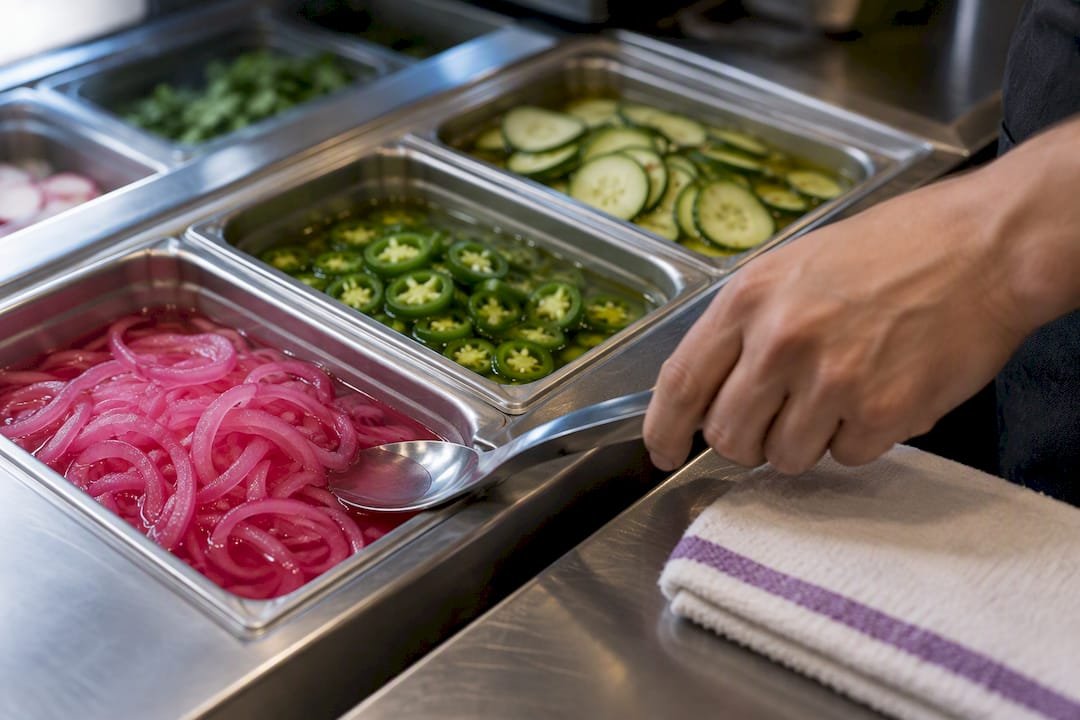
Fresh vegetables and herbs bring texture without competing with the main flavours. Cilantro is the standard herb, though diced white onion right alongside it is what gives street-style tacos their signature bite. Shredded cabbage holds up better than lettuce because it doesn’t wilt once salsa hits it. Radish adds a peppery snap, and jicama brings a mild, slightly sweet crunch that works well in lighter, fish-forward tacos.
Crunch and garnish toppings exist purely for contrast. Toasted pepitas (pumpkin seeds) add texture and a nutty note. Tortilla strips work well on tacos that already lean creamy. Fried shallots or crispy onions bring a savoury crunch that pairs nicely with braised meats.
Fruit salsas are worth a dedicated mention because they solve a specific problem: cutting richness with sweetness instead of pure acid. Fruit salsas made from mango, pineapple, or strawberry pair especially well with fatty or spicy fillings, balancing the richness without needing extra cream or cheese.
For readers who like to push past the standard list, a few fusion options are worth trying: kimchi for a fermented, spicy crunch, pickled beets for colour and earthiness, or roasted Brussels sprouts for a smokier, more savoury take. These aren’t traditional, but they follow the same balance rules as everything else on this list.
Pro Tip: Keep salsas in separate small bowls by heat level rather than one large mixed batch, so guests with different spice tolerances can serve themselves without guesswork.
How to set up a taco bar without running out or getting sick
Building a taco bar is mostly about proportions and timing. Get the quantities and safety controls right, and the rest takes care of itself.
- Plan two to three tortillas per person as a starting point for a casual gathering, then adjust up for heavier eaters or a dinner-only event.
- Warm tortillas in batches, keeping them stacked and covered so they stay soft rather than drying out under open air.
- Budget roughly 100 to 150 grams of filling per person across proteins and vegetables combined, with a little extra held in reserve for seconds.
- Lay out the bar in order: tortillas first, then fillings, then sauces and cheeses, then crunch and garnish last so toppings don’t get soggy sitting under warm items.
- Keep cold toppings at 4°C or colder and hot fillings at 60°C or hotter, checking temperatures periodically rather than assuming a dish will hold.
- Label spicy items clearly, especially any salsa above a mild heat band, so guests with different tolerances can self-select.
Food safety matters more at a self-serve station than at a plated meal, because toppings sit out longer and get handled by more people. Ready-to-eat potentially hazardous foods held at ambient temperature can generally stay out for up to four hours under proper controls, and should be discarded after that window. Cook proteins to their recommended minimum internal temperatures, ground meat to 71°C, poultry to 74°C, and fish to 70°C, before holding them for service.
Jalapeños typically fall within a moderate Scoville heat range, serranos are noticeably hotter, and poblanos are much milder. Knowing these bands helps you label salsas and fresh chiles accurately instead of guessing at how spicy something will taste.
For a full walk-through of layout and timing, our guide to building a taco bar that stays fed, fast, and safe covers the same principles in more detail.
Kitchen-tested tips for warming, holding, and swapping toppings
A few habits make the difference between a taco bar that holds up for hours and one that falls apart after twenty minutes.
- Stack tortillas in a cloth-lined container or a low oven around 85 to 100°C rather than a steamer, since steam traps tend to make corn tortillas soggy.
- Braise proteins like pork or beef a day ahead, then reheat and hold them hot rather than trying to cook everything the same day.
- Offer a gluten-free soft corn tortilla and a plant-based filling side by side with the regular options, labelled clearly so guests with dietary needs can self-serve without asking.
- Make salsas and pickled toppings up to two or three days in advance, since most only improve as the flavours settle.
These habits scale down easily for a family taco night at home, not just for catered events.
Allergen considerations and swaps for common toppings
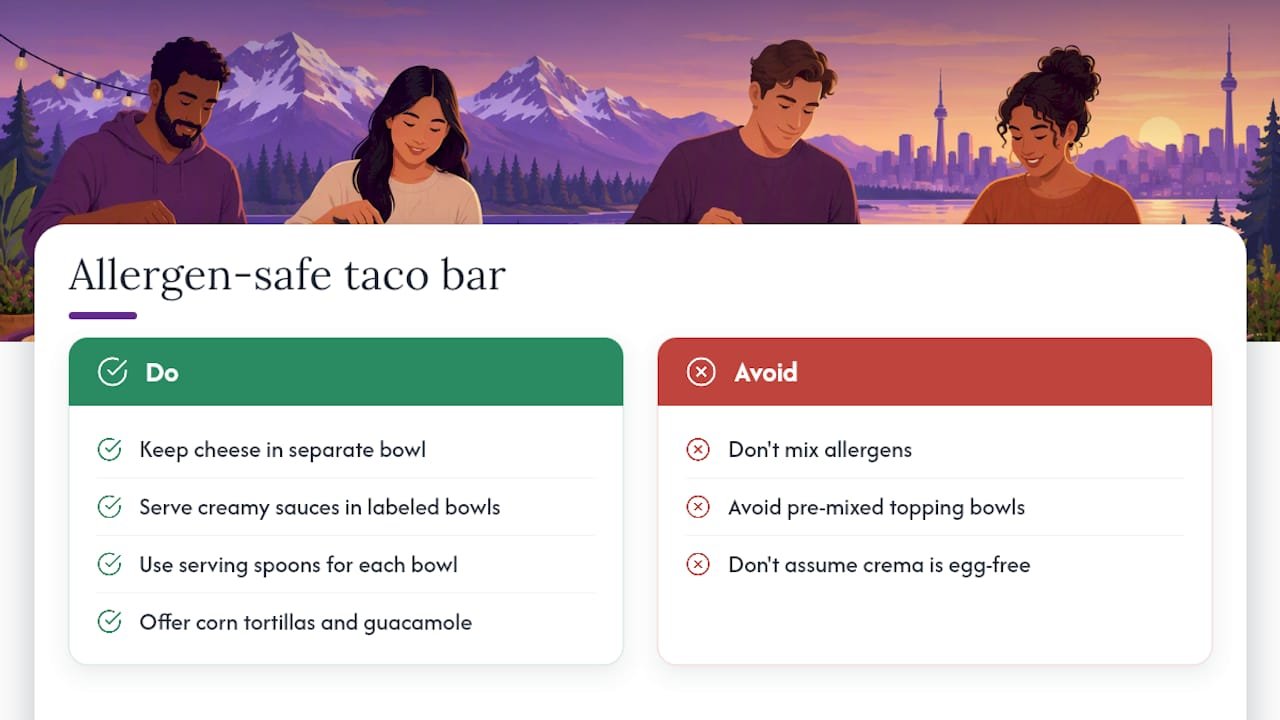
A taco bar touches nearly every major allergen category at once, so a little planning goes a long way. Dairy shows up in cheese, crema, and some crema-based salsas, and can be swapped with a plant-based sour cream or simply skipped in favour of extra guacamole. Gluten hides in flour tortillas and some pre-seasoned proteins, so offering corn tortillas alongside flour ones covers most gluten-sensitive guests without extra effort.
Tree nuts and seeds occasionally turn up in garnish mixes like toasted pepitas or candied nuts, so keep those in a clearly labelled, separate bowl rather than mixed into a shared topping. Eggs are less common on a taco bar but can appear in some crema recipes, worth checking before serving to guests with egg allergies. For guests avoiding nightshades, that means skipping tomato-based salsas and most peppers, leaning instead on citrus, cabbage, and herbs for flavour.
The simplest fix across the board is separation: keep allergen-heavy toppings like cheese, nuts, and creamy sauces in their own bowls with serving spoons, rather than pre-mixed into a single dish. That one habit prevents most cross-contact issues without requiring a completely separate spread for every dietary need.
There’s no single “correct” way to top a taco
Authenticity and invention aren’t opposites. Balance acid, fat, and crunch, and most combinations work, whether that’s a street-style classic or a fruit salsa nobody’s grandmother would recognize. Try one new topping alongside a familiar one next taco night.
— Austin
Skip the prep with a Burrito Splendido taco bar
If assembling all of this sounds like more than you want to manage, Burrito Splendido’s catering options include a Bueno Burrito Bar built around locally sourced Manitoba ingredients, gluten-free tortillas, and vegan and keto options for mixed groups.
Browse the full menu to see current tacos and toppings, or reach out through the catering page to book a spread for your next event.
Sources
- Peppers by Scoville units (University of Florida/IFAS Gardening Solutions)
- Guidelines for the storage of potentially hazardous foods at room temperature (BCCDC)
- Meat, poultry, eggs and fish temperature guidance (Vancouver Coastal Health)
FAQ
What toppings do you put on tacos?
Most tacos benefit from at least one topping from each of seven roles: acid, creamy, crunchy, heat, herbaceous, cheese, and filling. A simple combination might be pico de gallo, guacamole, shredded cabbage, pickled jalapeño, cilantro, cotija, and braised pork.
What are five condiments for tacos?
Salsa roja, salsa verde, pico de gallo, guacamole, and crema cover most flavour needs, from mild and tangy to rich and cooling. Chipotle crema is a good sixth option if you want smoky heat without a fresh chile’s sharpness.
What is usually on a taco bar?
A typical taco bar includes warm tortillas, one or two proteins, a couple of salsas at different heat levels, cheese, a creamy topping like guacamole or crema, and fresh garnishes like onion, cilantro, and lime. Pickled onion or jalapeño often rounds it out for extra acid and heat.
What do people typically put on tacos in Mexico?
Street-style tacos commonly feature diced white onion, chopped cilantro, a squeeze of lime, and a simple salsa, letting the filling stay the centre of attention. Contemporary chefs often build on that base with composed sauces suited to specific fillings like fish or chorizo, rather than adding heavier toppings.