The easiest way to make a reliably great quesadilla is to pair a high-melt cheese with one or two supporting elements, keep filling to about 1/2 to 3/4 cup for an 8 to 10 inch tortilla, and pre-treat any watery ingredients before they go in. From there you can build classic, veggie, breakfast, seafood, fusion, or even dessert versions using the same rule. The technique matters as much as the ingredients, and both are covered below.
TL;DR:
- Using fresh-shredded high-melt cheese and keeping filling amounts between 1/2 and 3/4 cup per 8 to 10 inch tortilla prevent sogginess and leaks.
- Pre-cooking watery ingredients and draining excess sauces help maintain crispness and proper sealing during cooking.
- Building the quesadilla with cheese mixed into fillings rather than layered on top promotes better cohesion and less spillage.
- Cooking method choices—pan-frying with oil, dry toasting, or oven baking—affect crust texture but all require careful temperature control for optimal melt and crispness.
- Choosing reliable pairings such as Monterey Jack with chicken or Chihuahua with carnitas, and using the right seasoning techniques, enhances flavor authenticity and quality.
Table of Contents
- Filling categories worth trying first
- How to design a balanced quesadilla so it doesn’t fall apart
- Getting the crispiest, best-melted result
- 12 filling combinations you can copy tonight
- What professional kitchens get right that home cooks often miss
- A quick personal pick and an easy swap
- Order one instead of making it yourself
- Sources
- FAQ
Filling categories worth trying first
If you want a fast mental map before you start cooking, group your ideas by category and grab one anchor cheese plus a protein or vegetable.
- Classic meat and cheese: shredded chicken, carnitas, or steak with Monterey Jack or Chihuahua cheese and a smoky salsa on the side.
- Vegetarian and vegan: black beans and corn, or sautéed mushrooms, bound with a smear of refried beans or mashed avocado instead of relying on cheese alone.
- Breakfast: scrambled eggs with chorizo, or potato and cheese, assembled the same way you would a dinner quesadilla, but cooked in butter for extra richness.
- Seafood and lighter options: shrimp with jack cheese, or flaky fish with a quick cabbage slaw folded in for crunch.
- Loaded or dirty style: a bean base topped with two or three extras (cheese, protein, pickled onions) so every bite carries a different texture.
- Kid-friendly: mild cheddar with shredded chicken or just cheese, kept simple so nothing gets picked out.
Each of these works as written, or as a starting point you adjust with what is already in your fridge. The framework in the next section explains why these particular pairings hold together instead of falling apart in the pan.
How to design a balanced quesadilla so it doesn’t fall apart
Cheese choice does more work than most people expect. Fresh-shredded Monterey Jack, Oaxaca, or Chihuahua melt smoothly because they haven’t been coated in the anti-caking agents found in most pre-shredded bags, a distinction the Dairy Farmers of Canada point to as the difference between a gooey melt and a grainy one. Shredding a block yourself takes two minutes and noticeably improves texture.
Portion size prevents the two most common failures: a soggy centre and a blowout seam.
- Keep filling to about 1/2 to 3/4 cup for a standard 8 to 10 inch tortilla, a guideline confirmed in Serious Eats’ testing on black bean and chipotle quesadillas.
- Pre-cook watery vegetables like peppers, zucchini, and mushrooms, and drain any stewed or saucy meat before it touches the tortilla.
- Reduce saucy fillings to a light coating rather than folding them in wet.
- Add something bright or crunchy, pickled jalapeños, raw scallions, or toasted corn, to cut through the richness of the cheese.
A quesadilla filled beyond 1/2 to 3/4 cup per 8 to 10 inch tortilla is the single most common reason home versions leak or steam instead of crisp. Staying inside that range keeps the tortilla sealed while the interior still melts through.
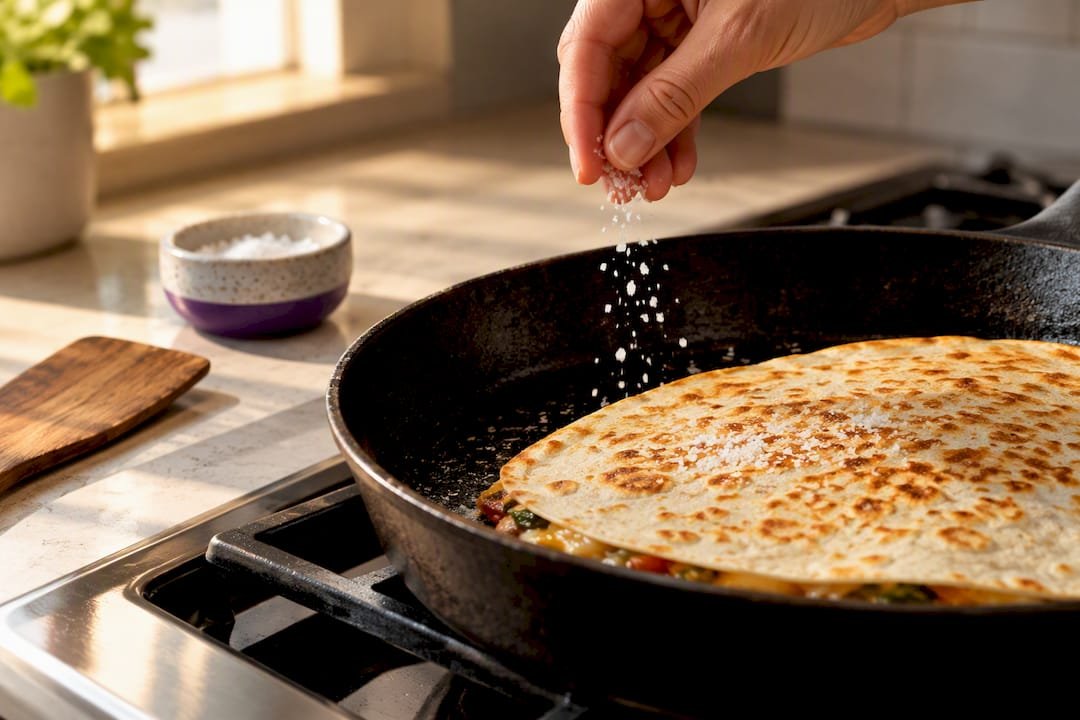
A written technique guide on cooking with huitlacoche and squash blossoms also recommends seasoning the filling itself, then lightly salting the outside of the tortilla right after you flip it. That second seasoning pass is easy to skip and makes a real difference in flavour.
Getting the crispiest, best-melted result
The order you build a quesadilla in changes how it cooks. Mixing the cheese directly into the other fillings, rather than layering cheese on the bottom and everything else on top, helps the whole mixture bind together instead of sliding out the first time you bite in, a point Serious Eats makes directly in its testing notes.
- Pan-fry with a little oil if you want a puffy, flaky crust with visible blistering.
- Dry-toast with no oil if you prefer a flatter, lightly smoky finish and a firmer bite.
- Press briefly on the hot surface before folding so the tortilla warms and relaxes, which cuts down on tearing along the fold.
- Cook two to three minutes per side over medium heat, then rest briefly on a rack instead of a plate so trapped steam doesn’t soften the crust.
- For batch cooking, use the oven or an air fryer: assemble the quesadillas on a baking sheet, press gently, and bake until golden and the cheese has melted, a method Food Network recommends for feeding a crowd at once.
Pro Tip: Stack assembled but uncooked quesadillas between sheets of parchment and refrigerate them briefly before cooking. They hold their shape better and are far easier to flip.
12 filling combinations you can copy tonight
Each of these follows the cheese-plus-one-or-two rule and notes any prep step worth doing ahead.
- Classic chicken: shredded chicken, Monterey Jack, mild salsa; medium heat.
- Carnitas: braised pork, Chihuahua cheese, pickled red onion; medium-high heat.
- Steak: sliced steak, Oaxaca cheese, roasted poblano; medium heat.
- Black bean and corn: black beans mashed slightly as a binder, corn, cheddar; mild, pairs well with lime crema.
- Spinach and Swiss: wilted and well-drained spinach, Swiss cheese, a pinch of nutmeg; mild.
- Squash blossom or huitlacoche: sautéed with epazote and onion until dry, paired with Oaxaca cheese, a traditional filling detailed by RecetasMexas, served with salsa verde when available seasonally.
- Shrimp and avocado: cooked shrimp, jack cheese, sliced avocado added after cooking so it stays cool; medium heat.
- Breakfast egg and potato: scrambled eggs, diced cooked potato, cheddar; cook in butter for extra flavour.
- BBQ pulled pork and cheddar: pulled pork drained of excess sauce, sharp cheddar, pickled jalapeños; medium-high heat.
- Mushroom and goat cheese: mushrooms cooked until dry, goat cheese, fresh thyme; mild to medium.
- Vegan chickpea “tuna”: mashed chickpeas with vegan mayo and celery, dairy-free cheese, a technique similar to the crisp fillings in this vegan wrap guide; mild.
- Dessert apple and caramel: thin apple slices cooked soft, a drizzle of caramel, cinnamon sugar on the outside of the tortilla instead of cheese.
For a loaded or “dirty” version, spread a thin layer of refried beans as a structural base, a trick that keeps loose toppings from spilling out, something Real Canadian Superstore’s product notes on bean spreads touch on when describing how bean pastes hold fillings together. If you’re building a vegetarian rotation, our guide to vegetarian Mexican protein options has more combinations that hit similar protein targets without meat.
What professional kitchens get right that home cooks often miss
Restaurant kitchens that handle volume tend to solve the same problems home cooks run into, just at scale.
- Press or warm your tortillas briefly before filling, the same reason fresh-pressed tortillas fold without cracking.
- Buy block cheese and shred it yourself instead of the pre-shredded bag, for the smoother melt already covered above.
- Take dietary restrictions seriously: staff trained on cross-contamination protocols is a small habit that matters if you’re cooking for someone with a gluten or dairy issue.
For a longer list of kitchen habits that translate directly to a home stove, our piece on fresh Mexican cooking at home goes further into daily prep routines.
A quick personal pick and an easy swap
My go-to is carnitas with Chihuahua cheese and pickled onion, the fat from the pork keeps the filling from drying out even if you’re slightly heavy-handed with the portion. If you can’t find Monterey Jack or Chihuahua, low-moisture mozzarella melts similarly and works as a straightforward substitute in almost any combo above.
— Austin
Order one instead of making it yourself
If cooking isn’t in the cards tonight, Burrito Splendido makes quesadillas to order with the same fresh-pressed tortillas and local cheese described above, so you get the results without the pan. Our menu has the current quesadilla options, and the catering page is worth a look if you’re feeding a group or managing a few dietary restrictions at once.

Ordering makes the most sense for parties, weeknights where nobody has 30 minutes to spare, or gatherings where you need vegan, gluten-free, and regular options handled correctly without juggling three separate pans.
Sources
- Dairy Farmers of Canada
- Serious Eats — spinach, black bean and chipotle quesadilla
- Growers Guide — epazote in Canada
- Food Network — loaded vegetable quesadillas
FAQ
What to put in a loaded quesadilla?
A loaded quesadilla typically starts with a thin layer of refried beans as a base, which helps hold everything together, then adds cheese plus two or three toppings like seasoned meat, pickled onion, and a fresh salsa. The key is keeping total filling within the 1/2 to 3/4 cup range for an 8 to 10 inch tortilla so it still seals properly.
What do people put in their quesadillas in Mexico?
Traditional fillings vary by region but often include squash blossoms or huitlacoche sautéed with epazote and onion, along with Oaxaca cheese, according to a regional technique guide. Simpler versions with just cheese, or cheese with mushrooms or shredded meat, are also common street-food staples.
What makes a really good quesadilla?
The best quesadillas use fresh-shredded, high-melt cheese, keep the filling proportion controlled so nothing leaks, and mix the cheese into the filling itself so it binds rather than falls out, a method Serious Eats recommends directly. Pre-cooking watery vegetables and adding a bright or crunchy element to balance the richness both make a noticeable difference.
What is a dirty quesadilla?
A “dirty” quesadilla usually refers to one cooked directly in a skillet with the cheese partly exposed to the pan, so the edges caramelize and get crisp and slightly charred against the metal. It is a texture-focused variation rather than a specific ingredient list, and it works well with any of the filling combinations covered above.