Al pastor and carnitas are both pork tacos, but the resemblance stops at the plate. Al pastor comes off a vertical spit with chili marinade and roasted pineapple, delivering a smoky, sweet char. Carnitas comes from pork simmered slowly in fat until it falls apart, then crisped, giving you a richer, more savoury bite. Pick al pastor for bright, spiced intensity; pick carnitas for deep, comforting pork flavour.
TL;DR:
- Al pastor uses a vertical spit and marinades with achiote, chilies, and pineapple, which tenderizes the meat and adds a smoky, sweet flavor, unlike carnitas’ slow-cooked pork in fat.
- Carnitas is made by simmering pork in lard with aromatics like orange and garlic, then crisped for a rich, savory taste, often yielding a more tender and flavour-concentrated bite.
- Al pastor’s roasting process results in less fat retention, making it slightly healthier than carnitas, which retains more fat due to its confit cooking method.
- Home preparation of al pastor requires thin slices and marination, while carnitas can be made using slow cookers or braising, with crisping many times done quickly at the end.
- The choice depends on preference for brightness and charred flavor versus deep, comforting richness, and equipment availability influences which method can be easily replicated at home.
Table of Contents
- Carnitas vs al pastor at a glance
- How is al pastor made?
- How are carnitas made?
- How do carnitas and al pastor taste different?
- Which is healthier: carnitas or al pastor?
- How do you choose between carnitas and al pastor?
- What chef tips make either taco taste more authentic?
- Both tacos tell an immigration story worth tasting, not arguing about
- Where to try both without picking a side
- Sources
- FAQ
Carnitas vs al pastor at a glance
The fastest way to tell these apart is by cooking method, not by ingredient list. Al pastor is grilled or roasted meat with a chili and pineapple marinade; carnitas is pork that’s been essentially confit-cooked in fat, then browned. Here’s how the main details stack up:
- Cooking method: Al pastor rotates on a trompo (vertical spit) or gets roasted/grilled; carnitas is slow-simmered in lard, then crisped.
- Typical cut: Al pastor often uses thin-sliced pork shoulder or leg; carnitas usually starts with a whole pork shoulder or butt.
- Marinade: Al pastor gets achiote, dried chilies, garlic, vinegar; carnitas is seasoned simply with citrus, garlic, and bay leaf.
- Pineapple’s role: Central to al pastor, both for flavour and tenderising; absent from traditional carnitas.
- Finishing step: Al pastor caramelises on the spit; carnitas gets a separate high heat crisp after braising.
- Toppings: Al pastor pairs with onion, cilantro, and a squeeze of lime; carnitas suits salsa verde, pickled onion, or a spoon of pan drippings.
How is al pastor made?
Al pastor’s roots trace back to Lebanese immigrants who brought shawarma to central Mexico in the twentieth century. Cooks swapped lamb for pork and added a Mexican-style marinade, and the vertical spit, or trompo, stuck around because it does something a flat grill can’t: it lets the outer layer of meat caramelise continuously while the inner layers keep cooking slowly, so the meat stays juicy while the edges char.
The marinade typically combines achiote paste, dried chilies like guajillo or ancho, garlic, vinegar or citrus, and warm spices such as cumin and clove. Two to twelve hours of marination is standard, though some cooks push it overnight for deeper colour and flavour.
Pineapple isn’t just garnish here. Fresh pineapple contains bromelain, an enzyme that breaks down proteins and helps tenderise the pork while it marinates, and its sugars balance the chili heat. Canned pineapple has been heated during processing, which deactivates the enzyme, so it won’t do the same job.
Without a trompo, you have options:
- Layer thin marinated slices tightly in a loaf pan and roast until the exterior crisps, then slice thin.
- Thread the pork onto skewers and grill, rotating often to mimic the spit’s rotation.
- Broil thin slices on a sheet pan, flipping once, for a faster weeknight version.
Pro Tip: Slice the pork thin before marinating, not after cooking. Thin cuts pick up more marinade surface area and crisp faster under a broiler, which gets you closer to true trompo texture at home.
How are carnitas made?
Traditional carnitas start in a cazo, a large copper pot filled with rendered lard. Pork shoulder or butt goes in whole or in large chunks and simmers gently for hours until it’s fall-apart tender, essentially a confit method where the fat both cooks the meat and carries flavour through it.
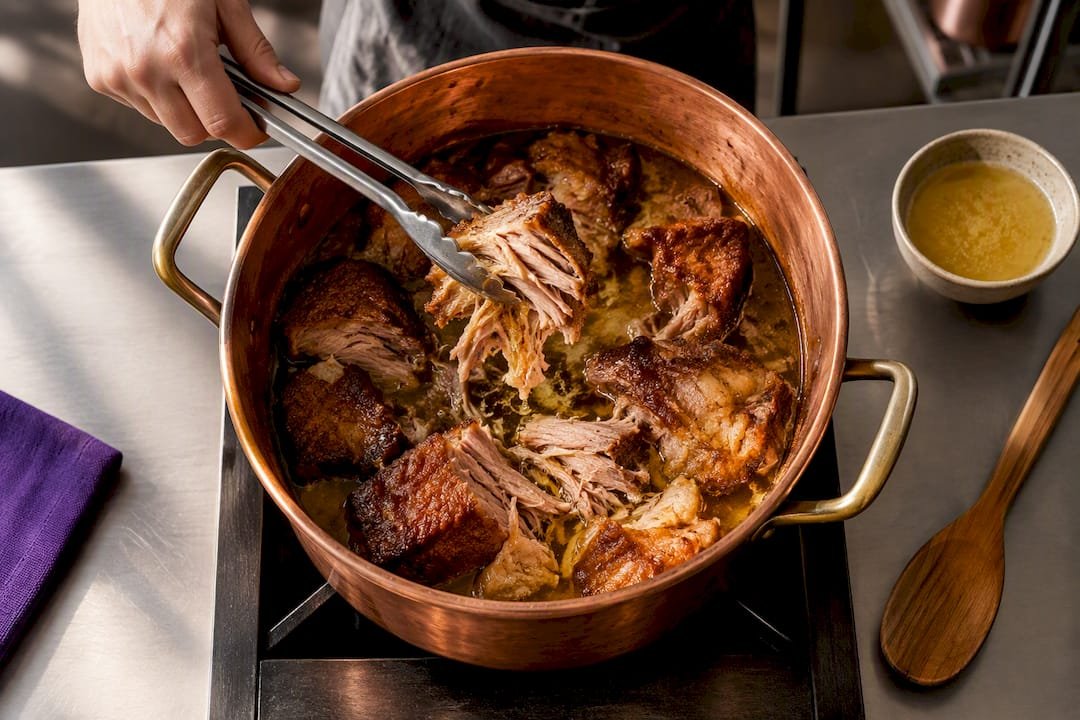
At home, a Dutch oven, slow cooker, or oven braise gets you most of the way there without a vat of lard. Sous-vide is another reliable route: it cooks the pork evenly at a controlled temperature, and you finish it under a broiler afterward to reintroduce crispness. That approach is more forgiving on timing than a stovetop braise and works well if you’re planning ahead.
Common aromatics include:
- Orange (juice and peel)
- Bay leaves
- Dried oregano
- Whole garlic cloves
- Sometimes a splash of milk or cinnamon, depending on the region
The fat does double duty. It keeps the meat moist through a long cook and picks up flavour from the aromatics, then bastes the pork as it renders. The finishing crisp is what separates carnitas from ordinary pulled pork: after shredding, you spread the meat on a tray and broil or pan-sear it briefly so the edges catch colour and crunch without drying out the tender centre.
Pro Tip: If you’re skipping the lard for a lighter version, use a mix of stock and a small amount of fat rather than water alone. A too-low fat ratio in the braising liquid leaves the meat drier once it’s shredded and crisped.
How do carnitas and al pastor taste different?
Al pastor tastes like sweet, smoky heat. The chili marinade brings warmth, the achiote adds an earthy edge, and the pineapple cuts through with acidity and sugar. Texturally, you get thin, slightly charred slices with crisp, caramelised edges and a chewier bite than carnitas.
Carnitas taste like pork, amplified. The fat-based cooking method concentrates flavour rather than diluting it, so what you get is a deep, savoury richness with tender shreds and pockets of crisp, browned bits scattered through.
Pairing tips worth knowing:
- Carnitas loves acid and herbs: salsa verde, pickled red onion, or a simple squeeze of lime cuts through the richness.
- Al pastor works well with grilled or roasted pineapple, a spicy salsa roja, or plain diced onion and cilantro to keep the brightness intact.
- If you’re serving both at once, put the richer carnitas first and the sharper al pastor second, so your palate doesn’t get fatigued by fat before the acid arrives.
Which is healthier: carnitas or al pastor?
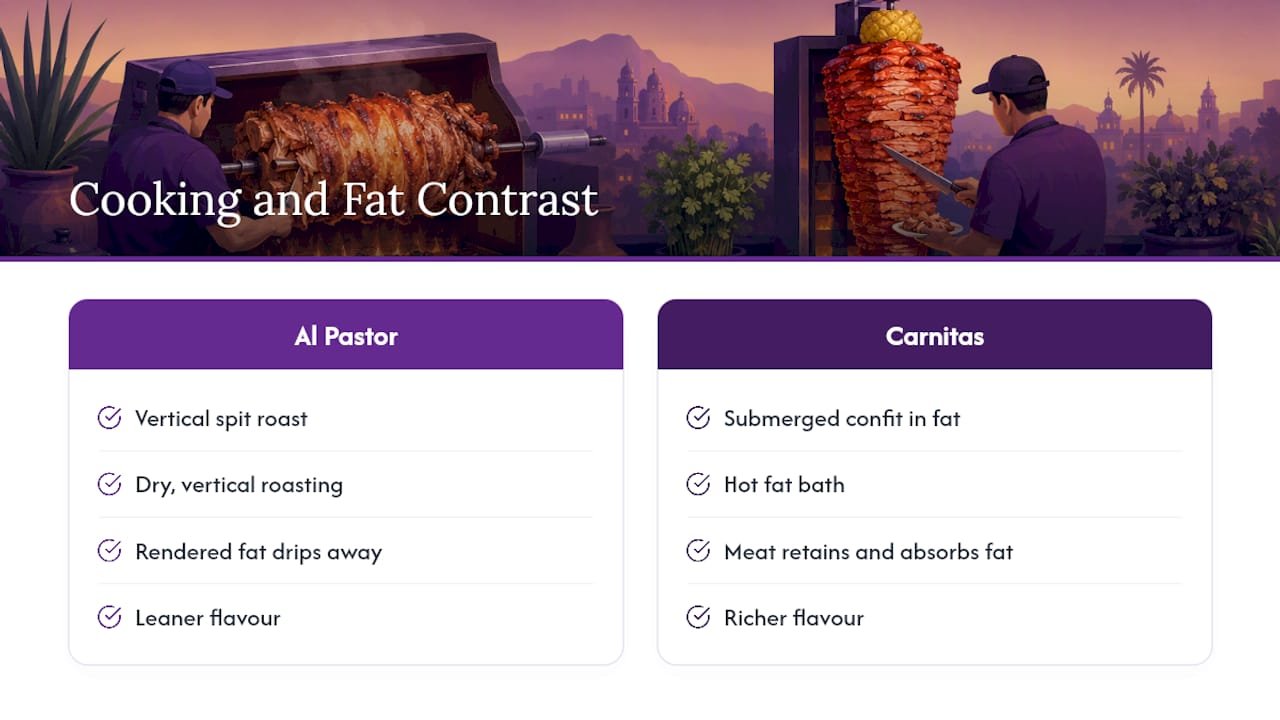
Cooking method drives the nutrition gap more than the meat itself. Al pastor loses fat as it roasts on a vertical spit, since much of the rendered fat drips away during cooking rather than staying in the meat. Carnitas, cooked in submerged fat, retains and absorbs more of it, which is exactly why the flavour runs richer.
Health Canada’s nutrient tables show roasted pork shoulder contains about 17–23 g total fat per 75 g serving, varying by trim, which can help when portioning either taco. If you want to lighten either dish, trim visible fat before cooking, ask for less lard-based sauce or drippings on carnitas, and watch tortilla size and topping volume rather than the meat itself. Burrito Splendido’s own carnitas calorie estimates fall in the 170 to 230 calorie range per 3 ounce portion, giving meal planners a concrete number to work from.
How do you choose between carnitas and al pastor?
Start with what you’re in the mood for. Bright, charred, and citrusy points toward al pastor; rich and slow-cooked comfort points toward carnitas.
- Check your equipment. A trompo is out of reach for most home cooks, but a broiler or a grill with skewers gets you close for al pastor. Carnitas only needs a Dutch oven, slow cooker, or oven.
- Think about your timeline. Al pastor needs marination time (a few hours minimum) plus a fast cook. Carnitas needs a long, mostly hands-off simmer, which makes it easier to start in the morning and forget about.
- Consider your crowd size. Carnitas scales well for a party because you can braise a large batch ahead and crisp it in portions as needed. Al pastor takes more assembly per serving but slices thin enough to prep in bulk and finish quickly.
What chef tips make either taco taste more authentic?
Getting restaurant-quality crisp edges at home usually comes down to one move: a short, hot finish after the main cook, whether that’s broiling carnitas on a tray or pan-searing al pastor slices for thirty seconds a side. Don’t skip this step and don’t overdo it. You want colour and crunch on the surface, not a dried-out centre.
- Warm your tortillas on a dry skillet or open flame, not the microwave, for better texture and flavour.
- Keep salsa options simple: one bright, acidic salsa and one spicier one covers both meats well.
- For catering or a family taco night, braise carnitas ahead of time and crisp it in small batches right before serving so it doesn’t dry out sitting in a warming tray.
- Slice al pastor thin and hold it warm in its own juices, then crisp only what you’re about to serve.
Both tacos tell an immigration story worth tasting, not arguing about
Al pastor exists because Lebanese immigrants brought shawarma to Mexico and cooks adapted it with local ingredients. That’s not a dilution of authenticity, it’s how cuisine actually evolves, the same way carnitas carries its own regional fingerprints depending on which part of Mexico you’re eating it in. Trying to crown one as more “real” than the other misses the point.
The more useful question isn’t which taco wins. It’s which one fits tonight’s craving, and whether you’re willing to babysit a spit or would rather let a pot do the work while you do something else.
— Austin
Where to try both without picking a side
You don’t need a trompo in your backyard or a cazo of lard on your stove to taste the real difference between these two tacos. Carnitas can be slow-cooked in-house daily using pork from local farms, hand-pulled and finished without shortcuts or deep frying.

If you’re curious how the confit method actually plays out in a kitchen you can walk into, the Burrito Splendido menu has carnitas ready to order alongside barbacoa and adobo chicken, so you can compare textures side by side instead of guessing from a recipe. Planning a bigger gathering? The Bueno Burrito Bar lets you build a taco spread for a group without doing the braising yourself. And if you’d rather learn the technique for your own kitchen, the step-by-step guide to making authentic tacos at home walks through the finishing tricks that make the difference between good and great. Either way, start by picking a location near you and ordering a carnitas taco this week.
Sources
- Tacos al pastor recipe — Serious Eats
- Health Canada nutrient data — meat and poultry
- Where did the taco come from? — Smithsonian Magazine
FAQ
Is al pastor the same as carnitas?
No. Al pastor is marinated pork cooked on a vertical spit or grilled, while carnitas is pork slow-cooked in fat until tender, then crisped. They share the pig but differ completely in seasoning, cooking method, and finished texture.
Is carnitas better than al pastor?
Neither is objectively better; they suit different cravings. Choose carnitas for rich, savoury comfort food, and al pastor when you want bright, spiced, charred flavour with a sweet edge from pineapple.
Is carnitas or al pastor healthier?
Al pastor tends to retain less fat because roasting on a spit lets rendered fat drip away, while carnitas absorbs more fat during its fat based cook. Health Canada’s data puts roasted pork shoulder around 17 to 23 grams of fat per 75 gram serving, which gives a useful reference point for either taco.
What is the difference between al pastor and carne asada?
Carne asada is grilled, thinly cut beef seasoned simply with salt, citrus, or a light marinade, while al pastor is pork marinated in chilies and achiote and cooked on a spit with pineapple. The two aren’t close cousins; different meat, different seasoning philosophy, and a completely different cooking method.
What sets barbacoa apart from carnitas?
Barbacoa is traditionally slow-cooked shredded beef, often wrapped and steamed or braised until tender, while carnitas is specifically pork cooked in fat and crisped. Burrito Splendido serves both, hand-pulled in-house daily, so you can taste the difference between beef barbacoa and pork carnitas on the same menu.