Burrito Splendido is a gluten-free-friendly option for eating in or catering in Winnipeg, with a kitchen and ingredients designed to accommodate dietary needs, but no restaurant should be treated as automatically safe. Winnipeg has several kinds of gluten-free options with different levels of risk, so before you visit or order, call ahead or check the menu online and leave a clear allergen note.
TL;DR:
- Dedicated gluten-free kitchens or restaurants with separate prep areas significantly reduce the risk of cross-contact, especially for those with celiac disease.
- Confirm details directly with the restaurant before ordering delivery, including the use of separate packaging, labeling, and handling procedures to prevent contamination.
- For high sensitivity, avoid third-party apps that do not verify kitchen practices and prioritize ordering directly from restaurants with transparent gluten-free protocols.
- In Manitoba, licensed caterers and mobile food vendors must meet standards that support safe gluten-free handling, such as proper storage, labeling, and staff training.
- Burrito Splendido’s gluten-free options include corn tortillas and labelling on catering trays, with a kitchen that avoids frying to reduce cross-contact risks.
Table of Contents
- What kinds of gluten-free dining options exist in Winnipeg
- How to find safe delivery and takeout options in Winnipeg
- Phone-ready safety checklist: what to ask before you order
- Delivery and catering rules that affect gluten-free safety in Manitoba
- How Burrito Splendido handles gluten-free orders and catering
- Local gluten-free support groups and where to get updated recommendations
- Using apps and online tools to find gluten-free options in Winnipeg
- Managing cross-contamination when dining with non-gluten-free companions
- Getting personalized advice from a local dietitian
- Why sourcing and training matter more than a gluten-free label
- Order or book gluten-free with Burrito Splendido
- Sources
- FAQ
What kinds of gluten-free dining options exist in Winnipeg
Not every “gluten-free” listing means the same thing, and knowing the category helps you judge the risk before you sit down or place an order.
- Dedicated gluten-free bakeries and kitchens prepare everything without wheat, barley or rye on-site, so cross-contact risk is lowest.
- Fully gluten-free restaurants run an entire menu without gluten ingredients, though shared delivery bags or takeout containers from other vendors can still introduce traces.
- Gluten-free-friendly mainstream restaurants offer separate items or swaps within a menu that also serves wheat-based food, which means shared fryers, grills or prep counters are the main variable to ask about.
- Delivery, catering and mobile food vendors add transport, packaging and staff training into the risk picture, on top of whatever kitchen practices they already follow.
For someone managing celiac disease, dedicated gluten-free kitchens or restaurants with documented separate prep areas carry the least risk, because there is no wheat in the building to cross into your meal. Diners with lower sensitivity, such as those avoiding gluten for comfort rather than an autoimmune reaction, often do fine at gluten-free-friendly mainstream restaurants that take labelling seriously.
Tourism Winnipeg’s own gluten-free dining guide lists a mix of dedicated bakeries and gluten-free-friendly restaurants across the city, and notes that practices vary enough that checking directly with each venue is still worthwhile. Directory sites such as OpenTable’s Winnipeg roundup show a similar pattern: plenty of venues advertise gluten-free items, but the depth of their safety protocols differs widely from one kitchen to the next.
The rule of thumb is simple. If you have celiac disease or a severe sensitivity, lean toward dedicated gluten-free operations or restaurants that can describe their cross-contact controls in detail without hesitating. If your needs are more flexible, a gluten-free-friendly mainstream restaurant with a clearly marked menu and a kitchen willing to answer questions is usually workable. Either way, the venue type only tells you what to expect. The actual protocol, discussed below, tells you whether it is safe for your body.
How to find safe delivery and takeout options in Winnipeg
Ordering gluten-free food for delivery adds a layer of risk that dine-in meals do not have, because you lose the chance to ask questions face to face and you are trusting packaging and handling you cannot see.
Dietary filters on delivery apps are a starting point, not a guarantee. They are usually built from restaurant-submitted menu tags, which means a filter can flag an item as “gluten-free” even when the kitchen has no dedicated prep process behind that label. Treat the filter as a way to narrow your search, then verify the details yourself.
- Check the online menu first for any gluten-free notes, ingredient lists or allergen statements before adding items to your cart.
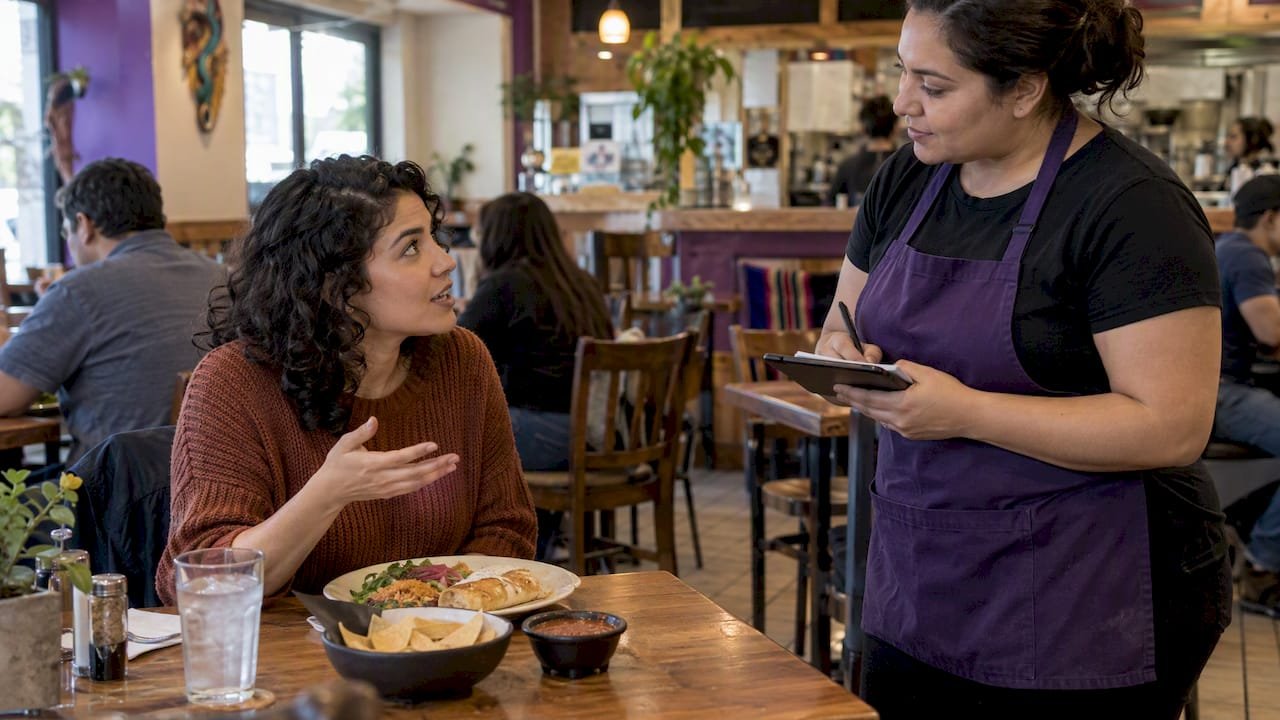
- Call the restaurant directly if the app does not let you leave allergen instructions, and confirm the kitchen can accommodate your request that day.
- Add a written note to your order asking for separate packaging and a label identifying the gluten-free item, especially when other dishes in the same order contain wheat.
- Order directly from the restaurant’s own site or phone line rather than a third-party app when your sensitivity is high, since direct orders usually reach kitchen staff faster and more clearly than a forwarded app ticket.
- Skip third-party delivery entirely for very high-sensitivity needs if a restaurant cannot confirm how it prevents cross-contact in transit, and consider picking the order up yourself instead.
Celiac Canada’s guidance on dining out safely applies just as much to delivery as it does to sitting down at a table: a menu label alone is not enough, and a quick phone call before you order is often the difference between a safe meal and a reaction.
Phone-ready safety checklist: what to ask before you order
A short phone call can tell you more about a kitchen’s gluten-free practices than any menu icon. Ask these questions before you commit to a restaurant or caterer.
- Do you use a dedicated fryer, or does gluten-free food share oil with breaded items?
- Is there a separate prep area or designated cutting board and utensils for gluten-free orders?
- Have staff been trained specifically on cross-contact prevention, not just on which menu items are gluten-free?
- Do you have a written procedure for gluten-free orders, or is it handled case by case?
- What brands do you use for staples like tortillas, sauces and seasonings, and have you checked their labels for gluten?
- How is a gluten-free order labelled once it is plated or packaged?
Celiac Canada’s State of Celiac Survey found that a majority of respondents avoid certain restaurants specifically because of cross-contamination risk, which is a strong signal that vague answers to these questions should be taken seriously rather than brushed off.
Watch for a few red flags: a server who answers “gluten-friendly” without being able to explain what that means, a kitchen that cannot describe how it separates equipment, or a shared fryer used for both breaded and gluten-free items with no mitigation step mentioned. Health Canada and Celiac Canada’s own labelling guidance points out that a genuine gluten-free claim in Canada corresponds to under 20 parts per million of gluten, so a menu that only says “may contain” gluten is a different category of risk than one that carries an actual gluten-free claim.
At the table, it is reasonable to ask that your dish be prepared and served first, before any wheat-containing items go out, and that the kitchen uses a clean set of utensils and gloves for your order.
Pro Tip: Ask for your gluten-free item to be labelled on the ticket or container itself, not just described verbally, so nothing gets mixed up between the kitchen and your table.
Delivery and catering rules that affect gluten-free safety in Manitoba
Provincial rules do not mention gluten specifically, but the equipment, training and documentation they require have a direct effect on how safely a caterer or mobile vendor can handle a gluten-free order.
Manitoba’s Mobile Food Service Establishment guideline requires operators to hold an annual health permit and to meet standards for food storage, temperature control, equipment and staff training. Those same requirements, applied well, are exactly what supports safer gluten-free handling: trained staff are more likely to understand cross-contact, and proper equipment separation is easier to maintain when a kitchen already meets provincial storage and handling standards.
Manitoba’s caterer guideline goes a step further, requiring caterers to describe where and how food will be stored, prepared and transported before they can register. That documentation is a useful thing to ask about directly.
- Ask whether the caterer holds a current Manitoba permit and how recently it was renewed.
- Ask what containers are used to transport gluten-free trays separately from wheat-containing dishes.
- Ask whether gluten-free trays are labelled visibly for guests and staff at the event.
- Ask whether a supervisor checks trays before service, rather than leaving it to whichever staff member is closest.
Serving gluten-free trays first and labelling them clearly, rather than relying on a mixed self-serve table, meaningfully lowers cross-contact risk, a practice drawn from Celiac Canada’s food service guidance for institutional and event settings. Documented procedures and visible labelling matter because they remove guesswork for both staff and guests at a busy event.
How Burrito Splendido handles gluten-free orders and catering
Burrito Splendido operates a kitchen without frying, aiming to reduce cross-contact points common in Mexican-style menus. The menu includes gluten-free, vegan, keto and paleo options integrated alongside other items.
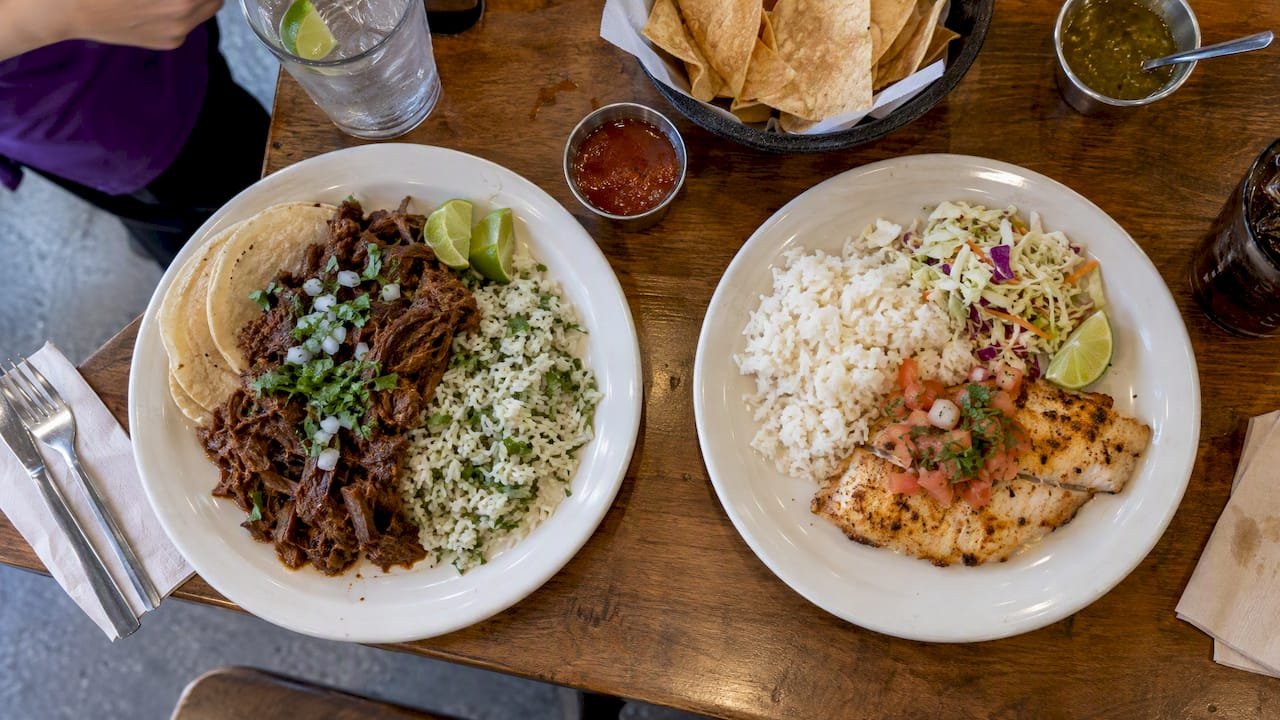
- Naked burrito bowls and most protein and topping combinations can be built gluten-free by skipping the flour tortilla.
- Corn-based options give you a tortilla swap without losing the format of a taco.
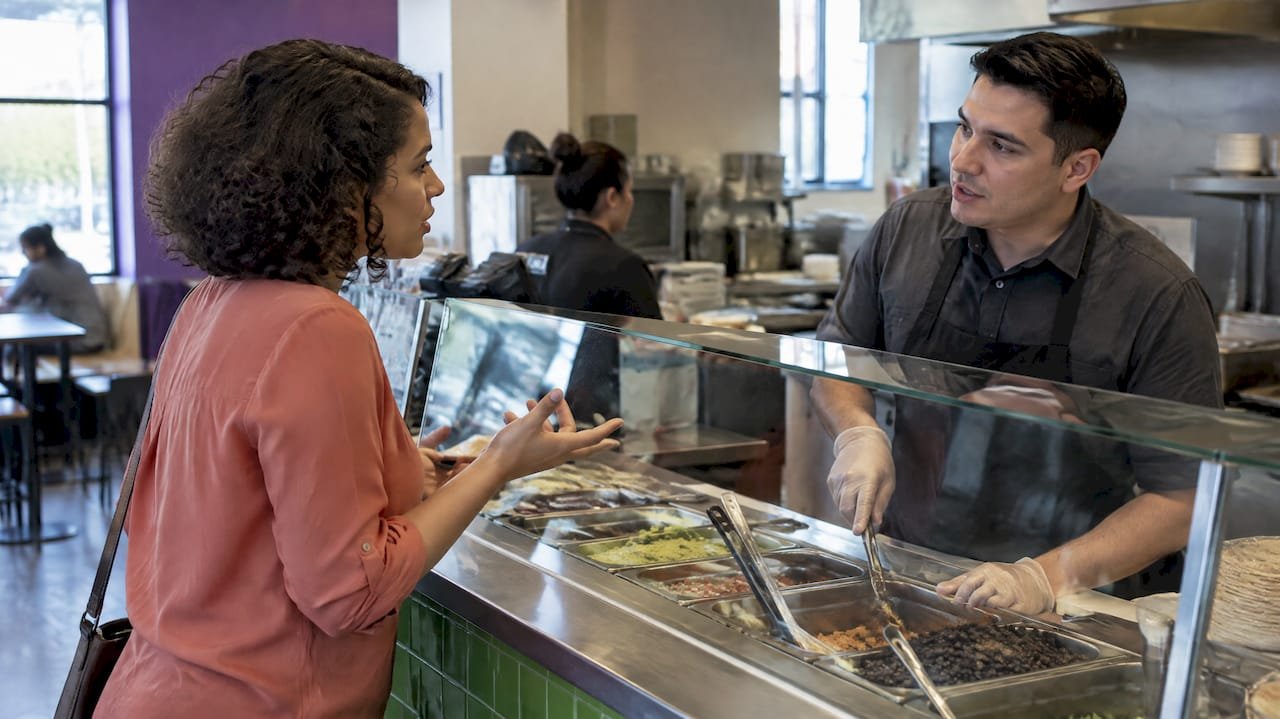
- Staff can walk you through which sauces and seasonings are gluten-free when you ask at the counter or over the phone.
- Catering orders can be briefed in advance so trays are prepared and labelled with your group’s dietary needs in mind.
When ordering by phone or online through the menu, note your allergen needs clearly, ask which proteins and sides are prepared without gluten-containing ingredients, and confirm at pickup or delivery that your order is labelled. Our checklist for what to look for at Mexican restaurants covers the same questions in more depth if you want to compare notes across venues. For anyone managing paleo or other restrictions alongside gluten-free needs, our guide to ordering paleo Mexican food walks through safe swaps.
For catering, gluten-free trays are separated and labelled for events, with transport and setup details planned with event contacts, reflecting best practices recommended for institutional settings. Understanding exactly how cross-contact happens in a kitchen, covered in our explainer on gluten cross-contamination, helps you ask sharper questions of any caterer, including ours.
A significant share of restaurant-goers with celiac disease report that cross-contamination worries limit where they can eat, according to Celiac Canada’s State of Celiac Survey, which is exactly why a deep-fryer-free kitchen and documented staff training are practical, not just marketing details.
Local gluten-free support groups and where to get updated recommendations
Winnipeg diners managing celiac disease or gluten sensitivity do not have to rely on restaurant listings alone. Celiac Canada operates as a national patient organization with resources, dining guidance and survey data specific to the Canadian celiac community, and its website is a good first stop for anything from newly diagnosed questions to restaurant safety advice.
Local and regional celiac support groups, often organized informally through community boards, social media groups or Celiac Canada’s own chapter network, can offer more current, on-the-ground recommendations than a static directory, since members regularly share updates when a restaurant’s practices change or a new gluten-free bakery opens. These groups are also a useful place to ask about a specific venue before you commit to a reservation, since firsthand reports from people managing the same condition tend to be more detailed than a general online review.
Checking in with a support group every so often is worth doing even if you already have a list of trusted spots, because kitchen staff, menus and suppliers change, and a restaurant that was safe a year ago may not have kept the same protocols in place.
Using apps and online tools to find gluten-free options in Winnipeg
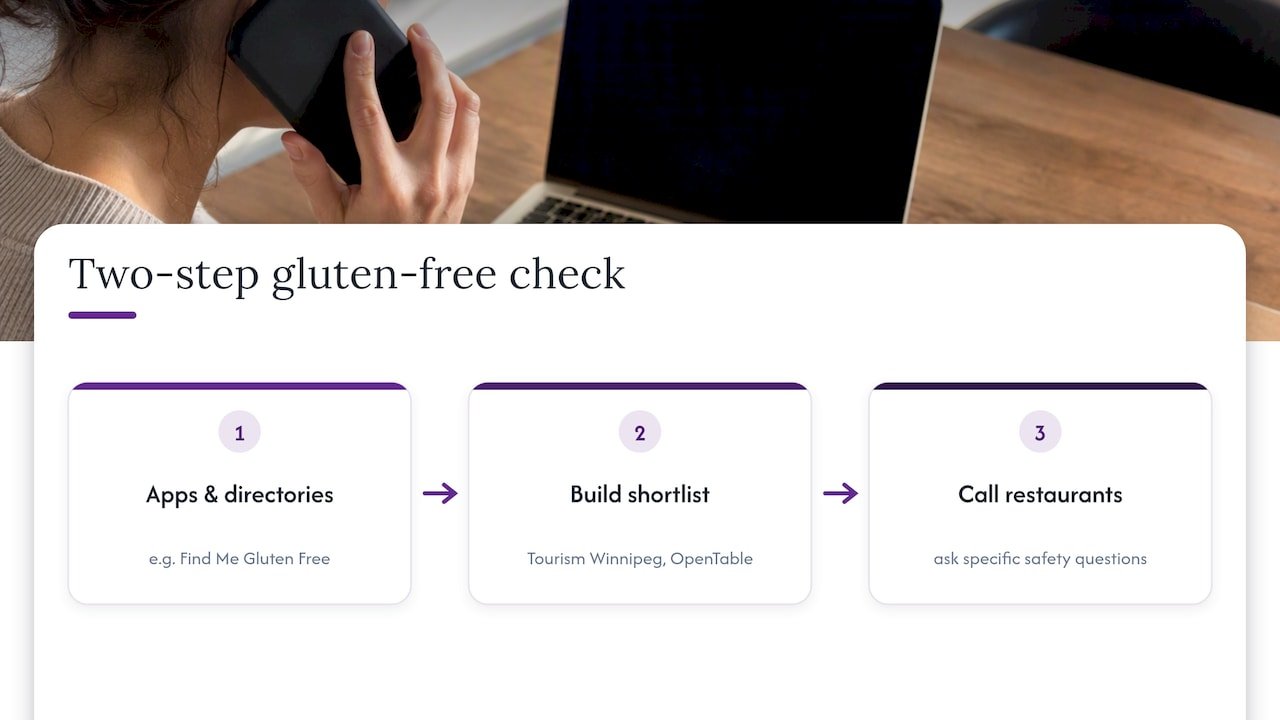
A handful of online tools can help narrow down where to eat, though none of them replace a direct call to the restaurant. Apps like Find Me Gluten Free rely on user-submitted reviews and ratings for specific locations, which makes them useful for spotting patterns (a restaurant with consistently positive gluten-free reviews is a reasonable starting point) but unreliable for anything more specific than that.
Delivery platforms with dietary filters work the same way: they surface restaurants that have tagged menu items as gluten-free, but the filter reflects what the restaurant submitted, not an independent safety check. Local directories and roundups, including Tourism Winnipeg’s gluten-free guide and OpenTable’s list of gluten-free restaurants, are helpful for building a shortlist of Winnipeg venues to research further.
Treat every app or website result as step one of a two-step process. Step two is always confirming directly with the restaurant, ideally with the specific questions covered in the phone checklist earlier in this guide. That combination, a shortlist from an app or directory followed by a direct call, tends to produce far better results than trusting either source alone.
Managing cross-contamination when dining with non-gluten-free companions
Eating out with friends or family who do not need to avoid gluten adds its own set of risks, especially at shared tables, buffets or family-style meals where dishes and serving utensils overlap.
At a sit-down restaurant, ask your server to have your gluten-free dish prepared with clean utensils and plated separately from shared appetizers or bread baskets. If the table is ordering shared plates, request that your portion be plated in the kitchen before the shared dish reaches the table, rather than serving yourself from a communal platter that others have already used utensils in.
At home or at a potluck-style gathering, keep a separate serving spoon for gluten-free dishes and store them away from bread, crackers or other obvious gluten sources. Crumbs are a common and easy-to-miss source of cross-contact: a shared butter dish, toaster or cutting board can pick up gluten from someone else’s meal without anyone noticing.
When ordering delivery for a group where only one person needs a gluten-free meal, request that the gluten-free item be packaged separately and labelled, since mixed bags are more prone to leaks or contact between containers than clearly separated ones. The same principle from the catering section, label and separate rather than assume, applies just as well to a dinner table shared with people who do not need to think about gluten at all.
Getting personalized advice from a local dietitian
General guidance covers most situations, but a registered dietitian can build a plan around your specific health needs, especially if you were recently diagnosed with celiac disease or are managing another condition alongside gluten sensitivity. Manitoba residents can access registered dietitians through community health centres, hospital outpatient programs or private practice, and a referral from a family doctor is often the fastest way to connect with one who has experience in celiac management.
Celiac Canada’s own resources are built with input from healthcare professionals and can help you understand what questions to bring to a dietitian appointment, particularly around reading labels, understanding hidden gluten sources and adjusting a diet that may have relied heavily on wheat-based staples. A dietitian can also help address nutritional gaps that sometimes come with a new gluten-free diet, since cutting out wheat products without a plan can reduce fibre and certain vitamin intake if replacement foods are not chosen carefully.
If your goal is simply eating out more confidently rather than a full nutrition plan, a single consultation focused on dining strategies and label reading is often enough to build lasting confidence at restaurants and grocery stores alike.
Why sourcing and training matter more than a gluten-free label
I’ve spent enough time around Winnipeg’s food scene to notice a pattern: the restaurants that handle gluten-free requests well are almost always the same ones that care about where their ingredients come from in the first place. When a kitchen knows exactly what is in its tortillas, its seasoning blends and its sauces, because it made most of them itself, answering a gluten-free question becomes straightforward instead of a guessing game.
That is part of why Burrito Splendido’s approach to sourcing, from Manitoba flour to house-made salsas, connects directly to safer dining rather than sitting apart from it as a separate concern. Staff who are trained on ingredients tend to be better prepared to answer cross-contact questions honestly, including saying “I’m not sure, let me check” instead of guessing.
Transparency should feel simple: a straight answer to a direct question, not a vague reassurance.
— Austin
Order or book gluten-free with Burrito Splendido
If you want a Winnipeg meal or catered event without spending your afternoon on the phone chasing down cross-contact answers, A deep-fryer-free kitchen, freshly made tortillas, and staff trained on dietary requests support safer gluten-free ordering.
Browse the menu to see gluten-free-friendly items before you order, or check the catering page if you are planning an event where gluten-free trays need to be labelled and kept separate. Either way, leave a note on your order about your dietary needs, and a member of staff can confirm the details before your food is prepared.
Sources
Wheat, barley and rye are the obvious ones, but gluten shows up in places that are easy to miss on a restaurant menu. Soy sauce, unless labelled gluten-free or tamari-based, typically contains wheat. Thickened soups and gravies often use flour as a base. Breaded or battered proteins, even when the sauce or seasoning is gluten-free, carry gluten from the coating itself.
Cross-contact is the other half of the problem. A fryer used for both breaded and non-breaded items, a grill that cooks bread alongside other proteins, or a cutting board used for sandwiches earlier in a shift can all transfer gluten to a dish that contains no gluten ingredients on paper. Seasoning blends and pre-made sauces are worth asking about specifically, since some use wheat-based fillers as an anti-caking agent that would not be obvious from the dish’s name.
Inspection Canada’s guidance on food allergens and gluten recommends that food processors use dedicated production lines where possible and validated cleaning procedures when they are not, precisely because these hidden contact points are so easy to overlook otherwise. The same logic applies at restaurant scale: a kitchen that has thought through scheduling and cleaning between gluten and gluten-free items is meaningfully safer than one that has not.
- Dining Out with Celiac Disease: Navigating Challenges and Enjoying Meals Safely – Celiac Canada
- Mobile Food Service Establishment Guideline – Manitoba Health
FAQ
What is the best gluten-free restaurant in Winnipeg?
There is no single official ranking of Winnipeg’s gluten-free restaurants, and needs vary by sensitivity level. There are local options with kitchens and ingredients that accommodate gluten-free needs, but confirming current protocols directly with any restaurant is still worthwhile.
What restaurant has the best gluten-free menu?
The strongest gluten-free menus tend to come from kitchens that build dietary options into the menu from the start rather than adapting existing dishes. Some menus include gluten-free, vegan, keto and paleo choices integrated across their lineups as part of a dietary-inclusive approach.
Which city in Canada is best for eating gluten-free?
No official source ranks Canadian cities for gluten-free dining, so this varies by personal experience and available options. Winnipeg has a mix of dedicated gluten-free bakeries and gluten-free-friendly restaurants, according to Tourism Winnipeg’s local guide, though calling ahead is still recommended.
Where can I find gluten-free wings in Winnipeg?
Gluten-free wings depend on whether the sauce and coating avoid wheat-based ingredients, so it is worth asking directly rather than assuming from the menu description. Checking whether the kitchen uses a shared fryer for breaded items is the key question, since that is the most common cross-contact point for wings.
How do I safely order gluten-free from a Mexican restaurant in Winnipeg?
Ask which proteins, sauces and tortillas are prepared without gluten, and confirm whether the kitchen uses a dedicated fryer or shared equipment. Some restaurants offer naked bowls and corn-based options as gluten-free swaps, with staff available to confirm ingredient details when ordering by phone or in person.