The fastest way to tell these dishes apart is the broth. Birria is defined by its red, chile-based consomé and stew-like format, while barbacoa is a pit- or leaf-braised meat that stays mostly dry and meat-forward. Both dishes now commonly use beef, so the cooking method and the presence of broth, not the meat itself, is what actually separates them.
TL;DR:
- Birria uses a chile-based broth and stew method, producing a rich consomé, while barbacoa relies on slow steaming in wraps with minimal liquid.
- Traditionally, birria comes from Jalisco with goat meat, while barbacoa originates from central highlands using various meats cooked in pits or leaves.
- Beef now commonly replaces goat in both dishes, with slow-cooker, pressure cooker, or oven methods used to mimic traditional cooking times and techniques.
- Birria’s flavor is chile heat and tangy vinegar, whereas barbacoa has earthy, smoky notes with less sauce and more focus on meat texture.
- To identify them, look for red broth for birria, wet versus dry meat, smoky scent for barbacoa, and dippable tacos with broth versus drier ones.
Table of Contents
- What birria and barbacoa actually are
- Where each dish comes from and what meat it traditionally uses
- How the cooking methods and ingredients differ
- What each dish tastes and smells like
- How to tell them apart on a menu or at the table
- How beef, quesabirria, and kitchen shortcuts changed both dishes
- How Burrito Splendido approaches barbacoa in a fast-casual kitchen
- Choosing between birria and barbacoa
- Why the confusion over these two dishes persists
- Try a hand-pulled barbacoa dish without the hours of prep
- Sources
- FAQ
What birria and barbacoa actually are
Birria is a stew built on an adobo of dried chiles, vinegar, and spices, with the meat seared and then simmered in that same liquid until it becomes a rich consomé. Barbacoa is a pit- or leaf-wrapped braise where meat cooks slowly with minimal liquid, producing tender, sheddable meat rather than a bowl of soup, much like the traditional Cochinita Pibil slow-cooked, leaf-wrapped dishes. The two names have overlapped historically: birria began as a regional term used where others said barbacoa, and the line between them blurred for generations before popular use split them into separate dishes.
Where each dish comes from and what meat it traditionally uses
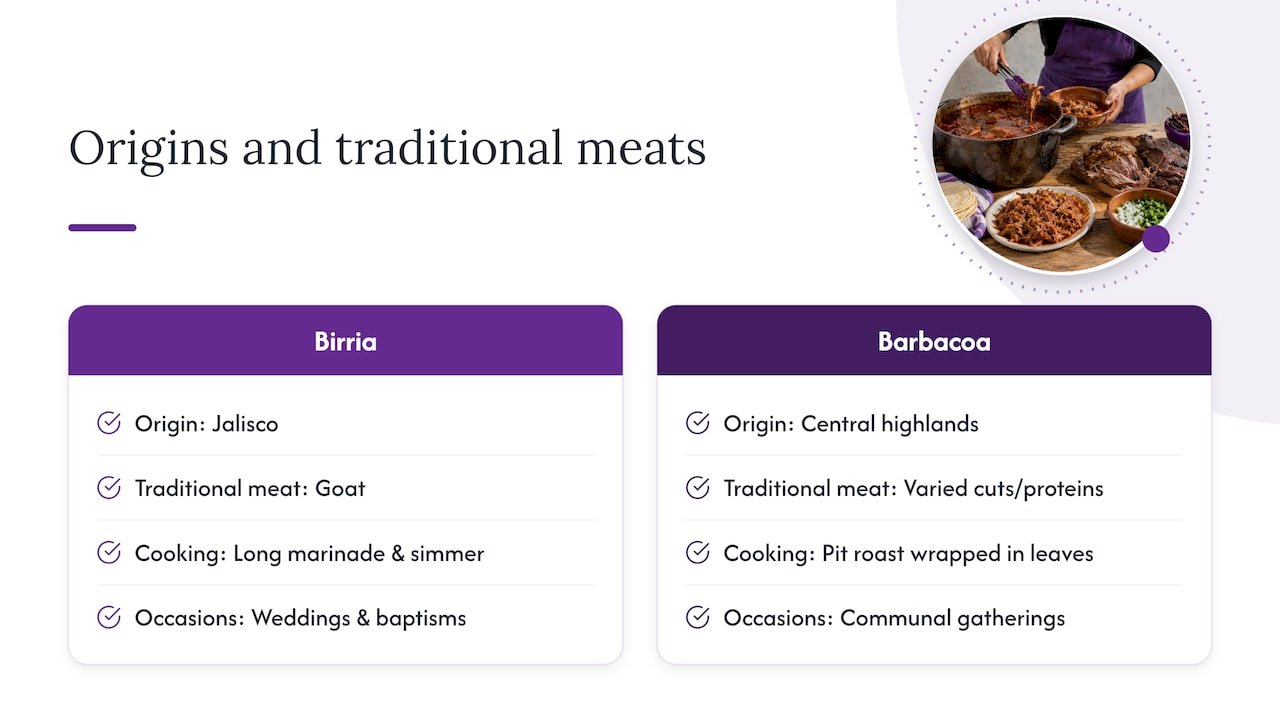
Birria traces back to Jalisco, where goat was the traditional meat, chosen partly because it was tough, affordable, and needed the long marinade and simmer that birria provides. It shows up at weddings, baptisms, and other celebrations where a slow-cooked stew could feed a crowd. Barbacoa has roots further into the central highlands, where meat (and historically other proteins) was wrapped in maguey or banana leaves and cooked in an earthen pit, a technique built around whatever cuts were on hand and the slow, steady heat of buried coals. Geography and the cost of meat shaped both traditions more than any fixed recipe did, which is part of why the traditional meats used across Mexican cooking vary so much by region.
How the cooking methods and ingredients differ
Birria starts with dried chiles like guajillo and ancho, toasted and blended into an adobo with vinegar and warm spices, then the meat is seared before it simmers for hours in that same liquid until the broth thickens into consomé. Chuck, short ribs, and oxtail all work well because their collagen breaks down into the broth, adding body. Barbacoa relies on wrapping, typically in maguey or banana leaf, then slow-braising with very little added liquid so the meat steams in its own juices, traditionally including cuts and organ meats that benefit from long, low heat. Home cooks without a pit or leaves can get close with:
- A slow cooker for an 8 to 10 hour low braise that mimics pit timing without the smoke.
- A pressure cooker or Instant Pot to cut cooking time to under two hours while still tenderizing tough cuts.
- A covered Dutch oven in a low oven, which keeps moisture in and approximates the steaming effect of leaf wrapping.
Each shortcut trades some smokiness or depth for convenience, which matters more for barbacoa than for birria since birria’s flavour lives mostly in the adobo rather than the cooking vessel. For a deeper look at ingredient sourcing and technique, see this guide to fresh Mexican cooking at home.
What each dish tastes and smells like
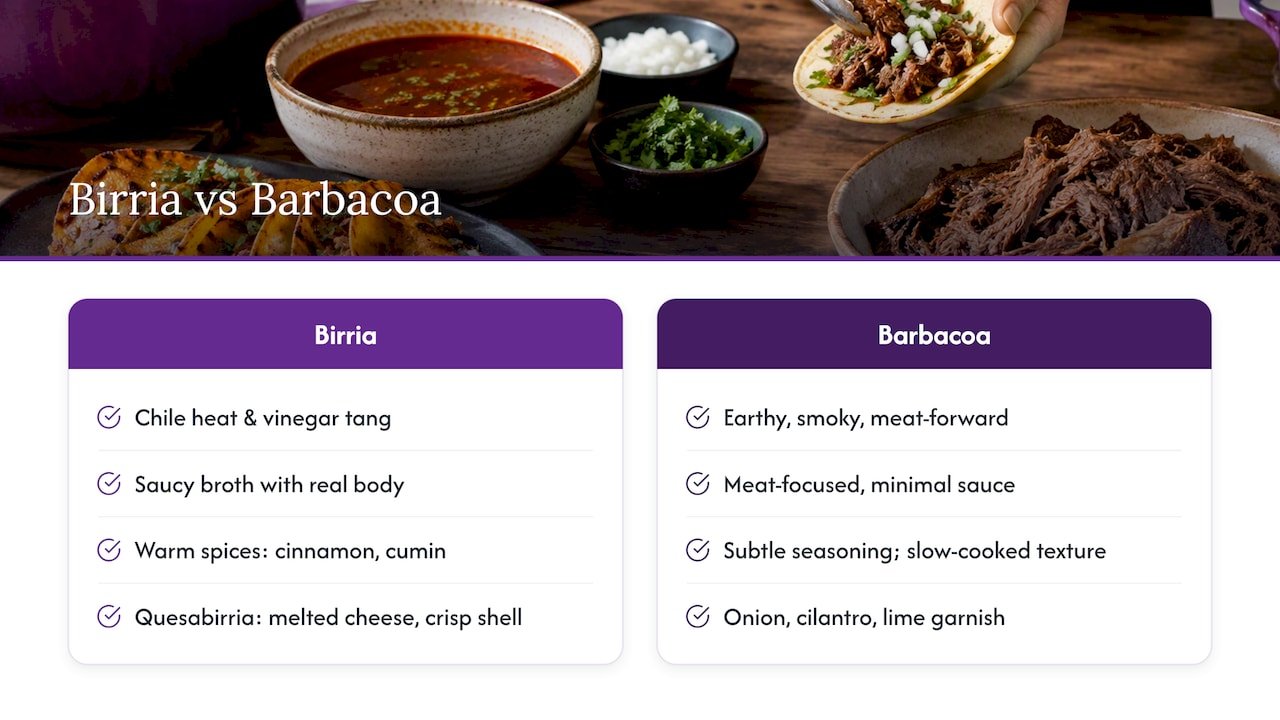
Birria carries direct chile heat, a tang from the vinegar in the adobo, and warm background spices like cinnamon and cumin, all suspended in a broth with real body. Barbacoa is earthier and smokier, built around the meat itself rather than a sauce, with subtler seasoning that lets the slow-cooked texture do the work. Garnishes shift the picture further: quesabirria adds melted cheese and a pan-fried shell, while barbacoa tacos usually stick to onion, cilantro, and a squeeze of lime, keeping the focus on the meat.
How to tell them apart on a menu or at the table
Four checks settle most cases before the first bite:
- Look for a side of red broth or consomé. Its presence almost always means birria.
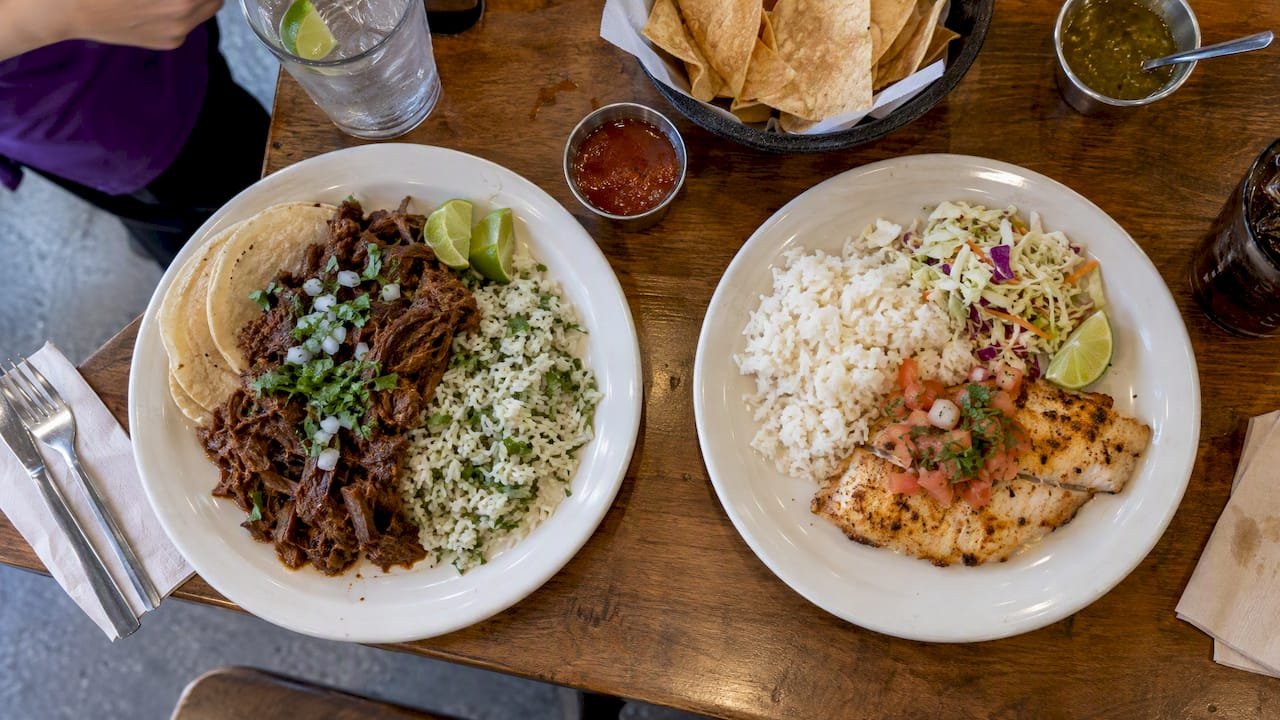
- Check whether the meat looks wet and saucy or dry and shredded. Dry, pulled meat points to barbacoa.
- Smell for a smoky or earthy aroma versus a Chile-forward, slightly tangy one. Smoke suggests barbacoa; tang suggests birria.
- Notice the taco style: a dippable taco served alongside a cup of broth is birria, while a simply dressed, drier taco is barbacoa.
Pro Tip: If you are unsure, just ask whether a consomé comes with the dish. It is the quickest way to confirm birria on the spot.
How beef, quesabirria, and kitchen shortcuts changed both dishes
Beef has largely replaced goat in both dishes because it is cheaper and easier to source outside the regions where goat is common, though it produces a milder, less gamey result. Quesabirria kept the defining habit of dipping into consomé but added melted cheese and a crisped, pan-fried tortilla, a format that spread quickly once it went viral online. Pressure cookers and ovens shortened cooking times for both dishes, which works well for birria’s broth-based method but can leave barbacoa a little less smoky than a true pit preparation.
How Burrito Splendido approaches barbacoa in a fast-casual kitchen
Running a fast-casual format means the slow-braise happens ahead of service so the texture and tenderness of a long cook are ready the moment an order comes in, without asking a customer to wait hours for it. That balance of traditional technique and daily consistency is also covered in this guide to barbacoa for home cooks, which walks through the same slow-cook logic at a kitchen scale anyone can replicate.
Choosing between birria and barbacoa
Choose birria when you want a brothy, highly seasoned bowl or a dippable taco with real chile heat. Choose barbacoa when you want a meat-forward taco with smoky, earthy notes and little mess from sauce. Availability matters too: goat birria is harder to find outside regions where it is traditional, and true pit-style barbacoa is rare outside specialty kitchens, so beef versions cooked in a slow cooker or oven are the realistic choice for most home cooks.
Why the confusion over these two dishes persists
Most of the confusion around birria and barbacoa comes from treating “goat versus beef” as the dividing line, when the cooking method was always the real distinction. Birria is a sauce built into a stew, barbacoa is a technique built around steam and slow heat, and the meat inside either one can change without changing what the dish fundamentally is. The bigger mistake home cooks make is chasing authenticity through ingredients alone, like insisting on goat or a literal pit, when the chile adobo for birria and the moisture-trapping wrap for barbacoa matter more to the final result than the protein itself. If you are deciding what to cook or order, pay attention to the broth and the braise, not the species on the label. That single shift in focus will make menu descriptions, recipes, and your own kitchen experiments far easier to judge.
— Austin
Try a hand-pulled barbacoa dish without the hours of prep
If reading about slow braises has you craving the real thing, Shredded beef barbacoa can be slow-cooked and hand-pulled daily, built on the same technique covered above but ready to order quickly.
Our menu includes barbacoa in burritos, bowls, and tacos, and our catering services can bring that same hand-pulled barbacoa to a larger group or event.
- Order barbacoa tacos or a burrito bowl for a quick, no-prep version of the dish.
- Group orders may be accommodated by catering packages available from some providers.
- Check the catering page for delivery, set-up, and staffing details relevant to your event.
FAQ
Are birria and barbacoa the same thing?
They are related but not the same: birria is a chile-based stew with a broth called consomé, while barbacoa is a pit- or leaf-braised meat with little to no broth. The two terms overlapped historically in some regions, which is part of why people still mix them up today.
Does beef barbacoa taste like birria?
Beef barbacoa tastes earthier and smokier, while birria carries chile heat and tang from its adobo and vinegar base. Even when both use beef, the broth in birria and the dry, shredded texture of barbacoa keep their flavours distinct.
How unhealthy is birria?
Birria’s nutritional profile depends heavily on the cut of meat, the amount of oil in the adobo, and how much consomé you drink alongside it, so there is no single fixed answer. Choosing leaner cuts and going light on the dipping broth is the simplest way to keep a serving lighter.
Can you use barbacoa for birria?
You can use barbacoa-style shredded meat as a shortcut, but it will miss the chile adobo and the long simmer that give birria its consomé and tang. For a closer result, finish pre-cooked shredded meat in a quick birria-style sauce made from toasted chiles, vinegar, and spices before serving.