A graduation taco bar is one of the most reliable ways to feed a mixed crowd of teenagers, grandparents, and gluten-free cousins without anyone standing in line for twenty minutes. Pick one or two proteins, estimate portions before you shop, map a single-direction serving flow, and set up hot and cold holding before the first guest arrives. For hosts who would rather skip the logistics entirely, Burrito Splendido’s catering packages offer a turnkey alternative worth considering.
TL;DR:
- Use chafing dishes or crockpots to keep proteins warm and ensure temperatures stay above 60°C, preventing bacterial growth.
- Limit the protein options to two, such as carnitas and adobo chicken, to speed up line flow and accommodate most dietary preferences.
- Plan for roughly 0.5 pounds of cooked protein and 2 to 3 tortillas per guest, adjusting upward for teens or longer parties.
- Label allergen and dietary options clearly using laminated cards to avoid cross-contamination and streamline guest choices.
- Consider catering services to handle setup, staffing, and food safety, especially if managing logistics feels overwhelming.
Table of Contents
- What do you need for a graduation taco bar setup?
- What proteins and toppings work best on a taco bar menu?
- How much food do you need per guest?
- How do you lay out the line so it doesn’t back up?
- How do you keep the food safe while it sits out?
- How do you label allergens and dietary options?
- What’s the timeline for setup and staffing?
- What Burrito Splendido brings to the table for catered events
- Book Burrito Splendido for your grad party taco bar
- Where to check food safety rules and exact quantities
- Sources
- FAQ
What do you need for a graduation taco bar setup?
Start with holding equipment, since that decides whether your food stays safe and warm. You’ll want chafing dishes or a couple of crockpots for proteins, ice-filled trays or bowls for anything cold, a cooler dedicated to perishables, and a digital food thermometer. That last item is non-negotiable. Guessing at temperature is how good parties turn into bad memories.
For servingware, budget for bowls, ladles, tongs, and squeeze bottles or small dispensers for sauces so nobody’s double-dipping with a communal spoon. Disposables save cleanup time but generate more waste and cost more per head at scale; reusable plates and cutlery cost less over multiple events but mean dishwashing after. Either way, buy 10 to 20% more plates, napkins, and cutlery than your guest count. People grab extras, drop things, and go back for seconds they didn’t plan on.
- Chafing dishes or crockpots (2, one per protein)
- Ice trays or crushed-ice bowls for cold toppings
- Insulated cooler kept separate from drink coolers
- Digital food thermometer
- Serving bowls, tongs, ladles, sauce dispensers
- Plates, cutlery, napkins (+10 to 20% buffer)
- Printed labels for allergens and dietary tags
Burrito Splendido’s taco bar planning resources cover layout and portion math in more detail if you want a second pass before shopping day.
What proteins and toppings work best on a taco bar menu?
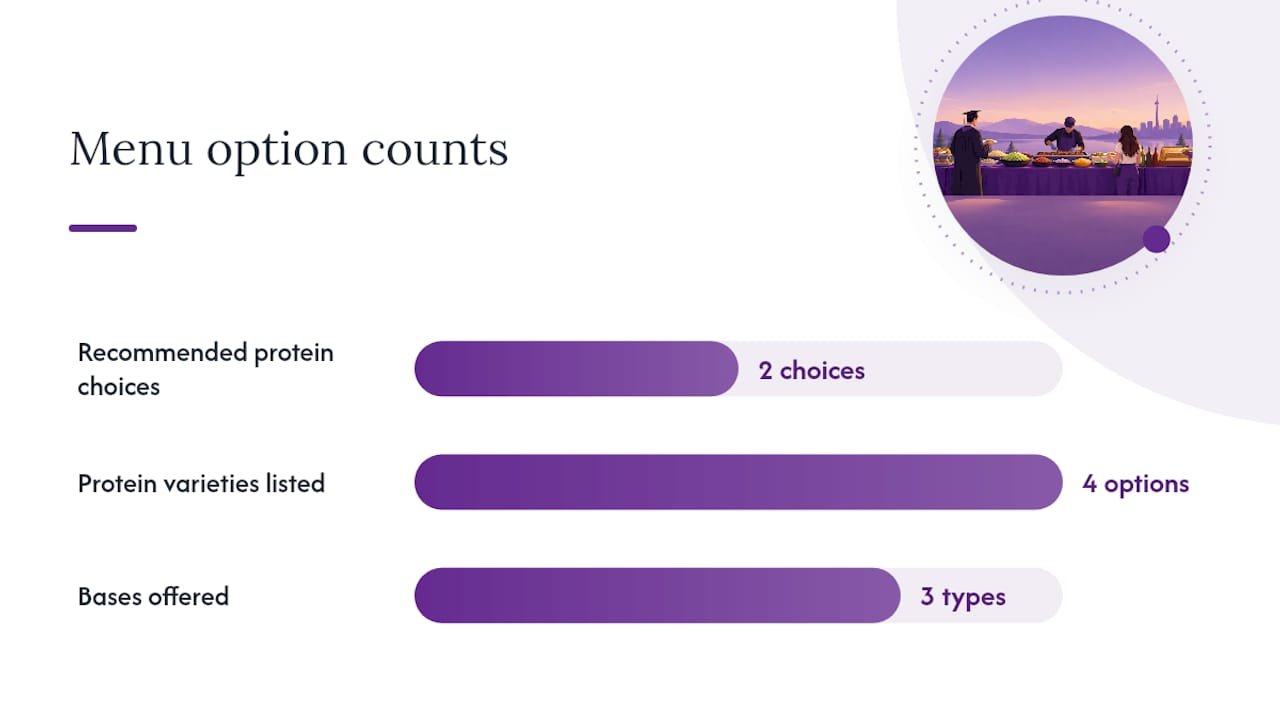
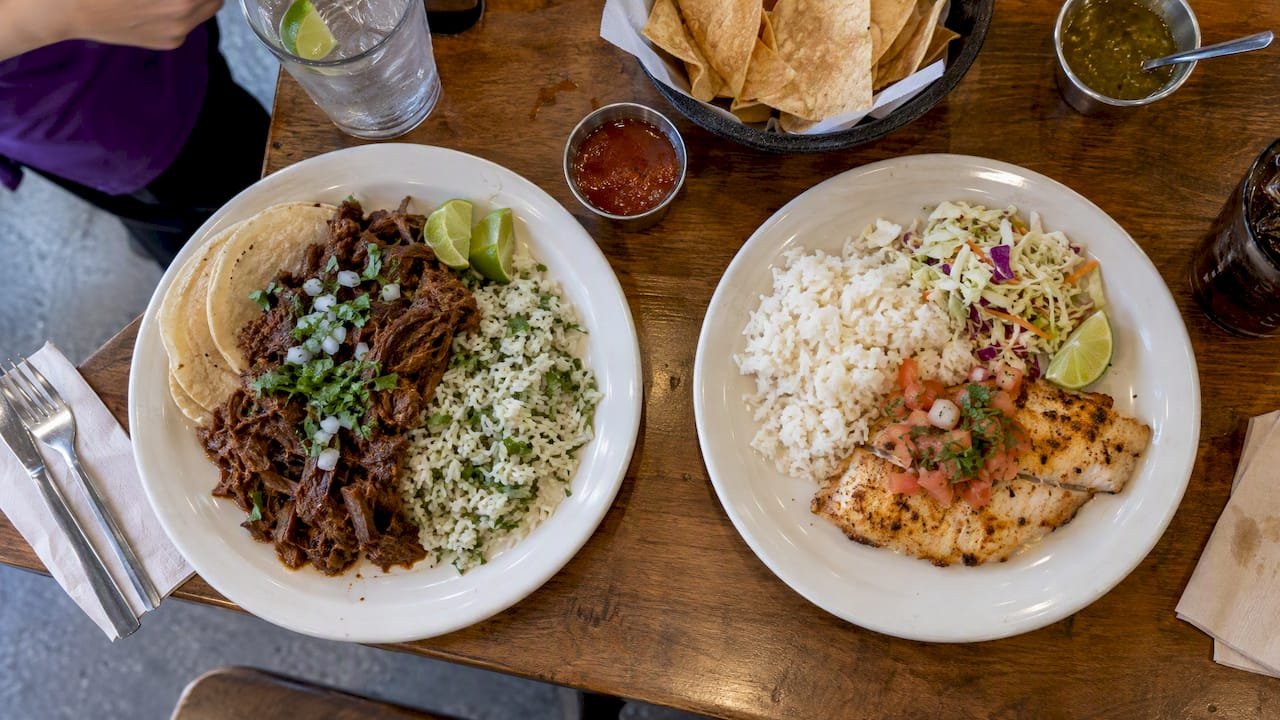
Keep the protein list short. Two options move a line faster than four, and grad parties usually run on a tight window between the ceremony and everyone’s dinner plans. A carnitas-style braised pork and a shredded adobo chicken cover most tastes, and seasoned black beans or roasted cauliflower give vegans and vegetarians a real option instead of an afterthought.
For bases, offer soft flour tortillas, corn tortillas for anyone avoiding gluten, and a bag of sturdy chips for walking tacos if you’re feeding people standing up or on the move.
- Shredded cheese, shredded lettuce, pico de gallo, guacamole
- Sour cream or crema, pickled red onions, two hot sauces (mild and hot)
- Chips and salsa as a self-serve side that needs no staffing
- Pre-portioned coleslaw or corn salad
- Bottled water, canned pop, or a lemonade station
Anyone building out a fuller spread can pull ideas from Burrito Splendido’s Mexican catering menu suggestions for combinations that hold up well at room temperature.
How much food do you need per guest?
A reliable baseline is about 0.5 lb of cooked protein per adult-equivalent guest, adjusted upward if your crowd skews toward teenagers or the party runs long. Plan for 2 to 3 tortillas or shells per person, then add a 10 to 20% buffer since first-timers at a taco bar tend to overfill and underestimate.
- For 25 guests, plan for about a dozen pounds of protein, around 60 to 75 tortillas, and a few pounds of shredded cheese
- For 50 guests, approximately 25 pounds of protein, 120 to 150 tortillas, and around 6 pounds of shredded cheese
- For 100 guests, expect to need roughly 50 pounds of protein, about 240 to 300 tortillas, and a dozen pounds of shredded cheese
Buy toppings in smaller batches rather than one giant bowl. Perishables like guacamole and crema spoil fast once they hit warm air, and swapping in a fresh batch every 45 minutes beats topping up a bowl that’s been sitting since noon. Burrito Splendido’s tacos-per-person breakdown has more granular counts if your guest list falls between these numbers.
How do you lay out the line so it doesn’t back up?
Guests move through a taco bar the same way every time, so design the table in eating order rather than by ingredient type. That single decision does more for speed than any amount of extra staffing.
- Plates first, stacked at the head of the line
- Bases (tortillas, shells, or a bowl for walking tacos)
- Proteins, kept warm in chafing dishes
- Beans or rice, if you’re serving them
- Cheese and fresh toppings
- Sauces and hot sauce station
- Cutlery, napkins, and a small trash bin at the end
For larger groups, split the table into two identical mirrored lines rather than one long one; it cuts wait time roughly in half without doubling your food cost. Keep drinks and desserts on a separate table well away from the food line so guests grazing for a second pop don’t jam up the people still building their first taco.
How do you keep the food safe while it sits out?
Temperature control is where most home-run taco bars fall apart, and it’s the one area where you shouldn’t improvise. Health Canada recommends keeping cold foods at or below 4°C and hot foods at or above 60°C, and discarding anything left at room temperature for more than an hour on hot days, or two hours in milder conditions.
Statistic Callout: Health Canada sets the danger zone between 4°C and 60°C. Anything sitting inside that range for too long is where bacteria multiply fastest.
- Use chafing dishes or a crockpot on low for proteins, never a plate left on the counter
- Keep cold toppings nested in bowls of ice, not just refrigerated ahead of time
- Check temperatures with a thermometer every 30 to 45 minutes
- Replace a serving bowl entirely instead of topping it up, which is how cross-contamination spreads at buffets
- Keep drink coolers physically separate from food coolers, since repeated opening for beverages warms the food around it
Assign one person, even just a teenager with a phone timer, to own the temperature checks. It’s the cheapest insurance policy at the whole party.
How do you label allergens and dietary options?
Grad parties draw a wide mix of guests, and a few clear labels save you from fielding the same question fifteen times. Mark stations with simple tags: GF for gluten-free, V for vegetarian, VG for vegan, DF for dairy-free. Keep a dedicated serving spoon in each dish so a guest with a peanut allergy isn’t handed a spoon that just touched something with nuts in it.
- Label the roasted cauliflower or bean option clearly as VG
- Use corn tortillas and label them GF, separate from the flour tortilla basket
- Keep crema and cheese in their own bowls with dedicated spoons
- Note Burrito Splendido’s dietary-inclusive catering menu if you’re outsourcing rather than DIY-ing
Pro Tip: Print labels the night before and laminate them with packing tape. Nothing kills momentum faster than hunting for a marker while guests are already lining up.
What’s the timeline for setup and staffing?
Work backward from serving time. The day before, braise or shred your proteins, chop anything that holds up in the fridge overnight (onions, cabbage, cheese), and make sauces that only improve with a rest. The morning of, stage your tables and get chafing dishes heating an hour before guests arrive.
- Day before: cook proteins, pre-chop sturdy toppings, chill sauces
- Morning of: set up tables, ice bowls, and signage
- 1 hour before: start warming chafing dishes and crockpots
- 30 minutes before: put out cold toppings on ice, do a final thermometer check
- During service: rotate one hot-food attendant, one topping monitor, one runner for refills, one person on cleanup
If a caterer is delivering, confirm parking and unloading access the week before. A checklist for busy hosts prepping large meals covers similar staging logic if you’re running the whole event solo.
What Burrito Splendido brings to the table for catered events
Burrito Splendido builds its catering around Manitoba-first sourcing: house-pressed tortillas from Manitoba flour, hand-pulled carnitas and barbacoa, adobo chicken, and cheese from Bothwell Cheese. The kitchen does not use deep frying and accommodates gluten-free, vegan, and keto dietary requests routinely.
When catering an event, the service manages hot and cold holding, staffing, and dietary labelling to ease the host’s responsibilities.
— Austin
Book Burrito Splendido for your grad party taco bar
If the equipment list, portion math, and temperature checks above sound like more than you want to manage on graduation weekend, Burrito Splendido’s catering does the entire job for you. The Bueno Burrito Bar sets up a full self-serve taco station at your venue, while the Burrito Express and Burrito Express Deluxe packages work better for smaller gatherings that still want house-made proteins and fresh toppings without the DIY shopping list.
Delivery and setup fees, catering staff billing rates, and gratuity information can be found on the catering page. You can browse the full Burrito Splendido menu to see protein and dietary options before requesting a quote, then head to the catering page to check availability for your graduation date and get pricing confirmed.
Where to check food safety rules and exact quantities
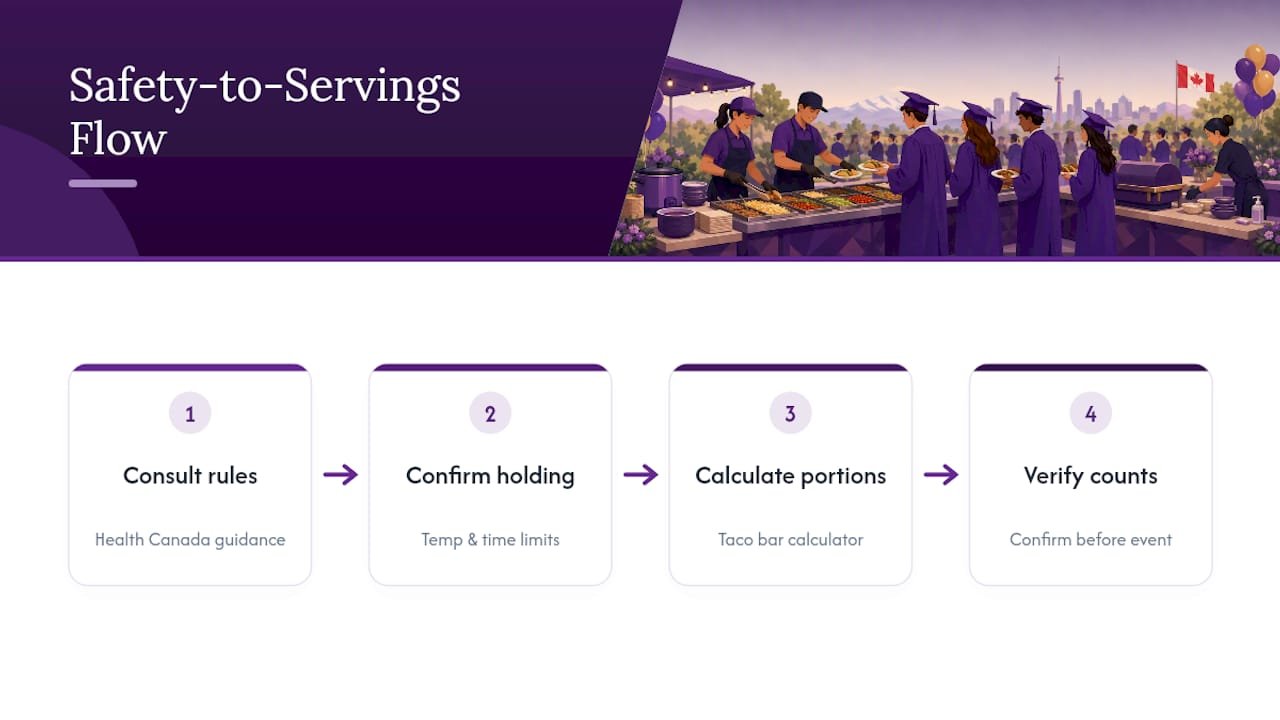
For the safety rules governing hot and cold holding times, go straight to Health Canada’s summer food safety guidance, which sets the temperature and time limits referenced throughout this guide. If you want quantities dialled in beyond the sample lists above, the free taco bar calculator adjusts protein, shell, and topping counts for your exact guest mix and serving window.
Sources
FAQ
How much food do I need for a taco bar for 100 people?
Plan for roughly 50 lb of cooked protein, 240 to 300 tortillas or shells, and a dozen pounds of shredded cheese, based on the 0.5 lb per guest baseline. Buy toppings in smaller batches and replenish through the event rather than putting everything out at once.
What should I serve alongside walking tacos at a grad party?
Chips and salsa, a pre-portioned coleslaw or corn salad, and bottled drinks all work well because none of them need active monitoring during service. Keep dessert and drinks on a separate table from the food line to avoid cross-traffic.
What should a taco bar include?
A functional taco bar needs one or two proteins, a gluten-free and a regular tortilla option, core toppings like cheese, salsa, guacamole, and pickled onions, and holding equipment to keep hot food hot and cold food cold. Clear allergen labels round it out.
What is the best food to serve at a graduation party?
A taco bar is one of the strongest choices because it scales to any guest count, serves vegan and gluten-free diets without a separate menu, and keeps costs predictable. Hosts who’d rather skip the shopping and staffing can book Burrito Splendido’s catering instead, with current pricing listed on the catering page.