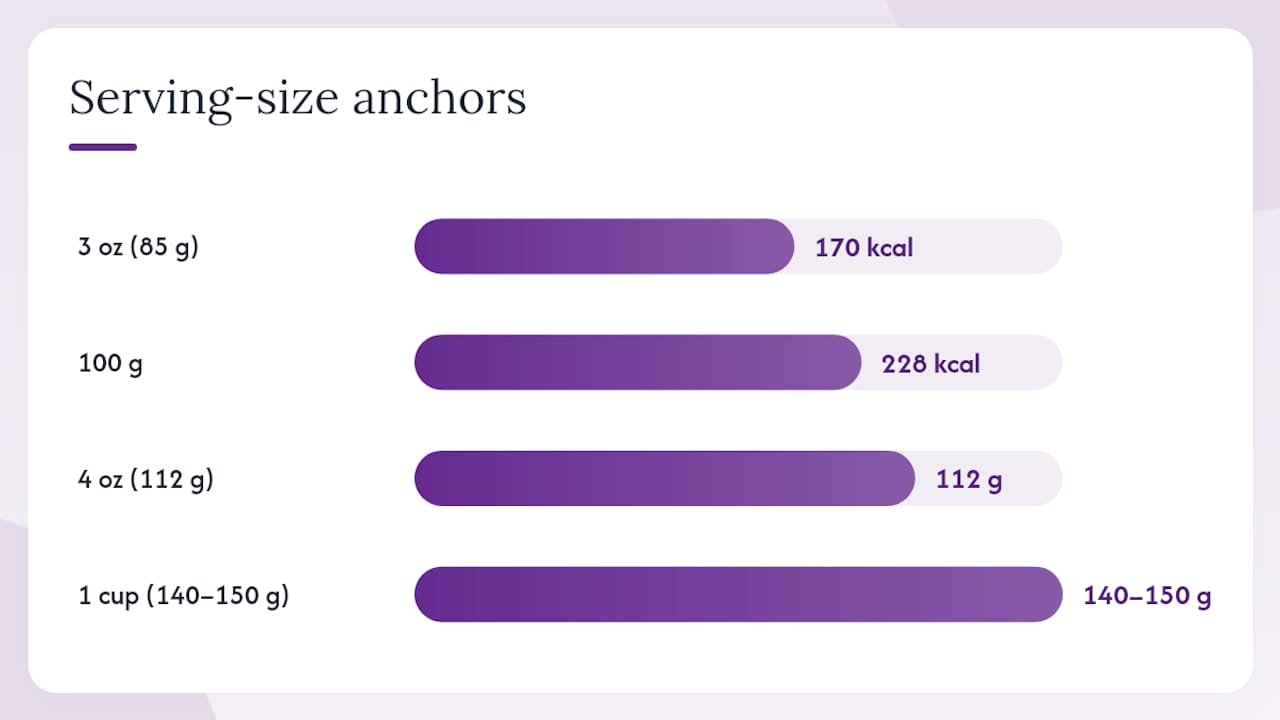
Pork carnitas contain roughly between 170 and 230 calories per 3 oz (85 g) serving of meat alone. The wide end of that range comes from added fat during the crisping step and from how much oil gets worked back into the pork after braising. Once you add a tortilla, cheese, or crema, a real taco or bowl climbs well past the meat number alone. The table below provides a range of typical calorie counts for pork carnitas depending on preparation.
TL;DR:
- A 3-ounce serving of carnitas contains between 170 and 230 kcal, with higher counts linked to added fats from crisping and oil absorption.
- Branded products and restaurant portions typically range from 200 to 228 kcal for the same size, influenced by fat content and finishing methods.
- Choosing corn over flour tortillas and asking for less finishing oil can significantly reduce calorie intake without sacrificing flavor.
- Estimating calories accurately involves matching portion size to known weights, adjusting for visible fat, and separating meat from toppings when planning meals.
Table of Contents
- Carnitas nutrition facts by serving size
- What a real taco, bowl, or burrito actually adds up to
- How to estimate carnitas calories at home or from a menu
- Fat, sodium, and smart swaps for carnitas orders
- How kitchen practices affect what’s on your plate
- Where these nutrition figures come from
- Planning meals around carnitas without overthinking it
- Sources
Carnitas nutrition facts by serving size
Carnitas calorie counts shift depending on whether you’re looking at a home recipe, a packaged product, or a restaurant portion. A Prospre nutrition entry lists trimmed, cooked pork carnitas at 170 kcal for 3 oz (85 g), with 11 g fat and 16 g protein. That’s a solid baseline for lean, home-style pork shoulder.
Branded, slow-cooked products run higher. Del Real Foods’ slow-cooked pork carnitas lists close to 200 calories per 85 g serving, with fat making up anywhere from 35% to 60% of total calories depending on the exact cut and finishing method. Scale up to 100 g and an institutional nutrition extract puts carnitas at about 228 kcal with roughly 20 g of fat, which lines up with the branded figures once you adjust for portion size.
Converting between units is simple math once you have one anchor figure. One cup of shredded carnitas weighs roughly 140 to 150 g, so multiply the 100 g figure by about 1.45 to estimate a cup. Going the other direction, 1 oz equals 28 g, so a 3 oz serving is 85 g and a 4 oz serving lands at 112 g. Sodium is the outlier in this table: it depends far more on seasoning and processing than the meat itself does, which the next section unpacks.
What a real taco, bowl, or burrito actually adds up to
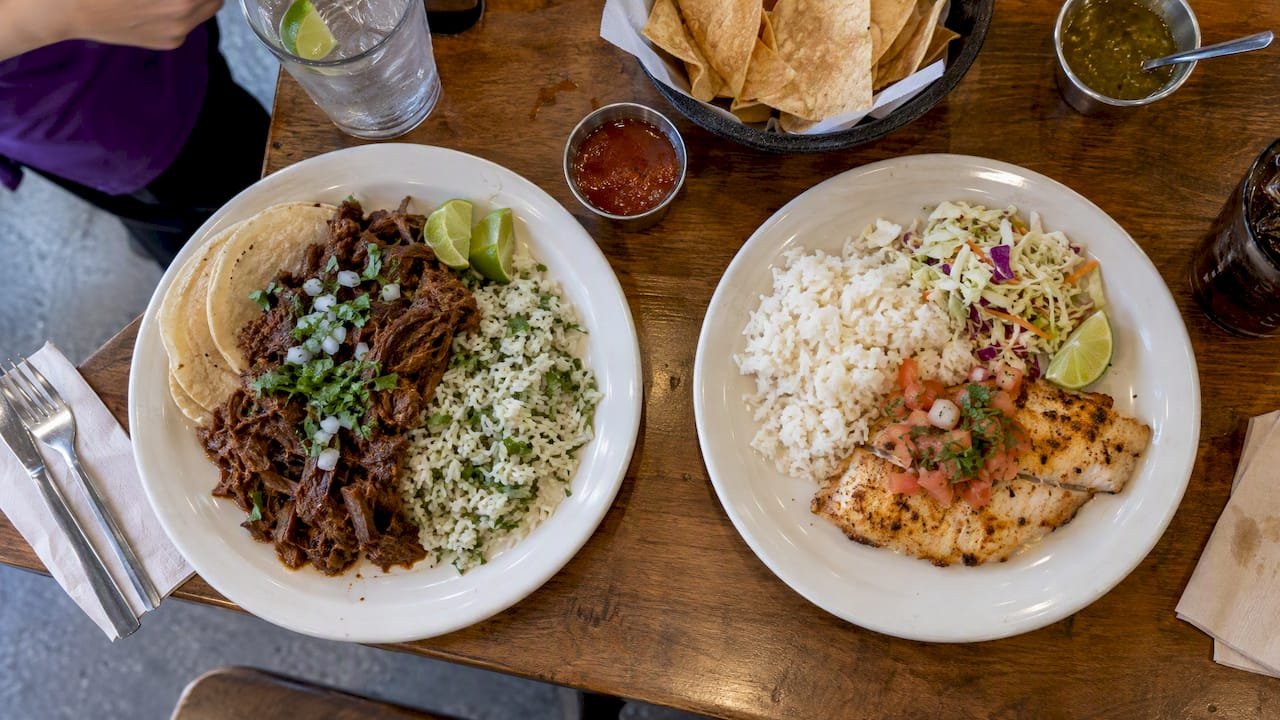
Nutrition labels rarely match what lands on your plate. Here’s how the numbers translate to actual orders:
- One street-style corn tortilla taco with 2 oz carnitas. The meat alone runs around 115 to 135 kcal (roughly two-thirds of a 3 oz portion), and a soft corn tortilla adds a modest amount on top, often in the 40 to 60 kcal range.
- A typical two-taco meal. Double the single-taco math and you land somewhere between 300 and 400 kcal before salsa, onion, or cilantro, which barely move the needle calorically.
- A burrito bowl with 4 oz carnitas. Start from the 210 to 230 kcal meat baseline, then add rice, beans, and any cheese or crema. This is where bowls can quietly outpace burritos if the toppings pile up, even though the tortilla calories disappear.
- Flour tortilla vs. corn tortilla swap. A flour tortilla typically contributes more calories than a corn one per piece, largely because of the added fat used in pressing. Choosing corn over flour on a multi-taco order is one of the easiest calorie levers available.
The spread between a lean home-style taco and a loaded restaurant version can be a few hundred calories, almost entirely driven by oil, cheese, and crema rather than the pork itself.
How to estimate carnitas calories at home or from a menu
Estimating carnitas calories doesn’t require a food scale, just a repeatable process.
- Start with a base serving. Match what’s on your plate to the closest weight in the table above, either 3 oz, 4 oz, or 100 g, and use that as your anchor number.
- Adjust for visible fat or a crispy finish. Carnitas finished under a broiler or pan-fried in reserved lard pick up extra calories from each added tablespoon of fat, so round up if the pork looks glossy or has crisp edges.
- Add the tortilla and toppings separately. Corn tortillas add a modest amount per piece, flour tortillas add more, and cheese, guacamole, and crema each carry their own calorie load on top of the meat.
- Watch for red flags on packaged or premade carnitas. Processed mixes and pre-seasoned products tend to carry higher sodium and sometimes added oils that don’t show up in a casual glance at the ingredient list.
- When in doubt, round up. Restaurant portions almost always run heavier on fat than home recipes, so a conservative estimate protects your tracking more than an optimistic one.
Pro Tip: Snap a photo of your plate before you eat, then compare it against a known 3 oz or 4 oz reference later. Over a few meals, you’ll start eyeballing portions accurately without ever pulling out a scale.
Fat, sodium, and smart swaps for carnitas orders
Carnitas earns its place in a calorie-conscious diet mainly on protein. A 3 oz serving delivers 16 to 23 g of protein, which stacks up reasonably well against lean poultry, though the fat-to-protein ratio runs higher than chicken breast. That’s the trade-off: more flavour and richness, but a higher calorie cost per gram of protein.
Sodium is the number that actually varies the most, sometimes ranging from under 300 mg per serving in a scratch-made batch to more than 800 mg in heavily seasoned or processed products. Preservatives and pre-mixed seasoning blends are usually the culprit, not the pork itself.
A few swaps make a real difference on any carnitas order:
- Ask for a smaller portion of meat and add extra vegetables or salsa to fill out the plate.
- Choose corn tortillas over flour when calories matter more than the pillowy texture.
- Swap crema and shredded cheese for salsa or pickled onion, which cuts fat without cutting flavour.
- Request the carnitas without extra finishing oil if you’re ordering somewhere that crisps the meat to order.
How kitchen practices affect what’s on your plate
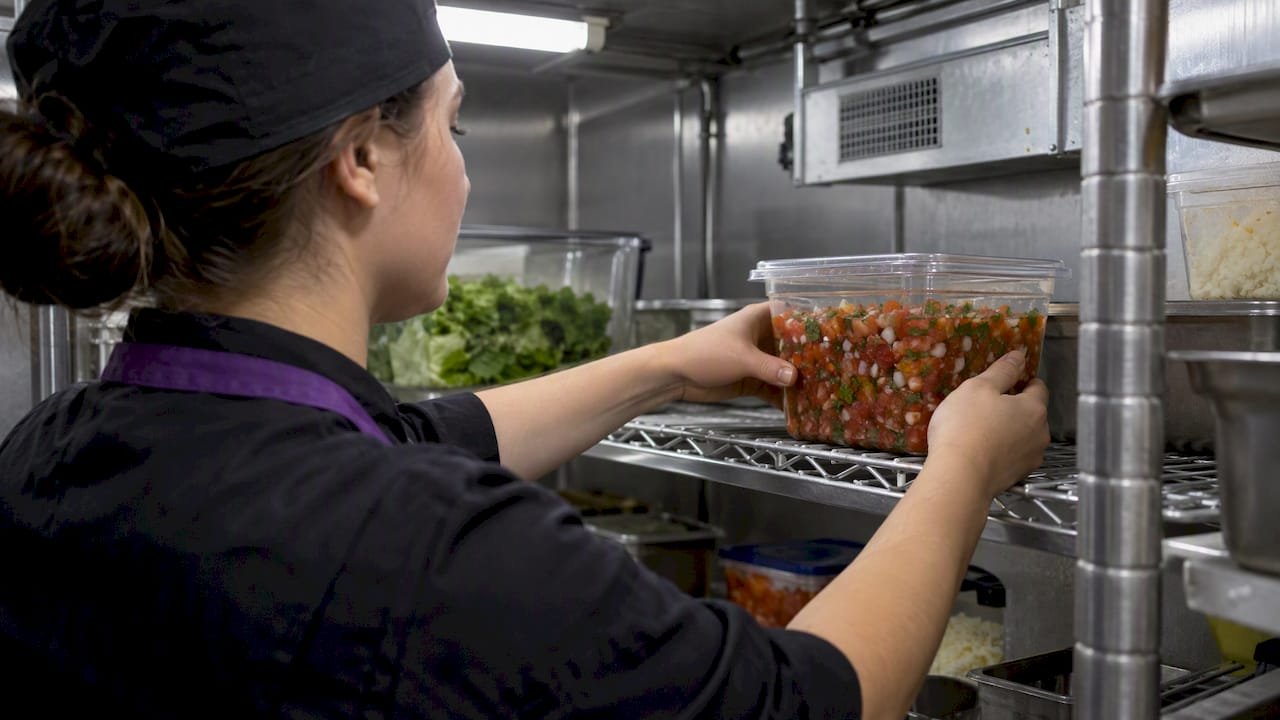
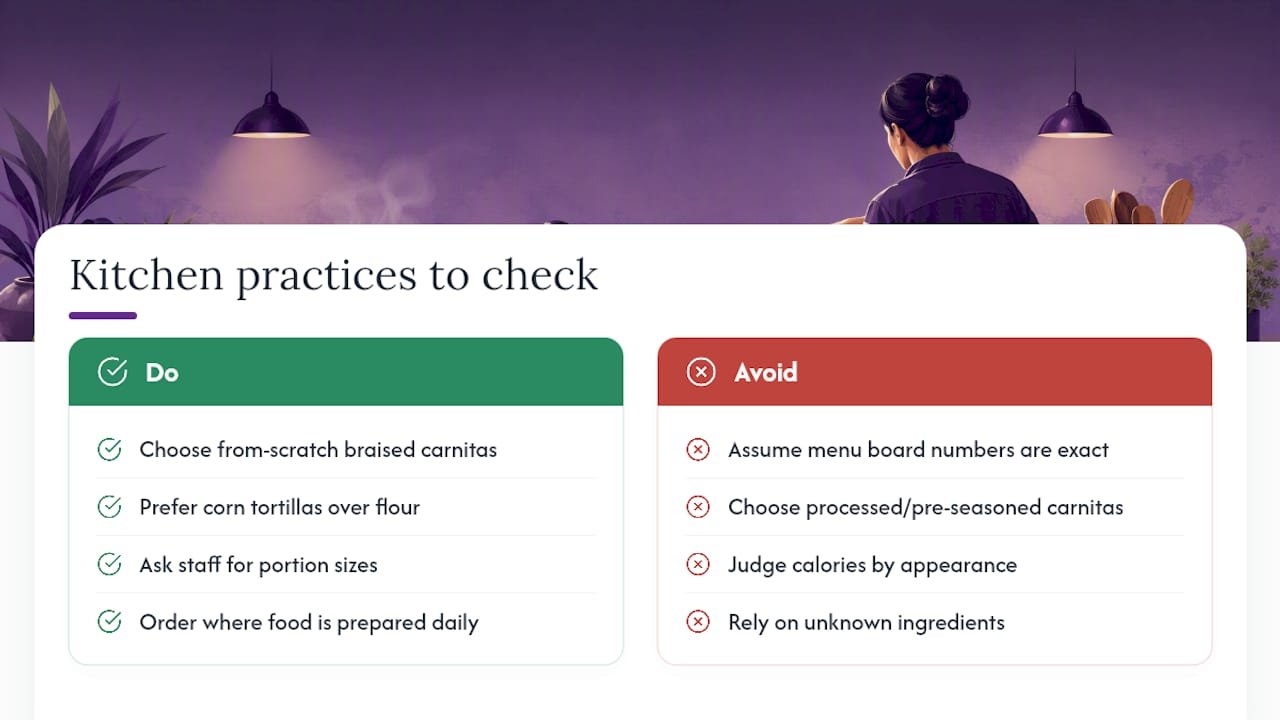
Not all carnitas are built the same way, and that’s exactly why calorie ranges are so wide. Some kitchens braise and hand-pull carnitas in-house from sourced pork, using a from-scratch kitchen with no deep fryer on site. That matters for calorie tracking because it removes a lot of the guesswork tied to processed or pre-seasoned carnitas, where hidden oils and sodium additives can push numbers up without any visual cue on the plate.
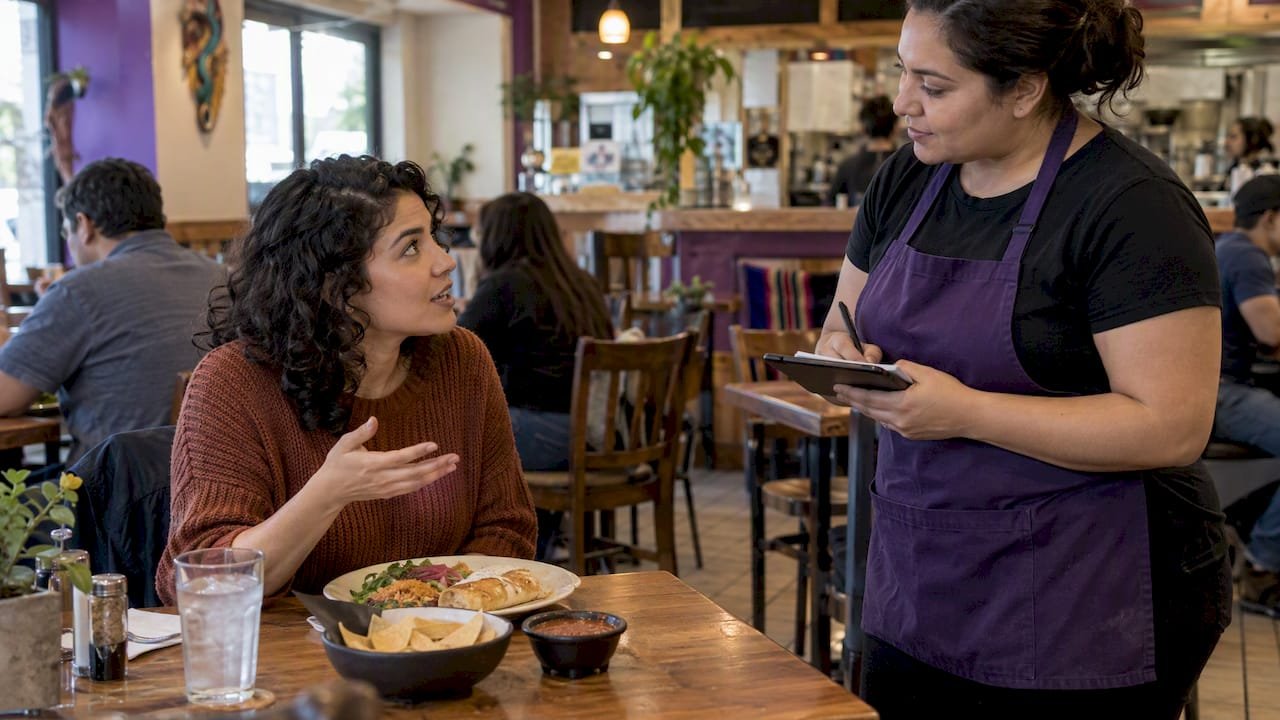
House-pressed tortillas made with local flour add their own calorie contribution, similar to the flour tortilla range covered earlier, so corn-based options remain the lighter choice for anyone watching totals closely. If you’re tracking calories seriously, ask staff about portion sizes when you order. Kitchens that prepare food daily from known ingredients can usually give you a straighter answer than a menu board can.
For a full breakdown of ingredient-conscious ordering, the healthy Mexican order guide covers specific swaps that pair well with the tips above.
Where these nutrition figures come from
The calorie and macronutrient figures in this article draw from a handful of public nutrition sources: the Prospre ingredient database for baseline label-style figures, Tools MyFoodData’s branded product listings for restaurant-style variation, an institutional nutrition extract for the 100 g conversion, and URMC’s nutrition encyclopedia for context on cooking-method variability. Branded restaurant menus can differ from all of these, so checking a posted nutrition panel is always worth the extra minute.
Planning meals around carnitas without overthinking it
Treat the ranges in this article as planning tools, not lab results. Pick the conservative end of the range when you’re logging a restaurant meal, since kitchens tend to use more fat than a home recipe would. If a place lists nutrition information, use it. If they don’t, ask. Most from-scratch kitchens can tell you roughly what goes into a portion, even if they don’t have a printed panel handy.
One heavier carnitas meal isn’t going to undo a week of consistent eating. The goal isn’t perfect precision every time. It’s having a number close enough to reality that your tracking stays honest over the long run.
— Austin
Sources
- Nutrition Facts for Del Real Foods – Slow-Cooked Pork Carnitas (Tools MyFoodData)
- Pork Carnitas nutrition entry (Prospre)
- Nutrition summary (UMD nutrition database extract)
- Pork carnitas nutrition (URMC Rochester)