A quesadilla is a tortilla folded around cheese and grilled or pressed until the cheese melts and the outside crisps, while a taco is a soft or lightly fried tortilla that carries a wider variety of fillings and is usually eaten right after assembly. Britannica treats these as distinct dishes with different techniques, and at Burrito Splendido we press and cook both daily, so the difference is evident in the dishes we prepare.
TL;DR:
- Quesadillas are primarily cheese-filled tortillas grilled or pressed until melted and crispy, usually made with flour tortillas that can include various extras.
- Tacos are hand-held tortillas filled with seasoned meats, vegetables, or seafood, traditionally made with corn in Mexico and often served soft without melting.
- Quesadillas require direct heat and pressing to melt cheese and crisp the tortilla, while tacos are assembled and served warm or at room temperature without additional cooking.
- Heavier and more cheese-centric, quesadillas are best for sharing or cutting into wedges, while tacos offer portability and customization for individual bites.
- Opt for tacos if seeking lighter, protein-rich options with fresh toppings, and choose quesadillas for gooey, melt-in-the-middle snacks suited for sharing.
Table of Contents
- What is a quesadilla?
- What is a taco?
- Quesadilla or taco: a quick side-by-side comparison
- Ingredients and fillings: why cheese behaves differently than taco toppings
- Cooking, texture, and assembly: pressing versus plating
- Origins and regional variations
- Which is healthier: tacos or quesadillas?
- How we build ours at Burrito Splendido
- When to pick a quesadilla and when to pick a taco
- Order quesadillas or tacos from Burrito Splendido
- FAQ
- Sources
What is a quesadilla?
A quesadilla is, at its core, a cheese dish. The Britannica Dictionary defines it as a tortilla folded around a filling, primarily cheese, then fried or grilled until the inside melts and the outside crisps. The name comes from “queso,” the Spanish word for cheese, which tells you where the priority sits even before you take a bite.
Flour tortillas are the common choice because they fold without cracking and turn golden and sturdy on a hot surface, though corn versions exist too. Some cooks use two tortillas stacked with filling between them instead of one folded tortilla, a style you’ll see at stands that sell them open-faced before closing and grilling. Beyond cheese, quesadillas often pick up chicken, mushrooms, squash blossoms, or peppers, but these additions share space with melted cheese rather than replacing it, and wetter fillings need draining first or the tortilla turns soggy before it crisps.
What is a taco?
Britannica describes a taco as a hand-sized tortilla, corn or flour, folded or rolled around seasoned meat, vegetables, or other fillings. Unlike a quesadilla, nothing about a taco requires cheese or a melting step: the tortilla is simply the vehicle.
Corn tortillas are traditional in much of Mexico, where maize has been central to the diet for centuries, while flour tortillas dominate in northern regions and many North American adaptations. Street-style tacos tend to use small, soft corn tortillas, sometimes doubled for strength, while the hard taco shell familiar in many countries is a later, largely commercial invention rather than a traditional form. Fillings range from grilled meats to beans, fish, or vegetables, and the finishing touches, chopped onion, cilantro, a squeeze of lime, a spoon of salsa, do a lot of the flavour work. Assembly happens fast, usually right before serving, so the tortilla stays pliable instead of crisping.
Quesadilla or taco: a quick side-by-side comparison
Once you line up the two dishes on the same axes, the differences stop being subtle.
- Primary filling: quesadillas are cheese-centric with optional extras; tacos are protein or vegetable-centric with cheese as a minor topping at most.
- Tortilla: quesadillas are typically flour, pressed and grilled; tacos lean corn for traditional versions, flour for others, and are served soft.
- Cooking method: a quesadilla gets a dedicated grilling or pressing step after assembly; a taco is filled and served with little to no additional heat.
- Shape: a quesadilla is sealed into a half-moon or sandwiched round; a taco stays open or loosely folded.
- Occasion: quesadillas suit a quick solo snack or a shareable platter cut into wedges; tacos fit portable street food, build-your-own family dinners, and party spreads where guests assemble their own.
If you want something melty and shareable in wedges, a quesadilla wins. If you want portability and variety across a few bites, tacos make more sense, and a party with mixed appetites often benefits from having both on the table.
Ingredients and fillings: why cheese behaves differently than taco toppings
Cheese dominates a quesadilla because it melts, binds the other ingredients, and seals the fold so the tortilla holds together under heat. Any moisture-heavy addition, sautéed mushrooms or roasted peppers, needs to be cooked down first or the extra liquid keeps the tortilla from crisping.
Tacos work the opposite way: filling, salsa, and toppings stay as discrete components layered inside the tortilla rather than melted together. That structure is part of why swaps are easy. A few combinations worth knowing:
- Vegan cheese and grilled vegetables replace dairy in a quesadilla without losing the melt-and-bind function.
- Lean proteins like grilled chicken or fish keep a taco light while still delivering texture.
- Black beans add body to either dish without the moisture problems of some vegetables.
For more combinations that hold together on the grill, our quesadilla filling ideas walk through pairings that won’t fall apart mid-bite.
Cooking, texture, and assembly: pressing versus plating
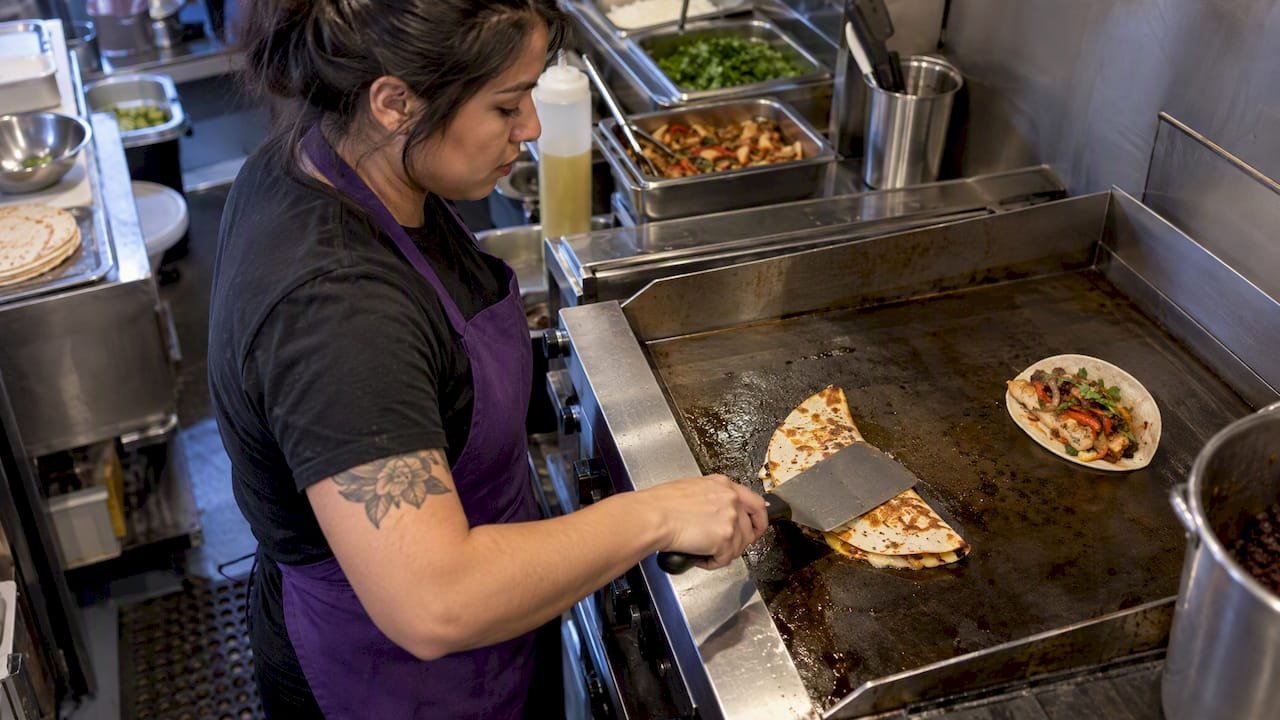
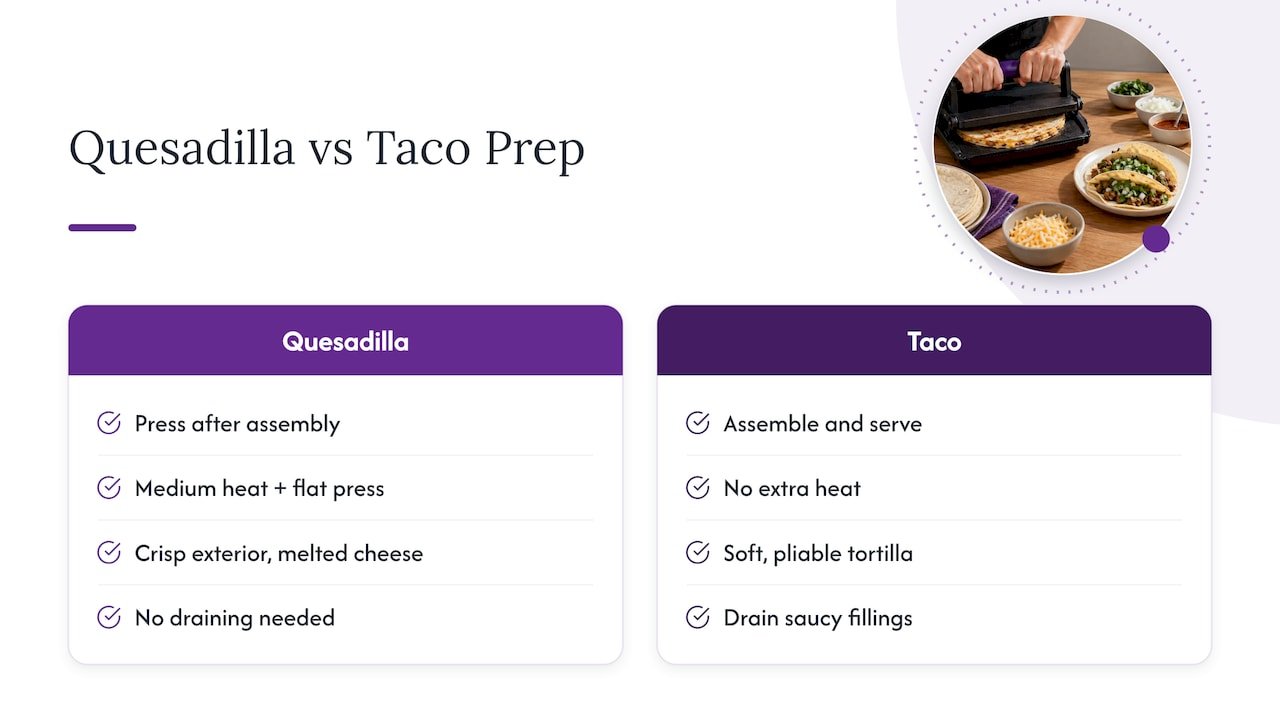
The technical split comes down to one step: a quesadilla needs direct heat after assembly to melt the cheese and crisp the tortilla, while a taco is filled and handed over, keeping its tortilla soft. Skip the press on a quesadilla and you’ve made a cold cheese sandwich; add unnecessary heat to a taco and you risk drying out a tortilla that’s supposed to stay pliable.
For quesadillas, medium heat and a flat press (a second pan or a spatula works) gives even melt without scorching the outside. For tacos, draining excess liquid from saucy fillings before assembly keeps the tortilla from tearing. Reheated leftovers do better in a dry pan than a microwave, which softens what should stay crisp.
Pro Tip: Warm your tortilla for a few seconds on each side before adding filling, whether you’re building a taco or a quesadilla: it makes folding easier and prevents cracks that let fillings spill out.
Origins and regional variations
The taco’s history is harder to pin down than most people expect. Smithsonian Magazine traces several competing threads behind the word and the dish, noting that later commercial adaptations, including the hard taco shell common in some countries, shaped what many people now picture as a “traditional” taco. The quesadilla’s story is more straightforward: the name derives directly from “queso,” pointing to cheese as the original and defining ingredient.
Regional practice still shapes both dishes today. Street vendors in central Mexico favour small soft corn tortillas for tacos, while some regions prefer the two-tortilla quesadilla style instead of a single folded one. International versions of both dishes often swap ingredients to match local tastes, which is fine as long as you don’t mistake the adaptation for the traditional form.
Which is healthier: tacos or quesadillas?
Quesadillas tend to run heavier because melted cheese covers the entire interior and the tortilla itself is often a larger flour round. Tacos can come in lighter, especially when built with lean protein, a modest cheese sprinkle, and a generous pile of vegetables instead of a thick layer of dairy.
A few swaps make either dish lighter: choose a corn tortilla over flour, go easy on the cheese or skip a full melt, and add grilled vegetables or beans for volume without extra fat. At a family dinner or party, cutting quesadillas into smaller wedges and setting out a build-your-own taco bar naturally controls portions better than one oversized serving per person.
How we build ours at Burrito Splendido
A few notes from how we put each one together:
- Quesadilla press sequence: layer cheese first so it anchors the fold, add well-drained fillings, then grill until the outside is golden and the centre is fully melted.
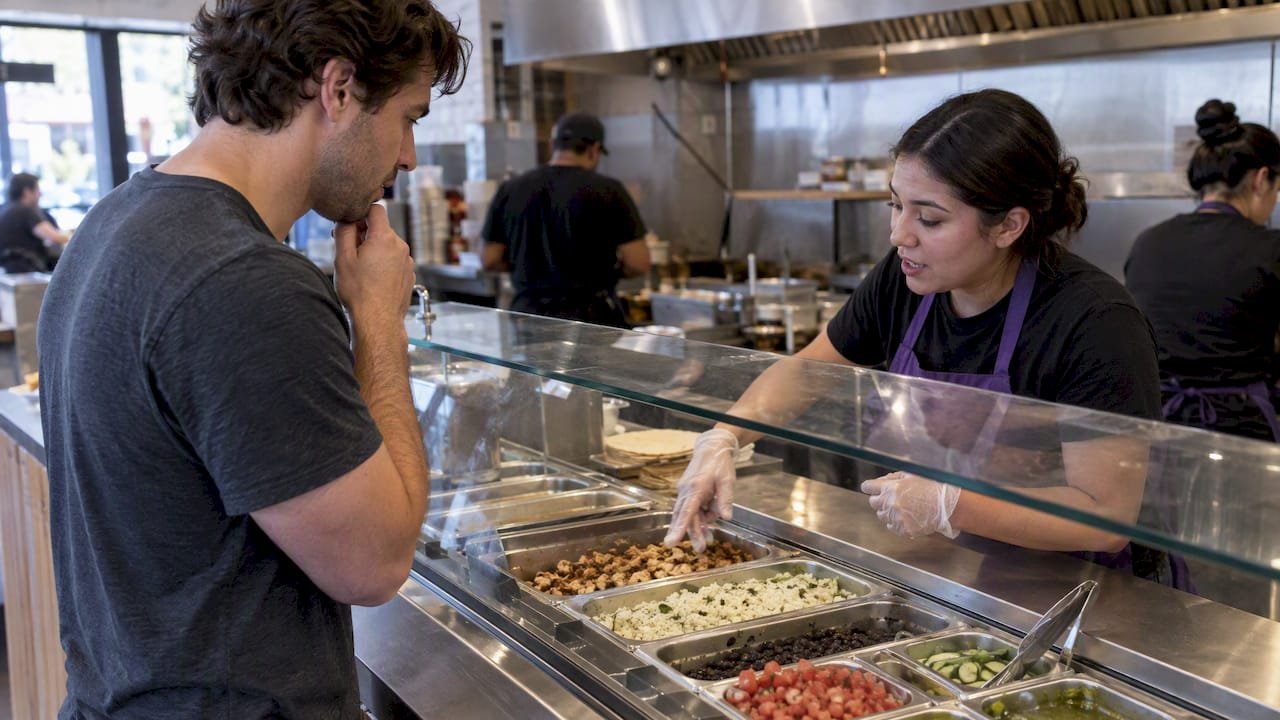
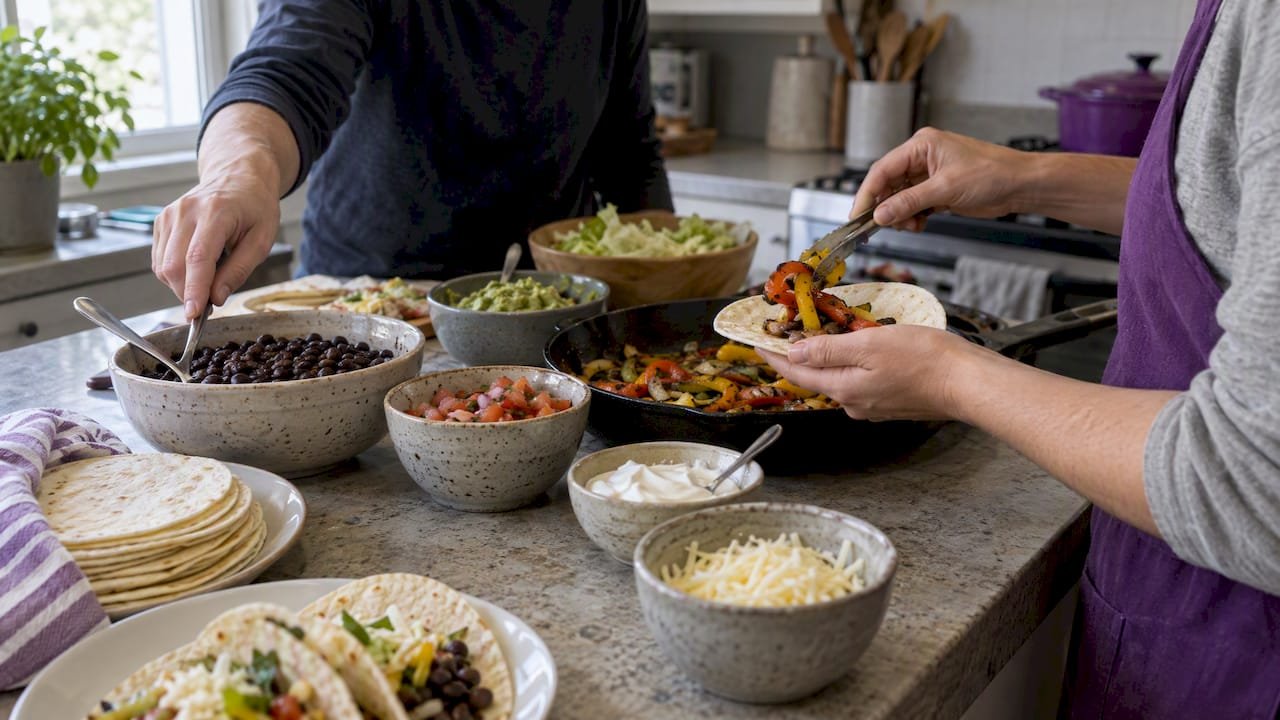
- Taco assembly checklist: warm the tortilla, add protein first, then crunch (onion, cabbage), then sauce last so nothing goes soggy before serving.
- We handle gluten-free and cross-contamination requests with dedicated prep steps, since several of our items, including corn tortillas, are naturally gluten-free.
For deeper steps, our guides on making tacos at home and the role of tortillas in Mexican cooking go further than we can here.
When to pick a quesadilla and when to pick a taco
If you want something you can cut into wedges and share around a table, go quesadilla. If you want a portable, build-your-own meal where everyone picks their own filling and toppings, go taco. A quick solo lunch favours the quesadilla’s single-step simplicity, while a group dinner or party favours tacos for their variety and hands-on assembly.
— Austin
Order quesadillas or tacos from Burrito Splendido
If reading about these two dishes has you ready to eat rather than cook, we’ve got both covered. Our street-style tacos and quesadillas are made fresh daily using house-pressed tortillas and ingredients sourced with a focus on freshness and quality, so you get a from-scratch standard whether you order one taco or a full platter.

Browse our full menu to order quesadillas or tacos for pickup or dine-in, or check our catering page if you’re planning a family taco night or a larger event. For current catering prices and packages, please refer to the catering page on our website.
FAQ
Which is healthier, tacos or quesadillas?
Tacos are often lighter because they’re built around lean protein and vegetables with cheese as a minor topping, while quesadillas carry more cheese across the whole interior. The healthier choice ultimately depends on portion size and how heavy-handed you are with cheese and sauce on either dish.
Do quesadillas count as tacos?
No. Britannica defines a taco as a tortilla folded or rolled around varied fillings, while the Britannica Dictionary defines a quesadilla as a tortilla folded specifically around cheese and grilled. They share a tortilla base but differ in filling focus and cooking method.
Which is better, burrito or quesadilla?
Neither is objectively better: a burrito wraps a larger tortilla around rice, beans, and protein for a full handheld meal, while a quesadilla is a smaller, cheese-forward dish meant to be grilled and cut into wedges. Our guide to burritos breaks down how that structure compares if you want a fuller meal versus a quick melt.
What is the difference between a taco and a tortilla?
A tortilla is the flat flour or corn base itself, while a taco is the finished dish made by folding that tortilla around fillings. Every taco starts with a tortilla, but a tortilla on its own isn’t a taco until it’s filled.
Sources
- Taco | Definition, Origins, Ingredients, & Types | Britannica
- Where did the taco come from? | Smithsonian Magazine