Burritos have become a fixture at fast-casual restaurants across Canada, yet many people treat them as nothing more than a loaded wrap. That assumption skips over centuries of culinary history, a very specific structural logic, and the kind of thoughtful assembly that separates a great burrito from a soggy, falling-apart disappointment. Whether you’re a first-timer stepping up to a counter in Winnipeg or a seasoned burrito fan looking to understand the food more deeply, this guide walks you through everything: what a burrito actually is, where it came from, how it’s built, and why customisation is at the heart of the modern experience.
Table of Contents
- Defining a burrito: Structure, basics, and what sets it apart
- The origins of the burrito: Northern Mexico to Canadian restaurants
- How a burrito is assembled: Ingredients, layers, and common pitfalls
- Burrito customisation in Canadian fast-casual: Build your own experience
- What most burrito guides miss: Why your choices matter more than you think
- Experience and customise burritos in Winnipeg
- Frequently asked questions
Key Takeaways
| Point | Details |
|---|---|
| Burritos are distinct | A burrito is a fully sealed flour tortilla cylinder, not just any wrap or taco. |
| Origins shape tradition | Burritos were born for portability in northern Mexico with flour tortillas. |
| Assembly is everything | Smart layering and moisture control prevent leaks and keep your burrito intact. |
| Customization rules modern dining | Canadian burrito shops thrive by letting you build your ideal flavour combination. |
| Choices make the difference | Your selections in fillings and structure define the burrito experience every time. |
Defining a burrito: Structure, basics, and what sets it apart
Most people can picture a burrito. It’s that chunky, foil-wrapped cylinder you eat standing up. But the actual definition is more precise than the image suggests. A burrito is typically a large flour tortilla wrapped around a variety of fillings, formed into a sealed, handheld cylinder. That last part matters enormously. The seal is what makes it a burrito.
Unlike a taco, which is folded rather than fully wrapped, or an enchilada, which is rolled and then covered in sauce and baked, a burrito is fully enclosed. The tortilla folds over the top and bottom, locking the fillings inside. You can eat it without utensils. You can carry it in one hand. That portability is not an accident; it’s the whole point.
The common misconception is that any rolled tortilla qualifies. It doesn’t. A wrap at a sandwich counter might look similar, but wraps use a thinner or smaller tortilla and don’t follow the same structural logic. Burritos require a large, pliable flour tortilla that can hold significant volume without tearing. The contents typically include:
- A protein such as beef, chicken, pork, or a plant-based option like tofu or black beans
- Rice, which adds bulk and helps absorb moisture
- Beans, either whole or refried, for flavour and texture
- Vegetables including peppers, corn, or fresh greens
- Sauces and salsas for moisture and seasoning
- Cheese for richness and binding
This combination of components, packed tightly and sealed securely, is what defines the experience. You can explore the principles behind burrito catering basics to see how these elements scale up for groups, but the same rules apply whether you’re feeding one person or fifty.
“A burrito is typically a large flour tortilla wrapped around a variety of fillings, formed into a sealed, handheld cylinder.”
Now that you know what sets the burrito experience apart from basic wraps, let’s look at where this distinctive food comes from.
The origins of the burrito: Northern Mexico to Canadian restaurants
The burrito’s story begins in northern Mexico, where practical necessity shaped an entirely new way of eating. Workers, farmers, and travellers in the region needed food that could be transported and eaten on the go, often without access to a table or plates. The solution was to wrap cooked fillings inside a flour tortilla, creating a self-contained, portable meal.
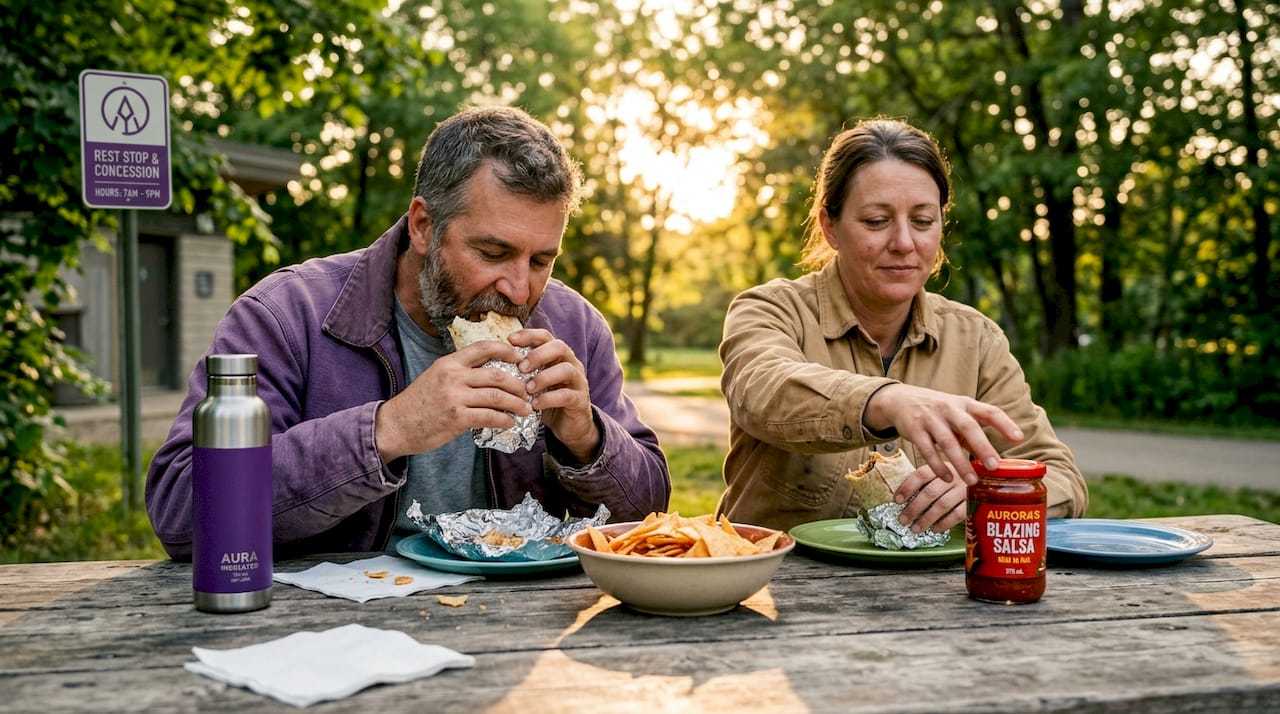
The history of the burrito is debated in detail, but multiple sources consistently trace its roots to northern Mexico and emphasise the practical need for portable food and the use of flour tortillas. Corn tortillas, which dominated central and southern Mexican cuisine, were less suitable for this purpose because they tended to crack under the weight of heavier fillings. Flour tortillas, developed in the northern states with stronger wheat-growing climates, were larger, more flexible, and far better suited to wrapping.
The word “burrito” translates roughly to “little donkey” in Spanish, which many historians link to the practice of loading these meals onto donkeys for transport to workers in the field. Whether or not that specific origin story is precisely accurate, it captures the spirit of the food: rugged, practical, and designed for people who needed fuel without fuss.
Here’s a simplified look at how the burrito evolved over time:
| Era | Key development |
|---|---|
| Pre-20th century | Flour tortilla wraps used by workers in northern Mexico |
| Early 1900s | Burritos documented in Ciudad Juárez and border towns |
| Mid-20th century | Gained popularity in California and the American Southwest |
| 1980s to 1990s | Fast-casual restaurants began standardising the “build-your-own” format |
| 2000s onwards | Spread into Canadian cities with local ingredient adaptations |
The role of tortillas in burritos is hard to overstate. Without the development of the large, pliable flour tortilla in northern Mexico, the burrito as we know it simply would not exist. And as burritos moved into Canadian cities like Winnipeg, Toronto, and Vancouver, local variations began to emerge. Restaurants started sourcing regional proteins, fresh local produce, and regional cheeses, creating a uniquely Canadian take on a northern Mexican classic. You can read more about these regional burrito styles to understand how geography shapes flavour.
Understanding where burritos come from helps explain their unique structure. Next, let’s break down how burritos are actually assembled, and why not all are created equal.
How a burrito is assembled: Ingredients, layers, and common pitfalls
Assembly is where most homemade burritos go wrong. The ingredients matter, of course, but the order in which you layer them and the way you roll the tortilla will determine whether you end up with a satisfying meal or a pile of fillings on your lap.
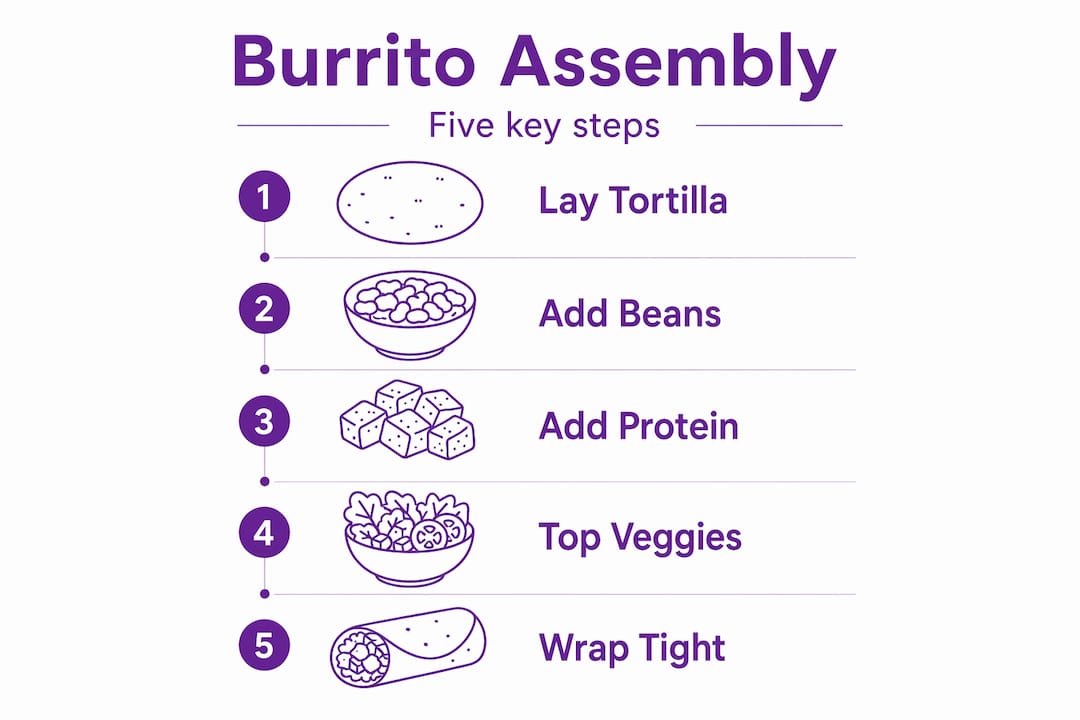
Structural failure in burrito assembly most often comes from overfilling or using ingredients with too much moisture, which causes leaks, sogginess, or what enthusiasts call a “blowout.” Understanding this from the start makes every step of the assembly process make more sense.
Here is a reliable process for building a burrito that holds together:
- Warm the tortilla. A cold tortilla cracks at the fold. Thirty seconds on a dry pan or griddle makes it pliable enough to roll without tearing.
- Layer rice first. Rice goes down in the centre third of the tortilla. It creates a stable base and absorbs excess moisture from wetter ingredients.
- Add beans. Whole beans work better structurally than overly wet refried varieties. If using refried beans, apply them thinly.
- Place your protein. Pile the cooked, well-drained protein on top of the beans. Hot, juicy proteins are fine as long as you’ve layered absorbent ingredients beneath them.
- Add vegetables and toppings. Peppers, corn, and greens go here. Save fresh salsas and sauces for last.
- Apply sauces carefully. A drizzle of salsa or crema on top is fine. Drowning the filling in sauce before rolling is a guaranteed leak.
- Fold and roll tightly. Fold the two short ends in first, then roll firmly from the bottom up. A snug roll traps everything inside.
These Canadian burrito assembly tips become especially useful when you’re working with fresh, locally sourced ingredients that sometimes carry more natural moisture than heavily processed alternatives.
Pro Tip: Pat proteins dry with a paper towel before adding them to the tortilla. Excess liquid is the single biggest cause of a soggy, collapsed burrito, and removing it takes only a few seconds.
Common mistakes are surprisingly easy to make. Overfilling is the most frequent: it feels generous, but a burrito stuffed beyond its capacity cannot be rolled tightly enough to stay closed. Using too many wet ingredients simultaneously, like fresh pico de gallo, sour cream, and liquid cheese sauce all at once, creates a moisture problem that no rolling technique can fix. For ideas on how restaurants handle these challenges with Winnipeg custom burrito options, it’s worth seeing how professionals balance flavour with structure.
With assembly insight in hand, it’s clear that every detail matters. But what truly sets the modern burrito apart is its customisability, especially in Canada’s fast-casual dining landscape.
Burrito customisation in Canadian fast-casual: Build your own experience
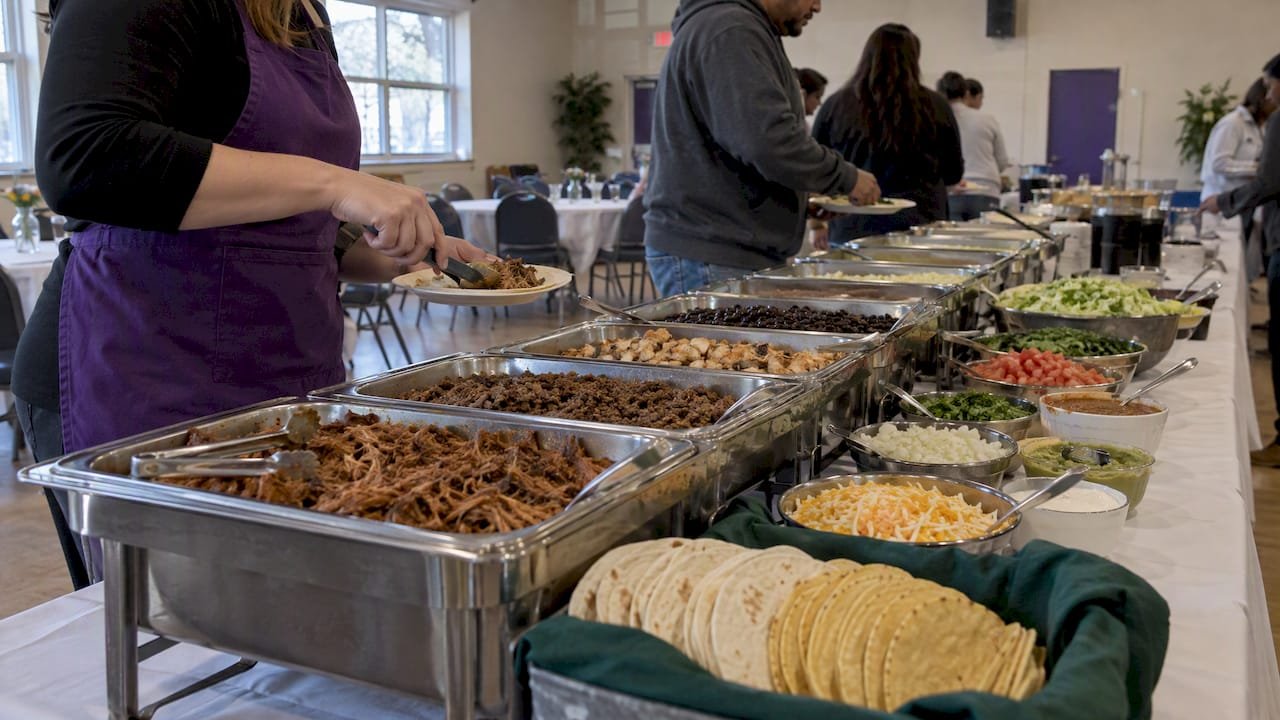
The build-your-own burrito model has transformed how Canadians think about fast food. Rather than choosing from a fixed menu, you make every decision from the ground up. Customisation is central to the burrito experience at fast-casual restaurants: you build by selecting your protein, rice, beans, toppings, and sauces. That might sound simple, but the combinations are genuinely vast.
Most Canadian fast-casual burrito spots offer choices across these categories:
- Proteins: Grilled chicken, braised pork (carnitas), shredded beef (barbacoa), tofu, or beans for a fully plant-based option
- Rice: White, brown, or cilantro-lime variations
- Beans: Black beans, pinto beans, or refried beans
- Toppings: Shredded cheese, lettuce, roasted corn, pickled onions, jalapeños, fresh pico de gallo
- Salsas and sauces: Mild tomato, medium roasted, hot habanero, crema, or guacamole
- Extras: Grilled peppers and onions (fajita-style), chipotle aioli, lime crema
Here’s how fast-casual customisation compares to the original format:
| Feature | Traditional burrito | Fast-casual burrito |
|---|---|---|
| Tortilla | Hand-pressed, flour-based | House-pressed or pre-made flour |
| Protein options | Typically one or two | Multiple proteins, plant-based included |
| Customisation level | Fixed or minimal | Full build-your-own at counter |
| Sauce style | Simple salsa or chilli | Multiple house-made salsa options |
| Dietary accommodations | Limited | Gluten-free, vegan, keto, paleo |
| Local sourcing | Regionally determined | Varies, some brands use local suppliers |
The impact of Canadian ingredients on this experience is genuinely exciting. When restaurants customise your Mexican meal using locally grown produce and regional proteins, the flavour profile shifts in subtle but meaningful ways. Manitoba-grown vegetables, for example, carry a freshness that pre-packaged or imported alternatives can’t match. And when cheese comes from a renowned local dairy like Bothwell Cheese, the richness and texture in every bite is noticeably different.
Pro Tip: When building your burrito at the counter, choose one sauce and one salsa rather than layering three or four. Stacking too many wet toppings not only risks structural issues, it also muddies the flavour. Let one or two strong flavours shine.
For those who want everything without the structural challenge, burrito bowl alternatives offer the same customisation in a bowl format. All of the flavour, none of the rolling anxiety.
Now that you’re equipped with history, assembly, and customisation insight, let’s consider some unique perspectives that go beyond the basics of burrito building.
What most burrito guides miss: Why your choices matter more than you think
Most guides to burritos focus on ingredients. Pick the right protein, find the best salsa, and you’re done. But that framing misses something fundamental. Burrito-to-burrito differences are often less about the general concept and more about construction choices, specifically how tight the roll is, how wet the fillings are, and how thoughtfully the ingredients are layered.
This is worth sitting with for a moment. Two burritos with identical ingredients can taste completely different based purely on assembly. A tightly rolled burrito with carefully layered components delivers a distinct flavour in every bite because the ingredients stay integrated. A loosely rolled, overfilled version starts falling apart before you finish it, and the flavours separate as the structure collapses.
The other thing most guides overlook is the value of regional and local influences. Canadian burritos are not simply American burritos moved north. When restaurants build their menus around locally sourced produce, house-made salsas, and proteins slow-cooked in-house, they create something genuinely distinct. Seasonal ingredients change the flavour profile in ways that a static menu never could. A late-summer burrito in Manitoba, made with freshly harvested corn and tomatoes from Peak of the Market, is a different experience from the same burrito made in January.
The takeaway here is that attentiveness matters at every stage. Whether you’re building at home or choosing each element at a counter, the decisions you make about moisture, layering, and rolling are just as important as what you put inside. Learn more about these principles through authentic burrito insights that go deeper into regional differences and their impact on the eating experience.
Experience and customise burritos in Winnipeg
If exploring the world of burritos has made you hungry for the real thing, Burrito Splendido brings every principle in this guide to life in restaurants across Winnipeg and Brandon. From house-pressed tortillas made with 100% Manitoba flour to slow-cooked carnitas, barbacoa, and Adobo Chicken prepared fresh each day, the experience is built around the same values that define a great burrito: quality ingredients, thoughtful assembly, and genuine customisation.
Every visit to Burrito Splendido is an opportunity to build exactly what you want. Choose your protein, select your beans and rice, then layer on the toppings and salsas that match your taste. The team at each location is trained to handle dietary needs including gluten-free, vegan, keto, and paleo options, so there’s something genuinely satisfying for every eater. Explore the full range of fresh custom burritos in Winnipeg, or dig into authentic burrito styles to plan your perfect order before you walk in.
Frequently asked questions
What exactly is inside a classic burrito?
A classic burrito features a flour tortilla filled with a mix of proteins, rice, beans, vegetables, cheese, and sauce, all wrapped into a sealed portable cylinder.
Why do burritos sometimes fall apart?
Overfilling or too-wet fillings cause leaks or structural failure during assembly or eating, which is why moisture control and tight rolling are so important.
What makes a burrito different from a wrap or taco?
Unlike wraps or tacos, burritos are fully enclosed in a large flour tortilla sealed into a cylinder, making the portable, self-contained structure the defining characteristic.
Are burritos originally from Mexico?
Yes, burritos trace their roots to northern Mexico, where flour tortillas and the need for portable, practical food created this distinctive meal.
Can I customise every part of my burrito at Canadian restaurants?
Most fast-casual restaurants in Canada let you choose your proteins, beans, rice, toppings, and sauces for a fully personalised burrito experience.