The best pork tacos start with the right cut, a long, slow cook and pork you can trace. In Winnipeg, the simplest way to get all three is to order carnitas made from Manitoba pork, braised and hand-pulled in-house, at Burrito Splendido. Below you will find what separates carnitas from al pastor, which cuts suit which method, how to spot genuinely Canadian pork, and how to cook it safely if you make tacos at home.
TL;DR
- Carnitas is slow-braised, pulled pork shoulder. Al pastor is thinly shaved, marinated pork roasted on a vertical spit. They are different tacos, not variations of one.
- Fatty, tough cuts (shoulder, belly) suit slow cooking. Lean cuts (loin, tenderloin) suit quick cooking.
- Not all pork processed in Manitoba is raised here. Look for the Canadian maple leaf or the Verified Canadian Pork sticker.
- Cook pork to an internal temperature of 71°C (160°F) and check it with a thermometer.
- Our carnitas are slow-cooked and hand-pulled in-house, in tortillas pressed with 100% Manitoba flour.
Table of Contents
- The two pork tacos everyone argues about
- Which cut for which taco
- What “Manitoba pork” actually means
- What pork tacos bring nutritionally
- Making pork tacos at home, safely
- Where to eat Manitoba pork tacos in Winnipeg
- Pork tacos for a crowd
- Perspective
- FAQ
- Sources
The two pork tacos everyone argues about
Most pork tacos you will meet fall into two camps, and the difference starts with how the meat is cooked.
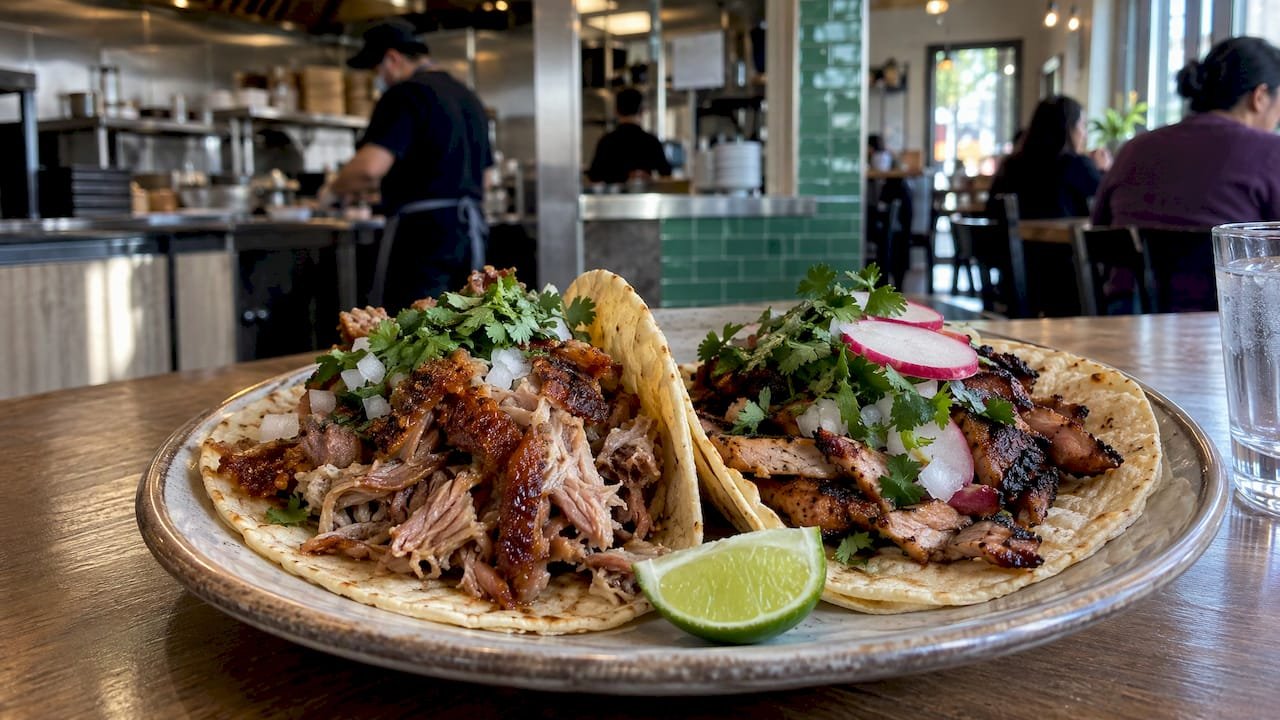
Carnitas begins with pork shoulder, seasoned with herbs and spices, braised in lard until tender, pulled apart and then roasted until slightly crisp. The style is traced to Michoacán, where pork shoulder is cut into chunks and simmered slowly in lard seasoned with chile, cumin, garlic and oregano. The result is juicy inside, with crisp edges.
Al pastor is thin shavings of pork marinated with achiote, guajillo chiles and pineapple and roasted on a vertical spit. The style traces back to Lebanese merchants who brought shawarma to Mexico City in the early 1900s. Mexican cooks swapped the lamb for pork and the Eastern spices for local flavours, and the dish became one of Mexico’s top taco styles.
A quick way to remember it: carnitas is about time in a pot, al pastor is about heat on a spit. Our own side-by-side is in Carnitas vs Al Pastor: spit roasted or confit pork.
| Carnitas | Al pastor | |
|---|---|---|
| Typical cut | Pork shoulder | Pork shoulder, sirloin or belly |
| Method | Slow braise, then pull and crisp | Marinate, stack, roast on a spit, shave |
| Flavour | Rich, savoury, pork-forward | Chile, achiote, pineapple, a little sweet |
| Texture | Tender strands with crisp edges | Thin, charred shavings |
| Usual finish | Pickled onions, salsa verde | Pineapple, onion, cilantro |
Which cut for which taco
Pork behaves very differently depending on where it comes from on the animal. Lean loin and tenderloin suit quick cooking, while fatty shoulder and belly suit slow cooking, because slow heat melts the collagen in tough cuts into something silky.
Manitoba Pork’s kitchen guide sorts this into two families:
- Dry heat (roasting, grilling, pan-frying) for loin and some leg or shoulder cuts.
- Moist heat (braising, stewing, slow cookers, pressure cookers) for marbled shoulder and belly.
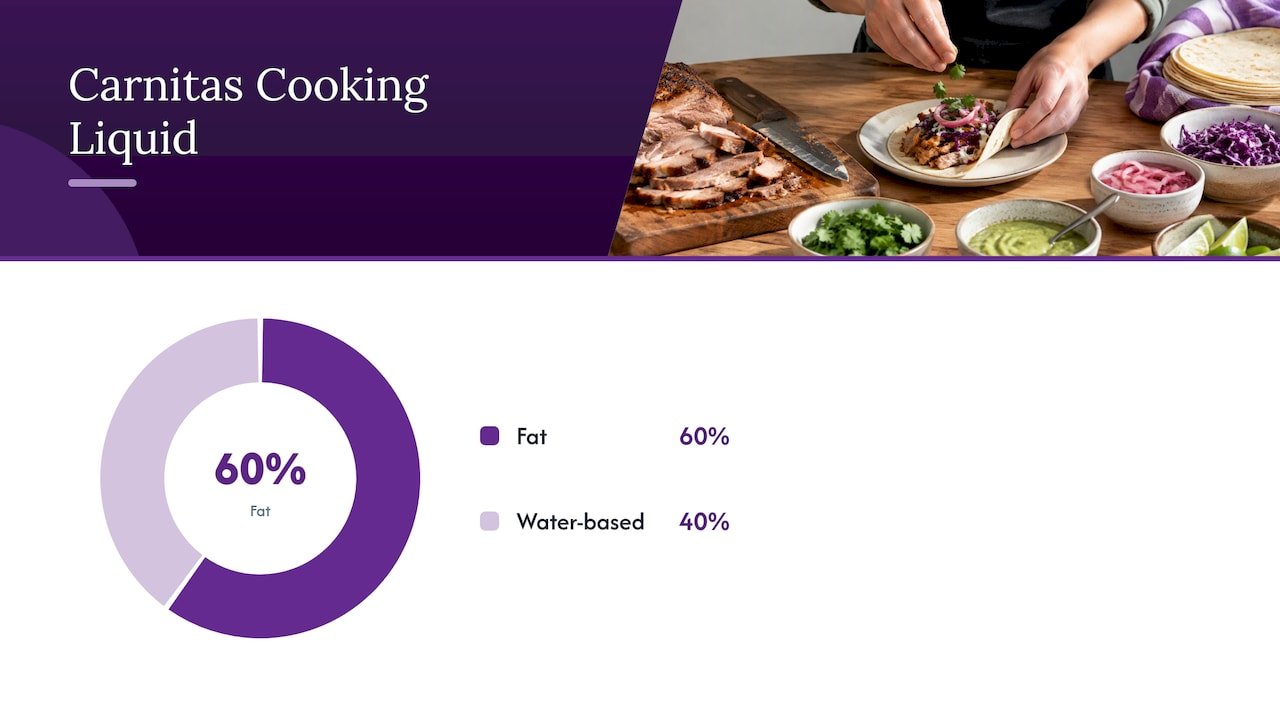
That is why carnitas almost always means shoulder. The fat and connective tissue break down over hours instead of drying out. One recipe tester’s rule of thumb for the cooking liquid: about 60% fat to 40% water-based liquid gave more tender, flavourful carnitas than fresh lard alone.
Al pastor is more flexible. One well-known tester found pork sirloin easier to slice and more tender than shoulder, while belly adds fat and flavour but is too rich alone, so he combined the two. Without a spit at home, a common approach is slicing boneless pork butt thin and cooking it over high heat for 3 to 5 minutes per side until charred.
What “Manitoba pork” actually means
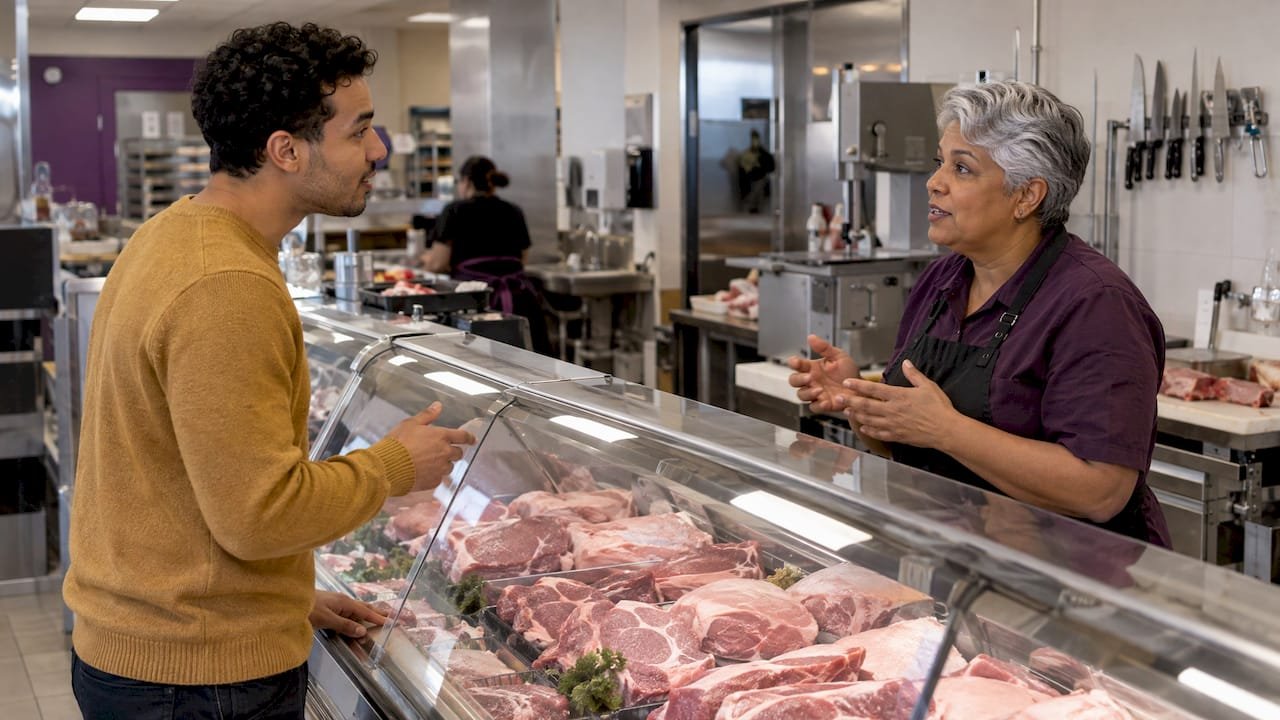
This is where a local reader can be misled. Not all pork processed in Manitoba is raised in Manitoba. If origin matters to you, that guide suggests asking the meat manager, shopping at an independent butcher or buying direct from a producer. On packaged fresh pork, look for the Canadian maple leaf or the Verified Canadian Pork sticker, a trademarked mark for federally approved pork from participating Canadian farmers and processors.
The same page notes that Canada’s meat inspection system is designed to ensure only healthy pigs are processed. It also gives a useful portion rule: the average pork serving is 100 g (3 oz) cooked, about the size of a deck of cards, which starts from 150 g (4 oz) of boneless raw pork. Foodland Ontario puts it slightly differently, at 120 g raw per 100 g cooked serving, so plan about 120 to 150 g raw per person, a little more for hungry taco eaters.
At our restaurants, pork comes from local farms, and our carnitas are slow-cooked and hand-pulled in-house. The tortilla is part of the story too: ours are house-pressed with 100% Manitoba-produced flour.
What pork tacos bring nutritionally
Pork has a better nutritional reputation than many people expect. According to Foodland Ontario, all trimmed pork cuts except ribs qualify as lean (10% fat or less), and a 100 g cooked serving of trimmed lean pork provides 191 calories, 29 g of protein and 7.5 g of fat. It also supplies thiamin, riboflavin, niacin, B6, B12, phosphorus, magnesium, iron and zinc. Manitoba Pork adds that pork is trans-fat free and that tenderloin is as lean as boneless, skinless chicken breast.
For wellness-minded diners, the taco itself is where choices add up:
- Protein-forward: a bowl or a few tacos with pulled pork gives you a high-protein meal without the bread. Our burrito bowl guide compares the formats.
- Gluten-free, keto and paleo: our menu offers options for each, and our staff are trained to handle dietary needs and cross-contamination concerns.
- Lower sodium: you can ask for no added salt. See low sodium Mexican orders for sample orders.
- Cooking method: we are a deep-fryer-free kitchen, so the pork is braised, not fried.
Topping choices change the picture as well. Pickled onions and salsa verde cut through rich pork without adding much, and pineapple gives al pastor its sweetness. For the full build, see our step-by-step taco assembly guide.
Making pork tacos at home, safely
If you cook pork tacos yourself, pork needs more care than the usual taco fillings, and today’s lean pork is easy to overcook. A digital thermometer solves both problems.
- Cook to temperature. Health Canada sets 71°C (160°F) for ground pork and for pieces or whole cuts such as chops and loin roast. Insert the thermometer through the thickest part to the middle, without touching bone.
- Keep it out of the danger zone. Manitoba Pork’s four steps are Clean, Separate, Chill, Cook. Pork should stay below 4°C (40°F) or above 60°C (140°F), since bacteria multiply quickly in between.
- Separate boards. Use one cutting board for produce and another for raw meat, and wash your hands with soap and warm water for at least 15 seconds.
- Rest and slice. Foodland Ontario advises resting a roast for 10 to 15 minutes under foil and slicing across the grain.
- Mind the label. “Seasoned” pork in the store is usually brined in salt, water and sodium phosphate to hold moisture, not flavoured with spices.
For carnitas, shoulder needs hours: a Dutch oven takes roughly 3 to 4 hours for the richest flavour, a slow cooker 6 to 8 hours, and a pressure cooker about 90 minutes, each finished in a hot skillet or under the broiler to crisp the edges. Our own 3-hour carnitas guide walks through the home method.
For al pastor, a sweet-savoury glaze helps replicate the caramelized edge of a trompo (the vertical spit). Unrefined cane sugar can do that job, and this panela barbecue sauce method shows how syrup-first sauces come together quickly.
Want the full routine? Our home taco guide covers tortillas and ingredients, and the authentic taco checklist covers the rest.
Where to eat Manitoba pork tacos in Winnipeg
Cooking carnitas properly takes an afternoon and a good deal of attention. Ordering them takes minutes. At Burrito Splendido you can have pork tacos built your way, with carnitas (braised pork) slow-cooked and hand-pulled in-house, alongside barbacoa (shredded beef) and adobo chicken. In season, our Manitoba whitefish and pickerel tacos show the same local approach with fish. If you are curious, read what a Manitoba whitefish taco is.
Tacos are one format among several. The same pork works in burritos, naked burrito bowls, quesadillas and salads, so you can match it to how you eat, whether that is a high-protein lunch, a vegan friend’s order sitting beside yours, or a family dinner. The healthy lunch in Winnipeg page shows seasonal bowls. For a wider look at the cuisine, try authentic Mexican dishes for Manitoba food fans.
Pork tacos for a crowd
Office lunches, team events and family gatherings are where hand-pulled pork makes the most sense, because the slow cooking is done for you. Our catering menu lists Burrito Express at $1,050 to $1,150 and Burrito Express Deluxe at $1,550. Delivery and set-up is $20, catering staff are $15 per hour per staff member, and gratuity is 10%. Dietary needs, from gluten-free to vegan, can be planned into the order.
We also serve the CANEX Mall at CFB Shilo, so military and community personnel looking for high-protein meals near the base can find pulled pork and bowls there.
Perspective
We built Burrito Splendido around one idea: fresh, local and doing the right thing. With pork tacos, that idea is easy to test with your tongue. A taco is only as good as what goes into it, so the pork comes from local farms, the meat is slow-cooked and hand-pulled in our kitchens every day, and the tortilla is pressed with Manitoba flour.
We think that is what separates a taco from something assembled out of a bag. Carnitas deserves hours, not shortcuts. We run a deep-fryer-free kitchen because we want people to eat well and feel good afterwards, and we train our staff so that gluten-free, vegan, keto and paleo guests get the same care as everyone else.
Eating local is also how a restaurant stays part of its community. Every taco we serve is a small vote for Manitoba farmers, millers and cheesemakers, and we are proud to keep making that choice.
Austin
FAQ
What is the difference between carnitas and al pastor?
Carnitas is pork shoulder braised slowly in fat, pulled apart and crisped. Al pastor is thinly sliced marinated pork roasted on a vertical spit and shaved onto tortillas. Carnitas is rich and tender, al pastor is chile-spiced with a touch of pineapple.
Is all Manitoba pork raised in Manitoba?
No. Manitoba Pork notes that not all pork processed in the province is raised there. Look for the Canadian maple leaf or Verified Canadian Pork sticker, or ask a butcher or the meat manager where the pork comes from.
What temperature should pork be cooked to for tacos?
Health Canada recommends 71°C (160°F) for ground pork and for whole cuts and pieces, measured with a thermometer in the thickest part without touching bone. Slow-braised shoulder goes well beyond that, which is why it pulls apart so easily.
Can I get pork tacos on a gluten-free, keto or paleo diet?
Yes. We offer gluten-free, vegan, keto and paleo options, and our staff are trained on dietary needs and cross-contamination. A pulled pork bowl is a common choice for low-carb eaters.
Sources
- Al Pastor, Carnitas, and Barbacoa Differences, PopSugar
- A Guide To (Almost) Every Taco Filling, The Daily Meal
- 15 Mexican Taco Styles, Explained, Chowhound
- 20 Tips You Need When Cooking With Pork, Tasting Table
- In the Kitchen: Pork Cooking, Handling, and Safety, Manitoba Pork
- No-Waste Tacos de Carnitas, Serious Eats
- Homemade Tacos Al Pastor, Serious Eats
- Tacos Árabes Recipe, Epicurious
- Learn About Pork & How to Buy the Best Cuts, Manitoba Pork
- Pork, Foodland Ontario
- Discover the Nutritional Benefits of Pork, Manitoba Pork
- Safe cooking temperatures, Health Canada
- Carnitas Tacos Recipe, Foodie and Wine