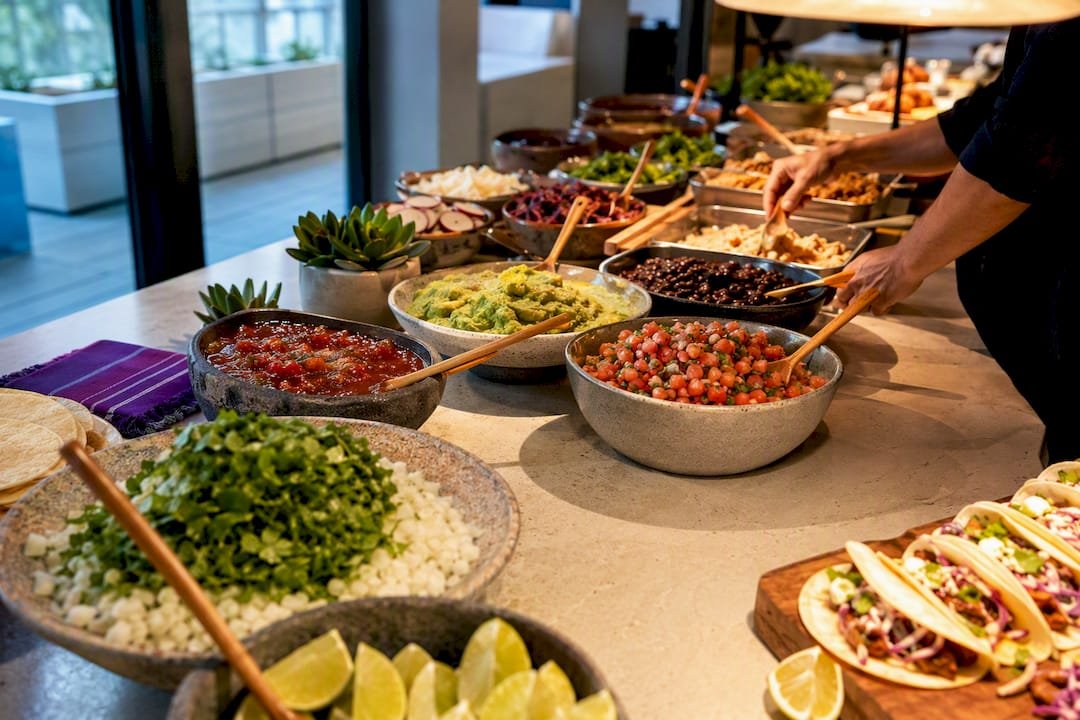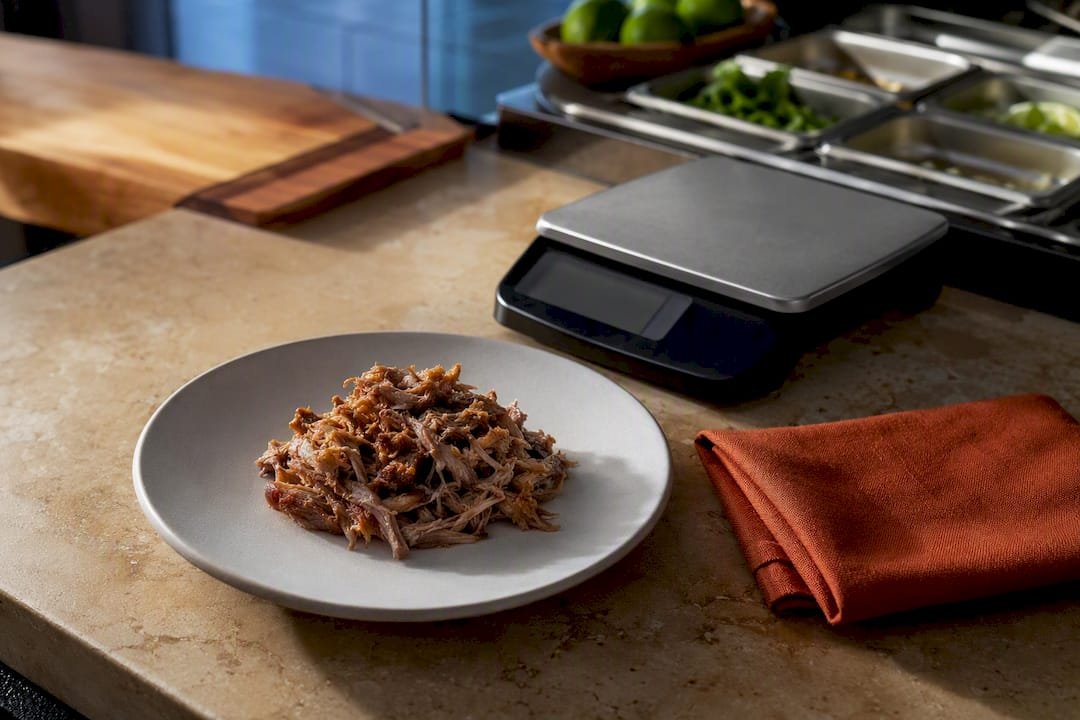
Plan on 2 to 3 tacos per adult, which works out to roughly 4 to 6 ounces of cooked meat per person. Buy raw meat at 1.25 times that cooked weight to cover the shrinkage that happens on the stove.
TL;DR:
- The raw meat needed for 25 guests is about 9.75 pounds, accounting for shrinkage, which is critical for accurate shopping.
- Expect tortillas to run out before meat, so plan for 5 to 6 per adult, with an added buffer of 10-20% for breakage and extra servings.
- Toppings such as cheese, salsa, and guacamole should be scaled to about 1-2 ounces per person, emphasizing abundance for perceived generosity.
- For evening events with alcohol, increase meat portions by approximately 15%, while parties with heavy sides require reducing protein estimates accordingly.
- Proper temperature control and equipment like chafing dishes and insulated carriers are essential for food safety and efficient service at larger taco gatherings.
Table of Contents
- Tacos per person: turning ounces into pounds you can actually buy
- How many tortillas, and how much cheese, salsa, and guacamole per guest?
- Adjusting your numbers for kids, teens, and evening parties
- Setting up a safe taco bar: temperatures, timing, and traffic flow
- Your shopping list and prep timeline, built from the math above
- What catering taco events actually teaches you about portioning
- Why the “just buy extra” instinct usually backfires
- When Burrito Splendido catering takes the math off your plate
- Sources
Tacos per person: turning ounces into pounds you can actually buy
Every taco holds about 2 to 4 ounces of cooked filling, depending on how generous you get with the scoop. Multiply that by 2 to 3 tacos and you land at the same number party calculators keep landing on: 4 to 6 ounces of cooked meat per adult for a main course spread. Some calculators trim that down slightly to 4 to 5 ounces per guest when tortillas and toppings are generous enough to fill the rest with the plate.
The conversion that trips up most first-time hosts isn’t the taco count; it’s the jump from “how much cooked meat do I need” to “how much raw meat do I actually buy at the counter.” Meat loses roughly 20% of its weight to moisture and fat during cooking, so the standard shrinkage math is simple: raw weight equals cooked weight times 1.25.
Here’s the math laid out for three common guest counts, assuming 5 ounces of cooked meat per person:
- 10 guests: 50 oz cooked meat needed (about 3.1 lb) → buy roughly 3.9 lb raw.
- 25 guests: 125 oz cooked meat needed (about 7.8 lb) → buy roughly 9.75 lb raw.
- 50 guests: 250 oz cooked meat needed (about 15.6 lb) → buy roughly 19.5 lb raw.
Quick statistic to anchor your shopping list: one pound of cooked taco meat typically fills 2.5 to 3 servings when guests eat 2 to 3 tacos each. That means a 50-person party needs somewhere around 17 to 20 lb of cooked meat total before you even touch the shrinkage multiplier, which lines up almost exactly with the raw totals above.
Pro Tip: Weigh your raw meat before cooking and again after. Once you know your own shrinkage rate for a specific cut, like brisket versus ground beef, you’ll stop guessing every time you cater a party.
Ground beef and shredded chicken shrink less dramatically than a slow-braised cut like pork shoulder, which can lose more moisture over a long cook. If you’re working with carnitas style pork, lean toward the higher end of that 1.25 multiplier rather than the lower end.
How many tortillas, and how much cheese, salsa, and guacamole per guest?
Tortillas run out before meat does, almost every time, because guests grab a fresh one for their second and third taco instead of reusing a torn one. Plan on 5 to 6 tortillas per adult for a 2 to 3 taco meal, which already builds in room for the person who insists on double-stacking every single taco.
Add another 10 to 20% buffer on top of that count for breakage, seconds, and the odd guest who tears three tortillas trying to get one off the stack. For a party of 25, that means buying closer to 150 tortillas rather than the bare-minimum 125.
Toppings scale differently than protein does. A well-stocked topping bar actually lets you serve less meat per person without anyone noticing, because variety and abundance matter more to perceived generosity than raw protein weight.
- Cheese: about 2 oz shredded per person.
- Lettuce or cabbage: 1 to 1.5 oz per person, shredded fine.
- Salsa: 1 to 2 oz per person, split across two varieties if you can.
- Guacamole: roughly half an avocado’s worth per person, more if it’s a headline topping.
- Rice and beans: a half-cup serving each stretches the meal and reduces how much protein guests reach for.
Offering a second protein, even a simple vegetarian option like seasoned black beans or grilled peppers, spreads demand across two stations instead of one and cuts down the chance you run dry on your primary meat before the night ends.
Adjusting your numbers for kids, teens, and evening parties
The 2 to 3 taco baseline assumes a room full of average adults eating a normal dinner portion. Real guest lists rarely look like that, so you need a few quick multipliers to bend the math toward your actual crowd.
- Children under 10: plan for 50 to 75% of an adult portion, so roughly 1 taco with a smaller meat scoop.
- Teenagers and self-described big eaters: bump up 15 to 25% over the adult baseline.
- Seniors and light eaters: drop 10 to 25% below the baseline.
- Evening events with alcohol: add about 15%, since drinking tends to push people toward a third or fourth taco.
- Parties with heavy sides or multiple courses: subtract roughly 15%, since a loaded appetizer table or a dessert spread eats into taco demand.
A worked example makes this concrete. Say you’re hosting 20 adults, 6 teenagers, and 4 kids for an evening party with beer on hand. Your adults need the standard 5 oz cooked meat each, or 100 oz. Kids get 3 oz each, adding 12 oz. Total cooked meat comes to 148 oz, or roughly 9.25 lb, before you even apply the evening alcohol bump to the adult and teen portions.
Setting up a safe taco bar: temperatures, timing, and traffic flow
Food safety rules don’t bend for a party, no matter how casual the setup looks. Hot food needs to stay at 60°C (140°F) or higher, and cold toppings need to stay at 4°C (40°F) or lower. Anything perishable that sits outside those ranges for more than two hours gets tossed, full stop, no matter how much of it is left.
A few pieces of equipment make holding those temperatures a lot easier than juggling reheats all afternoon:
- Chafing dishes for meat, especially if you’ve got more than one protein working.
- A slow cooker on the warm setting, with the lid left slightly ajar during service so condensation doesn’t drip and turn your protein soggy.
- Insulated carriers for transporting food to an outdoor party or a rented hall.
Statistic worth remembering: for groups larger than about 25 guests, duplicate your taco bar into two lines rather than forcing everyone through one queue. It cuts wait times dramatically and keeps hot food from sitting under lights any longer than it needs to.
Add a splash of broth or reserved cooking liquid to your meat pan every 30 to 40 minutes of service. It keeps carnitas and barbacoa from drying into leather under a heat lamp, and it costs you nothing but a ladle and a few minutes of attention.
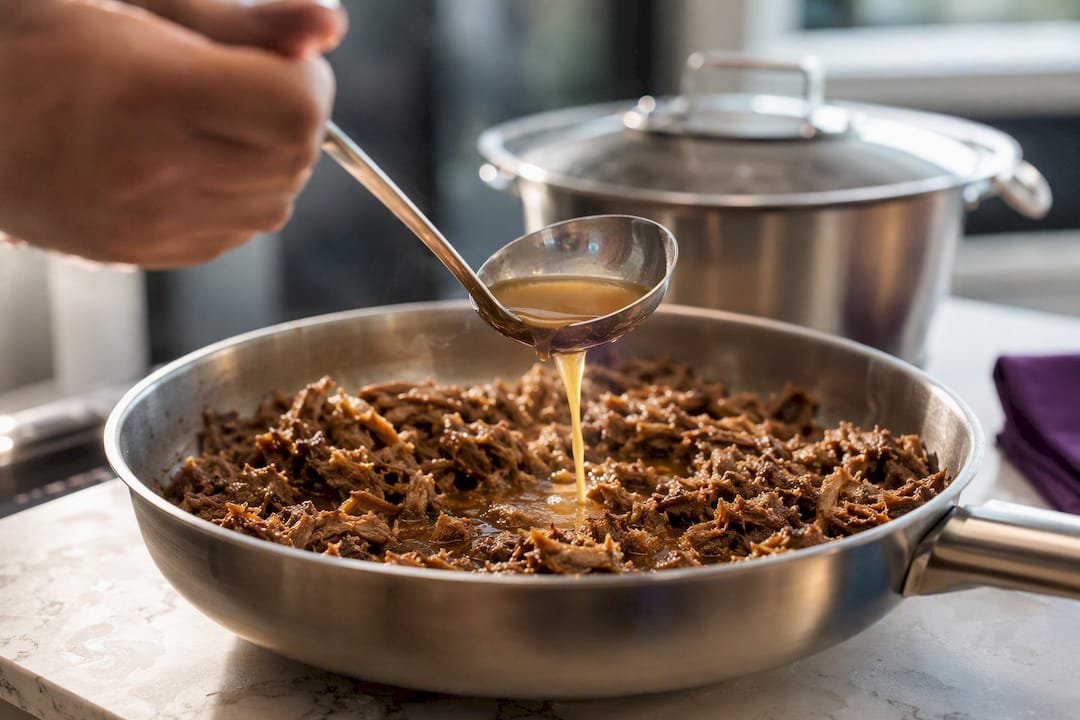
Line order matters more than people expect: tortillas first, hot proteins second, cold toppings and sauces last. That sequence keeps the queue moving and stops warm hands from lingering near the ice-cold guacamole bowl.
Your shopping list and prep timeline, built from the math above
Once you’ve settled on your guest count and adjustments, the shopping list writes itself. For a party of 25 adults with the standard baseline, you’re looking at roughly 9.75 lb raw meat, 150 tortillas, about 3 lb of shredded cheese, and a few dozen limes for garnish, plus enough salsa and guacamole to match.
Two days before: shop for everything shelf-stable, and start any slow-braised protein like carnitas or barbacoa, since both improve after a day resting in the fridge.
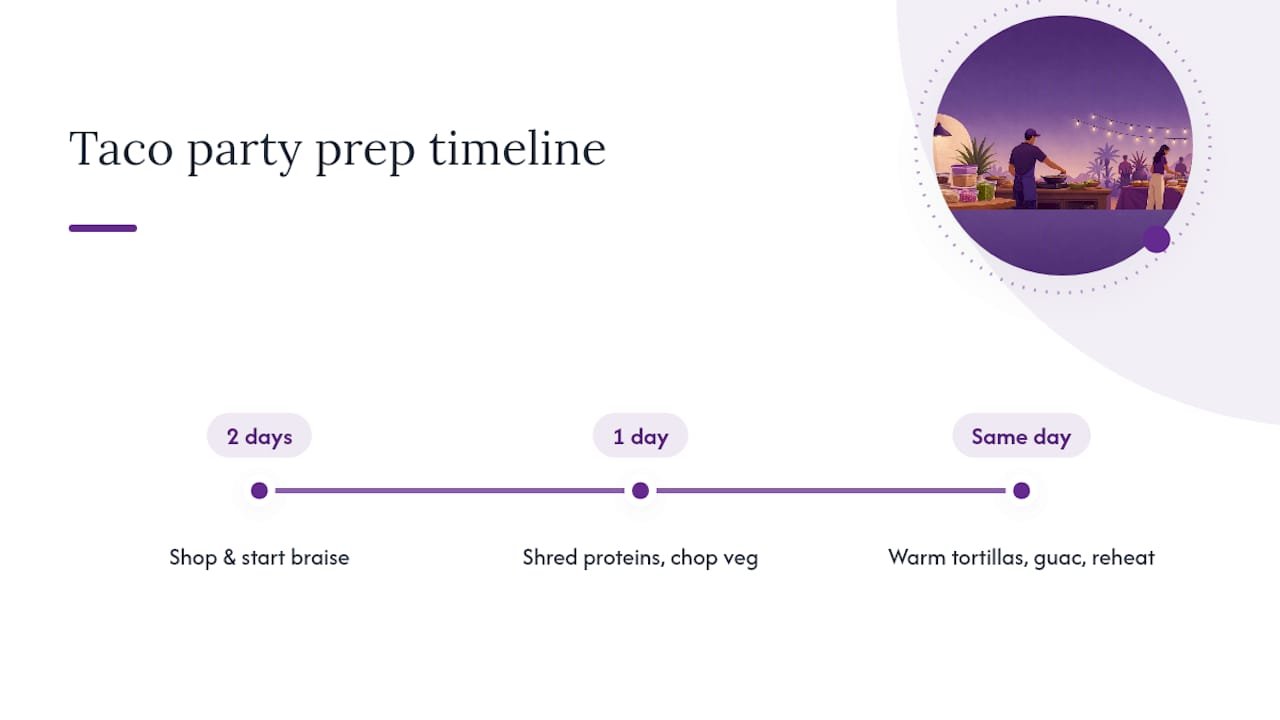
The day before: shred or dice your proteins, chop lettuce and cabbage, and make salsa if it’s a cooked variety.
Same day: press or warm tortillas last, mash guacamole no more than a few hours ahead so it doesn’t brown, and reheat proteins gently with a splash of their own juices to bring back moisture.
Pro Tip: Keep a small notepad by the serving table and jot down which proteins and toppings run out first. That five-minute habit turns your next party into a far more accurate estimate than any calculator can give you.
Storage-wise, cooked meat holds well in the fridge for a few days in a sealed container, and reheating with a bit of added liquid, whether that’s stock, salsa, or the pan drippings you saved, brings it back close to fresh. For more ideas on building out a full topping bar without over-planning any single component, Burrito Splendido’s taco bar guide walks through the layout in more detail.
What catering taco events actually teaches you about portioning
Running taco service for groups that range from a dozen coworkers to a few hundred wedding guests exposes patterns that a spreadsheet never quite captures. Double-stacked tortillas are the single biggest reason hosts underestimate their tortilla count, not portion size. Give guests the option and a meaningful share of them will use two tortillas per taco out of habit, not hunger.
Protein splits also settle into a predictable pattern once you’ve watched enough tables. A shredded, saucy protein like barbacoa tends to get eaten faster than a drier option, simply because it feels more generous on the plate even at the same weight. That’s part of why offering two proteins side by side, rather than doubling down on one, tends to stretch a budget further than raw ounces alone would suggest.
For hosts weighing whether to cook everything themselves or bring in help, the deciding factor usually isn’t cost. It’s whether you want to spend the party managing a chafing dish or actually talking to your guests. Catering that handles from-scratch proteins and dietary accommodations, including gluten-free and vegan options, removes the entire shopping-list exercise from your plate.
Why the “just buy extra” instinct usually backfires
Most hosts overcorrect for fear of running short, and the fix they reach for, buying noticeably more meat than the math calls for, is the wrong lever to pull. Extra meat sitting in the fridge for three days is a bigger loss, in both cost and quality, than running slightly low on one topping that guests barely notice missing.
The real insurance policy is in the tortillas and the toppings, not the protein. Toppings work the same way. A second salsa or an extra half-avocado of guacamole stretches perceived abundance further per dollar than another pound of ground beef ever will.
If there’s one number worth memorizing over all the others in this piece, it’s the 1.25 raw-to-cooked multiplier. Get that right and your protein budget takes care of itself. Everything else, the tortilla buffer, the topping ratios, the kid and teen adjustments, is fine-tuning around a number you should nail first.
— Austin
When Burrito Splendido catering takes the math off your plate
Catering starts making sense the moment your guest count climbs past what one home stove can comfortably handle, or when your guest list includes dietary needs you’d rather not manage solo on party day. If you’re staring down a 50-person backyard party with three vegans, two gluten-free eaters, and a cousin who only eats keto, the shrinkage math above is the easy part. Coordinating five different prep stations in one kitchen is where DIY plans usually fall apart.
Every taco event builds around from-scratch proteins like carnitas, barbacoa, and adobo chicken, hand-pulled in-house from local-sourced meat, alongside gluten-free soft corn tortillas and dedicated vegan options that don’t feel like an afterthought. That means the portioning, the holding temperatures, and the topping variety are already handled before your guests arrive, and you get to spend your party actually hosting instead of refilling a chafing dish. If your event calendar has a taco night on it, request a catering quote and get the headcount conversation started early. It’s the fastest way to lock in a date before your preferred weekend fills up.
Sources
- Free Taco Bar Calculator: Meat, Shells & Toppings Per Person | OnePageParty
- Ultimate taco bar party guide: setup, quantities & toppings