Stack a soy protein like tofu or tempeh with beans and a whole grain such as quinoa, and you can get a substantial amount of protein in a single Mexican-style meal without touching meat. The three most reliable combinations are tofu with black beans and quinoa, tempeh with pinto beans and pumpkin seeds, or cottage cheese with lentils and corn tortillas. Each stack works for dinner tonight and for a batch you portion into containers on Sunday.
TL;DR:
- Combining legumes with grains or seeds significantly boosts protein intake, with typical meals reaching 22 to 28 grams of protein per serving.
- Popular Mexican-inspired dishes like burritos and tacos can provide 19 to 34 grams of protein, depending on ingredient ratios and portion sizes.
- Preparing ingredients such as tofu, tempeh, and beans correctly enhances flavor and texture, making vegetarian dishes more satisfying and meal-prep friendly.
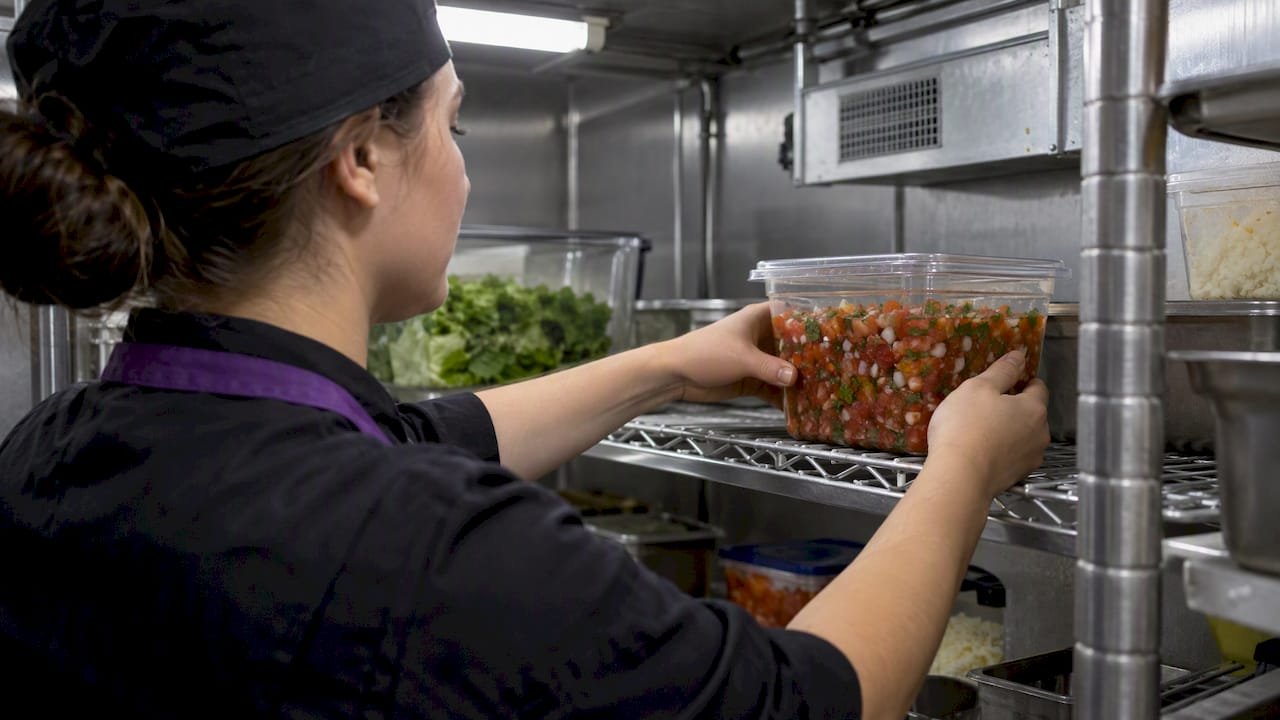
- Storing toppings separately and layering moisture-heavy ingredients at the end prevents sogginess during storage and reheating.
- Repeating core ingredients like beans, grains, and proteins weekly with small variations helps achieve daily protein goals without complicated cooking.
Table of Contents
- Quick shortlist: 8 high-protein Mexican meal ideas to try right away
- Best plant-based protein ingredients for Mexican cooking
- Curated high-protein Mexican recipes and how much protein they deliver
- Meal-prep plan: how to structure a week to hit 80 to 120 grams protein
- Texture, flavour and substitution tips specific to Mexican-style dishes
- Why trust this guidance: kitchen practice behind the recommendations
- What most protein listicles get wrong about Mexican vegetarian cooking
- Order it instead: protein-forward vegetarian options at Burrito Splendido
- Sources
Quick shortlist: 8 high-protein Mexican meal ideas to try right away
You don’t need a spreadsheet to eat well this week. These eight ideas cover breakfast through dinner, and most reheat cleanly for lunches.
- Black bean and tofu scramble tacos — grated extra-firm tofu, black beans, corn tortillas. Roughly 18 to 22g protein per serving. Freezer-safe if you skip the fresh pico.
- Tempeh street tacos with salsa fresca — crumbled tempeh browned hard, warm corn tortillas, radish and lime. Provide a moderate amount of protein, based on a documented tempeh taco recipe.
- Quinoa and black bean burrito bowl — quinoa, black beans, roasted peppers, pumpkin seeds. Typically 24 to 28g protein.
- Chickpea and mushroom picadillo — grated tofu, diced mushroom, chickpeas simmered in a smoky tomato base. Offers a good protein level and is meal-prep friendly.
- Lentil and cheese quesadillas — refried lentils, Monterey Jack, whole wheat tortilla. About 22g protein per quesadilla.
- Loaded vegetarian burrito — beans, tofu or tempeh, rice, cheese, seeds. Commonly 22 to 34g protein, per Food with Feeling’s burrito breakdown.
- Roasted chickpea and tofu Buddha bowl — tofu, roasted chickpeas, quinoa, tahini drizzle. Can reach a high protein level with generous portions.
- Greek yoghurt breakfast burrito — scrambled eggs or tofu, black beans, Greek yoghurt crema. Provides a good protein amount and holds up well wrapped for grab-and-go mornings.
Best plant-based protein ingredients for Mexican cooking
These ingredients are common in Mexican and Mexican-inspired kitchens, but preparation affects their flavor impact.
- Super-firm tofu: skip the pressing step entirely, grate it cold, then pan-fry until the edges crisp. It picks up cumin and chili powder better than extra-firm because it’s drier out of the package.
- Tempeh: steam it for five minutes first to cut bitterness, then crumble and sear hard in a dry pan before adding sauce. Roughly 16 to 19g protein per 100g serving.
- Black and pinto beans: canned works fine, but simmering dried beans with epazote or bay leaf gives a rounder flavour. About 15g protein per cooked cup.
- Lentils: red lentils break down fast and mimic ground meat texture in picadillo or taco filling. Roughly 18g protein per cooked cup.
- Quinoa: rinse thoroughly before cooking to strip the bitter saponin coating, then toast it dry in the pot for a minute before adding liquid. About 8g protein per cooked cup, and it’s a complete protein on its own.
- Edamame: toss frozen shelled edamame straight into bowls for a quick 17g protein per cup, no prep required.
- Chickpeas: roast at high heat with oil and salt until they rattle in the pan. Around 15g protein per cooked cup, plus real crunch.
- Hemp, flax, and chia seeds: sprinkle raw over finished bowls for a 3 to 5g protein boost per tablespoon without changing the dish’s flavour profile.
- Cottage cheese and Greek yoghurt: for vegetarians (not vegans), these add 12 to 20g protein per half-cup and work well folded into scrambles or as a crema substitute.
Pro Tip: No single plant protein carries every essential amino acid in ideal ratio, but pairing a legume (beans, lentils, chickpeas) with a grain (quinoa, corn tortillas, rice) fills the gaps naturally. Canada’s dietary reference values for macronutrients note that daily variety, not perfect single-meal balance, is what actually matters for adults.
Curated high-protein Mexican recipes and how much protein they deliver
These picks span the day, and each one gives you a real protein number to plan around, not a guess.
- Breakfast black bean and tofu burrito: scrambled tofu, black beans, salsa, wrapped in a whole wheat tortilla. About 20g protein. Ten minutes to cook, and it freezes well wrapped in foil for up to two months.
- Quinoa and roasted vegetable burrito bowl: quinoa, black beans, roasted zucchini and peppers, avocado, pumpkin seeds. Around 24g protein. Prep the grain and beans Sunday, assemble fresh through the week.
- One-pan tempeh taco skillet: crumbled tempeh, corn, black beans, taco seasoning, all cooked in one skillet. Close to 26g protein and it reheats in a microwave without drying out.
- Chickpea and mushroom picadillo: grated tofu, finely diced mushroom, chickpeas, raisins, and green olives simmered in tomato sauce, a technique borrowed from a chickpea picadillo built around mushrooms and tofu standing in for ground meat. Roughly 21g protein per serving over rice.
- High-protein black bean tacos: refried black beans, queso fresco, cabbage slaw, corn tortillas. About 19g protein for two tacos.
- Loaded protein burrito: black beans, tofu or tempeh, brown rice, cheese, hemp seeds. Typically lands in the 22 to 34g protein range depending on how heavy-handed you are with the beans and cheese.
- Tofu and roasted chickpea Buddha bowl: extra-firm tofu, roasted chickpeas, quinoa, tahini dressing, pickled onion.
One version of this bowl reaches 47 grams of protein per serving when tofu and roasted chickpeas are both served in full portions alongside quinoa, making it one of the highest-protein single meals on this list.
Most of these hold up in the fridge for three to four days. The exception is anything with fresh avocado or cabbage slaw. Keep those separate and add them right before eating, or you’ll end up with a soggy container by Wednesday.
Meal-prep plan: how to structure a week to hit 80 to 120 grams protein
Hitting a daily protein target without meat comes down to repetition with small upgrades, not reinventing dinner every night.
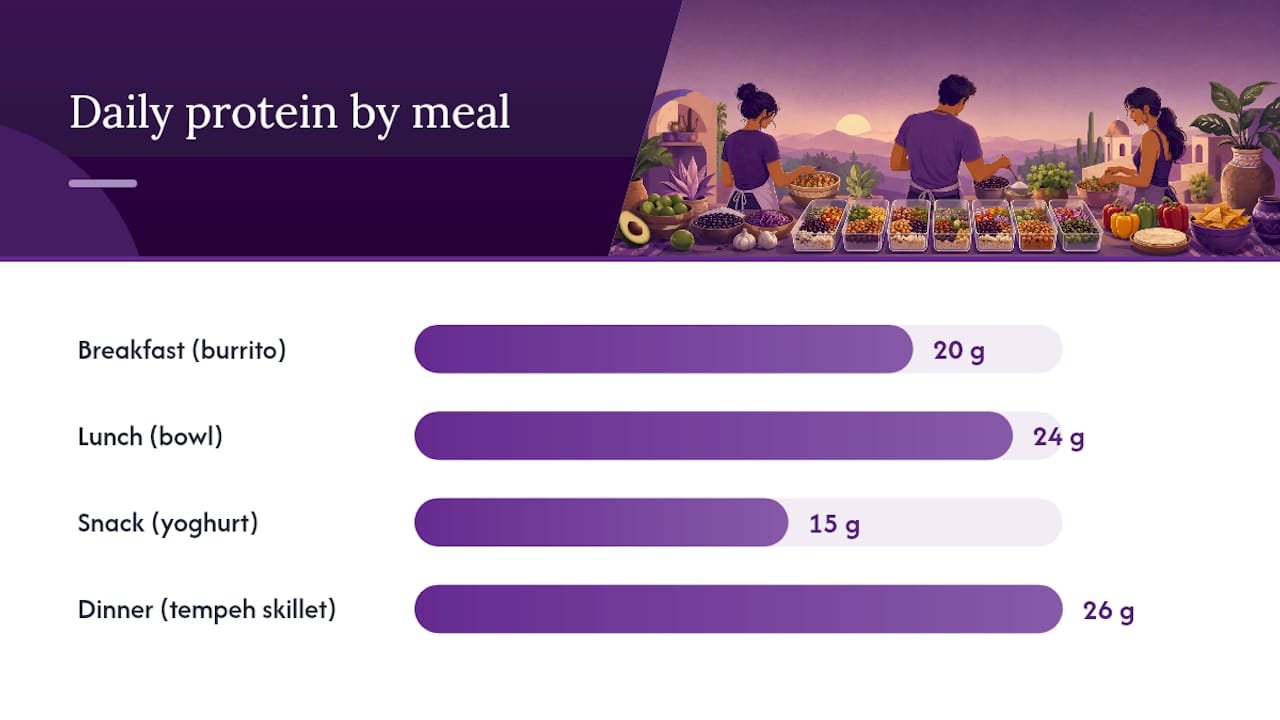
One-day sample:
- Breakfast: black bean and tofu burrito (~20g)
- Lunch: quinoa and black bean bowl with pumpkin seeds (~24g)
- Snack: Greek yoghurt with chia seeds (~15g)
- Dinner: tempeh taco skillet (~26g)
That’s already close to 85g for the day, and a small serving of edamame or a handful of pepitas closes any remaining gap.
Three-day rotation logic:
Cook a large batch of beans, a batch of quinoa, and one protein (tofu or tempeh) on Sunday. Rotate them across tacos, bowls, and quesadillas so nothing tastes repetitive even though the base ingredients repeat.
Three swaps raise your daily total fast: double the beans in any bowl for an extra 15g, cube in a second block of tofu across the week’s dinners, or stir a tablespoon of hemp seeds into whatever you’re eating. None of these change the flavour of the dish, they just make it work harder.
Pro Tip: Super-firm tofu is the better meal-prep choice over extra-firm because it holds its shape through a week of reheating without turning mushy, and you skip the pressing step entirely.
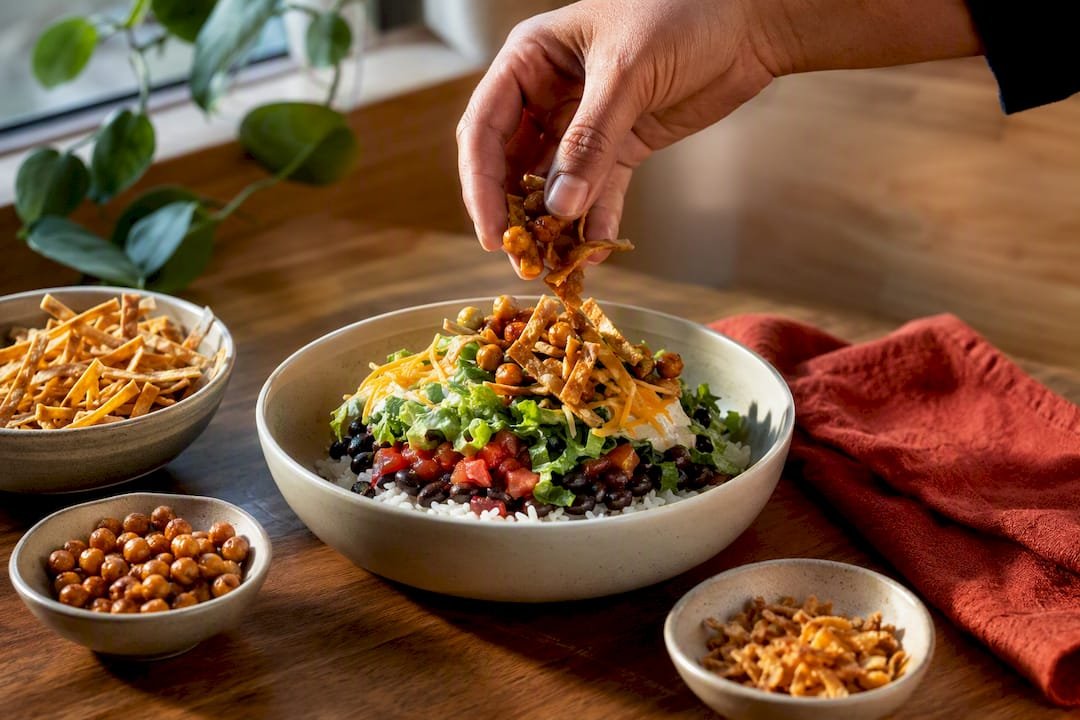
Store crisp toppings (fried onions, roasted chickpeas, tortilla strips) in separate containers from your rice and beans. Layer rice first, beans and protein next, and a light hand with sauce, then add anything crunchy right at the table.
Texture, flavour and substitution tips specific to Mexican-style dishes
The biggest complaint about vegetarian Mexican cooking is texture, not flavour, and it’s an easy fix once you know the tricks.
- Grate tofu on a box grater before cooking to get a ground-meat texture that holds seasoning better than cubed tofu.
- Dice mushrooms small and sauté until browned before adding to picadillo or taco filling for a meaty chew.
- Roast chickpeas at 425°F until they rattle in the pan for crunch that survives a day in the fridge.
- Toast cumin, chili powder, and dried oregano in oil for thirty seconds before adding other ingredients to wake up their flavour.
- Add a splash of lime juice or a spoonful of chipotle paste at the end of cooking for the umami punch that meat usually provides.
- Swap sour cream for a cashew crema or Greek yoghurt, and swap chorizo for spiced crumbled tempeh, using the same seasoning ratio you’d use for the original.
Pro Tip: Layer moisture-heavy ingredients like salsa or guacamole on top rather than mixed through a burrito or bowl, so the tortilla or grain underneath stays intact through reheating.
Why trust this guidance: kitchen practice behind the recommendations
This guidance comes from Austin, whose writing on Burrito Splendido’s blog covers authentic Mexican proteins and practical vegan burrito construction. Burrito Splendido runs a from-scratch, deep-fryer-free kitchen with staff trained to handle vegan, vegetarian, and gluten-free orders without cross-contamination, which means the protein-stacking logic here reflects what actually works when you’re building a bowl or burrito to order rather than in theory.
What most protein listicles get wrong about Mexican vegetarian cooking
Most recipe roundups treat protein grams as an afterthought bolted onto a photo caption. The real work is in the stacking logic: a bean alone won’t get you to 30 grams, but a bean plus a grain plus a seed boost reliably will, and almost no listicle explains why that combination outperforms any single ingredient.
The other gap is texture advice. Readers get told to “use tofu” with zero guidance on grating versus cubing, or why super-firm beats extra-firm for a Tuesday-to-Friday meal prep container. That’s the difference between a bowl that tastes like a compromise and one you actually look forward to eating.
If you take one thing from this collection, prioritize the stack over the single ingredient. Quinoa alone is a complete protein but a thin one at 8 grams a cup. Paired with black beans and a handful of pumpkin seeds, the same bowl does real work toward your daily total, and it tastes like a finished dish instead of a nutrition worksheet.
— Austin
Order it instead: protein-forward vegetarian options at Burrito Splendido
Some nights the better move is letting someone else’s from-scratch kitchen do the grating, roasting, and stacking for you. Some restaurants build burritos, bowls, and tacos to order, allowing you to customize ingredients and protein bases.
The menu is built around customization, so a naked burrito bowl with extra beans and seeds is a normal order, not a special request. Locations may source produce locally and have staff trained regarding vegan, vegetarian, and gluten-free handling. Feeding a group instead of yourself? The catering page lets you build a protein-forward vegetarian spread for an office lunch or family gathering without a single person standing over a stove. Check the menu, build your bowl, and place the order.
Sources
- Health Canada — Reference values for macronutrients
- PCRM — Crunchy tempeh tacos with salsa fresca
- New York Times Cooking — Chickpea picadillo
- FitChef — Buddha bowl with tofu & roasted chickpeas
- Food with Feeling — High protein vegetarian burritos