The bowl is the better default for most everyday goals. A large flour tortilla adds roughly 290–320 calories and 45–50 g of carbohydrates before a single filling goes in, so skipping it immediately changes the numbers. The fillings stay the same; only the wrapper changes. At Burrito Splendido in Winnipeg, staff handle both formats daily, and the split between bowl and burrito orders reflects exactly this trade-off: nutrition control on one side, handheld convenience on the other.
Pick a bowl when you want:
- Fewer calories and clearer portion visibility
- Easy meal-prep and reliable reheating
- A gluten-free or lower-carb build without substitutions
Pick a burrito when you want:
- A warm, portable, one-handed meal on the go
- The satisfying density of a wrapped, handheld format
- A comfort-food experience that travels well
Key takeaways
The bowl is the better default for nutrition control and meal prep; the burrito wins for portability and the handheld experience.
| Point | Details |
|---|---|
| Tortilla calorie impact | A large flour tortilla adds roughly 290–320 cal and 45–50 g of carbs before any filling. |
| Bowl = better control | Open format makes portions visible and components easier to adjust for any dietary goal. |
| Protein is format-neutral | Protein totals stay comparable across bowl and burrito when you use the same portion size. |
| Burrito = best portability | Fully handheld, no utensil needed, low spill risk — the right call for eating on the move. |
| Burritosplendido | Offers both formats with Manitoba-sourced ingredients, dietary accommodations, and catering options across Winnipeg and Brandon. |
Table of Contents
- What is a burrito bowl, and how does it differ from a burrito?
- How do burrito bowl vs burrito calories and macros actually compare?
- Which format wins for portability, satiety, and leftovers?
- How do bowls and burritos handle gluten-free, low-carb, and vegan diets?
- Quick swaps to make either format healthier
- How Burritosplendido handles bowls and burritos in practice
- Which should you pick? A quick decision checklist
- What most people get wrong about the bowl vs burrito choice
- Fresh bowls and burritos, made your way at Burritosplendido
- Sources
What is a burrito bowl, and how does it differ from a burrito?
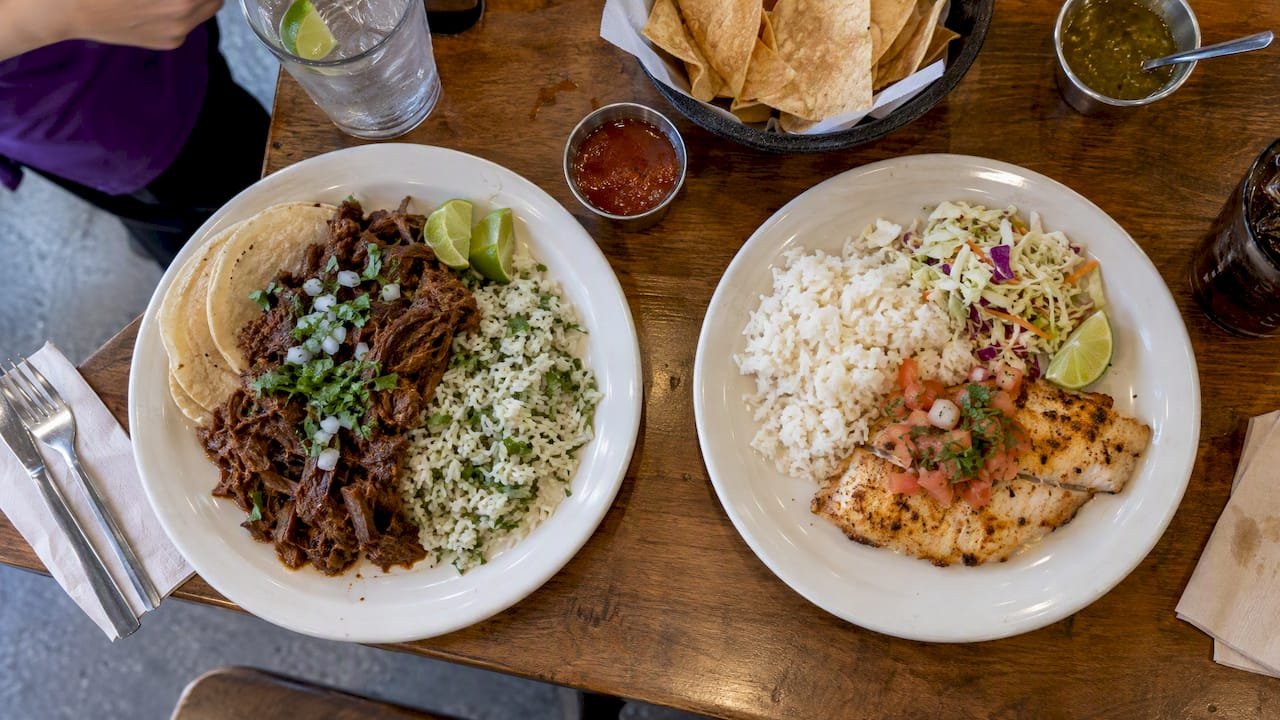
A burrito is a large flour tortilla wrapped tightly around a filling of rice, beans, protein, and toppings like salsa, cheese, sour cream, and guacamole. The tortilla is structural: it holds everything together and adds its own calories, carbs, and texture to every bite.
A burrito bowl is the same combination of fillings served open in a bowl, no tortilla required. The base swaps to rice (white or brown), mixed greens, or cauliflower rice. You eat it with a fork, and every ingredient is visible, which makes portioning and customising straightforward.
Common fillings in both formats:
- Base: white rice, brown rice, cauliflower rice, or mixed greens
- Beans: black beans or pinto beans
- Protein: grilled chicken, slow-cooked carnitas, barbacoa, steak, tofu, or roasted vegetables
- Toppings: salsa, pico de gallo, shredded cheese, sour cream, guacamole, pickled jalapeños, corn
The practical difference is the tortilla and the utensil. A burrito needs no fork. A bowl needs one, and a flat surface helps. That single distinction drives most of the portability and nutrition gap between the two.
How do burrito bowl vs burrito calories and macros actually compare?
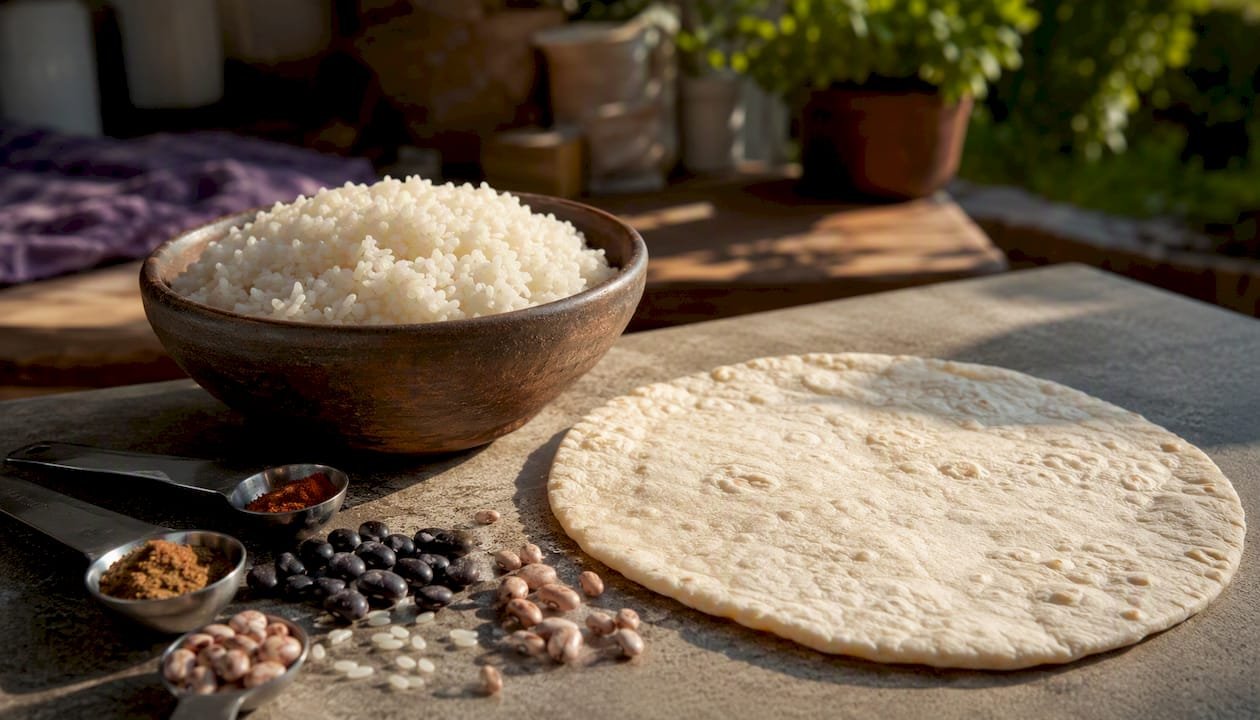
The base drives the difference. Swap a large flour tortilla for a cup of cooked white rice and you trade roughly 290–320 calories and 45–50 g of carbs for about 200 calories and 44 g of carbs. Move to a greens base and the numbers drop further. Protein stays nearly identical across both formats when you use the same portion of meat or beans.
Dietitians note that a bowl usually makes calorie control easier, but toppings like cheese, sour cream, and guacamole can close the gap quickly. The format is a starting advantage, not a guarantee.
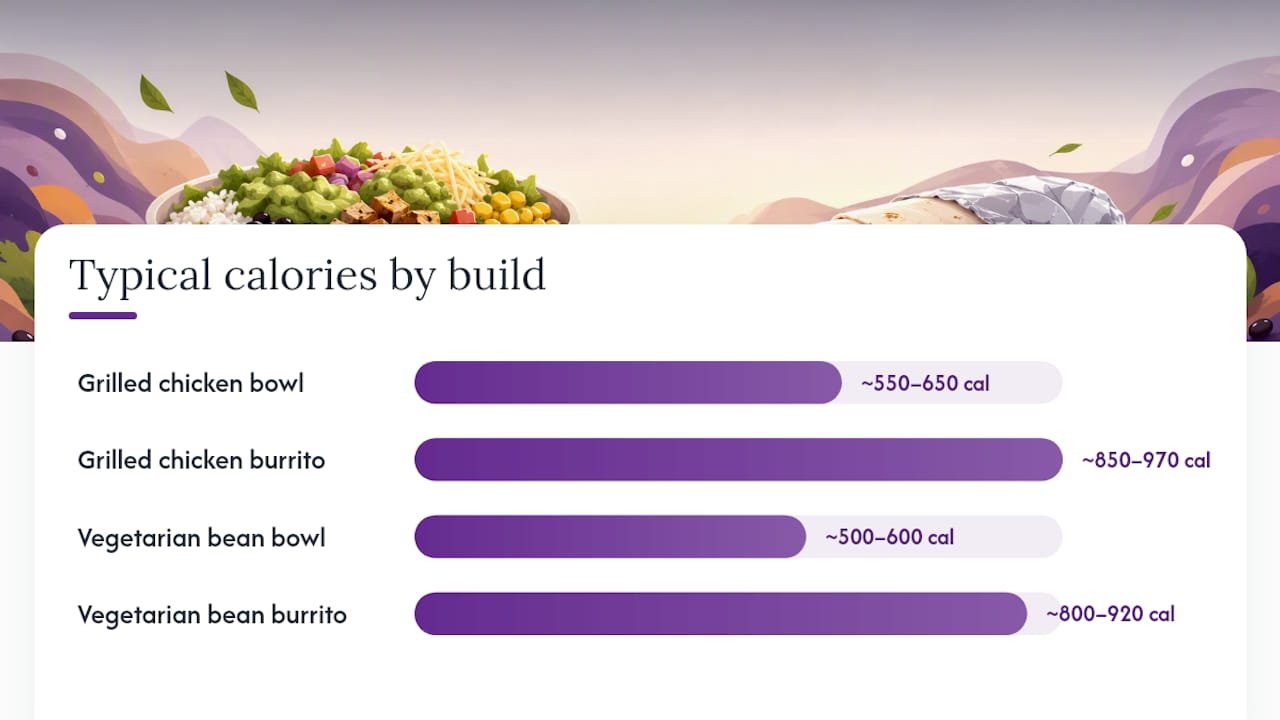
Sample builds: lean chicken and vegetarian bean
| Dimension | Grilled chicken bowl | Grilled chicken burrito | Vegetarian bean bowl | Vegetarian bean burrito |
|---|---|---|---|---|
| Typical calories | ~550–650 cal | ~850–970 cal | ~500–600 cal | ~800–920 cal |
| Carbs / fibre | ~55 g / 10 g | ~100 g / 12 g | ~75 g / 18 g | ~120 g / 20 g |
| Protein | ~35–40 g | ~35–40 g | ~20–25 g | ~20–25 g |
| Fat | ~15–20 g | ~20–28 g | ~10–15 g | ~15–22 g |
| Portion / satiety | High volume, lower density | Dense, filling immediately | High volume, high fibre | Dense, very filling |
| Portability | Needs fork, flat surface | Fully handheld | Needs fork, flat surface | Fully handheld |
| Dietary flexibility | Gluten-free, keto-adaptable | Limited (wheat tortilla) | Vegan, gluten-free | Vegan, not gluten-free |
| Leftovers / reheating | Reheats cleanly | Can go soggy | Reheats cleanly | Can go soggy |
Estimates based on standard fast-casual portions with rice base, no cheese or sour cream, salsa included. Actual values vary by restaurant and build.
The tortilla accounts for a significant calorie amount before a single filling is added — the single largest format-driven variable in the burrito bowl vs burrito comparison.
Pro Tip: Ask for the tortilla on the side. You get the bowl’s calorie control and can still wrap a few bites if you want the handheld experience. It’s the most practical middle ground at any fast-casual counter.
Which format wins for portability, satiety, and leftovers?
Portability trade-offs at a glance:
- Burrito: fully handheld, no utensil, no flat surface needed, travels in foil, low spill risk
- Bowl: requires a fork and a stable surface, higher spill risk in a bag or car, better packaging for desk lunches
The tortilla does real work beyond calories. It adds density and immediate satisfaction in a way that a bowl’s open format does not replicate. For a commute, a long drive, or eating while standing, a burrito is simply more practical.
Bowls have the advantage once you sit down. The open format lets you see and control every component, which tends to slow eating and improve satiety over a longer stretch. Beans and extra vegetables add volume without much calorie cost, so a well-built bowl can keep you full as long as a burrito with less total food.
For leftovers and meal prep, the bowl is the clear winner. Here is why:
- Components stay separate in a bowl, so rice, protein, and cold toppings can be stored individually and assembled fresh.
- A reheated burrito often turns soggy as moisture from the fillings softens the tortilla.
- Storing warm and cold components separately preserves texture and flavour far better than a pre-wrapped burrito sitting in the fridge overnight.
- Bowl components reheat in two to three minutes in a microwave; the tortilla can be warmed separately or skipped entirely.
Spill risk matters more than people expect. A bowl in a takeout bag tips easily. A burrito in foil does not. If you are eating at a desk or have a short commute, the bowl’s reheating advantage outweighs the portability gap. For anything involving a car or a walk, the burrito wins.
How do bowls and burritos handle gluten-free, low-carb, and vegan diets?
The bowl is the straightforward choice for most dietary restrictions. Skipping the tortilla removes wheat entirely, which matters for anyone avoiding gluten. A bowl sidesteps the question completely.
For gluten-free diners, the bowl is the safer default. Burritosplendido also offers gluten-free soft corn tacos from La Cocina for those who want a wrapped option without wheat.
Dietary builds by goal:
- Low-carb / keto: Choose a greens base, skip rice, load up on protein and guacamole, avoid beans and corn. Recipe sites recommend swapping white rice for cauliflower rice as the single highest-impact carb reduction.
- Vegan / vegetarian: Swap meat for black beans, pinto beans, or roasted vegetables; skip cheese and sour cream; use salsa and guacamole as flavour. Both formats work, but the bowl makes it easier to see what is in each layer.
- Allergen control: Cross-contamination is a real concern at any counter. Ask staff specifically about shared scoops, shared grills, and whether guacamole is portioned with a dedicated utensil.
Questions to ask staff before ordering:
- Do you use separate scoops for each topping?
- Is the grill shared between proteins (relevant for pork allergies)?
- Can you change gloves before assembling my order?
- Is the guacamole portioned with a dedicated spoon?
- Are the corn tortillas stored separately from the flour tortillas?
Pro Tip: At Burritosplendido, staff are trained to handle dietary needs and cross-contamination concerns. Mention your restriction when you order, not after the bowl is half-assembled. The earlier you flag it, the more reliably the kitchen can accommodate you.
Quick swaps to make either format healthier
The format matters less than the build. A bowl loaded with double cheese, sour cream, and extra guacamole can easily match a plain burrito’s calorie count. A burrito with a corn tortilla, lean protein, and salsa instead of crema can be lighter than a rice-heavy bowl.
High-impact swaps for either format:
- Skip the flour tortilla or choose a corn tortilla (roughly half the calories and carbs of a large flour tortilla)
- Swap white rice for brown rice, farro, or cauliflower rice to cut refined carbs and add fibre
- Double the beans instead of doubling the protein for more fibre and less saturated fat
- Use salsa as your primary dressing instead of sour cream or crema
- Ask for light rice (a half-cup scoop rather than a full scoop) to reduce carbs without eliminating the base
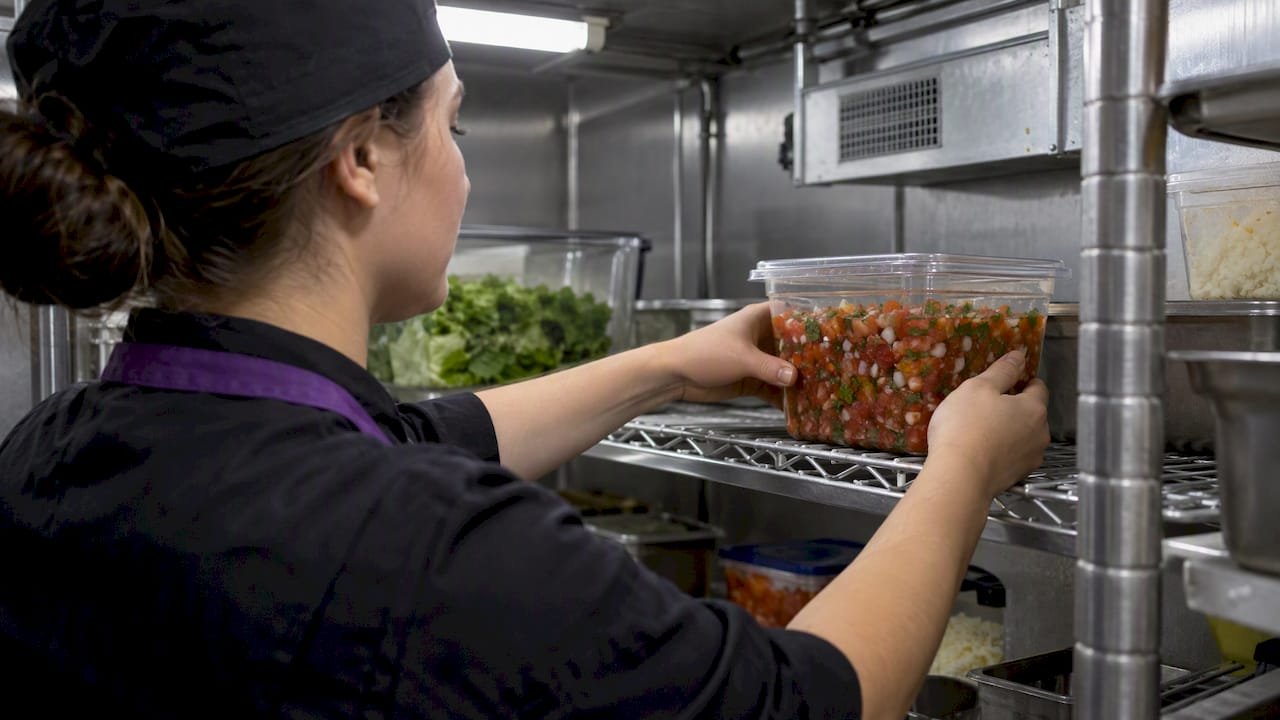
Meal-prep workflow: Assemble components separately. Keep rice and protein warm; store salsa, greens, and guacamole cold. Combine just before eating. This approach, recommended by recipe authors and chefs, keeps every component at its best texture for three to four days. For burritos made ahead, wrap tightly in foil and store without sour cream or salsa inside — add those fresh when reheating to prevent sogginess. The Burritosplendido meal prep guide for burrito bowls walks through this component-by-component.
Portion tricks:
- Request a half-scoop of rice at the counter to trim 100 calories without losing the base
- Ask for guacamole on the side so you control the portion
- Load up on fajita vegetables or extra salsa for volume with minimal calorie cost
For burritos made ahead at home, the practical guide to meal-prepping burritos covers wrapping technique and which fillings hold up best after refrigeration.
Pro Tip: A well-stocked pantry makes both formats easy to build at home. Keep canned black beans, brown rice, and a jar of good salsa on hand and you can assemble a solid bowl in under 15 minutes.
How Burritosplendido handles bowls and burritos in practice
Burritosplendido has operated a from-scratch kitchen since November 2012, and the approach shows in both formats. Every item is prepared daily. Proteins — Carnitas, Barbacoa, and Adobo Chicken — are slow-cooked and hand-pulled in-house. Cheese comes from Bothwell Cheese; poultry from Granny’s Chicken; fresh produce through Peak of the Market.
The kitchen operates without a deep fryer, which keeps the default cooking methods cleaner across both formats.
Practical ordering advice at Burritosplendido:
- Ask for the tortilla on the side if you want bowl-level control with the option to wrap
- Request a separate container for guacamole and sour cream if you are meal-prepping multiple portions
- For allergy or cross-contamination concerns, mention your restriction at the start of the order so staff can use dedicated utensils
- Catering orders can be set up as a bowl bar or burrito station, letting guests choose their own format and toppings
Burritosplendido’s Winnipeg burrito bowl menu lists current topping options and seasonal additions. Locations across Winnipeg and Brandon include Portage Avenue, St. Mary’s Road, King Edward Street, Henderson Highway, and Regent Avenue.
Which should you pick? A quick decision checklist
Use this to decide at the counter or before you cook.
- Lower calories: Pick the bowl. Skip the tortilla and use a greens or cauliflower rice base. Quick order: “Bowl, greens base, grilled chicken, black beans, salsa.”
- More protein: Either format works. Protein is comparable when you use the same portion. Quick order: “Double protein, light rice, salsa only.”
- Portability: Pick the burrito. It travels in foil, needs no utensil, and holds together for at least an hour. Quick order: “Burrito, no sour cream, wrap tight.”
- Reheating and leftovers: Pick the bowl. Store components separately, reheat rice and protein, add cold toppings fresh. Quick order: “Bowl, rice on the side, guac separate.”
- Kid-friendly: Either works. Burritos are easier for kids to hold; bowls let you control portions and hide vegetables more easily. Quick order: “Half-portion bowl, rice, mild salsa, cheese.”
- Comfort food: Pick the burrito. The wrapped format, the warm tortilla, the density — it delivers in a way a bowl does not replicate. Quick order: “Burrito, carnitas, cheese, sour cream, guac.”
Try the middle path at least once: bowl with tortilla on the side. You get clear portions and the option to wrap a few bites. Most people who try it stick with it.
What most people get wrong about the bowl vs burrito choice
The common assumption is that the bowl is automatically the healthy choice. It is not. A bowl with double cheese, full sour cream, extra guacamole, and a large rice base can land at 900 calories or more. The bowl gives you control; it does not exercise it for you.
The more useful frame is visibility. A bowl puts every ingredient in front of you before you eat it. A burrito wraps everything together, which makes it harder to judge what you are actually consuming. That visibility advantage is real, and it is why dietitians tend to recommend the bowl for calorie-conscious diners. But the bowl only delivers on that advantage if you use it.
The other thing people underestimate is the tortilla’s role in satiety. Skipping it does not automatically leave you hungry. A bowl built around a full protein portion, a serving of beans, and plenty of salsa and vegetables delivers fibre and volume that keep most people satisfied for three to four hours. The tortilla adds density and immediate fullness, but the bowl’s fibre and volume tend to win over a longer stretch.
The practical takeaway: order the bowl when you are eating at a desk or prepping meals for the week. Order the burrito when you are eating on the move or want the full comfort-food experience. Both are good. The format just needs to match the situation.
Fresh bowls and burritos, made your way at Burritosplendido
Burritosplendido builds both formats from scratch, every day, using Manitoba-sourced ingredients. Whether you want a lean bowl with cauliflower rice and grilled chicken, a fully loaded carnitas burrito, or a vegan black bean build, the menu covers it. Staff are trained to handle gluten-free, keto, vegan, and allergy-specific requests, and every protein is slow-cooked and hand-pulled in-house.
For groups and events, Burritosplendido’s catering service sets up bowl bars and burrito stations so guests can choose their own format and toppings. It is a practical option for office lunches, team events, and family gatherings across Winnipeg and Brandon. Browse the full menu and order online to try both formats and see which one fits your week.
Sources
Use these to check specific calorie figures, explore recipe variations, and build your own meal-prep workflow.
- Nutrition
- Burrito Bowl vs Burrito vs Salad: Which Is Healthier?
- Burrito or Bowl? A Dietitian’s Guide to Loving Chipotle
- Burrito Bowl