Planning food for an event when some guests avoid gluten can feel like a puzzle with too many moving parts. Understanding what is gluten-free catering means going well beyond swapping wheat bread for a gluten-free alternative. It means managing allergen risk at every stage, from ingredient sourcing to the moment food lands on a plate. Whether you have celiac disease, a gluten sensitivity, or you are planning an event for guests who do, this guide explains what gluten-free catering actually involves, what to watch for, and how to make confident choices.
Table of Contents
- Key takeaways
- What gluten-free catering actually means
- Cross-contact: the real challenge in safe catering
- Nutrition in gluten-free menus: more than substitution
- How to choose a gluten-free caterer
- Gluten-free options that work across event types
- My take on what people get wrong
- Gluten-free catering from Burrito Splendido
- FAQ
Key takeaways
| Point | Details |
|---|---|
| Gluten-free is not zero gluten | The FDA defines gluten-free as less than 20 ppm gluten, not a complete absence. |
| Cross-contact is the hidden risk | Safe preparation goes beyond ingredients; kitchen practices at every stage matter. |
| Nutrition needs attention too | Removing gluten can reduce fibre and vitamin intake if menus are not thoughtfully designed. |
| Ask specific questions | Confirm ingredient controls and cross-contact protocols before booking any caterer. |
| Natural ingredients lower risk | Fruits, vegetables, and meats are naturally gluten-free and simplify safe menu design. |
What gluten-free catering actually means
Gluten is a protein found in wheat, barley, and rye. For people with celiac disease or non-celiac gluten sensitivity, consuming it triggers real physical harm, ranging from digestive distress to longer-term intestinal damage. Gluten-free catering is the practice of preparing and serving meals that avoid gluten-containing ingredients while also managing the risk of cross-contact throughout the entire food handling process.
A critical point that trips up many people: gluten-free does not mean zero gluten. The FDA defines a gluten-free food as one containing less than 20 parts per million (ppm) of gluten. This threshold was set because it is the lowest level that can be consistently detected with current testing methods and is considered safe for most people with celiac disease. For caterers, this threshold applies primarily to packaged foods they source. Prepared dishes require additional controls beyond what a label can guarantee.
What separates professional gluten-free catering from simply cooking without wheat flour comes down to these standards:
- Using certified or verified gluten-free ingredients where possible
- Sourcing from suppliers who understand and control their own cross-contact risks
- Clearly labelling all dishes and ingredients at the point of service
- Training staff to understand what gluten-free actually requires in practice
- Maintaining documentation so guests can ask informed questions
The FDA labelling rules matter because they set a baseline expectation for what “gluten-free” means. Caterers who take this seriously treat it as a starting point, not the finish line.
Cross-contact: the real challenge in safe catering
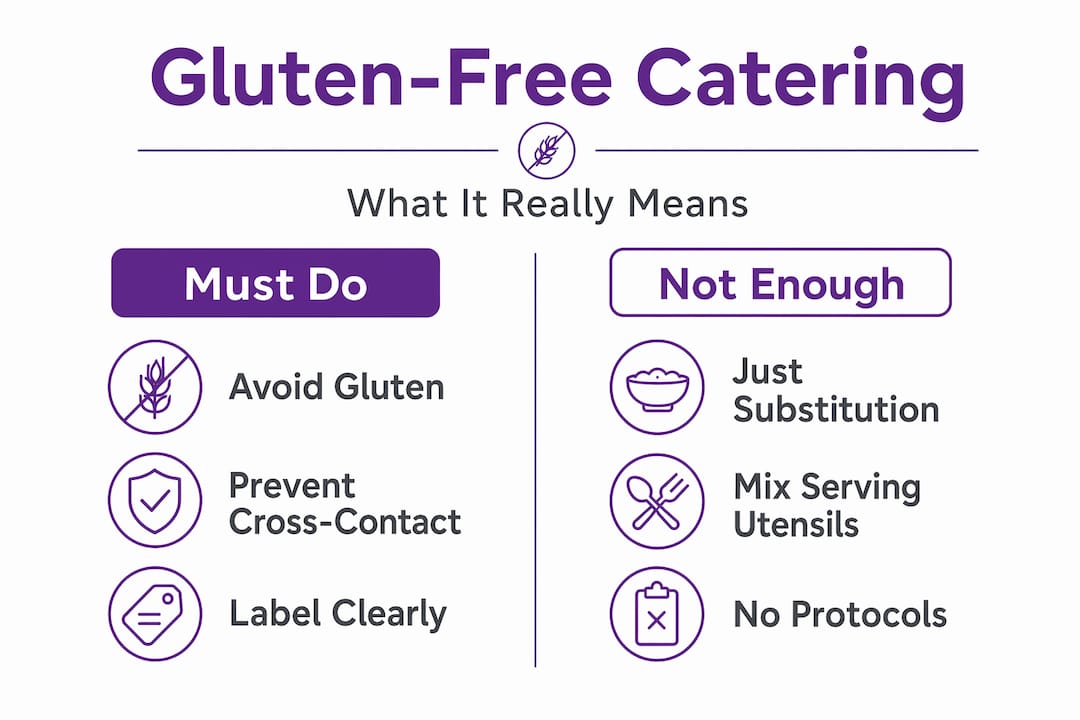
Cross-contact happens when a gluten-free food comes into contact with gluten through shared surfaces, utensils, or airborne flour particles. It is different from cross-contamination (which involves bacteria), but it is just as consequential for someone with celiac disease. Cross-contact can occur at harvesting, transportation, storage, preparation, cooking, and serving. Every single stage presents a potential point of failure.
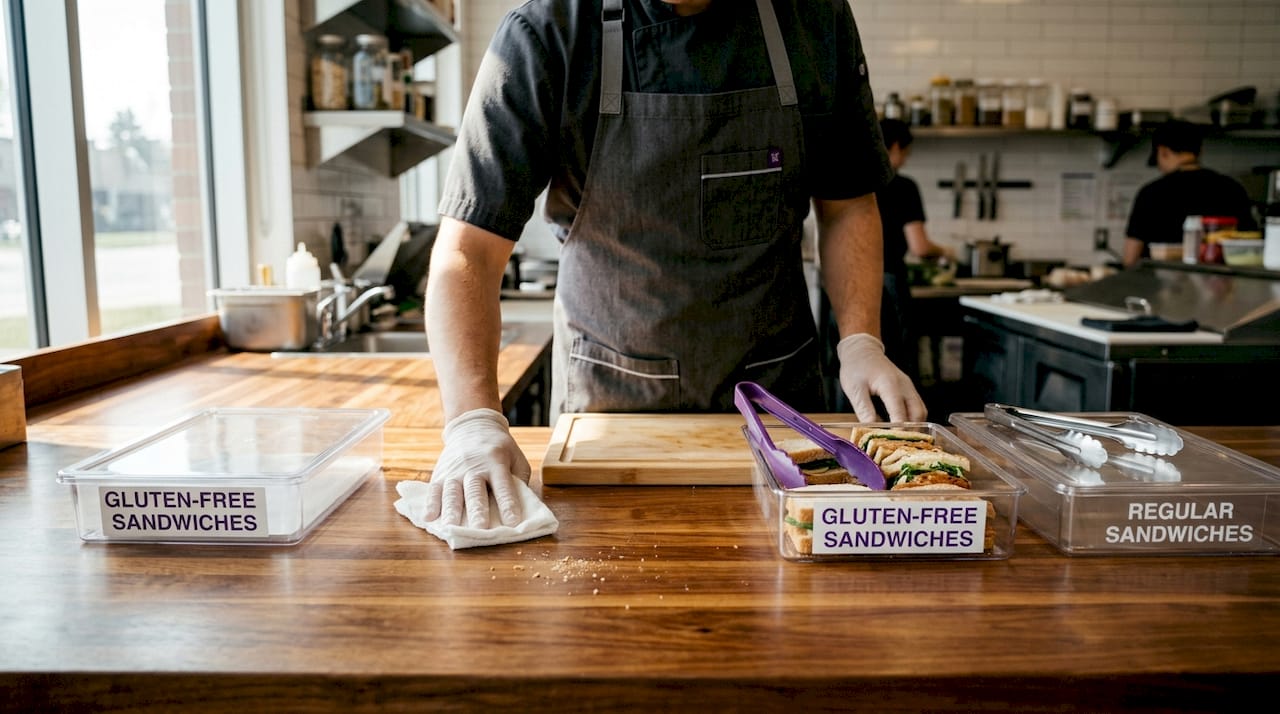
In a professional kitchen, the most common sources of cross-contact include shared cutting boards, colanders used for both wheat pasta and gluten-free pasta, shared fryer oil (which is why deep-fryer-free kitchens have a genuine advantage), and staff touching gluten-containing foods before handling gluten-free ones. Even shared condiment jars can introduce gluten through double-dipping spoons.
Reputable gluten-free caterers address this through a combination of physical separation and procedural controls:
- Dedicated preparation surfaces, utensils, and cookware for gluten-free dishes
- Separate storage areas or clearly sealed containers to prevent contact with wheat flour or crumbs
- Staff protocols requiring handwashing and glove changes before preparing gluten-free items
- Clear labelling of all ingredients during prep
- Separate serving utensils for gluten-free dishes at the point of service
Buffet settings deserve special mention. They are inherently higher risk because guests handle serving utensils, spills happen, and dishes get moved around. A buffet where gluten-free and wheat-based dishes sit side by side, sharing tongs or ladles, is not truly safe for someone with celiac disease regardless of what the individual dishes contain. Professional caterers managing this well will physically separate gluten-free stations, use dedicated utensils, and often serve gluten-free guests first before the general buffet opens.
Pro Tip: At any catered event, do not hesitate to ask the caterer or serving staff which dishes are gluten-free and whether they were prepared separately. A caterer confident in their practices will answer without hesitation. Uncertainty in the answer is itself useful information.
For guests with celiac disease, individually portioned servings are the safest option at events because they eliminate the shared utensil and surface risks entirely.
Nutrition in gluten-free menus: more than substitution
One of the most underappreciated aspects of quality gluten-free catering is nutrition. When gluten is removed from a menu, fibre and vitamin intake can drop significantly if the approach is simply to swap wheat-based items for their gluten-free commercial equivalents. Many gluten-free packaged alternatives are lower in B vitamins, iron, and dietary fibre than their wheat counterparts.
A well-designed gluten-free catering menu accounts for this. Rather than defaulting to processed substitutes, strong caterers build dishes around naturally gluten-free whole foods: legumes, quinoa, brown rice, sweet potatoes, leafy greens, and quality proteins. The result is a menu that is not only safe but genuinely nutritious.
Consider what a thoughtfully designed gluten-free catering spread can include:
- Proteins: slow-braised meats, grilled chicken, fish, or plant-based legume dishes, all naturally free of gluten
- Grains and starches: rice, corn, quinoa, and certified gluten-free oats providing fibre and energy
- Vegetables and salads: roasted seasonal vegetables, grain-free slaws, and fresh greens adding micronutrients
- Desserts: naturally gluten-free options like flourless chocolate cake, panna cotta, or fresh fruit pavlova
For people with celiac disease especially, gluten-free eating that balances safe preparation with nutrition is not a luxury. It directly affects their long-term health outcomes. A caterer who understands this is worth their price.
How to choose a gluten-free caterer
Knowing what to ask separates a smart decision from a hopeful one. Before booking any gluten-free food service for your event, work through these questions with the caterer:
- Do you have a dedicated preparation area or protocol for gluten-free dishes?
- Where do you source your gluten-free ingredients, and are they certified?
- How do your staff handle cross-contact prevention during service?
- Can you describe how gluten-free dishes are separated in a buffet or plated service setting?
- Do you have experience catering for guests with celiac disease specifically?
The answers reveal a lot. A caterer who has genuinely thought through allergen risk management will give you specific, procedural answers. Vague reassurances like “we are careful” or “we use gluten-free ingredients” without explaining how are warning signs.
When comparing gluten-free catering service formats, this table helps clarify the trade-offs:
| Service type | Gluten-free safety level | Best for |
|---|---|---|
| Plated, full-service | Highest. Individual portions prepared separately. | Formal events, celiac guests |
| Individual boxed meals | High. Pre-portioned, lower cross-contact risk. | Corporate lunches, small gatherings |
| Delivery catering | Moderate. Quality depends on packaging and transport. | Office events, smaller groups |
| Open buffet | Lower without strict protocols. Shared utensils are a risk. | Requires clear labelling and separation |
Pro Tip: If you are unsure about a caterer’s gluten-free practices and the event is high-stakes for a celiac guest, bring a confirmed safe dish from a trusted source for that person. There is no shame in it, and it removes the uncertainty entirely.
Communicating your needs clearly to any caterer also matters. Give specific details: how many gluten-free guests will attend, whether any have celiac disease (more serious than sensitivity), and whether you prefer individually plated servings or a clearly separated station. The more specific you are, the better a good caterer can plan.
Gluten-free options that work across event types
Naturally gluten-free foods are the backbone of any strong gluten-free catering menu. Fruits, vegetables, most meats and seafood, corn, rice, and legumes all fit naturally without complicated substitution. Using these as the foundation reduces cross-contact risk and simplifies kitchen management.
For events ranging from weddings to corporate lunches, common gluten-free catering offerings include:
- Appetisers: ceviche, stuffed mushrooms, rice paper rolls, guacamole with corn chips
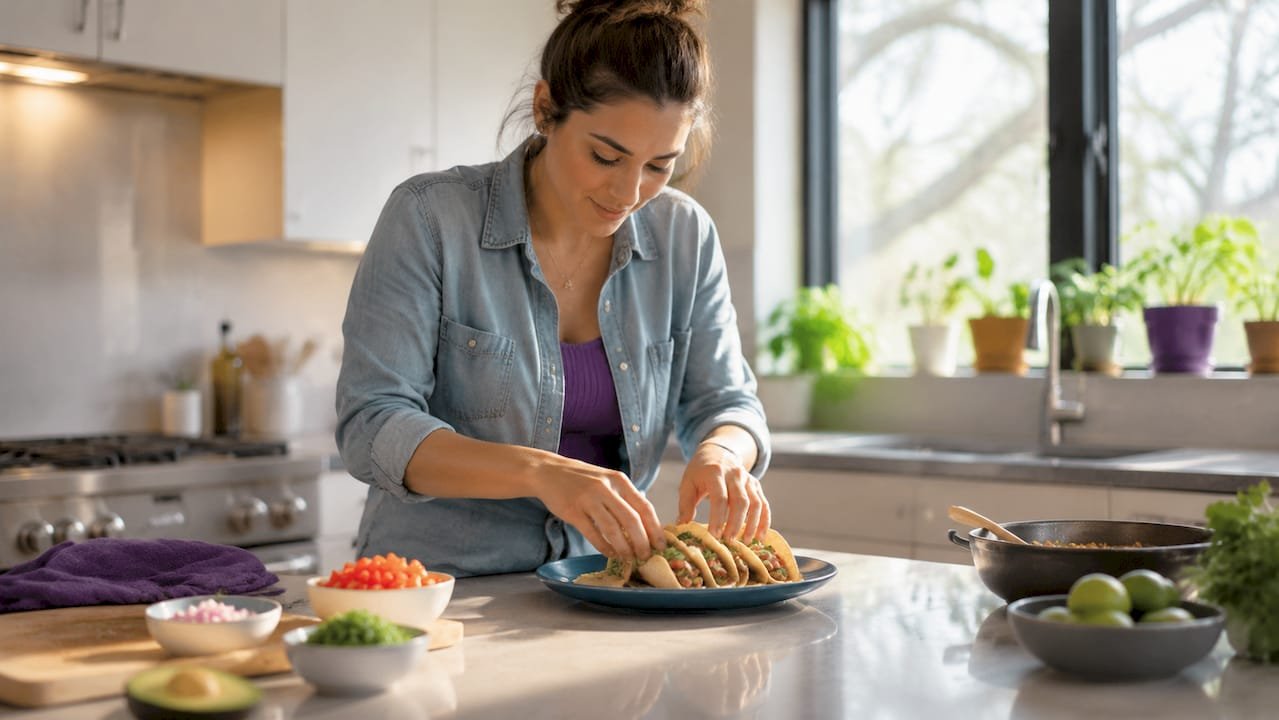
- Mains: grilled salmon, roasted chicken, beef short ribs, rice bowls, taco bars built on corn tortillas
- Sides: roasted root vegetables, black bean salads, elote-style corn, cilantro-lime rice
- Desserts: chocolate mousse, sorbet, flourless cakes, and fresh seasonal fruit
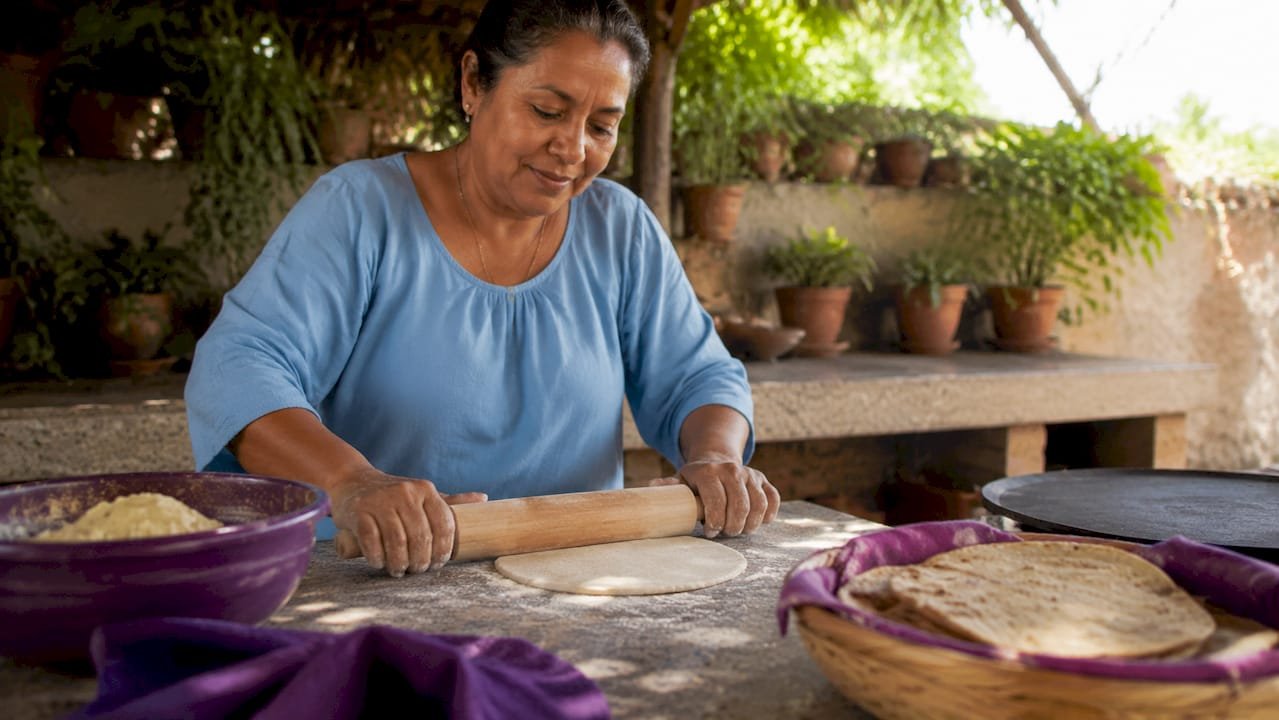
Mexican-inspired catering works particularly well for gluten-free events because so much of the traditional cuisine is built on corn, beans, and fresh produce rather than wheat. Street-style tacos on gluten-free corn tortillas are naturally safe and crowd-pleasing. Cultural adaptations like these show that gluten-free dining does not mean sacrificing flavour or variety.
For corporate events in particular, Mexican food catering offers a practical advantage: most guests can eat from the same menu, reducing the need for complicated separate meal arrangements.
My take on what people get wrong
I have seen a pattern play out repeatedly. Someone puts “gluten-free options available” on an event menu and considers the job done. They swap out a bread roll, maybe offer a rice dish, and call it inclusive. For a guest with a mild sensitivity, that might be fine. For someone with celiac disease, it can cause a week of symptoms.
What I have learned is that gluten-free catering only works when the caterer treats it as a system, not a substitution. Every stage matters. It is not enough to buy gluten-free pasta if you boil it in the same water as wheat pasta. It is not enough to label a dish gluten-free if it shares a serving spoon with a wheat-based dish ten minutes into the buffet.
The nutrition side gets overlooked even more. I have eaten at events where the “gluten-free option” was a sad plate of plain rice and steamed vegetables while everyone else had a full spread. That is not gluten-free catering done well. Done properly, gluten-free dining should feel like a full, satisfying experience, not a consolation prize.
My honest advice: ask hard questions, and if the caterer cannot answer them with confidence and specificity, keep looking.
— Austin
Gluten-free catering from Burrito Splendido
When you want gluten-free event catering that takes both safety and flavour seriously, Burrito Splendido is worth knowing. Built on fresh Manitoba ingredients and a deep-fryer-free kitchen, the menu is designed from the ground up to accommodate gluten-free, vegan, and keto needs. Gluten-free soft corn tortillas from La Cocina anchor a taco spread that genuinely satisfies every guest at the table, whether or not they avoid gluten.
Staff are trained to handle dietary needs and cross-contact concerns, so you are not left guessing. Explore the full range of catering options including flexible gluten-free menus built around locally sourced proteins, house-made salsas, and customisable bowls. Whether you are planning a corporate lunch, a family gathering, or a large event, Burrito Splendido makes gluten-free catering approachable and genuinely delicious.
FAQ
What is gluten-free catering?
Gluten-free catering is the preparation and service of meals that exclude gluten-containing ingredients while actively managing cross-contact risk at every stage of food handling. It goes well beyond ingredient substitution to include kitchen protocols, staff training, and service practices.
Is gluten-free catering safe for people with celiac disease?
It can be, but safety depends entirely on how well the caterer manages cross-contact. The FDA threshold of 20 ppm applies to packaged foods; prepared dishes require additional procedural controls to be genuinely safe for celiac guests.
What gluten-free meal options work best for events?
Naturally gluten-free dishes built on corn, rice, legumes, fresh vegetables, and quality proteins work best. Corn tortilla taco bars, rice bowls, and grilled protein stations are crowd-pleasing choices that reduce cross-contact complexity.
How do I know if a caterer’s gluten-free practices are reliable?
Ask specific questions about their preparation protocols, ingredient sourcing, and how they handle cross-contact during both prep and service. A caterer with genuine expertise will answer with detail and confidence, not generalities.
What is the difference between gluten-free and wheat-free catering?
Gluten-free excludes all sources of gluten, including barley and rye, not just wheat. Wheat-free meals may still contain other gluten-containing grains, so they are not safe for people with celiac disease or full gluten sensitivity.
Recommended
- Why Mexican food is ideal for Manitoba corporate events – Burrito Splendido
- Gluten-Free, Vegan, & Keto: Navigating the Menu at Burrito Splendido – Burrito Splendido
- Mexican Food Catering in Canada: How to Host the Perfect Fiesta – Burrito Splendido
- Customize Mexican meals with Manitoba flair and health