Getting a nutritious, flavour-packed Mexican meal on the table after a long day feels impossible without a plan. A solid healthy Mexican meal workflow changes that. Instead of cooking from scratch every night, you prep core components once, assemble quickly, and eat well all week. This guide walks you through exactly what to stock, how to cook safely and efficiently, and how to keep everything fresh for days. If you are health-conscious and short on time, this is the system you have been looking for.
Table of Contents
- Key takeaways
- Your healthy Mexican meal workflow starts here
- The step-by-step cooking workflow
- Assembling your meal bowls
- Optimising your weekly routine
- My honest take on what actually works
- Fresh Mexican meals, made easy with Burritosplendido
- FAQ
Key takeaways
| Point | Details |
|---|---|
| Prep components separately | Cook and store proteins, grains, and fresh toppings apart to preserve texture and flavour all week. |
| Follow food safety rules | Refrigerate cooked food within 2 hours and reheat to 165°F (74°C) to keep batch-cooked meals safe. |
| Use the barrier method | Layer dense carbs at the bottom, protein in the middle, and keep wet toppings separate until serving. |
| Batch cook once, vary daily | One Sunday session of cooking components gives you four to five different bowl combinations across the week. |
| Restore moisture when reheating | Add a splash of water and cover loosely before microwaving to keep rice and protein from drying out. |
Your healthy Mexican meal workflow starts here
Before you cook a single thing, your workflow lives or dies by what is already in your kitchen. A disorganised pantry means wasted time mid-cook. A well-stocked one means you can build a complete Mexican bowl in under 30 minutes on any given night.
Proteins, grains, and fresh produce
For a balanced, low-calorie Mexican meal, you need three layers: a lean protein, a complex carbohydrate, and fresh vegetables. The protein carries the most flavour and nutritional weight, so your choice here matters. Ground turkey and chicken thighs are the workhorses of healthy Mexican cooking. Ground turkey is lower in fat and cooks fast. Chicken thighs retain moisture better than breasts during refrigeration and reheating, making them the smarter pick for batch cooking.
| Protein | Calories (per 100g) | Prep time | Best for |
|---|---|---|---|
| Ground turkey | ~170 kcal | 8–10 min skillet | Tacos, bowls, low-fat meals |
| Chicken thighs | ~210 kcal | 15–20 min skillet | Batch bowls, reheated meals |
| Lean ground beef | ~215 kcal | 8–10 min skillet | Taco bowls, burritos |
| Black beans (tinned) | ~132 kcal | 5 min (drain + heat) | Vegan bowls, fibre boost |
For grains, cilantro-lime rice is the standard for Mexican meal planning. Long-grain white or brown rice both work. Brown rice adds fibre but takes longer to cook. For fresh produce, keep bell peppers, red onion, corn, and limes stocked regularly.
Pantry staples and tools
Your spice drawer should always have cumin, chili powder, smoked paprika, garlic powder, and dried oregano. These five spices cover 90% of Mexican seasoning needs without a pre-made packet full of sodium. For tinned goods, keep black beans, corn, and diced tomatoes on hand. Tinned goods are the backbone of easy healthy Mexican dishes when fresh produce runs low.
For tools, you need a large non-stick skillet, a heavy-bottomed saucepan for rice, shallow containers for cooling, and airtight meal prep containers for storage. Glass containers are preferable to plastic for reheating. Glass meal prep containers avoid the toxin leaching risk that comes with heating food in lower-quality plastic, and they hold temperature more evenly.
Pro Tip: Label your containers with the prep date using masking tape and a marker. It takes five seconds and removes all guesswork about what is still safe to eat.
The step-by-step cooking workflow
A healthy Mexican cooking workflow is not just about what you cook. It is about the order you cook it in. Get the sequence right and you can have all your components ready in about an hour.
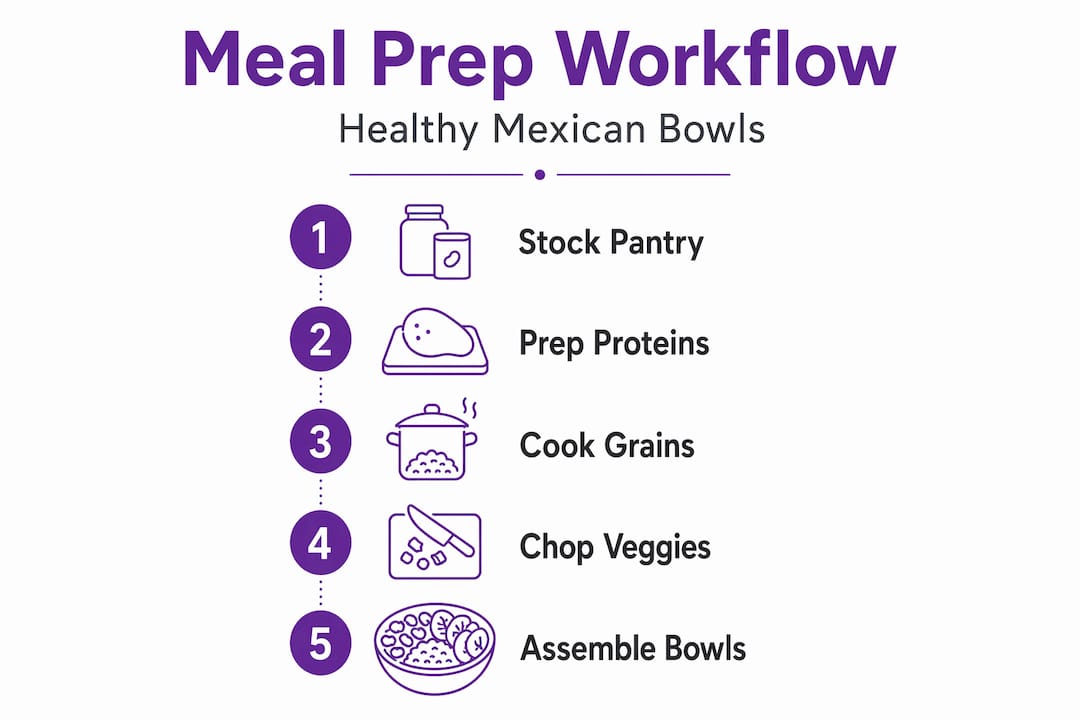
- Start the rice first. Cilantro-lime rice takes 18 to 20 minutes. Get it going before you touch anything else. Use a 1:2 rice-to-water ratio, bring to a boil, then reduce to a simmer with the lid on.
- Prep your vegetables while the rice cooks. Dice bell peppers and red onion. Cut corn from the cob if using fresh, or drain a tin. This prep takes about 10 minutes.
- Cook your protein. A one-skillet Mexican meal cooks efficiently with this sequence: add protein to a hot skillet, cook for 7 to 9 minutes, then add vegetables for another 7 to 9 minutes with your spice blend. Total active cooking time: about 20 minutes.
- Cook skillet corn separately. Toast corn in a dry skillet for 4 to 5 minutes until lightly charred. This takes almost no time but adds serious depth of flavour to your bowls.
- Cool everything before storing. This is where most people skip a critical step.
Cooling and food safety
Rapid cooling prevents bacterial growth in the temperature danger zone, which sits between 4°C and 60°C. Spread your rice in a shallow container rather than a deep one. This increases the surface area and drops the temperature much faster. Do not put a hot, deep container of rice straight into the fridge. The centre stays warm for hours, which is exactly where bacteria multiply.
Refrigerate cooked food within 2 hours of cooking. When you reheat anything later, the internal temperature must reach 165°F (74°C) throughout. A probe thermometer is the only way to know for certain.
Treat your cooling step with the same attention you give your cooking. A perfect batch of taco meat means nothing if you leave it sitting on the counter for three hours before refrigerating.
Pro Tip: Spread rice and protein across two shallow containers instead of one deep one. Your food reaches a safe temperature at least twice as fast, and your fridge does not have to work as hard.
Assembling your meal bowls
Once your components are prepped and cooled, assembly is where the barrier method becomes your best tool. The goal is to prevent moisture migration, which is the silent quality killer in any meal prep bowl. Wet toppings bleed into rice, protein releases juices, and by day three your bowl is a soggy mess.
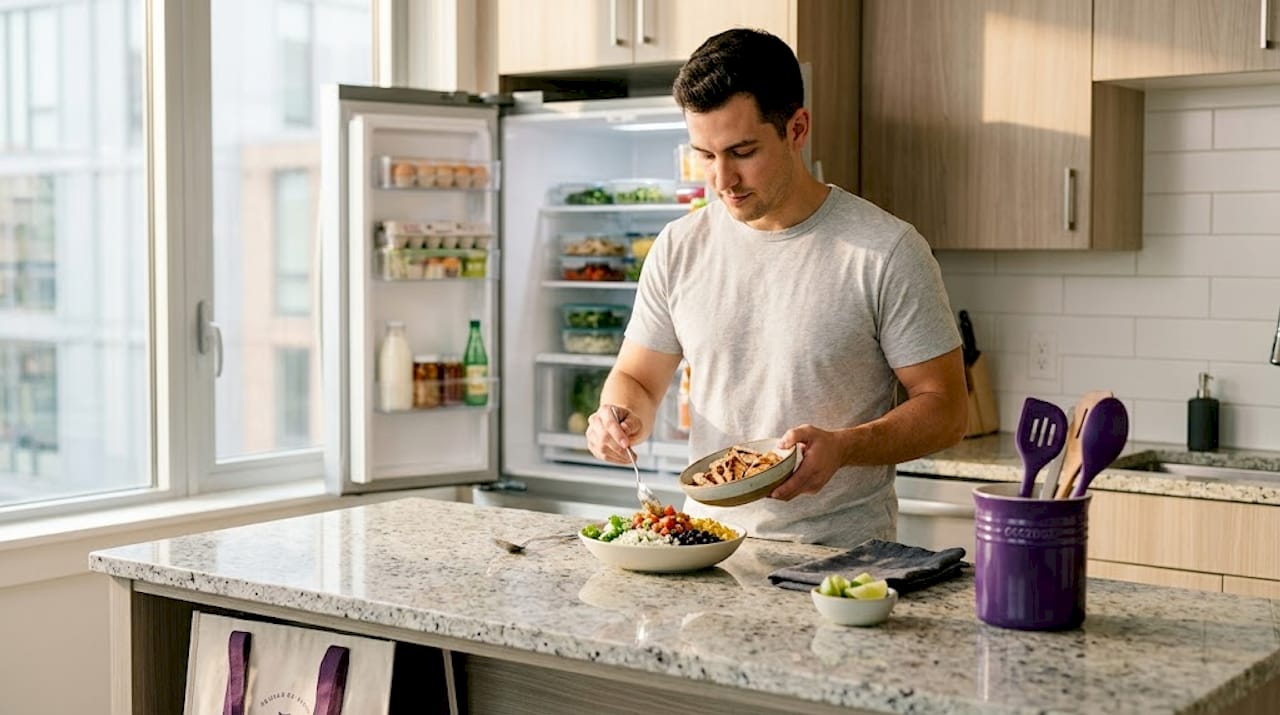
The barrier method solves this. Dense carbs like rice and beans go at the bottom. They absorb ambient moisture without becoming obviously soggy. The protein layer sits in the middle and acts as a physical shield between the carbs and any acidic or wet toppings. Anything perishable and wet, like pico de gallo, guacamole, avocado, and shredded lettuce, stays in a separate small container until you are ready to eat.
Assembling a complete taco bowl takes about 30 minutes when your components are already prepped. That includes portioning into individual containers and setting aside separate topping containers.
| Ingredient | Layer position | Storage method |
|---|---|---|
| Cilantro-lime rice | Bottom | In main container |
| Black beans | Bottom, over rice | In main container |
| Seasoned protein | Middle | In main container |
| Skillet corn | Middle, beside protein | In main container |
| Pico de gallo | Separate | Small sealed container |
| Avocado or guacamole | Separate | Small container with lime juice |
| Shredded lettuce | Separate | Small dry container |
| Cheese | Separate or top of protein | Small container or on protein layer |
Pro Tip: Squeeze fresh lime juice over sliced avocado or guacamole before sealing the container. In professional kitchens, this process is called acidulation. The acid slows enzymatic browning and keeps your avocado green and fresh-tasting for an extra day or two.
Optimising your weekly routine
The most efficient Mexican food meal planning approach is cooking all your components in one Sunday session and mixing them differently throughout the week. Same ingredients, different combinations: bowls on Monday, tacos on Tuesday, a quesadilla filling on Wednesday. You get variety without extra cooking.
Here is what keeps the system working past day two:
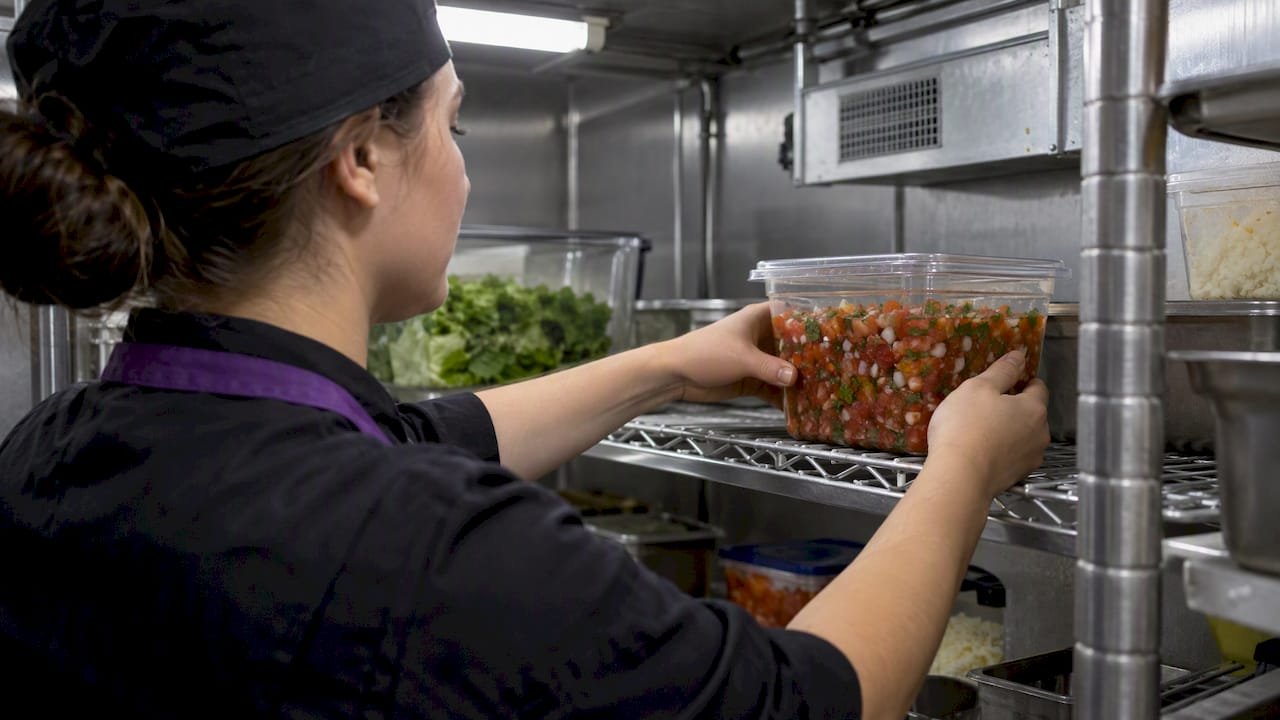
- Storage timelines matter. Cooked protein and rice last up to one week in the fridge. Pico de gallo lasts up to five days. Assembled bowls with wet toppings should be eaten within two to three days.
- Use airtight containers. Exposure to air degrades flavour and speeds up spoilage. A proper seal is not optional.
- Reheat only what you will eat. Do not reheat an entire container if you only want half. Repeated heating and cooling cycles damage texture and create food safety risk.
- Restore moisture when reheating rice. Add a splash of water or broth, cover with a damp paper towel, and use 70% microwave power. This keeps rice fluffy instead of turning it into a dry brick.
- Remove fresh toppings before heating. Lettuce wilts, avocado turns bitter, and pico releases water when heated. Always add them cold after warming the base.
The biggest mistake people make with clean eating Mexican meals is assembling everything together and then wondering why the food tastes flat by day three. Keep components separate. It takes one extra container and saves the entire week’s worth of meals.
Pro Tip: Portion your protein and rice into individual containers right after cooling. Pre-portioned meals remove the daily decision of how much to take, which means fewer over-portioned lunches and less food waste.
My honest take on what actually works
I have seen every variation of the Mexican meal prep approach, and the thing that changed my results most was not a new recipe. It was treating the workflow as a system rather than a loose collection of cooking tasks.
The first time I tried batch cooking without a plan, I ended up with soggy rice, grey avocado, and protein that tasted like cardboard by Thursday. The turning point was separating components completely and taking cooling seriously. Once I started spreading rice thin and getting it into the fridge quickly, the texture held through the week.
What most people underestimate is the flavour payoff of proper storage. A well-stored bowl on day four can taste nearly as good as day one, if you protect each component’s integrity. The barrier method is not a restaurant trick reserved for professional kitchens. It is a practical solution anyone can use at home. Pair it with acidulation on your avocado and you will stop throwing out half your prep each week.
The other thing I feel strongly about: invest in decent glass containers. The difference in reheating quality is noticeable. Food heats more evenly, there is no plastic taste, and they last for years. It is one of the few kitchen purchases that pays for itself quickly.
Flavour retention is what makes or breaks a sustainable healthy eating habit. If your meals taste bad by midweek, you will order takeout. Keep the food good and the habit sticks.
— Austin
Fresh Mexican meals, made easy with Burritosplendido
When Sunday prep is not happening and you still want a clean, nutritious Mexican meal, Burritosplendido is built for exactly that. Every bowl, burrito, and taco is made from scratch daily using locally sourced Manitoba ingredients, with no deep fryer in sight. The menu is fully customisable for gluten-free, vegan, keto, and paleo needs, so you never have to compromise on your health goals. If you are feeding a team or planning a work event, the Burritosplendido catering service brings that same fresh-from-scratch quality to any gathering. You can also explore healthy Mexican-inspired menus across their Manitoba locations when you need a fast, wholesome option without the prep work.
FAQ
How long do batch-cooked Mexican components last in the fridge?
Cooked proteins and rice last up to one week when stored in airtight containers below 4°C. Pico de gallo keeps for up to five days, and fully assembled bowls with wet toppings are best eaten within two to three days.
What is the barrier method in meal prep bowls?
The barrier method means placing dense carbs at the bottom of a container, protein in the middle, and storing wet toppings separately. This prevents moisture migration and keeps every layer at the right texture until you are ready to eat.
What temperature should reheated Mexican meal prep reach?
All reheated leftovers must reach an internal temperature of 165°F (74°C) throughout to be safe. Use a probe thermometer to check, especially with thick protein portions.
Is chicken or turkey better for Mexican meal prep bowls?
Chicken thighs are the better choice for batch cooking because their intramuscular fat helps them retain moisture through refrigeration and reheating. Ground turkey works well if you want a leaner option and plan to eat within three to four days.
How do you stop avocado from browning in meal prep containers?
Squeeze fresh lime juice directly over your avocado or guacamole before sealing the container. This acidulation process slows enzymatic browning and keeps the colour and flavour intact for an extra day or two.