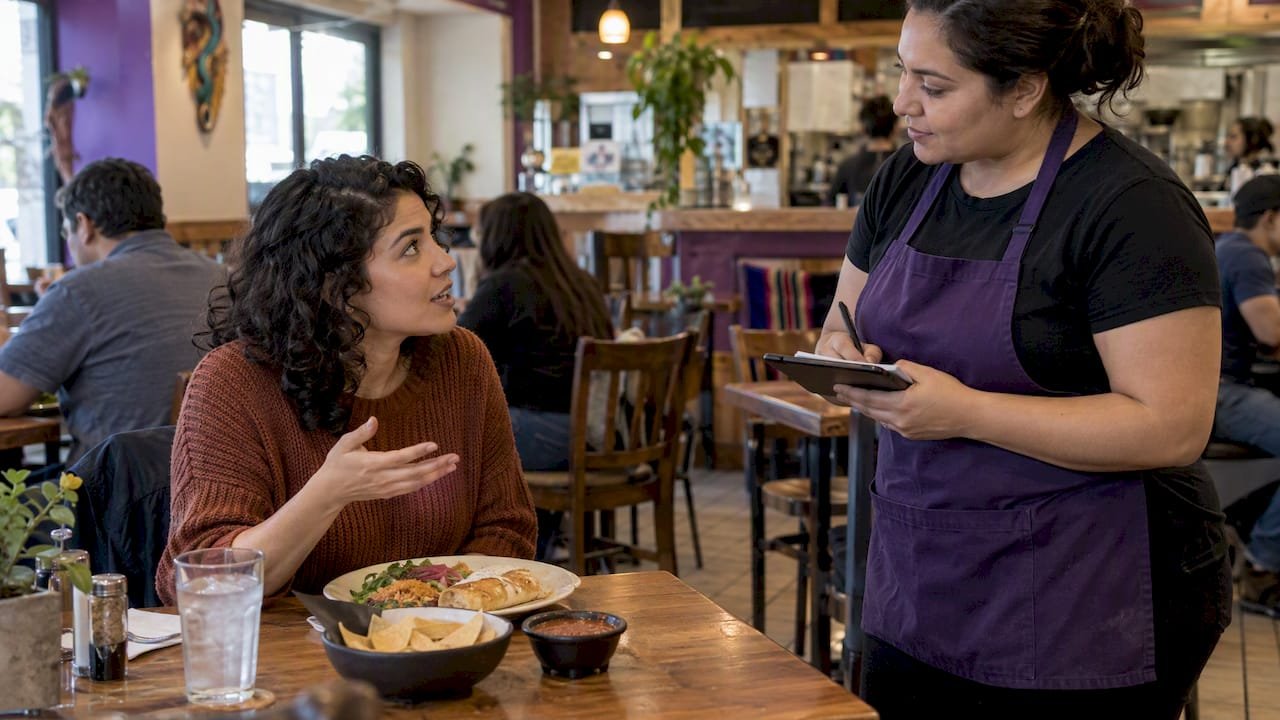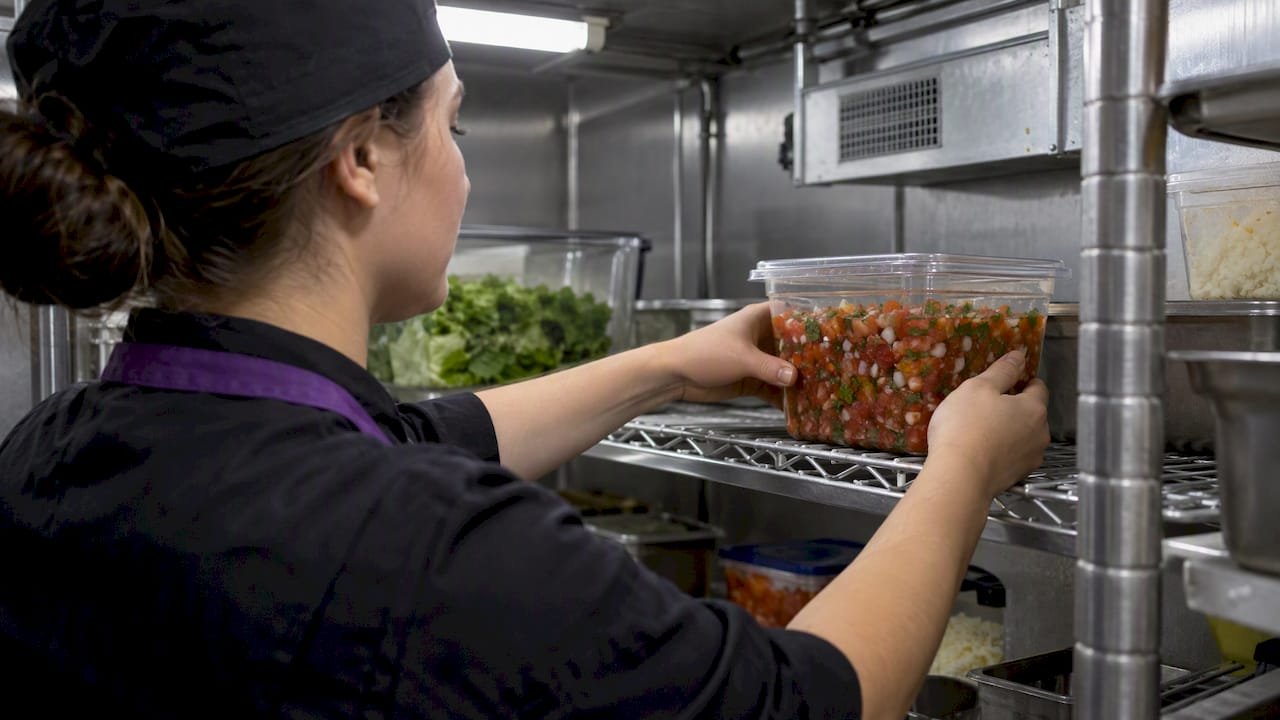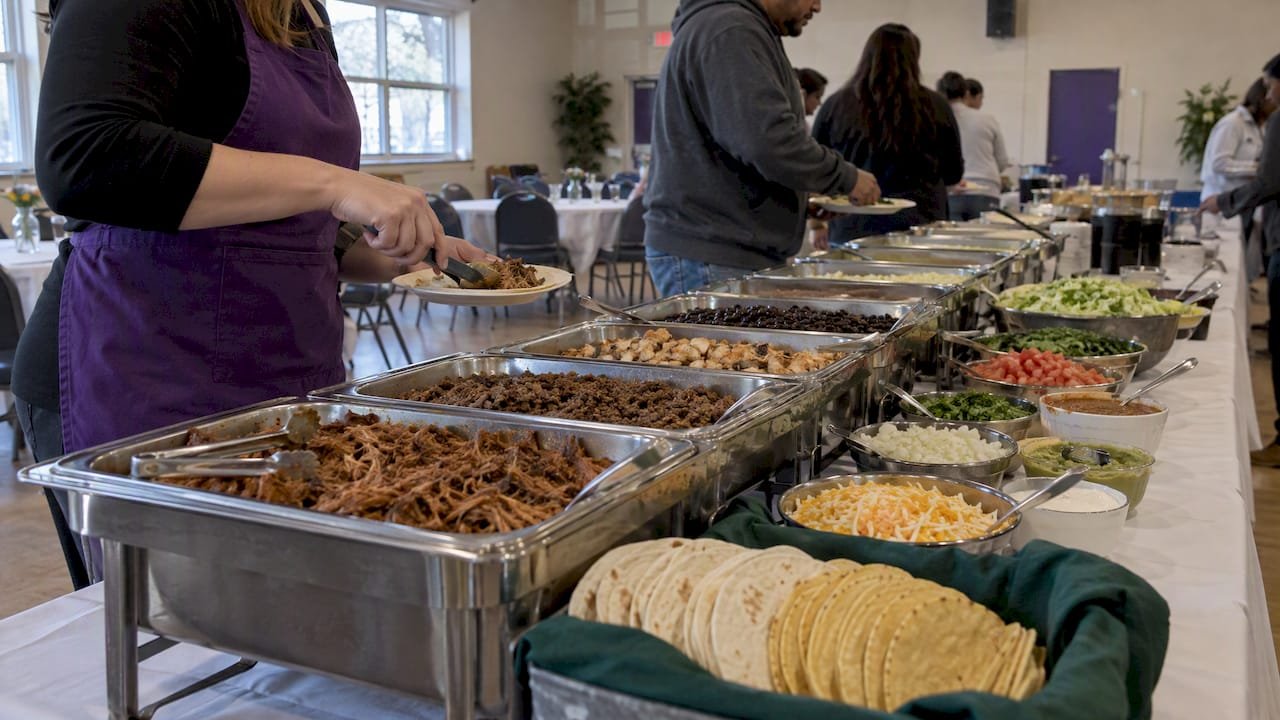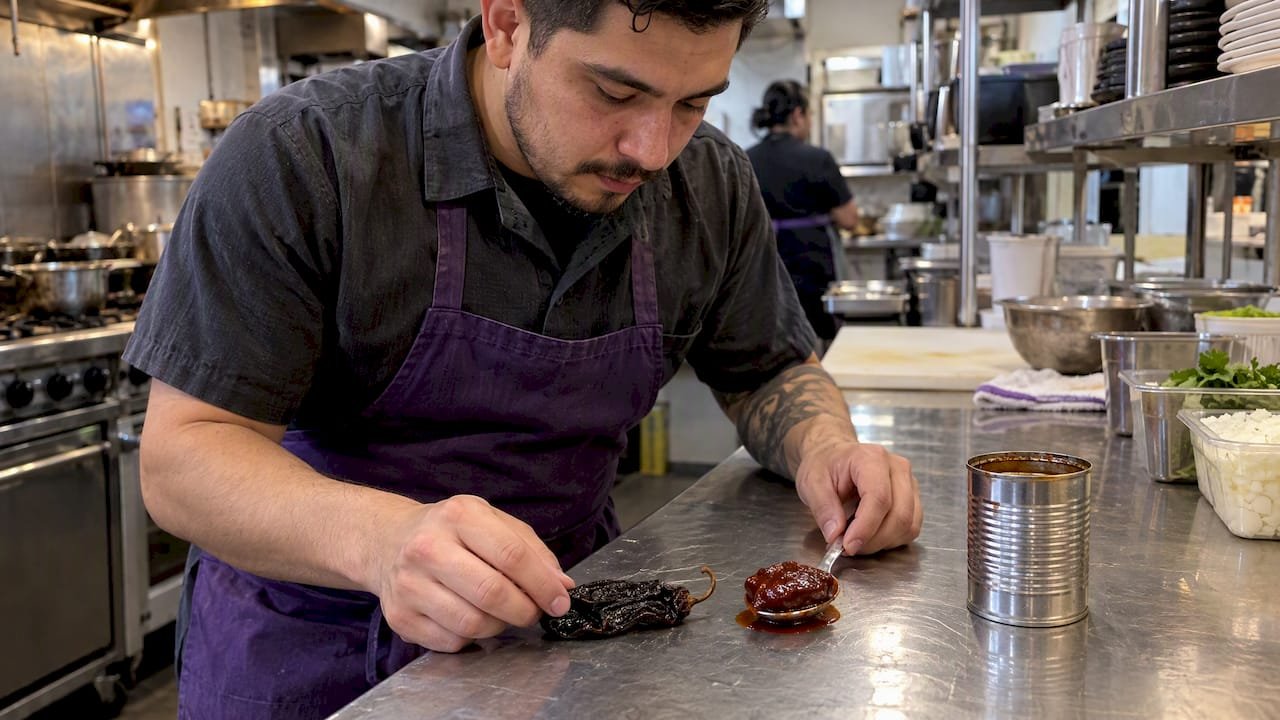
Pick a build-your-own bar for small groups, boxed meals for meeting-heavy occasions, a buffet or drop-off spread for larger groups, and pizza or pasta when the budget is tight. Then run it through the checklist below. Build-your-own formats win most often because they flex around dietary needs and headcount surprises without extra planning.
TL;DR:
- Build-your-own taco or bowl bars are ideal for small to medium teams because they handle dietary needs and de-bottleneck service efficiently.
- Planning requires confirming headcount 48 hours in advance and including a 10% buffer for last-minute guests or cancellations.
- Dietary considerations are best managed by collecting allergen info via sign-up forms and using segregated, clearly labeled food trays or boxes.
- Budget options like pizza and pasta work well for tight budgets or last-minute plans, costing around $10 to $12 per person for basic setups.
- Running recurring, themed lunches with simple formats and rotating team involvement helps maintain engagement without extra planning effort.
Table of Contents
- What are the best team lunch formats?
- 10 team lunch ideas you can order or assemble this week
- How to plan a team lunch step by step
- How do you handle dietary needs and allergies?
- Sample menus and budgets by team size
- How Burrito Splendido handles catering for teams
- Turning lunch into a team-building moment
- What desserts and drinks pair well with lunch?
- What if guest numbers change at the last minute?
- How do you manage RSVPs without chasing people?
- What rotation keeps lunches interesting long term?
- Ready to book your next team lunch?
- Sources
- FAQ
What are the best team lunch formats?
Format matters more than cuisine. A taco bar and a Thai buffet solve the same logistical problems in different clothes, but the format, not the flavour, decides whether your lunch runs smoothly or turns into a line snaking past someone’s desk.
- Build-your-own bars (tacos, bowls, sandwiches): best for small to medium groups who can serve themselves in under 10 minutes. Needs one serving table, tongs, and clear labels. Handles vegan and gluten-free guests without a separate order.
- Boxed or individually packaged meals: best for meetings, staggered shifts, or remote-hybrid teams where people eat at different times. No serving line, no bottleneck, and each box travels cleanly to a desk.
- Buffet or drop-off spreads: best for larger groups with one shared eating window. Needs chafing dishes or insulated carriers and someone assigned to restock.
- Pizza and pasta stations: best for budget-conscious teams or last-minute plans. Cost-effective, familiar to almost everyone, easy to scale with additional orders.
- Food trucks or pop-up stations: best for outdoor events or milestone celebrations where the novelty is part of the point.
Headcount and timing decide the format faster than taste preferences do. A 12-person team meeting calls for boxes. A 60-person all-hands calls for a buffet with two serving lines.
10 team lunch ideas you can order or assemble this week
Every idea below tells you what to order, who it suits, and one thing to get right on execution.
- Taco bar with three proteins. Order seasoned chicken, beef, and a vegetarian filling with tortillas, salsas, and toppings on the side. Best for teams that skew varied on diet. Set up toppings before proteins to keep the line moving.
- Burrito bowl station. Rice, beans, protein, and toppings in separate trays. Best for fitness-minded offices. Label the cauliflower rice tray clearly if you’re running a paleo-friendly bowl option.
- Boxed sandwich assortment. Three sandwich types plus one wrap, individually wrapped. Best for back-to-back meeting days. Order in multiples of five to simplify counting.
- Grazing or charcuterie board. Cured meats, cheeses, crackers, fruit. Best for smaller teams marking a win. Skip individual plates and let people build their own small plate.
- Pizza and salad combo. Three pizza styles plus a big salad. Best for the tightest budgets. One large pizza reliably covers three to four people.
- Soup and sandwich pairing. Rotating soup with half sandwiches. Best for colder months or lighter appetites. Keep soup in an insulated container, not a slow cooker on someone’s desk.
- DIY quesadilla station. Tortillas, cheese, fillings, a griddle if you have one. Best for hands-on teams that like assembling their own food.
- Remote-friendly meal credit. Send a modest per-person allowance for a local delivery order instead of shipping food. Best for hybrid teams spread across a city or region.
- Bagel and spread bar. Bagels, cream cheeses, lox if the budget allows, fruit on the side. Best for morning meetings that run long into lunch.
- Low-cost fallback: bulk pasta with two sauces. One meat sauce, one vegetarian, garlic bread on the side. Best when the budget got cut at the last minute.
Pro Tip: For tacos, plan on 3 tacos per person for a standard lunch and 4 to 5 for a heavier event, with roughly 1.25 to 1.5 kilograms of protein per 10 people when you’re offering more than one filling. For boxed lunches, round your order up by 10% over confirmed headcount rather than ordering exact numbers.
How to plan a team lunch step by step
Once you’ve picked a format, the planning work is mostly arithmetic and timing. Here’s the checklist that keeps it from falling apart the morning of.
- Confirm headcount by a firm cutoff, ideally 48 hours ahead.
- Add a 10% buffer for last-minute guests or people who forgot to reply. That buffer applies directly to boxed orders but works for buffets too.
- Collect dietary needs in the same sign-up you use for headcount, not as a separate follow-up.
- Pick a delivery or pickup window that lands 15 to 20 minutes before people actually eat, so food isn’t sitting out getting cold or warm.
- Set up serving stations with enough space between them to avoid a single choke point.
- Assign someone to restock and manage utensils and napkins, since that job always gets forgotten.
- Plan for waste, whether that’s compost bins for a taco bar or a next-day plan for leftover pizza.
Budget bands roughly break down like this: under $10 per person gets you pizza or a simple sandwich box, $12 to $18 gets a solid taco or bowl bar, and $20 plus opens the door to multi-station buffets with dessert included. A corporate catering checklist is worth keeping on hand if your team runs lunches often enough to want a repeatable template.
How do you handle dietary needs and allergies?
The fix is structural, not menu-based: collect the information once, then pick a format that makes cross-contact easy to avoid.
- Build your sign-up form with fields for allergies, vegan or vegetarian status, and gluten sensitivity, not just a free-text “notes” box people skip.
- Favour build-your-own or individually boxed formats when allergies are in the mix. They separate ingredients naturally instead of mixing everything into one dish.
- Label every tray or box with what’s inside, and post a simple allergen key next to the spread.
- Guarantee at least one solid vegan option and one gluten-aware option on every order, even if nobody has flagged a need yet. Needs change week to week.
Pro Tip: Ask about cross-contact, not just ingredients. Someone with a peanut allergy cares whether the taco station’s serving spoons touched a peanut-based sauce, not just whether peanuts are listed on the menu.
Sample menus and budgets by team size
Small team (8 to 12 people): A grazing board with two cheeses, one cured meat, crackers, and fruit, or a boxed lunch with three sandwich options. Expect roughly $12 to $16 per person, no minimum order concerns.
- Medium team (20 to 40 people): A taco or bowl bar with two proteins, rice, beans, and toppings, plus a simple side salad. Expect $14 to $18 per person. Most catering providers set a minimum order around 20 people for a full bar setup.
- Large team (50 or more): A multi-station buffet, pasta with two sauces, or a full taco bar with three proteins plus a shared dessert table. Expect $16 to $22 per person, and budget extra time for staffing since serving lines move slower at scale.
Check Mexican catering menu ideas for a sense of how far a scalable menu stretches across these three tiers before locking in numbers.
How Burrito Splendido handles catering for teams
Burrito Splendido builds its catering around the same problem organizers face: feeding a group without excluding anyone or compromising on quality. The kitchen runs deep-fryer-free, presses tortillas daily from 100% Manitoba flour, and slow-cooks proteins like carnitas and barbacoa in-house rather than relying on pre-made fillings. Gluten-free soft corn tacos come from La Cocina, giving organisers a labelled, allergy-aware option without a separate order process.
A build-your-own taco or bowl bar sourced from local Manitoba ingredients solves the two hardest parts of team catering at once: variety without complexity, and freshness without a premium-only price tag.
That combination maps directly onto the checklist above: local sourcing supports quality claims you can actually stand behind, and a deep-fryer-free, dietary-inclusive kitchen means the vegan and gluten-aware defaults are already built in, not bolted on.
Turning lunch into a team-building moment
A build-your-own bar already does half the work of a team activity because people move, choose, and talk while assembling their own plate instead of sitting in a line for pre-plated food.
A few additions turn a routine lunch into something people remember. Run a quick “build your weirdest combo” contest at a taco or quesadilla bar, where the most creative plate wins a small prize. Pair lunch with a 15-minute trivia round using a free tool projected on a shared screen; food keeps hands busy while people think. For remote or hybrid teams, send matching delivery orders and open a video call specifically for eating together, no agenda, just conversation.
Rotating who picks the theme each month also builds ownership. Let a different department choose the cuisine or format for their turn, and the lunch stops feeling like a top-down perk and starts feeling like something the team runs itself. None of this needs a budget line of its own. It needs five extra minutes of planning layered onto a lunch you were already organizing, and it tends to outperform a separate, scheduled “team-building activity” that everyone quietly dreads.
What desserts and drinks pair well with lunch?
Keep dessert and drinks as simple as the main format, not a second catering decision.
For a taco or bowl bar, a churro tray or a simple tres leches cake works without clashing flavours, alongside horchata or iced hibiscus tea if you want something on theme. For boxed lunches, individually wrapped cookies or small fruit cups travel better than anything that needs a fork and a table. Buffets can support a shared dessert table: a sheet cake for milestones, or a small assortment of squares and brownies for a routine week.
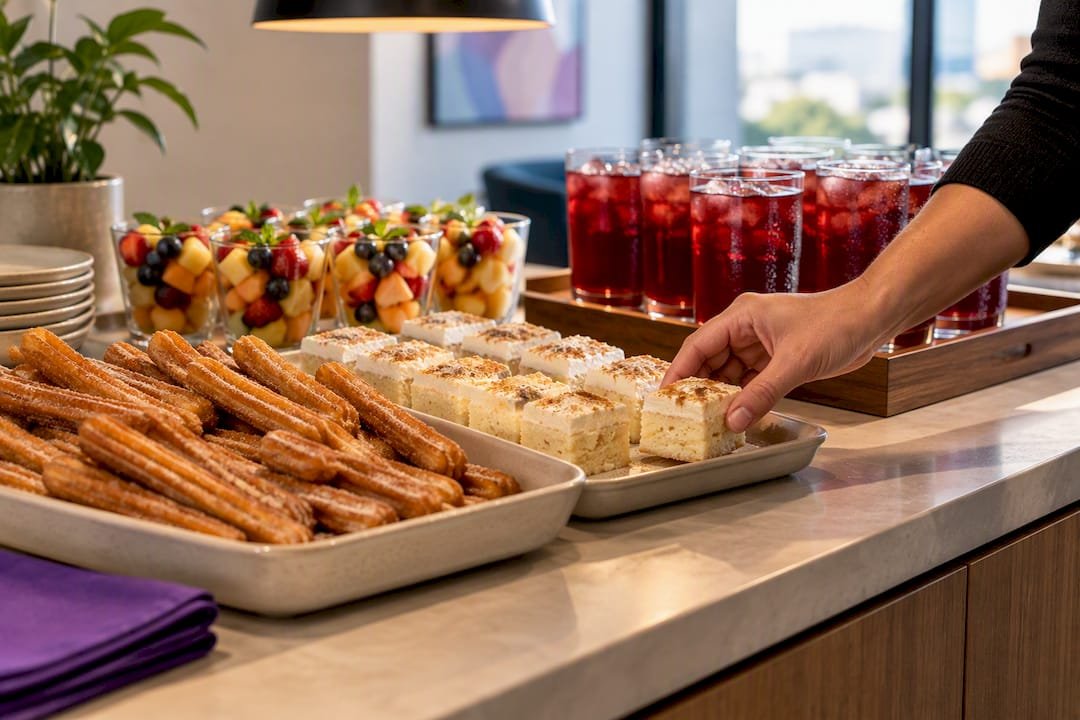
On drinks, water and one or two soft drink options cover most teams without overcomplicating the order. Coffee service matters more at breakfast-adjacent lunches than at midday ones. Skip elaborate drink stations unless the event is a celebration, since they add setup time without adding much satisfaction per dollar spent.
What if guest numbers change at the last minute?
Build slack into the order itself rather than hoping the headcount holds. A 10% buffer above confirmed numbers, the same buffer recommended for boxed lunches, covers most surprise attendees without meaningfully increasing cost.
Build-your-own formats absorb extra guests better than fixed-portion boxes, since a taco bar with a slightly larger crowd just means faster-moving trays, not a missing meal. If a boxed order runs short, a fast fallback is ordering two or three extra sandwich boxes from a nearby spot rather than trying to stretch existing portions. Keep a short list of backup options for exactly this situation, and treat it as part of the plan rather than a last-minute scramble.
For a shrinking headcount, don’t cancel small quantities the morning of. Most catering providers can’t adjust an order that close to delivery, so build cancellation cutoffs into your planning from the start, ideally 24 to 48 hours out.
How do you manage RSVPs without chasing people?
Use one sign-up link for headcount and dietary needs together, sent with a clear deadline, not a vague “let me know” message in a group chat. Assigning specific slots or items rather than a general request cuts down on duplicate answers and missing replies.
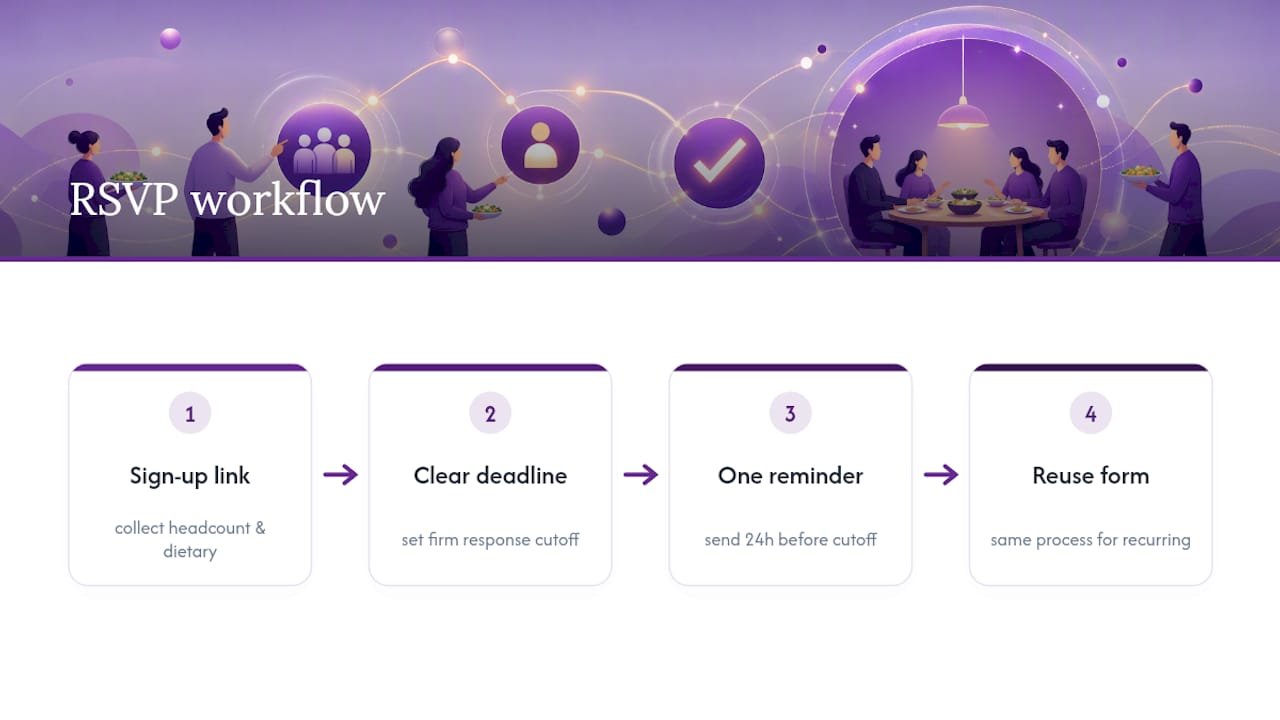
Send one reminder 24 hours before the cutoff, not three scattered nudges. A single, well-timed reminder gets better response rates than repeated pings that people start ignoring. For recurring team lunches, keep the same form and process every time. Consistency in how you ask cuts the mental effort of replying, which is often the real reason people delay.
What rotation keeps lunches interesting long term?
Run a four-week rotation with one novelty slot each quarter instead of chasing something new every week. Format consistency drives participation more than cuisine variety does, and it cuts planning effort dramatically. Treat every dietary requirement as fixed, never optional.
— Austin
Ready to book your next team lunch?
Burrito Splendido gives organisers something a lot of catering orders don’t: a fully customizable, dietary-inclusive menu built from 100% Manitoba-sourced ingredients, without the premium price tag of a specialty caterer. The Burrito Express starts around $1,050 to $1,150, the Burrito Express Deluxe runs $1,550, and the Bueno Burrito Bar is offered as a full build-your-own setup, with delivery and set-up and catering staff available for additional fees.
When you request a quote, expect a straightforward conversation about headcount, dietary needs, and pickup or delivery timing, not a long back-and-forth. Browse the full catering menu to see what’s available before you decide, then head to the catering page to lock in a date and get pricing confirmed for your group.
Sources
- Office lunch ideas for every occasion: a guide to feeding your team | Fooda
- How to feed a large sports team / Team meal planning guidance (sign-up and slot strategy)
FAQ
What are some good team lunch ideas?
Build-your-own taco or bowl bars, boxed sandwich assortments, grazing boards, and pizza or pasta stations cover most budgets and group sizes. Build-your-own formats tend to satisfy the widest range of dietary needs with the least extra planning.
What can I make for a group lunch?
A taco bar with two or three proteins, a build-your-own quesadilla station, or a bulk pasta bake with two sauces are all easy to scale up or down. Order roughly 3 tacos per person for a standard lunch, closer to 4 or 5 for a heavier event.
What is a good lunch to serve friends or coworkers?
A grazing board or a taco bar works well for smaller, informal groups since both let people build their own plate and mingle while serving themselves. For larger or more formal settings, boxed meals keep things clean and simple.
What are some creative ideas for a staff luncheon?
Pair a build-your-own taco or bowl bar with a quick team trivia round or a “best combo” contest to add a light interactive element. Rotating which department picks the theme each month also keeps a recurring luncheon from feeling repetitive.
How much does catering cost for a team lunch?
Costs vary by format and headcount, generally landing between $10 and $22 per person depending on complexity. Burrito Splendido’s catering options range from about $1,050 for the Burrito Express to $1,699 one-off for the full Bueno Burrito Bar setup, with delivery and staffing fees listed separately.