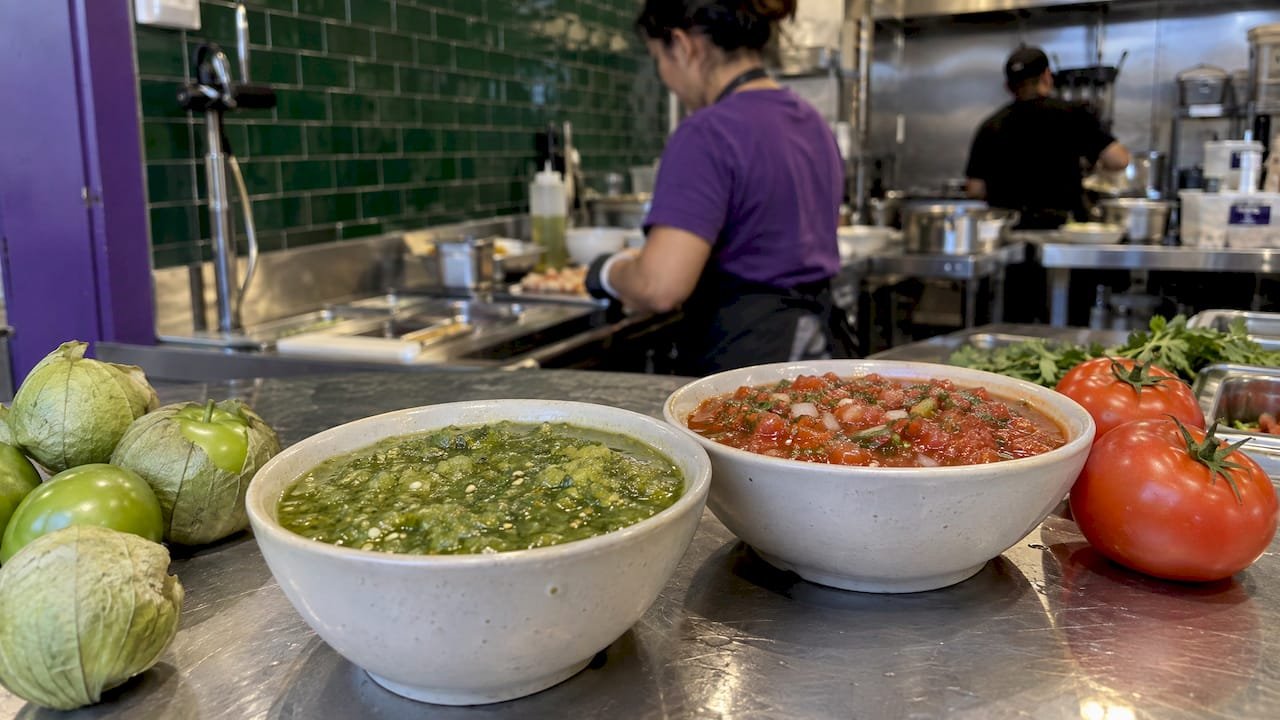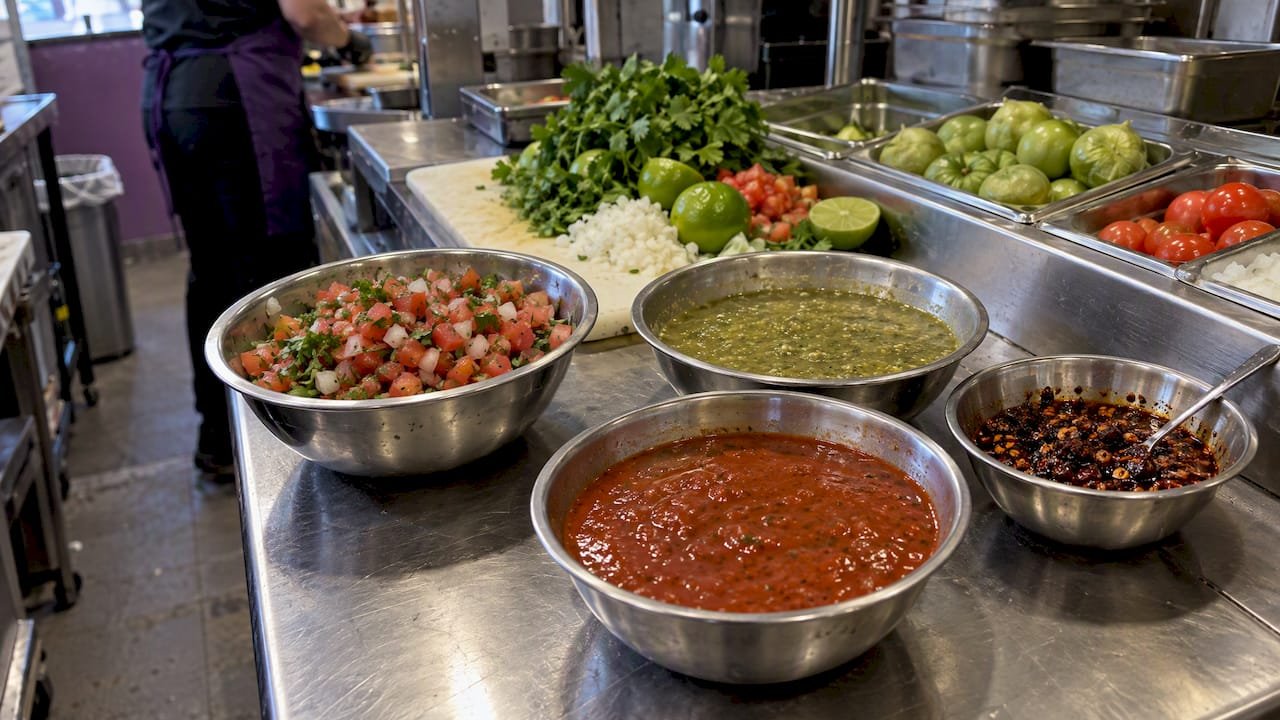
Tomatillo salsa is tangy, bright and usually green. Tomato salsa is sweeter, rounder and usually red. That is the short answer. The longer one is more interesting, because the fruit, the way it is cooked and the chiles around it decide how each salsa behaves on a taco, a burrito or a chip. Here is how to tell them apart, when to reach for each, and what to do if you only have one of the two fruits in your kitchen.
TL;DR
- Tomatillo salsa (salsa verde) is tart, fresh and green. Tomato salsa (salsa roja) is sweeter and savoury, and red.
- Tomatillos are not unripe tomatoes. They are a different fruit, so green tomatoes only work as a stand-in, and the flavour changes.
- Roasting or charring deepens both salsas. Raw versions taste sharper and more grassy.
- Green salsa suits fish, chicken and eggs. Red salsa suits grilled meats, chips and anything that wants depth.
- There are no fixed rules: a salsa can use tomatoes, tomatillos or both.
Table of Contents
- What tomatillo salsa actually is
- Tomatillo salsa vs tomato salsa at a glance
- Flavour: why green tastes sharp and red tastes round
- Colour and texture
- Can tomatillo salsa be red?
- Tomatillos are not green tomatoes
- Roasting and charring: what it does to each salsa
- Which salsa goes with what
- How to choose when you are ordering
- Making the choice at home: a simple starting recipe
- Our perspective
- Order fresh Mexican-inspired food in Manitoba
- FAQ
- Sources
What tomatillo salsa actually is
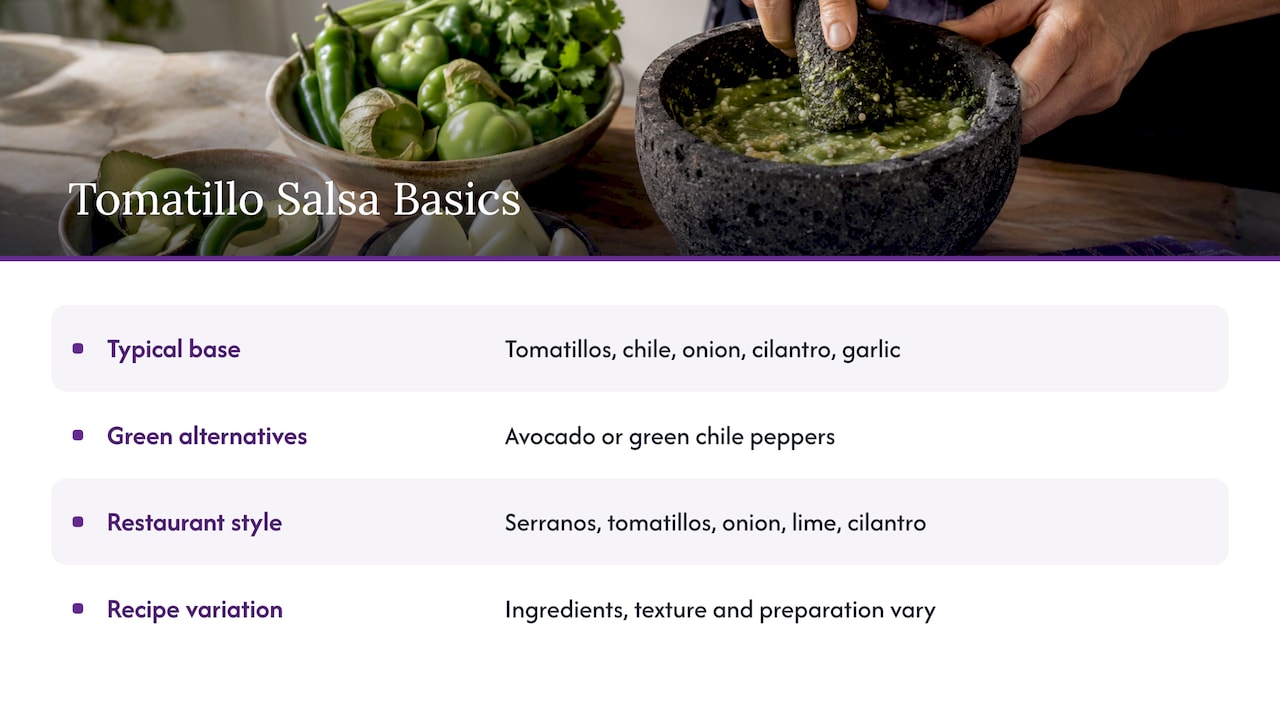
Tomatillo salsa is typically made from tomatillos, often with jalapeño or serrano peppers, onion, cilantro and garlic. Mexican salsa verde is usually tomatillo-based, although some green salsas get their colour from avocado or green chile peppers instead.
If you have ordered the “green salsa” at a Mexican restaurant, this is almost certainly what you were handed. One common restaurant-style formula, described by the Calgary Herald, blends serrano peppers and tomatillos with white onion, lime juice, salt, cilantro and water, often after blackening some of the ingredients under a broiler.
So the name tells you the base fruit, not a single recipe. That matters, because many people searching for the difference expect two rigid categories. In practice, Mexican table salsas have no single fixed recipe. They may use tomatoes, tomatillos or both, any type of chile, and a range of aromatics, herbs and spices. Preparation and texture vary widely too.
Tomatillo salsa vs tomato salsa at a glance
Use this table as a starting point. Every row describes the typical version, and cooks bend all of these rules.
| Tomatillo salsa (salsa verde) | Tomato salsa (salsa roja) | |
|---|---|---|
| Main fruit | Tomatillo | Red tomato |
| Typical colour | Bright to olive green | Vibrant to brick red |
| Taste | Tangy, tart, bright | Sweeter, savoury, rounder |
| Acidity | Higher | Lower |
| Common extras | Jalapeño or serrano, onion, cilantro, garlic, lime | Chiles (fresh, dried or smoked), onion, garlic, herbs |
| Texture | Smooth or chunky | Smooth or chunky |
| Best for | Brightening rich dishes, fish, chicken, eggs | Adding depth to grilled meat, chips, tacos |
The taste and colour rows follow this comparison of red and green salsa, which ties the tartness of tomatillo salsa to malic acid and the sweeter, more savoury profile of tomato salsa to its lower acidity. Salsa roja is generally sweeter because its base is red tomatoes, while tomatillo salsa is generally tarter and less sweet.
Flavour: why green tastes sharp and red tastes round
Taste a raw tomatillo and you get a clean, citrusy snap. Taste a ripe tomato and you get sweetness with a savoury, almost meaty background. Blend either into a salsa and those traits carry through.
The practical result is a difference in what each salsa does to a plate of food:
- Tomatillo salsa cuts through. It works like a squeeze of lime. Put it next to something rich, such as slow-cooked pork, melted cheese or a creamy sauce, and the dish tastes lighter.
- Tomato salsa adds body. It brings sweetness and depth, so it pairs well with grilled and smoky flavours and with salty chips.
Chiles change the picture again. A salsa verde with serranos can be hotter than a mild tomato salsa, and a red salsa made with dried chiles can be smoky and deep without being especially hot. Heat comes from the chile, not the colour. If you want to know how a salsa will taste, ask what chile is in it, not only whether it is green or red.
Colour and texture
Tomatillo salsa is usually green because of the tomatillos. Some green salsas borrow their colour from avocado or green chiles. The ingredients may be raw, boiled, grilled, roasted or fried, then blended to a smooth consistency or ground for more texture.
That last point is worth remembering. Texture is a choice, not a trait of the fruit:
- A blender produces a pourable, almost sauce-like salsa that clings to a burrito.
- A quick pulse, or a knife, gives a chunky salsa that sits on top of a taco.
- A traditional stone mortar gives something in between, with bits of char and seed.
One small colour note: a roasted or charred tomatillo salsa turns from vivid green to a more olive, sometimes brownish green. That is normal, and it is a sign of the deeper flavour, not of spoilage.
Can tomatillo salsa be red?
Yes. This surprises people who assume “tomatillo” always means green. Rick Bayless’s salsa roja recipe, published on Food Network, combines tomatillos with small hot dried chiles and roasted garlic. The dried chiles give the salsa its red colour, while the tomatillos still supply the tang.
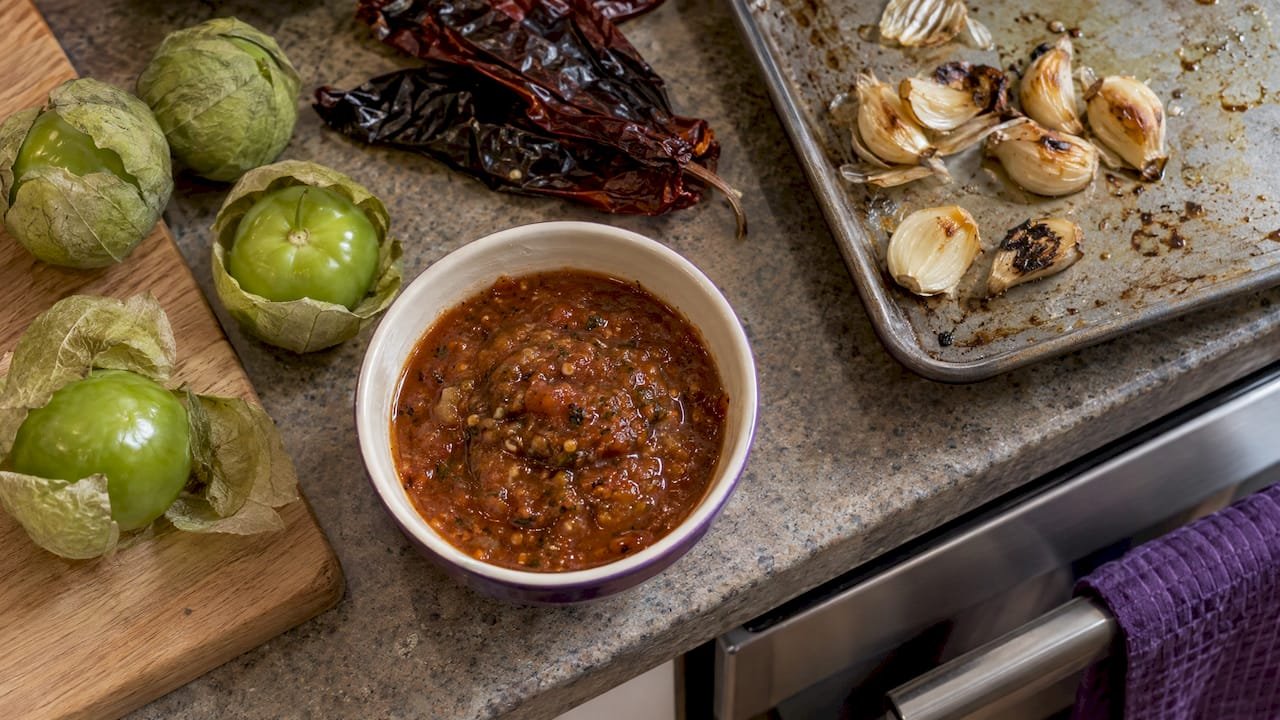
So you can meet a red salsa with no tomato in it, and a green salsa with no tomatillo in it (the avocado or green chile versions). Colour is a hint, not a guarantee. When it matters, for taste or for an allergy or dietary need, ask what is in the bowl.
Tomatillos are not green tomatoes
This is the question behind most substitution mistakes. A tomatillo is a papery-husked fruit that stays green when ripe. It is a first cousin to ground cherries and a more distant relative of tomatoes, and its flesh differs from that of a green tomato. A green tomato is simply a tomato that has not ripened yet.
How to pick and prep tomatillos
- Choose firm tomatillos that fill their husks.
- Peel off the husk, then rinse away the sticky film underneath. It tastes faintly soapy if you leave it on.
- Cut out any bruised spots before roasting or blending.
Those few steps are why a homemade salsa verde can taste cleaner than a rushed one.
Can you swap green tomatoes for tomatillos?
You can, with a trade-off. Green tomatoes work as a substitute, but they change the flavour profile: they lack the distinct tart, fruity acidity of tomatillos and are milder. Some cooks go further and say that unripe tomatoes miss the bright “malic snap” and can introduce a raw, bitter note.
If you have to substitute, a few adjustments help:
- Roast or char the green tomatoes first to soften any raw edge.
- Add extra lime juice to bring back some of the missing tartness.
- Keep the cilantro, onion and chiles the same, and taste before adding salt.
- Do not expect an exact match. Call it a green tomato salsa and enjoy it for what it is.
If you do not have cilantro, our guide to a 1:1 parsley swap for cilantro in salsa covers that part.
A note for anyone canning salsa
Canning is where substitutions stop being a matter of taste and become a matter of safety. For canning, use a salsa recipe that has been tested for canning, as Oregon State University Extension advises. Green tomatoes are acidic enough for water-bath processing, so swapping them in is safe when you follow a tested recipe. For tomato products, the University of California’s guidance says to add bottled lemon juice or citric acid, or 5-percent vinegar instead, because acidification is required to ensure safe acidity. Do not change the proportions of tomato, tomatillo, onion, chile and acid in a tested recipe on your own. If you are unsure, follow the recipe exactly or keep the salsa fresh and eat it within a few days.
Roasting and charring: what it does to each salsa
Roasting is the quiet variable that changes everything. Roasting tomatoes, onions, chiles and garlic deepens the flavour of many Mexican salsas.
For tomatillos, the effect is especially clear. Roasting rounds off the raw edge into something deeper and slightly sweet while keeping the tang, whereas raw salsa verde tastes sharp and grassy. For tomatoes, a char adds smoke and concentrates sweetness.
A simple way to see it for yourself is to make one batch of each and split them:
- Raw tomatillo salsa: bright, sharp, herbal. Good with rich or fried food.
- Roasted tomatillo salsa: mellow, slightly sweet, still tangy. Good on almost anything.
- Raw tomato salsa (pico-style): fresh, juicy, light.
- Roasted tomato salsa: smoky, deeper, rounder.
Many cooks also combine the two fruits in one salsa, charring equal parts tomatoes and tomatillos with chiles, onion and garlic. You get sweetness from the tomato and snap from the tomatillo. It is a good answer if you cannot decide.
Which salsa goes with what
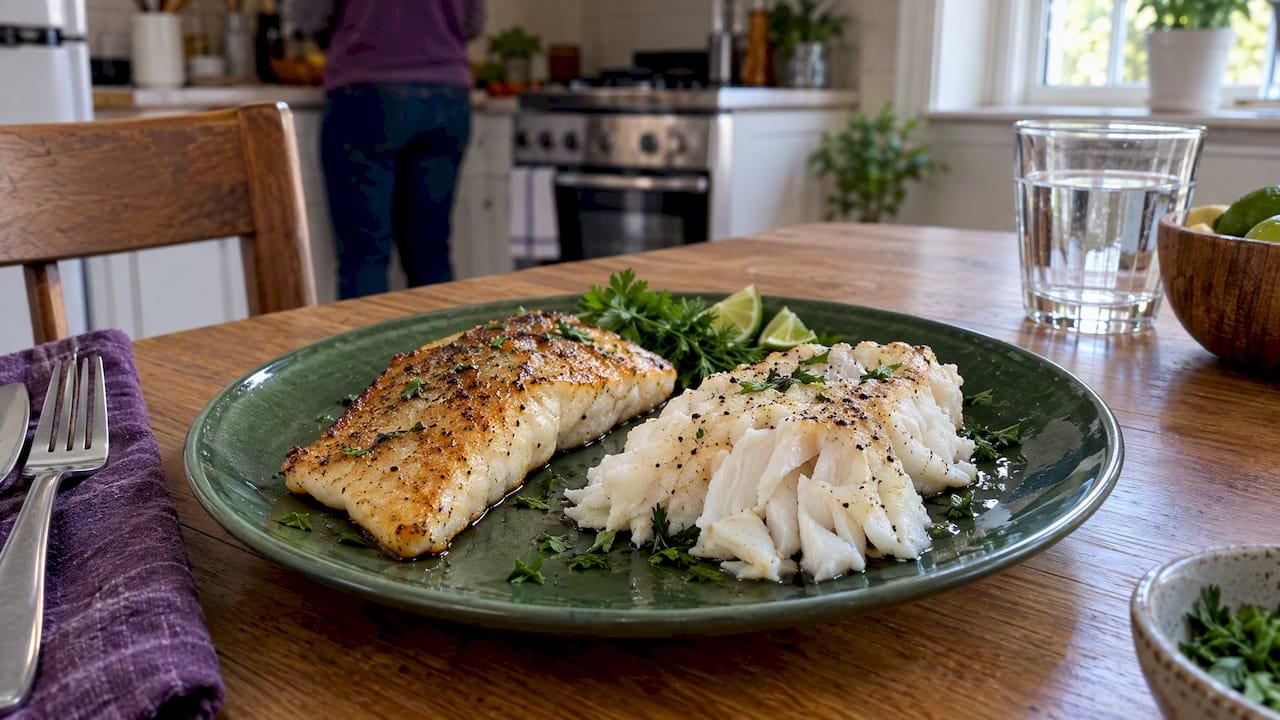
Salsas in general are served with chips, grilled meat, chicken, fish and tacos. Green salsas are especially nice with fish, and all go well with eggs. Tomatillo salsa also turns up as a dip with nachos, simmered into mole, and spooned over tacos or grilled fish.
Here is a quick pairing guide:
| Dish | Reach for | Why |
|---|---|---|
| Fish tacos | Tomatillo salsa | Acidity brightens delicate fish |
| Pulled pork or carnitas | Tomatillo salsa | Cuts through rich, braised meat |
| Grilled steak or barbacoa | Tomato salsa | Sweetness and smoke match the char |
| Chicken | Either | Green for freshness, red for depth |
| Breakfast eggs | Either | Both work with eggs |
| Plain tortilla chips | Tomato salsa, or a roasted green | Sweet and salty is a classic pairing |
| Quesadillas | Either | Acid or sweetness against melted cheese |
If you cook tacos at home, our step-by-step guide to authentic Mexican tacos shows where salsa fits in the build, and the role of salsas in Mexican food goes deeper on matching sauces to dishes.
How to choose when you are ordering
At a counter, you rarely get to taste before you commit. A few rules of thumb keep you on track:
- Rich or fatty filling? Pick the green. The tang resets your palate between bites.
- Mild, lean or very fresh filling? Pick the red, or a mild green, so you do not overpower it.
- Heat-sensitive? Ask which chile is used and whether you can have the salsa on the side. Colour does not tell you how hot it is.
- Dietary needs? Ask about ingredients and cross-contact, especially for sauces that may contain added ingredients beyond fruit, chile and herbs.
- Cannot decide? Get both and try one on each half of your meal.
If you are weighing salsa against other table sauces, our quick checks on choosing hot sauce or salsa can help. And once you have made a batch, our note on how long fresh salsa lasts in Canada explains how to store it safely.
Making the choice at home: a simple starting recipe
This is not a canning recipe. It is a fresh salsa to eat within a few days, and it shows how little separates the two styles.
Roasted tomatillo salsa
- Husk and rinse about 500 g of tomatillos.
- Broil them with one or two serranos or jalapeños, half an onion and a few garlic cloves until blistered and softened.
- Blend with a handful of cilantro, lime juice, salt and a splash of water.
- Taste, then adjust the salt and lime.
Roasted tomato salsa
- Swap the tomatillos for the same weight of Roma tomatoes.
- Use dried or smoked chiles if you want a deeper heat.
- Cut back on lime, since tomatoes need less acid than tomatillos.
The two methods are nearly identical. The fruit does most of the work. For more on keeping the rest of the dish fresh, see our tips for fresh Mexican cooking at home.
Our perspective
We cook from scratch every day, and salsa is where that shows most. A sauce is not an afterthought on a taco or a burrito. It decides whether the whole thing tastes bright or heavy.
Our view is simple: choose the salsa for the food, not for the colour. Green belongs next to rich, slow-cooked proteins like carnitas and barbacoa, where a little acid is a relief. Red belongs where you want sweetness and a bit of smoke. Neither is better. They do different jobs.
What we care about most is freshness and local sourcing. Our kitchen presses tortillas with 100% Manitoba-produced flour, uses locally raised meats and Bothwell Cheese, and sources produce mainly through Peak of the Market. A good salsa starts with good produce and honest handling, and the same holds for your kitchen. Buy firm tomatillos, rinse them well, roast them when you want depth, and taste as you go.
If you have dietary needs, tell us. Our team is trained to handle gluten-free, vegan, keto and paleo requests and to take cross-contamination seriously.
Austin
Order fresh Mexican-inspired food in Manitoba
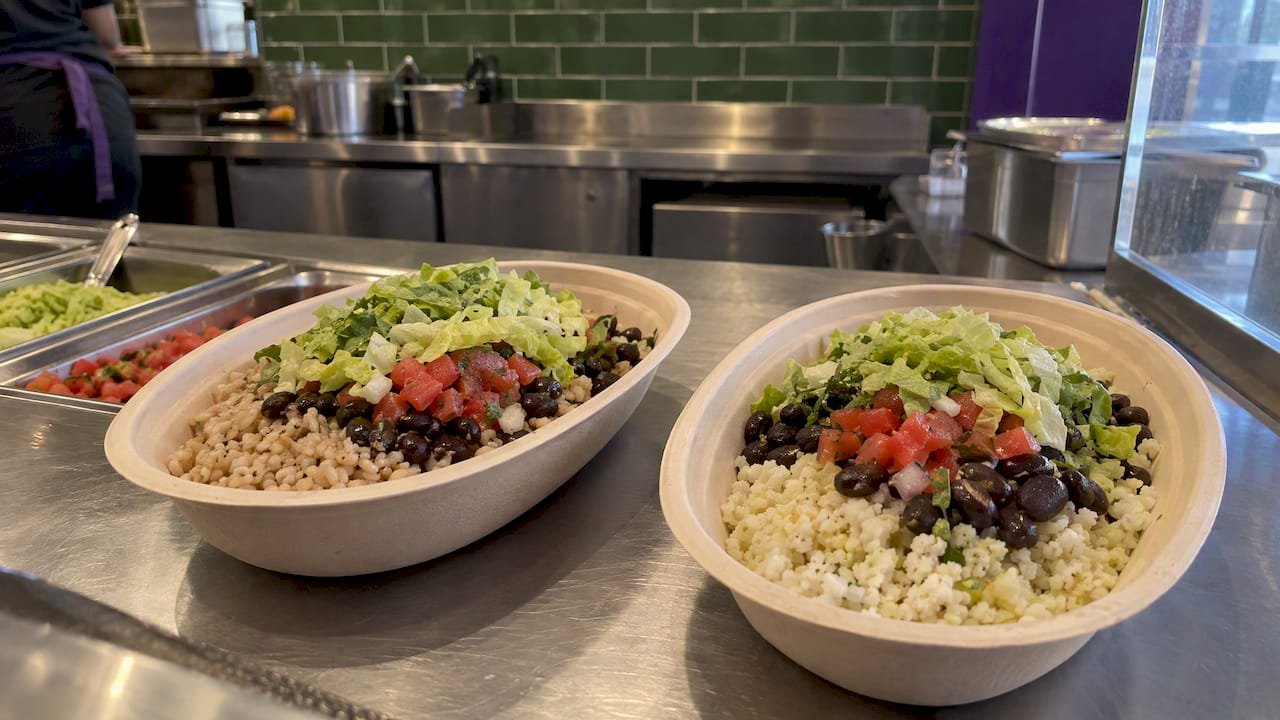
If you would rather taste the difference than make it, come and eat with us. Our menu of burritos, bowls, tacos, quesadillas and salads is built around a from-scratch kitchen, a deep-fryer-free way of cooking and Manitoba ingredients, with options for gluten-free, vegan, vegetarian, keto and paleo diets.

Planning a team lunch or an event? Take a look at our catering options, from the Burrito Express to the Bueno Burrito Bar. If you want something lighter for lunch, see our seasonal Manitoba bowls in Winnipeg.
FAQ
What is the green salsa at Mexican restaurants?
It is usually salsa verde, made with tomatillos, chiles such as jalapeño or serrano, onion, cilantro and lime. Some green salsas use avocado or green chiles instead, so ask if you have an allergy or a dietary need. Often some of the ingredients are charred first for a deeper flavour.
Can tomatillo sauce be red?
Yes. A red chile and tomatillo salsa combines tomatillos with small hot dried chiles and roasted garlic. The dried chiles supply the colour and heat, and the tomatillos supply the tang.
Are tomatillos different from green tomatoes?
Yes. Tomatillos are a first cousin to ground cherries and only a more distant relative of tomatoes, and they keep their husks and stay green when ripe. Green tomatoes are unripe tomatoes. They taste milder and less tart, so a salsa made with them tastes different.
Can you substitute green tomatoes for tomatillos in salsa verde?
Yes, but expect a milder, less tangy salsa. Roast the tomatoes and add extra lime to compensate. If you are canning, follow a recipe that was tested for canning and do not change the acid or proportions.
Which is healthier, tomatillo salsa or tomato salsa?
Both are mostly vegetables, chiles and herbs, so the main differences come from what is added, such as salt, oil or sugar, rather than from the fruit. If you are watching sodium, ask for no added salt or check how a salsa is made. Our guide to low sodium Mexican orders shows how.
Sources
- Salsa Roja vs. Salsa Verde: How are they different?
- Making salsa is about conducting a symphony of flavours, Calgary Herald
- The Difference Between Red and Green Salsa
- An introduction to Mexican salsas, Eat Mexico
- Salsa Roja: Red Chile-Tomatillo Salsa Recipe, Food Network
- Preserving tomatillos, Oregon State University Extension
- Tomatillo Salsa Verde: 12-Minute Broiler Char
- Selecting, Preparing, and Canning Tomatoes and Tomato Products, UC ANR
- Tomatoes and Tomatillos: Salsa Essentials, MexConnect
- Time for tomatillos, Cynthia David