Dietary friendly catering is the strategic design and selection of event menus to accommodate varied dietary restrictions and preferences safely and inclusively. The industry term for this practice is inclusive menu planning, and it covers everything from vegan and gluten-free requirements to halal, kosher, and severe food allergies. Done well, it transforms a potential logistical headache into a professional advantage. Ignoring dietary requirements damages event perception and reflects poorly on the organiser. Done right, it signals competence, care, and respect for every guest at the table.
What are the common dietary restrictions and how does catering accommodate them?
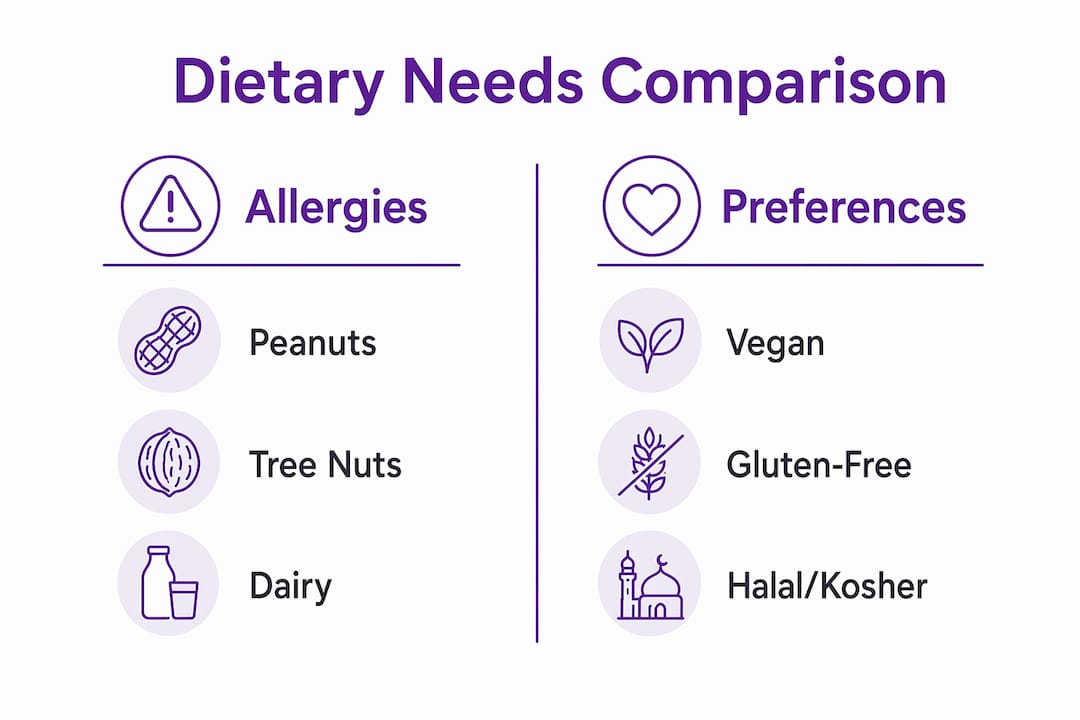
Dietary specific catering starts with understanding the most common restrictions your guest list will carry. These fall into four broad categories: medical allergies, religious or cultural requirements, ethical choices, and health-based preferences.
Medical allergies are the highest-stakes category. The Big 9 allergens recognised in Canada include peanuts, tree nuts, milk, eggs, wheat, soy, sesame, fish, and shellfish. A reaction to any of these can be life-threatening, so they require a separate operational response from preference-based restrictions.

Religious and cultural requirements include halal and kosher certifications, which govern not just ingredients but preparation methods and sourcing. Halal catering, for example, requires specific slaughter practices and prohibits pork and alcohol in any form. Kosher catering adds rules around meat and dairy separation, which is why kosher catering adds $5–$15 per person compared to standard options. That premium reflects certified sourcing and preparation oversight, not just ingredient swaps.
Ethical and lifestyle choices include vegan, vegetarian, and plant-based diets. Vegan options are often cost-neutral relative to standard catering. Gluten-free adds roughly $1–$3 per person, and halal adds $2–$5. These figures matter when you are building a catering budget for a mixed group.
The smartest approach to catering for food restrictions is overlap logic. A single vegan and gluten-free dish covers vegan, vegetarian, dairy-free, egg-free, and gluten-free guests simultaneously. One dish covers five restrictions with no extra cost or complexity. That is the core efficiency principle behind inclusive menu planning.
- Vegan dishes: cover vegan, vegetarian, dairy-free, and egg-free guests
- Gluten-free dishes: cover celiac, gluten-sensitive, and many paleo guests
- Halal dishes: cover halal and often kosher-adjacent preferences when pork and alcohol are absent
- Nut-free dishes: cover the most common severe allergy category
Pro Tip: When building your catering order, identify your two or three highest-overlap dishes first. These are your max-coverage items. Fill remaining gaps with targeted additions rather than ordering a unique meal for every restriction.
How to plan and communicate dietary needs effectively
The most critical part of dietary catering success is early, detailed communication via RSVP with specific dietary questions. Vague questions like “do you have any dietary needs?” produce vague answers. Specific questions produce usable data.
Here is a practical planning sequence for any catered event:
- Send a dietary survey 5–7 days before the event. This window gives you time to analyse responses and place a final order. Survey attendees 5–7 days out and require a confirmed final order at least 48 hours in advance for groups over 20.
- Categorise responses by severity and type. Separate medical allergies from preferences. A guest with celiac disease requires a different operational response than a guest who simply prefers to avoid gluten.
- Share categorised data with your caterer in writing. Verbal communication creates gaps. A written brief with guest counts per restriction protects both you and the caterer.
- Confirm cross-contamination protocols. Ask your caterer directly how they handle shared surfaces, utensils, and cooking equipment. This question alone tells you whether they have a real allergy protocol or a casual one.
- Label every dish clearly at the event. Use consistent, readable signage that identifies the top allergens and dietary categories for each item.
Categorising needs early prevents last-minute errors in safety and ingredient management. A guest with a peanut allergy who receives an unlabelled dish is not just a catering failure. It is a liability.
Pro Tip: Add a free-text field to your dietary survey alongside checkbox options. Guests with complex or unusual restrictions will use it, and it prevents surprises on the day.
What catering formats best serve mixed dietary groups?
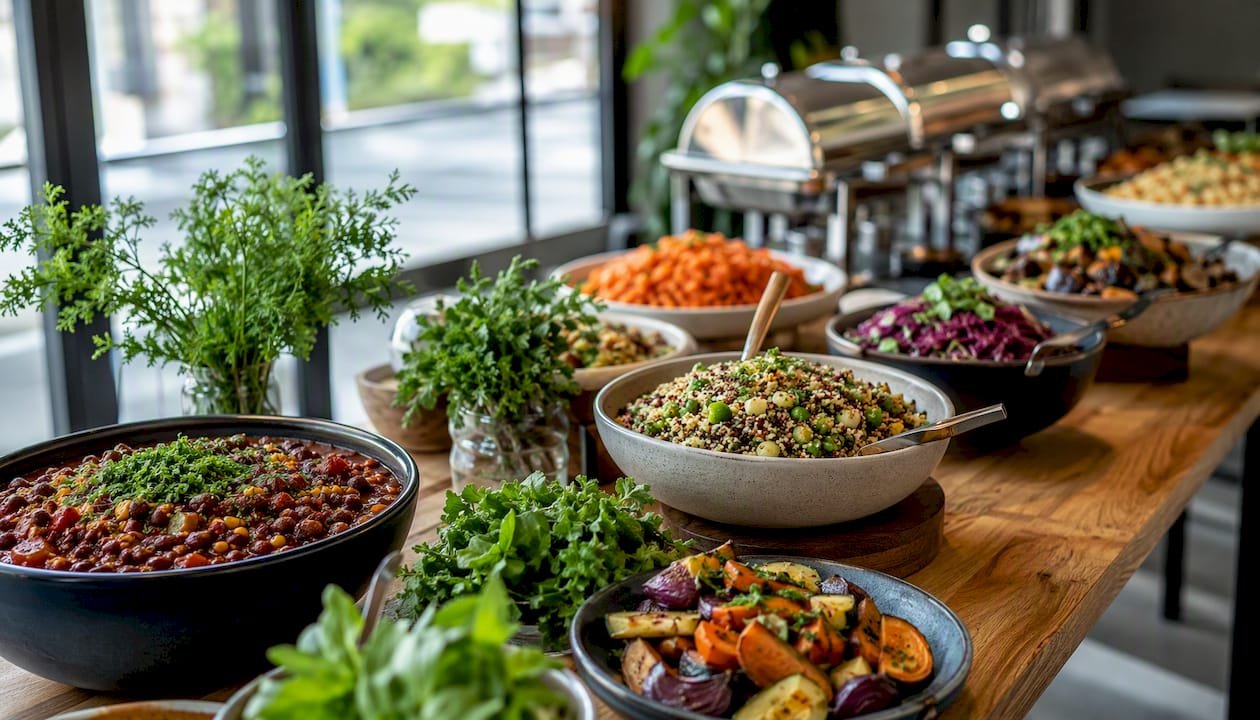
The format of your catering service shapes the guest experience as much as the food itself. Three formats dominate event catering, and each has a different relationship with dietary inclusivity.
| Format | Dietary Flexibility | Allergy Safety | Guest Experience |
|---|---|---|---|
| Buffet | High | Moderate risk of cross-contamination | Social, self-directed |
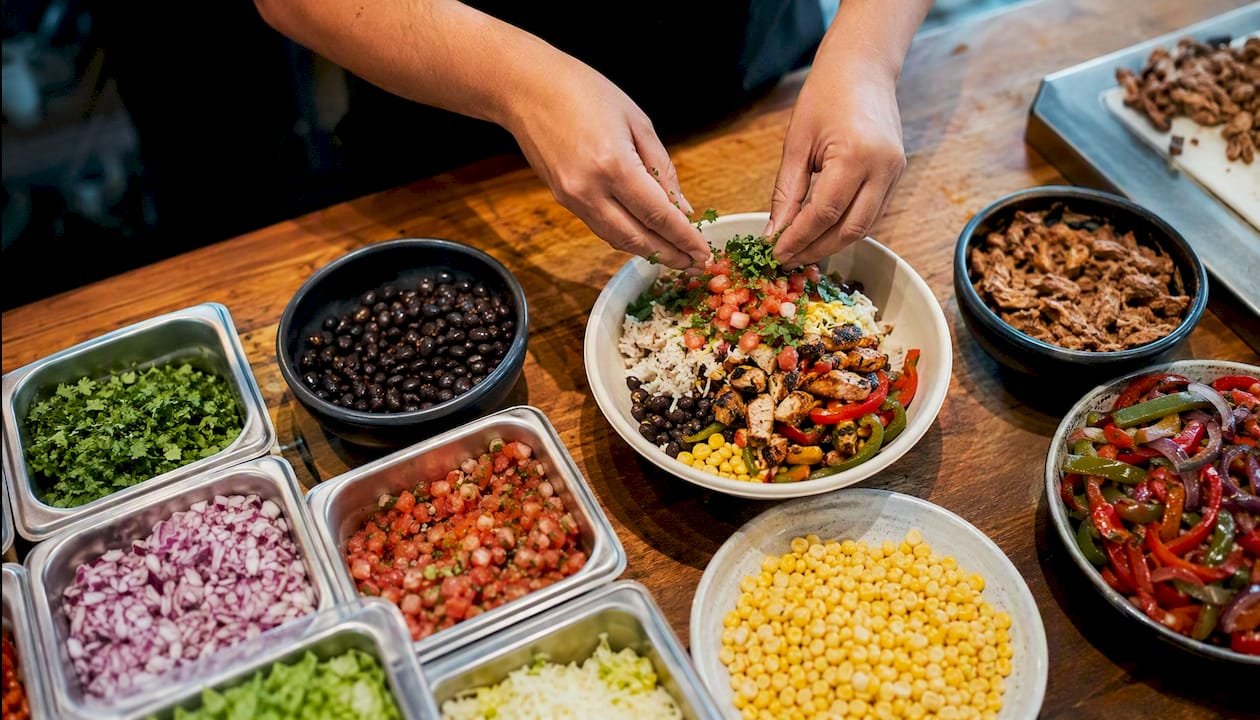
| Build-your-own bar | Very high | Moderate, depends on setup | Highly inclusive, interactive |
| Individually packaged meals | Low to moderate | Highest safety for severe allergies | Controlled, stigma risk |
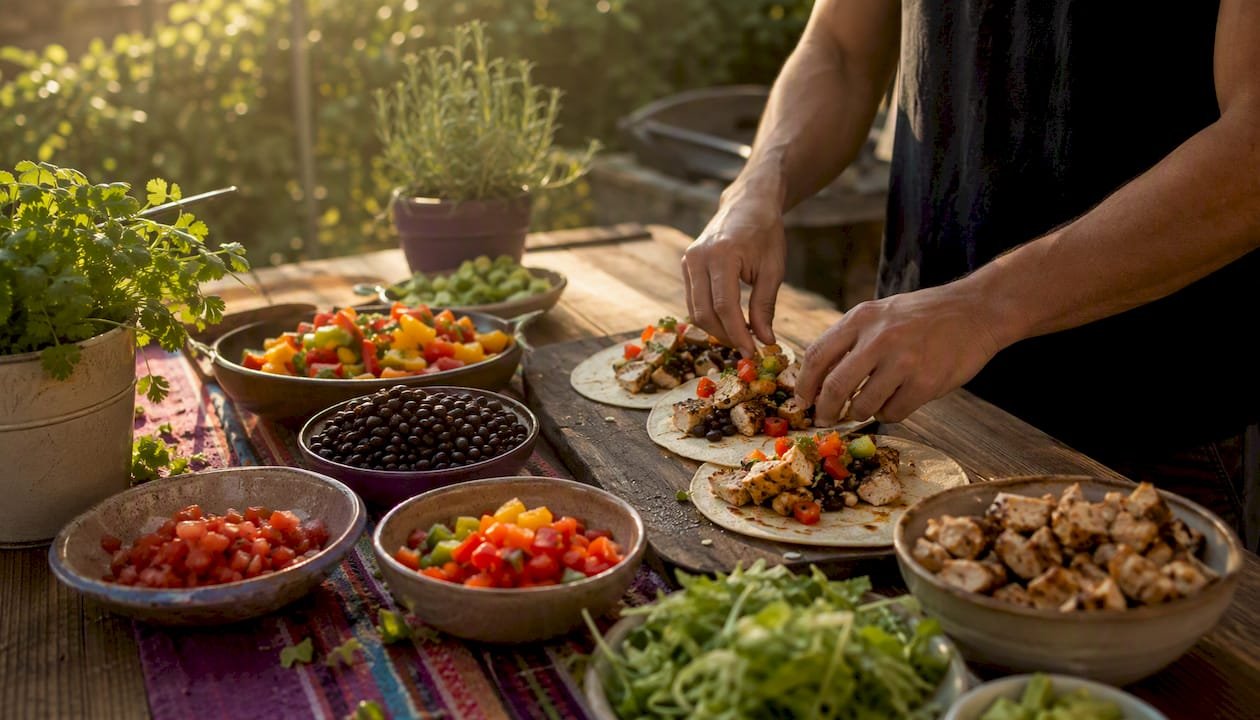
Build-your-own bar formats resolve most mixed dietary needs by allowing guests to assemble plates tailored to their preferences without staff micromanagement. Mexican and Mediterranean cuisines are particularly well-suited to this format. A taco bar with separate proteins, toppings, and tortilla options naturally accommodates gluten-free, vegan, halal, and dairy-free guests from a single setup. You can read more about how this works in practice with Mexican buffet options for events of all sizes.
Buffet formats offer flexibility but carry inherent cross-contamination risks. Shared serving utensils and open dishes create exposure pathways for guests with severe allergies. For guests with Big 9 allergen sensitivities, individually packaged boxed lunches are the operational default to prevent cross-contamination. The trade-off is that boxed meals can feel isolating if only one or two guests receive them while everyone else serves themselves.
Integrated menus with clear signage reduce stigma and create a cohesive guest experience. Moving away from segregated special plates is the current best practice. When a vegan guest receives the same beautifully presented dish as everyone else, rather than a separate container pulled from a back room, the message is clear: they were considered from the start.
- Mediterranean cuisine: naturally accommodates vegan, gluten-free, and dairy-free guests through dishes like hummus, tabbouleh, and grilled proteins
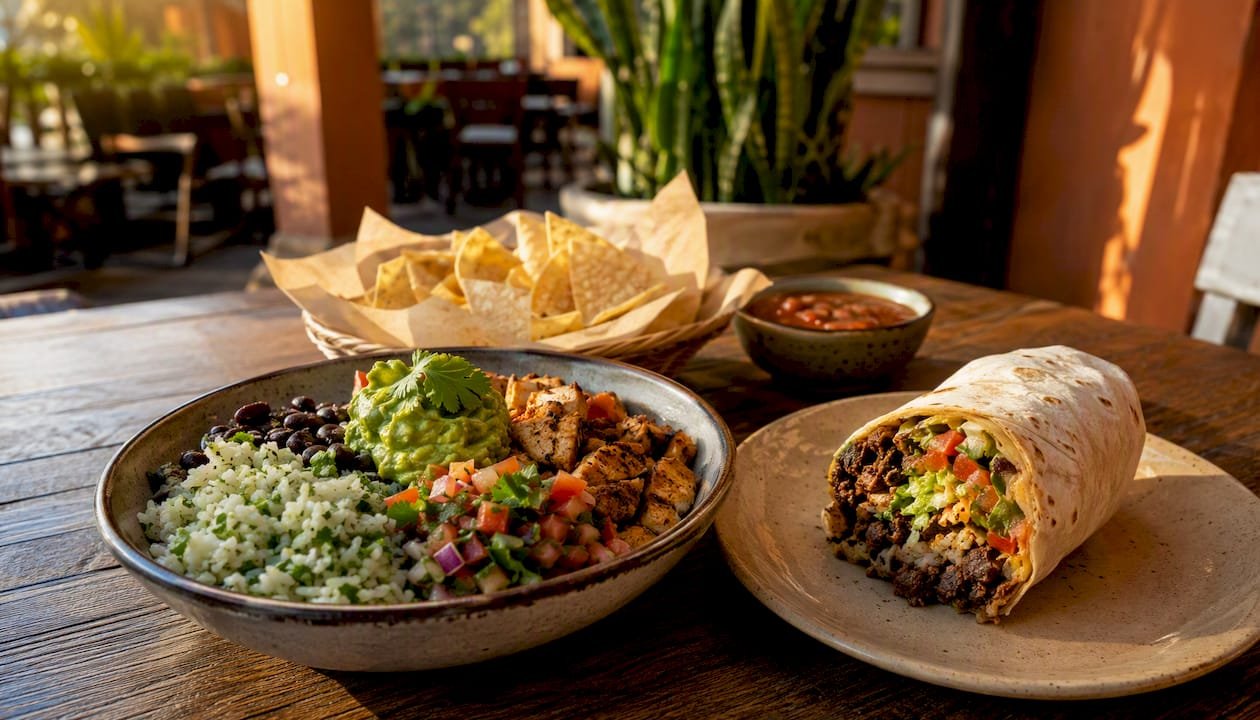
- Mexican cuisine: build-your-own formats with corn tortillas, rice, beans, and fresh salsas cover most common restrictions simultaneously
- Indian cuisine: many dishes are naturally vegan or vegetarian, with clear protein separation making halal accommodation straightforward
For healthy event catering that genuinely works across a mixed group, cuisine choice is as strategic as menu design.
What are the cost factors in dietary specific catering?
The most common misconception in nutritional catering options is that accommodating multiple dietary needs multiplies your costs. It does not, when you apply overlap logic correctly.
Catering mixed dietary needs typically adds only $2–$5 per person when using overlap logic, compared to ordering individual special meals for each restriction. That is a significant difference at scale. A corporate lunch for 100 people with 20 guests carrying various restrictions costs roughly $200–$500 more with overlap logic. Ordering unique meals for each of those 20 guests could easily double or triple that figure.
| Dietary Requirement | Typical Cost Addition Per Person |
|---|---|
| Vegan | Cost-neutral |
| Gluten-free | $1–$3 |
| Halal | $2–$5 |
| Kosher | $5–$15 |
The data above reflects the real cost of accommodation when sourcing and preparation are handled correctly. Kosher catering sits at the high end because certification, supervision, and separate equipment are non-negotiable requirements.
Ordering unique special meals for every restriction is expensive and inefficient. Subset logic simplifies catering orders while covering all guests’ needs. The practical rule from Zerocater is that 25–30% of your total food items should be max-coverage dishes. These are items that satisfy the broadest possible range of restrictions simultaneously. The remaining 70–75% of your menu can be standard offerings, knowing the max-coverage dishes have your restricted guests covered.
The efficiency gains compound quickly. A caterer who understands subset logic will propose fewer unique dishes, lower total food volume, and a cleaner service operation. When you are evaluating how to choose dietary catering for your next event, ask potential caterers directly whether they use overlap or subset logic in their planning. Their answer tells you a great deal about their experience level.
Key takeaways
Inclusive menu planning is the most cost-effective and professionally sound approach to dietary friendly catering, combining overlap logic, early communication, and integrated menu design.
| Point | Details |
|---|---|
| Use overlap logic first | A vegan and gluten-free dish covers five restrictions at once, reducing cost and complexity. |
| Survey guests 5–7 days out | Early, specific dietary surveys prevent last-minute errors and protect guest safety. |
| Choose the right format | Build-your-own bars offer the highest dietary flexibility with strong guest experience. |
| Integrated menus reduce stigma | Dishes compatible with multiple diets eliminate the need for segregated special plates. |
| Cost is manageable | Mixed dietary needs add only $2–$5 per person with overlap logic applied correctly. |
Why inclusive catering is no longer optional
I have reviewed enough event post-mortems to say this plainly: the catering complaints that damage reputations are almost never about food quality. They are about guests who felt forgotten. A vegetarian who received a plate of side dishes while everyone else had a full meal. A guest with celiac disease who spent the evening unsure what was safe to eat. These are not edge cases. They are predictable outcomes of poor planning.
The shift from special plates to integrated menus is the single most meaningful change in event catering over the past decade. It is not just a logistical improvement. It is a signal to every guest that they were considered before they arrived. That signal matters more than most planners realise.
What I find most underused is the build-your-own format. Planners sometimes resist it because it feels informal. In practice, it is the most inclusive and operationally forgiving format available. Mexican cuisine in particular, with its natural separation of proteins, bases, and toppings, is built for this approach. You can explore how Mexican food suits diverse diets for corporate events specifically.
The planners who get this right treat dietary requirements as a design constraint, not an afterthought. They ask better questions on their RSVPs, brief their caterers in writing, and choose formats that let the food do the work. The result is an event where no guest has to explain themselves or feel like a burden. That is the standard worth aiming for.
— Austin
How Burritosplendido makes dietary catering simple
Burritosplendido’s build-your-own format is designed precisely for the kind of mixed dietary groups this article describes. The menu covers vegan, vegetarian, gluten-free, and keto options as standard, not as special requests. Proteins like Carnitas, Barbacoa, and Adobo Chicken are prepared in-house daily, and gluten-free soft corn tortillas from La Cocina are available alongside house-pressed flour options.
For corporate planners, families, and organisations across Winnipeg and Brandon, Burritosplendido’s event catering service handles the complexity of mixed dietary groups without the premium cost of bespoke special meals. The team is trained in cross-contamination protocols and can work with your dietary survey data to build a menu that covers your full guest list. Contact Burritosplendido directly to discuss your next event.
FAQ
What is dietary friendly catering?
Dietary friendly catering is the planning and delivery of event food that accommodates varied dietary restrictions and preferences, including vegan, gluten-free, halal, kosher, and allergy-related needs. The goal is an inclusive menu where all guests are served safely and without stigma.
How much does catering for food restrictions cost?
Accommodating mixed dietary needs typically adds $2–$5 per person when overlap logic is used. Vegan options are often cost-neutral, gluten-free adds $1–$3, halal adds $2–$5, and kosher adds $5–$15 per person.
When should i collect dietary information from guests?
Survey attendees 5–7 days before the event and submit your final catering order at least 48 hours in advance. Early collection allows you to categorise needs by severity and brief your caterer accurately.
What catering format works best for mixed dietary groups?
Build-your-own bar formats offer the highest dietary flexibility and the best guest experience for mixed groups. For guests with severe allergies to Big 9 allergens, individually sealed boxed lunches are the safest operational choice.
How do i avoid cross-contamination at a catered event?
Confirm cross-contamination protocols with your caterer in writing before the event. For severe allergies, request individually packaged and sealed meals, and use dedicated serving utensils for each dish at buffet-style setups.