Crema is a thinner, milder, pourable cultured cream built for drizzling over hot dishes, while sour cream is thicker and tangier, meant for dolloping and dipping. The difference comes down to fat content, acidity, and how each behaves near heat. Once you know which role you need, swapping or adapting between them gets a lot easier.
TL;DR:
- Crema is more pourable, milder, and tolerates heat better than sour cream, making it ideal for drizzling over hot dishes.
- Sour cream is thicker, tangier, and better for cold toppings or dense dollops that need to hold their shape.
- Traditional crema is cultured with gentle methods, whereas many commercial versions use stabilizers and acidifiers, affecting texture and flavor.
- Substituting sour cream for crema involves thinning it with milk or cream, especially in hot recipes, to prevent curdling.
- Both products last 1 to 3 weeks in refrigeration, but using genuine cultured versions ensures better flavor and stability.
Table of Contents
- Texture, acidity, fat, and heat: a side-by-side comparison
- Why they taste and behave differently: culture, fat, and processing
- Swapping between them without wrecking a recipe
- Which dishes call for crema, and which call for sour cream
- Two home recipes when crema isn’t on the shelf
- How long crema and sour cream keep
- A cook’s take on choosing between them
- FAQ
- Sources
Texture, acidity, fat, and heat: a side-by-side comparison
Crema pours; sour cream sits in a spoonable mound. That single difference drives almost every decision about which one to reach for. Crema also tastes milder and less sour, so it softens spice instead of fighting it, while sour cream’s sharper tang stands up to rich or heavy foods like baked potatoes and chili.
Fat content explains part of the gap. Crema mexicana typically runs 18 to 30% fat, giving it a silky, pourable body, while commercial sour cream usually sits around 18 to 20% fat but with a thicker set and sharper acidity from its fermentation process.
Heat is where the two really part ways. Crema holds together in hot soups and sauces, while sour cream tends to break or curdle if stirred into something too hot.
| Trait | Crema | Sour cream |
|---|---|---|
| Texture | Pourable, silky | Thick, spoonable |
| Flavour | Mild, slightly tangy | Sharp, tangy |
| Fat content | About 18 to 30% | About 18 to 20% |
| Heat behaviour | Tolerates heat well | Can curdle under high heat |
- Use crema when a dish calls for a drizzle rather than a dollop.
- Lean on sour cream when you want a thicker, tangier topping that holds its shape.
- Thin sour cream with a little milk or cream to mimic crema’s pourability.
- Swap in crème fraîche when you want crema’s heat tolerance but can’t find crema.
Why they taste and behave differently: culture, fat, and processing
The texture and flavour gap starts with how each product is cultured. Crema is traditionally made by culturing cream with buttermilk or mesophilic cultures, a gentler process that yields a milder tang and a looser set. Sour cream uses lactic acid cultures added directly to cream, which ferment faster and produce a sharper, more acidic result.
Fat percentage and culturing time both shape the final product. Higher fat and shorter culturing time lean toward a softer, milder cream, while lower fat and longer fermentation push toward thickness and tang.
Not every tub on the shelf follows this traditional path. Rick Bayless notes that many mass-market “crema” products rely on stabilizers and acidifiers to mimic the traditional texture rather than culturing cream the old way.
- Check the ingredient list: cream and cultures only is the sign of a traditional product.
- Watch for gums, starches, or acidifiers, which signal a stabilized imitation rather than a cultured one.
- A shorter ingredient list usually means a cleaner, more authentic flavour.
Swapping between them without wrecking a recipe
Substituting one for the other works most of the time, as long as you account for texture and heat.
- For cold toppings and dips, swap crema and sour cream 1:1. If the result tastes too mild or too sharp, adjust with a squeeze of lime or lemon.
- For hot soups and sauces, favour crema or crème fraîche, which stays stable under heat instead of sour cream. If sour cream is all you have, cool the dish slightly first or blend the sour cream with a little cream before stirring it in.
- To match crema’s pourable consistency, thin sour cream with a splash of milk, cream, or water until it drizzles rather than plops.
- To thicken crema for a dollop-style use, chill it well and fold in a spoonful of Greek yogourt or a little powdered milk.
- For dairy-free cooking, look for coconut- or soy-based crema-style products designed to mimic the same pourable texture.
Which dishes call for crema, and which call for sour cream
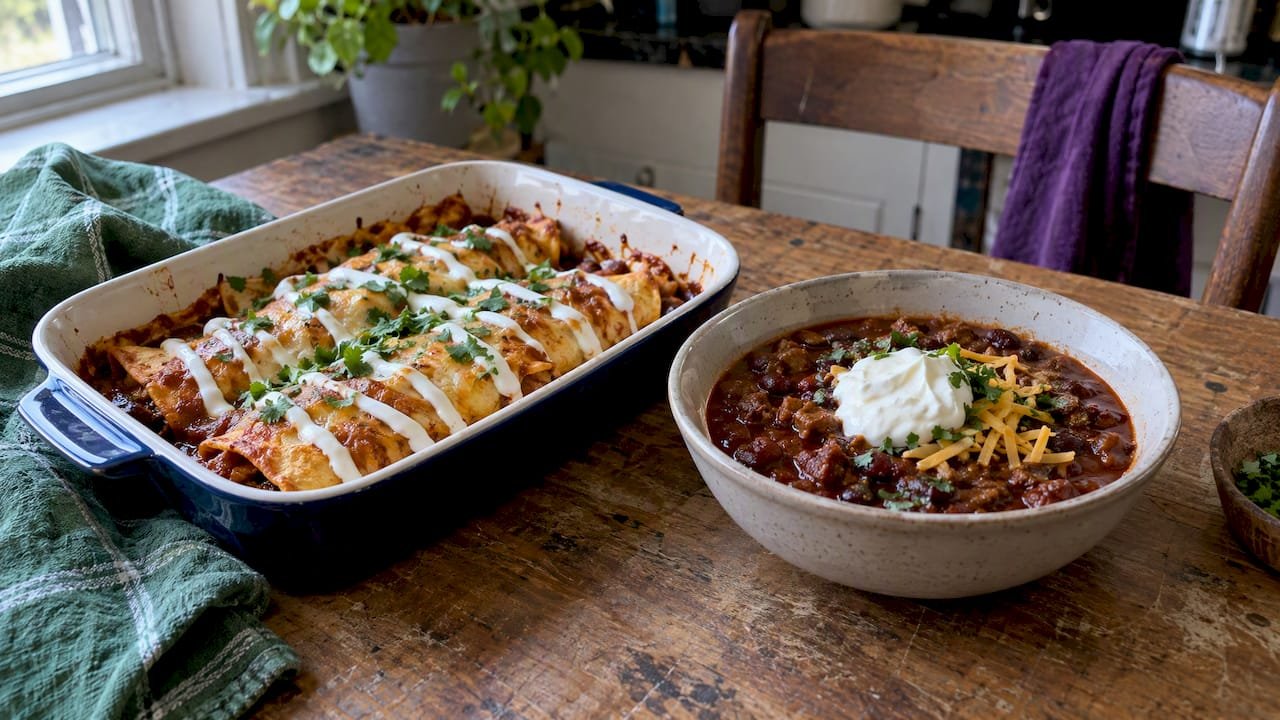
Crema’s job is to cool and balance heat without burying it, which is why it shows up drizzled over tacos, elotes, enchiladas, pozole, and fish tacos. A thin stream across a plate of enchiladas lets the sauce and spice still come through, just rounded out.
Sour cream does different work. Its thickness holds up on a baked potato, inside a cold dip, or as a dollop on chili or a slice of banana bread, where you want it to sit rather than melt in.
Small details change how either one reads on the plate. A little lime zest or a pinch of salt stirred into crema sharpens its flavour without thickening it. A runny crema drizzled in a zigzag looks and tastes different from a thick dollop of sour cream sitting on top, so choosing a squeeze bottle for crema versus a spoon for sour cream is part of the decision, not an afterthought.
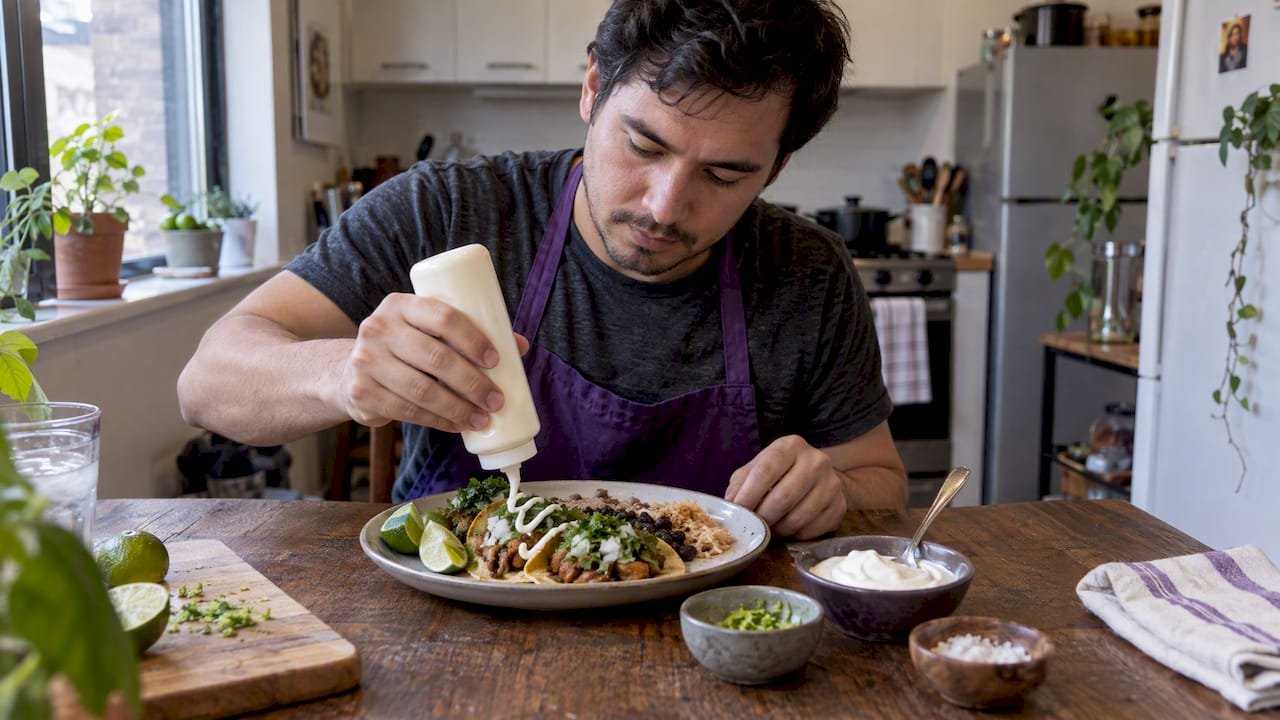
For more on building a plate around these finishing touches, our guide to fresh Mexican cooking at home and our step-by-step taco guide both walk through where a finishing cream fits best. For a broader look at how crema fits into the wider pantry, see this guide to taco varieties and garnishes.
Two home recipes when crema isn’t on the shelf
Store-bought crema isn’t always easy to find, but Rick Bayless documents two reliable home methods: one richer and slower, one quicker and more stable.
- Richer, cultured crema: Stir 1 cup heavy cream with 2 tablespoons buttermilk, plus a tablespoon of powdered milk if you want extra body. Leave it covered at warm room temperature, around 20 to 24°C, for 6 to 12 hours, until it thickens and smells faintly tangy. Chill before serving.
- Quicker, stable crema: Whisk together equal parts heavy cream and sour cream. It’s ready in minutes rather than hours and holds up better when stirred into hot dishes.
Choose cream without ultra-pasteurization when you can, since it cultures more reliably. If you’re serving crema warm, hold back on thinning it until the last minute so it doesn’t turn watery on the plate.
Pro Tip: If your kitchen runs cool, set the culturing bowl near (not on) a warm appliance like a running oven to keep the temperature steady.
How long crema and sour cream keep
Both products need consistent refrigeration and a clean container to last. Properly stored cultured creams generally hold for 1 to 3 weeks, depending on the formulation and whether live cultures are present; pasteurized commercial versions can vary from that range.
- A sharp, off smell or visible mould means it’s time to toss it.
- A thin layer of watery liquid on top is normal whey separation, not spoilage; just stir it back in.
- Always scoop with a clean utensil and transfer leftovers to a sealed container to avoid cross-contamination.
A cook’s take on choosing between them
If I could only keep one in the fridge, it would be crema, because it adapts more easily to both finishing a hot dish and loosening into a dip. But in practice, I keep both on hand: sour cream for baked potatoes and cold dips, crema for anything that comes off the stove or out of a tortilla warmer.
Daily cooking and catering trays both benefit from the same rule: taste before you thicken or thin, since a dish that looks underdressed on a chafing line is often one spoonful of crema away from right. For more on building that finishing layer, our tacos guide covers where it fits best.
— Austin
FAQ
Can I substitute crema for sour cream?
Yes, crema works as a substitute for sour cream in most cold applications, though it’s thinner and milder, so dips may turn out looser and less tangy. For dishes where you want a thick dollop, chill the crema well or fold in a spoonful of Greek yogourt first.
Are sour cream and crema the same?
No, they’re related but distinct: crema is thinner, milder, and more pourable, while sour cream is thicker and tangier. Both are cultured dairy products, but different culturing methods and fat levels give them different textures and flavours.
Can I turn sour cream into crema?
You can get close by thinning sour cream with a splash of milk or cream until it reaches a pourable consistency, then adjusting the tang with a squeeze of lime if it tastes too sharp. It won’t be identical to traditionally cultured crema, but it works well for drizzling.
Is crema better for you than sour cream?
Neither is clearly healthier since both are cultured dairy products with overlapping fat ranges, crema around 18 to 30% fat and sour cream around 18 to 20%. The better choice depends more on the dish and portion than on one product being lighter than the other.
Sources
- Mexican-style crema — Rick Bayless
- Crema mexicana (Mexican cultured cream) — Provenance Technique Library
- Mexican crema vs sour cream: differences, uses & substitutes — Tabetha’s Table
- Crème fraîche vs. sour cream—the differences explained — Martha Stewart