Tortilla freshness is defined by three qualities working together: softness, flexibility, and a hydrated starch matrix that resists drying and cracking. What makes tortillas fresh is not simply heat or time off the griddle. It is the condition of the starch network inside the dough, the moisture distributed through that network, and whether preparation and storage choices protect or destroy that balance. Corn tortillas depend on nixtamalization to build their elastic masa. Flour tortillas depend on gluten relaxation and hydration. Both go stale through the same culprit: starch retrogradation.
What makes tortillas fresh at the molecular level?
Starch retrogradation and moisture migration are the two primary drivers of tortilla staling. When starch gelatinises during cooking, it absorbs water and swells into a soft, flexible gel. As the tortilla cools, those starch molecules begin to recrystallise, expelling moisture and tightening the structure. The result is a tortilla that feels firm, brittle, and prone to cracking when folded.
Moisture migration makes this worse. Water does not stay evenly distributed inside a tortilla. It moves from wetter regions toward drier ones, and it moves from the tortilla into the surrounding air if the tortilla is left uncovered. A tortilla can feel warm yet still be stiff if moisture has already redistributed away from the starch matrix. This is why freshness depends on starch chemistry and moisture distribution rather than temperature alone.
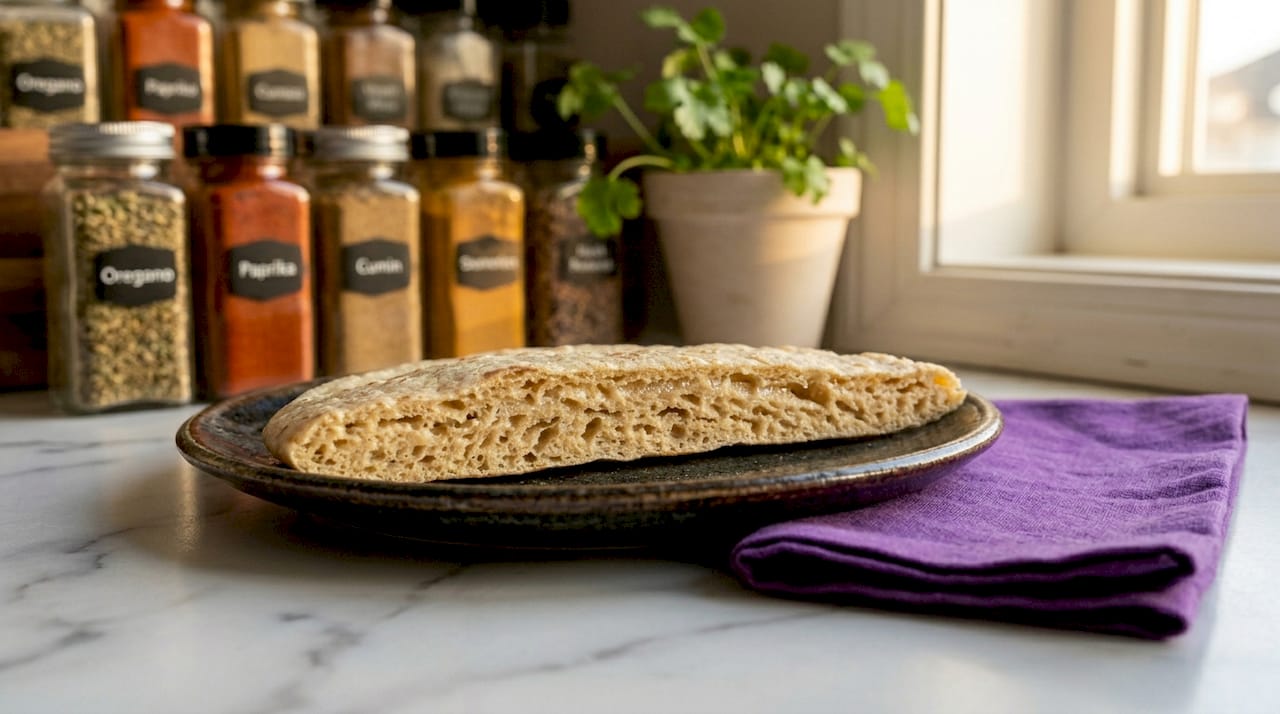
Refrigeration accelerates the problem. Cold temperatures speed up starch recrystallisation, which is why refrigerated tortillas often feel rubbery or tough within a day. Room temperature storage, with proper moisture protection, consistently outperforms refrigeration for short-term freshness.
| Factor | Effect on freshness |
|---|---|
| Starch gelatinisation | Creates soft, pliable texture during cooking |
| Starch retrogradation | Causes firming and cracking as tortilla cools |
| Moisture migration | Redistributes water unevenly, leading to dry edges |
| Refrigeration | Accelerates recrystallisation and toughening |
| Airtight storage at room temperature | Slows moisture loss and retrogradation |
Pro Tip: Wrap freshly cooked tortillas immediately in a clean cotton cloth and place them in a sealed container. The cloth absorbs excess surface steam while the container traps ambient moisture, slowing retrogradation significantly.
How does nixtamalization create fresh corn tortillas?
Nixtamalization is the alkaline cooking process that transforms dried corn into masa, the cohesive dough used for corn tortillas. Dried corn kernels are simmered in a solution of water and calcium hydroxide, raising the pH to approximately 11. This alkaline environment breaks down the pericarp of the kernel, releases bound niacin, and triggers cross-linking and partial gelatinisation of the corn starches. The result is a kernel that grinds into a smooth, elastic, and cohesive dough rather than a dry, crumbly powder.
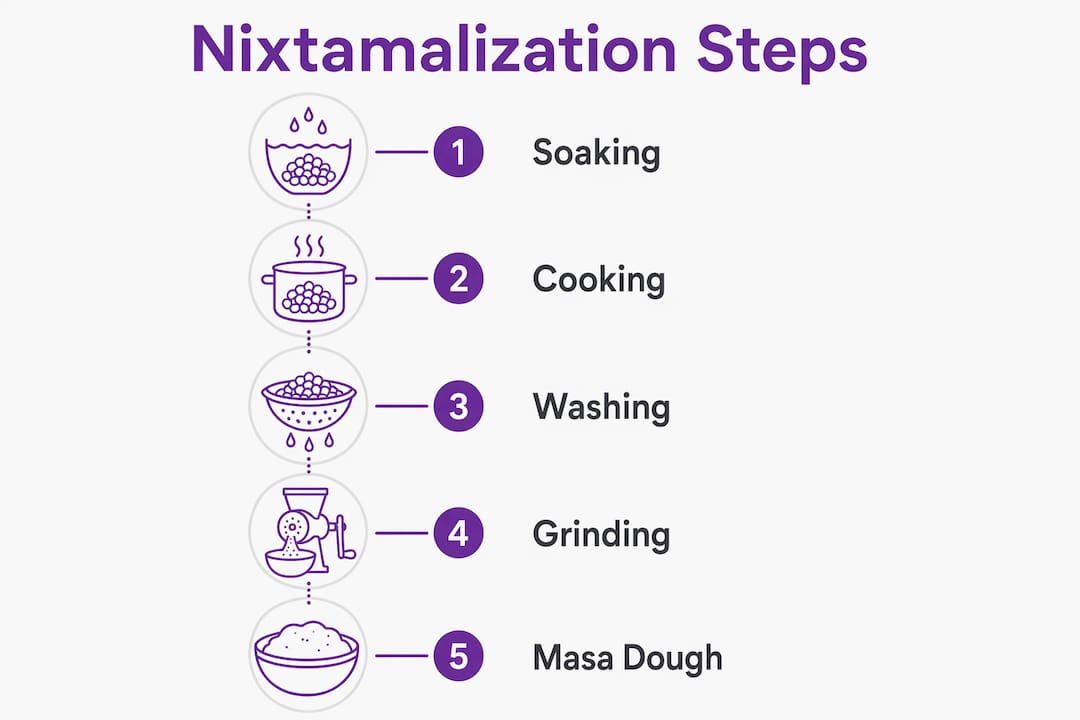
The nixtamalization process directly determines the freshness potential of every corn tortilla made from that masa. Under-nixtamalised corn produces masa that tears during pressing and cooks into flat, dense rounds. Properly nixtamalised corn produces masa with enough elasticity to hold together under pressure and enough hydration to generate steam during cooking.
Hydration and resting time after grinding are equally critical. Masa that rests for 20 to 30 minutes allows water to distribute evenly through the starch network, improving cohesiveness and pliability. Rushing this step produces tortillas that crack at the edges even before they cool.
Key factors in masa preparation that affect freshness:
- Calcium hydroxide ratio: Too little means incomplete gelatinisation; too much creates a bitter, over-alkaline flavour.
- Soaking time: Longer soaking increases hydration and softens the kernel more thoroughly.
- Grinding consistency: Coarse grinding leaves unhydrated starch particles that create dry spots in the finished tortilla.
- Resting time: Dough resting of 20 to 30 minutes allows moisture to equalise throughout the masa before pressing.
- Dough temperature: Warm masa presses more evenly and cooks with better steam generation than cold masa.
Pro Tip: If you are using masa harina rather than freshly ground nixtamal, add warm water gradually and let the dough rest covered for at least 20 minutes before pressing. The hydration window is narrower with dried masa flour, and resting makes a measurable difference in the final texture.
The essential role of tortillas in Mexican cuisine extends well beyond the plate. Nixtamalization is one of the oldest food technologies in the Americas, and its chemistry is the reason corn tortillas have a flavour and texture that no other flatbread replicates.
What cooking techniques preserve tortilla freshness?
Cooking method and timing are where freshness is either locked in or lost. For corn tortillas, the goal is to trap steam inside the dough as it cooks, creating the characteristic puff that signals a properly hydrated, properly cooked tortilla. Oven temperatures of 260 to 340°C with moisture encapsulation enable this puffing. At home on a comal or cast iron pan, the same principle applies: high, consistent heat with minimal pressing.
Cold or dehydrated dough cannot puff. When masa arrives at the cooking surface without adequate hydration, the surface layer sets before internal steam can build pressure. The tortilla stays flat, and the texture is dense rather than tender. This is why cold or dry dough causes surface rupture and prevents the layered softness that defines a fresh corn tortilla.
Flour tortillas follow a different logic. Gluten development and relaxation govern their texture more than steam puffing does. Resting dough for at least 15 minutes before rolling allows gluten strands to relax, making the dough easier to roll thin and producing a more pliable, tender tortilla. Cooking each flour tortilla for one to two minutes until bubbles appear on the surface signals that the starch has gelatinised fully and the moisture is sealed inside.
| Tortilla type | Cooking priority | Key technique |
|---|---|---|
| Corn | Steam generation and puffing | High heat, no pressing, hydrated masa |
| Flour | Gluten relaxation and even cooking | Rested dough, medium-high heat, 1 to 2 minutes per side |
| Both | Immediate moisture retention | Wrap in cloth directly off the heat |
Tortilla foldability is fundamentally a water retention issue. Edges that lose moisture below the starch matrix’s capacity will crack even if the centre of the tortilla is still warm. Keeping tortillas stacked and covered immediately after cooking is not optional. It is the step that determines whether they remain pliable through the meal.
How to keep tortillas fresh at home
Proper storage is where most home cooks lose the freshness they worked to create. Keeping tortillas at room temperature in an airtight container with a folded towel preserves softness for up to five days. Refrigerating them promotes starch retrogradation and increases the risk of condensation, which creates conditions for mould without actually keeping the tortillas soft.
Follow these steps to maximise tortilla shelf life at home:
- Cool before sealing. Let tortillas rest in a cloth for five minutes after cooking. Sealing them while still steaming traps too much moisture and creates condensation that softens the surface unevenly.
- Separate with parchment or cloth. Stack separation with breathable layers reduces internal moisture migration between tortillas, preventing the bottom of the stack from becoming soggy while the top dries out.
- Use an airtight container at room temperature. A sealed container at 20 to 22°C slows moisture loss without the retrogradation penalty of refrigeration.
- Freeze for longer storage. If you need to store tortillas beyond five days, freeze them with parchment between each one. Freezing halts retrogradation rather than accelerating it, and tortillas thaw well with gentle reheating.
- Reheat with dry heat followed by steam. Combining dry heat then steaming produces the best fresh-like texture. A dry pan for 30 seconds per side, followed by a brief wrap in a damp cloth for one minute, rebalances moisture and restores pliability.
Condensation and temperature swings shorten freshness significantly. Moving tortillas repeatedly between cold and warm environments accelerates both moisture migration and microbial growth. Stability in storage temperature is as important as the container itself.
Pro Tip: For taco night with a group, wrap a stack of tortillas in foil and place them in a 150°C oven for 10 minutes before serving. The gentle heat rehydrates the starch evenly without drying the surface, and the foil traps steam throughout the stack. Your guide to family taco night has more practical serving strategies worth reading before you host.
Key takeaways
Tortilla freshness is engineered through starch hydration, nixtamalization, steam-trapping cooking techniques, and moisture-protective storage rather than any single ingredient or step.
| Point | Details |
|---|---|
| Starch retrogradation causes staling | Recrystallisation of starch after cooking firms tortillas; slowing it is the core freshness challenge. |
| Nixtamalization builds freshness potential | Alkaline cooking at pH 11 creates elastic masa that holds moisture and puffs during cooking. |
| Steam during cooking creates softness | Properly hydrated dough on high heat traps steam, producing the pliable texture of a fresh tortilla. |
| Room temperature storage beats refrigeration | Airtight containers at 20 to 22°C preserve softness for up to five days; refrigeration accelerates firmness. |
| Reheat with dry heat then steam | A dry pan followed by a damp cloth wrap restores moisture balance in leftover tortillas effectively. |
The part most home cooks get backwards
Most people treat tortilla freshness as a cooking problem. They focus on the griddle, the heat, the press. In my experience, the real work happens before and after cooking, not during it.
The before part is hydration. Whether you are making masa from nixtamal or mixing flour dough, the resting period is where freshness is actually built. Skipping it or rushing it produces a tortilla that was never going to stay soft, regardless of how well you cook it. I have seen cooks with beautiful technique produce brittle tortillas simply because they pressed the dough too soon.
The after part is wrapping. The moment a tortilla leaves the heat, it starts losing moisture from its edges. Stacking them uncovered for even two minutes while you finish cooking the rest of the batch is enough to compromise the texture of the first ones. A cloth and a covered bowl cost nothing and make a measurable difference.
The other misconception worth addressing is that corn and flour tortillas need the same treatment. They do not. Corn tortillas are more forgiving of reheating because their masa structure responds well to moisture. Flour tortillas toughen faster with repeated heat exposure because gluten tightens. If you are reheating flour tortillas, one pass on a dry pan is usually enough. If you are reheating corn tortillas, a damp cloth wrap genuinely restores them close to their original texture.
The La Cocina corn tortillas article is worth reading if you want to understand how traditional nixtamalization methods translate into the kind of freshness that commercial corn tortillas rarely achieve.
— Austin
Experience fresh tortillas the Burritosplendido way
Burritosplendido has built its entire menu around the freshness principles described in this article. Every tortilla served at Burritosplendido locations across Winnipeg and Brandon is house-pressed using 100% Manitoba-produced flour, prepared fresh each day in a from-scratch kitchen. The corn tortillas come from La Cocina, made using traditional nixtamalization methods that produce the elastic, pliable texture this article describes.

If you are planning an event in Winnipeg and want that same freshness at scale, Burritosplendido’s catering services bring the full from-scratch experience to your venue. From Carnitas burritos to street-style tacos with house-made salsas, every item is prepared with the same commitment to moisture, flavour, and quality that defines a genuinely fresh tortilla.
FAQ
What causes tortillas to become hard and crack?
Starch retrogradation and moisture migration cause tortillas to harden and crack. As starch recrystallises after cooking and moisture moves away from the starch matrix, the tortilla loses flexibility and breaks when folded.
How long do homemade tortillas stay fresh?
Homemade tortillas stored in an airtight container with a cloth at room temperature stay soft for up to five days. Refrigeration shortens usable freshness by accelerating starch retrogradation.
What is nixtamalization and why does it matter for freshness?
Nixtamalization is the process of cooking corn in an alkaline calcium hydroxide solution, raising the pH to approximately 11. This creates elastic, cohesive masa that holds moisture during cooking and produces the soft, pliable texture of a fresh corn tortilla.
What is the best way to reheat tortillas without drying them out?
The best method combines dry heat and steam. Heat each tortilla on a dry pan for 30 seconds per side, then wrap the stack in a damp cloth for one minute. This rebalances moisture and restores a fresh-like texture without toughening the surface.
Does refrigerating tortillas keep them fresher longer?
Refrigeration does not keep tortillas fresher. Cold temperatures accelerate starch recrystallisation, making tortillas firm and rubbery faster than room temperature storage. Freezing is the better option for storage beyond five days.