An authentic taco is defined by three components: a warm corn tortilla, a modest but flavourful filling, and a fresh salsa with minimal garnishes. This is the taco trinity, and every item on a proper checklist for authentic tacos serves one of these three pillars. The Americanised version, loaded with shredded lettuce, cheddar, and sour cream, is a different dish entirely. What follows is a practical, ingredient-by-ingredient guide built around traditional Mexican street taco methods, adapted for Canadian home cooks who want the real thing.
1. The checklist for authentic tacos starts with corn tortillas
Corn tortillas are the non-negotiable foundation of any authentic taco recipe. Flour tortillas are a northern Mexican and Tex-Mex convention. For street-style tacos, masa harina is the only correct starting point.
To make the dough, combine 250 g masa harina with 330 to 360 ml of warm water and a pinch of salt. Mix until the dough holds together without cracking at the edges. A small addition of lard or neutral oil improves pliability, though it is optional. The dough should feel like soft playdough. If it cracks when you press it, add water a tablespoon at a time.
Key preparation steps for authentic corn tortillas:
- Press each ball of dough between two sheets of plastic wrap using a tortilla press or a heavy flat-bottomed pan
- Aim for a diameter of roughly 12 to 15 centimetres and an even, thin thickness throughout
- Cook on a hot dry comal or cast iron skillet for 45 to 60 seconds per side until light brown spots appear
- Stack finished tortillas in a clean cloth or tortilla warmer immediately to trap steam and keep them pliable
- Never cook tortillas in oil. That changes both texture and flavour.
Pro Tip: If your tortillas crack when you fold them, the dough is too dry or the tortillas cooled too long before serving. Steam them briefly over a pot of hot water for 20 seconds to restore flexibility.
The tortilla press produces the most consistent results, but a heavy cast iron pan pressed firmly over plastic-wrapped dough works well at home. For more on tortilla technique and its cultural significance, Burritosplendido’s guide on the role of tortillas in Mexican cuisine is worth reading before you start.
2. Authentic fillings: what belongs inside a real taco
Traditional Mexican street tacos use slow-cooked or grilled meats as their primary filling. Ground beef seasoned with a packet mix is an American invention with no place in an authentic taco making guide.
The most recognised authentic fillings include:
- Carnitas: pork shoulder braised low and slow, then crisped in its own fat
- Al pastor: marinated pork cooked on a vertical spit, inspired by Lebanese shawarma brought to Mexico in the early 20th century
- Carne asada: thin-cut beef, typically skirt or flank steak, grilled over high heat and chopped
- Barbacoa: beef cheek or lamb slow-cooked until it pulls apart, traditionally in an underground pit
- Pollo adobado: chicken marinated in dried chiles and vinegar, then grilled or pan-cooked
For vegetarian options that stay within tradition, consider huitlacoche (corn fungus), rajas con crema (roasted poblano strips in cream), or simply black beans with epazote herb. These are not compromises. They are genuinely traditional.
Portion control is where most home cooks go wrong. The correct filling weight per taco is 60 to 80 grams. That sounds modest, but it is the amount that keeps the taco foldable and prevents the tortilla from tearing under the weight of juicy meat. A taco that falls apart is a structural failure, not a sign of generosity.
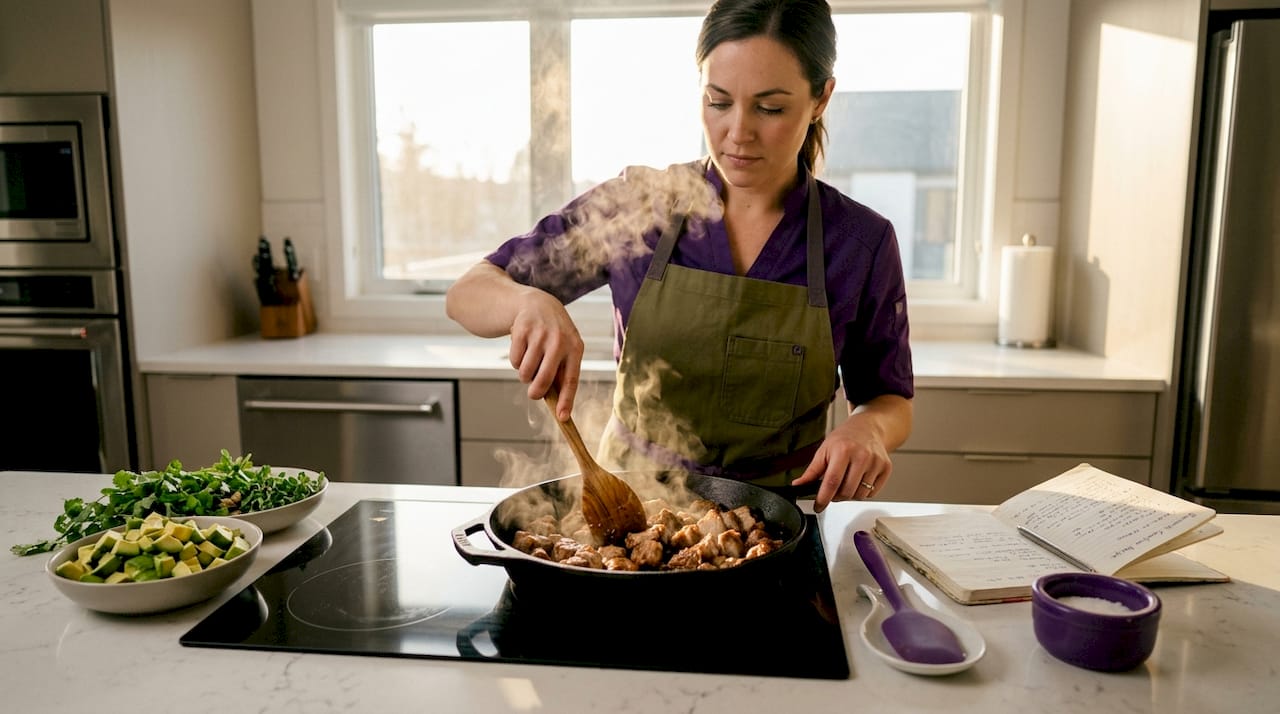
Pro Tip: Cook your filling in a wide, heavy pan over high heat for the final two minutes to develop caramelisation on the edges. That slight char is what gives street tacos their distinctive flavour.
3. Salsas and garnishes: the authentic taco toppings checklist
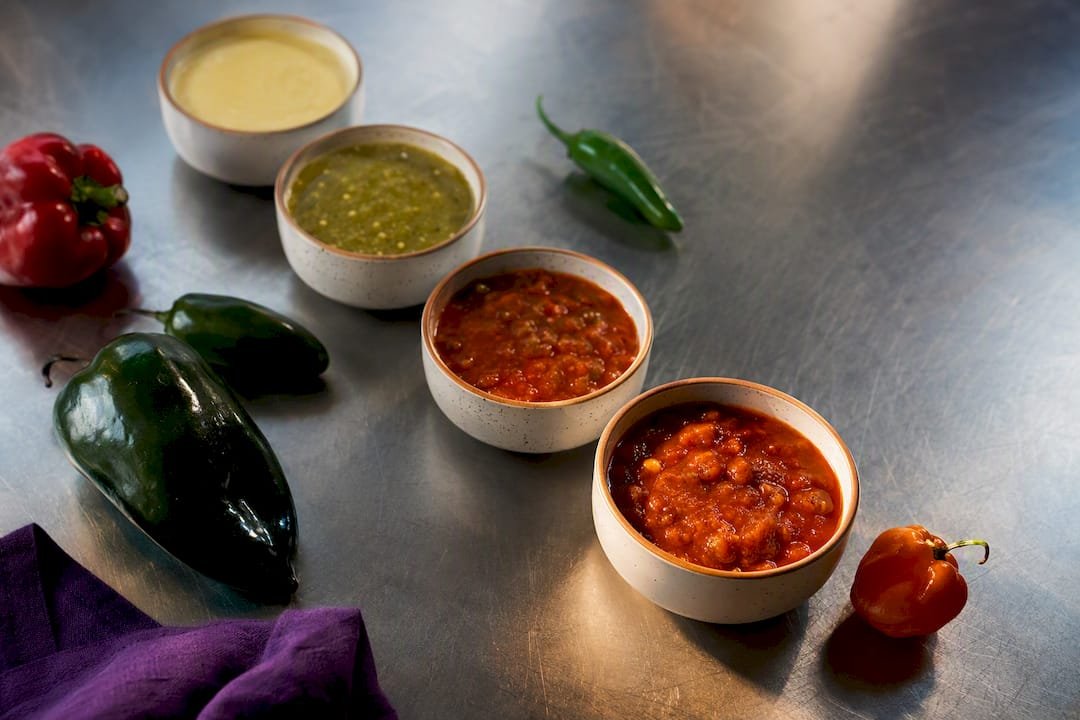
Salsa is not optional in an authentic taco. It provides moisture, acidity, and heat, tying the tortilla and filling into a single coherent bite. Without salsa, a taco is dry and flat. The two foundational options are salsa verde and salsa roja.
| Salsa | Base ingredients | Flavour profile | Best paired with |
|---|---|---|---|
| Salsa verde | Tomatillos, serrano or jalapeño, onion, garlic, cilantro | Bright, tangy, herbaceous, moderate heat | Carnitas, pollo adobado, vegetarian fillings |
| Salsa roja | Roasted tomatoes, dried chiles (guajillo, ancho), onion, garlic | Smoky, earthy, deeper heat | Carne asada, barbacoa, al pastor |
Both salsas share onion, garlic, and cilantro as base aromatics, but their character diverges completely at the primary ingredient. Salsa verde’s tomatillo base gives it a citrus-like tartness. Salsa roja’s dried chile base produces a roasted, complex depth. Offering both at the table is standard practice at any taquería worth visiting.
The garnish list for authentic street tacos is short by design. Finely diced white onion and fresh cilantro are the standard finish, along with a wedge of lime squeezed directly over the taco before eating. Shredded cheese, sour cream, and iceberg lettuce are not traditional garnishes on street tacos. Adding them does not ruin your meal, but it does move the dish away from its origins.
4. How to assemble authentic tacos step by step
Assembly is where the checklist becomes a sequence. The order matters because each step either protects the tortilla or builds flavour in a specific way.
- Warm two corn tortillas per taco on your comal or skillet. Stacking two tortillas is structural practice, not waste. The second tortilla absorbs moisture from the filling and prevents tearing.
- Place the stacked tortillas on a flat surface or directly in your hand.
- Add 60 to 80 grams of your chosen filling down the centre. Keep it in a line rather than a pile so the taco folds cleanly.
- Scatter a small amount of finely diced white onion over the filling. Use roughly one teaspoon per taco.
- Add a pinch of fresh cilantro leaves on top of the onion.
- Spoon salsa verde or roja over the filling. One to two teaspoons is enough. Pooling salsa makes the tortilla soggy within seconds.
- Squeeze a lime wedge over everything just before eating. This is the final step, not an optional garnish.
Pro Tip: Keep your assembled tacos on a warm plate or in a low oven at 90°C while you finish the batch. Cold tortillas stiffen quickly and crack when folded.
The taco assembly process rewards restraint. Every element has a defined role. Adding more does not improve the taco. It disrupts the balance that makes the original so satisfying.
5. Sourcing authentic taco ingredients in Canada
Finding the right ingredients in Canada is straightforward once you know where to look. Masa harina is the single most important item on your shopping list, and it is more widely available than most home cooks realise.
Sourcing guide for Canadian home cooks:
- Masa harina: Maseca is the most widely distributed brand and is available at most large grocery chains including Walmart Canada and Real Canadian Superstore. Bob’s Red Mill also produces a masa harina that is stocked at health food stores and online through Amazon Canada.
- Dried chiles (guajillo, ancho, pasilla): Latin American grocery stores in Winnipeg, Toronto, Calgary, and Vancouver carry these reliably. In Winnipeg specifically, stores along Portage Avenue and in the North End stock a broad selection. Online retailers like MexGrocer.ca ship across Canada.
- Tomatillos: Available fresh at most large grocery chains during summer months. Canned tomatillos from brands like La Costeña work well for salsa verde year-round and are found in the international aisle.
- Fresh corn tortillas: Burritosplendido sources gluten-free corn tortillas from La Cocina, a supplier that produces tortillas adapted for Canadian kitchens. These are worth seeking out if you want a shortcut without sacrificing quality.
- Epazote and fresh chiles: Specialty herb shops and Latin markets are your best option. In a pinch, dried epazote from online spice retailers delivers acceptable results.
Storage matters as much as sourcing. Masa dough keeps in the refrigerator for up to two days wrapped tightly in plastic wrap. Cooked tortillas stay pliable for up to 24 hours if wrapped in a damp cloth and refrigerated. Fresh salsa verde and roja keep for four to five days refrigerated in sealed containers. The flavour of both salsas actually improves after 24 hours as the ingredients meld.
Key takeaways
An authentic taco succeeds through restraint: the right tortilla, a correctly portioned filling, and a well-made salsa do all the work without any additional complexity.
| Point | Details |
|---|---|
| Corn tortillas are non-negotiable | Use masa harina dough cooked on a dry comal for authentic texture and flavour. |
| Portion filling at 60 to 80 grams | This weight keeps the taco foldable and prevents the tortilla from tearing. |
| Stack two tortillas per taco | The double layer absorbs moisture and provides structural support under juicy fillings. |
| Salsa is a core ingredient, not a condiment | Salsa verde or roja provides the moisture, acidity, and heat that completes every taco. |
| Source masa harina and dried chiles locally | Maseca and Bob’s Red Mill are available across Canada; Latin markets carry specialty chiles. |
What I have learned from making tacos the hard way
I spent years adding things to tacos before I understood that the dish is an exercise in subtraction. The first time I ate a proper street taco in Mexico City, I was confused by how small it was. Two bites. A thin tortilla, a few pieces of carnitas, a spoonful of salsa verde, onion, cilantro, done. I kept waiting for the rest of it.
That simplicity is not poverty of imagination. It is precision. Every element is doing a specific job, and nothing is there to fill space. The tortilla is the vehicle. The filling is the flavour anchor. The salsa is the acid and heat. The onion and cilantro are the freshness. Lime is the finish. Remove any one of those and the taco is incomplete. Add anything extra and you are covering up the balance rather than building on it.
The mistake most home cooks make is treating the taco like a canvas for everything they enjoy. Cheese, sour cream, guacamole, shredded lettuce. These are fine foods. They are just not street tacos. If you want to make authentic tacos at home, the step-by-step guide from Burritosplendido is the most practical starting point I have seen for Canadian cooks working with local ingredients.
The other thing I would tell any home cook is to practise the tortillas separately before you try to make a full meal. Masa dough is forgiving once you understand its texture, but the first batch will likely crack or stick. That is normal. Traditional Mexican cooking relies on feel and visual cues rather than strict measurements. Trust the dough, not just the recipe.
— Austin
Bring authentic tacos to your next event with Burritosplendido
Burritosplendido has been making tacos the right way in Manitoba since 2012, with slow-cooked carnitas, hand-pulled barbacoa, and fresh-pressed tortillas made from locally sourced ingredients every single day.
Whether you are planning a family taco night or a large event, Burritosplendido’s catering services bring the full street taco experience to your table, including house-made salsas, gluten-free corn tortillas from La Cocina, and proteins cooked in-house. The team handles everything from portioning to garnishes so your guests get the real thing. Explore the menu and book your catering experience at burritosplendido.com.
FAQ
What makes a taco authentically Mexican?
An authentic Mexican taco uses a warm corn tortilla, a modest portion of traditionally prepared filling such as carnitas or carne asada, and fresh salsa with white onion, cilantro, and lime. Shredded cheese and sour cream are not traditional street taco garnishes.
Can I use flour tortillas for authentic tacos?
Flour tortillas are common in northern Mexico and Tex-Mex cooking but are not traditional for street-style tacos. Corn tortillas made from masa harina are the correct choice for authentic preparation.
How much filling should I put in each taco?
The recommended filling portion is 60 to 80 grams per taco. This amount keeps the taco foldable and prevents the tortilla from tearing under the weight of juicy meat or wet fillings.
Where can I buy masa harina in Canada?
Maseca is available at most large Canadian grocery chains including Walmart Canada and Real Canadian Superstore. Bob’s Red Mill masa harina is stocked at health food retailers and through Amazon Canada.
What is the difference between salsa verde and salsa roja?
Salsa verde is made from tomatillos and has a bright, tangy flavour. Salsa roja is made from roasted tomatoes and dried chiles, producing a smoky, deeper heat. Both are traditional on street tacos and complement different fillings.