For parties and office events, the strongest vegetarian catering approach is a five to seven dish menu anchored by plant proteins like beans, lentils, tofu, and eggs, mixing hot, warm, and room-temperature dishes with modular add-ons for dairy and nuts. This guide covers menu ideas, portioning, food safety limits per Health Canada and Manitoba caterer rules, and how Burrito Splendido builds vegetarian catering menus in practice.
TL;DR:
- Vegetarian menus should include five to seven dishes, combining mains, sides, and desserts with a focus on plant proteins like beans, lentils, and tofu.
- Room-temperature dishes such as grain salads, dips, tartlets, and stuffed vegetables hold texture for hours and are ideal for buffet or party settings.
- It is essential to refill small trays regularly and avoid large, single spreads to maintain food safety and freshness under Manitoba guidelines.
- Clear labeling of allergens and dietary components with ingredient matrices helps guests distinguish vegan, vegetarian, and allergy-friendly options easily.
- Bulk legumes, seasonal vegetables, and room-temperature dishes offer the lowest costs, with about 150 to 200 grams of substantial food per guest recommended for most events.
Table of Contents
- 12 vegetarian catering ideas that work at real events
- Building a balanced vegetarian menu without overdoing it
- What holds up on a buffet versus what needs a plate
- Labelling so vegan, vegetarian, and allergic guests can relax
- Three sample vegetarian menus you can send to a caterer
- Your pre-event ordering checklist
- How our own catering kitchen shapes this advice
- Order vegetarian catering built from scratch, not from a freezer
- Sources
- FAQ
12 vegetarian catering ideas that work at real events
Great vegetarian catering ideas share three traits: they hold their texture for hours, they travel without collapsing into mush, and they don’t need a chafing dish to taste good. These twelve cover the range planners actually ask for.
-
Mediterranean mezze platter. Hummus, baba ganoush, marinated olives, and warm pita anchor the protein with chickpeas and tahini. It holds at room temperature for hours and needs zero reheating. Serve dips in small bowls nested inside a larger tray so refills are quick.
-
Indian thali boxes. Chana masala, dal, basmati rice, and raita give guests a full protein hit from lentils and chickpeas, plus a dairy option for those who want it. Individual boxed portions solve the buffet-line bottleneck at office lunches.
-
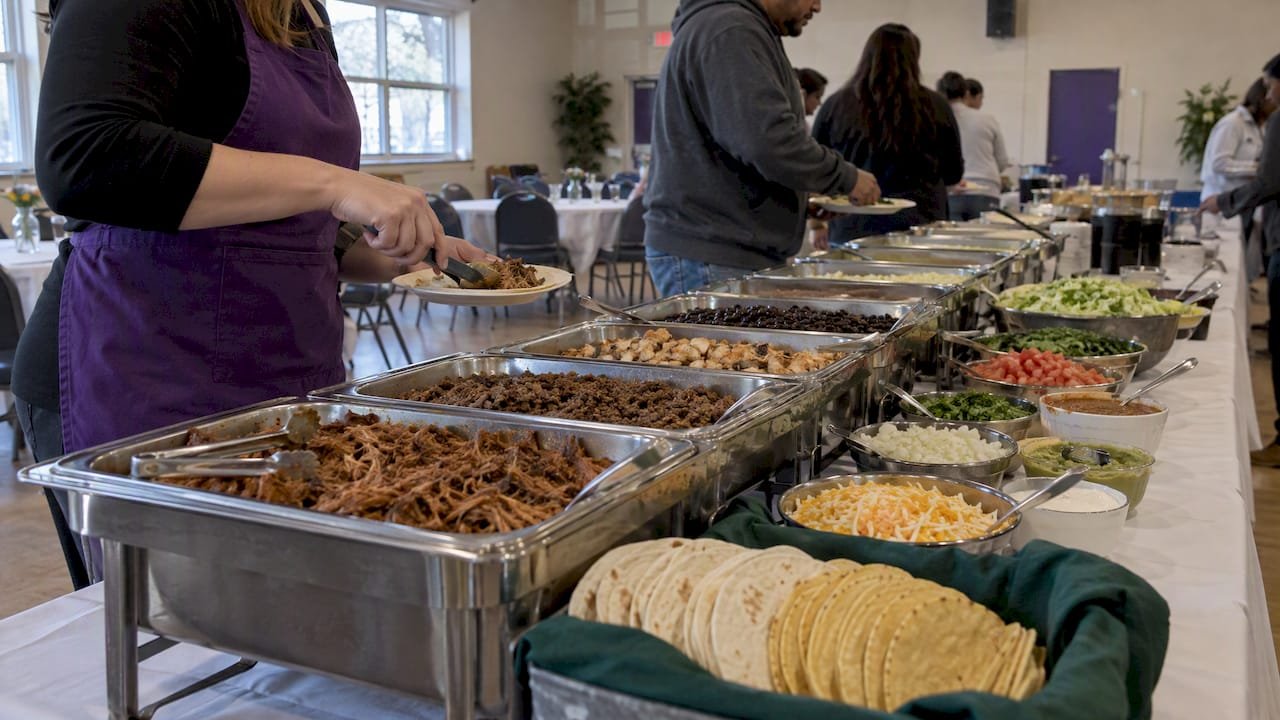
Mexican street-food station. A build-your-own bar with black beans, pinto beans, grilled peppers, and rice lets guests self-assemble tacos or bowls. This is one of the easier vegetarian options for catering because the components separate cleanly for allergy questions. Burrito Splendido’s menu shows how modular Mexican-style stations scale for groups.
-
Grain-and-legume bowls. Farro or quinoa, roasted vegetables, and a lentil or chickpea base travel exceptionally well cold or at room temperature. Dress on-site to avoid sogginess, and offer a yogurt-tahini sauce separately.
-
Baked vegetable lasagne. Ricotta, spinach, and mushroom layers reheat evenly in a chafing dish and cut into clean squares for a crowd. This is a reliable main course for cooler-weather events where guests want something warm.
-
Savoury tartlets and quiches. Egg-and-cheese quiche bites or spinach-feta tartlets are naturally portioned, hold at room temperature reasonably well, and photograph beautifully on a tiered stand. They’re a strong pick for cocktail-style events.
-
Stuffed vegetables. Bell peppers or zucchini stuffed with rice, beans, and herbs serve as a full main course and reheat without drying out. They also plate individually, which suits sit-down dinners better than a buffet line.
-
Falafel with a trio of dips. Falafel delivers a chickpea-based protein anchor that stays crisp for a couple of hours outside the fryer. Pair with hummus, tzatziki (or a vegan tahini substitute), and a spicy harissa mayo so guests can mix and match.
-
Vegetable and tofu kebabs. Marinated tofu, peppers, and mushrooms grilled or roasted hold their shape and reheat without turning rubbery, unlike delicate vegetables alone. Label clearly since satay-style peanut sauces are a common allergen trap.
-
Caprese or grain salad platters. Tomato, mozzarella, and basil, or a farro version with roasted squash, work as a room-temperature side that needs no holding equipment at all. These are some of the vegetarian buffet recipes that consistently travel well for events.
-
Quesadilla or bean-and-cheese station. Grilled quesadillas with black beans, cheese, and roasted vegetables reheat fast and cut into easy triangles for passed trays. A dairy-free cheese swap covers vegan guests without a separate dish.
-
Dessert bar with fruit and baked goods. Fruit skewers, mini brownies, and a lemon tart or two round out a plant-based menu option without needing refrigeration for more than a couple of hours. Keep a nut-free tray clearly separated if any items contain nuts.
Building a balanced vegetarian menu without overdoing it
Five to seven dishes is the sweet spot for most parties and office events. Fewer feels thin; more creates decision fatigue and food waste. Aim for two to three mains, two sides, and one dessert, with roughly one main-course dish per fifteen to twenty guests.
- Plan for 150 to 200 grams of substantial food per person across mains and sides combined.
- Pair a legume or lentil dish with a grain (rice, farro, quinoa) in at least one main to round out the amino acid profile, a pairing Health Canada specifically flags for beans, tofu, and lentils.
- Add eggs or lower-fat dairy as one option, not the default, since a meatless catering spread needs at least one fully dairy-free main.
- Cut costs with bulk legumes, seasonal vegetables, and more room-temperature dishes instead of items that need constant hot holding equipment.
Pro Tip: Build one dish as a base and let guests add cheese, yogurt, or nuts separately. It keeps the core spread vegan, cuts your allergen headaches in half, and still feels indulgent for guests who want the extras.
What holds up on a buffet versus what needs a plate
Hot dishes must stay at 60°C (140°F) or above, and cold dishes at 5°C (40°F) or below, under Manitoba’s caterer guidelines. That single rule decides a lot of your menu.
- Room-temperature stars: grain salads, roasted vegetable platters, hummus and dips, tartlets, caprese skewers.
- Riskier for buffets: mayo-based creamy desserts, soft-serve items, anything with raw egg that sits out past two hours.
- Refill small trays rather than loading one giant tray. It keeps temperature consistent and cuts waste.
Manitoba’s rules are explicit that self-serve buffet food cannot go back into hot or cold holding once served. That’s why smaller, frequently swapped trays beat one enormous spread every time.
Anyone providing potentially hazardous foods for an event needs a permit from a Public Health Inspector, and temporary events require advance permitting through the same caterer guidelines.
Labelling so vegan, vegetarian, and allergic guests can relax
Vegetarian and vegan aren’t the same category, and a single cheese garnish or honey drizzle can flip a dish from one to the other. The fix is a simple ingredient matrix handed to your caterer before the event, listing every component and its allergens.
- Use small tent cards with one ingredient line and allergen icons rather than large signs separating “vegan” items visually.
- Keep add-ons like cheese, sour cream, or nuts in separate bowls so a vegan base stays vegan.
- Restaurant food is generally exempt from mandatory nutrition labelling in Canada, but you can request voluntary Nutrition Facts-style detail from your caterer for corporate events with health-conscious guests.
Three sample vegetarian menus you can send to a caterer
- Office lunch (boxed): Grain-and-legume bowl, hummus with veggies, fruit skewers. Best boxed individually; swap farro for rice to cut cost.
- Cocktail event (passed trays): Mini quesadilla triangles, spinach-feta tartlets, stuffed mushroom caps. Best passed on trays; drop the tartlets for a bigger dip platter to save budget.
- Family celebration (buffet): Vegetable lasagne, chana masala with rice, caprese platter, dessert bar. Best buffet-style with smaller refill trays; swap lasagne for a bean-and-cheese casserole to reduce cost.
Your pre-event ordering checklist
- Confirm chafing dishes, thermal containers, and delivery timing with your caterer.
- Request an ingredient matrix covering every dish, including hidden allergens.
- Set a refill schedule for buffet trays instead of one large initial setup.
- Confirm staffing levels and build in a 10 to 15 percent portion buffer.
- Ask directly about cross-contact procedures for nut and dairy-free items.
Pro Tip: Always order slightly more than your headcount suggests and request smaller display trays with a refill plan. It’s cheaper than running out and far less stressful than watching one giant tray dry out under the lights.
How our own catering kitchen shapes this advice
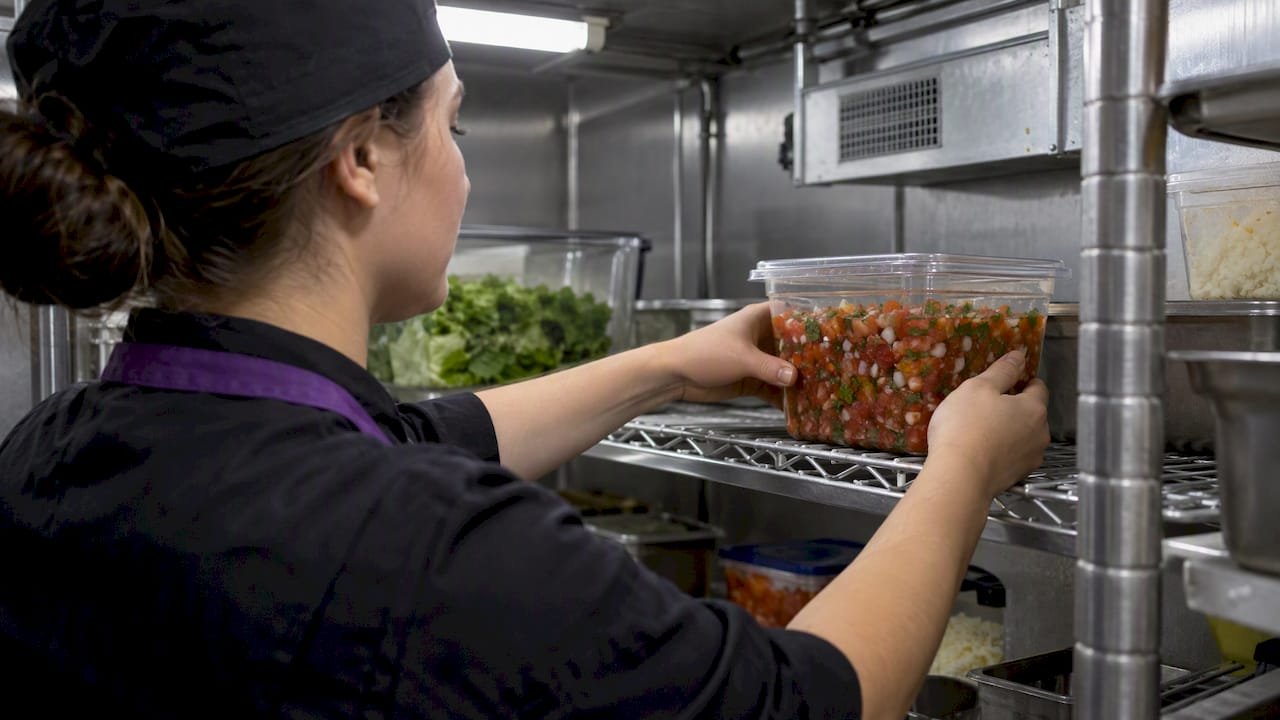
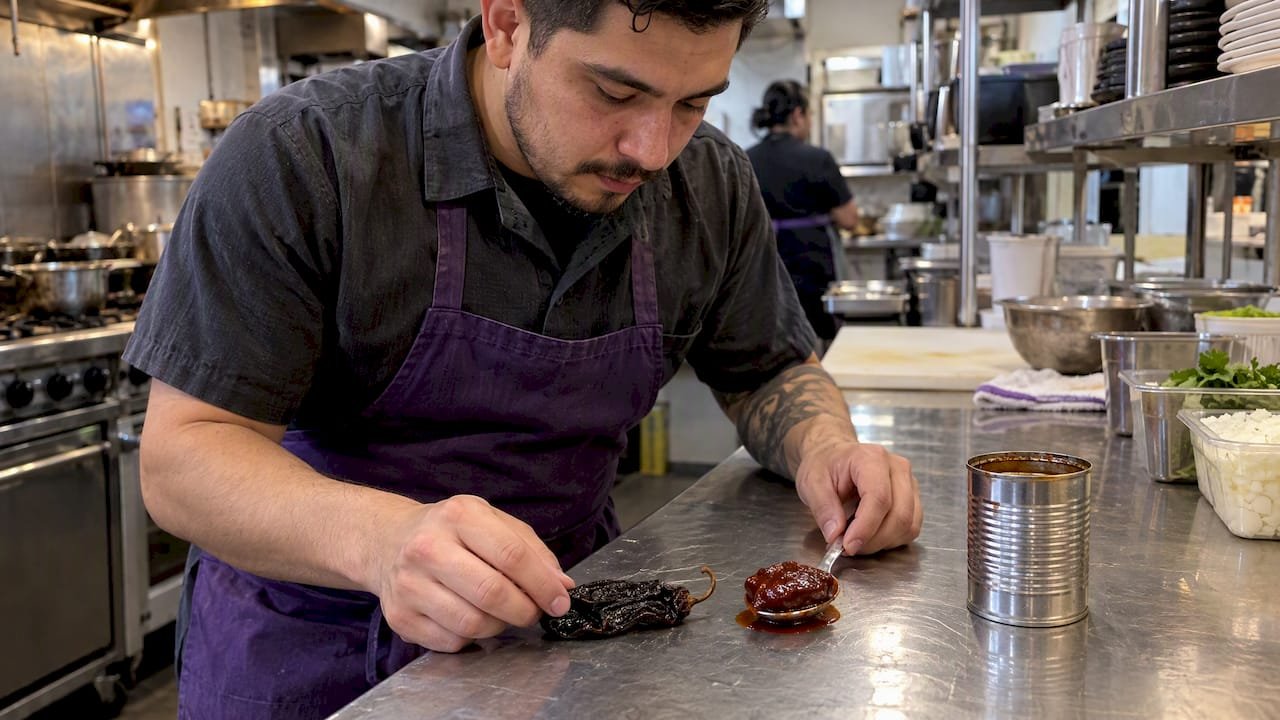
This catering kitchen operates from scratch using local sourcing, a deep-fryer-free approach, and extensive vegan and vegetarian options built into daily prep… One lesson from catering events: refilling small trays instead of one large spread keeps food fresher and cuts waste noticeably.
— Austin
Order vegetarian catering built from scratch, not from a freezer
Every catering order is built from scratch using locally sourced ingredients, with vegetarian, vegan, and other dietary-friendly options thoughtfully integrated across the menu.
The catering page lists packages including the Burrito Express, Burrito Express Deluxe, and Bueno Burrito Bar, along with delivery and staffing details, so you can see exactly what a modular vegetarian spread looks like before you order. Browse the full menu to see which items work as vegetarian anchors for your event, then reach out through the catering page to request a sample menu or a quote for your headcount.
Sources
- Canada’s dietary guidelines: section 1 foundation for healthy eating
- Caterer guidelines (Manitoba)
- Vegetarian buffet recipes | BBC Good Food
FAQ
What is a good vegetarian dish for a party?
Dishes that hold at room temperature win at parties, including grain-and-legume bowls, hummus platters, and savoury tartlets. They skip the need for constant hot holding and still deliver a solid protein anchor from beans, chickpeas, or eggs.
What are some good vegetarian dishes to serve in catering?
Baked lasagne, stuffed vegetables, and falafel with dips are reliable vegetarian options for catering because they reheat evenly and portion cleanly for large groups. Burrito Splendido builds similar modular mains, like bean-and-cheese quesadillas, directly into its catering packages.
What are some good vegetarian menu ideas for a party?
Aim for five to seven dishes mixing a legume-based main, a grain salad, a dip platter, and a dessert that doesn’t need refrigeration. Keep the base vegan where possible and offer cheese or yogurt as a separate add-on so every guest has options.
What is the cheapest food to cater a party?
Bulk legumes, rice, and seasonal vegetables are consistently the lowest-cost base for a vegetarian menu, since beans and lentils cost far less per serving than most proteins. Room-temperature dishes also cut costs by avoiding equipment rental for hot holding.
How much vegetarian food should I order per person?
Plan for roughly 150 to 200 grams of substantial food per guest across mains and sides combined, plus a 10 to 15 percent buffer for seconds and uneven appetites. That buffer matters more at office events, where portion habits vary widely.