A fuss-free taco bar needs two good proteins, warmed tortillas, and a toppings lineup arranged in build order: base, protein, toppings, salsas, sides. Keep hot items at 140°F (60°C) or above and cold items at 40°F (4°C) or below. Two proteins cover most crowds; mirror the whole line on both ends of the table once you pass 25 to 40 guests.
TL;DR:
- Using two proteins like ground beef and carnitas simplifies cooking and maximizes variety through toppings rather than additional proteins.
- Mirroring the setup on both ends of the table reduces wait times and streamlines movement when hosting more than 25 guests.
- Keep hot foods at 140°F (60°C) and cold toppings at 40°F (4°C), discarding items left in the danger zone for more than two hours, or one hour outdoors.
- Planning for 4 to 5 ounces of cooked meat and 5 to 6 tortillas per guest provides a reliable baseline, with options to extend the menu via sides for larger groups.
- Catering from a professional provider like Burrito Splendido can save time, ensure temperature safety, and accommodate dietary restrictions without extra stress.
Table of Contents
- Taco bar ideas for toppings, fillings, and a checklist you can shop from
- How to set up a taco bar line so it doesn’t bottleneck
- Taco bar menu ideas: how much food to buy per guest
- Food safety rules every host needs to follow
- A make-ahead timeline that saves your day-of sanity
- Tortilla and shell options for every guest at the table
- Sides, drinks, and finishing touches that round out the spread
- What a from-scratch kitchen brings to your taco bar planning
- Turning your taco bar into an interactive experience
- Decor and ambiance that set the mood without extra effort
- Utensils and serving ware that keep the line moving
- Vegan, keto, and allergen-friendly taco bar ideas
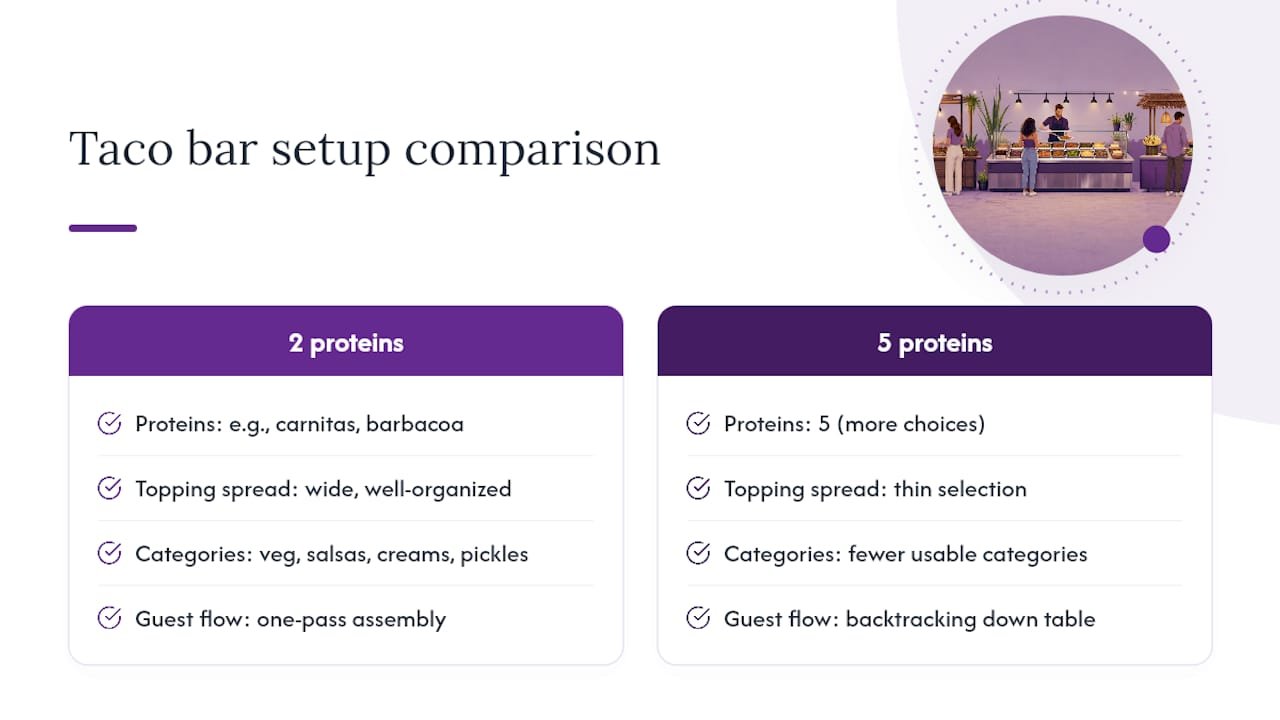
- Why the two-protein rule beats a five-protein spread
- Let Burrito Splendido handle your next taco bar
- Sources
Taco bar ideas for toppings, fillings, and a checklist you can shop from
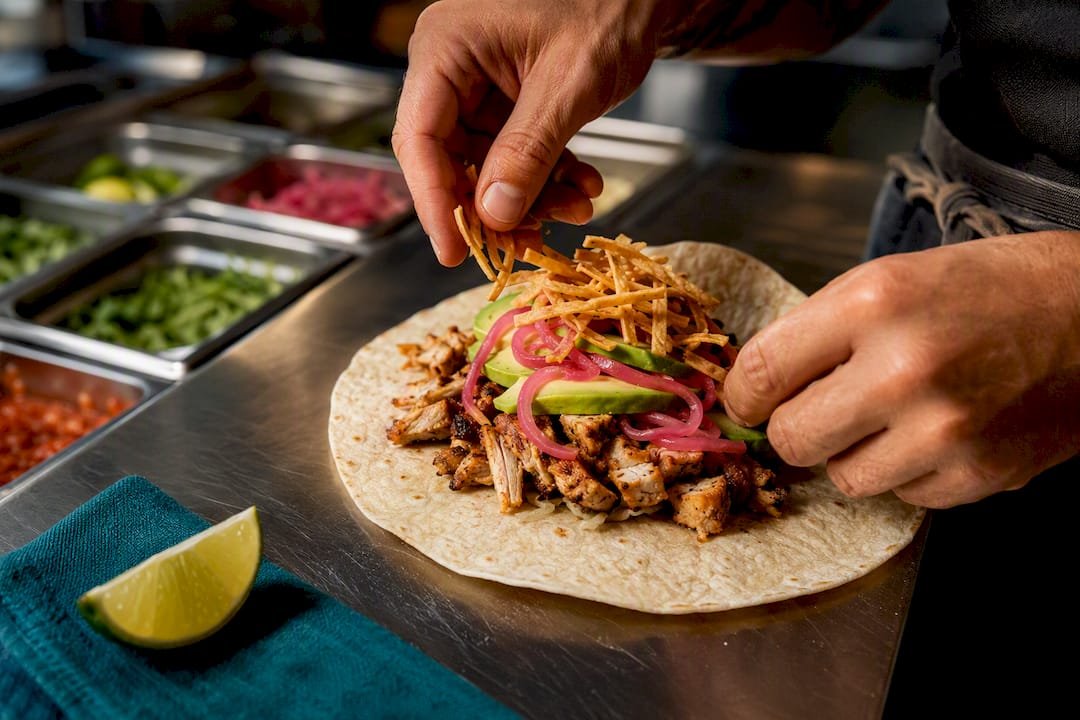
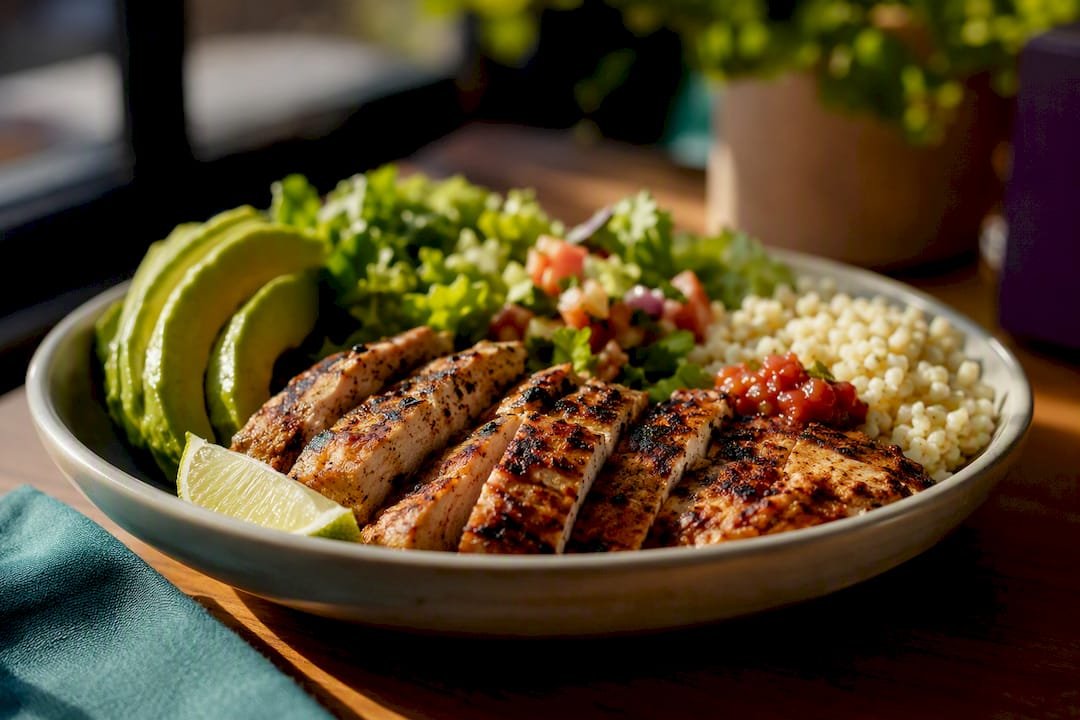
The best taco bar setup wins on variety, not complexity. Two proteins and a wide, well-organized topping spread beat five proteins and a thin selection every time, since toppings do the work of making a small menu feel abundant. Group everything by category so guests can build a taco in one pass instead of backtracking down the table.
Proteins: carnitas, barbacoa, adobo chicken, seasoned ground beef, blackened white fish, and a plant-based option like seasoned black beans or spiced jackfruit.
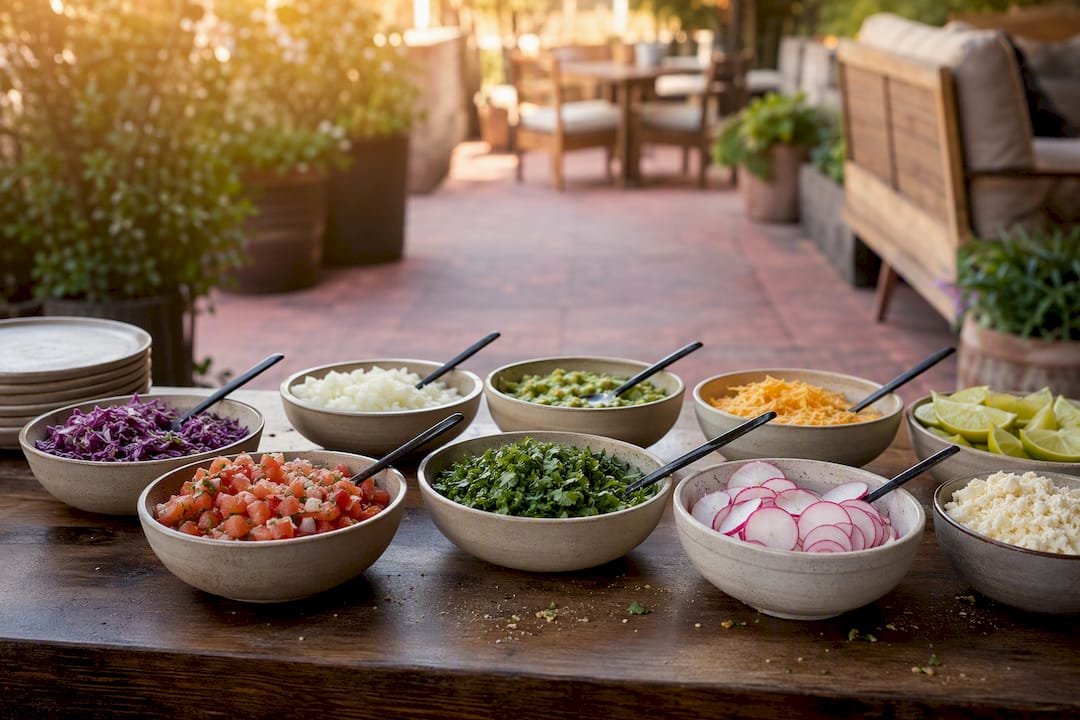
Veg and crunch: shredded lettuce, diced onion, pico de gallo, roasted corn, sliced radish, shredded cabbage, crumbled queso fresco, and crushed tortilla chips.
Salsas and wet toppings: mild pico, roasted tomatillo salsa verde, a smoky chipotle salsa, and a proper hot sauce for the heat-seekers.
Creams and pickles: sour cream, crema, guacamole, pickled jalapeños, pickled red onion, and lime wedges.
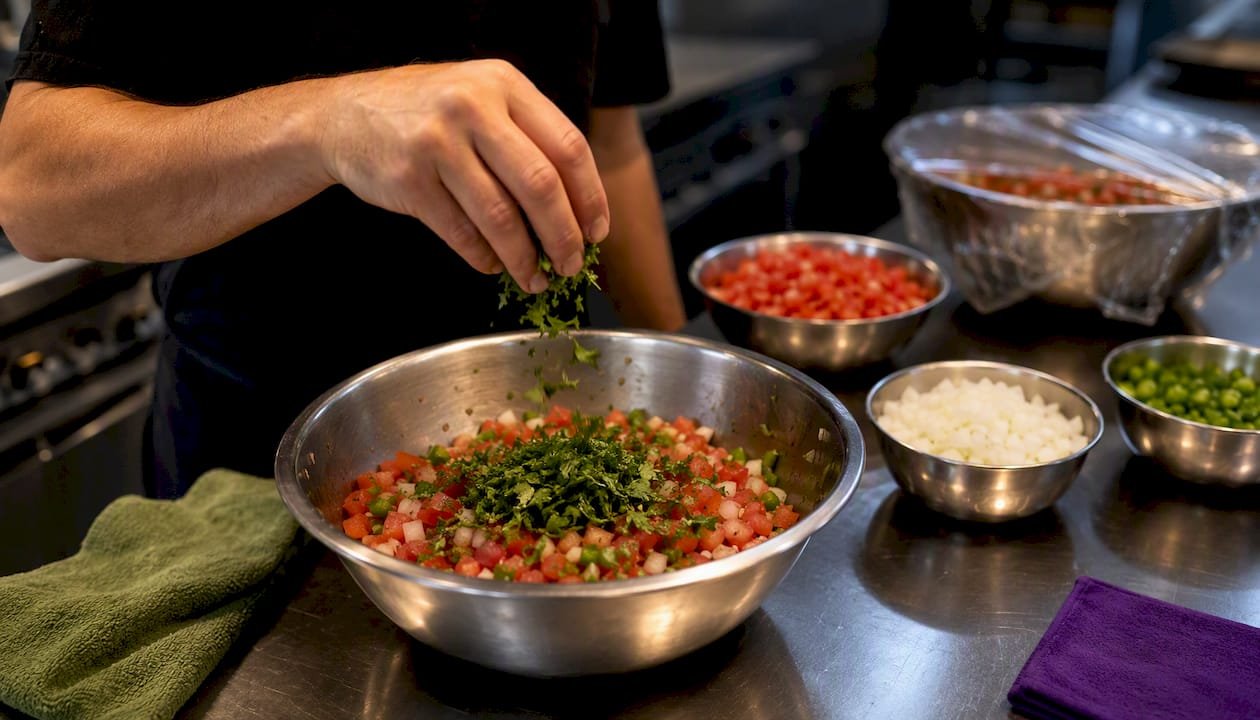
Roasted vegetables, pickled onions, and most salsas hold well for a day or two in the fridge, so batch those ahead of time. Guacamole and shredded lettuce are the exceptions. Make those last, since they brown and wilt fast.
Label every bowl with its name and heat level, and give each topping its own serving spoon. That small step keeps flavours from bleeding into each other and gives guests with allergies or dietary restrictions the confidence to build their plate without asking a dozen questions.
How to set up a taco bar line so it doesn’t bottleneck
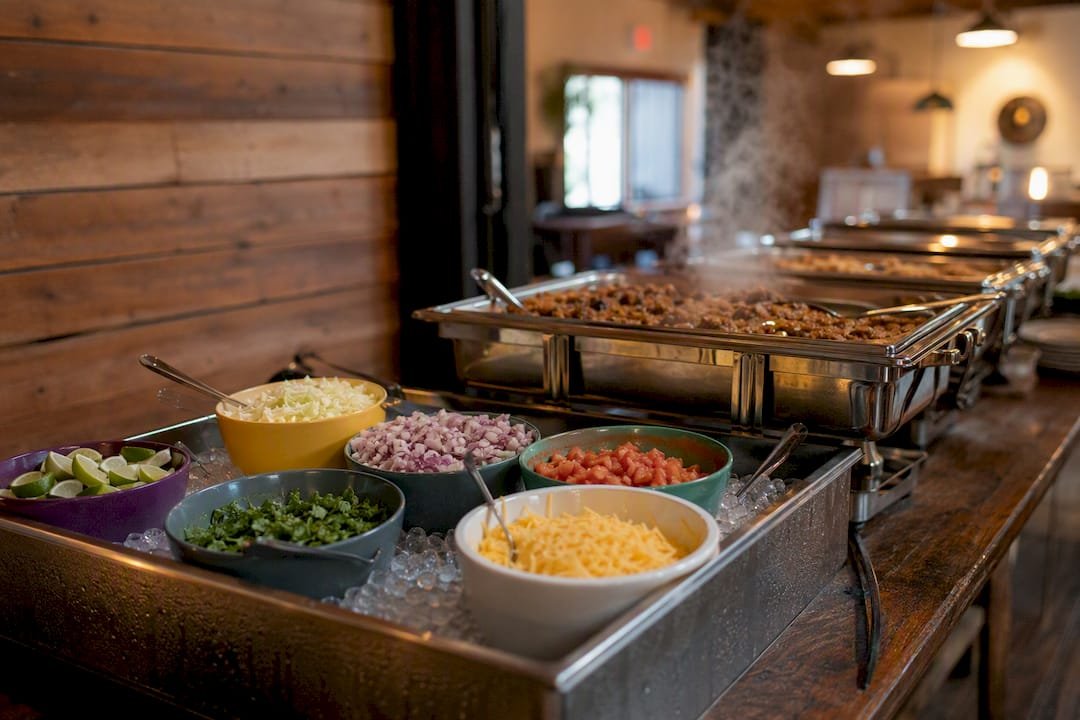
Build order matters more than most hosts expect. Guests move faster and pile their plates smarter when the line follows a logical sequence, which is also the standard taco bar setup professionals recommend for events.
- Base — plates, then tortillas (warmed, in a towel-lined basket or insulated bag).
- Proteins — hot items first, closest to the tortillas.
- Toppings — veg and crunch, arranged by colour so the line stays visually clear.
- Salsas and sauces — mild to hot, left to right.
- Sides — rice, beans, chips, placed at the very end so plates don’t overflow mid-line.
Past 25 to 40 guests, mirror the entire setup on both ends of the table. One line creates a single-file bottleneck; two identical lines cut wait times roughly in half without doubling your prep.
Pro Tip: Run hot proteins in chafing dishes or an electric warming tray, and nest cold toppings in bowls set over a bed of ice. Both keep temperature stable for hours without anyone hovering over the table.
Taco bar menu ideas: how much food to buy per guest
Skip the guesswork. Plan on roughly 4 to 5 ounces of cooked meat and 5 to 6 tortillas per person as your baseline, then adjust up slightly if tacos are the only main dish.
Quick scaling reference:
- 10 guests: about 3 lb cooked protein, 60 tortillas, 2 to 3 salsas.
- 20 guests: about 6 lb cooked protein, 120 tortillas, 3 to 4 salsas.
- 40 guests: about 12 lb cooked protein, 240 tortillas, 4 to 5 salsas plus a second protein option.
If your budget is tight or the group runs bigger than expected, stretch further with seasoned black beans, Mexican rice, or roasted vegetables. Guests fill up on sides without anyone noticing the meat went further than planned.
Food safety rules every host needs to follow
Hot foods need to stay at 140°F (60°C) or above, and cold toppings need to stay at 40°F (4°C) or below. Anything left sitting in the danger zone between those two marks for more than two hours should be discarded, and that window shrinks to one hour outdoors in hot weather, according to Health Canada’s food safety guidance.
- Use chafing dishes, electric warming trays, or a slow cooker on low for hot proteins.
- Nest cold bowls over ice, and swap the ice as it melts.
- Check temperatures hourly with an actual food thermometer, not a guess.
- Outdoors in summer, cut your holding window in half and rotate fresh bowls more often.
If a tray has been sitting too long, don’t scrape and refill it. Toss it and bring out a clean batch.
A make-ahead timeline that saves your day-of sanity
Spreading the work over several days is what makes a taco bar feel effortless instead of chaotic.
- Two days out: braise or slow-cook your proteins, make salsas and pickled onions, and portion dry goods like rice and beans.
- One day out: chop sturdy veg (onion, radish, cabbage), shred cheese, and chill serving bowls.
- Morning of: reheat proteins gently, adding a splash of broth so shredded meat doesn’t dry out under warming trays.
- One hour before: make guacamole, shred lettuce, slice avocado, and set out ice for cold bowls.
Keep a few backup chilled bowls in the fridge to rotate in as the party runs long, and line your slow cooker with a disposable liner to cut cleanup down to almost nothing.
Tortilla and shell options for every guest at the table
Offer both corn and flour tortillas side by side. It’s the single easiest way to make most guests happy without extra recipes, since corn covers gluten-free needs and flour covers the traditionalists.
- Warm corn tortillas in a dry skillet or wrapped in a damp towel in the microwave; they crack if served cold and stiff.
- Warm flour tortillas in foil in a low oven, or stack them in an insulated tortilla warmer.
- For low-carb or gluten-sensitive guests, set out crisp lettuce cups or a rice bowl option alongside the tortillas, not as an afterthought at the end of the table.
- Keep gluten-free tortillas in their own labelled basket with a dedicated set of tongs to avoid cross-contact with flour crumbs.
Burrito Splendido’s own approach to gluten-free tacos at home walks through the same cross-contact precautions if you want a deeper checklist before hosting.
Sides, drinks, and finishing touches that round out the spread
Mexican rice and black or pinto beans stretch your protein budget and give guests something to fill the plate with beyond meat and tortillas. Add tortilla chips with a bowl of queso or salsa on the side for anyone snacking before the main line opens.
- Elote (Mexican street corn) or a simple corn salad.
- A citrusy slaw to cut through richer proteins.
- Agua fresca or a pitcher of limeade for non-alcoholic guests.
- Margaritas or Mexican beer for a casual adult gathering, set at a separate drink station so the food line keeps moving.
Small labelled cards, a tiered stand for chips or fruit, and a basket of napkins at the very end of the line all add polish without extra cooking.
What a from-scratch kitchen brings to your taco bar planning
Burrito Splendido builds every element of its menu the way this guide recommends you build your own: from scratch, daily. Tortillas are house-pressed from Manitoba flour, proteins like carnitas and barbacoa are slow-cooked and hand-pulled in-house, and staff are trained to handle gluten-free, vegan, and keto orders without cross-contamination.
A standard catering setup means a host skips the two-day braising timeline entirely and still serves proteins that were slow-cooked that same morning.
That’s the trade a lot of hosts don’t realize they’re making: DIY saves money, but a from-scratch kitchen saves the entire prep weekend.
Turning your taco bar into an interactive experience
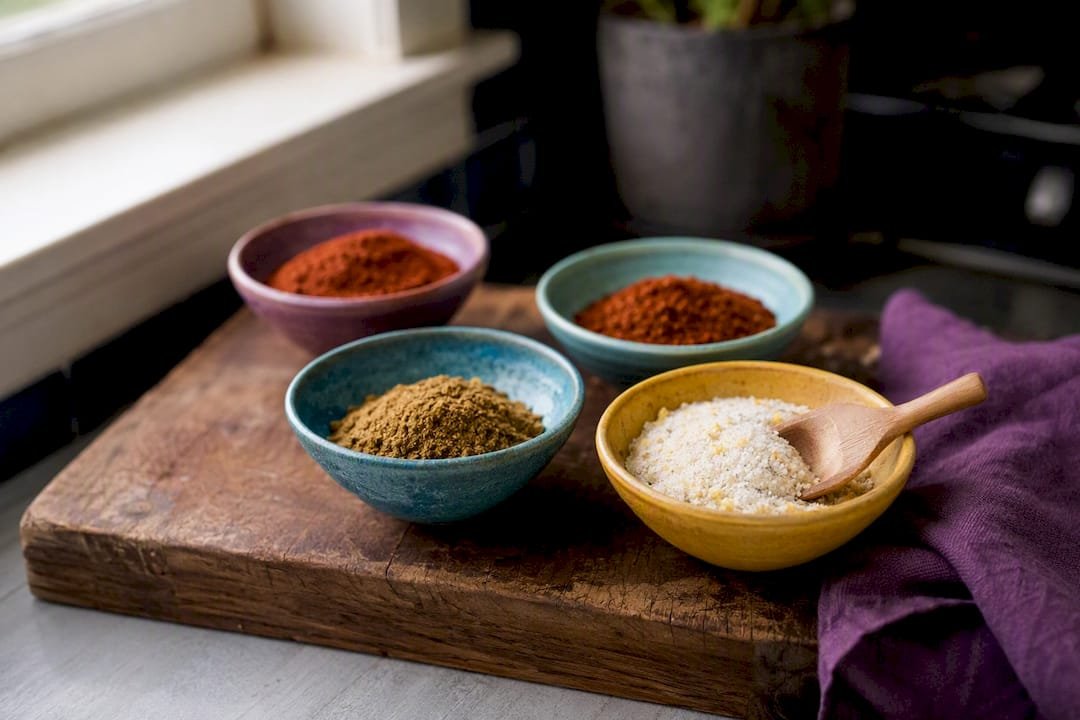
A taco bar for parties gets more memorable when guests are doing more than assembling a plate. A build-your-own seasoning station, where you set out small bowls of cumin, smoked paprika, chili powder, and a citrus salt blend, lets guests season their own protein right at the table. It’s a five-minute setup that turns a normal spread into something people talk about the next day.
DIY taco recipes work well as printed cards propped next to the proteins, each one suggesting a specific combination: barbacoa with pickled onion and salsa verde, or blackened fish with cabbage slaw and a squeeze of lime. Guests who don’t know where to start will follow the suggestion; guests who do know exactly what they want will ignore the card and build their own anyway. Either way, the line keeps moving.
For a party or office taco bar, consider a “build your own” contest element: hand out small paper ballots and have guests vote on the best combination someone assembled. It costs nothing and gives people a reason to try toppings they’d normally skip. A salsa flight, three small cups with mild, medium, and hot side by side, does the same job for guests who are curious about heat level but don’t want to commit a whole taco to finding out.
Kids’ tables benefit from a scaled-down version: pre-shredded cheese, mild salsa only, and soft flour tortillas cut into smaller portions so little hands can manage them without a fork.
Decor and ambiance that set the mood without extra effort
You don’t need a full theme to make a taco bar look intentional. A few colourful serapes or woven table runners under the serving dishes do most of the visual work, and they cost nothing to reuse for the next gathering. Small terracotta pots with fresh herbs, or a scatter of dried chilies down the centre of the table, fill dead space without competing with the food.
Chalkboard labels or simple kraft-paper tags naming each topping and its heat level double as decor and function: guests read them anyway, so make them look good. String lights or paper lanterns overhead work for an evening backyard party ideas setup, while a bright tablecloth and a stack of colourful napkins carry the same energy for a lunchtime office spread.
Keep the drink station visually separate from the food line, maybe on a side table or bar cart, with its own small sign. It reduces congestion and gives the space a sense of structure instead of one long table doing everything at once.
Utensils and serving ware that keep the line moving
The right serving ware prevents more headaches than any recipe. Sturdy paper plates or reusable melamine plates hold up better than thin plastic when loaded with rice, beans, and a taco or two. Go one size larger than you’d normally pick. Overflowing plates slow the line down as guests try to balance everything.
Give every topping its own serving spoon or small tongs, and resist the urge to let guests share utensils between bowls. That single habit is what keeps cross-contact low for guests managing allergies or gluten sensitivities. Small bowls with tight-fitting lids work well for creams and salsas that need to come in and out of the fridge partway through a long event.
Stock plenty of napkins near the end of the line, not the beginning. Guests grab them right before finding a seat, so placing them early just means a pile of unused napkins sitting under the tortillas. A stack of forks near the rice and beans covers anyone who wants a bite of sides without picking up their taco first.
Vegan, keto, and allergen-friendly taco bar ideas
A gluten-free option covers one dietary need, but a genuinely inclusive taco bar menu goes further. For vegan guests, seasoned black beans or spiced jackfruit work as a full protein swap, and a cashew-based crema or straight-up guacamole replaces dairy sour cream without anyone noticing the substitution.
Keto guests need low-carb backup beyond skipping the tortilla. Lettuce cups solve the shell problem, and a heavier hand on proteins, cheese, and avocado keeps the plate satisfying without rice or beans pulling up the carb count. Skip sugary bottled salsas where you can. A fresh pico de gallo has almost no added sugar compared to some jarred versions.
For allergen-heavy tables, keep nuts, dairy, and shellfish-adjacent items (some pre-made salsas use fish sauce) clearly labelled and physically separated from the rest of the line. A dedicated small table for allergen-safe options, plated and ready rather than self-serve, removes the risk of cross-contact entirely for guests managing a serious allergy.
Why the two-protein rule beats a five-protein spread
Most first-time hosts overbuild their protein list because it feels generous. It usually backfires: five half-empty trays look worse than two well-stocked ones, and the extra cooking time rarely earns its keep. Pick two proteins, one that browns well (ground beef or adobo chicken) and one that holds moisture over time (carnitas or barbacoa), and let the toppings carry the variety instead.
The one thing I’d tell any first-time host: build your topping list before you touch the protein list. The proteins are what you cook. The toppings are what your guests actually remember.
— Austin
Let Burrito Splendido handle your next taco bar
Burrito Splendido is the alternative to a weekend of braising and shopping lists: order catering and you get proteins slow-cooked from scratch that same day, house-pressed Manitoba flour tortillas, and staff already trained to handle gluten-free, vegan, and keto requests without a cross-contamination scramble.
Catering packages can supply proteins like carnitas, barbacoa, and adobo chicken, house salsas at multiple heat levels, both corn and flour tortillas, and dietary-specific options built in rather than added on. DIY still makes sense for a casual backyard gathering where cooking is part of the fun. Catering makes more sense once you’re feeding 20-plus people, hosting a corporate event, or you’d simply rather spend the morning of the party doing anything other than braising pork.
Check Burrito Splendido’s catering page for packages and lead times, or start with the customization workflow to see how orders come together for groups. If you’re in Winnipeg or Brandon, get a quote for your event and skip straight to the part where you actually enjoy the party.
Sources
Health Canada’s food safety guidance backs the holding-temperature and discard-time rules above. TwoSleevers’ taco bar guide and Party & Beyond’s scaling table informed the setup and portion sections, and Wild Foodz’s meal-prep tips support the make-ahead timeline.
- Food safety for you — Health Canada
- How to build a taco bar — TwoSleevers
- Ultimate Taco Bar Party Guide — Party & Beyond