Yes, Winnipeg has real slow-cooked carnitas, and you have two solid paths to it. Order from Burrito Splendido, where the pork is braised and hand-pulled in-house daily, or follow the tested oven and slow-cooker method below and get restaurant-quality results in your own kitchen this weekend.
TL;DR:
- Authentic carnitas require a slow braise with citrus, onion, and spices for at least 2.5 hours in the oven or 7 hours in a slow cooker, followed by crisping.
- Look for menu descriptions like “slow-cooked” or “hand-pulled” and ensure toppings are traditional, such as onion, cilantro, lime, and salsa, not salad-style.
- Using pork shoulder with the fat cap intact and bone-in improves moisture, flavor, and proper crisping; avoid lean cuts like pork loin.
- Reheating and crisping fresh the same day enhances texture, while leftovers stored in braising liquid keep well for three days, or up to two months frozen.
- Burrito Splendido prepares and hand-pulls its carnitas daily from locally sourced pork, offering a reliable, made-from-scratch alternative to fast-casual options.
Table of Contents
- Where to find slow-cooked carnitas in Winnipeg
- Tested slow-cooked carnitas recipe you can actually replicate
- Lard confit vs. braising vs. slow cooker: which method wins?
- Sourcing pork and tortillas the right way in Manitoba
- Why Burrito Splendido is a reliable local choice
- Order out or cook it yourself: an honest take
- Order carnitas or book catering with Burrito Splendido
- Sources
Where to find slow-cooked carnitas in Winnipeg
Not every taco counter in the city actually slow-cooks its pork. A lot of “carnitas” on Winnipeg menus is really just seasoned pulled pork that’s been steamed or braised quickly and never crisped. The real thing takes hours, and it shows in the texture: tender shreds with crisp, caramelized edges, not a uniformly soft, wet pile of meat.
When you’re scanning a menu, look for specific language. Words like “slow-braised,” “hand-pulled,” or “slow-cooked in-house” are good signs. If a menu just says “carnitas” with no description, it’s worth asking the counter staff how the pork is prepared and whether it’s crisped before serving. A kitchen that’s proud of its process will usually tell you unprompted.
Authentic carnitas also come with a specific set of toppings, not a build-your-own salad bar approach. Classic accompaniments include diced white onion, fresh cilantro, a squeeze of lime, and a simple salsa, either red or green, rather than a dozen sauce options layered on top. If a spot serves carnitas with shredded lettuce and shredded cheese piled on like a taco salad, that’s a sign the kitchen is working from a generic fast-food template rather than a Mexican one.
Here’s what to check before you order, whether you’re doing takeout or sitting down:
- Ask if the pork is slow-cooked or braised in-house, not shipped in pre-cooked.
- Look for a visible crisping step (a hot skillet, broiler, or griddle finish) rather than meat straight from a warming tray.
- Check that toppings are classic: onion, cilantro, lime, salsa, maybe pickled onions or radish.
- Confirm portion size and price before ordering; carnitas tacos in Winnipeg generally run in line with other specialty proteins on a fast-casual menu, not a premium upcharge.
- For catering or larger orders, ask how far in advance you need to book, since braised meats take real kitchen time to prepare properly.
Pro Tip: If you’re dining in, ask whether the kitchen crisps a fresh batch to order or reheats from a hotel pan. Freshly crisped carnitas taste noticeably different, crackly at the edges and juicy in the centre, compared to meat that’s been sitting under heat lamps for a few hours.
This is where Burrito Splendido stands apart from a lot of the fast-casual competition in the city. The kitchen slow-cooks and hand-pulls its carnitas in-house, using pork sourced from local farms rather than a pre-cooked, shipped-in product. That’s paired with a genuinely deep-fryer-free kitchen, which matters for anyone trying to avoid the greasy, over-fried texture that ruins a lot of quick-service Mexican food.
Availability is straightforward if you’re planning ahead. Burrito Splendido operates multiple locations across Winnipeg and Brandon, including Portage Avenue, St. Mary’s Road, King Edward Street, Henderson Highway, and Regent Avenue, so a carnitas fix is rarely far from wherever you are in the city. If you’re weighing your options across the city more broadly, this Winnipeg Mexican restaurant checklist breaks down what separates a genuine fast-casual kitchen from one just riding the trend, and this roundup of authentic Mexican street food picks in Winnipeg covers other dishes worth trying alongside your carnitas order.
Tested slow-cooked carnitas recipe you can actually replicate
Good carnitas come down to two separate steps: a long, gentle braise that makes the pork fall-apart tender, and a hard, fast crisping step that gives you the caramelized edges people actually crave. Skip either one and you end up with either tough meat or a soft, unremarkable pile of shreds. This recipe handles both, with oven and slow-cooker options so you can pick whichever fits your day.
Ingredients (serves 6 to 8):
- 3 to 5 lb (1.4 to 2.3 kg) bone-in or boneless pork shoulder (also called pork butt), with a modest fat cap left on
- 2 oranges, juiced, with the squeezed halves reserved
- 1 white onion, quartered
- 6 garlic cloves, smashed
- 2 bay leaves
- 1 cinnamon stick (optional, but traditional)
- 2 tsp ground cumin
- 1 tbsp dried oregano
- 2 to 3 tsp kosher salt, plus more to taste
- 1 tsp freshly ground black pepper
- 1 to 2 cups (240 to 480 mL) water or low-sodium chicken stock, enough to come partway up the meat
The oranges, bay leaf, cinnamon, and garlic combination is the traditional aromatic backbone of carnitas, and it’s what separates this dish from a generic pulled pork. Don’t skip the citrus. It cuts through the richness of the pork and gives the braising liquid a brightness that plain stock can’t replicate.
Method:
- Cut the pork shoulder into large chunks, roughly 3 to 4 inches, and season generously with the salt, pepper, cumin, and oregano.
- Place the pork in a large Dutch oven or slow-cooker insert. Add the onion, garlic, bay leaves, cinnamon stick, orange juice, and squeezed orange halves.
- Pour in enough water or stock to come about a third to halfway up the meat. You’re braising, not boiling the pork in liquid, so don’t drown it.
- For the oven method: cover tightly and braise at 300°F (150°C) for 2.5 to 3.5 hours, until the pork shreds easily with a fork.
- For the slow-cooker method: cook on low for many hours, or on high for a shorter extended period, until equally tender.
- Remove the pork and set it aside. Strain the braising liquid into a separate container, discarding the solids (onion, garlic skins, bay leaves, cinnamon).
- Skim the fat off the top of the strained liquid. Reserve that liquid, since it makes an excellent base for a quick salsa verde or can be spooned back over the meat later for moisture.
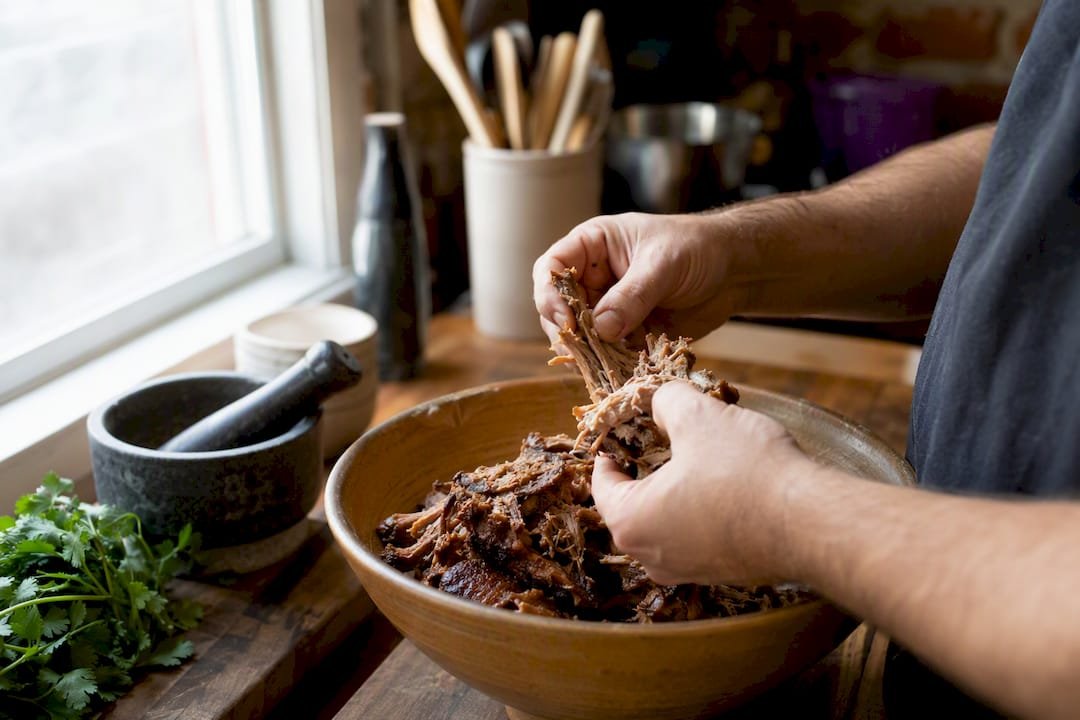
- Shred the pork into rough pieces using two forks, keeping some larger chunks for texture rather than shredding everything to uniform threads.
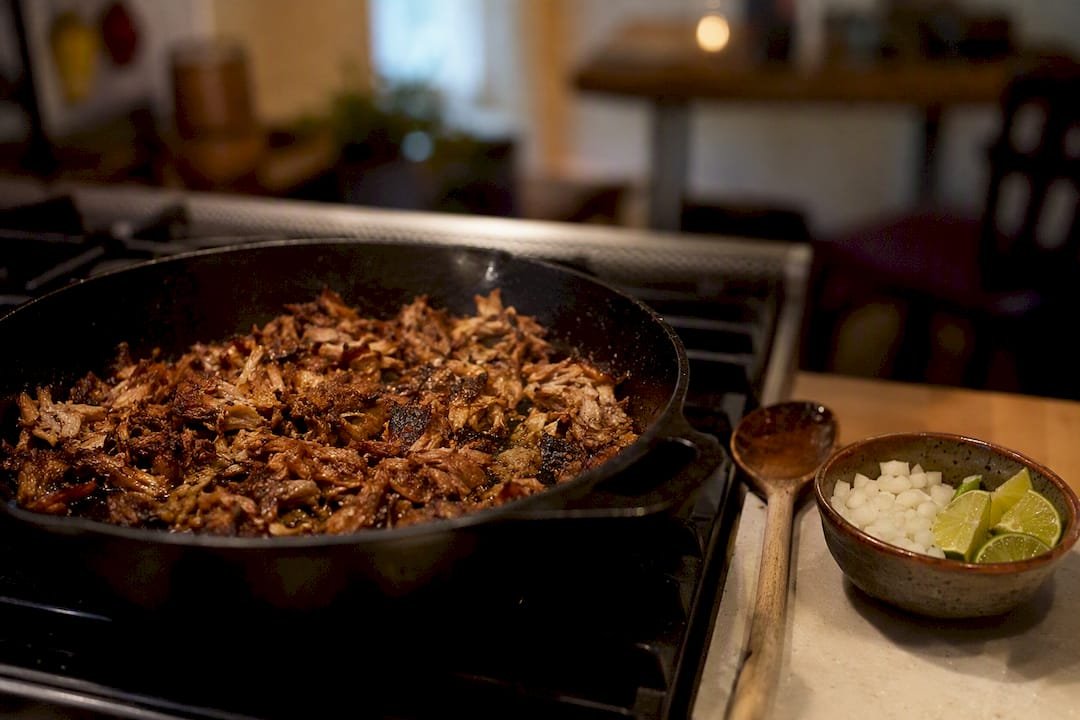
- Spread the shredded pork in a single layer on a rimmed baking sheet, spoon a little of the reserved fat and liquid back over it, and broil for about 6 minutes, then stir and broil again until you get crisp, browned edges throughout.
- Taste and adjust salt before serving. The crisping step concentrates flavour, so you may need less salt than you’d expect.
The table below lays out the timing differences so you can plan around your schedule.
| Method | Cook time | Best for |
|---|---|---|
| Oven braise | 2.5 to 3.5 hours at 300°F (150°C) | Hands-off but home most of the afternoon |
| Slow cooker (low) | 7 to 8 hours | Starting in the morning, ready by dinner |
| Slow cooker (high) | 4 to 5 hours | Faster turnaround, slightly less depth |
| Crisping (broiler) | 4 to 6 minutes per batch | Feeding a crowd quickly |
Carnitas actually improve with a rest. Cooking the pork a full day ahead and storing it in its own braising liquid in the fridge lets the flavours settle and deepen overnight. When you’re ready to serve, reheat gently in the liquid, then crisp under the broiler or in a hot skillet right before plating. Leftovers keep well for three to four days refrigerated in an airtight container, ideally still sitting in a bit of the reserved liquid to keep the meat from drying out. For longer storage, shredded carnitas freeze well for up to two months. Thaw overnight in the fridge, then crisp fresh rather than microwaving straight from frozen, which turns the texture rubbery.
Pro Tip: Don’t shred the pork too finely before crisping. Larger, ragged pieces get more surface contact with the pan or broiler, which means more crisp edges per bite instead of one uniformly dry batch.
If you want a broader primer on what carnitas actually is and how it differs from other braised Mexican proteins, this home cook’s guide to carnitas is worth a read before your first attempt.
Lard confit vs. braising vs. slow cooker: which method wins?
Traditional Mexican carnitas are made by submerging pork in a large pot of lard and slow-poaching it at low heat for hours, a technique often called confit. It produces an incredibly rich, deeply flavoured result because the meat cooks entirely surrounded by fat rather than a water-based liquid. The catch for a home cook: it requires several litres of lard, careful temperature control to avoid a grease fire, and a fair bit of cleanup and fat disposal afterward. It’s the technique most Winnipeg restaurants doing carnitas properly are drawing from, but it’s a lot to take on in a home kitchen.
A liquid braise, whether in the oven or a slow cooker, swaps most of that lard for water, stock, and citrus. You lose a little of the deep richness that pure lard delivers, but you gain a method that’s far more practical at home and considerably lighter. A small-scale version using minimal added fat can get remarkably close to the traditional texture, especially once you add the crisping step back in.
That crisping step is non-negotiable no matter which braising method you use. Your main options:
- Broiler: fastest for a full batch at once, best for feeding a group.
- Skillet: more control over browning, but overcrowding the pan causes steaming instead of crisping, so work in batches.
- Shallow pan-fry: uses the reserved rendered fat as the frying medium, closest in flavour to the traditional method.
One detail nearly a third of home carnitas recipes get wrong is what to do with the leftover braising liquid. Strain it, skim the fat, and either freeze it for the next batch or reduce it into a salsa base rather than pouring it down the drain. If you’re reusing braising fat across multiple batches, keep it refrigerated and use it within a week or two, and always reheat it to a full simmer before reuse to keep it food-safe.
Sourcing pork and tortillas the right way in Manitoba
The cut matters more than most home cooks realize. Ask your butcher specifically for pork shoulder, sometimes labelled pork butt or Boston butt, not pork loin. Loin is too lean and turns dry and stringy under long, slow heat. Shoulder has enough intramuscular fat and connective tissue to break down properly over hours of cooking, which is exactly what gives carnitas its texture.
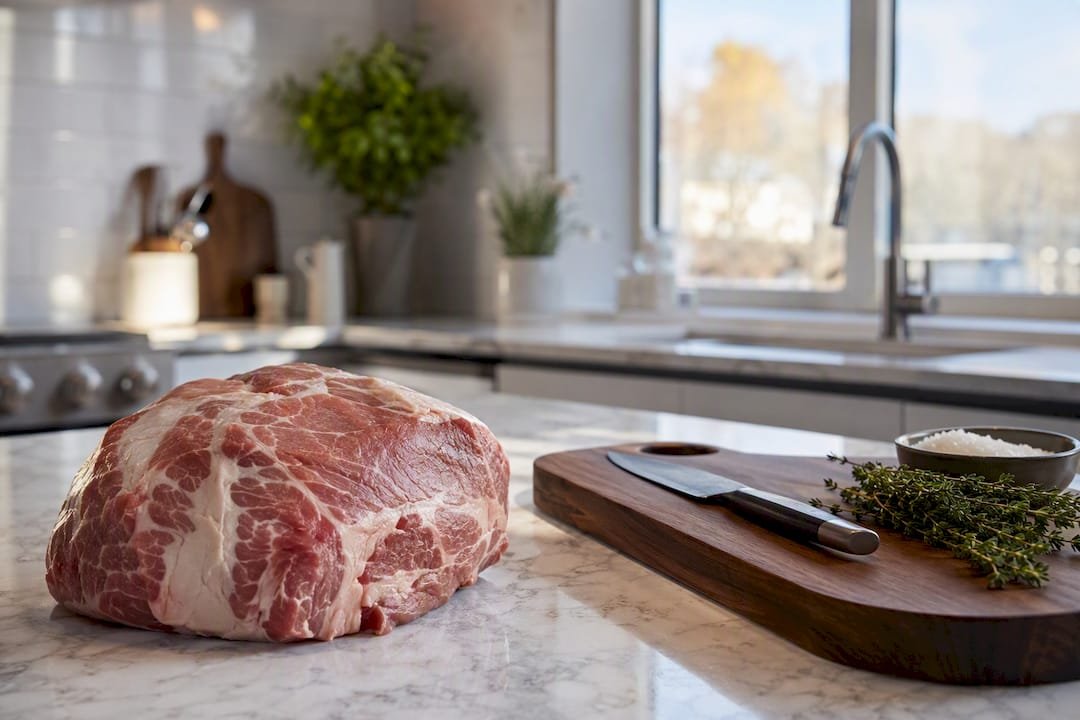
Fat matters too, and more than you’d think. Leaving a modest fat cap on the shoulder means that fat renders during the braise, bastes the meat from the inside, and becomes the frying medium during the crisping step. Trimming it all away before cooking leaves you with leaner, drier carnitas and nothing to crisp the meat in afterward.
A few practical notes for shopping in Winnipeg:
- Ask a butcher counter directly for “bone-in pork shoulder, skin off, with the fat cap left on” rather than a pre-trimmed supermarket cut.
- Bone-in cuts often deliver more flavour and moisture retention than boneless, though boneless is easier to portion and shred.
- For tortillas, corn is the traditional choice for carnitas tacos, but Manitoba-produced flour tortillas, pressed fresh rather than shipped in plastic bags, are a genuinely good alternative if you prefer a softer bite.
- If you want to render your own lard for the traditional confit method, ask a butcher for pork fatback and render it slowly at home over low heat, straining it before storage.
If tortillas are where you want to focus your energy next, this step-by-step guide to making authentic Mexican tacos at home covers pressing and warming technique in more detail.
Why Burrito Splendido is a reliable local choice
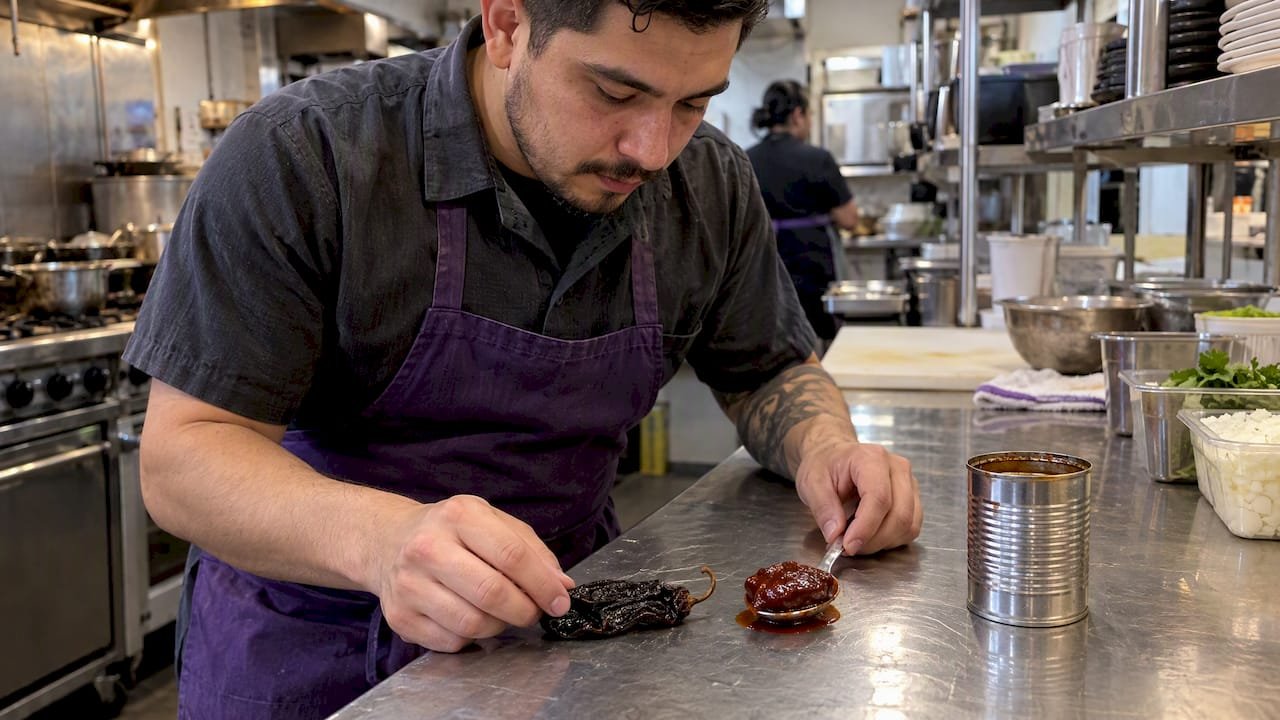
This guide draws on hands-on kitchen experience from Austin at Burrito Splendido, where slow-cooked carnitas are prepared and hand-pulled fresh, daily, not shipped in from a central commissary.
That kitchen practice matters because carnitas are unforgiving. Rush the braise or skip the crisping step, and you get either tough meat or a soft, forgettable taco filling. Burrito Splendido’s approach reflects the same principles this article walks through: a genuine slow braise, fat left on the pork for basting, and a deliberate crisping stage before serving.
The wider kitchen backs that up. It’s a deep-fryer-free operation, tortillas are pressed fresh from Manitoba flour, and the pork itself comes from local farms rather than a distant supplier. If you’re ordering for pickup or catering, expect the same from-scratch standard applied to whatever else lands on your plate alongside the carnitas.
Order out or cook it yourself: an honest take
Cooking carnitas at home is genuinely worth doing at least once. You control the fat, the salt, the acidity, and you get to taste the difference a proper crisping step makes versus meat that’s just been kept warm. It’s also a slow Sunday project, not a Tuesday-night dinner, so plan accordingly.
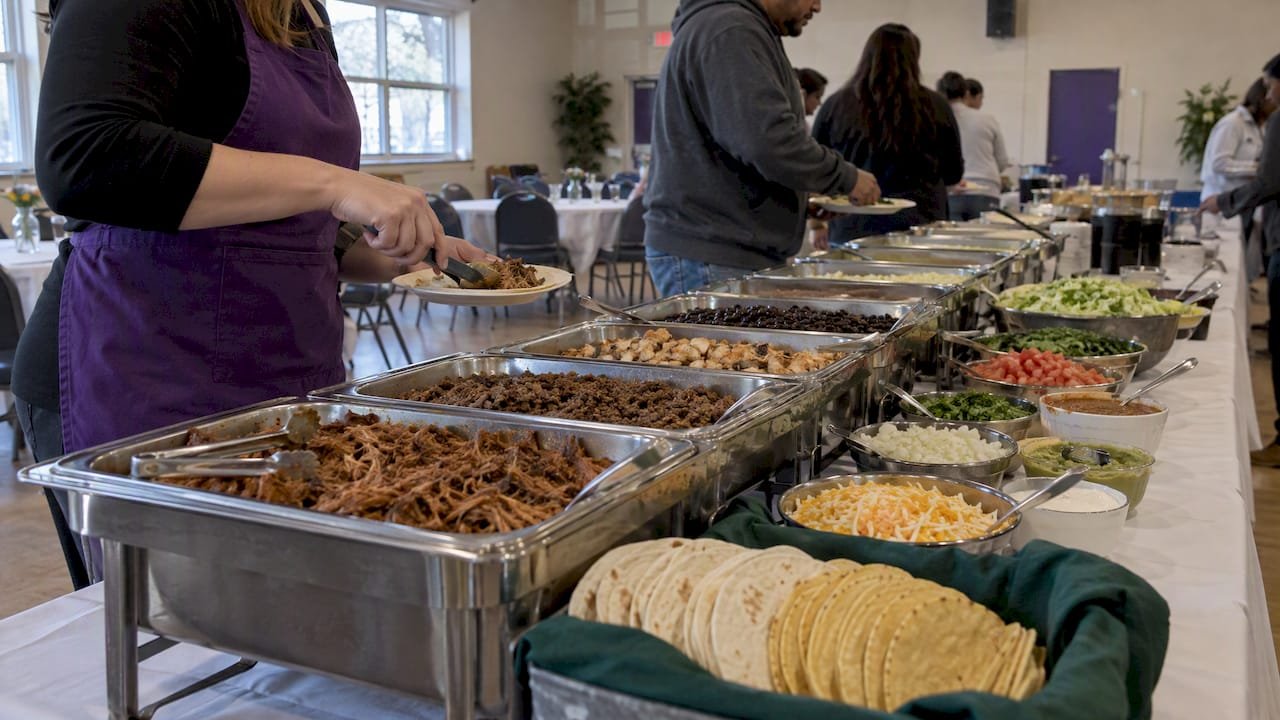
Ordering makes more sense in a few specific situations: feeding a group on short notice, catering an office lunch or a party, or simply wanting carnitas tonight without committing your whole afternoon to a braise. For those cases, a kitchen that’s already doing the slow-cook and hand-pull work daily is the more sensible choice.
Quick checklist for deciding:
- Cook at home if you have 3+ hours free, want to control ingredients, or you’re feeding a small group who’ll appreciate the process.
- Order out if you need to feed 10+ people, you’re short on time, or it’s simply not a cooking day.
Either path gets you to real, slow-cooked carnitas. The only wrong move is settling for the version that skipped the crisping step.
— Austin
Order carnitas or book catering with Burrito Splendido
If today isn’t a braising day, Burrito Splendido gets you the same slow-cooked, hand-pulled carnitas without the three-hour wait. That’s the practical trade-off: you skip the skillet and the cleanup, and still get pork that was braised in-house this morning, not reheated from a bag.
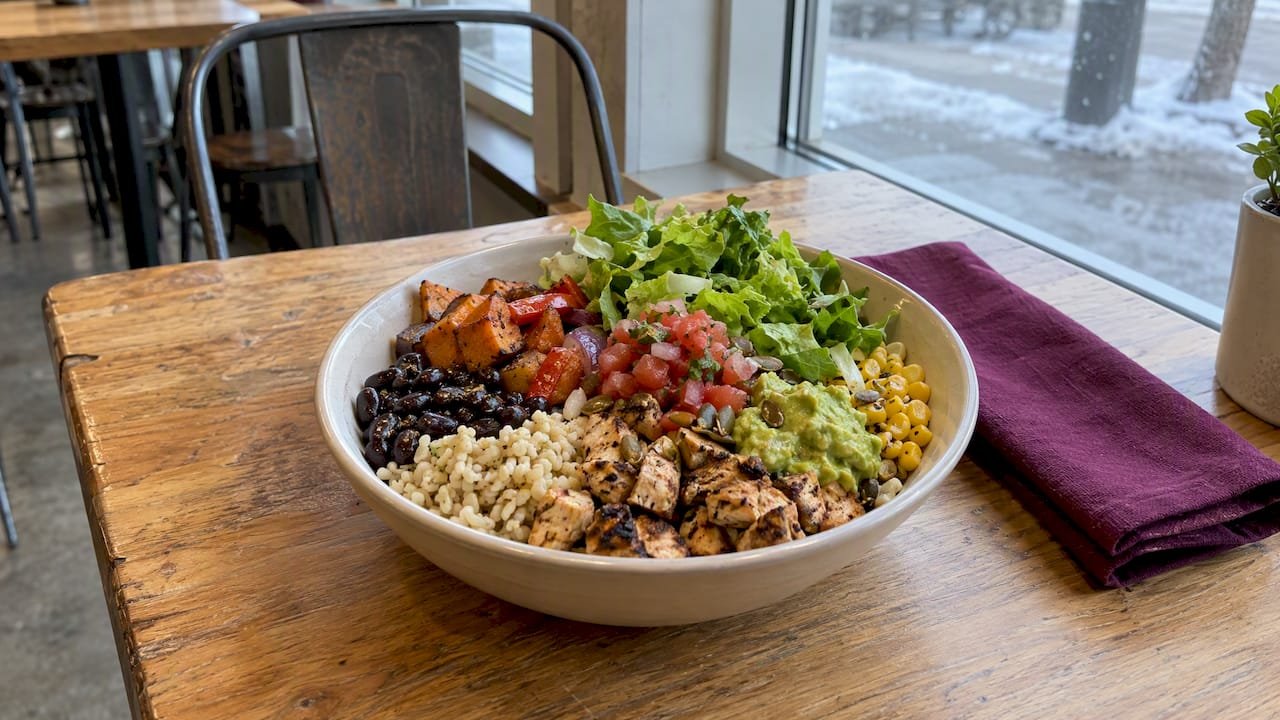
For a solo taco order or a family dinner, browse the Burrito Splendido menu and online ordering page and build a plate around carnitas tacos, a naked bowl, or a burrito. For anything bigger, the catering page covers group formats built around trays of proteins, including carnitas, with rough portion guidance so you’re not guessing how much to order for a dozen people versus fifty. A general rule when planning: figure on roughly 4 to 6 oz (110 to 170 g) of cooked, shredded meat per person for a taco-style spread. If you want a closer look at how Burrito Splendido’s sourcing and menu philosophy shape the final product, the Winnipeg Mexican restaurant checklist breaks down what “fresh, local, and customizable” actually means on the plate. Whichever you choose, place your order online or call ahead for catering to lock in your date.
Sources
- Tacos de carnitas (Well Seasoned Studio)
- Carnitas recipe (New York Times Cooking)
- No-waste tacos de carnitas with salsa verde (Serious Eats)
- Carnitas recipe (Simply Recipes)
- Pork carnitas recipe (Bon Appétit)