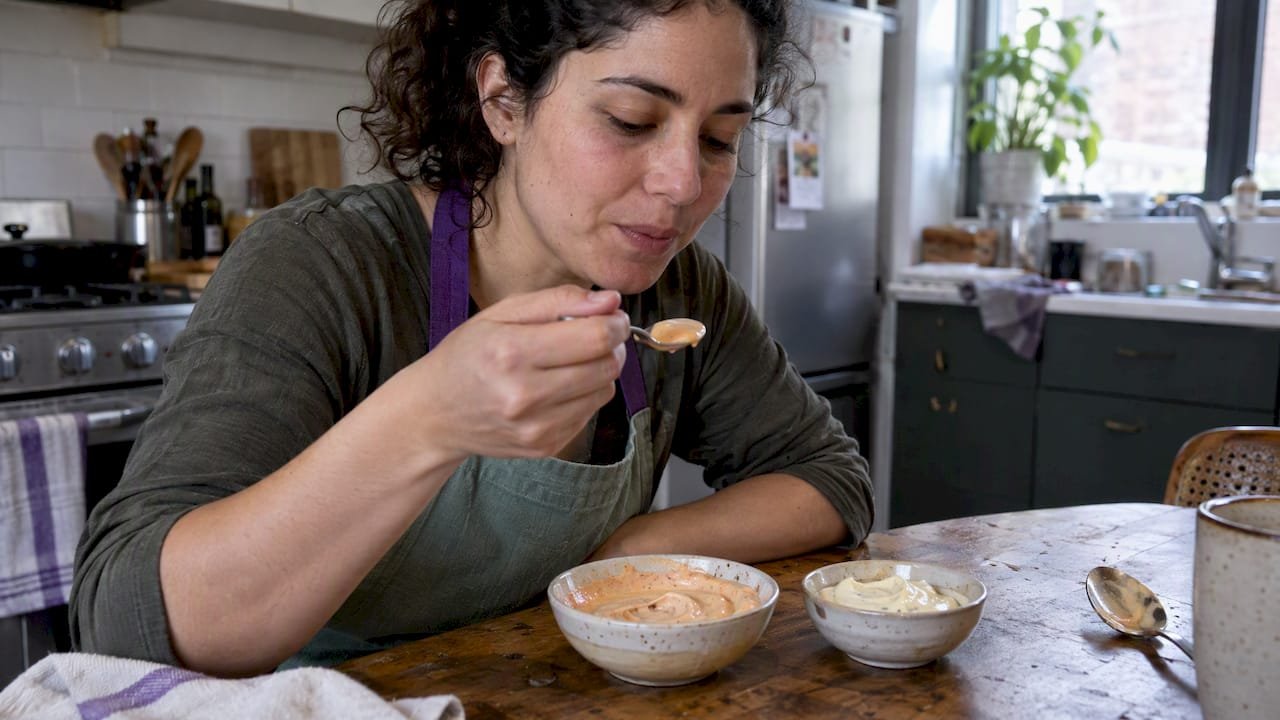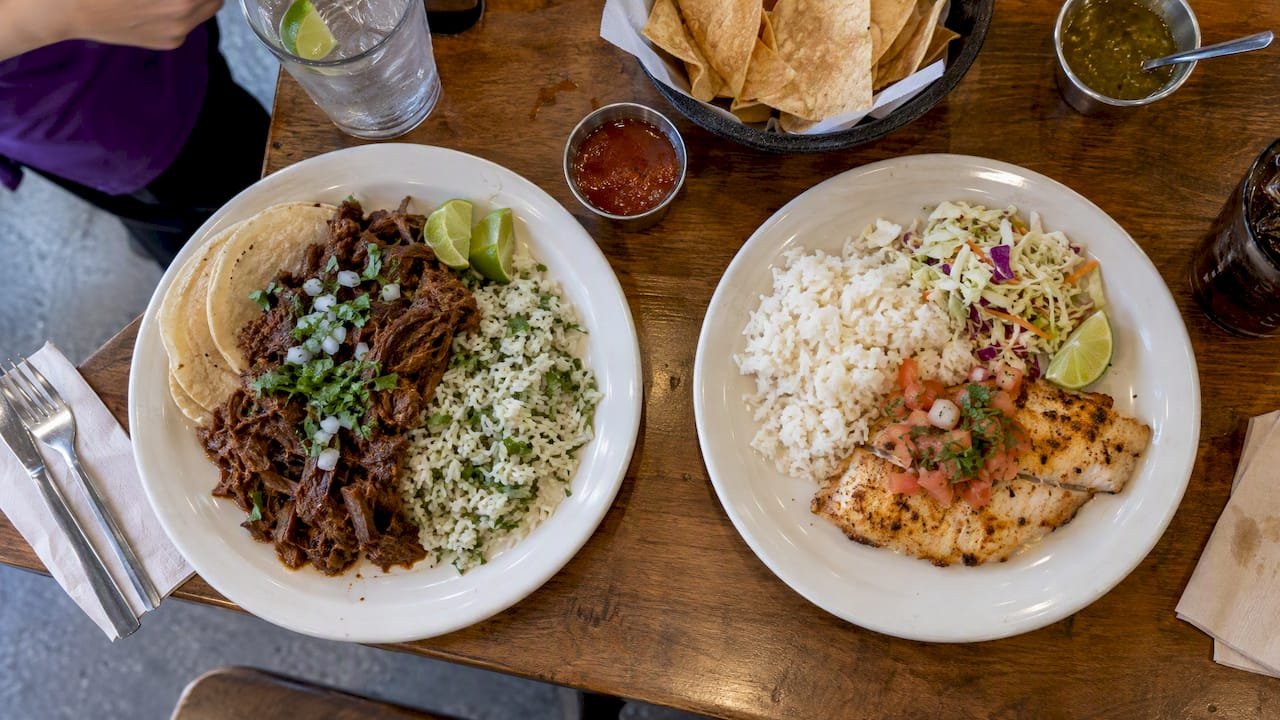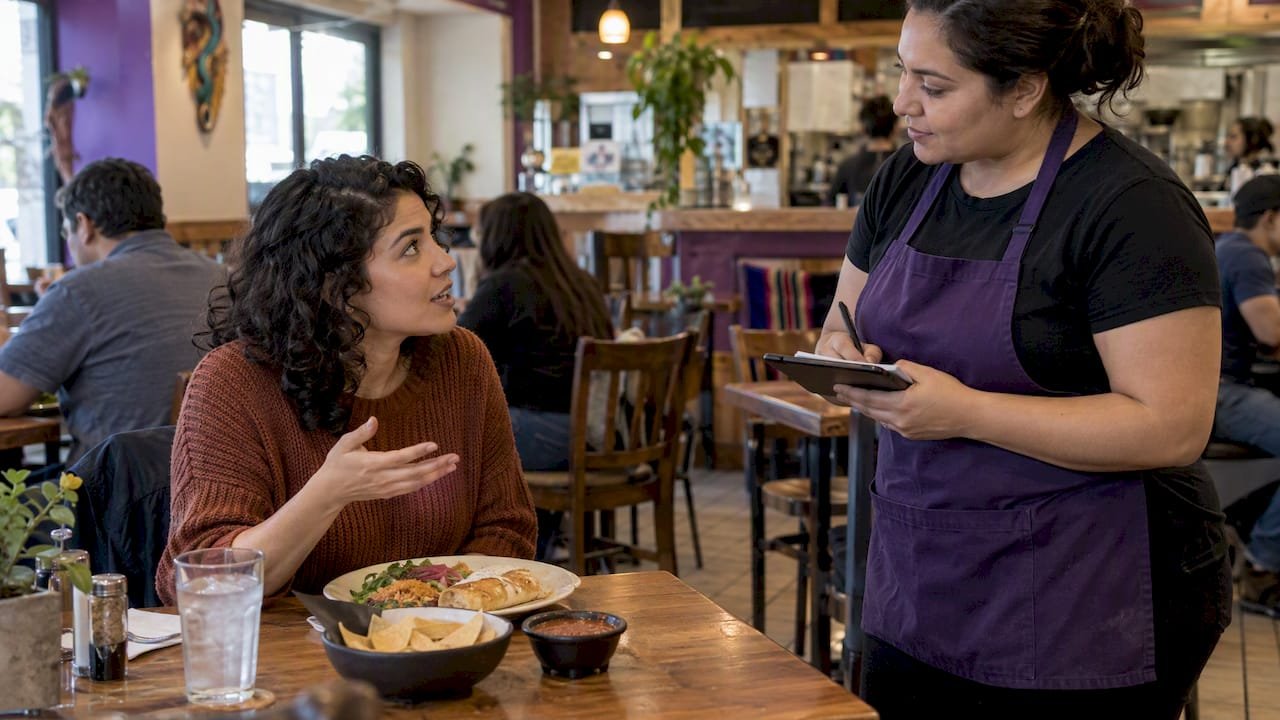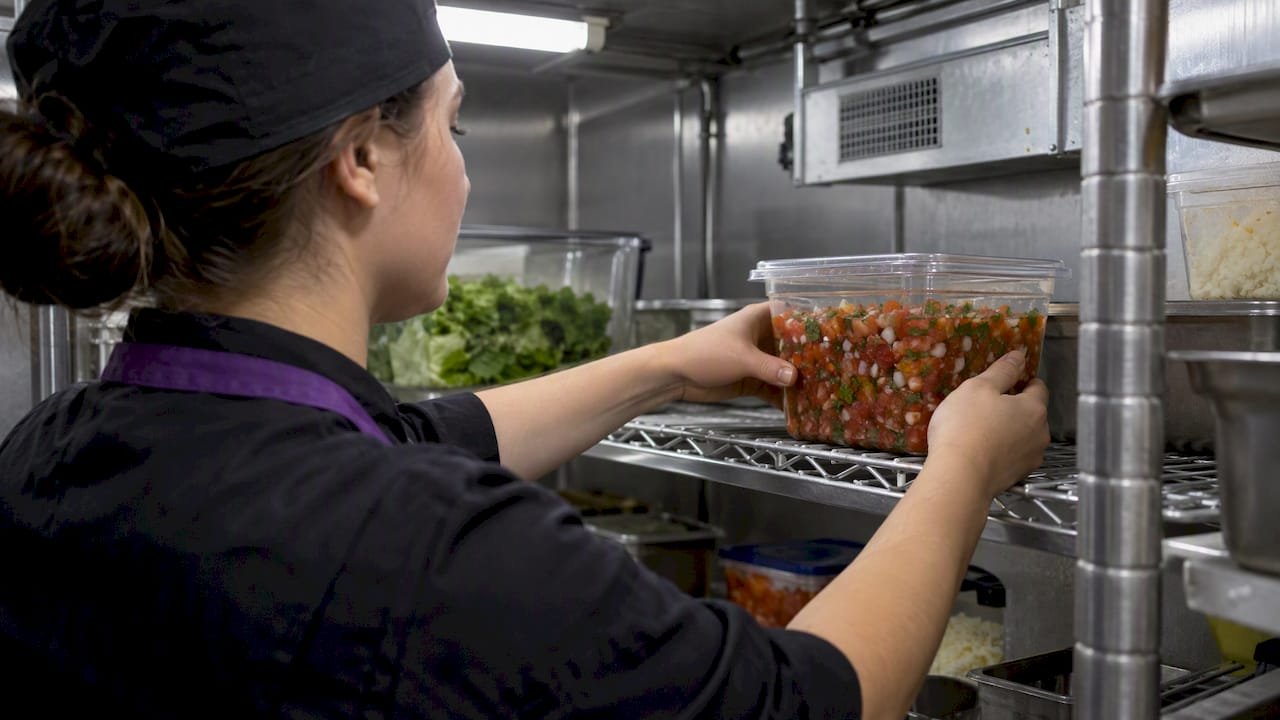
The Manitoba-first restaurant philosophy centres on sourcing ingredients from within the province, building menus around seasonal availability, and treating food as a reflection of place, community, and cultural heritage — including Indigenous knowledge and traditions. In practice, it means a restaurant’s menu changes when the asparagus runs out, the cheese comes from Bothwell rather than Ontario, and the chef can name the farm that raised the pork.
Here is what it looks like on the ground:
- Supplier transparency: menus or websites name specific farms, processors, or harvesters rather than using vague “locally sourced” language.
- Seasonal swaps: dishes rotate based on what Manitoba producers actually have, not what a national distributor can ship year-round.
- Indigenous ingredients or techniques: wild rice, bannock, pickerel, bison, and traditional preparation methods appear alongside or within contemporary dishes.
Two restaurants anchor this story. Bungees, which opened in 1981 in downtown Winnipeg, is widely recognised as the first Indigenous restaurant in Manitoba, serving pemmican pâté, buffalo, rabbit, and wild rice at a time when none of that was fashionable. Decades later, Burritosplendido carries a version of that same commitment into fast-casual Mexican food, pressing tortillas daily from 100% Manitoba-produced flour and sourcing proteins and produce from named local suppliers.
Table of Contents
- What are the core principles of a Manitoba-first restaurant?
- How Indigenous-rooted restaurants interpret Manitoba-first practice
- What do Manitoba-first sourcing practices actually look like in a kitchen?
- Manitoba restaurants that put this philosophy into practice
- How can you recognise and support Manitoba-first restaurants as a diner?
- Burritosplendido’s Manitoba-first sourcing: what the kitchen actually does
- Key takeaways
- Why this philosophy deserves more than a trend label
- Burritosplendido brings Manitoba-first to your table
- Useful sources and further reading
What are the core principles of a Manitoba-first restaurant?
A restaurant can slap “local” on a menu without it meaning much. The Manitoba-first philosophy, as practised by chefs who take it seriously, rests on a specific set of commitments that go well beyond a single regional ingredient.
Hyper-local sourcing is the foundation. The goal is to reduce the distance between producer and plate, which cuts supply-chain emissions and creates direct accountability between chef and farmer. When Bistro on Notre Dame sources bison from Iron Head Ranch and freshwater fish from Manitoba lakes, the chef knows exactly where the animal was raised and can speak to it at the table.
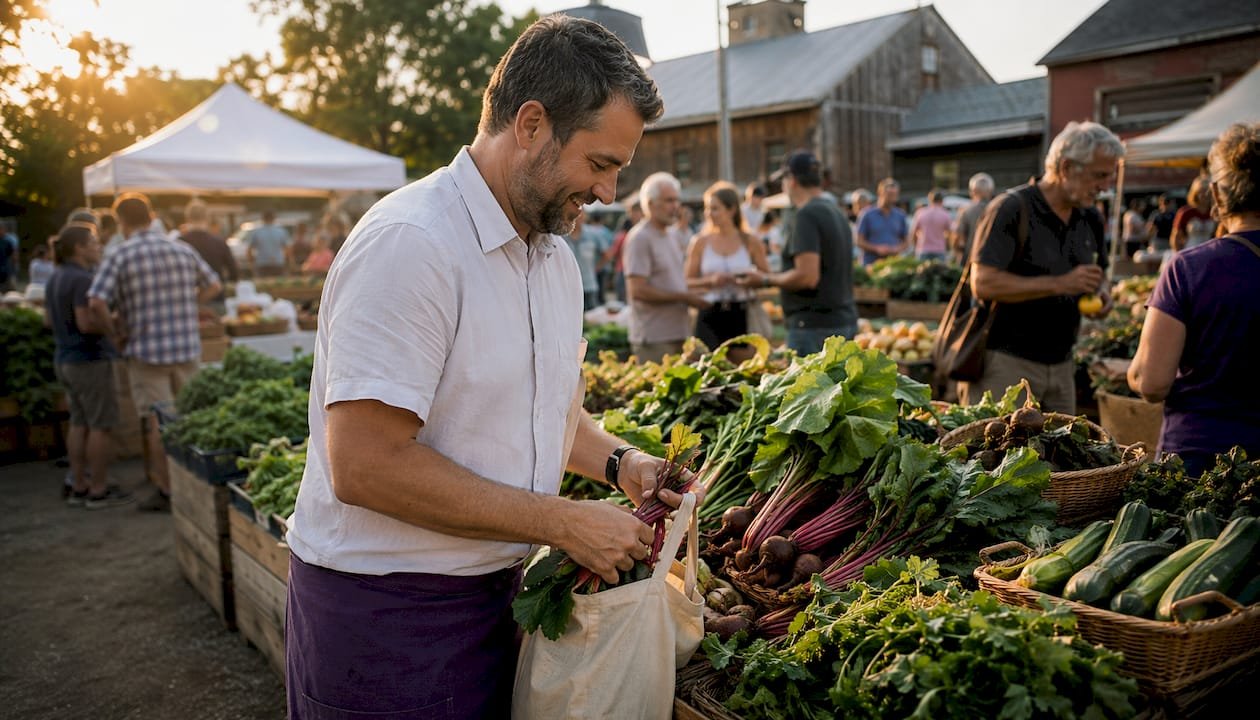
Seasonality is the discipline that makes local sourcing real. A restaurant that claims Manitoba-first but serves the same menu in February as in August is almost certainly supplementing with imports. Genuine seasonality means spring menus feature asparagus and rhubarb, summer brings fresh tomatoes and herbs, and fall leans into root vegetables, wild rice, and game. A visible supplier timeline on a menu or website, showing something like “wild rice: September–October” or “spring asparagus: May–June,” is one of the clearest signals that a kitchen is actually doing this.
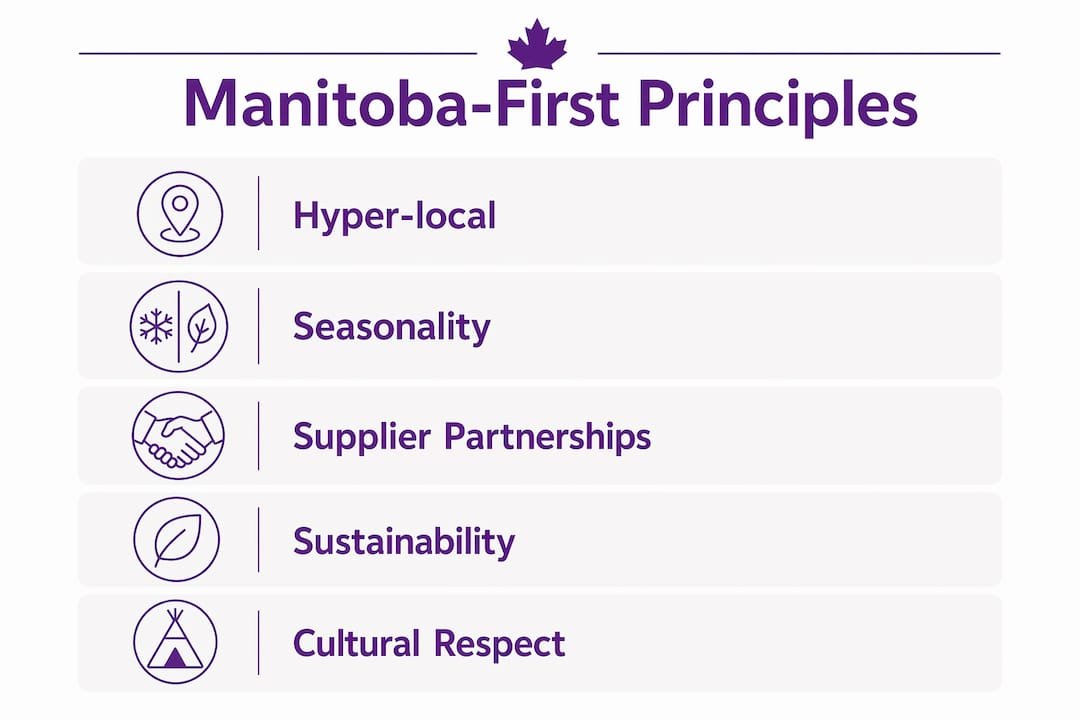
Supplier partnerships and accountability distinguish a philosophy from a purchasing preference. Restaurants committed to Manitoba-first build ongoing relationships with specific farms, processors, and harvesters rather than buying opportunistically. Those relationships show up in named credits on menus, in social media posts from farm visits, and in the willingness to adjust a dish when a supplier has a short crop.
Sustainability and low-impact procurement follow naturally from local sourcing, but they are worth naming separately. The WRHA’s healthy eating position links nutritional adequacy with food security and explicitly encourages locally sourced, sustainable, and affordable foods. Affordability matters here: a philosophy that only works at fine-dining price points is not a community philosophy.
Cultural respect and decolonizing cuisine complete the picture. Food Matters Manitoba frames an ethical relationship with food as one that includes cultural connection and a practice of interrogating bias rather than labelling foods as simply “good” or “bad.” For Manitoba restaurants, that means acknowledging whose land the ingredients come from and whose knowledge shaped how they are prepared.
Pro Tip: When evaluating a restaurant’s Manitoba-first claims, look for three things: named suppliers (not just “local farms”), a menu that changes by season, and any stated relationship with Indigenous producers or harvesters. All three together signal genuine commitment.
How Indigenous-rooted restaurants interpret Manitoba-first practice
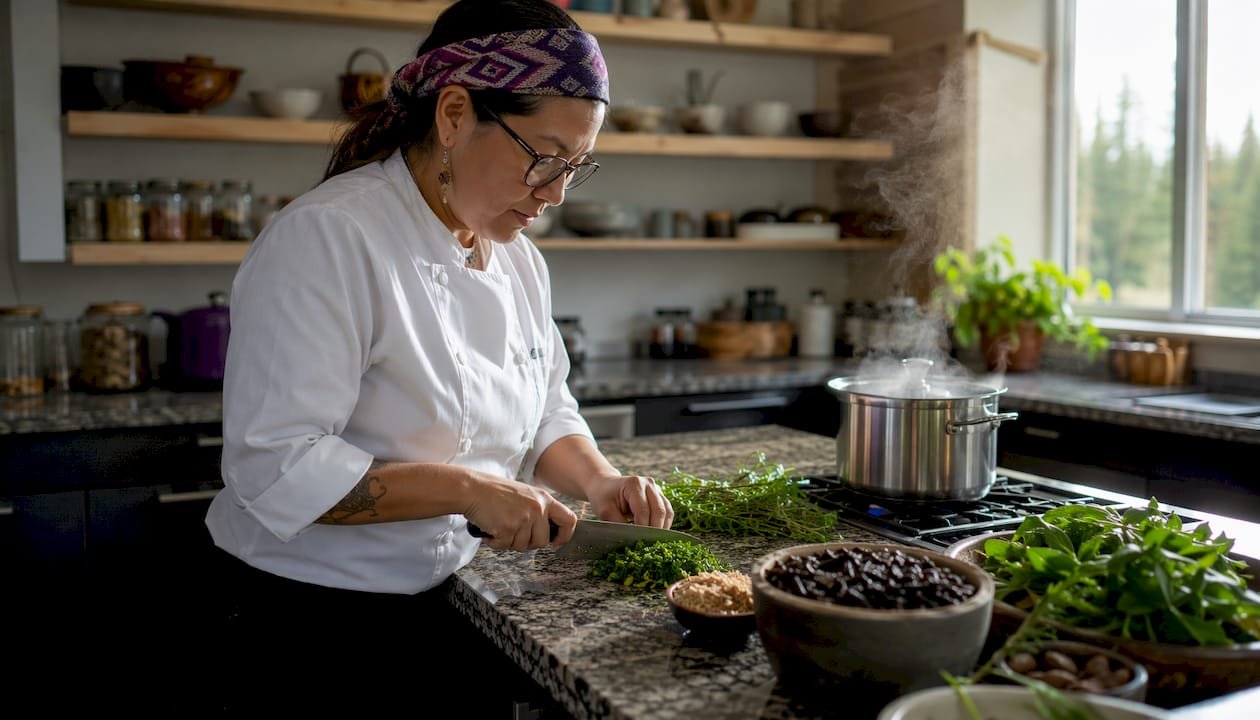
Indigenous-rooted restaurants do not simply source locally. They treat the land, its seasonal cycles, and the knowledge of Indigenous communities as the actual curriculum for what ends up on the plate.
The most visible expression is the revival of traditional foods. Wild rice harvested by Indigenous communities, bannock made from scratch, pemmican prepared using traditional methods, bison sourced from Indigenous-owned ranches, and freshwater species like pickerel and whitefish all carry cultural weight that goes beyond nutrition. Serving them is an act of cultural continuity.
Bistro on Notre Dame in Winnipeg, led by chef-owner Dean Herkert, frames its menu explicitly around Red River Métis heritage. The kitchen works with Iron Head Bison Ranch, uses Manitoba freshwater fish and local grains, and positions the restaurant as an intentional community gathering space. That last detail matters. Indigenous-rooted restaurants often function as cultural anchors, not just dining rooms.
Foraging and seasonal harvesting cycles shape procurement in ways that a conventional restaurant calendar cannot accommodate. Wild ingredients arrive when they arrive. A kitchen that works with Indigenous harvesters must build flexibility into its menu rather than locking in a fixed dish list months in advance.
Cultural protocols also govern how ingredients are sourced and credited. Acknowledging the harvester, the community, and the territory on a menu is not decoration. It is part of the philosophy. Restaurants that do this well tend to include brief notes explaining where an ingredient comes from and who produced it, which also serves as a practical trust signal for diners.
Pro Tip: Ask your server whether any ingredients were sourced from Indigenous-owned suppliers or harvesters. A restaurant genuinely practising Indigenous-rooted sourcing will have a specific answer, not a general one.
What do Manitoba-first sourcing practices actually look like in a kitchen?
The philosophy sounds appealing in theory. The operational reality involves real trade-offs that chefs manage every week.
Sourcing rhythms and lead times are the first adjustment. Small Manitoba farms and Indigenous harvesters do not operate on the same replenishment schedule as a national food distributor. A chef sourcing pickerel from a local fishery might get a call on Tuesday that the week’s catch is ready, which means the fish special goes on the menu Wednesday and comes off by Friday. That kind of responsiveness requires a kitchen team that can adapt quickly and a menu structure that accommodates daily changes.
Supplier relationships are built over seasons, not transactions. Chefs at restaurants like Fude, which pioneered the use of prairie ingredients in Winnipeg’s locavore scene, developed direct relationships with farms supplying bison from Iron Head, pickerel from Bearcat Fisheries, Berkshire pork from All Natural Meats, and wild rice from Naosap Harvest. Those relationships give chefs early access to seasonal items and a degree of supply reliability that spot-purchasing cannot match.
Cost implications are real and worth being honest about. Local, small-batch procurement typically costs more per unit than commodity purchasing. Restaurants manage this through cross-utilisation (using every part of a locally sourced animal or vegetable), smaller batch purchasing that reduces waste, and seasonal features that rotate high-cost items rather than keeping them on the menu year-round. The role of local farms in restaurant menus involves genuine financial planning, not just good intentions.
Understanding how local ingredients shape a menu is useful context for both chefs and diners evaluating whether a restaurant’s sourcing claims hold up.
| Sourcing signal | What it indicates | What to ask |
|---|---|---|
| Named suppliers on menu | Direct farm or producer relationship | “Is this supplier still active this season?” |
| Seasonal menu with dates | Real procurement tied to harvest cycles | “What’s coming off the menu soon?” |
| Indigenous harvester credit | Community-led sourcing, cultural protocol | “Who harvested this and where?” |
| Third-party certification | Organic, Fairtrade, or social-enterprise validation | “Which certification body?” |
| Published supplier list | Highest transparency level | Available on website or on request |
Operational signals like published supplier lists and dated seasonal menus are the strongest proof of genuine practice. A restaurant that can show you a supplier timeline is not performing local sourcing. It is doing it.
Manitoba restaurants that put this philosophy into practice
Three restaurants illustrate the range of how Manitoba-first principles show up in real operations.
Burritosplendido (Winnipeg, multiple locations) applies the philosophy within a fast-casual Mexican format. Every tortilla is pressed daily from 100% Manitoba-produced flour. Proteins include pork from local farms, poultry from Granny’s Chicken, and cheese from Bothwell Cheese. Fresh produce comes primarily through Peak of the Market. Seasonal specials like Manitoba Whitefish/Pickerel tacos show the kitchen responding to what the province actually produces. The local food guide on the Burritosplendido site maps out how Manitoba ingredients appear across the menu.
Bistro on Notre Dame (Winnipeg) is the clearest contemporary example of Indigenous-rooted Manitoba-first practice. Chef-owner Dean Herkert’s menu is shaped by Red River Métis heritage, with bison from Iron Head Ranch, Manitoba freshwater fish, and local grains forming the backbone of the kitchen. The restaurant functions as a community gathering space as much as a dining room, which reflects the philosophy’s emphasis on food as cultural connection rather than just nutrition.
Bungees (Winnipeg, 1981) is the historical anchor. As the first Indigenous restaurant in Manitoba, Bungees served pemmican pâté, buffalo, rabbit, and wild rice at a time when none of those ingredients appeared on mainstream Winnipeg menus. The restaurant demonstrated that Indigenous food systems could sustain a commercial kitchen and introduced those flavours to a broader public.
Pro Tip: Menus change seasonally, sometimes weekly. Before visiting any Manitoba-first restaurant, check their social media or call ahead to confirm which seasonal dishes are currently available. What you read about in a review may not be on the menu today.
How can you recognise and support Manitoba-first restaurants as a diner?
Knowing what to look for makes the difference between supporting genuine practice and rewarding a marketing claim.
- Check the menu for named suppliers. “Local cheese” is vague. “Bothwell Cheese” is verifiable. Named suppliers are the single clearest signal of real commitment.
- Look for seasonal language with specifics. A menu that says “spring asparagus” or “fall wild rice” and changes accordingly is doing something a static menu cannot.
- Ask your server a direct question. “Where does the bison come from?” or “Is the pickerel from a Manitoba fishery?” A server at a genuinely Manitoba-first restaurant will have an answer.
- Check the restaurant’s website or social channels. Published supplier lists, farm visit posts, and harvest updates are signs of transparency that go beyond the dining room.
- Look for Indigenous sourcing acknowledgements. Menu notes crediting a harvester, a community, or a territory signal cultural protocols in practice, not just local purchasing.
- Choose seasonal dishes over year-round staples. Ordering the seasonal special supports the procurement decision the chef made that week and helps sustain the supply relationship.
- Distinguish confidence from greenwashing. A restaurant that can answer “which farm?” and “which season?” is credible. One that responds with “we support local” and nothing more is not. Ask a follow-up.
Supporting these restaurants also means understanding that why local restaurants matter goes beyond flavour. Local procurement keeps money in Manitoba communities, supports small farms and Indigenous harvesters, and builds the kind of food system the WRHA’s healthy eating framework describes: one that is nutritionally adequate, culturally connected, and financially accessible.
Pro Tip: Attending a restaurant’s pop-up event, harvest dinner, or community gathering is one of the most direct ways to support Manitoba-first practice. These events often feature ingredients and producers that do not appear on the regular menu.
Burritosplendido’s Manitoba-first sourcing: what the kitchen actually does
Burritosplendido’s Manitoba-first approach is not a marketing frame applied after the fact. It is built into the daily prep cycle.
- Tortillas: pressed in-house every day from 100% Manitoba-produced flour. The house-pressed tortilla process is central to the brand’s from-scratch identity.
- Proteins: Carnitas (braised pork) and Barbacoa (shredded beef) are slow-cooked and hand-pulled daily. Poultry comes from Granny’s Chicken, a Manitoba supplier.
- Cheese: sourced from Bothwell Cheese, a well-established Manitoba dairy processor.
- Produce: primarily through Peak of the Market, a Manitoba-based produce distributor.
- Seasonal specials: Manitoba Whitefish/Pickerel tacos appear when the fish is available, connecting the menu directly to provincial harvest cycles.
- No deep fryer: the kitchen’s commitment to healthier cooking methods aligns with the WRHA’s framing of local, sustainable food as part of overall nutritional well-being.
- Dietary accommodation: gluten-free, vegan, keto, and paleo options are built into the menu, not treated as afterthoughts, with staff trained on cross-contamination protocols.
“Fresh, local, and doing the right thing” is the operating principle at Burritosplendido — a commitment that shows up in every tortilla pressed and every supplier named on the menu.
The farm-to-table approach Burritosplendido describes is grounded in specific supplier relationships rather than general local-sourcing language. For diners who want to verify the sourcing claims, the brand’s website and in-store staff can speak to each supplier by name.
Key takeaways
The Manitoba-first restaurant philosophy is most credible when a restaurant can name its suppliers, show a menu that changes by season, and demonstrate genuine relationships with Indigenous producers and harvesters.
| Point | Details |
|---|---|
| Definition | Manitoba-first means local sourcing, seasonal menus, named suppliers, and cultural respect for Indigenous food knowledge. |
| Trust signals | Named farms, seasonal menus with dates, Indigenous harvester credits, and published supplier lists separate real practice from marketing language. |
| Indigenous-rooted distinction | Indigenous-rooted restaurants treat traditional foods and cultural protocols as the foundation, not an add-on, to local sourcing. |
| Diner action | Ask servers “which farm?” and “which season?” — a genuine Manitoba-first kitchen will have specific answers. |
| Burritosplendido | Presses tortillas daily from Manitoba flour, sources poultry from Granny’s Chicken and cheese from Bothwell Cheese, and features seasonal pickerel tacos. |
Why this philosophy deserves more than a trend label
The Manitoba-first approach gets lumped in with farm-to-table as though it is a dining trend that will cycle out when the next aesthetic takes over. That framing misses what is actually happening.
What distinguishes the serious practitioners from the marketing adopters is accountability. A restaurant that names Iron Head Bison Ranch on its menu cannot quietly swap in imported beef when the local supply gets tight without someone noticing. That accountability loop, between chef, producer, and informed diner, is what makes the philosophy structurally different from a general preference for “fresh ingredients.”
The Indigenous-rooted dimension adds another layer that the farm-to-table framing rarely captures. When Bungees opened in 1981 and put pemmican pâté on a downtown Winnipeg menu, that was not a trend. It was an assertion that Indigenous food systems were worth preserving and sharing. Bistro on Notre Dame carries that same assertion forward today, with the added complexity of navigating cultural protocols in a commercial kitchen. Those are not the same challenges a chef faces when deciding whether to buy Ontario tomatoes or Manitoba tomatoes.
For diners, the practical takeaway is straightforward: the philosophy is real when the restaurant can be held to it. Ask the questions. Order the seasonal dish. Support the restaurants that can answer you specifically. The food is better for it, and so is the supply chain that produced it.
Burritosplendido brings Manitoba-first to your table
If you want to eat Manitoba-first without researching supplier lists yourself, Burritosplendido has done that work for you. Every tortilla is pressed daily from Manitoba flour, every protein is slow-cooked in-house, and the cheese and poultry come from named Manitoba producers. The menu accommodates gluten-free, vegan, keto, and paleo diets without compromise.
For groups and events, Burritosplendido’s catering service brings the same local-sourcing commitment to corporate lunches, community gatherings, and private events across Winnipeg and Brandon. If you want to see what is on the menu today, including any current seasonal specials, the full menu and ordering page is the place to start.
This article is published by Burritosplendido as general information about Manitoba-first restaurant philosophy. It is not independent editorial content. For specific sourcing details, contact the restaurant directly or visit burritosplendido.com.
Useful sources and further reading
The claims in this guide draw on primary sources and documented restaurant profiles. Here is where to go to verify them or read further.
- Food Matters Manitoba — guiding statement: the foundational ethical framing for food relationships in Manitoba, including cultural connection and the avoidance of moralising food choices.
- WRHA healthy eating position statement: the Winnipeg Regional Health Authority’s framework linking local, sustainable, and affordable food to nutritional well-being and food security.
- Bistro on Notre Dame — Manitoba Métis Federation: the primary profile of chef-owner Dean Herkert’s sourcing practices and Métis heritage menu framing.
- Bistro on Notre Dame — Indigenous Tourism Manitoba: describes the restaurant as an intentional community gathering space with local, ethical, and sustainable sourcing.
- Bungees: A First for Manitoba: the historical record of Manitoba’s first Indigenous restaurant, opened in 1981.
- Ciao! Winnipeg — Fude profile: documents how early Winnipeg restaurants like Fude built a locavore identity around prairie ingredients and named Manitoba suppliers.
| Source | Core point supported |
|---|---|
| Food Matters Manitoba | Cultural ethics and decolonizing food framing |
| WRHA position statement | Food security, affordability, and local sourcing as health practice |
| MMF — Bistro on Notre Dame | Indigenous-rooted sourcing and Métis heritage menu design |
| Indigenous Tourism Manitoba | Community gathering and ethical sourcing credibility |
| Winnipeg Histories — Bungees | Historical lineage of Indigenous restaurant practice in Manitoba |
| Ciao! Winnipeg — Fude | Prairie ingredient sourcing and early locavore restaurant practice |