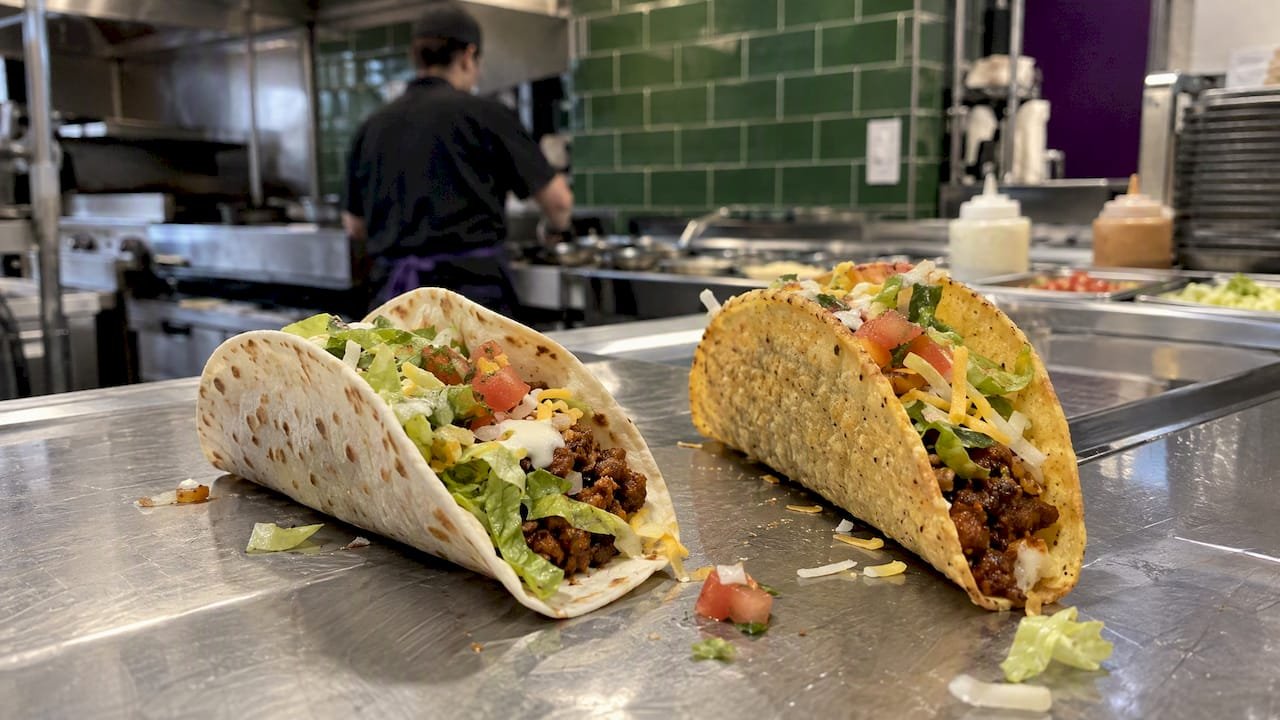
Soft tacos are the traditional choice. They use a pliable tortilla that you fold around the filling, and they suit juicy, slow-cooked meats best. Hard tacos use a crisp, fried U-shaped shell. They are an easy, crunchy match for ground meat and cold toppings, but they crack easily. Neither is automatically healthier. Frying, fillings and portion size matter more than the shell. Below is how to choose, and how to get the best from either.
TL;DR
- Soft tacos are the traditional style in Mexico. Northern states serve flour or corn tortillas, and southern states serve corn.
- Hard shells give crunch but tend to crack and shed crumbs. Soft shells fold and hold together.
- Choose soft for braised or grilled meats and fish. Choose hard for seasoned ground meat and crisp, cool toppings.
- Neither format wins on health. Baking instead of deep-frying, lean or plant-based fillings, vegetables and sensible portions make the difference.
- A third option exists: tacos dorados, filled soft tortillas that are crisped afterwards and are crunchy without being brittle.
Table of Contents
- The real difference between hard and soft tacos
- Where hard and soft tacos come from
- Which fillings suit which shell
- The best of both: tacos dorados
- Are soft or hard tacos healthier?
- How to choose: a quick decision guide
- Our perspective on shells
- Order soft tacos made fresh in Winnipeg
- Making tacos at home: keeping either shell at its best
- FAQ
- Sources
The real difference between hard and soft tacos
It starts with the tortilla and what happens to it.
A soft taco uses a tortilla that is simply cooked on a hot surface. It stays flexible. You can make it from corn or from wheat flour, and it wraps the filling like a blanket. A hard taco starts as a corn tortilla too, but it is fried and shaped so it stays rigid. America’s Test Kitchen notes that corn tortillas can be fried into U-shaped shells, the kind most of us picture when we think of a boxed taco kit.
That single step, frying and setting the shape, explains almost everything else:
| Soft taco | Hard taco | |
|---|---|---|
| Tortilla | Corn or flour, cooked flat and kept flexible | Corn, fried into a rigid U shape |
| Texture | Tender, chewy, slightly absorbent | Crunchy, brittle |
| Eating | Fold and hold, or eat with two hands | Hold upright, expect some breakage |
| Best with | Braised, grilled or shredded meats, fish, roasted vegetables | Seasoned ground meat, crisp lettuce, cold toppings |
| Flavour | The tortilla contributes its own taste | The shell tastes mostly of toasted, fried corn |
| Tradition | Common across Mexico | A North American style |
Taste and texture
Soft corn tortillas carry their own flavour, and they quietly soak up what you put in them. Texas Monthly’s 2022 comparison describes them absorbing fillings such as al pastor, barbacoa, steak with rajas, or shrimp with chile. That is why a good soft taco tastes like one blended bite rather than a shell plus a filling.
A hard shell works the other way. The crunch is the point. You get contrast: crisp outside, warm and savoury inside, cool and fresh on top. The same Texas Monthly piece frames crispy tacos as a comforting North American Tex-Mex tradition, while soft tortillas often show off the filling and where it comes from more clearly.
How well each holds fillings
This is where the shells really split. The Queen’s Journal’s point/counterpoint describes soft shells as foldable and cohesive, while hard shells tend to crack, shed crumbs and make fillings harder to contain. Anyone who has watched half a taco land on a plate knows the feeling.
Soft tortillas have their own weak spot. If a filling is very wet and the tortilla is thin, it can go soggy or tear. Two tortillas stacked together, a habit you will see at many taquerías, solve that. So does draining or reducing a saucy filling before you serve it.
Where hard and soft tacos come from
If you grew up in Canada eating tacos from a kit, you may think hard shells are the default. They are not, at least not in Mexico.
The University of Wyoming Extension’s handout on authentic tacos says traditional Mexican tacos use soft tortillas. Northern Mexican states offer soft flour or corn tortillas, while southern states serve soft corn tortillas. The hard-shell taco familiar in North America was invented in 1949 and helped spread an Americanized version.
That does not make hard shells wrong. It makes them a different dish with a different history. Plenty of people love them for exactly the reasons they are not traditional: the crunch, the nostalgia, the Tuesday-night ease. If you want to see how the two styles differ in more detail, our guide to street tacos lays out street tacos versus Americanised ones.
Which fillings suit which shell
Matching filling to shell is the quickest way to a better taco.
Best in soft tacos
Slow-cooked and grilled proteins belong in a soft tortilla. The Wyoming Extension handout lists seafood, carnitas, carne asada, barbacoa and roasted-vegetable tacos among the common styles. Allrecipes’ taco guide adds that soft corn tortillas are traditional for fish tacos and street tacos and pair well with grilled meats.
The toppings are simple too. The same handout names lime, onions, cilantro, pico de gallo, radishes or cucumbers, avocado and chilli peppers as standard. It also notes that authentic Mexican tacos are rarely topped with shredded cheese. If you like a lot of cheese, that is a point in the hard-shell column, or at least a reason to order a quesadilla instead. We compare the two in Quesadilla vs Taco.
Best in hard tacos
Allrecipes’ guide says hard corn shells work well with ground meats and warm, wetter fillings. Think seasoned ground beef or turkey, refried beans, or a spiced lentil mix. Add shredded lettuce, diced tomato and a little cheese just before serving so the shell stays crisp.
A few practical rules for hard shells:
- Warm the shells briefly in the oven so they taste fresh rather than stale.
- Fill them from the bottom up, with the heavy, warm filling first and the light toppings last.
- Use thick or well-drained salsa. A runny one turns the shell soft within minutes.
- Serve them upright in a baking dish or taco holder so they do not tip.
The best of both: tacos dorados
You do not have to pick a side. America’s Test Kitchen’s tacos dorados use filled, folded soft corn tortillas that become crisp on the flat sides but stay flexible at the spine. The same piece reports that filling the tortillas before frying can produce hard tacos that are crisp yet flexible and less likely to split than prefabricated shells.
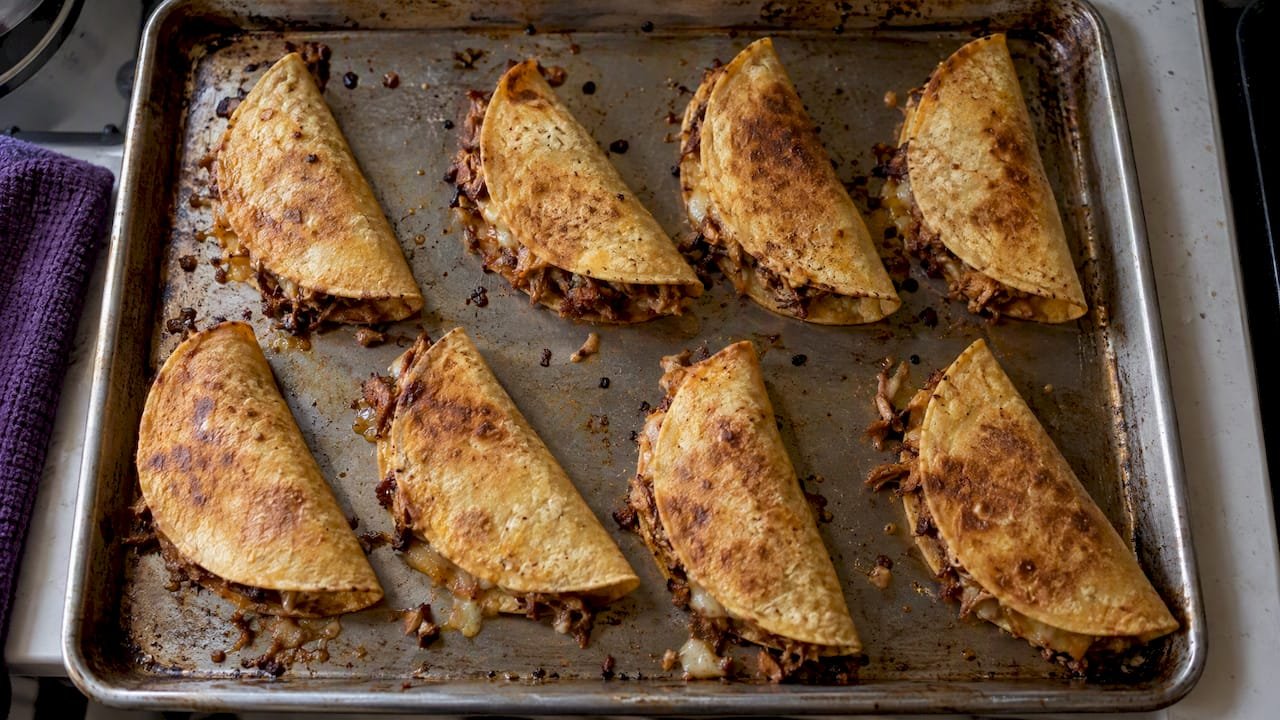
If you cook at home, this is worth trying. You get crunch and a taco that stays in one piece. Bake instead of fry if you want a lighter version.
What about a taco with both shells?
Yes, that exists. A double-decker taco wraps a crisp hard shell and its filling in a soft flour tortilla. Allrecipes’ double-decker version spreads the soft tortilla with refried beans, which acts as glue. It is a fun, filling option for a casual dinner, though it is closer to a North American invention than to a street taco.
Are soft or hard tacos healthier?
Neither format is automatically healthier. Healthline’s 2021 guidance favours corn or whole-wheat tortillas, baked rather than deep-fried shells, lean or plant-based fillings, vegetables and moderate portions. It also warns that fried ingredients and calorie-dense toppings can raise calories, fat and salt. Taco nutrition varies with ingredients, and reasonable portion sizes can help keep tacos lower in calories, fat and salt.
So the useful questions are not “hard or soft?” but these:
- How was the shell cooked? A deep-fried shell absorbs oil. A baked shell or a simply griddled tortilla does not.
- What is inside? Grilled chicken, fish, beans and roasted vegetables are different from heavily fried or creamy fillings.
- How much cheese, sour cream and sauce goes on? Toppings can add up faster than the tortilla does.
- How many tacos make a meal? Two or three filled with vegetables and protein are a different meal than five loaded ones.
If you watch your sodium, the seasoning and sauces matter at least as much as the shell. Our note on ordering Mexican food with no added salt shows how to ask for that at the counter.
How to choose: a quick decision guide
Pick soft if:
- Your filling is braised, grilled, shredded or seafood.
- You want a taco that is easy to eat without it falling apart.
- You like to taste the tortilla, especially one pressed fresh.
- You prefer a more traditional Mexican style.
Pick hard if:
- You want crunch above all else.
- You are making seasoned ground meat or bean tacos for a crowd.
- You are serving kids who enjoy an interactive build-your-own dinner.
- You like loading on cold, crisp toppings.
Pick tacos dorados or a double-decker if you cannot decide, or if you want crunch that does not shatter at the first bite.
Our perspective on shells
We press our tortillas in the kitchen with 100% Manitoba-produced flour, and we run a deep-fryer-free kitchen. That shapes how we think about this debate.
When the shell is fresh, warm and pliable, it is part of the taco rather than a container for it. A soft tortilla lets our slow-cooked carnitas, barbacoa and adobo chicken, all hand-pulled in-house, be the main event. It also lets seasonal items like our Manitoba whitefish or pickerel tacos taste of the fish, not of the fryer.
We do not look down on crunch. We just get ours from fresh toppings, crisp vegetables and house salsas instead of a deep-fried shell. If you love the sound of a hard taco, you can build the same contrast on a soft one: pickled onions, radish, cabbage, a squeeze of lime. For more on what makes a street-style taco work, see how street tacos are made.
Our rule of thumb is simple: let the filling pick the shell, and never let the shell be the most expensive-tasting thing on the plate.
— Austin
Order soft tacos made fresh in Winnipeg
If you want to taste the difference a fresh tortilla makes, our tacos are built on house-pressed tortillas, with proteins slow-cooked and hand-pulled in-house and local Manitoba ingredients wherever we can. We also cater for offices, families and events who want a taco and burrito spread. See the full menu for tacos, burritos, bowls, quesadillas and salads, with gluten-free, vegan, vegetarian, keto and paleo options.
Planning a group meal? Our catering options include Burrito Express, Burrito Express Deluxe and the Bueno Burrito Bar. Check the page for current pricing and fees.
Making tacos at home: keeping either shell at its best
A few habits make a bigger difference than the shell you choose.
Soft tortillas
Heat them on a dry skillet or griddle until they puff slightly and pick up a few brown spots. Keep them wrapped in a clean tea towel so they stay warm and flexible. Cold, stiff tortillas crack and taste dull. Our home-cook guide to choosing tortillas and ingredients goes through the options.
Hard shells
Treat them gently. Open the box carefully, warm them, and fill them as late as you can. If you buy shells in a kit, a quick bake is better than eating them straight from the box.
Salsa and assembly
The sauce can rescue or sink either style. Chunky pico de gallo suits a hard shell, since it adds little moisture. A looser salsa verde or roja is happier on a soft tortilla. Our guides on assembly and toppings and the role of salsas in Mexican food help you pair them.
Leftovers
Shells and fillings need different heat, so store them separately and rewarm each on its own. Our guide to reheating tacos explains how, for both crisp and soft styles.
FAQ
Why do restaurants use two tortillas for tacos?
A double layer adds strength. Juicy fillings can soak through a single thin tortilla and tear it, so a second one keeps the taco intact and easier to hold. It is common with street-style tacos, which are small, loaded and eaten by hand.
Are soft or hard shell tacos healthier?
Neither is automatically healthier. Healthline’s guidance favours baked rather than deep-fried shells, lean or plant-based fillings, plenty of vegetables and moderate portions. Fried ingredients and heavy toppings are what add calories, fat and salt, so look at the whole taco, not just the shell.
What kind of tortillas do Mexicans prefer?
It depends on the region. According to the University of Wyoming Extension, northern Mexican states offer soft flour or corn tortillas, and southern states serve soft corn tortillas. Traditional tacos in Mexico are soft, not hard-shelled.
What do you call a taco with a hard and soft shell?
Many menus call it a double-decker taco. A crisp hard shell with its filling is wrapped in a soft flour tortilla, often spread with refried beans to hold the layers together. It is different from tacos dorados, which crisp a single filled tortilla.
Are hard shell tacos authentic?
Not in the traditional Mexican sense. The hard-shell taco familiar in North America dates to 1949 and became part of an Americanized style. They are still a legitimate, well-loved way to eat tacos here, just a different tradition.
Sources
- How to Make Tacos Dorados, America’s Test Kitchen
- Soft Or Crispy Tacos? The Great Hard-shell Taco Debate, Texas Monthly
- Point/counterpoint: Hard shell vs soft shell tacos, The Queen’s Journal
- What Makes an Authentic Taco, University of Wyoming Extension
- How to Make Tacos at Home, Allrecipes
- Double Decker Tacos Recipe, Allrecipes
- Are Tacos Healthy? Ingredients, Calories, and Serving Sizes, Healthline