Plated catering means guests sit down and servers bring each person a finished plate. Buffet catering means guests walk up to food stations and serve themselves. Plated feels formal and controlled, and it usually costs more per guest because it needs more staff. Buffet feels relaxed, gives people choice, and tends to be easier on the budget. Which one is right depends on your guest count, your room, your schedule and the mood you want. This guide walks through each factor, with the food safety rules that apply in Manitoba and Canada.
TL;DR
- Plated suits formal, seated, speech-heavy evenings with a fixed schedule. Buffet suits mixed crowds, longer mingling and events where choice matters.
- Plated usually costs more per person because of labour and serviceware, but it gives tight portion control. A buffet can look cheaper until you count food waste and extra stations.
- Dietary needs are easy to handle in both styles if you collect them early. Plated lets you label every plate. A buffet needs clear signage and separate serving tools.
- Hot food must stay hot and cold food cold, whichever style you pick. Ask any caterer how they will do that in your venue.
- Compare fully itemized quotes for both styles before you decide.
Table of Contents
- What actually separates buffet from plated service
- What type of food works on a buffet?
- Cost: which is cheaper, plated or buffet?
- Staffing, timing and lines
- Dietary needs and food preferences
- Food safety: what to confirm before you book
- Which style suits which event?
- Our perspective
- Ordering buffet-style catering from Burrito Splendido
- A simple way to decide
- FAQ
- Sources
What actually separates buffet from plated service
The two styles differ in who does the work at the moment of eating.
In plated service, the kitchen portions every dish. Servers deliver courses to guests who stay seated, usually table by table. Guests typically choose their entrée in advance, often on the RSVP, so the kitchen knows exactly how many of each to make.
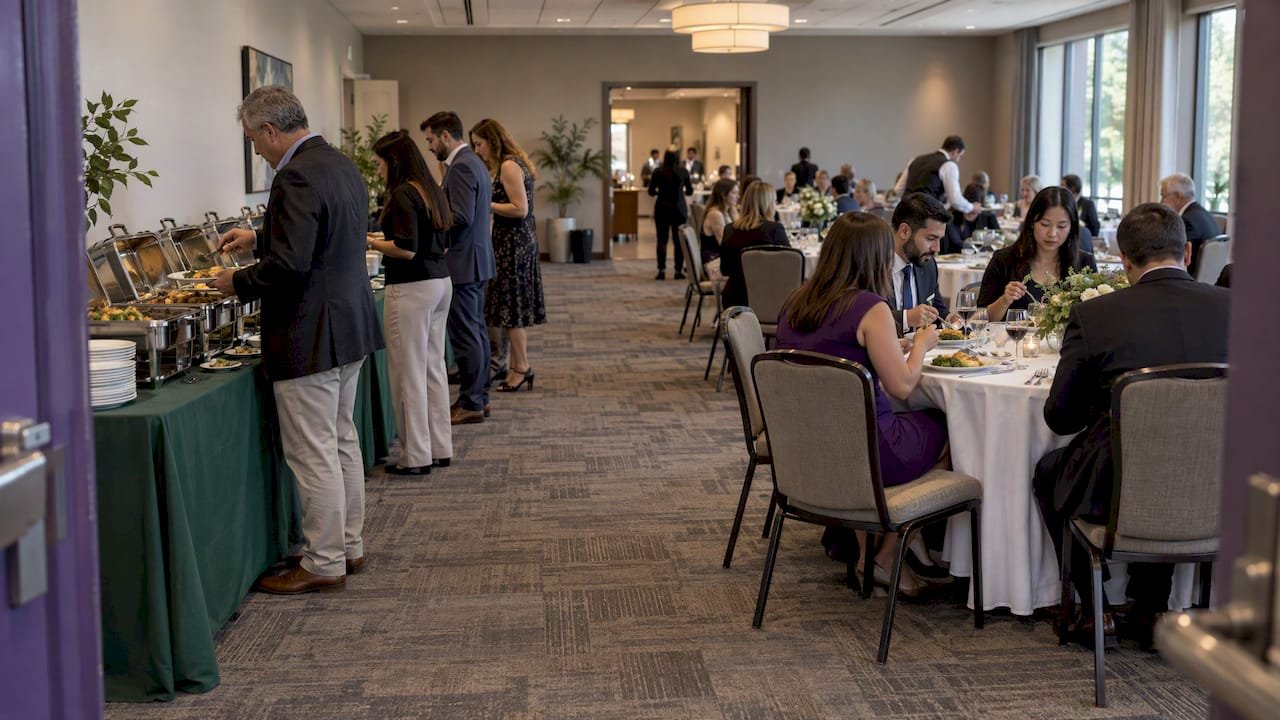
In buffet service, the kitchen sets out food in warming trays, chafers or cold displays, and guests build their own plate. Tables are usually released a few at a time to keep the line short. Guests decide portions and combinations themselves.
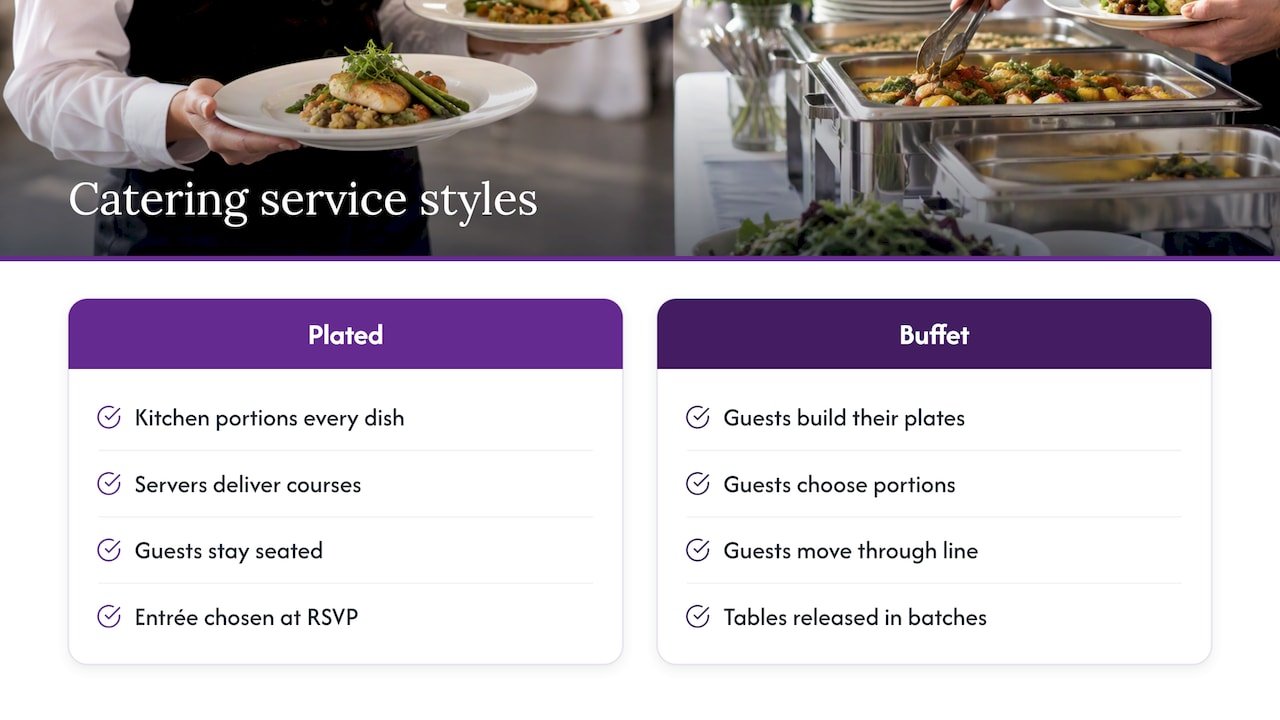
A company that runs events in Canada describes the experience difference simply: plated service is a formal, structured experience where guests stay seated, while buffets are interactive and casual and let people mingle. That matches what most planners see on the day. A plated dinner makes the meal a scheduled part of the programme. A buffet makes it something guests move through at their own pace.
There are also in-between formats. Family-style service puts shared platters on each table. Food stations spread dishes around the room, each with its own theme. If you want a sit-down feel without the cost of fully plated courses, these are worth asking about. For a closer look at one buffet format, see our guide to types of Mexican buffet options for every event.
What type of food works on a buffet?
Buffet food is anything that holds well and that guests can portion themselves. That points to a few reliable categories:
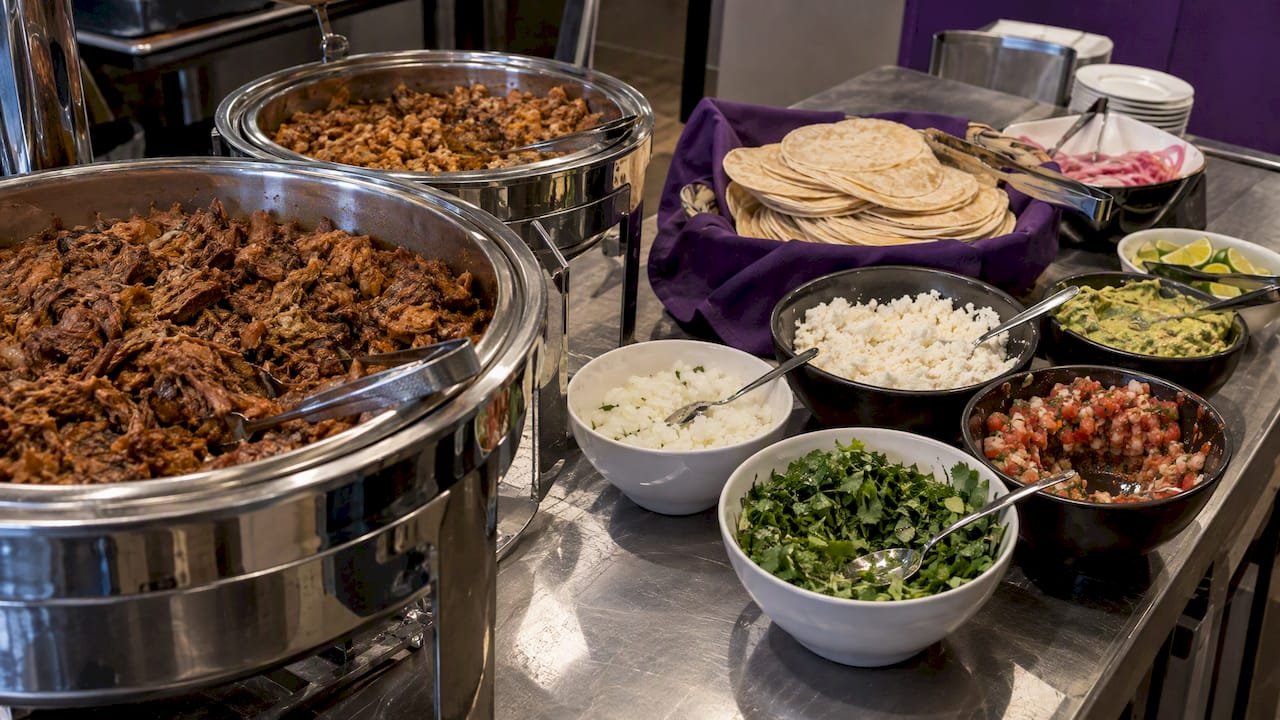
- Braised and slow-cooked proteins. Pulled pork, shredded beef and stewed chicken stay moist in a warming tray for the length of service.
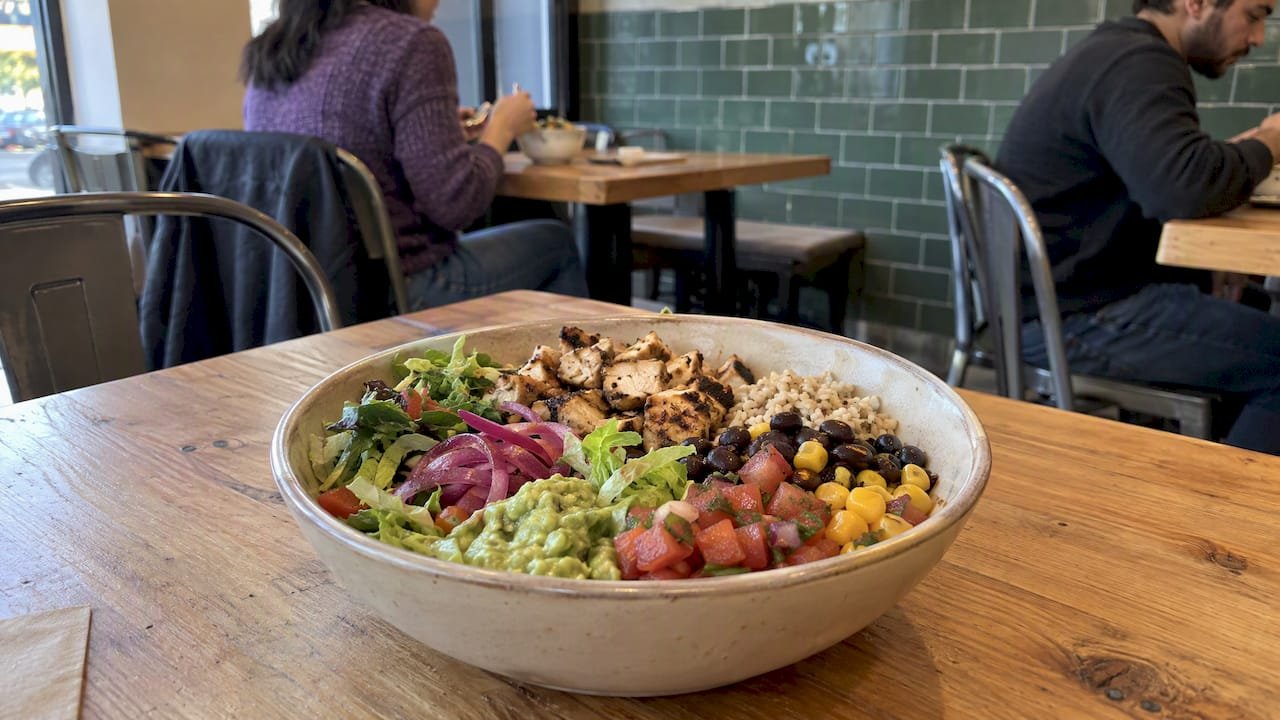
- Build-your-own formats. Taco, burrito and bowl bars let each guest pick a base, a protein and toppings. They are naturally flexible for different diets.
- Rice, beans, roasted vegetables and grain salads. These are forgiving and cheap to scale.
- Cold salads and salsas. These work well if they can be kept chilled.
What works poorly are delicate items that wilt, go soggy or overcook under heat: thin-cut steaks cooked to order, crisp fried items, and anything with a sauce that splits. Those are better plated, where the kitchen controls the last minute before service.
Mexican-style menus are a natural fit for buffets, because the food was built to be assembled by the eater. Braised meats, warm tortillas and a row of toppings need no plating skill, and every guest ends up with a meal made to their own taste.
Cost: which is cheaper, plated or buffet?
Buffet is usually cheaper per person, but the gap is smaller than most people expect, and it depends on what you count.
One 2026 catering guide gives a rough picture: buffet catering generally runs $45 to $95 per person, while plated dinners often start around $90 and can reach $175 or more. Treat these as ballpark planning figures, not quotes. Prices vary by city, menu, season and venue, and the same guide notes its cost data comes from 2024.
Why plated costs more:
- More staff. Every table needs servers moving in coordination, and the kitchen needs extra hands to plate quickly while food is hot.
- More serviceware. Each guest needs a plate per course, plus the cutlery and glassware that go with it.
- More planning. Entrée choices have to be collected, counted and matched to seats.
Why buffet can cost more than it looks:
- Food quantity. Hosts normally order more food than a plated dinner needs so the last guests in line do not find empty trays. Sources differ on how this nets out. One analysis argues that plated efficiency comes from precise portion control and less waste, while a buffet’s apparent savings come from needing fewer service staff.
- Extra stations. A large group needs more than one line to avoid long waits, and each line needs equipment and a person.
Read the quote line by line
The fairest comparison is two fully itemized quotes for the same event. The advice is consistent: decide on guest experience and logistics first and treat cost as the tiebreaker. Ask each quote to show the following as separate lines:
- Food per person
- Staff and their hours
- Delivery and set-up
- Rentals, such as chafing dishes, plates and linens
- Service charge or gratuity
- Taxes
The last four are where two similar-looking quotes drift apart.
How we price catering
We publish our catering packages so you can budget early. Burrito Express is $1,050 to $1,150, and Burrito Express Deluxe is $1,550. Delivery and set-up is $20, catering staff are $15 per hour per staff member, and gratuity is 10%. The Bueno Burrito Bar is also listed on our catering page, where you can see current details for each package.
Staffing, timing and lines
This is where the two styles feel most different on the day.
Plated timing is predictable but rigid. Courses arrive in sequence, so the whole room eats at about the same time. That suits an evening with speeches, a toast or a slideshow between courses. The catch is that if the schedule slips, the kitchen has finished plates sitting under lids.
Buffet timing is flexible but depends on line management. Guests eat when they are ready, which suits a long cocktail hour or a casual afternoon. The risk is the line. If you release one table at a time and set up two sides of the buffet, a large group moves smoothly. If you open the line to everyone at once, you get a queue, and the guests at the back eat last and often cold.
A few practical habits help a buffet:
- Double-sided or multiple stations for groups beyond a modest size.
- Releasing tables in waves, with a host or the caterer’s staff signalling each wave.
- Putting plates at the start, cutlery and napkins at the end, so hands are free while loading plates.
- Placing drinks on separate tables so the food line does not stall.
A few habits help a plated dinner:
- Collect entrée choices early and mark them on place cards or tickets.
- Tell the caterer about speeches and their timing so the kitchen can pace courses.
- Confirm the venue has a space where plates can be finished and held.
Staffing costs follow from this. Plated needs the most service staff, because servers are doing the entire job. A buffet can run with fewer servers, though you still need people to refill trays, replace serving tools and clear plates.
Dietary needs and food preferences
Both formats can serve guests with allergies, vegan diets or religious restrictions. The difference is how.
Plated handles special diets cleanly if you plan ahead. Each guest’s entrée is chosen in advance, so a gluten-free, vegan or allergy plate can be prepared separately and delivered to the right person. A good benchmark is what large institutions ask for. Simon Fraser University’s Vancouver campus catering tender, for example, requires meals for guests with allergies to be prepared separately, labelled with the guest’s name and provided at no extra charge. You can ask any caterer for the same standard at your own event.
Buffet gives guests the freedom to choose for themselves, which is a real benefit when your list includes vegetarian, keto, gluten-free and no-restriction eaters at the same table. The risks are cross-contact from shared spoons and unclear labelling. Ask for:
- Signs on every dish naming it and its main allergens
- A separate serving tool for each dish
- A way for guests with serious allergies to be served first, from fresh trays
A build-your-own format is especially forgiving. When guests assemble their own plates from labelled components, one spread covers many diets. Our guide on how to customize a catering menu for any event goes through how to build that kind of menu.
Whichever style you choose, put a dietary question on your invitation or RSVP and send the list to the caterer well ahead. Anyone with a severe allergy should also be encouraged to speak to the caterer directly.
Food safety: what to confirm before you book
Food safety matters more at a buffet, because food sits out for longer and many hands touch the same serving utensils. Plated food is served straight from the kitchen, though it still has to be held at safe temperatures before it goes out.
Health Canada’s guidance for gatherings is clear on the basics: hot foods should be kept hot and cold foods cold, food left at room temperature for more than two hours should be discarded, and every dish, finger foods included, should have its own serving spoon or tongs.
In Manitoba, the rule has numbers attached. The provincial Food and Food Handling Establishments Regulation requires potentially hazardous foods to be kept at an internal temperature of no higher than 5°C or no lower than 60°C, except during preparation.
Also check who is cooking. Manitoba does not allow food prepared in a home-based business to be served to the public, apart from certain non-hazardous foods at specified markets or sales. Public food facilities need a commercial kitchen and a health permit. When you hire a caterer for a public or paid event, confirm they operate from a licensed kitchen.
Questions to ask every caterer, buffet or plated:
- How will you keep hot food above 60°C and cold food below 5°C for the whole service?
- What equipment do you bring, and does the venue need to supply power?
- How long will each dish be out, and when is it replaced or removed?
- How do you label allergens and prevent cross-contact?
- Who handles setup, refills and clean-up, and for how many hours?
Which style suits which event?
The most useful way to choose is to match the style to the event, not to a general ranking.
| Situation | Better fit | Why |
|---|---|---|
| Formal wedding or gala with speeches | Plated | Controlled timing, seated guests, formal feel |
| Casual wedding or reception with mingling | Buffet or stations | Relaxed mood, guests move around |
| Corporate lunch or training day | Buffet or boxed meals | Quick service, choice, easy for dietary needs |
| Large group in a space with little room | Plated or family-style | No lines, no extra tables |
| Mixed ages and tastes (family reunion, community event) | Buffet | Everyone picks their own portions |
| Tight, fixed programme | Plated | Meal times are predictable |
| Tight budget with flexible schedule | Buffet | Fewer service staff needed |
Guest count and venue
Small groups can do either. Very large groups strain both: plated needs a big team to serve everyone while the food is hot, and a buffet needs several lines. Look at your room as well. A buffet needs space for tables, a queue and a flow that does not cross the dance floor or the bar. A plated dinner needs round or banquet tables with enough room for servers to pass.
Formality and mood
Plated says dinner party. Buffet says relaxed celebration. Neither is better. A buffet done well, with warm tortillas pressed fresh and a thoughtful spread, can feel generous and festive. A plated dinner done badly feels stiff and slow.
For corporate planning, our corporate catering checklist covers headcounts, timing and approvals, and our step by step catering guide lays out the whole process from first call to clean-up.
Our perspective
We are a from-scratch kitchen in Manitoba, and that shapes how we see this question. Our tortillas are pressed with Manitoba flour, our carnitas, barbacoa and adobo chicken are slow-cooked and hand-pulled in-house, and we do not run a deep fryer. Food like that is built for a self-serve format: it holds well, it is easy to portion, and it lets every guest build the plate they want.
That is why most of the catering we do is buffet-style or build-your-own. A spread of braised proteins, fresh toppings and house salsas lets the vegan, the keto eater, the gluten-free guest and the person who wants everything share one table without anyone ordering something separate. Our staff are trained to handle dietary needs and cross-contamination concerns, and we would rather you tell us about them early than discover them on the day.
We will not tell you a buffet is right for every event. If you are hosting a formal seated dinner with speeches between courses, a plated meal may suit the evening better, and you should choose the format that fits your guests. If you are feeding a mixed crowd, a team, or a family that spans three generations, a buffet with real choice tends to leave people happier, and food that is cooked fresh and kept at the right temperature does most of the work.
— Austin
Ordering buffet-style catering from Burrito Splendido
If a relaxed, self-serve spread fits your event, our catering packages are built for it. We offer Burrito Express, Burrito Express Deluxe and the Bueno Burrito Bar, with delivery, set-up and staff available for an extra fee. Browse the options and current details on our catering page, or look through the full menu to see what we cook every day.
If you are planning for a workplace, our article on corporate catering ideas Winnipeg planners can order today shows how teams usually order.
A simple way to decide
Work through these questions in order. Stop at the first one that gives a clear answer.
- Is the schedule fixed, with speeches or a programme? If yes, lean plated.
- Is your guest list mixed, with several dietary needs? If yes, lean buffet or build-your-own.
- Is the room small or awkward? Plated or family-style avoids queues.
- Is the budget the hard limit? Get itemized quotes for both and compare staff, rentals and gratuity, not just the food line.
- Do you want guests mingling? Choose buffet or stations.
If you are still unsure, ask your caterer which format their kitchen does best. Food made for a style almost always beats food forced into one.
FAQ
What is cheaper, plated dinner or buffet?
Buffet is usually cheaper per person because it needs fewer servers and less serviceware. One 2026 guide puts buffets at roughly $45 to $95 per person and plated dinners from about $90 upward. Waste and extra stations can narrow the gap, so compare itemized quotes for both.
What type of food is a buffet?
A buffet is a self-serve meal where several dishes are set out and guests build their own plate. Foods that hold well, such as braised meats, rice, beans, roasted vegetables and salads, work best. Build-your-own taco or burrito bars are a common example.
Do buffets handle dietary restrictions as well as plated dinners?
Yes, if you plan for it. A plated dinner lets the caterer prepare and label each special meal in advance. A buffet needs clear labels, separate serving tools for each dish and a plan for guests with serious allergies. In both cases, send the dietary list to the caterer early.
How do I keep buffet food safe?
Keep hot food hot and cold food cold, and discard food that has been out at room temperature for more than two hours, as Health Canada advises. Provide a separate serving spoon or tongs for every dish. In Manitoba, potentially hazardous food must be held at 5°C or colder, or 60°C or hotter.
Can I mix both styles?
Yes. Many hosts choose a plated first course followed by a buffet or stations for the main meal, or family-style tables to get a sit-down feel without full plated service. Ask your caterer what they can do well with their kitchen and staff.
Sources
- Buffet vs Plated Catering: Cost and Service Compared
- Buffet Vs. Plated Dinner: Which Option Saves You More
- Dining styles explained
- Catering Services for SFU Vancouver Campus, tender notice
- Holiday food safety, Health Canada
- Food and Food Handling Establishments Regulation, Manitoba
- Notice to Home-Based Food Businesses, Province of Manitoba