Adobo chicken is defined as a Filipino dish where chicken is braised in a mixture of soy sauce, vinegar, garlic, bay leaves, and peppercorns to produce a deeply savoury, tangy, and tender result. Recognised as the Philippines’ national dish, Filipino adobo is not a sauce or a spice blend. It is a cooking method. The word “adobo” describes the act of braising meat in an acidic liquid until the flavours concentrate and the meat becomes fall-off-the-bone tender. For home cooks, this dish is one of the most forgiving and rewarding recipes in any cuisine.
What is adobo chicken made of?
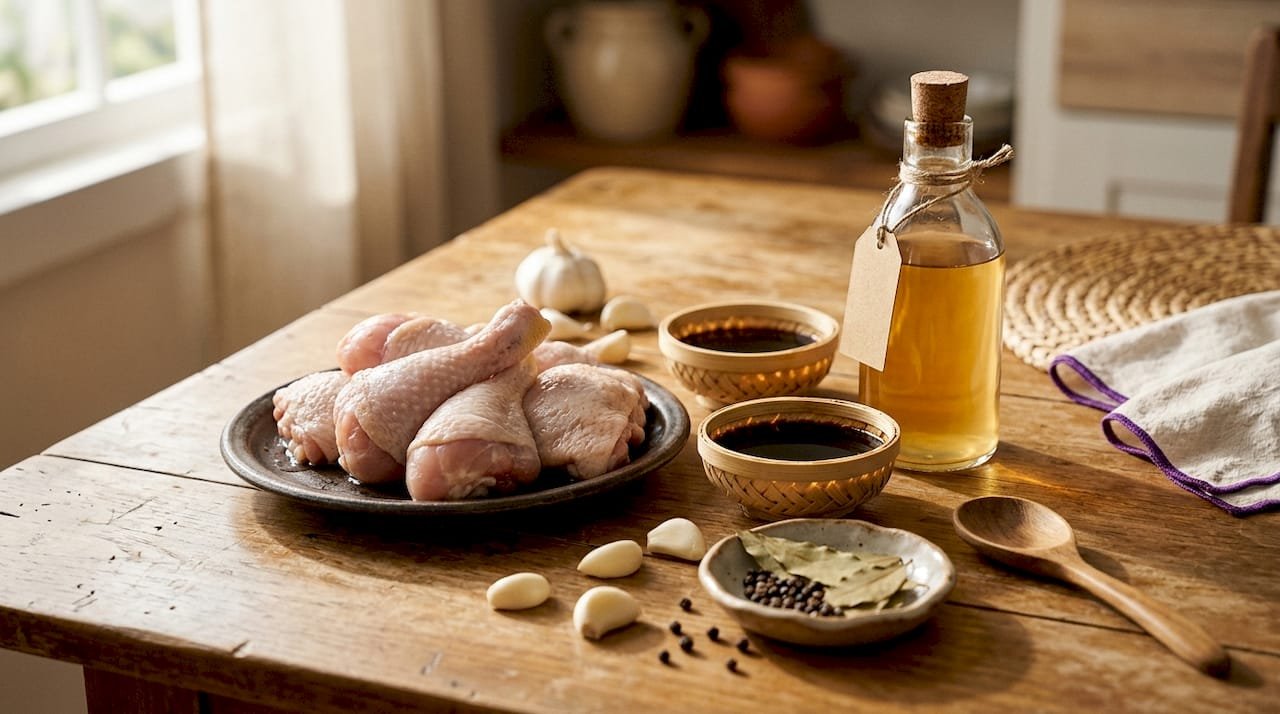
The core ingredients for adobo chicken are chicken pieces, soy sauce, white or cane vinegar, garlic, bay leaves, and whole black peppercorns. Each ingredient plays a specific role. Soy sauce delivers saltiness and umami depth. Vinegar provides acidity that both flavours the dish and acts as a natural preservative. Garlic adds aromatic richness, while bay leaves and peppercorns contribute a subtle, earthy warmth.
One point that confuses many Western home cooks: Filipino adobo differs fundamentally from Mexican adobo. Mexican adobo is a smoky chili paste used as a marinade or sauce. Filipino adobo is a clear, soy-vinegar braise with aromatics. The two share a name but nothing else in technique or flavour.
Optional additions include a small amount of palm sugar or brown sugar to soften the sharpness of the vinegar. Some cooks add coconut milk for a creamier, milder version popular in certain Philippine regions.
Vinegar types and their flavour impact
| Vinegar type | Flavour profile | Best use |
|---|---|---|
| Cane vinegar | Mild, slightly sweet | Traditional Filipino adobo |
| Coconut vinegar | Tangy, earthy | Regional southern Philippine variations |
| Apple cider vinegar | Fruity, sharp | Widely available substitute |
| White distilled vinegar | Sharp, neutral | Budget option; use sparingly |
Cane vinegar is the most traditional choice. Apple cider vinegar works well as a substitute and is easy to find across Canada.
Key ingredients at a glance:
- Bone-in, skin-on chicken thighs or drumsticks (preferred for juiciness)
- ½ cup soy sauce
- ½ cup vinegar (cane, coconut, or apple cider)
- 6–8 garlic cloves, crushed
- 3–4 bay leaves
- 1 teaspoon whole black peppercorns
- 1 tablespoon sugar (optional)
How is adobo chicken traditionally prepared?
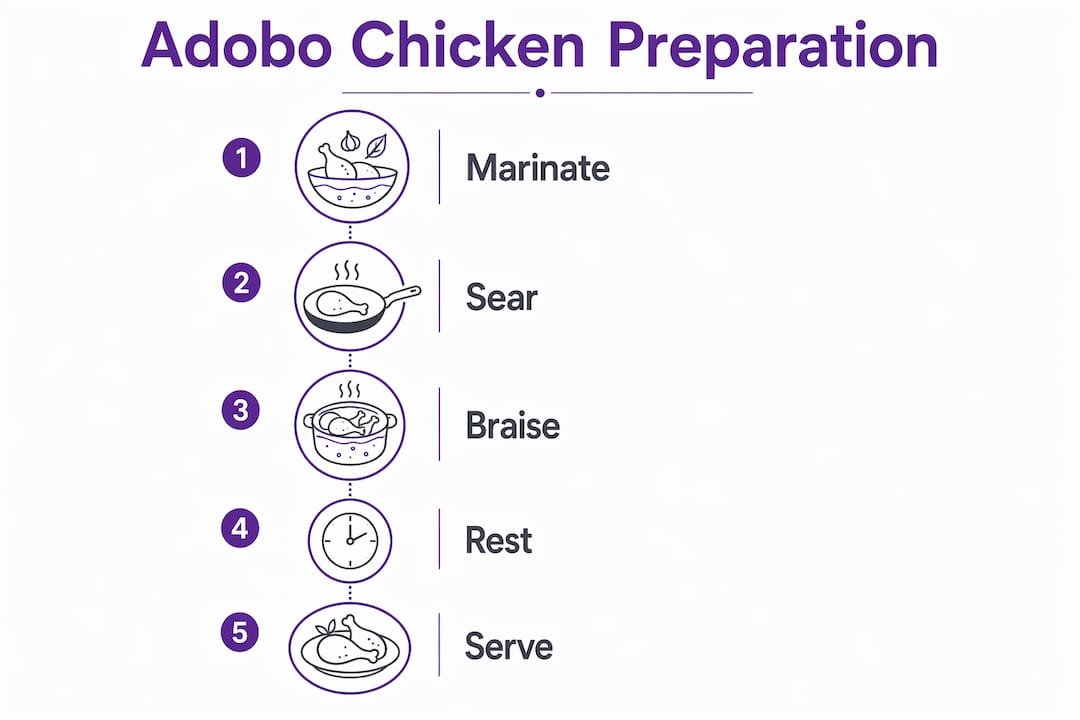
Traditional adobo chicken preparation follows a clear sequence: marinate, sear, braise, and finish. Preparation time runs 45–60 minutes, not counting marination, which can range from one hour to overnight. Longer marination deepens the flavour considerably.
Bone-in, skin-on chicken is the preferred cut for traditional adobo. The bones add body to the braising liquid, and the skin crisps up beautifully at the end. Boneless cuts are a faster option. Boneless pieces cook in roughly 10–15 minutes of braising time, while bone-in cuts need longer to reach full tenderness.
Step-by-step preparation:
- Combine soy sauce, vinegar, garlic, bay leaves, and peppercorns in a bowl. Reserve half this mixture for braising. Use the other half to marinate the chicken for at least one hour in the refrigerator.
- Remove chicken from the marinade and pat dry with paper towels. Discard the used marinade. Never cook raw chicken in marinade that has already been in contact with raw meat, as this is a food safety concern.
- Heat oil in a heavy-bottomed pan or Dutch oven over medium-high heat. Sear the chicken pieces for about two minutes per side until golden brown. This step renders fat from the skin and builds flavour through browning.
- Pour the reserved fresh marinade over the seared chicken. Add a splash of water if needed to partially submerge the pieces.
- Add vinegar to the pot. Let it come to a boil without stirring for 2–3 minutes. Boiling vinegar undisturbed allows the sharp acidity to mellow. Stirring immediately produces a harsh, unbalanced sauce.
- Reduce heat to low. Cover and simmer for 25–35 minutes, turning chicken halfway through, until the meat is cooked through and tender.
- Uncover the pot and increase heat to reduce the sauce to a glossy, concentrated consistency.
- For crisp skin, transfer chicken pieces to a baking sheet and broil at high heat for 3–5 minutes. This “boil then broil” technique produces tender meat with textured skin.
Pro Tip: Reserve a separate, untouched portion of your marinade before adding the chicken. Use only this reserved portion as your braising liquid. This keeps the sauce clean and safe.
This method mirrors the same slow-cooking philosophy behind dishes like braised barbacoa, where patience and low heat transform tough cuts into something remarkable.
What flavour profile defines Filipino adobo chicken?
Filipino adobo chicken is defined by three flavour pillars: saltiness from soy sauce, acidity from vinegar, and a subtle sweetness that ties the two together. The standard ratio is ½ cup soy sauce to ½ cup vinegar for four servings, with roughly one tablespoon of sugar to round out the sharpness. This balance is the heart of the dish.
Getting the balance right takes one or two attempts. The most common mistake is adding too much soy sauce, which makes the dish overwhelmingly salty. The second most common mistake is using too much vinegar without allowing it to cook down, which leaves a harsh, raw acidic taste.
Ways to adjust and personalise the flavour:
- Too salty: Add a splash more vinegar or a small amount of water to dilute.
- Too sharp or sour: Add sugar in small increments, or use coconut vinegar instead of white distilled vinegar.
- Too mild: Increase garlic or add a pinch of ground black pepper at the end.
- Richer flavour: Add a tablespoon of oyster sauce or a small amount of coconut milk.
Regional variations across the Philippines reflect local preferences. Northern regions tend toward a saltier, darker adobo. Southern regions often use coconut milk for a gentler, creamier result. Some cooks add potatoes or hard-boiled eggs to the braise, which absorb the sauce beautifully.
Pro Tip: Taste the braising liquid before adding the chicken. Adjust salt and acidity at this stage. Once the chicken is in, the flavours concentrate and corrections become harder to make.
For home cooks who want to practise flavour balancing techniques across different cuisines, the principles used in adobo apply broadly to any braised dish.
How to serve adobo chicken and make the most of leftovers
Steamed white rice is the traditional and ideal accompaniment for adobo chicken. The rice absorbs the braising sauce, which is intensely savoury and slightly sticky after reduction. This combination is the backbone of everyday Filipino home cooking.
Adobo chicken often tastes better the next day. As the meat rests in the sauce overnight, it absorbs more of the savoury and tangy liquid. The vinegar and soy sauce also act as natural preservatives, extending the dish’s shelf life safely in the refrigerator for up to four days.
Serving and storage ideas:
- Serve over steamed jasmine or short-grain rice with a side of sautéed greens such as bok choy or spinach.
- Shred leftover adobo chicken and use it as a filling for tacos, wraps, or rice bowls.
- Reheat gently on the stovetop with a small splash of water to loosen the sauce. Avoid the microwave if you want to preserve the skin’s texture.
- Freeze portions of adobo chicken in the braising sauce for up to two months. The sauce protects the meat during freezing.
- Use the concentrated braising sauce as a flavour base for fried rice the next morning.
Adobo chicken is one of the best dishes for meal prep planning. It scales easily, stores well, and actually improves with time. Few dishes can claim all three.
Key takeaways
Filipino adobo chicken is the most forgiving braised dish a home cook can master, requiring only five core ingredients and one reliable technique to produce consistently excellent results.
| Point | Details |
|---|---|
| Core definition | Adobo chicken is a Filipino braise of soy sauce, vinegar, garlic, bay leaves, and peppercorns. |
| Ingredient choice matters | Bone-in, skin-on chicken produces the juiciest result and the best braising liquid. |
| Vinegar technique is critical | Add vinegar and let it boil undisturbed for 2–3 minutes to mellow acidity before stirring. |
| Flavour improves over time | Leftovers taste better after 24 hours as the meat absorbs the concentrated sauce. |
| Finish with broiling | The “boil then broil” method delivers tender meat and crisp, well-textured skin. |
Why adobo chicken changed how I think about braising
I spent years treating braising as a technique reserved for special occasions or weekend cooking. Adobo chicken broke that habit completely. The dish requires no special equipment, no hard-to-find ingredients, and no culinary training. What it does require is patience with the vinegar and trust in the process.
The insight that changed my results most was the undisturbed boil. Letting the vinegar cook without stirring for those first few minutes felt counterintuitive. Every instinct said to stir. But the sauce that results from leaving it alone is noticeably smoother and more rounded than one that gets stirred immediately. That single detail separates a good adobo from a great one.
My honest advice: start with the classic ratio of equal parts soy sauce and vinegar, then adjust from there. Do not try to fix the flavour once the chicken is already braising. Taste and correct the liquid before the protein goes in. And do not skip the broiling step at the end. That final blast of heat transforms the skin from soft and pale to something genuinely worth eating.
Adobo is also a dish that rewards experimentation without punishing mistakes. Swap the vinegar type. Add coconut milk. Throw in a potato. The structure of the dish holds up to variation in a way that more precise recipes do not. That forgiving quality is exactly why it has remained a staple across generations of Filipino home cooking.
— Austin
Adobo chicken and the Burritosplendido approach to slow-cooked proteins
At Burritosplendido, slow-cooked proteins are not a shortcut. They are the standard. The same philosophy that makes adobo chicken so satisfying, patience, quality ingredients, and technique, drives how Burritosplendido prepares its Adobo Chicken, Carnitas, and Barbacoa in-house every day.

If you are hosting a gathering and want that same depth of flavour without the prep work, Burritosplendido’s catering services bring fresh, scratch-made proteins and customisable Mexican-inspired meals directly to your event. Every protein is hand-pulled and made from locally sourced Manitoba ingredients. Whether you are feeding ten people or a hundred, the food is built the same way: from scratch, with care, and without shortcuts.
FAQ
What is adobo chicken?
Adobo chicken is a Filipino dish where chicken is braised in soy sauce, vinegar, garlic, bay leaves, and peppercorns. It is widely recognised as the Philippines’ national dish and is known for its savoury, tangy flavour.
How is Filipino adobo different from Mexican adobo?
Filipino adobo is a clear soy-vinegar braise with aromatics, while Mexican adobo is a smoky chili paste used as a marinade or sauce. The two share a name but differ completely in technique and flavour.
What is the best vinegar to use for adobo chicken?
Cane vinegar is the most traditional choice for Filipino adobo chicken. Apple cider vinegar is the most practical substitute available in Canada and produces a slightly fruity, well-rounded result.
Why does adobo chicken taste better the next day?
The vinegar and soy sauce act as natural preservatives and continue to penetrate the meat after cooking. Resting the chicken in the sauce overnight concentrates the flavour and produces a noticeably richer result.
Can you use boneless chicken for adobo?
Boneless chicken works well and cuts braising time to roughly 10–15 minutes. Bone-in, skin-on pieces are preferred for traditional adobo because the bones enrich the braising liquid and the skin crisps up under the broiler.