Locally rooted cuisine is defined as the traditional foods, cooking techniques, and ingredients that belong uniquely to a small, specific geographic community, shaping its culinary identity from the ground up. This concept, often called local gastronomy in culinary and academic circles, goes far deeper than regional or national food labels. It ties a dish to a particular town, neighbourhood, or micro-climate, and to the people who have lived there across generations. Understanding what defines local cuisine means recognising that food is never just fuel. It is memory, ecology, and community identity served on a plate.
What is locally rooted cuisine and how is it defined?
Locally rooted cuisine is the food, cooking methods, and ingredients specific to a small, granular geographic community, such as a single town or neighbourhood, distinct from broader regional cuisine. The key word is granular. This is not the cuisine of a province or a country. It is the cuisine of a fishing village, a river valley, or a specific farming district. The soil quality, the seasonal rhythms, and the social history of that exact place shape every dish.
Local gastronomy functions as a living artifact that is variable, personal, and shaped by immediate geography and seasonality. Two communities separated by 30 kilometres can produce entirely different culinary traditions because their micro-climates, water sources, and agricultural histories diverge. This hyper-local specificity is what separates locally rooted cuisine from the broader categories most food lovers encounter on menus or in travel guides.
Local food cultures also carry economic, environmental, and social benefits, building connections through shared meals and providing fresher, more nutritious food. Knowing the origin of your food builds trust and supports sustainable food systems. That trust is the foundation of everything locally rooted cuisine represents.

How does locally rooted cuisine differ from regional and national traditions?
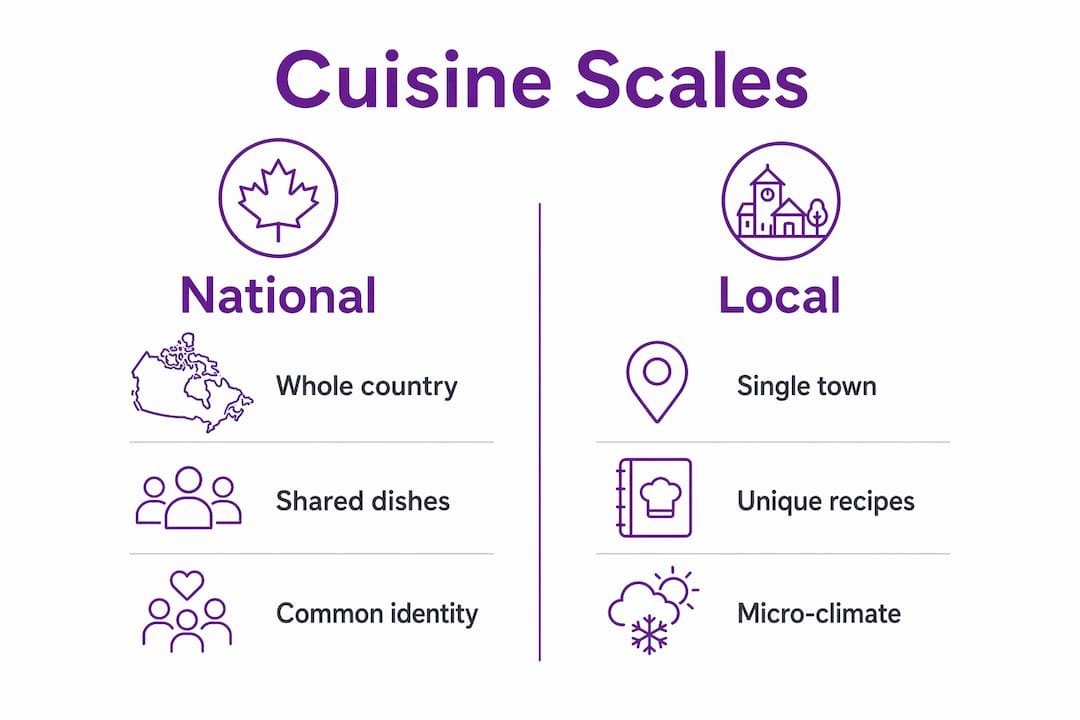
The distinction between local, regional, and national cuisine is one of scale and specificity. National cuisine represents the broadest category, a country’s most recognisable dishes. Regional cuisine narrows that to a province, state, or geographic zone. Locally rooted cuisine goes further still, focusing on a single community’s relationship with its immediate environment.
| Level | Geographic scope | Defining factor | Example |
|---|---|---|---|
| National | Entire country | Shared cultural identity | Canadian poutine |
| Regional | Province or zone | Climate and agricultural zone | Québec maple traditions |
| Local | Town or neighbourhood | Micro-climate, soil, social history | A specific village’s fermented fish recipe |
The table above shows how the lens tightens at each level. Regional culinary traditions in Manitoba, for instance, include a broad appreciation for wild game and freshwater fish. But the specific way a community on Lake Winnipeg prepares pickerel, using techniques passed down through generations, is locally rooted cuisine. The recipe encodes that community’s relationship with its lake, its winters, and its people.
Local cuisine also resists standardisation. A regional dish can be replicated in a commercial kitchen anywhere. A truly local dish depends on ingredients that only exist in that place, prepared by people who learned by watching and doing, not by reading a recipe card.
How does locally rooted cuisine preserve cultural identity and heritage?
Food is one of the most durable carriers of cultural memory. UNESCO recognises locally rooted cuisine as intangible cultural heritage, emphasising ancestral knowledge, culinary systems, and social bonds that extend far beyond the food itself. Sustainable Gastronomy Day, promoted by UNESCO, exists specifically to honour these practices. That recognition matters because it frames local food not as nostalgia but as living knowledge that communities actively maintain.
The connection between food and the social calendar is direct and measurable. Studies in Pattani Province identified over 23 distinct local food items tied to community festivals and traditions. Each dish marks a moment in the year, a harvest, a ceremony, a gathering. Remove the dish and you remove a thread from the community’s shared story.
Local cuisine also communicates values that written history often misses:
- Seasonal awareness: Dishes reflect what the land offers at a given time of year, teaching communities to work with nature rather than against it.
- Collective labour: Many traditional preparations, such as communal bread baking or collective fermentation, require group effort and reinforce social bonds.
- Ancestral knowledge: Recipes encode generations of trial and error about which plants are safe, which combinations are nourishing, and which techniques preserve food through hard winters.
- Ritual significance: Specific dishes mark births, deaths, harvests, and religious observances, giving food a ceremonial weight that supermarket products cannot replicate.
“Local food is not just what people eat. It is how they remember who they are.” — Wild Foodz, Hotel Entree Brugge
The importance of traditional dishes in maintaining social and cultural identity cannot be overstated. When a community loses its local food knowledge, it loses a form of communication that no written record fully captures.
What ecological and sustainability dimensions define locally rooted cuisine?
Locally rooted cuisine depends on micro-climates and local biodiversity in ways that make it inherently ecological. The forest, the river, the soil composition, and the seasonal temperature range all determine what grows, what can be preserved, and what ends up on the table. Local cuisine is an ancient ecological system shaped by climate, migration, and memory, not just a collection of regional recipes.
Traditional preservation techniques are the backbone of this ecological relationship. Fermenting, smoking, pickling, and curing evolved as survival strategies in regions with short growing seasons, not as flavour experiments. In rural Norway’s Sunnmøre region, for example, these methods created a culinary identity so distinct that it became the foundation of the New Nordic cuisine movement. The technique preceded the trend by centuries.
Local food systems also resist the homogenisation that global supply chains produce. When a community sources, prepares, and consumes food within its own geography, it maintains biodiversity, supports local farmers, and keeps money circulating within the community. That is a sustainability argument as much as a culinary one.
Here is a practical framework for understanding the ecological layers of locally rooted cuisine:
- Micro-climate and soil: The starting point. What grows here that does not grow 50 kilometres away?
- Seasonal calendar: When is each ingredient available, and how does the community’s food cycle align with the land’s rhythms?
- Preservation infrastructure: What techniques allow the community to eat well through seasons when the land produces little?
- Biodiversity maintenance: Does the local food system support heritage seed varieties, traditional livestock breeds, and wild-harvested ingredients?
- Economic circulation: Does the food system keep value within the community, or does it export raw ingredients and import processed food?
Pro Tip: Visit farmers’ markets and speak directly with producers. Ask what is grown specifically in your area and what preservation methods they use. That conversation is often the fastest path to understanding a community’s true local gastronomy.
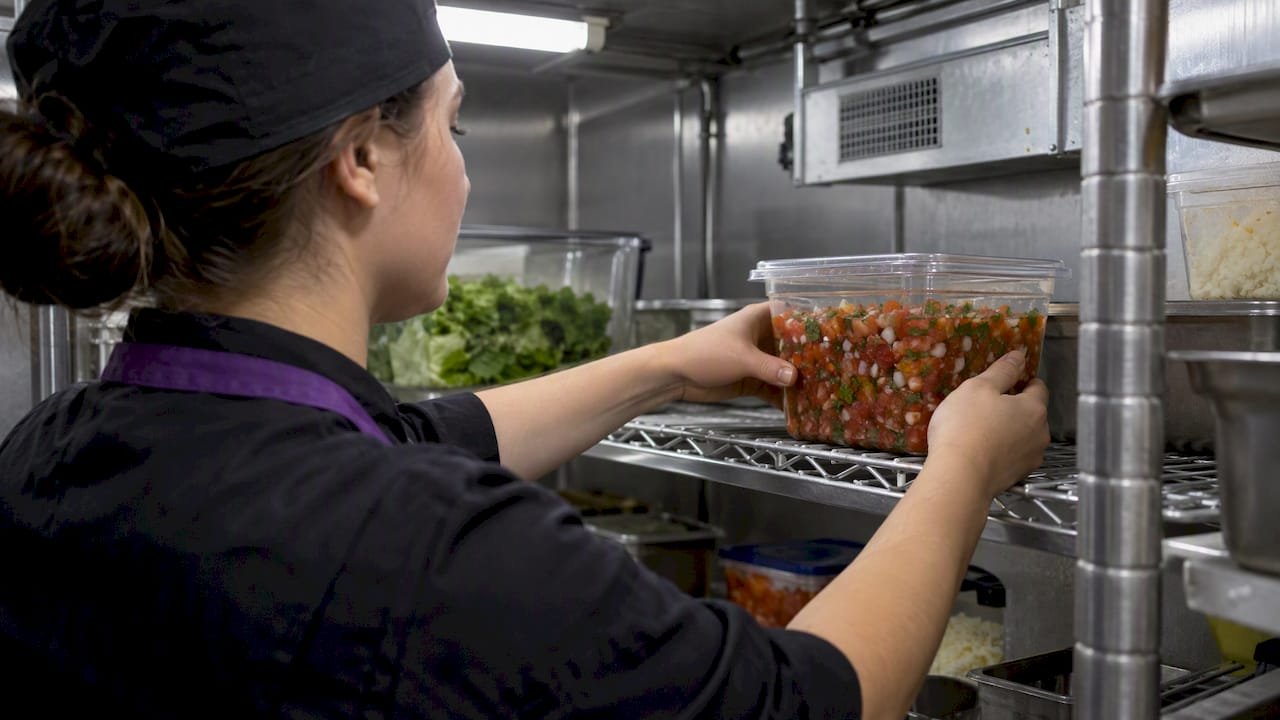
Burritosplendido’s approach in Manitoba reflects this framework directly. The restaurant sources flour from Manitoba-grown wheat, poultry from Granny’s Chicken, cheese from Bothwell Cheese, and fresh produce through Peak of the Market. Each supplier represents a layer of the local food system, and each choice keeps the ecological and economic benefits within the province. You can read more about how local ingredients shape the best food in this approach.
What challenges and opportunities affect locally rooted cuisine today?
The biggest misunderstanding about local cuisine is that it is fixed. Local cuisine constantly evolves, negotiating between ancestral recipes and the availability of resources today, especially amid climate change and resource scarcity. A fishing community whose primary catch has declined due to warming waters does not abandon its culinary identity. It adapts, substitutes, and reinterprets, and that process is itself part of the tradition.
Several forces currently shape this evolution:
- Climate change: Shifting growing seasons and changing species distributions alter what ingredients are available, forcing communities to adapt recipes or source differently.
- Migration and cultural exchange: Newcomers bring ingredients, techniques, and flavour combinations that connect gastronomy with local agriculture in new ways, expanding the concept of “local” beyond strict ethnic or historical boundaries.
- Globalisation of food supply: Cheap imported ingredients can undercut local producers, making it economically difficult to maintain traditional sourcing practices.
- Knowledge loss: When younger generations leave rural communities, they often take culinary knowledge with them, and that knowledge rarely transfers fully to written recipes.
The opportunities are equally significant. Community-based initiatives that involve knowledge transfer and awareness-raising can make local food culture sustainable both economically and culturally. Training programmes in Prajan Subdistrict, for example, equip youth and local residents to maintain culinary traditions by making them economically viable, not just culturally significant. That model, connecting heritage with livelihood, is replicable in communities worldwide.
How can food enthusiasts experience locally rooted cuisine authentically?
Authentic local cuisine often exists outside mainstream hospitality. It thrives in home kitchens, village feasts, and informal gatherings where knowledge is encoded in practice and community trust. Naga cuisine in northeast India is a clear example: its sophistication is not found in restaurants but in the domestic and ceremonial spaces where it has always lived. Experiencing it requires genuine engagement with the community, not a visit to a tourist-facing venue.
For food enthusiasts who want to engage meaningfully with local food culture, the approach matters as much as the destination:
- Seek out local festivals and seasonal food events rather than restaurant districts. These are where traditional dishes appear in their original context.
- Build relationships with local producers, farmers, and home cooks. Trust is the currency of authentic food access.
- Ask questions about technique and origin, not just ingredients. The story behind a dish reveals more than the dish itself.
- Support traditional cooks and small producers financially. Appreciation without economic support does not sustain a food tradition.
- Approach unfamiliar food customs with respect for the community’s own protocols around sharing, preparation, and seasonal availability.
Pro Tip: When travelling, skip the first restaurant you see near a landmark. Walk 10 minutes further and look for places where locals eat on weekday lunchtimes. That is almost always where the genuine local food culture lives.
Organising local ingredient catering in Winnipeg is one practical way to connect with local food systems without travelling far. Catering that prioritises local sourcing brings the principles of locally rooted cuisine directly to your event, supporting producers and delivering food with a genuine sense of place.
Key takeaways
Locally rooted cuisine is the most specific and culturally dense form of food identity, defined by micro-climate, community history, and living culinary knowledge that no broader regional label can fully capture.
| Point | Details |
|---|---|
| Hyper-local definition | Locally rooted cuisine belongs to a single town or neighbourhood, not a province or country. |
| Cultural heritage status | UNESCO recognises local gastronomy as intangible cultural heritage tied to ancestral knowledge and social bonds. |
| Ecological foundation | Micro-climates, seasonal cycles, and preservation techniques like fermenting and curing shape local food identity. |
| Dynamic, not static | Local cuisine evolves constantly in response to climate change, migration, and resource availability. |
| Authentic access | Genuine local food lives in home kitchens and community events, not tourist restaurants. |
Why locally rooted cuisine deserves more serious attention
I have eaten in a lot of places, and the meals I remember most clearly were never in celebrated restaurants. They were in a farmhouse kitchen in rural Manitoba where the cook used ingredients she had grown herself, or at a community gathering where every dish had a story attached to it. That is locally rooted cuisine at its most honest.
What strikes me most is how poorly the concept translates to commercial food culture. The moment a dish becomes popular enough to be packaged and exported, it loses the thing that made it worth eating in the first place: its specificity. A jar of “artisan” salsa made in a factory 2,000 kilometres from the peppers’ origin is not local gastronomy. It is a brand.
The tension between preservation and evolution is real, and I think food enthusiasts often get it wrong in both directions. Some treat local cuisine as a museum exhibit, insisting on strict authenticity that ignores the fact that every tradition was once an adaptation. Others embrace fusion so enthusiastically that the original tradition disappears entirely. The honest middle ground is to learn the tradition deeply before you start reinterpreting it. That takes time, humility, and genuine community relationships.
Burritosplendido gets this balance right in a way that is worth noticing. Using Bothwell Cheese, Granny’s Chicken, and Peak of the Market produce is not just a sourcing decision. It is a statement about which food system the restaurant wants to support and strengthen. That is what locally rooted cuisine looks like when it is applied in a fast-casual context without losing its integrity.
— Austin
Locally sourced flavours at Burritosplendido
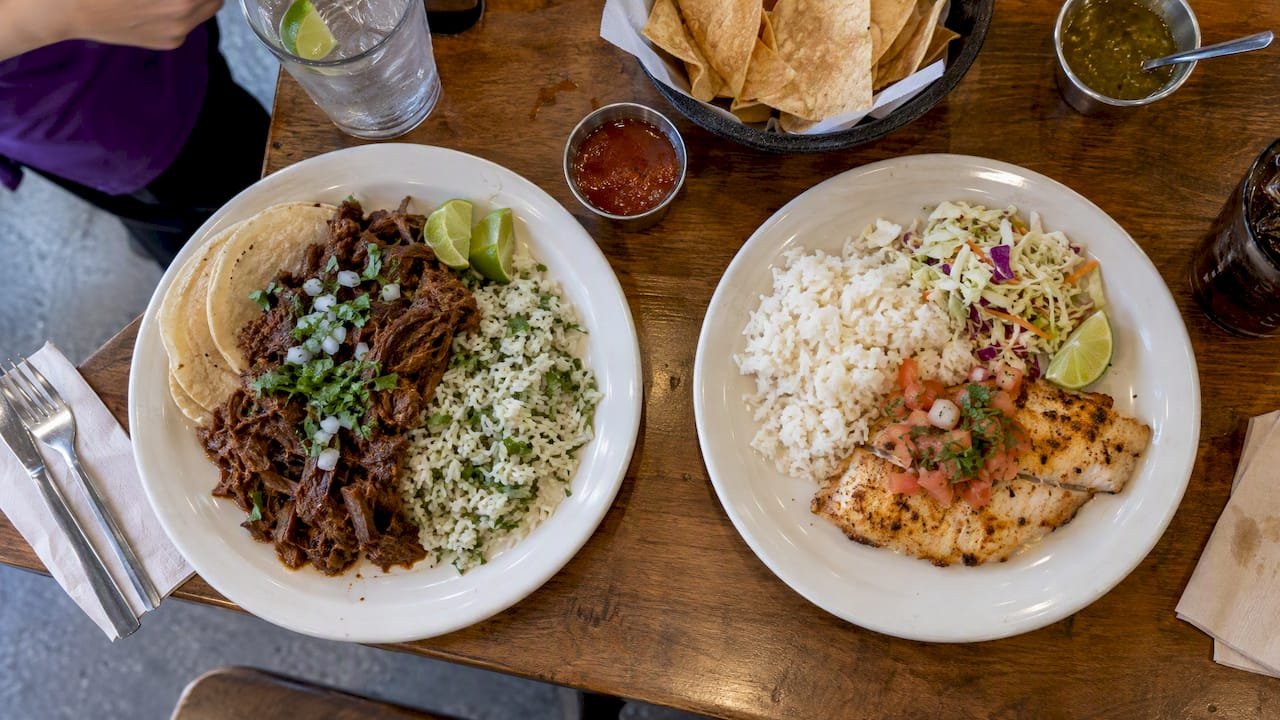
Burritosplendido has built its entire menu around the principles of locally rooted cuisine, applied to a Mexican-inspired fast-casual format in Manitoba. Every tortilla is pressed from 100% Manitoba-produced flour. Every protein, from slow-braised Carnitas to hand-pulled Barbacoa, is prepared from scratch daily using locally sourced ingredients. Seasonal specialties like Manitoba Whitefish tacos bring genuine regional flavour to the menu in a way that no national chain can replicate.

If you want to experience what fresh, locally sourced catering looks like in practice, Burritosplendido’s catering service brings that same Manitoba-first philosophy to your event. Whether you are planning a corporate lunch or a community gathering, the food on the table will reflect the place you live. Explore the real benefits of local Mexican food in Winnipeg and see how a commitment to local sourcing changes what ends up on your plate.
FAQ
What is locally rooted cuisine in simple terms?
Locally rooted cuisine is the traditional food, cooking methods, and ingredients that belong to a specific small community, shaped by its micro-climate, history, and social practices. It is more specific than regional or national cuisine.
How does local cuisine differ from farm-to-table dining?
Farm-to-table dining is a sourcing philosophy that prioritises fresh, local ingredients. Locally rooted cuisine is a broader concept that includes cultural identity, ancestral recipes, and community traditions, not just ingredient sourcing.
Why does UNESCO recognise local food as cultural heritage?
UNESCO classifies local gastronomy as intangible cultural heritage because it encodes ancestral knowledge, social bonds, and community identity that cannot be preserved through written records alone.
Does locally rooted cuisine change over time?
Local cuisine evolves constantly in response to climate shifts, migration, and resource availability. Authentic local food fluctuates with agricultural cycles, and that adaptation is part of the tradition, not a departure from it.
How can I find genuine locally rooted cuisine when travelling?
Seek out community festivals, farmers’ markets, and home-cook gatherings rather than tourist-facing restaurants. Authentic local food typically lives in informal community spaces where trust and seasonal knowledge guide what is served.