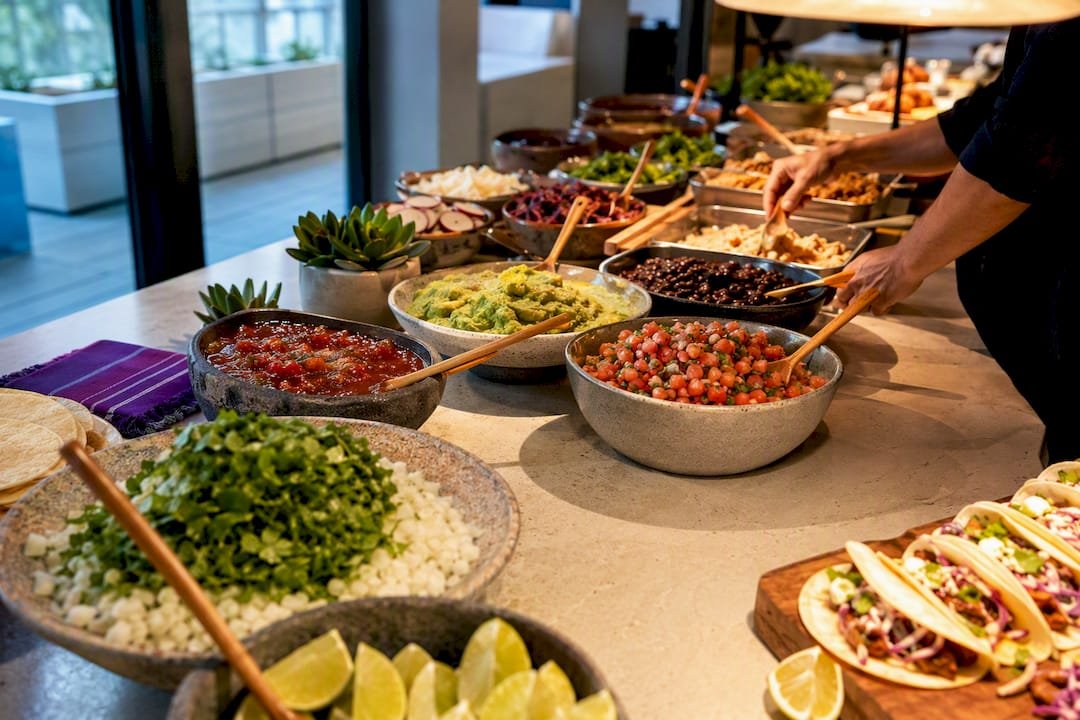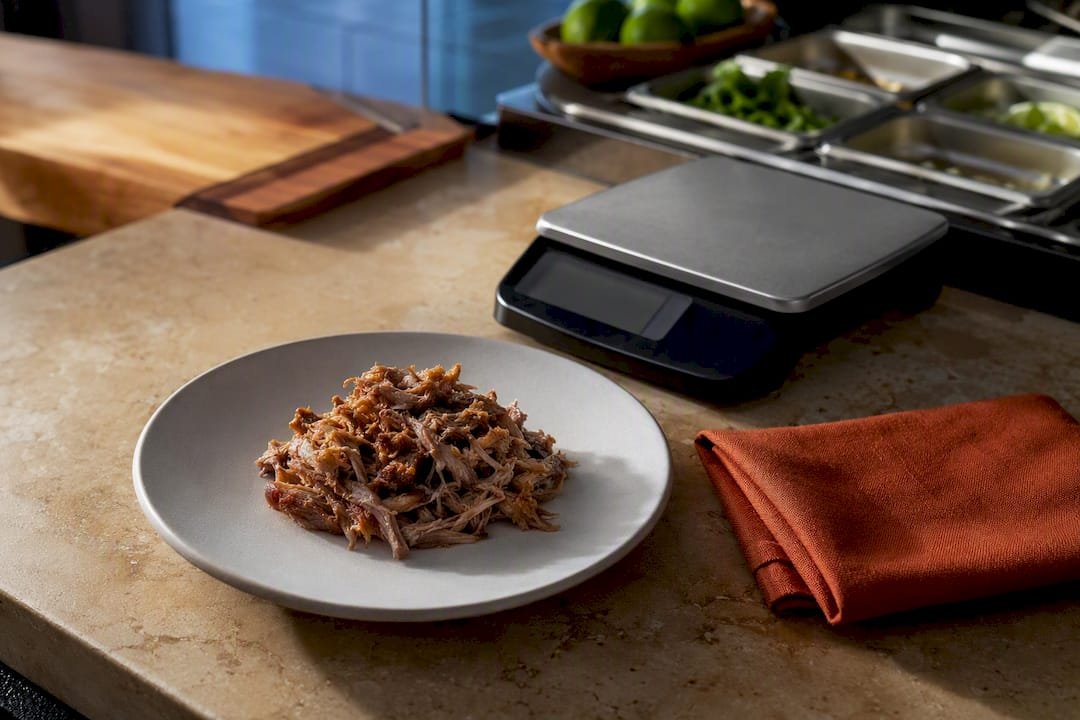
Corporate catering is far more than calling in a pizza order before a board meeting. Understanding what is corporate catering means recognising a professional food service discipline that handles everything from menu planning and dietary accommodation to logistics, staffing, and presentation for business events of all sizes. For Canadian companies, getting catering right is not a minor detail. It shapes how clients perceive your organisation, how employees feel about their workplace, and how smoothly your events actually run. This guide breaks down everything you need to know before your next booking.
Table of Contents
- Key takeaways
- What is corporate catering?
- Why businesses invest in corporate catering
- Corporate catering options, styles, and pricing
- Planning your corporate catering effectively
- Corporate catering trends in Canada and globally
- My honest take on what makes corporate catering work
- Feed your next event with Burritosplendido
- FAQ
Key takeaways
| Point | Details |
|---|---|
| Corporate catering is a professional service | It covers food, logistics, staffing, and presentation tailored to business events of every scale. |
| Benefits go beyond food | Quality catering supports employee morale, company image, and overall event efficiency. |
| Service styles vary widely | Buffets, plated meals, and boxed lunches each suit different event types and budgets. |
| Early planning prevents problems | Locking in your caterer early and tracking dietary needs centrally avoids the most common pitfalls. |
| The market is growing fast | Global corporate catering demand is accelerating, making vendor quality and differentiation more important than ever. |
What is corporate catering?
Corporate catering is a specialised food service designed exclusively for professional business environments. Unlike casual restaurant delivery or a grocery run, it accounts for the full complexity of serving groups in a professional context: dietary restrictions, timing aligned to meeting schedules, appropriate presentation, and service formats that keep events running without interruption.
The scope is genuinely broad. Corporate catering serves events ranging from intimate meetings of 12 people to large conferences hosting 3,000 or more guests, with menus and logistics adapted for each scenario. A weekly office lunch looks nothing like a formal client dinner or a product launch reception, and a professional caterer understands exactly how to adjust for each.
What distinguishes corporate catering from general catering services includes:
- Menu customisation to reflect the company’s brand, culture, and the nature of the event
- Dietary accommodation for guests with allergies, intolerances, and lifestyle preferences including vegan, gluten-free, keto, and halal requirements
- Professional presentation that aligns with the tone of a business setting
- Logistics coordination covering delivery timing, setup, service flow, and cleanup
- Scalability to handle anything from a weekly lunch programme to a multi-day conference
What is corporate lunch catering, specifically? It falls within this broader category and refers to midday meal service for offices and workplace meetings, often structured around speed and minimal disruption to the workday. It is one of the highest-volume segments of corporate catering services in Canada.
Why businesses invest in corporate catering
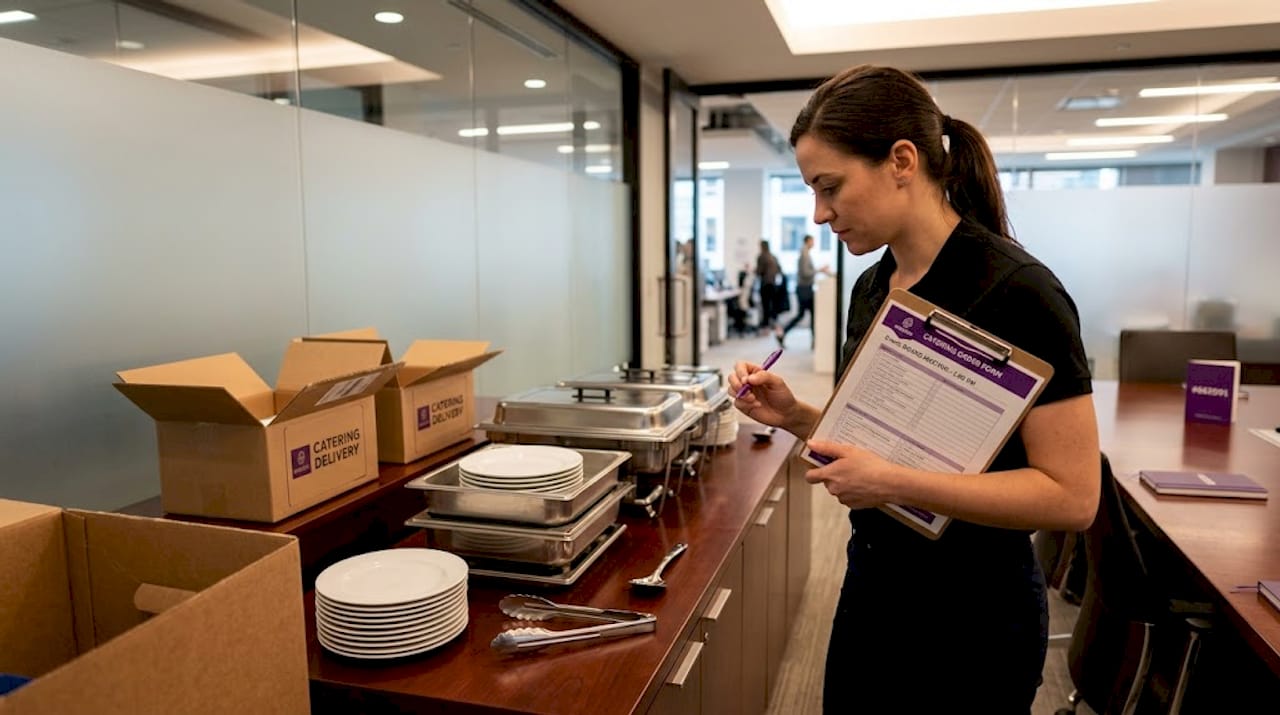
The practical case for professional catering goes well beyond convenience. Quality food and timing directly affect employee morale and productivity, making catering a genuine operational investment rather than a perk.
Consider what poor catering communicates. A client meeting where food arrives late, choices are limited, or dietary needs are ignored sends a message about how your organisation handles details. Conversely, a well-executed meal signals professionalism and care. Corporate catering choices are an extension of brand identity, shaping how both clients and employees perceive your company.
The operational benefits of corporate catering services are equally concrete:
- Employee morale and retention: Providing quality meals, particularly for long meetings or working lunches, demonstrates that the company values its people’s time and comfort.
- Productivity: Food that is ready on schedule keeps attendees focused and meetings on track, rather than losing 20 minutes while people scatter to find lunch nearby.
- Reduced administrative burden: A reliable catering vendor handles ordering, prep, delivery, and cleanup. Your team does not need to manage it.
- Waste reduction: Boxed lunch catering reduces food waste by allowing employees to pre-select meals, eliminating guesswork about quantities and dietary needs.
- Brand reinforcement: For client-facing events, food quality and presentation are part of the experience your organisation delivers.
Pro Tip: If your organisation hosts recurring meetings, set up a standing catering arrangement rather than ordering ad hoc each time. Caterers provide better pricing and more reliable service when they can plan ahead, and your team avoids the weekly coordination effort.
Corporate catering options, styles, and pricing
Understanding the service formats available helps you choose the right fit for each event type and budget. Corporate catering options fall into several distinct categories, each with different cost drivers and use cases.
| Service style | Best suited for | Typical cost per person | Key consideration |
|---|---|---|---|
| Breakfast catering | Morning meetings, seminars | $5–$15 | Keep it simple; coffee and protein matter most |
| Boxed lunch | Working lunches, hybrid teams | $12–$25 | Pre-selection reduces waste and speeds distribution |
| Buffet service | Team events, conferences | $20–$45 | Lower staffing ratio, but requires space and setup time |
| Plated service | Client dinners, formal events | $40–$70+ | Higher staffing cost; requires experienced coordination |
| Reception and stations | Networking events, launches | $25–$60 | Flexible and social; works well for standing events |
Industry pricing guides show that corporate catering costs encompass more than food. Staffing, logistics, equipment rental, and lead time all factor into a final quote. Proper budgeting from the outset prevents surprises when invoices arrive.
Staffing ratios are one of the least-discussed but most significant cost drivers. Buffet service requires roughly one server per 25 to 30 guests, while plated service demands one server per 8 to 10 guests. That difference directly explains the cost gap between the two formats. When you understand that, a quote that initially looks expensive starts to make sense.
Pro Tip: For large events with mixed guest types, consider combining service styles. A buffet for the main meal with plated desserts creates a polished experience while managing staffing costs more efficiently than full plated service throughout.
Exploring Mexican buffet options is one practical example of how a single cuisine can be adapted across multiple corporate formats, from casual team lunches to more structured event catering.
Planning your corporate catering effectively
Execution quality separates memorable events from forgettable ones. The logistics of corporate catering require deliberate planning well before the event date.
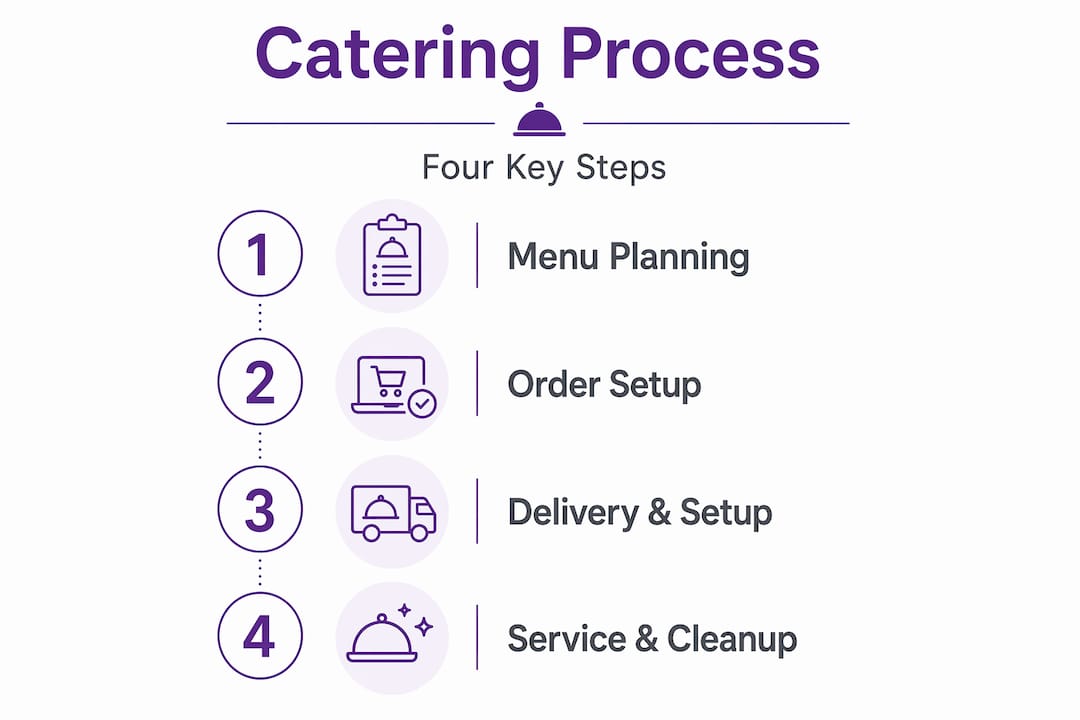
Follow these steps to set your event up for success:
-
Book your caterer early. Reputable vendors book up quickly, particularly for Friday events and end-of-quarter dates. Confirm your caterer at least two to three weeks in advance for small events and six to eight weeks out for large conferences.
-
Collect dietary requirements proactively. Send a form to all attendees when you send the event invitation. Tracking dietary restrictions centrally with a spreadsheet or internal system is vital to avoid guest complaints and liability issues. Do not rely on people mentioning it the day of.
-
Treat your caterer as a strategic partner. Experienced caterers offer planning advice beyond food, including guidance on room flow, service timing, and how to structure food stations relative to your agenda. Ask for their input early rather than handing them a finished plan.
-
Sync food service with your agenda. Meals and breaks should be coordinated with scheduled presentations, speeches, or networking periods so that food arrival does not interrupt key moments. Staggering food stations at large events prevents bottlenecks and keeps service flowing efficiently.
-
Plan for leftovers and waste. Confirm your caterer’s policy on surplus food. Many professional services can arrange for donation or responsible disposal, which reflects well on your company and reduces waste.
-
Confirm setup and cleanup details in writing. Know exactly when the team arrives, when food is ready to serve, and when everything is packed down. Ambiguity here is the most common source of last-minute stress.
Learning how to plan corporate food service as a partnership between event organiser and catering team makes the entire process significantly less stressful and the result noticeably better.
Corporate catering trends in Canada and globally
The corporate catering industry is not standing still. Businesses planning events in 2026 and beyond should understand where the market is heading, because vendor capabilities and guest expectations are shifting together.
The numbers alone signal how seriously the industry is growing. The EMEA corporate catering market is projected to grow from $15 billion USD in 2025 to $32 billion USD by 2034, representing a compound annual growth rate of 7.90%. North American trends closely follow this trajectory.
Several specific shifts are redefining what top corporate catering services look like:
- Locally sourced menus are no longer a premium add-on. Guests increasingly expect caterers to know where their food comes from, and companies use local sourcing as a reflection of their values.
- Pre-selection and digital ordering have grown substantially, driven by the hybrid workplace. Pre-selected boxed lunches reduce waste and improve ordering efficiency, particularly when teams are split between office and remote attendance.
- Dietary inclusivity has moved from accommodation to expectation. Events that do not offer meaningful vegan, gluten-free, and allergen-conscious options are now the exception rather than the norm.
- Hybrid event catering now means coordinating food for in-person attendees while also considering how to create a similar experience for remote participants through delivery partnerships.
- Sustainability is influencing both packaging choices and menu composition, with biodegradable serviceware and plant-forward menus becoming standard requests from corporate clients.
Understanding why locally sourced ingredients matter for Manitoba corporate events is a good starting point if your business values community connection in its catering choices.
My honest take on what makes corporate catering work
I’ve reviewed a lot of corporate events, and the ones that fall flat almost always have the same issue: the food was treated as a checkbox rather than a component of the experience. Someone ordered catering, the order arrived, and that was considered done. What was missing was any thought about whether the format suited the event, whether guests with dietary needs were actually accommodated, or whether the timing would create a 45-minute lunch queue in the middle of a half-day session.
What I’ve found is that the companies that do this well share one habit: they call the caterer before they finalise any other plan. Not after the agenda is set and the venue is booked and the invitations are sent. Before. Because an experienced catering team will ask questions that clarify your own thinking about the event. They’ll flag that 200 people cannot realistically move through a single buffet line in 30 minutes. They’ll point out that a sit-down dinner for 80 requires a different room layout than you’ve scheduled.
The other thing I’d push back on is the assumption that local or fast-casual options are somehow less suited for corporate events. In my experience, guests are far more enthusiastic about fresh, customisable food with clear local provenance than they are about a generic plated chicken breast. The format matters less than the quality and the thought behind it.
— Austin
Feed your next event with Burritosplendido
When you are looking for corporate catering services that bring genuine quality to the table, Burritosplendido delivers exactly that for Manitoba businesses. Built on a “fresh, local, and doing the right thing” philosophy, every item is made from scratch daily using Manitoba-produced ingredients including locally milled flour, Granny’s Chicken poultry, and Bothwell Cheese.
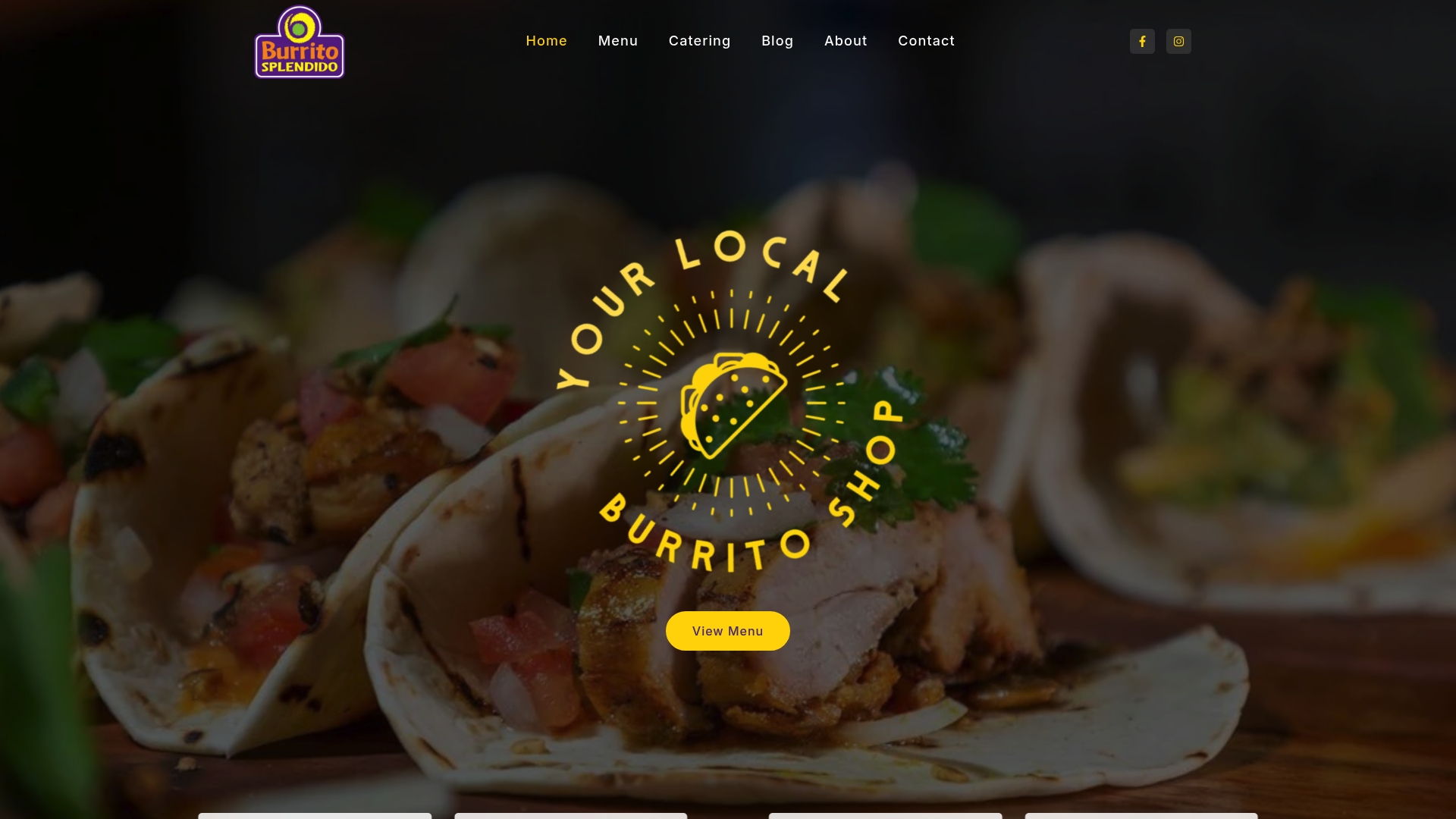
Whether you are organising a working lunch for 20 or a full corporate event for hundreds, Burritosplendido’s catering services offer flexible formats including burritos, burrito bowls, street-style tacos, and quesadillas. Every order accommodates gluten-free, vegan, keto, and other dietary preferences without compromise. Reliable, locally rooted, and built for the demands of professional events, Burritosplendido is ready to support your next gathering. Reach out through the catering page to request a quote.
FAQ
What does corporate catering include?
Corporate catering includes food preparation, delivery or on-site service, menu planning for dietary needs, staffing, equipment, and cleanup tailored to professional business events. The scope scales from small office lunches to large multi-day conferences.
How much does corporate catering cost per person?
Corporate catering costs typically range from $5 to $15 per person for breakfast, $10 to $25 for lunch, and $25 to $70 or more for full event catering, depending on service style and staffing requirements.
How far in advance should I book corporate catering?
Book at least two to three weeks ahead for smaller events and six to eight weeks ahead for large conferences or end-of-quarter dates, when professional caterers are in highest demand.
What is the difference between buffet and plated corporate catering?
Buffet service is more cost-effective, requiring one server per 25 to 30 guests, while plated service is more formal and labour-intensive at one server per 8 to 10 guests. Your choice should match the tone and budget of the event.
How do I handle dietary restrictions for corporate catering?
Collect dietary requirements from all attendees at the time of invitation using a simple form. Track responses centrally and share a confirmed list with your caterer well before the event date to avoid last-minute issues.