There’s a persistent myth that Mexican food means mountains of melted cheese, heavy fried shells, and calorie-dense sauces. For many Manitobans, that image has kept them from exploring one of the most vibrant, produce-forward cuisines in the world. In reality, Mexican-inspired menus emphasise fresh staples like corn, beans, peppers, tomatoes, avocados, and aromatic herbs, all of which translate beautifully to Manitoba’s local food landscape. When these flavours meet locally grown and raised ingredients, something genuinely exciting happens on your plate.
Table of Contents
- What makes a menu Mexican-inspired?
- Customising Mexican flavours for Manitoba
- Healthy benchmarks: Nutrition by the numbers
- Tradition meets innovation: Authenticity vs fusion debate
- Why most people misunderstand Mexican-inspired menus in Manitoba
- Experience Mexican-inspired menus with fresh, local flair
- Frequently asked questions
Key Takeaways
| Point | Details |
|---|---|
| Fresh local ingredients | Mexican-inspired menus in Manitoba often feature Manitoba-grown vegetables and proteins for flavour and health. |
| Flexible dietary options | Many dishes are customisable for vegan, gluten-free, or high-protein needs using traditional and local ingredients. |
| Balance of tradition and creativity | Manitoba chefs blend authentic Mexican techniques with local food traditions to create vibrant, healthy menus. |
| Nutrition-focused choices | Calories, fibre, and protein are highlighted, making it easier to choose healthy Mexican-inspired meals. |
What makes a menu Mexican-inspired?
The term “Mexican-inspired” gets used often, but it carries real meaning. At its core, this style of cooking draws from a tradition built on whole, minimally processed ingredients. Think vibrant fresh salsas, slow-cooked proteins, hand-pressed corn or flour tortillas, and layered seasonings built from dried chillies, cumin, oregano, and citrus. These are not heavy foods by nature. They are bold, bright, and deeply nourishing.
The fresh staples that define these menus include:
- Corn, used in tortillas, soups, and salsas
- Beans, a powerhouse of plant-based protein and fibre
- Peppers, from mild poblanos to smoky chipotles
- Tomatoes and tomatillos, the foundation of most salsas
- Avocados, a source of healthy monounsaturated fats
- Fresh herbs like cilantro and epazote for brightness and depth
In Manitoba, this foundation gets adapted naturally. Local chicken, pork from regional farms, bison, and seasonal root vegetables all fit into this framework without compromising the spirit of the cuisine. Corn grows well in southern Manitoba during summer, and the province’s agricultural output means fresh produce from Peak of the Market is available across the growing season.
“A Mexican-inspired menu in Manitoba is not about copying a distant cuisine. It’s about borrowing a philosophy: cook fresh, season boldly, and let the ingredients speak.”
Places like Burrito Splendido have made this philosophy their operational foundation, using Winnipeg Mexican street food traditions as a jumping-off point while sourcing ingredients grown and raised right here in the province. Understanding what authentic Mexican food really means for Canadians reveals that adaptation is not betrayal. It is the natural evolution of any living culinary tradition.
Customising Mexican flavours for Manitoba
With a sense of the staples and style, we move to see how these dishes truly come alive with a Manitoban twist. The key insight here is that traditional Mexican cuisine was always regional. What they grew in Oaxaca differed from what cooks used in the Yucatán. Manitoba is simply the next regional chapter.
Local Manitoba ingredients like bison, Granny’s Chicken poultry, Bothwell Cheese, and seasonal produce from Peak of the Market slot naturally into Mexican-inspired formats. A bison barbacoa taco is not a compromise. It is a genuinely Manitoban creation with Mexican soul. Similarly, a burrito bowl loaded with Manitoba-grown vegetables and topped with locally made cheese carries the same nutritional and flavour logic as its southern counterpart.

| Traditional ingredient | Manitoba adaptation | Flavour match |
|---|---|---|
| Carnitas (pork shoulder) | Local farm pork, slow-braised | Excellent |
| Chicken tinga | Granny’s Chicken, adobo-spiced | Excellent |
| Queso fresco | Bothwell Cheese varieties | Very good |
| Seasonal peppers | Manitoba greenhouse peppers | Good |
| Black beans | Prairie-grown dried black beans | Excellent |
| Fresh corn tortillas | Manitoba-milled flour tortillas | Very good |
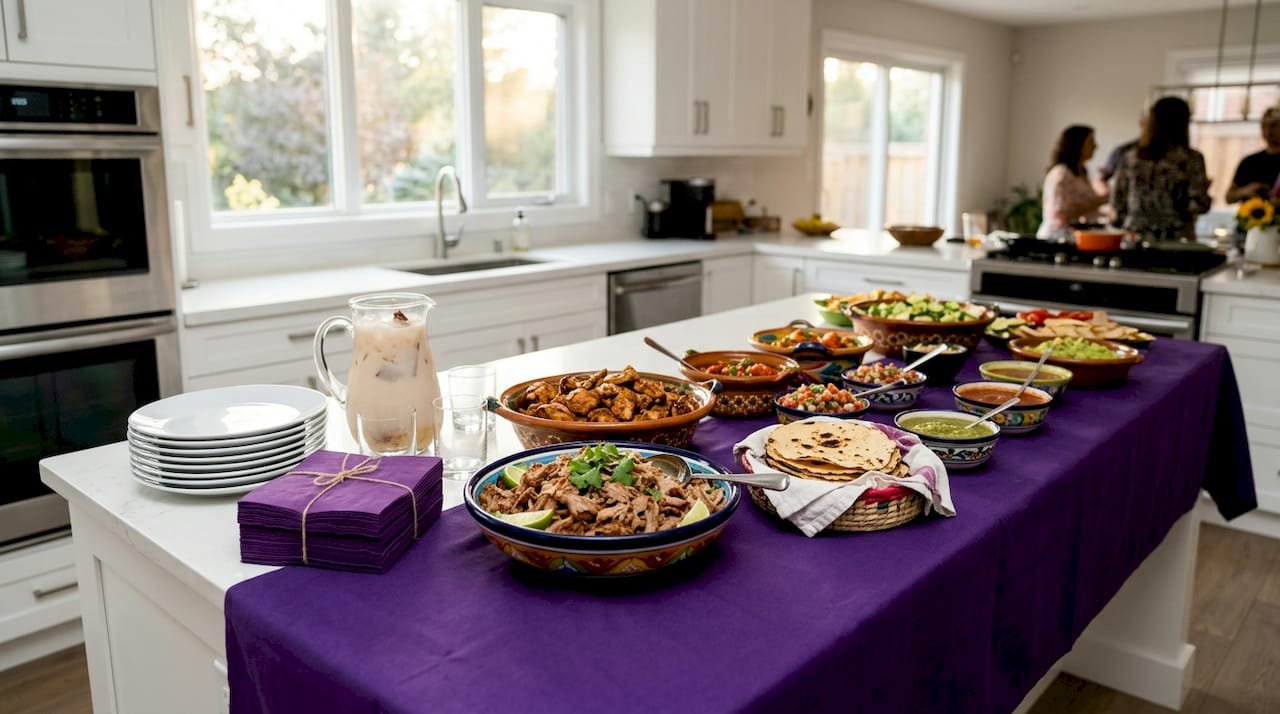
For those assembling perfect Manitoba tacos at home or ordering at a restaurant, dietary flexibility is another major advantage. A well-designed Mexican-inspired menu works naturally for:
- Gluten-free diners: Corn tortillas from producers like La Cocina sidestep wheat entirely
- Vegans: Black bean bowls, roasted vegetable tacos, and fresh guacamole are naturally plant-based
- Keto and paleo eaters: Naked burrito bowls with grilled protein, salsa, and avocado fit both frameworks
- High-protein seekers: Slow-cooked meats like carnitas and barbacoa deliver substantial protein without deep-frying
Research supports adapting Mexican dishes for local Canadian palates as a growing culinary trend, and it is one that Manitoba’s food scene is well positioned to lead. The province’s strong farming culture and community-minded food businesses make this kind of adaptation feel genuine rather than gimmicky.
Sources confirm that Burrito Splendido uses locally sourced ingredients to build fresh burritos and salad bowls that serve Winnipeg diners across multiple dietary needs. For Winnipeg’s growing Mexican food scene, the defining trend is precisely this ability to build customisable bowls and tacos from local proteins and produce.
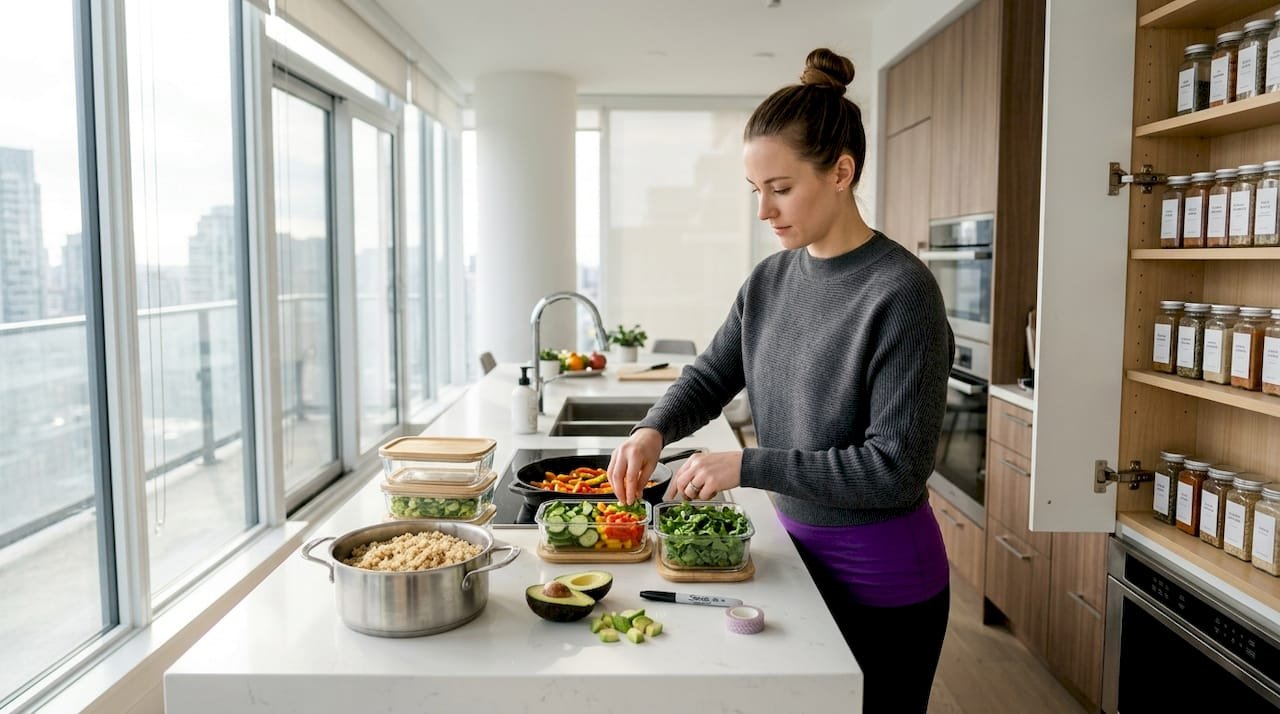
Pro Tip: Batch-prep a large portion of grilled local chicken or slow-braised pork on Sunday. Store it in the fridge and build quick taco or burrito bowls throughout the week by rotating your salsas, beans, and toppings for variety without extra cooking time.
Healthy benchmarks: Nutrition by the numbers
As customisation thrives, it’s crucial to evaluate how these choices meet health and nutrition goals. Mexican-inspired food, when built thoughtfully, sits among the most nutritionally balanced fast-casual options available.
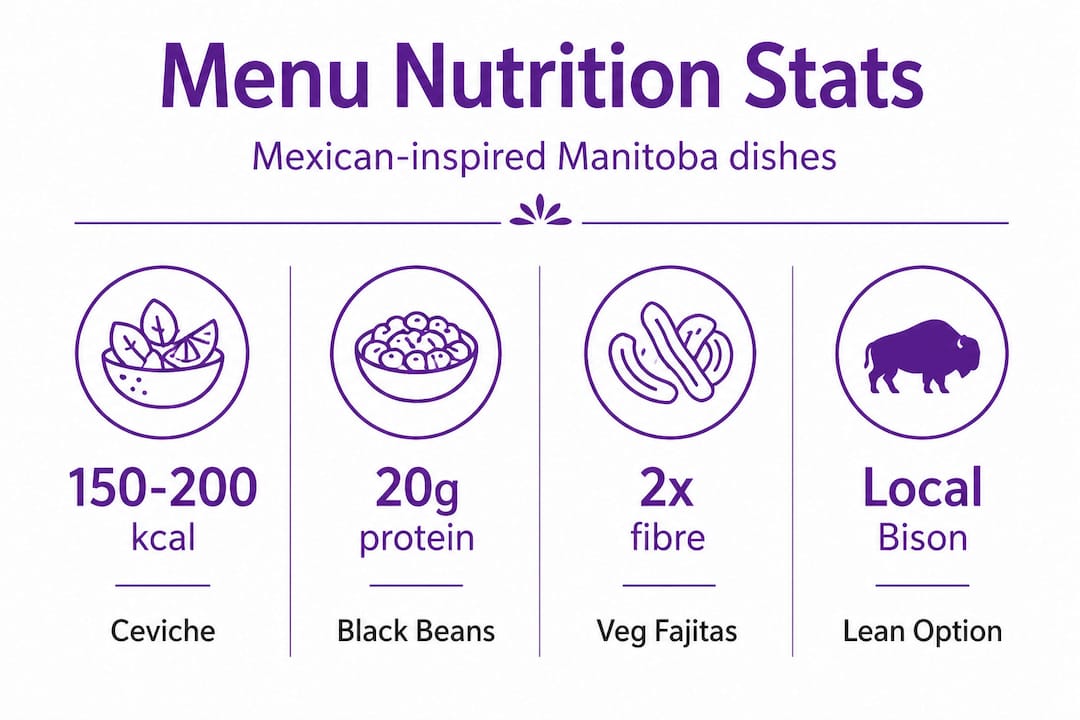
Consider the numbers. Healthy benchmarks show that ceviche (raw fish marinated in citrus, a classic Mexican preparation) delivers roughly 150 to 200 calories with around 25 grams of protein and very little fat. Grilled chicken fajitas land in the 350 to 400 calorie range and include a substantial fibre load from the sautéed peppers and onions. A black bean bowl built with rice, vegetables, and salsa provides around 450 to 500 calories, 40 grams of protein, and 12 grams of dietary fibre.
| Menu item | Approx. calories | Protein (g) | Fibre (g) | Best suited for |
|---|---|---|---|---|
| Ceviche | 150 to 200 | 25 | 2 | Low-calorie, high-protein |
| Grilled chicken fajitas | 350 to 400 | 30 | 6 | Balanced, high-fibre |
| Black bean bowl | 450 to 500 | 40 | 12 | Vegan, high-fibre |
| Carnitas burrito bowl | 500 to 550 | 38 | 9 | Keto-friendly (no rice) |
| Veggie taco (corn tortilla) | 180 to 220 | 8 | 5 | Gluten-free, light |
The fibre and protein focus in Mexican-inspired eating is not accidental. Fibre from beans and vegetables supports gut health and aids in satiety, meaning you feel full longer without overconsumption. Protein from well-seasoned, slow-cooked meats or legumes supports muscle maintenance and energy. These are not diet-culture talking points. They are basic nutritional facts that make this cuisine genuinely suitable for health-conscious Manitobans.
Smart swaps make a significant difference for people managing specific dietary needs at Burrito Splendido and similar spots:
- Replace white rice with extra grilled vegetables to cut carbohydrates and add micronutrients
- Choose corn tortillas over flour to eliminate gluten while gaining whole grain nutrition
- Swap sour cream for fresh avocado to move from saturated to heart-healthy fats
- Use black beans instead of ground beef for a fully plant-based, protein-rich option
- Request house-made salsas over bottled options to reduce sodium significantly
These swaps are not about restriction. They are about making your meal work harder for you while keeping every bite satisfying.
Tradition meets innovation: Authenticity vs fusion debate
Once health and choice are clear, what’s left is how chefs and diners navigate the fine line between innovation and tradition. This conversation matters in Manitoba because the province is actively building its own identity within the Mexican-inspired food category.
The debate breaks into two clear camps. Culinary purists argue that straying from traditional preparation methods and regional Mexican ingredients dilutes the cultural meaning of the food. Modern chefs, particularly those working in Canadian twists on burritos and bowls, see the same cuisine as a living, breathing platform for creativity. Both perspectives carry weight.
Research into culturally inspired menus shows that fusion cuisine adapts local ingredients creatively but risks diluting tradition when cultural context is stripped away entirely. The difference between respectful adaptation and careless appropriation usually comes down to intention and knowledge.
Here is a practical framework for navigating this well:
- Learn the tradition first: Understand why a dish uses specific ingredients before swapping them out
- Keep the flavour logic intact: If chipotle heat and lime brightness define a dish, preserve that even with local proteins
- Label honestly: Call it “Manitoba-style” or “inspired by” rather than claiming strict authenticity
- Source intentionally: Use local ingredients because they are fresh and excellent, not as a marketing shortcut
- Celebrate, don’t erase: Feature the origin proudly alongside the local adaptation
Fusion cuisine is growing across Manitoba for clear reasons. The province’s multicultural urban population in Winnipeg craves global flavours adapted to local contexts. The strong farming community provides genuinely excellent raw ingredients. And food-conscious Manitobans increasingly want meals that are both exciting and transparently sourced. These forces make Mexican-inspired fusion not just inevitable but genuinely excellent when executed well.
Why most people misunderstand Mexican-inspired menus in Manitoba
Here’s a perspective that often gets lost in the authenticity versus fusion conversation: the real measure of a great Mexican-inspired meal is not whether it came from a specific region of Mexico. It is whether it was made with care, fresh ingredients, and honest flavour.
Most people assume that eating “authentic” means eating something geographically correct. But Mexican cuisine itself has always been a fusion story. Spanish colonisation, Indigenous traditions, and regional agricultural realities all shaped what we now call Mexican food. The tacos al pastor that Mexicans love today came from Lebanese immigrants bringing shawarma-style cooking to Mexico City. Adaptation is not the enemy of authenticity. It is the mechanism through which tradition survives.
In Manitoba, rethinking authenticity means recognising that a Carnitas bowl made from Manitoba pork, slow-braised with the right spices, wrapped in a tortilla pressed from Manitoba-milled flour, is not a lesser version of the original. It is a genuinely new and valuable expression of the same culinary philosophy.
The insider truth about finding the best Mexican-inspired food in Manitoba is this: follow the local sourcing. When a restaurant can tell you exactly where their chicken came from, who made their cheese, and what farm grew their peppers, that transparency is the clearest signal of quality. It means the kitchen cares about the food at every step, not just the final seasoning.
Accessibility matters too. A Mexican-inspired menu that works for gluten-free, vegan, keto, and paleo diners simultaneously is not a compromise. It is thoughtful cooking that respects a diverse community. That is something traditional fine-dining Mexican restaurants often struggle to offer, and it is exactly where Manitoba’s fast-casual Mexican scene genuinely excels.
Experience Mexican-inspired menus with fresh, local flair
After understanding and appreciating the depth of Mexican-inspired cooking, you’re ready to experience it first-hand. Manitoba’s Mexican-inspired food scene offers more than a quick lunch. It offers a genuinely nourishing, flavour-forward way of eating that supports local farmers and feeds a diverse community.
At Burrito Splendido, every item on the menu reflects the province’s best agricultural output, from Bothwell Cheese and Granny’s Chicken to fresh produce from Peak of the Market. Whether you’re planning a family meal, a team lunch, or a larger event, exploring Mexican catering in Manitoba brings the same fresh, local philosophy to any occasion. Read more about the local sourcing in Mexican food that sets Burrito Splendido apart, and discover how every ingredient chosen reflects a commitment to community, quality, and genuine flavour. Visit burritosplendido.com to explore the full menu and find a location near you across Winnipeg and Brandon.
Frequently asked questions
How is Mexican-inspired food in Manitoba different from traditional Mexican food?
Menus here use local Manitoba ingredients and adapt classic recipes to regional tastes and seasonal availability, while preserving the bold, fresh flavour profiles that define the cuisine.
What are some healthy options on a Mexican-inspired menu?
Look for ceviche, grilled fajitas, and black bean bowls built with fresh vegetables for strong protein and fibre content with manageable calories.
Are there vegan or gluten-free Mexican options in Winnipeg?
Yes, restaurants like Burrito Splendido and BMC Market offer vegan and gluten-free choices built from locally sourced, fresh ingredients including corn tortillas and plant-based fillings.
What makes a good starter Mexican-inspired menu at home?
Begin with corn tortillas, a grilled local protein, dried beans, and a batch of fresh salsa. Batch-prepping these staples at the start of the week makes healthy weeknight meals simple and quick.
Is fusion Mexican cuisine less authentic?
Fusion adapts tradition using local ingredients and can produce excellent results, though purists argue it risks erasing cultural context when the original techniques and flavour logic are not honoured.