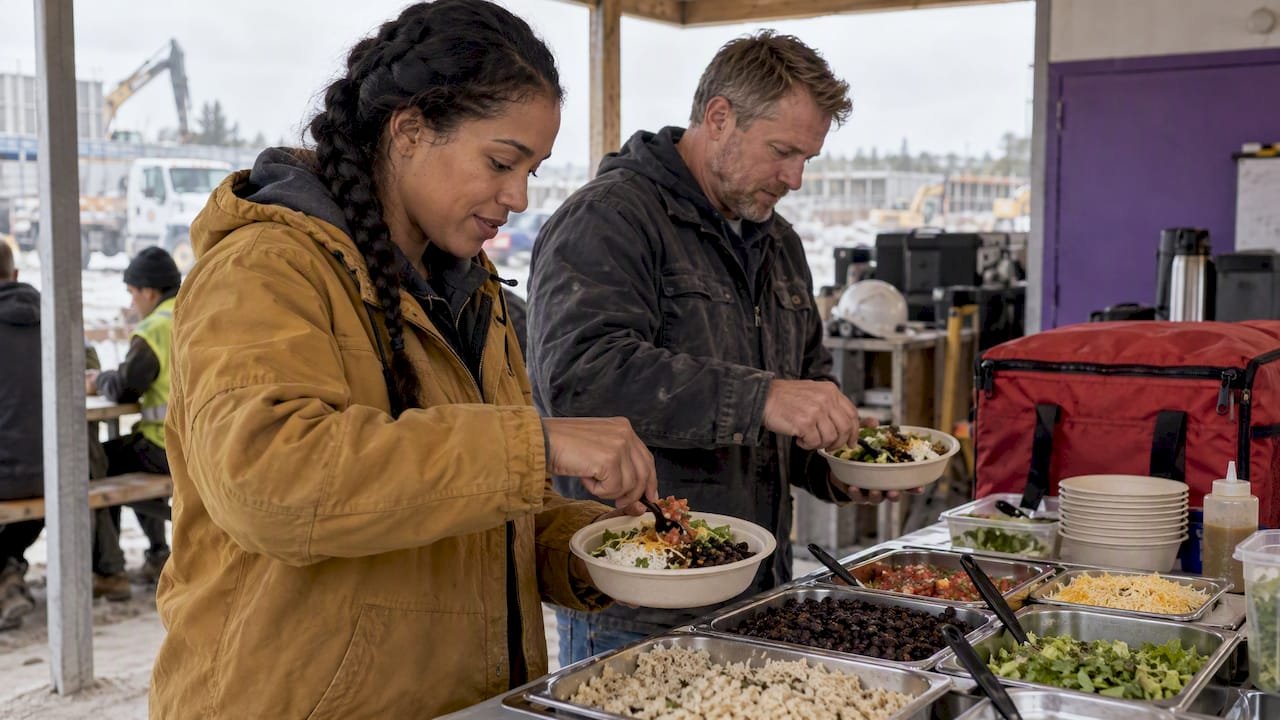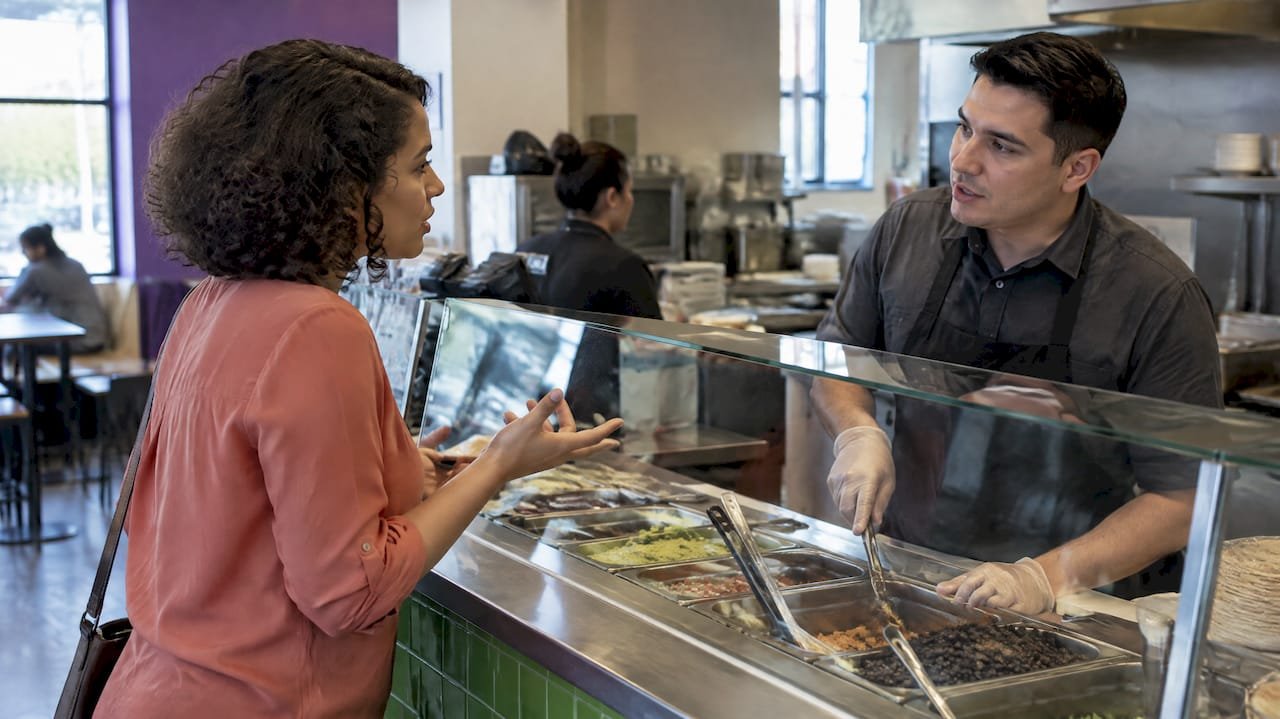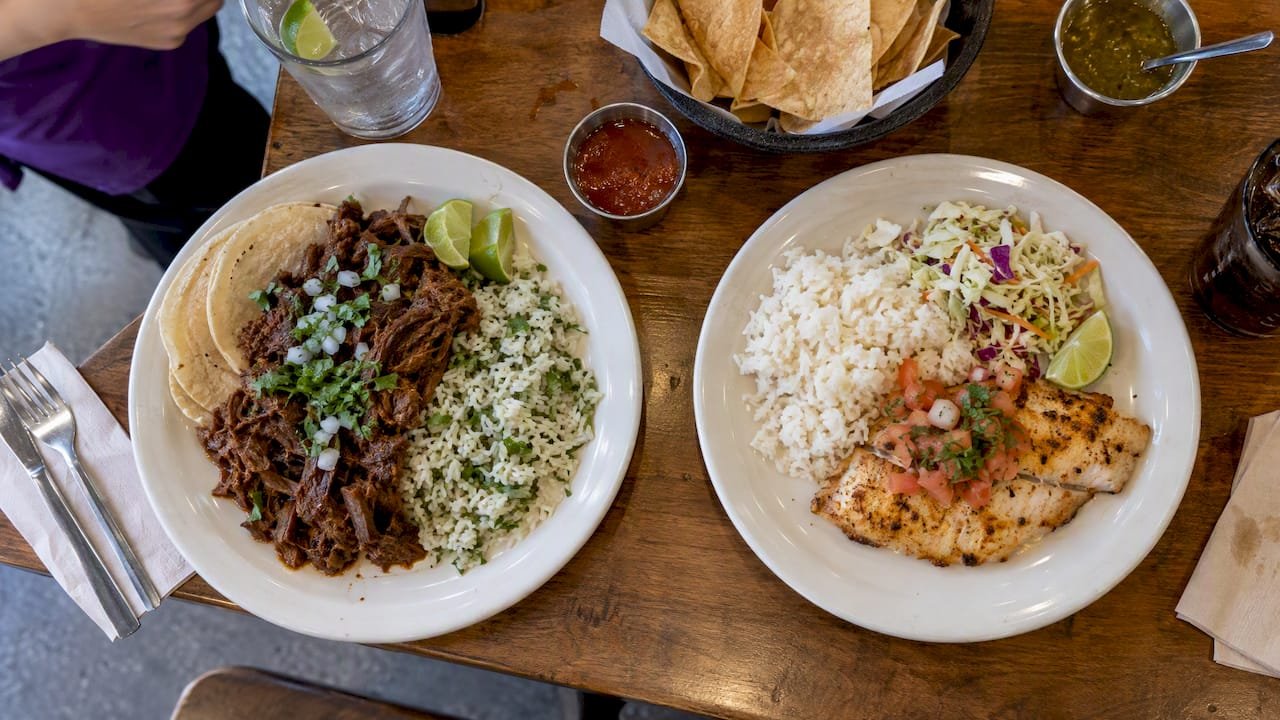
The best crew lunch is a build-your-own meal built on slow-cooked protein, with a few sides that nobody has to babysit. It survives a late truck, a delayed break or a job that runs over. It also lets the vegan, the gluten-free eater and the guy who wants double meat all eat from the same table. Below are the formats that work, how to match them to your crew, and how to plan the logistics so lunch arrives when people can actually eat it.
TL;DR
- Choose food that forgives delay: braised or pulled meats, rice or grain bases and sheet-pan items stay good when the break slips.
- Build-your-own beats set plates. One base, several proteins and a toppings line cover most dietary needs without special orders.
- Ask about allergies and diets before you order, not at the table.
- Plan for the clock: food on site before the break, not at it.
- For Winnipeg and Manitoba crews, our catering packages start at $1,050 and a burrito bar is priced per person.
Table of Contents
- What a good crew lunch has to do
- Ten crew lunch ideas that work
- Match the meal to the crew
- Plan for dietary needs before you order
- Timing and logistics
- Our perspective: why we build for the long break
- Budget: what feeding a crew costs
- Order from Burrito Splendido
- Making it a habit
- FAQ
- Sources
What a good crew lunch has to do
A team lunch at a desk and a crew lunch on a job site are different problems. A crew is often physically busy, spread across a site, and working to a schedule that moves. That changes what “good” means.
First, the food has to be filling without making people sluggish. A typical catered box lunch can be heavy: a nutrition guide for healthy catering vendors from a US health system notes that a typical box lunch can top 1,400 calories once the sandwich, chips, cookie and sweet drink are added together. A crew on its feet can use the energy, but a 2 p.m. crash on a ladder is a safety issue, not just a comfort one.
Second, it has to hold. Firehall cooks, whose dinners get interrupted by calls, lean on braised, slow-cooked and sheet-pan meals because they can be kept warm or reheated without falling apart. The same logic applies to a framing crew, a film unit or a road-maintenance team.
Third, it has to be simple. Superyacht galley writers make the point that crew often don’t want elaborate food. They want food that is hot, plentiful and not the same as yesterday.
Ten crew lunch ideas that work
1. Build-your-own burrito bowls
The most flexible format on this list. One tray of rice or greens, two or three proteins, beans, salsa, cheese and toppings. Everyone builds the plate they want. A bowl skips the tortilla for gluten-free eaters and a pile of beans and vegetables serves the vegans. If protein is the priority, our guide to hitting 30 to 45 g of protein in a burrito bowl shows how the macros stack up.
2. Pulled pork, beef or chicken with a starch
Sailors have used this trick for generations: a rice or pasta filler with something over it, one pot for the base and one for the topping. It is also cheap, because the starch carries the plate. On land, swap the pot for a chafing dish and the principle is the same. Braised carnitas, shredded barbacoa and adobo chicken all suit it, and they reheat well. If you are unsure how barbacoa differs from birria, this quick comparison settles it.
3. Taco bar
Soft tortillas, two proteins, a vegetarian filling and a spread of toppings. Tacos are easy to eat standing up and with gloves just off. They are smaller portions, so people can go back for a second round according to appetite. A fish option makes a nice change from red meat when you can get it.
4. Quesadilla platters
Quesadillas cut into wedges travel well and are easy to eat one-handed on a tailgate. Keep fillings simple so they stay together: cheese plus one thing. Our list of quesadilla fillings that won’t fall apart gives combinations that survive a drive.
5. Soup and a roll
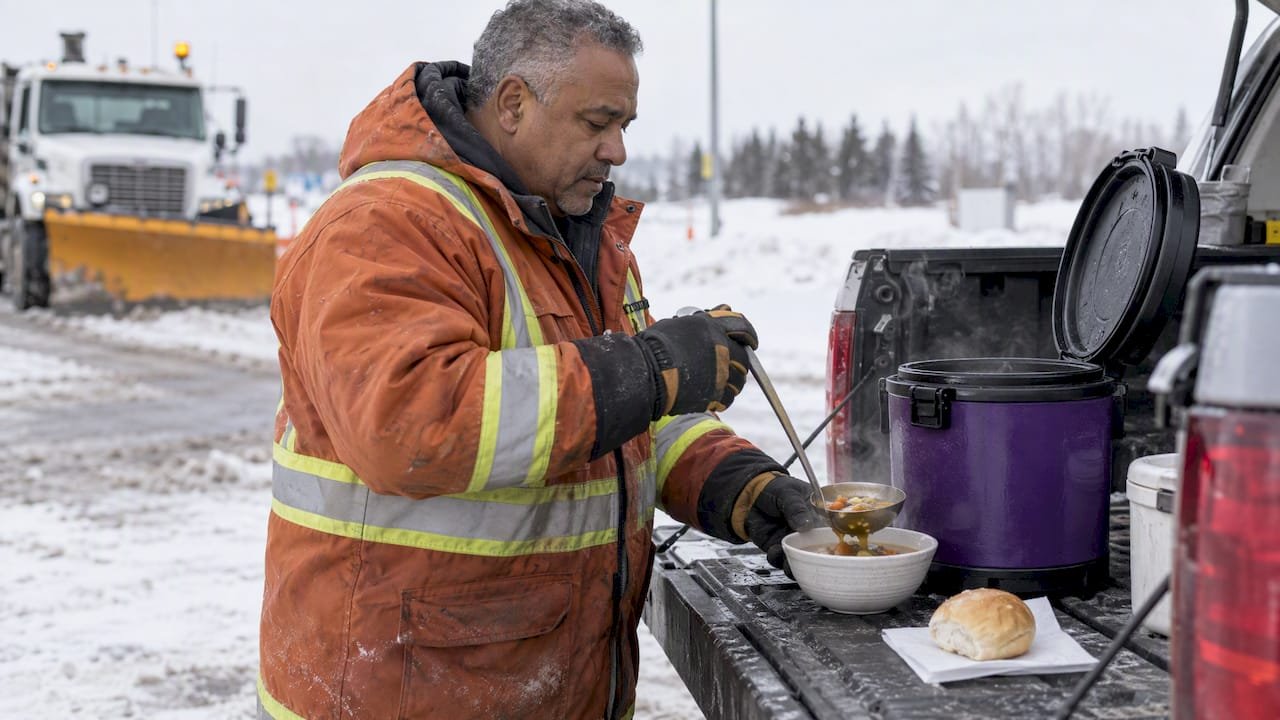
For a cold-weather crew in a Manitoba October, a hot soup in an insulated carrier does more for morale than a sandwich tray. Pair it with a salad or a half portion of something filling. Soup is also forgiving on timing.
6. Big salads with a protein add-on
Salads are the weak spot of most crew lunches because they read as “light”. Make them substantial: grains, beans, roasted vegetables, a real portion of protein on the side. Serve dressing separately so the leaves stay crisp.
7. Sheet-pan fajita-style trays
Peppers, onions and chicken or beef roasted on a tray need little attention and hold well in a warm oven. They also work as a filling for tortillas or over rice.
8. Breakfast burritos for early starts
If your crew starts at 6 a.m., a mid-morning breakfast burrito can be the real lunch. Wrapped in foil, they hold heat for a while and need no cutlery.
9. Chili and rice
The classic backup meal. Galley guides list chilli, pulled meats and curries among the things worth having ready when service overruns. Chili makes sense for a crew because it improves when it sits.
10. Something sweet
A small dessert costs little and changes the mood of the break. One item per person is enough.
Match the meal to the crew
| Crew situation | Best format | Why |
|---|---|---|
| Outdoor site, cold weather | Soup, chili, braised meats | Stays hot, easy to carry |
| Mixed diets (vegan, gluten-free, keto) | Burrito bar or bowls | One base, many plates |
| Breaks that can slip | Pulled proteins, rice, sheet-pan trays | Holds without drying out |
| Tight budget, large group | Rice or bean base with one protein | Starch stretches the spend |
| Standing, no tables | Wrapped burritos, quesadilla wedges | One-handed eating |
| Very early start | Breakfast burritos | No cutlery, travels warm |
Plan for dietary needs before you order
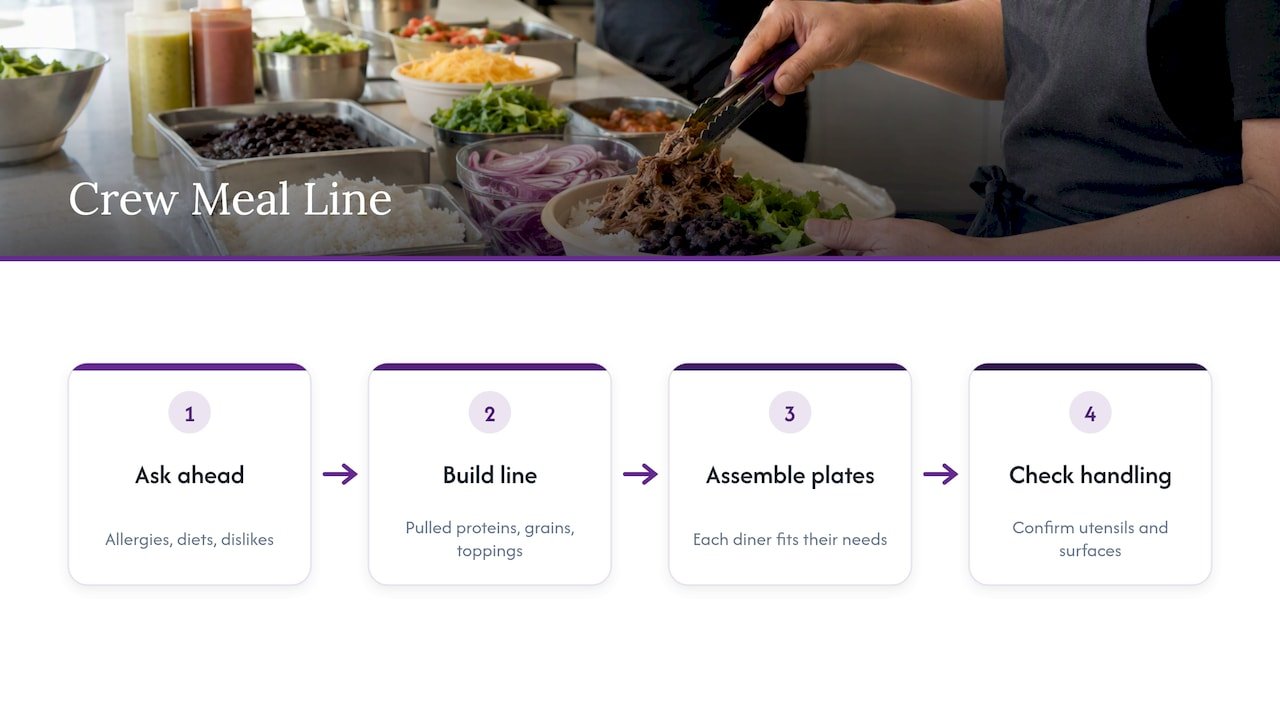
One of the most common mistakes is treating diets as exceptions. Vegan, vegetarian, gluten-free and halal needs are normal on a crew today, so treat them as part of the base order. Ask in advance, with a simple message to the crew lead: any allergies, any diets, anything people won’t eat.
The build-your-own approach does most of the work here. A line of pulled proteins, grains and toppings lets each person assemble a plate that fits their own needs rather than ordering a separate special meal. Cross-contamination is the one thing to confirm with your caterer: ask how serving utensils and surfaces are handled, especially for serious allergies. Anyone with a medical allergy should speak to the caterer directly, and should not rely on a label on a tray.
If you want a deeper planning reference, see our dietary-friendly catering guide and the vegan catering menu ideas.
Timing and logistics
Good food that arrives late is bad lunch. A few rules of thumb:
- Aim for arrival before the break. Fifteen minutes early gives someone time to set up and means the crew eats rather than waits.
- Give a headcount you trust. Count the day’s actual crew, then add a small buffer for the person who brings an extra.
- Name one contact on site. The driver should know who to call and where to unload.
- Ask about set-up. Do you need tables, chafing dishes, serving utensils? Some catering services include delivery and set-up for a fee. Ours is $20.
- Decide on leftovers. Braised proteins and rice keep well for the next day, so a bit of extra is rarely wasted.
Our corporate catering checklist walks through these steps in order, and the team lunch ideas article covers scaling the same meal from five people to fifty.
Our perspective: why we build for the long break
We started in Winnipeg in November 2012 with a simple idea: cook from scratch each day and use what Manitoba grows and raises. That shapes how we think about crew food.
First, we think the best crew meals are the ones that start from good ingredients and slow cooking. Our carnitas, barbacoa and adobo chicken are slow-cooked and hand-pulled in the kitchen, which is exactly the kind of protein that holds when a day goes sideways. Our tortillas are pressed with 100% Manitoba flour, and we work with local suppliers such as Bothwell Cheese and Granny’s Chicken.
Second, we run a deep-fryer-free kitchen. For a crew that has to work all afternoon, a meal that leaves you energized rather than heavy is a real benefit, not a marketing line.
Third, we think a burrito bar is the fairest way to feed a mixed group. Our staff are trained to handle gluten-free, vegan, keto and paleo requests and to take cross-contamination seriously, so the person with the tightest diet is not an afterthought.
Finally, we serve crews, not just offices. We have a location at the CANEX Mall at CFB Shilo, which means we think regularly about high-protein meals for people with demanding days.
— Austin
Budget: what feeding a crew costs
Costs depend on headcount, format and service level. For catered orders from us, these are the published figures:
| Option | Price |
|---|---|
| Burrito Express | $1,050 to $1,150 |
| Burrito Express Deluxe | $1,550 |
| Bueno Burrito Bar | $1,699 per person |
| Delivery and set-up fee | $20 |
| Catering staff | $15 per hour per staff member |
| Gratuity | 10% |
Check the catering page for what each package includes and how many it serves before you decide, as we don’t list that here. Staff are optional, and if your crew is happy to serve themselves, you can skip that line.
If you are comparing options in general, think in cost per plate and cost per wasted plate. A cheap tray that half the crew skips because of dietary needs costs more than a slightly pricier bar everyone uses.
Order from Burrito Splendido
For Winnipeg and Manitoba crews, we cater from-scratch Mexican-inspired food with gluten-free, vegan, vegetarian, keto and paleo options. Look through the full menu for burritos, tacos, quesadillas, salads, soup and sides, or go to our catering packages to plan a group order. Not sure which fits your crew? Start with the Burrito Express for a straightforward lunch, or the burrito bar if diets vary a lot.
Making it a habit
Crews remember lunch. A few small habits keep it good over weeks:
- Rotate the format. Bowls one week, tacos the next, soup and chili when it turns cold.
- Collect feedback quickly. Two questions after lunch: was it enough, and what would you change?
- Keep a backup. Have a freezer-friendly option such as chili or pulled meat for the day the order falls through.
- Watch the heavy extras. Chips, cookies and sweet drinks add up fast. Offer water and keep desserts small.
- Keep it healthy by default. Our guides to healthy catering menu examples and healthy catering for corporate meetings have ideas that don’t feel like diet food.
The pattern is simple. Choose food that holds, give people a choice, get it there early and ask about diets first. Everything else is a variation.
FAQ
What is the easiest crew lunch to organize for a mixed group?
A build-your-own bowl or burrito bar. One base, two or three proteins and a toppings line mean each person assembles what they can eat. You order once rather than juggling special meals.
What foods hold up if the break runs late?
Braised and slow-cooked meats, rice, beans, soup and sheet-pan trays. They can stay warm or be reheated without drying out, which is why crews who work unpredictable shifts rely on them.
How early should crew lunch arrive?
Aim to have it on site at least 15 minutes before the break, so it is set up and ready when people sit down. Give the driver one on-site contact and a clear unloading spot.
How do I handle vegan, gluten-free and allergy needs?
Ask the crew before ordering, and treat those needs as part of the standard order. A build-your-own format covers most diets. For serious allergies, talk directly to the caterer about cross-contamination and utensil handling before you confirm.
Sources
- Firehall Meals: Firefighter recipes and crew meal ideas
- The Ultimate Yacht Chef Prep Guide, The Galley Gang
- Crew Meals: Feeding Body and Mind, Onboard Online
- Feeding the offshore crew, The Book of Sail
- Healthy Catering Vendor Guide, Kaiser Permanente supplier site