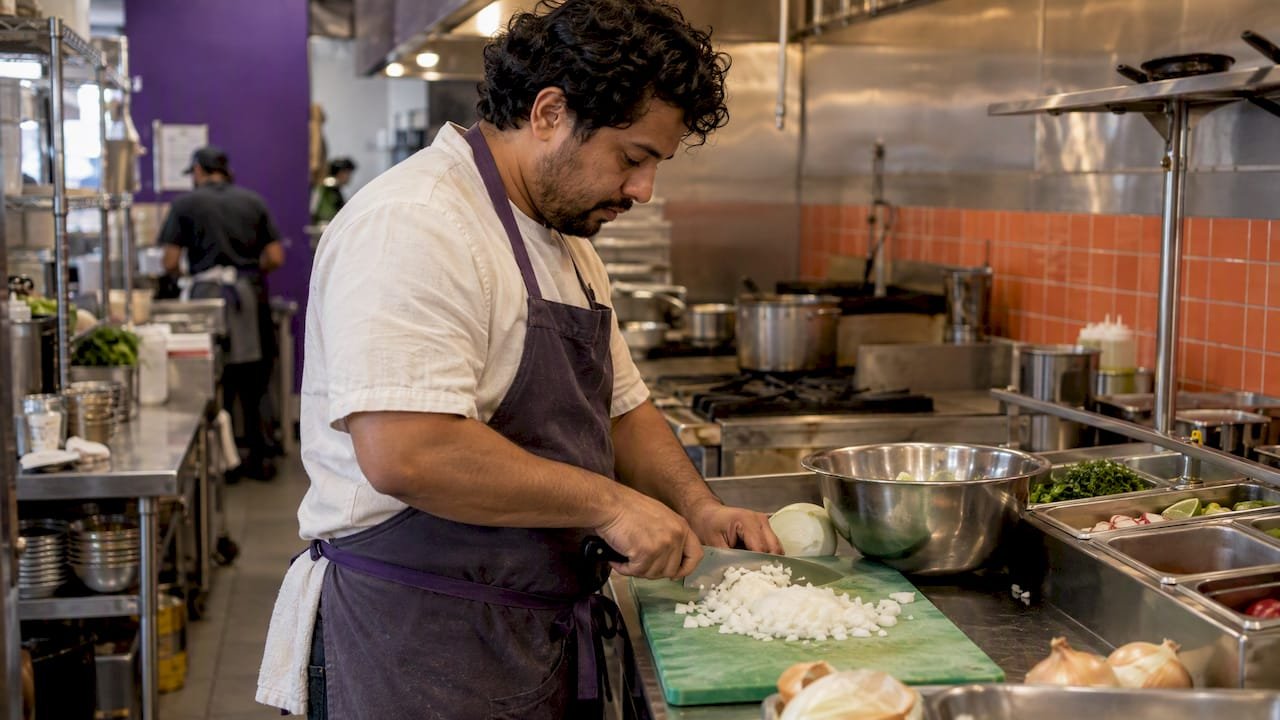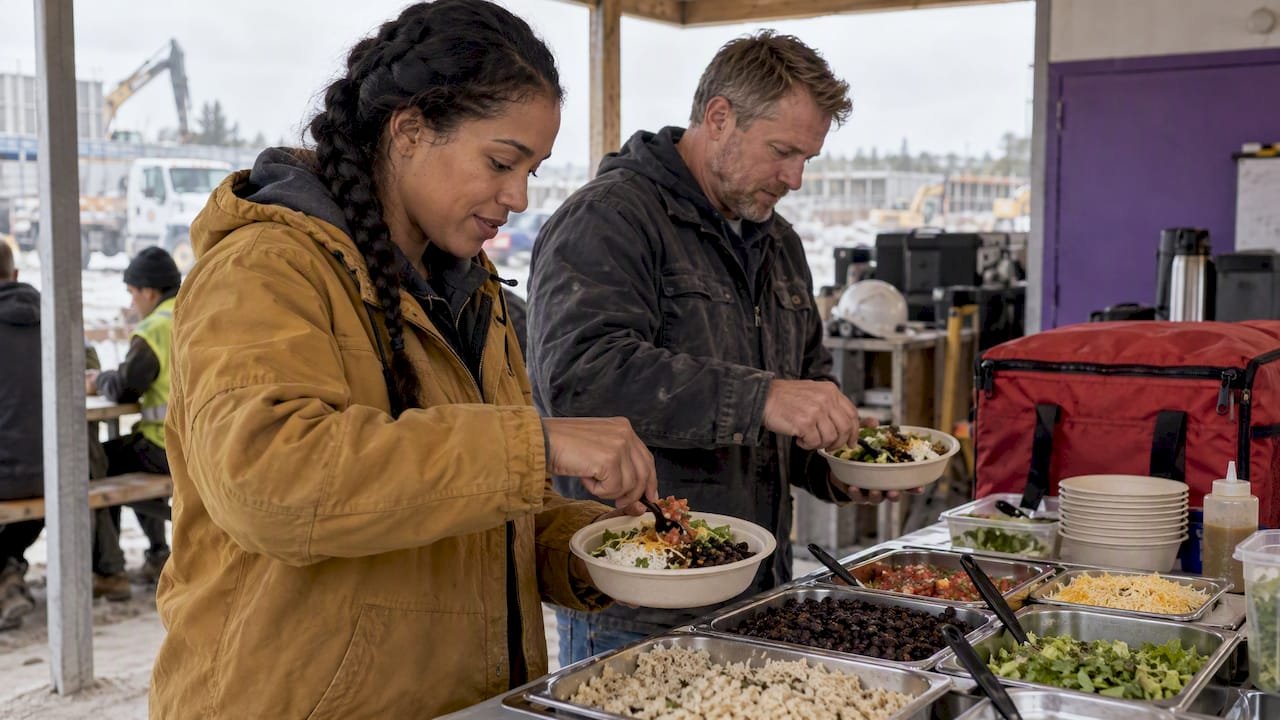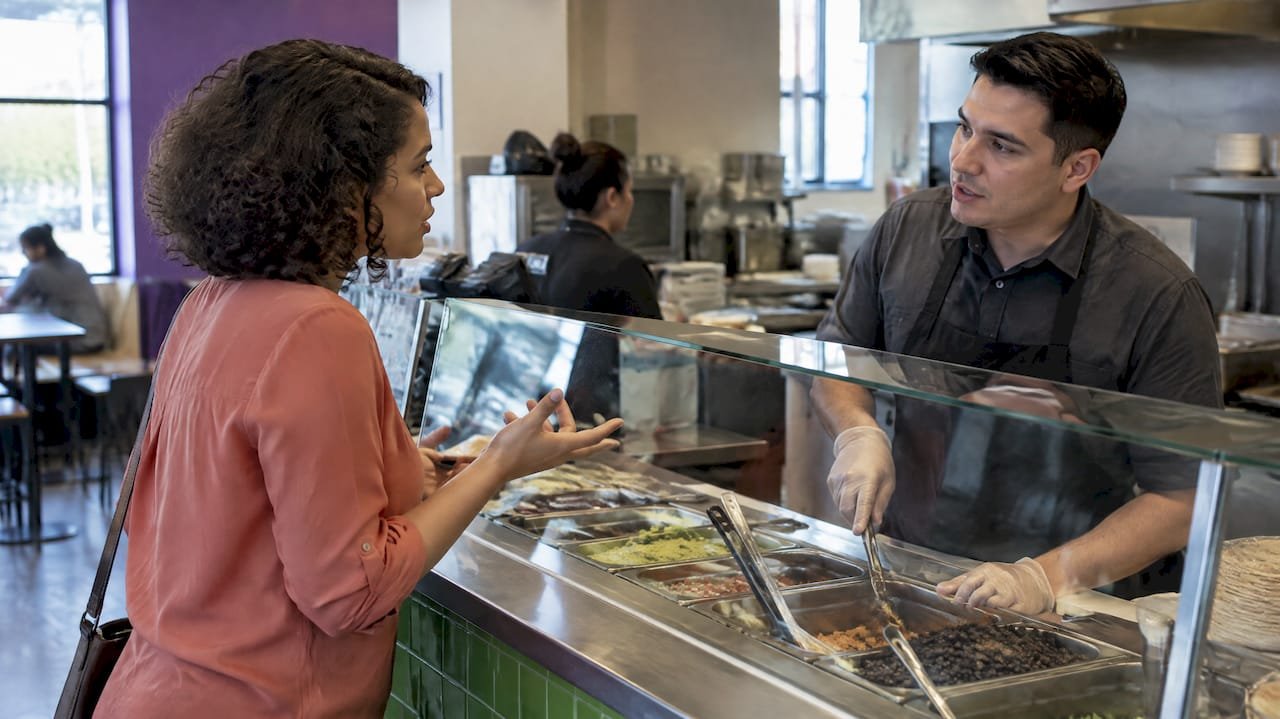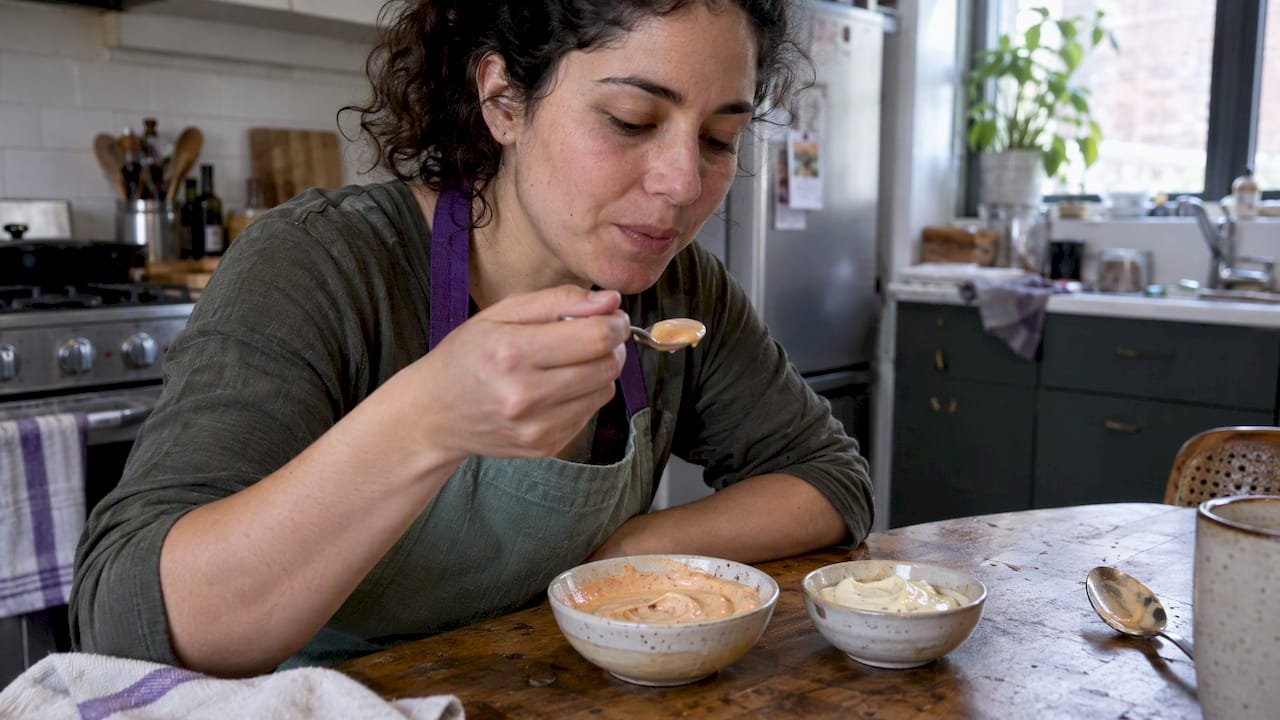
Scratch kitchen dining means the restaurant makes its food from raw ingredients on site: sauces, breads, tortillas and proteins are prepared in the kitchen, not opened from a bag, a box or a freezer tray. The label is easy to print on a menu and hard to live up to. This guide explains what it covers, what it costs a restaurant to do properly, and the questions that tell you whether a kitchen is the real thing. We also show what it looks like in practice at Burrito Splendido in Winnipeg.
TL;DR
- A scratch kitchen starts with raw ingredients and builds the dish in house. Nothing arrives pre-mixed, pre-cooked or pre-breaded.
- It is a spectrum, not a badge. Ask what is made on site: sauces, breads or tortillas, proteins, dressings, desserts.
- Scratch cooking costs more in labour, so the guest is paying for freshness and taste, not for convenience.
- Short ingredient lists, visible prep and staff who can name their suppliers are the best signs.
- In Winnipeg, we press tortillas with 100% Manitoba flour and slow-cook our proteins in house every day.
Table of Contents
- What “scratch kitchen” actually means
- Scratch kitchen versus fast food and “fresh” claims
- What scratch cooking costs a restaurant, and why it shows on your plate
- Local sourcing: the natural partner of scratch cooking
- How to tell if a restaurant really cooks from scratch
- Perspective: what scratch means in our kitchen
- Why Mexican food suits the scratch approach
- Scratch kitchen dining in Winnipeg: where to start
- Order from our scratch kitchen
- FAQ
- Sources
What “scratch kitchen” actually means
The plain definition: a kitchen that cooks from basic, mostly unprocessed ingredients rather than from ready-made components. A scratch kitchen chops its own onions, braises its own meat, mixes its own dressings and bakes or presses its own bread. A kitchen that assembles frozen, pre-sauced or pre-marinated products is something else, however fresh the plating looks.
Chefs describe it as a question of intent. In a Vancouver Sun profile, Splash Bistro’s chef Manpreet Dhindsa ties authentic cooking to mastering good ingredients, and Toronto operators interviewed by Foodism describe building a kitchen from scratch as a structural decision that means turning away from convenient pre-mixes.
A useful way to think about it is by layers:
- Ingredients: whole vegetables, whole cuts of meat, flour, not diced-and-bagged or pre-portioned.
- Components: sauces, salsas, dressings, stocks, marinades, breads and tortillas made in house.
- Cooking method: braised, roasted, grilled or pressed on site, not reheated from a factory product.
- Daily rhythm: prep happens the same day or the day before, in batches sized to demand.
Most restaurants are scratch at some layers and not others. That is fine, as long as the menu does not claim more than the kitchen does.
Scratch kitchen versus fast food and “fresh” claims
The word “fresh” has no fixed meaning on a menu. A frozen patty cooked to order is hot, but it is not made from scratch. The differences show up in four places.
| Scratch kitchen | Assembly kitchen | |
|---|---|---|
| Sauces and salsas | Made in house in batches | Poured from bags or tubs |
| Bread or tortillas | Baked or pressed on site, or from a named local baker | Shipped frozen or shelf-stable |
| Proteins | Braised, roasted or grilled from raw | Arrive cooked, marinated or breaded |
| Frying | Often limited, or no deep fryer at all | Fryer drives much of the menu |
| Menu size | Tighter, built around what the kitchen can prep | Wide, because components are interchangeable |
The last row surprises people. A very long menu with dozens of unrelated dishes is often a sign that the kitchen runs on pre-made components, because no team can scratch-prep that many things daily.
What scratch cooking costs a restaurant, and why it shows on your plate
Scratch cooking is not the cheap route. Operators quoted by Foodism describe the shift as moving cost away from premixed food products and toward labour. The Vancouver Sun piece makes the same point: preparing sauces, breads and proteins by hand takes more staff time, and the payoff is a loyal guest base that notices the difference.
That is worth knowing as a diner for two reasons. First, a scratch kitchen is not trying to compete on the lowest possible price, it is competing on taste and freshness. Second, the cost is a reason to be sceptical of a scratch claim paired with rock-bottom prices and a giant menu. The numbers rarely add up.
Nutrition is the other argument. Chef Nutcha Phanthoupheng of Baan Lao argues that a scratch approach supports better nutrition by removing frozen and processed elements, as reported in the Vancouver Sun profile above. That is a chef’s view, not a clinical finding, but it matches common sense: when you control every ingredient, you control the salt, sugar and oil that go into it. If you want to go further on how fresh preparation relates to food quality, this piece on why fresh prepared food matters is a good place to start.
Local sourcing: the natural partner of scratch cooking
A kitchen that cooks from raw ingredients cares where those ingredients come from, because there is nothing between the farm and the pan to hide behind. Shorter supply chains mean produce spends less time in storage and transport, and fewer food miles.
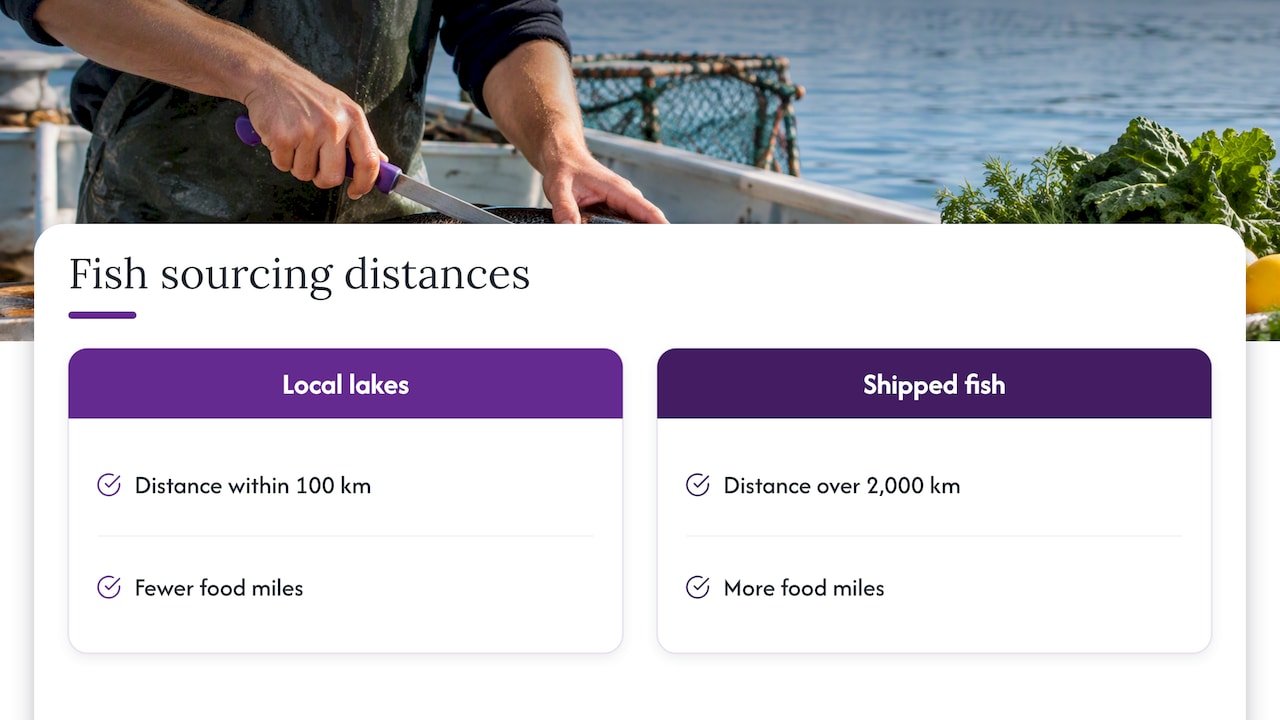
Winnipeg has a clear example of the principle. Dean Herkert, owner and chef at Bistro on Notre Dame, told the Manitoba Métis Federation that sourcing fish from local lakes within 100 km, rather than shipping it from more than 2,000 km away, is a no-brainer for the environment. The same logic applies to flour, pork, chicken and cheese.
If this is a subject you care about, we have written about it in more depth: why local food matters in 2026, tips for sustainable restaurant choices in Manitoba and our Manitoba-first restaurant philosophy.
How to tell if a restaurant really cooks from scratch
You do not need to see the kitchen. Most of the evidence is on the menu and in how staff answer simple questions.
Ask about the small things
The big items are the easy ones to make from scratch for show. The tell is in the details. Ask:
- Is the bread, bun or tortilla made here, or bought in? If bought, from whom?
- Are the sauces and dressings made in house?
- How are the meats cooked, and when? Slow-braised dishes cannot be rushed, so they have to be prepped hours ahead.
- Is there a deep fryer? A kitchen without one has made a deliberate choice.
- Which ingredients come from named, local suppliers?
Staff at a real scratch kitchen answer these quickly and with detail. Vague answers, or “it’s all fresh”, tell you something too.
Read the menu like a cook
- Menu size: a focused menu with repeated ingredients suggests daily prep and little waste.
- Named suppliers: farms and producers named on the menu or the website are a commitment someone can check.
- Seasonal changes: a special built around what is available this month, such as a lake fish taco, is hard to fake with frozen product.
- Modifications: a kitchen that cooks from raw can usually leave out an ingredient or swap it. An assembly kitchen is limited to what is in the tub.
Check the dietary claims
Scratch cooking makes allergen control easier, because you know every ingredient, but a menu label still deserves a question. In Canada, the Canadian Food Inspection Agency treats allergen-free, gluten-free and precautionary statements as part of the overall impression of a label or advertisement, so a claim should be accurate and not misleading. If you have coeliac disease or a serious allergy, tell the staff before you order and ask how cross-contamination is handled. Your doctor or allergist is the right person for advice about what is safe for you personally.
Perspective: what scratch means in our kitchen
We opened in Winnipeg in November 2012 with a simple idea: fresh, local, and doing the right thing. Everything we serve is prepared in our kitchens every day, and we would rather tell you exactly how than hide behind the word “fresh”.
Here is what that looks like for us:
- Tortillas: house-pressed, made with 100% Manitoba-produced flour.
- Proteins: Carnitas (braised pork), Barbacoa (shredded beef) and Adobo Chicken are slow-cooked and hand-pulled in house. Our pork comes from local farms, our poultry from Granny’s Chicken.
- Cheese and produce: Bothwell Cheese, with fresh produce sourced primarily through Peak of the Market.
- No deep fryer: we run a deep-fryer-free kitchen, which keeps the cooking focused on braising, grilling and pressing.
- Seasonal specials: Manitoba whitefish and pickerel tacos, when they are in season.
The honest part is that this takes more work. Braising pork and pulling beef by hand is slower than opening a bag, and it is the kind of labour cost other chefs describe as the price of the model. We think the difference is obvious on the first bite, and it is why our team can talk to you about gluten-free, vegan, vegetarian, keto and paleo orders with real knowledge of what is in each component. Staff are trained to handle specific dietary needs and cross-contamination concerns, so ask us.
We also try to be where people need us. In April 2024 we opened in the CANEX Mall at CFB Shilo, as Shilo Stag News reported, bringing locally sourced food to members of the Canadian Armed Forces and their families.
— Austin
Why Mexican food suits the scratch approach
Mexican cooking is built from components: a tortilla, a braised meat, a salsa, beans, rice, a cheese. Each one can be made from scratch, and each one tastes noticeably different when it is. That also makes it easy to judge. A pressed tortilla is softer and more flavourful than a shelf-stable one, and a slow-cooked, hand-pulled meat has a texture that a pre-cooked product cannot match.
If you want to learn what to look for, a few of our guides break the components down:
- Barbacoa versus birria in four quick checks
- What a burrito is, and how to build one
- The role of house-made salsas
- A checklist for authentic tacos
And if you are choosing between Winnipeg Mexican restaurants, our Mexican restaurant checklist covers what to ask before you pick.
Scratch kitchen dining in Winnipeg: where to start
Winnipeg has a strong tradition of owner-run restaurants that built their menus the slow way, and the Winnipeg Free Press has covered local operators who grew from small kitchens into city institutions. The same pattern holds across the city: the places worth returning to are usually the ones that can tell you what they make themselves.
A practical routine for trying a new place:
- Look at the website and menu for named suppliers and a focused menu.
- Order something simple that depends on house-made components, such as a taco, a soup or a bowl.
- Ask one question about how it is made. Note how the staff answer.
- Come back and try the seasonal special.
For a lighter lunch, our guide to seasonal Manitoba bowls shows how we think about it, and our low sodium ordering tips help if you are watching salt.
Order from our scratch kitchen
Our menu covers burritos, salads, tacos, quesadillas, soup, sides, kids’ items, sweet endings and beverages, all customizable. We are open for dine-in, takeout and online ordering, with locations across Winnipeg and at CFB Shilo.
Planning an office lunch or an event? Our catering page lists the packages. Burrito Express is $1,050 to $1,150, and Burrito Express Deluxe is $1,550. Delivery and set-up is $20, catering staff are $15 per hour per staff member, and gratuity is 10%. Check the page for what each package includes.
FAQ
What does “scratch cooking” mean?
It means preparing food from raw, basic ingredients in the restaurant’s own kitchen instead of using frozen, pre-mixed or pre-cooked products. Sauces, breads, dressings and proteins are made on site. Many kitchens do this for some items and not others, so ask what is made in house.
Is a scratch-made restaurant healthier?
Not automatically. Scratch cooking gives the kitchen full control over salt, sugar and oil, and chefs such as Nutcha Phanthoupheng link it to better nutrition because processed elements are removed. Whether a dish suits your diet still depends on what you order, so ask about ingredients if you have a specific need.
How can I tell if a menu is really made from scratch?
Look for a focused menu, named local suppliers and seasonal specials. Then ask whether tortillas or bread, sauces and meats are made in house. Confident, specific answers are a good sign.
Does Winnipeg have scratch kitchens for dietary needs like gluten-free or vegan?
Yes. At Burrito Splendido, we offer gluten-free, vegan, vegetarian, keto and paleo options, and our staff are trained on cross-contamination. If you have an allergy or coeliac disease, tell us when you order so we can walk you through the menu.
Sources
- Recipe for Success: Head Chef at Splash Bistro, Vancouver Sun
- The love story behind Mamakas Taverna, Foodism CA
- Bistro on Notre Dame, Manitoba Métis Federation
- Allergen-free, gluten-free and cross-contamination statements, Canadian Food Inspection Agency
- Holy Guacamole! It’s a splendido opening, Shilo Stag News
- Built from scratch, Winnipeg Free Press