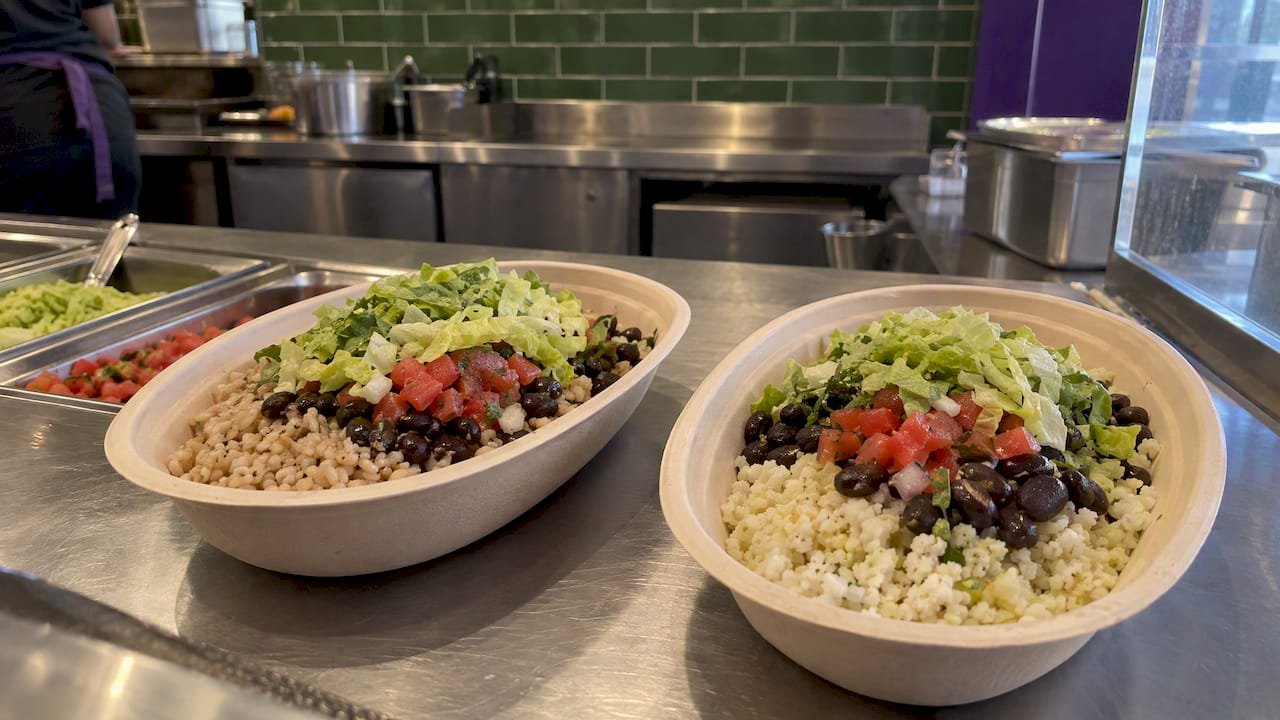
Cauliflower rice is the lighter pick: far fewer calories and carbs per cup, with a mild vegetable taste. Brown rice is the more filling, more traditional pick: a whole grain with a nutty flavour and a chewy bite. Neither is “better” for everyone. The right one depends on whether you are counting carbs, managing blood sugar, fuelling training, or simply building a bowl you will enjoy eating. This guide gives you the numbers, the taste and texture differences, the cooking tricks that stop cauliflower rice going soggy, and a simple way to decide.
TL;DR
- Carbs and calories: cooked brown rice has roughly 20 to 25 g of carbs per half cup, while cooked cauliflower rice has only a few grams. Cauliflower rice wins easily for low-carb, keto and paleo eating.
- Fullness and fuel: brown rice gives you more energy, more protein and a satisfying chew. It suits active days and bigger appetites.
- Taste: brown rice is nutty and chewy. Cauliflower rice tastes like cauliflower, so season it boldly and treat it as a vegetable, not a clone of rice.
- Cooking: cauliflower rice holds a lot of water. Cook it hot and dry, and go easy on sauce.
- Blood sugar: brown rice can still fit when the portion is controlled and it is eaten with protein and vegetables. Cauliflower rice is the easy way to cut the carb load further.
Table of Contents
- Cauliflower rice vs brown rice at a glance
- Calories, carbs and fibre compared
- Taste and texture: does cauliflower rice taste like rice?
- How to cook cauliflower rice so it is not soggy
- Which is better for low-carb, keto and paleo eating?
- What about blood sugar and weight goals?
- Which is better if you train hard?
- How to choose: a quick decision guide
- Building the bowl: toppings that work with either base
- Our perspective
- Order a bowl built your way
- FAQ
- Sources
Cauliflower rice vs brown rice at a glance
Cauliflower rice is raw cauliflower grated or pulsed into rice-sized grains, then lightly cooked. Brown rice is a whole grain that keeps its bran and germ along with the starchy endosperm, which is why it is considered more nutritious than white rice, as Diabetes Strong explains.
| Cauliflower rice | Brown rice | |
|---|---|---|
| What it is | Grated or riced cauliflower | Whole-grain rice with bran and germ |
| Carbs (cooked, per 1/2 cup) | About 3 g | About 23 g |
| Fibre (cooked, per 1/2 cup) | About 2 g | About 1.7 g |
| Calories | Very low | Moderate |
| Flavour | Mild, vegetable | Nutty |
| Texture | Soft, tender, can turn watery | Chewy, substantial |
| Best for | Low-carb, keto, paleo, lighter meals | Active days, filling meals, traditional bowls |
The carb and fibre figures in the table come from a dietitian-reviewed comparison of rice types. The rest of this article unpacks them.
Calories, carbs and fibre compared
The gap in carbohydrate is the headline. Health Canada’s nutrient tables list a 125 mL serving of cooked long-grain brown rice at 115 calories and 24 g of carbohydrate. A raw cup of cauliflower rice (about 107 g) comes in at roughly 27 calories and 5 g of carbohydrate, with about 2 g each of protein and fibre.
A few things to keep in mind when you read those numbers:
- Serving sizes differ. A 125 mL serving is about half a cup. A cup of cooked brown rice is therefore roughly double the Health Canada figure, and many restaurant bowls hold more than one cup. Compare like with like before you decide one is “much worse.”
- Raw versus cooked. Cauliflower rice shrinks and loses water as it cooks, so a raw cup and a cooked cup are not the same thing. The difference in carbs stays large either way.
- Fibre is closer than you would think. Per half cup, cauliflower rice and brown rice land in a similar fibre range, so you are not giving up fibre by switching. You are giving up most of the starch.
Protein and micronutrients
Brown rice carries more protein per serving, and it also supplies minerals such as magnesium and manganese. Cauliflower, being a vegetable, is a good source of vitamin C and vitamin K. In practice this means the two foods are not direct nutritional twins: one is a starch with some minerals, the other a low-energy vegetable with vitamins. If you swap one for the other, make sure the rest of your bowl still brings protein, which is easy with beans, grilled chicken, slow-cooked pork or beef, or tofu.
Taste and texture: does cauliflower rice taste like rice?
Not really, and it is better to accept that up front. Brown rice has a nut-like flavour and a chewy texture, which is how Alberta Health Services describes it. Cauliflower rice tastes like mild, slightly sweet cauliflower, and it is soft rather than chewy.
That is not a flaw. Cauliflower rice works well as a neutral, lightly starchy base that carries whatever you put on it: garlic, lime, cumin, smoked paprika, fresh cilantro, a spoonful of salsa. Brown rice does the same job but adds its own personality and bulk.
A practical way to think about it:
- Want the bowl to taste like a classic rice-and-beans burrito bowl? Brown rice gets you closest.
- Want the toppings to be the star and the base to disappear? Cauliflower rice is ideal.
- Cannot decide? Mix half and half. You keep some chew and cut the carbs by roughly a third to a half, depending on how you portion it.
How to cook cauliflower rice so it is not soggy
Cauliflower is mostly water, and riced cauliflower releases that water as soon as it heats. Most disappointing cauliflower rice comes down to steaming it in its own liquid. These habits help:
- Start with a hot, wide pan. A wide skillet gives moisture room to evaporate instead of pooling.
- Cook it dry first. Add the riced cauliflower with spices but no sauce, and let it sizzle for a few minutes. Add oil or butter near the end for flavour.
- Do not crowd the pan. Cook in batches if you are making a family-size portion.
- Keep it short. A few minutes is enough. Overcooked cauliflower rice turns mushy and loses its slight bite.
- Season at the end. Salt early draws out even more water, so add it once the moisture has cooked off.
- Go easy on wet toppings. Cauliflower rice does not soak up liquid the way grains do, so drown it in sauce and the bowl turns soupy. Spoon salsa or dressing on top instead of stirring it through.
- If you use a pressure cooker, a steamer basket keeps the cauliflower out of the liquid, which helps prevent a soggy result.
Brown rice is more forgiving: it needs more time (it is a whole grain, so it cooks longer than white rice) but it holds its shape, reheats well and stands up to sauce. That makes it the easier option for big meal-prep batches. If you prep bowls ahead, our meal prep workflow for burrito bowls shows how to keep each component fresh through the week.
Which is better for low-carb, keto and paleo eating?
If you are following a low-carb, keto or paleo plan, cauliflower rice is the one that fits. With only a few grams of carbohydrate per half cup, it leaves room in your daily budget for beans (if your plan allows them), vegetables, nuts and sauces. Brown rice, even in a modest portion, uses up a large share of a strict low-carb allowance, and it is a grain, so it falls outside paleo.
If you want a full walk-through, our paleo burrito bowl with crisp cauliflower rice is a 30 to 40 minute meal-prep recipe built around exactly this swap. And if you would rather skip the rice altogether when you order out, our guide to rice-free burrito options gives you recipes and the exact phrases to use at the counter.
What about blood sugar and weight goals?
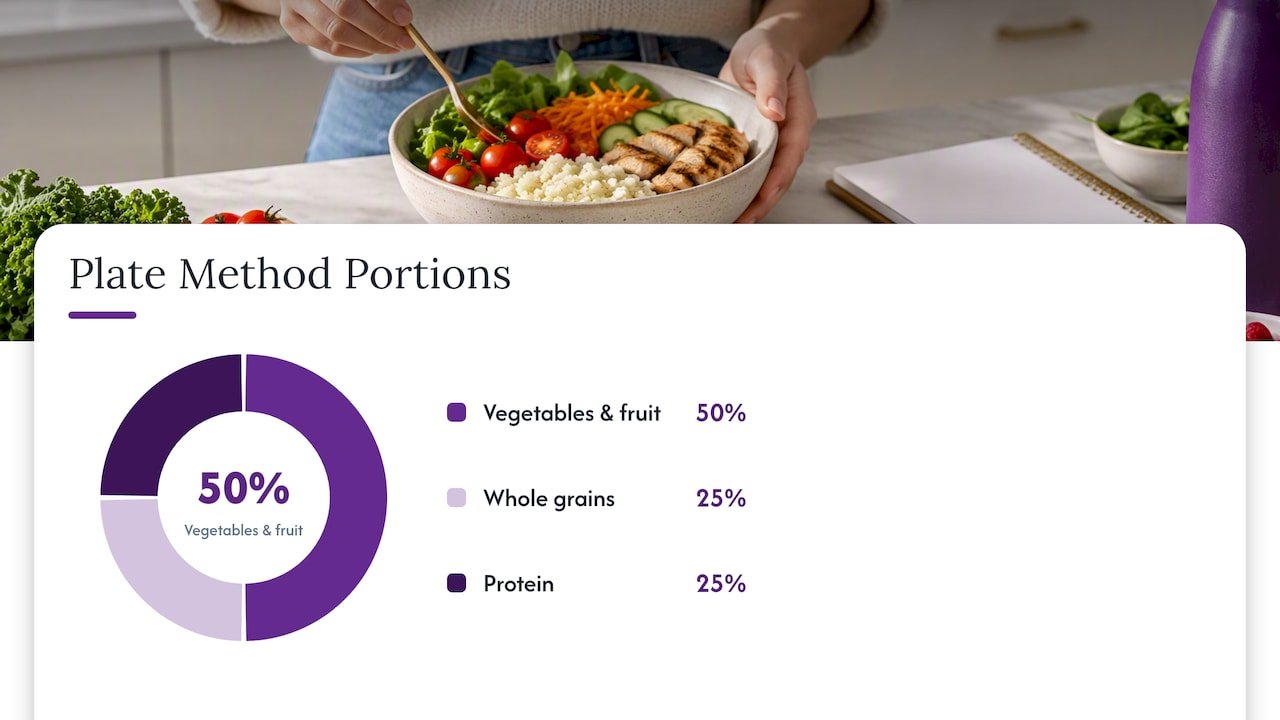
Cauliflower rice delivers far fewer carbohydrates per serving, so it is the simple route if you want to lower the carb load of a meal. That does not make brown rice off limits. Diabetes Canada says that rice, especially brown rice and lower-glycemic varieties such as parboiled, can fit into eating for people living with diabetes, and that portion size and the other foods in the meal are what matter most. The same page describes the plate method recommended by Canada’s Food Guide: half vegetables and fruit, a quarter whole grains, a quarter protein.
Diabetes Strong makes a related point: brown rice is healthier than white rice but still a high-carbohydrate food, so the portion needs watching. In a burrito bowl, that translates to:
- Brown rice in about a quarter of the bowl, with plenty of vegetables, beans and protein around it.
- Or cauliflower rice as the base if you want the carbs lower still.
- Or a half-and-half base as a middle path.
If you manage diabetes or take medication that affects blood sugar, your dietitian or care team is the right person to set your carbohydrate targets. Food swaps are a tool, not a prescription.
For weight goals the logic is simple: cauliflower rice lets you eat a bigger-looking bowl for fewer calories. But a very low-energy bowl can leave you hungry an hour later, so build in protein and healthy fats rather than relying on volume alone.
Which is better if you train hard?
Brown rice earns its place when you are active. It supplies the carbohydrate your muscles use, plus more protein than cauliflower rice. If you lift or run regularly, a rice base around your workout makes sense, and on rest days cauliflower rice can lighten the load. If you want to go deeper on when to eat carbs around exercise, this piece on carbohydrate timing around training covers the idea in more detail.
A simple pattern many active eaters use: brown rice for the meal after a hard session, cauliflower rice for a desk-day lunch. It is not a rule, just a way to match the base to the day.
How to choose: a quick decision guide
Ask yourself what the bowl has to do.
| If you want… | Choose |
|---|---|
| The fewest carbs and calories | Cauliflower rice |
| Keto or paleo friendly | Cauliflower rice |
| A filling, chewy, classic base | Brown rice |
| Fuel for a long run or heavy training day | Brown rice |
| Easy batch cooking and reheating | Brown rice |
| More vegetables in your day | Cauliflower rice |
| A middle path | Half and half |
One more thing: cauliflower is also generally a lighter crop on the environment than rice, a point that is sometimes raised in these comparisons, though it should not decide a meal on its own.
Building the bowl: toppings that work with either base
The base is only part of the story. A bowl is balanced when it has protein, vegetables, a little fat and something fresh and sharp. Here is how that looks with each base.
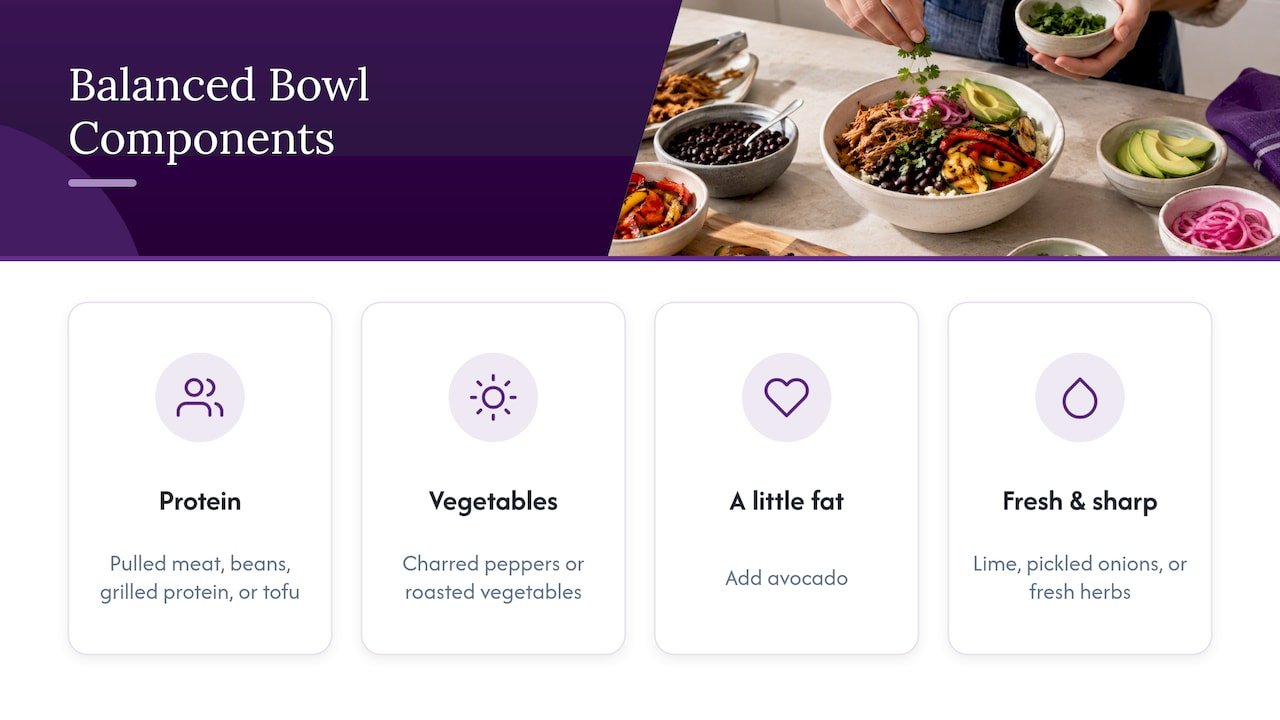
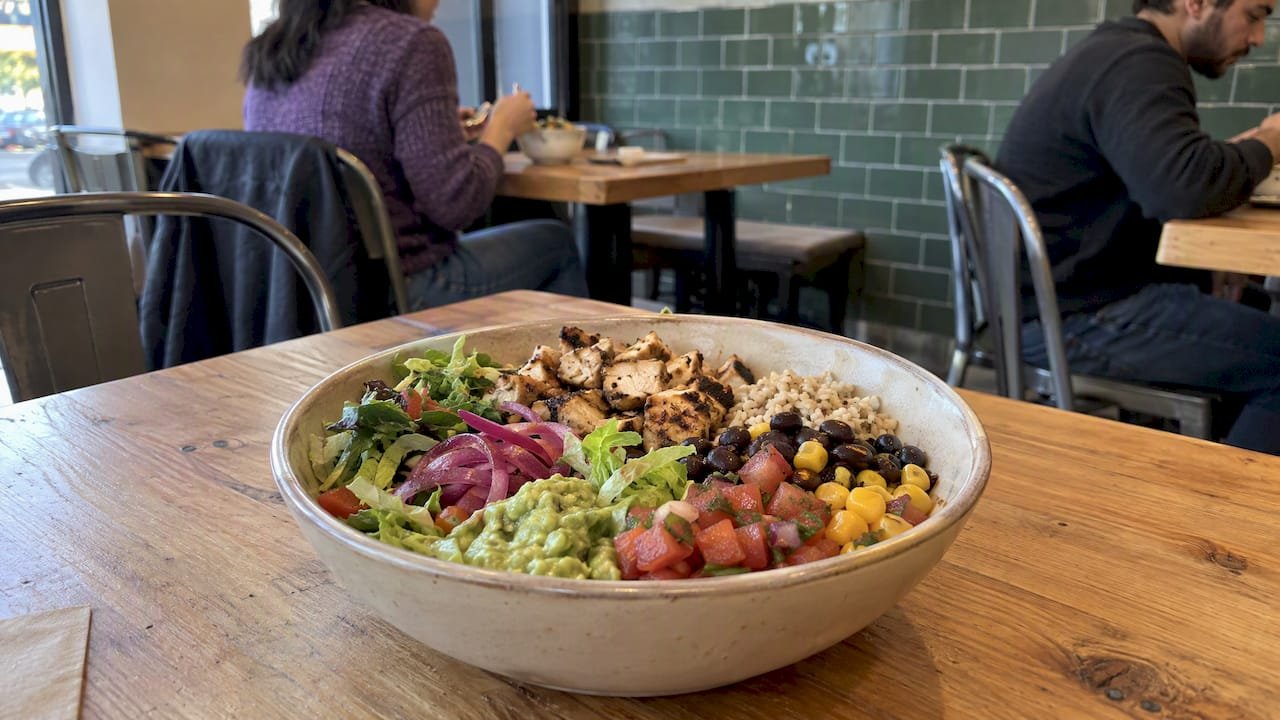
With brown rice: pair it with slow-cooked pulled meats or beans, charred peppers, tomato salsa, a squeeze of lime and some avocado. The grain absorbs juices well, so a saucier topping is fine. If you cannot choose between flavoured and plain rice, our comparison of cilantro lime rice versus plain rice explains which suits which protein.
With cauliflower rice: go for bold, drier toppings. Grilled or braised protein with its juices drained a little, roasted vegetables, pickled onions, fresh herbs, lime and a spoonful of salsa on top rather than mixed in. Add crunch with seeds or shredded cabbage so the bowl has some texture contrast, since the base itself is soft.
With tofu: both bases work. If you want a plant-based, higher-protein option, our tofu burrito bowl guide shows three ways to keep tofu crisp.
And if you are deciding between a bowl and a wrapped burrito, our comparison of how bowls and burritos handle gluten-free, low-carb and vegan diets can help.
Our perspective
We cook from scratch every day, and that shapes how we think about bases. A bowl is only as good as what goes into it, and the base should serve the meal, not the other way around. Some of our guests want a hearty grain to carry slow-cooked carnitas, barbacoa or adobo chicken. Others want something lighter, or need to avoid grains entirely.
That is why we built our kitchen around choice. We are a deep-fryer-free kitchen, we offer gluten-free, vegan, keto and paleo options, and our team is trained to handle dietary needs and cross-contamination questions. If you are weighing cauliflower rice against brown rice, tell us what you are aiming for, whether that is fewer carbs, more fuel or simply a lighter lunch, and we will help you build the bowl around it.
Our rule of thumb is simple: pick the base that fits your day, then make everything on top fresh and local where we can. In Manitoba that means ingredients like Bothwell cheese, Granny’s Chicken and Peak of the Market produce, with tortillas pressed from 100% Manitoba flour.
Austin
Order a bowl built your way
If you are in Manitoba and would rather have someone else do the cooking, our menu has burritos, naked burrito bowls, tacos, quesadillas, salads and more, all made from scratch daily. Tell the team about your dietary needs when you order and they will guide you through the options. Planning a team lunch or event? Our catering options are built for groups.

Looking for a bowl that suits your week? Our guide to seasonal Manitoba bowls and healthy lunches in Winnipeg is a good place to start.
FAQ
Does cauliflower rice actually taste like rice?
No, it tastes like mild cauliflower and has a softer texture than rice. Brown rice is nutty and chewy. Cauliflower rice works best when you season it well and treat it as a vegetable base, not a perfect copy of grain.
What is the difference between brown rice and cauliflower rice?
Brown rice is a whole grain that keeps its bran and germ, so it is starchy, filling and higher in calories and carbs. Cauliflower rice is grated cauliflower, which is much lower in carbs and calories. A half cup cooked has about 23 g of carbs for brown rice and about 3 g for cauliflower rice.
Can I eat cauliflower rice on a low-carb diet?
Yes. Its low carbohydrate content makes it one of the most practical swaps for low-carb, keto and paleo eating. Cook it dry and season it well so it does not turn watery, and keep protein in the bowl so it keeps you full.
Is brown rice or cauliflower rice better for blood sugar?
Cauliflower rice has far fewer carbs, so it raises the carb load less. Brown rice can still fit when the portion is controlled and paired with protein and vegetables. For personal targets, check with your dietitian or diabetes care team.
Can I swap cauliflower rice for brown rice in a burrito bowl?
Yes, in most bowls. Keep the toppings a little drier, add the sauce on top rather than mixing it in, and add some crunch for texture. A half-and-half base is a good way to try it.
Sources
- Nutrient Value of Some Common Foods, Health Canada
- Carbs in Rice: Amount by Type and What to Eat Instead, Wellspring
- Cauliflower Rice: Calories and Nutrition Facts, Healthline
- Low-Carb Alternatives to White Rice, Diabetes Strong
- Try a New Whole Grain, Alberta Health Services
- Easy No-Chop Instant Pot Cauliflower Rice, Good Noms