The fastest way to keep guacamole green and safe is to refrigerate it in an airtight container with the surface pressed or covered by a thin liquid barrier, then freeze it if you need months of storage. Homemade guacamole keeps in the fridge for 1 to 3 days, while opened commercial guacamole usually lasts 3 to 5 days if you follow the label. For longer storage, freeze it for 3 to 6 months.
TL;DR:
- Using airtight containers about the size of the guacamole batch and pressing plastic wrap directly on the surface significantly slows browning.
- Storing guacamole in the fridge at or below 4°C extends freshness to 1 to 3 days for homemade and 3 to 5 days for opened commercial varieties.
- Freezing guacamole in airtight, leak-proof containers or freezer bags preserves quality for 3 to 6 months, with texture slightly loosening after thawing.
- Adding lime or lemon juice before storage and combining it with an oxygen barrier, like plastic wrap or a water layer, delays oxidation and discoloration.
- Signs of spoilage include mold, sour or off smells, slimy texture, or storage above 4°C for extended periods; if in doubt, discard to prevent foodborne illness.
Table of Contents
- Practical storage methods that actually keep guacamole green
- Refrigerator storage: timing, temperatures and daily handling
- Freezing guacamole: packing, timing, and what changes after thawing
- Why guacamole browns and what actually slows it down
- Best containers and low-cost tools for less oxidation
- Clear safety rules and when to throw it out
- Quick fixes if your guacamole browned or separated
- How we think about freshness in the kitchen
- FAQ
- Sources
Practical storage methods that actually keep guacamole green
Oxygen is the enemy here, so every method below works by blocking air from touching the surface. Try them in this order depending on what you have on hand.
- Plastic wrap press: smooth the guacamole flat in its container, then press plastic wrap directly onto the surface so there are no air pockets, and seal the lid on top.
- Water seal: pour about 0.5 inches (roughly 1 centimetre) of cold water gently over the smoothed surface, seal the container, and pour the water off right before serving, as recommended by FoodSaver.
- Airtight container alone: pick the smallest container that fits the batch, tamp the guacamole down to remove air pockets, then snap the lid shut.
- Vacuum sealing: for the strongest colour retention over several days, a vacuum sealer removes nearly all the air, though the pressure can slightly compress the texture.
A few extra habits make any of these methods work better:
- Stir in 2 to 3 tablespoons of lime or lemon juice before storing, since acid slows the browning reaction.
- Flatten the guacamole against the container wall instead of leaving it mounded, which cuts down on trapped air.
- Choose glass or rigid plastic over a bowl covered loosely with a plate.
Pro Tip: Combine the water seal with a splash of lime juice in the water itself. You get the oxygen barrier and a mild acid boost in one step.
Refrigerator storage: timing, temperatures and daily handling
Refrigeration timing matters as much as the container you use. Canadian food safety guidance recommends refrigerating perishable foods like guacamole within two hours of making or opening them, and keeping your fridge at or below 4°C (40°F) to slow bacterial growth.
Homemade guacamole lasts 1 to 3 days in the fridge, while opened commercial guacamole typically holds for 3 to 5 days, according to Canada’s food safety guidance. Those numbers assume proper refrigeration and an airtight container from the start, not a bowl left covered loosely on the counter.
A few habits extend the useful life of a batch:
- Write the date on the container lid so you are not guessing later.
- Keep headspace to a minimum by transferring guacamole into a smaller container as the batch shrinks.
- Store it toward the back of the fridge, away from the door, where temperature swings are smaller.
- Go easy on diced tomato and sour cream if you plan to store leftovers, since both ingredients shorten how long the guacamole tastes fresh even before safety becomes a concern.
Our guide to keeping ingredients cold and dated covers the same temperature principles that apply to tortillas and other perishables in a home kitchen.
Freezing guacamole: packing, timing, and what changes after thawing
Freezing is the right call when you have more guacamole than you can use in a few days. Pack it properly and it holds its quality for months, even though the texture will shift slightly once thawed.
- Pack the guacamole into airtight, leak-proof containers or heavy-duty freezer bags, pressing out as much air as possible before sealing, following best practices to store fresh fruits and keep them at their best.
- Flatten bags into a thin slab so the guacamole freezes and thaws faster and more evenly.
- Label with the date and freeze at -18°C (0°F) or lower for the best quality over 3 to 6 months.
- Skip dairy and fresh chopped tomato before freezing. Freeze a plain avocado puree instead, and stir those ingredients in fresh after thawing.
- Thaw overnight in the fridge, then refresh with a squeeze of lime and a good stir to bring back some of the texture.
Expect the thawed guacamole to be a little looser than fresh, since avocado cells break down slightly during freezing. It is still fine to eat and tastes close to original once stirred and seasoned again. For readers who batch cook regularly, our tips for fresh Mexican cooking at home cover similar freezing and timing principles for other prepped ingredients.
Why guacamole browns and what actually slows it down
Guacamole turns brown because of an enzyme called polyphenol oxidase, or PPO, which reacts with oxygen in the air to darken the exposed surface. According to research on enzymatic browning, PPO is most active at a pH between 5 and 7, and lowering the pH with acid slows the reaction considerably. That is the whole reason lime juice works: it drops the pH and supplies reducing compounds that delay oxidation at the same time.
The practical takeaway is that any method cutting off oxygen or acidifying the surface helps:
- Pressed plastic wrap removes the air gap between guacamole and lid.
- A thin water layer, about 0.5 inches, physically blocks oxygen from reaching the surface, as FoodSaver notes.
- Lime or lemon juice lowers pH and adds ascorbic acid, both of which slow PPO activity.
- Vacuum sealing or a tight-fitting lid with no trapped air gives the longest colour retention.
One popular trick does not hold up under scrutiny. Leaving the avocado pit in the bowl only protects the small patch of surface directly underneath it, as Inverse reported; the rest of the bowl browns at the same rate regardless.
Combining an acid like lime juice with an airtight barrier addresses both drivers of browning at once: pH and oxygen exposure.
Industrial processors sometimes use additives like EDTA or high-pressure processing to extend shelf life in packaged guacamole, but those tools belong in a food plant, not a home kitchen. A squeeze of lime and a tight seal will do the job on your counter.
Best containers and low-cost tools for less oxidation
The container matters almost as much as the method. A few practical rules keep most home cooks covered without buying anything fancy:
- Pick the smallest airtight container that fits the batch, since extra headspace means extra air touching the surface.
- Glass jars with tight lids work well because they are durable and do not absorb odours or flavours.
- For freezer bags, press out air by hand or with a straw, then freeze the bag flat for faster, more even thawing.
- A vacuum sealer gives the strongest multi-day colour retention if you store guacamole often.
- Avoid the warmest parts of the fridge, like the door shelves, and always use a clean spoon to serve so you are not introducing bacteria with every scoop.
- A plate pressed directly onto the surface, a layer of cling film under the lid, or a reusable silicone lid are all inexpensive stand-ins for a vacuum sealer.
Clear safety rules and when to throw it out
Browning on its own is just oxidation, not spoilage, so a slightly darker surface does not mean the batch is unsafe. Canadian food safety guidance recommends discarding guacamole after 3 days in the fridge or sooner if spoilage signs appear, regardless of colour.
Watch for the signals that actually matter:
- Mould of any colour on the surface or sides of the container.
- A sour, rancid, or otherwise off smell when you open the lid.
- A slimy or stringy texture instead of the usual creamy consistency.
- Fridge storage above 4°C (40°F) for an extended period, which speeds up bacterial growth even if the guacamole still looks fine.
When in doubt, throw it out. A few dollars of avocado is not worth a day of food poisoning.
Quick fixes if your guacamole browned or separated
Most minor texture or colour issues are fixable in under a minute, as long as there is no sign of spoilage.
- Scrape off the thin browned layer on top with a spoon, then stir the remaining guacamole with a fresh squeeze of lime to brighten the colour and flavour.
- If the texture has separated or gone watery but the smell is still fine, fold it into a cooked sauce or dip rather than serving it raw, since cooking masks the texture change.
- If you notice mould, a sour smell, or a slimy texture anywhere in the container, discard the entire batch. Do not scoop around the bad part and try to save the rest, since contamination is rarely limited to what you can see.
A quick stir with fresh herbs helps too. If cilantro is not on hand, a 1:1 parsley swap works in a pinch for both flavour and colour.
How we think about freshness in the kitchen
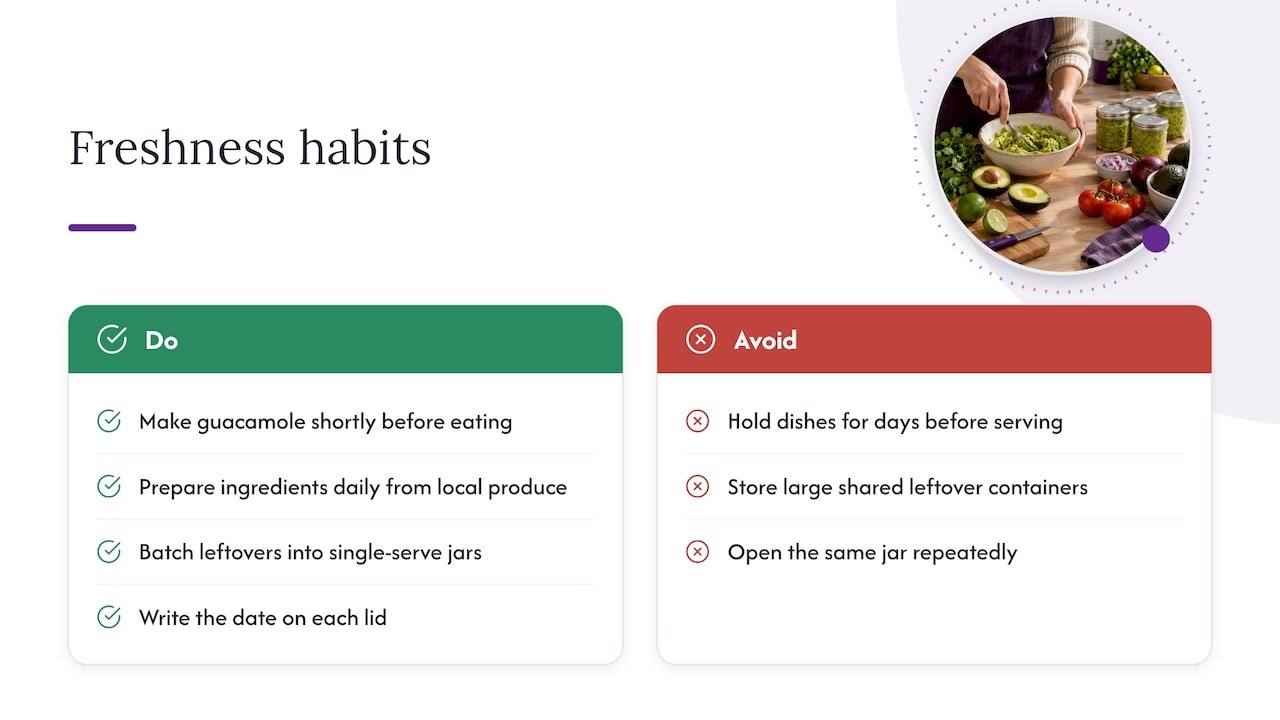
Freshness is less about one trick and more about timing and habits. Ingredients prepared from scratch daily using locally sourced produce means dishes are built close to serving time rather than held for days. That same logic applies at home: making guacamole shortly before you plan to eat it avoids most storage problems entirely.
For leftovers, batching into single-serve jars with the date written on the lid keeps portions smaller and air exposure lower each time you open one. Our meal prep workflow for burrito bowls covers similar batching habits that cut down on waste while keeping each portion tasting fresh.
— Austin
FAQ
How do Mexican restaurants keep their guacamole from turning brown?
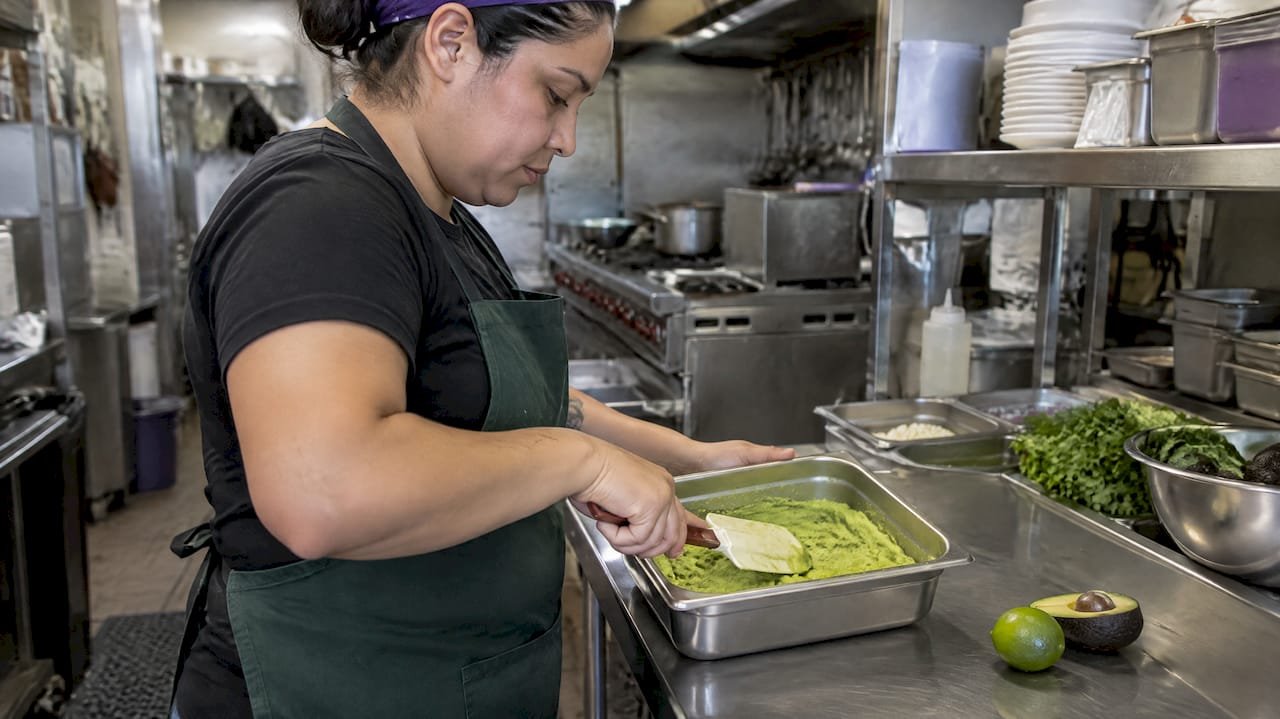
Restaurants typically press plastic wrap directly against the surface, use airtight containers, and add fresh lime juice, the same combination of oxygen exclusion and acid that works at home. Many also prepare guacamole in smaller batches throughout service rather than one large batch that sits exposed for hours.
What is the best container to store guacamole in?
A small, airtight glass or rigid plastic container with a tight-fitting lid works best, since minimizing headspace limits how much air touches the surface. Choosing a container close to the size of your batch, rather than a large bowl with extra room, noticeably slows browning.
How long can guacamole last in the fridge?
Homemade guacamole lasts 1 to 3 days in the fridge when stored in an airtight container, while opened commercial guacamole usually lasts 3 to 5 days following the label. Discard it sooner if you notice mould, a sour smell, or a slimy texture.
Does saran wrap stop guacamole from turning brown?
Pressing plastic wrap flush against the surface of the guacamole, with no air pockets, is one of the most effective low-cost ways to slow browning, according to FoodSaver. Simply draping it loosely over the bowl without pressing it down does little, since air can still reach the surface.
Can you freeze guacamole without ruining it?
Yes, guacamole freezes well for 3 to 6 months when packed in an airtight, leak-proof container or heavy-duty freezer bag with minimal air. The texture loosens slightly after thawing, so a quick stir with fresh lime juice brings it back close to its original consistency.
Sources
- Canada
- How to keep guacamole from turning brown — FoodSaver
- PubMed article on enzymatic browning and pH