This is a working set of paleo Mexican dishes that taste like the real thing, built around swaps that actually hold up in a home kitchen: cauliflower rice instead of grain, cassava or jicama in place of tortillas, and dairy-free sauces made from avocado and cashews instead of sour cream. Pick a category below: mains, breakfasts, sides, or quick meals, and follow the substitution notes alongside each recipe idea.
TL;DR:
- Cassava flour tortillas, jicama rounds, and cauliflower rice are key substitutes to replicate traditional Mexican textures without grains or dairy, limiting the need for recipe adjustments.
- Batch cooking proteins like carnitas, stews, and cauliflower rice enables meal prep for three to four days and simplifies weeknight dinner assembly.
- Replacing corn and wheat with cassava, jicama, or plantain significantly reduces dish complexity while keeping flavors authentic.
- Paleo Mexican desserts rely on fruit, chocolate, and cinnamon, with swaps for flour and sugar to maintain traditional flavors.
- Traditional Mexican dishes built on slow-cooked meats and fresh produce align closely with Paleo principles, with grains as the main adaptation challenge.
Table of Contents
- Paleo Mexican main courses: tacos, fajitas, carnitas, and bakes
- Paleo Mexican breakfasts: huevos, shakshuka, and hash
- Rice, tortillas, and sauces: the paleo Mexican swap kit
- Snacks and condiments that round out a paleo Mexican spread
- Fast weeknight paleo Mexican meals and batch cooking
- Pantry staples that make paleo Mexican cooking reliable
- How Burrito Splendido builds paleo Mexican plates
- Nutritional upside and real challenges of eating this way
- Where Paleo principles actually overlap with traditional Mexican cooking
- Drinks that pair with paleo Mexican meals
- Paleo Mexican desserts built on fruit, chocolate, and cinnamon
- What the data on paleo Mexican cooking actually tells you
- Order paleo-friendly bowls and catering from Burrito Splendido
- Sources
- FAQ
Paleo Mexican main courses: tacos, fajitas, carnitas, and bakes
The backbone of any paleo Mexican spread is the protein, and Mexican cooking already leans on slow-cooked meats and grilled proteins that need no adaptation at all. The tortilla and the rice are where the real engineering happens.
Cassava flour or jicama rounds make convincing taco shells when paired with grass-fed beef, shredded chicken, or shrimp and a hard squeeze of lime. Sheet-pan steak fajitas cook quickly and require minimal cleanup, making them a solid weeknight option. Pollo asado, marinated in citrus and achiote, works equally well grilled or roasted and reheats without drying out. Carnitas take longer, two to three hours braised and then crisped, but a big batch covers three or four meals.
A beef enchilada bake swaps stacked tortillas for layered roasted vegetables with a dairy-free avocado cilantro sauce, and it holds up as leftovers better than most casseroles. Chile relleno casserole follows a similar logic, cauliflower rice and a dairy-free queso replace the traditional cheese and batter, and it reheats cleanly for lunches. For something you can walk away from, an Instant Pot Mexican beef stew built on bone broth and fire-roasted tomatoes needs only cauliflower rice and toppings to finish. Shrimp ceviche, meanwhile, needs no cooking at all and works as a light main on a hot night.
- Sheet-pan steak fajitas – 25 minutes, serve over cauliflower rice or in cassava tortillas, best same-day
- Pollo asado – 30 minutes active, marinate ahead, meal-prep friendly
- Carnitas – 2 to 3 hours, freezes well, ideal for batch cooking
- Beef enchilada bake – 45 minutes, layered vegetables replace tortillas, reheats well
- Chile relleno casserole – 40 minutes, cauliflower rice base, great for families
- Instant Pot beef stew – 35 minutes pressurized, serve with pico and guacamole, freezes in portions
- Shrimp ceviche – 20 minutes, no cooking, best eaten fresh within a day
Paleo Mexican breakfasts: huevos, shakshuka, and hash
Eggs do most of the heavy lifting here, and Mexican breakfast flavours (chorizo, salsa, cumin, lime) translate to paleo without much fuss. A Mexican-style shakshuka, eggs poached in a spiced tomato and poblano sauce, needs one pan and about 20 minutes. Huevos divorciados works as two fried eggs split between a red and green salsa, finished with avocado instead of cheese. A sheet-pan egg and sweet-potato hash with chorizo feeds a family without much hands-on time.
- Mexican shakshuka – 20 minutes, swap chorizo for salmon for a lighter version
- Huevos divorciados – 15 minutes, dairy-free crema instead of sour cream
- Sheet-pan hash – 30 minutes, shredded chicken works if you skip chorizo
- Chilaquiles reworked – sweet potato rounds replace tortilla chips, baked until crisp, then topped with salsa and egg
Rice, tortillas, and sauces: the paleo Mexican swap kit
Three substitutions carry most paleo Mexican cooking, and getting them right matters more than any single recipe.
- Cauliflower rice. Pulse raw florets in a food processor, then sauté in avocado oil with lime and cilantro for five minutes. It restores the bulk and texture a dish needs without the starch.
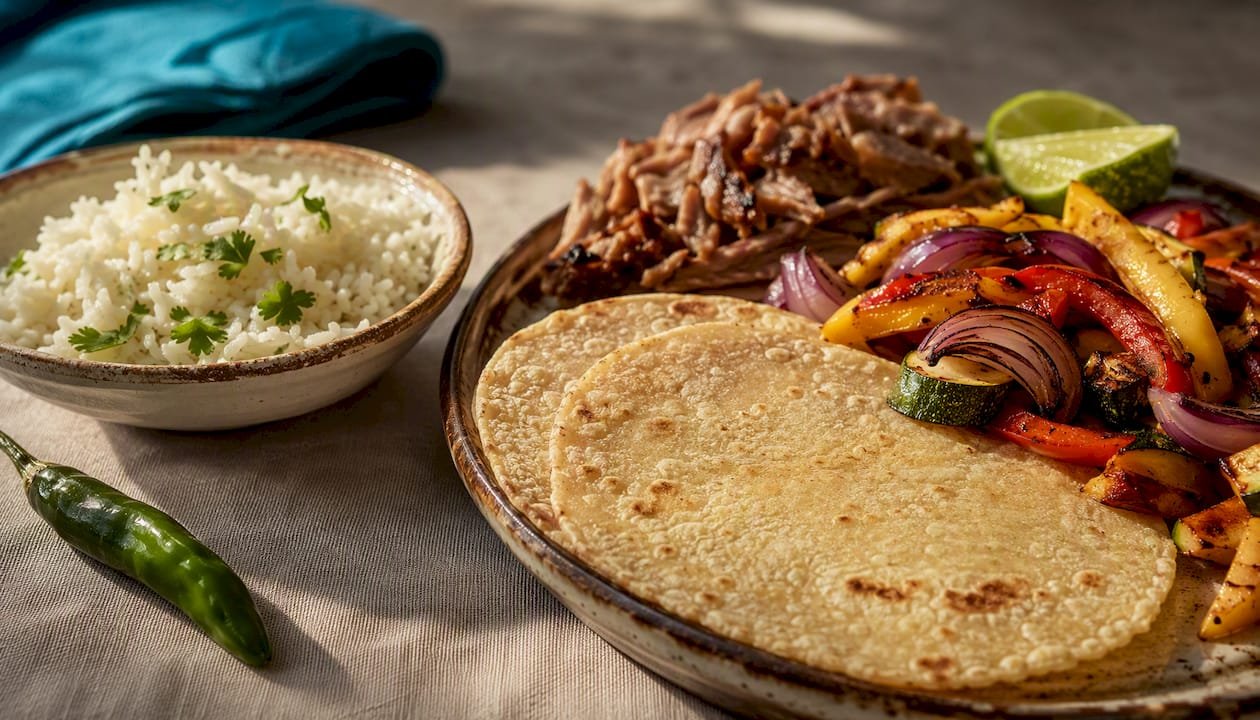
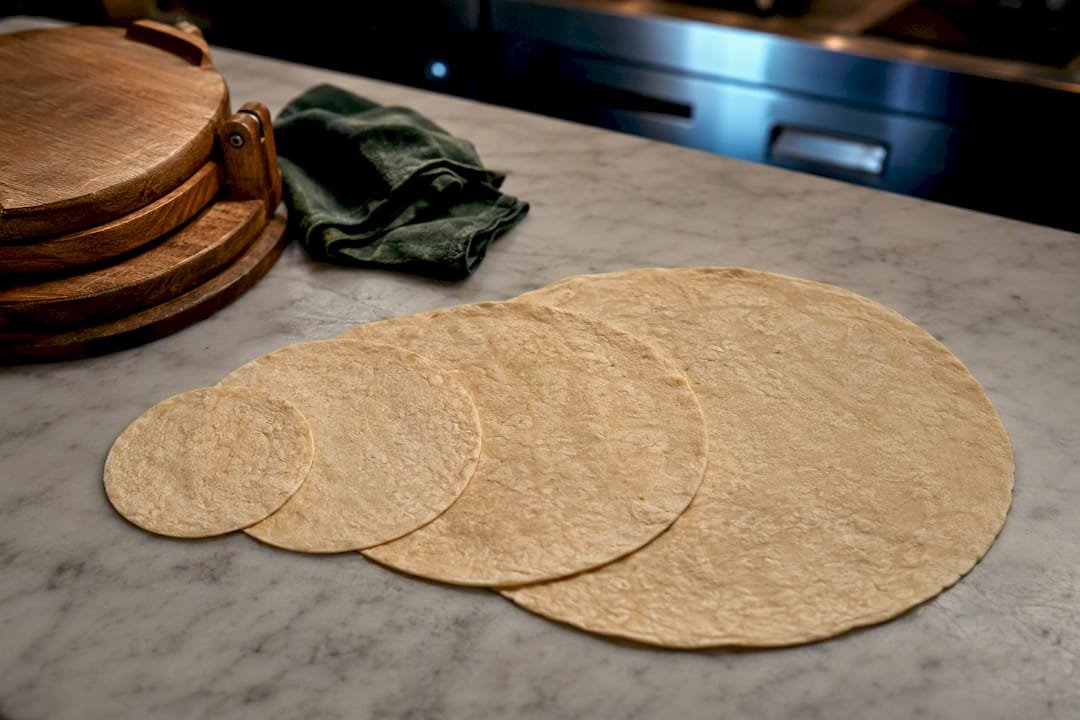
- Cassava, jicama, or plantain “tortillas.” Cassava flour tortillas fold the closest to wheat but crack if overcooked, so warm them gently in a dry pan. Jicama rounds need no cooking and add a crisp, slightly sweet bite, though they don’t hold heavy fillings well. Plantain shells fry up sturdier and work best for tacos with wetter fillings like carnitas or shredded chicken.
- Dairy-free crema and salsa. Blend soaked cashews or avocado with lime juice and a pinch of salt for a crema that thickens as it chills. Salsas need no adaptation since most are naturally paleo, just watch for added sugar in jarred versions.
Store cauliflower rice for up to four days refrigerated; cassava tortillas keep about a week sealed and reheat best in a dry skillet, not the microwave.
Snacks and condiments that round out a paleo Mexican spread
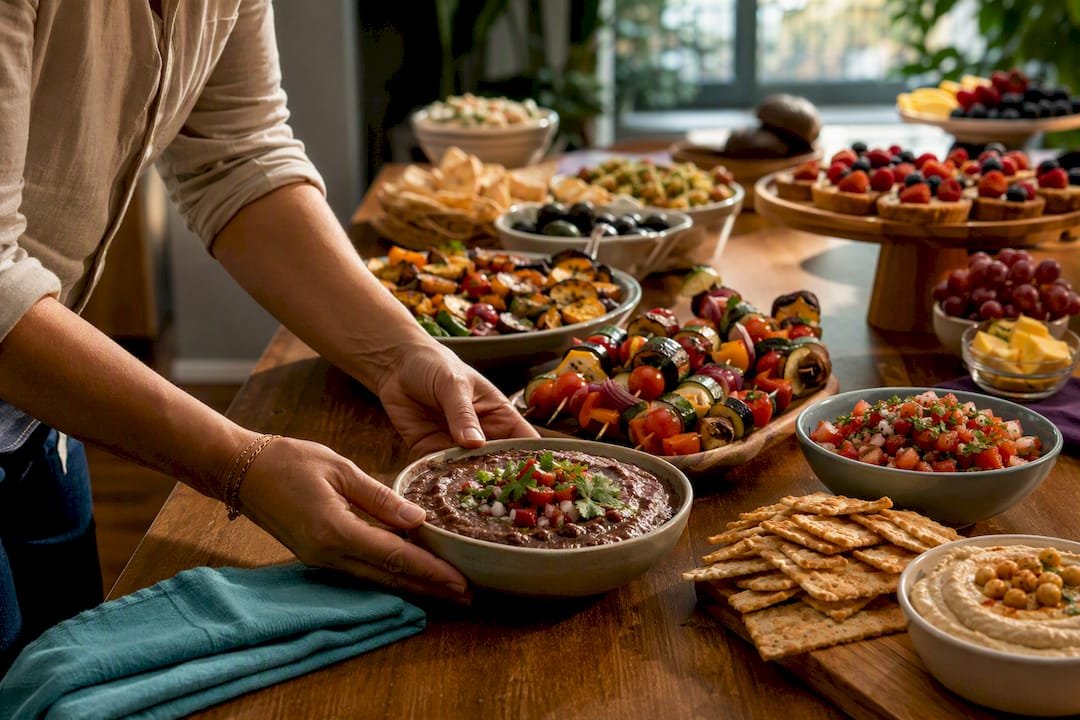
Small plates carry a lot of the flavour work in Mexican cooking, and most translate to paleo with zero compromise. Baked jicama rounds or plantain chips stand in for tostadas and hold up to heavier toppings like guacamole or shredded pork. Ceviche, built on citrus-cured fish or shrimp, needs no adaptation at all. A mango-avocado salsa adds sweetness against spicier mains, and quick-pickled carrots and onions (ready in under an hour) cut through rich, fatty proteins like carnitas.
- Baked jicama rounds with guacamole, make the guac same-day but jicama holds for a few hours
- Ceviche in small cups for entertaining, best consumed within a day
- Mango-avocado salsa, keeps two to three days refrigerated
- Pickled onions and carrots, keep up to two weeks and only improve with time
Serve two or three of these together and they stop being snacks and start being a light meal on their own.
Fast weeknight paleo Mexican meals and batch cooking
Four formats cover most weeknight needs without repeating the same plate twice.
- Sheet-pan fajitas – peppers, onion, and sliced steak or chicken roasted together, 25 minutes start to finish.
- Instant Pot stew – dump-and-cook beef stew that needs only cauliflower rice and toppings to finish, and it reheats better on day two as the flavours settle.
- Skillet chicken with cauliflower rice – one pan, 20 minutes, endlessly adaptable with whatever salsa is on hand.
- Make-ahead carnitas – cook once on a Sunday, portion into containers, and pull from the freezer through the week.
Cooked proteins keep three to four days refrigerated and up to three months frozen in flat, labelled bags. Cauliflower rice reheats best in a dry skillet over medium heat rather than the microwave, which turns it soggy.
Pro Tip: Build a “topping pack” on Sunday, diced onion, chopped cilantro, sliced radish, lime wedges, in small containers. On a busy night, dinner becomes assembly instead of cooking.
For a ready-made version of this exact format, Burrito Splendido’s paleo burrito bowl follows the same crisp cauliflower rice approach in about 30 to 40 minutes.
Pantry staples that make paleo Mexican cooking reliable
A short, consistent pantry list removes most of the guesswork. Keep cassava flour and arrowroot on hand as your two main thickeners and binders, avocado oil for higher-heat cooking, a few dried chiles (ancho, guajillo) for depth, bone broth for stews, and canned tomatillos for salsa verde.
- Arrowroot replaces cornstarch at roughly the same ratio and thickens sauces without clouding them.
- Cassava flour behaves differently than wheat when heated, it dries out faster, so tortillas need a shorter, gentler cook than you’d expect.
- Canned coconut milk or cashew cream cover most spots where a recipe calls for dairy.
- Read labels on canned goods for added sugar and on chili powder blends for anti-caking agents that sometimes include corn starch.
Most dried spices hold their potency for about a year; buy in small quantities if you cook Mexican food only occasionally.
How Burrito Splendido builds paleo Mexican plates
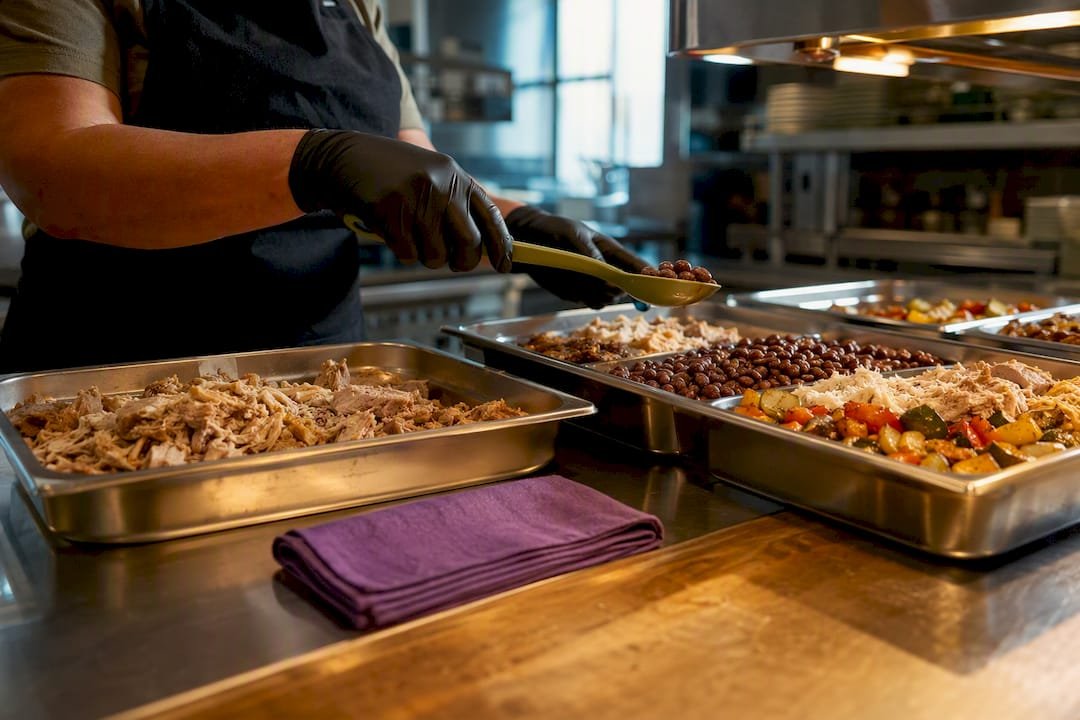
This paleo Mexican approach includes a deep-fryer-free kitchen and sauces and proteins prepared from scratch daily, using locally sourced ingredients including pork, poultry, and produce. Slow-braised carnitas, hand-pulled barbacoa, and adobo chicken are made with long cooking times, whole ingredients, and no shortcuts. A practical plate to order or recreate at home: a naked bowl with carnitas or barbacoa, cauliflower rice if available, fresh salsa, and guacamole, skipping cheese and any flour-based components entirely.
Nutritional upside and real challenges of eating this way
Paleo Mexican dishes tend to be higher in protein and lower in refined carbohydrates than their traditional counterparts, largely because rice and wheat tortillas disappear and vegetables take their place. Vegetable-forward swaps like cauliflower rice keep dishes in a lower-calorie range while still delivering volume on the plate, which matters if you’re trying to eat well without feeling shorted.
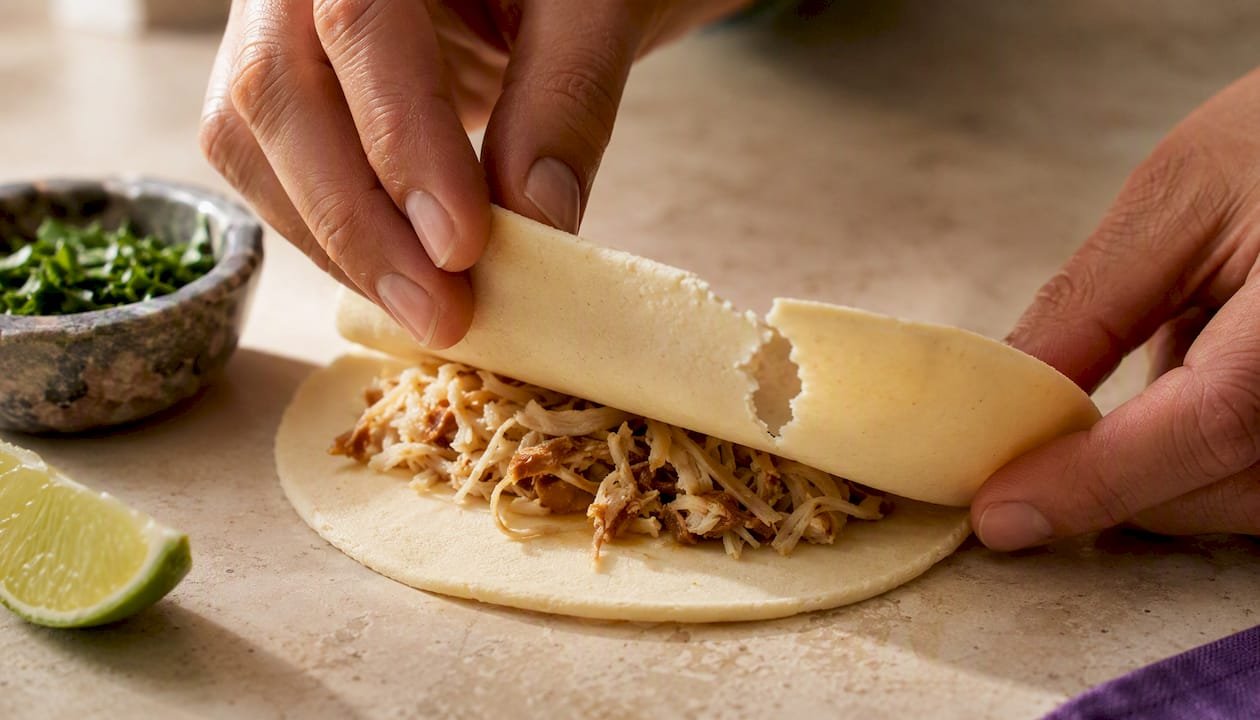
The real challenges show up in texture and time. Cassava tortillas don’t stretch or fold quite like wheat, so wetter fillings can cause tearing. Dairy-free crema needs a blender and a bit of chill time to thicken properly, it’s not a one-to-one swap you can rush. Batch cooking helps offset the time cost since carnitas, stews, and cauliflower rice all hold up over several days, but the upfront prep is real on a first attempt.
There’s also a cost consideration worth naming plainly: cassava flour and specialty items like arrowroot cost more per pound than the wheat flour or white rice they replace, and buying fresh produce for pickled and fresh condiments adds up if you’re cooking for a full week. None of that erases the benefit, more protein, more vegetables, fewer processed grains, but it’s worth planning for rather than discovering at the checkout.
Where Paleo principles actually overlap with traditional Mexican cooking
The Paleo diet, built around whole foods eaten before the rise of industrial agriculture (meat, fish, vegetables, fruit, nuts), excludes grains, legumes, and dairy. Traditional Mexican cuisine, particularly the pre-colonial and regional cooking that predates heavy wheat flour use, already leans on many of these same building blocks: slow-braised meats, fresh chiles, tomatoes, avocado, and lime.
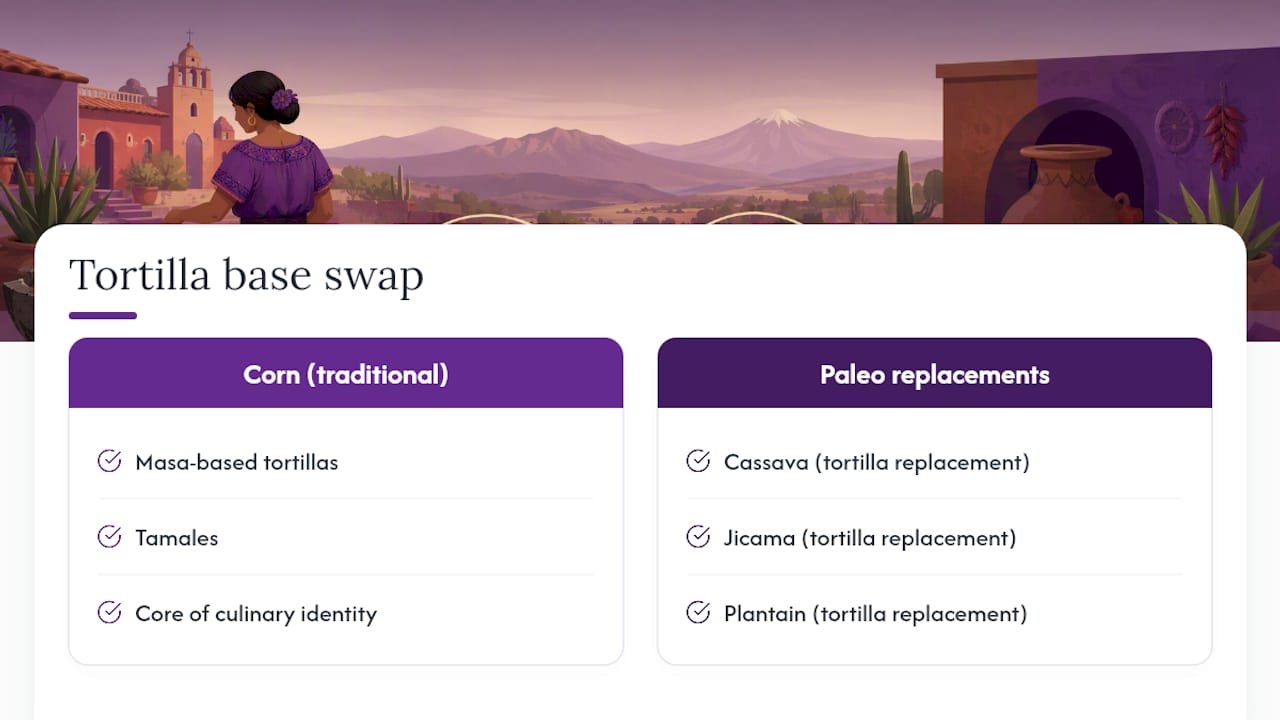
Corn is the obvious tension point. Masa-based tortillas, tamales, and much of Mexican culinary identity are built on corn, and corn is excluded under strict Paleo guidelines because it’s a grain. That’s the single biggest adaptation this whole category requires, replacing corn and wheat tortillas with cassava, jicama, or plantain rather than pretending the swap doesn’t matter.
Beyond that one substitution, the overlap is genuinely strong. Carnitas, barbacoa, and grilled meats need no adjustment. Salsas, guacamole, and pickled vegetables are naturally paleo as written. Rice, a more modern addition to Mexican plates than most people assume, swaps out for cauliflower rice without changing the character of the dish much at all. The result isn’t a workaround built to feel Mexican, it’s closer to how a lot of these dishes were built before grains became the default filler.
Drinks that pair with paleo Mexican meals
Skip the usual beer and horchata, both are off the table under Paleo guidelines, and lean into drinks that were already close to compliant. Fresh-squeezed limeade, sweetened lightly with a bit of raw honey if needed, cuts through richer dishes like carnitas or a beef stew. Hibiscus tea (agua de jamaica), steeped and served cold, has the same tart profile Mexican meals are built around and needs no added sugar to taste complete.
For something with more weight, a tamarind agua fresca made from scratch skips the corn syrup found in bottled versions. Sparkling water with fresh lime and a few muddled berries stands in nicely for a mocktail at a dinner party without any compliance questions. If you drink alcohol and are following a looser version of Paleo, a tequila blanco on the rocks with lime is about as clean as spirits get, tequila is distilled from agave, not grain, so it avoids the issue that rules out beer and most whiskey.
Coffee deserves a mention too, since Mexican meals often close with it. Black coffee or coffee finished with a splash of full-fat coconut milk instead of cream keeps the tradition of a strong after-dinner drink without adding dairy. A cinnamon stick steeped in the pot during brewing gets you close to the flavour of café de olla without the raw sugar traditionally used to sweeten it.
Whatever you pour, match it to the meal the way you would any dinner. A citrus-heavy limeade works better against fattier carnitas, while hibiscus tea’s tartness holds its own next to a lighter shrimp ceviche.
Paleo Mexican desserts built on fruit, chocolate, and cinnamon
Mexican desserts already rely heavily on cinnamon, chocolate, and fruit, three flavours that need almost no adjustment to fit Paleo guidelines. The bigger obstacle is usually flour and refined sugar, both fixable with a few reliable swaps.
Grilled pineapple or peaches with a dusting of cinnamon and a drizzle of honey deliver dessert in under ten minutes with no baking involved. Mexican chocolate avocado mousse, blended avocado, cacao powder, a touch of maple syrup, and a pinch of cinnamon, mimics the richness of a flan or pudding without any dairy or eggs. Almond flour replaces wheat flour convincingly in cinnamon-sugar “churro” bites, baked rather than fried, then rolled in cinnamon and coconut sugar while warm.
For something closer to a traditional flan, a coconut milk custard sweetened with honey and set with eggs gets remarkably close to the original texture, dairy was really the only barrier there to begin with.
None of these need special equipment or hard-to-find ingredients, which is really the point. Mexican dessert flavours were never the problem for Paleo eating; wheat flour and white sugar were, and both have workable substitutes that don’t ask you to give up the flavours that make the dish recognizable.
What the data on paleo Mexican cooking actually tells you
The pattern across every reliable paleo Mexican recipe is the same: the protein and the produce were never the issue, the starch always was. Carnitas, barbacoa, grilled fish, salsas, guacamole, none of it needed reinventing. Rice and wheat or corn tortillas are the two components carrying the entire adaptation burden, and once you accept that, the rest of the cooking gets a lot simpler.
Where I think conventional advice gets it wrong is in treating cassava and jicama as inferior stand-ins you tolerate rather than ingredients with their own strengths. Jicama brings a crunch wheat tortillas never had. Cauliflower rice takes on flavour faster than white rice because it has more surface area and less starch fighting the seasoning. Stop chasing an exact replica and start cooking to what the ingredient actually does well.
If you’re just starting out, prioritize the sauces and toppings before you worry about the shell. A great pico de gallo and a properly rested carnitas will carry a mediocre tortilla substitute. Get those right first, and the rest of the plate falls into place.
— Austin
Order paleo-friendly bowls and catering from Burrito Splendido
Burrito Splendido skips the trial-and-error entirely: order a naked bowl built on cauliflower rice with carnitas, barbacoa, or adobo chicken, fresh salsa, and guacamole, no cheese, no flour, no deep fryer involved anywhere in the kitchen. When you order in-store, online, or through catering, mention your paleo requirements directly, no cheese, cauliflower rice instead of regular rice, and a protein like carnitas or barbacoa, and staff trained on dietary needs and cross-contamination will build the plate accordingly. For a group or an office event, the same paleo-friendly bowls scale up through catering, with trays built the same way as the individual bowls. Check the full menu to see current paleo-tagged items before you order, or to place a takeout order tonight.
Sources
- Beef Enchilada Bake with Cilantro Avocado Cream Sauce (Paleo, Whole30) – Wholesomelicious
- Instant Pot Mexican Beef Stew (paleo, keto, Whole30)
- Paleo Tacos Recipe: Easy Grain-Free Healthy Mexican Dinner
FAQ
What is the healthiest Mexican dish?
Dishes built around grilled or braised protein, fresh salsa, and vegetables, like ceviche or a carnitas bowl over cauliflower rice, tend to be the healthiest since they skip fried components and refined grains entirely.
What Mexican dish has the lowest carbs?
Ceviche and protein-based bowls served over cauliflower rice instead of white rice or tortillas carry the lowest carbohydrate counts, since the starch is the main carb source in most traditional versions.
What are some low-carb Mexican recipes worth trying?
Sheet-pan fajitas, shrimp ceviche, carnitas bowls with cauliflower rice, and a beef enchilada bake made with layered vegetables instead of tortillas all keep carbs low without sacrificing flavour.
What is the lowest-calorie Mexican dish?
Ceviche and vegetable-forward chicken dishes served with cauliflower rice fall into the under-400-calorie range most consistently, largely because they skip fried tortillas and heavy dairy.
Can I order paleo Mexican food instead of cooking it myself?
Yes. Burrito Splendido builds naked bowls with cauliflower rice, dairy-free toppings, and slow-cooked proteins like carnitas or barbacoa, available for takeout, delivery, or catering for groups.