Feta can stand in for cotija in a surprising number of dishes, but only when you match the right cotija to the right feta. Younger, moister cotija swaps cleanly for a mild feta on tacos, salads, and elote. Aged, dry cotija doesn’t translate the same way, because feta stays wet where aged cotija stays crumbly and firm. The next section breaks down exactly where that line sits.
TL;DR:
- Younger cotija replicates moist, mild feta well, but aged cotija’s drier, crumbly texture does not compare to feta’s moist, softer consistency.
- Heating practices differ: cotija softens but does not melt, while feta becomes creamy when heated, affecting their interchangeability in recipes.
- When substituting, use feta for toppings and salads but opt for drier cheeses like ricotta salata or Parmesan for grating purposes.
- Buying a block of cheese and crumbling it fresh ensures better texture control than pre-crumbled varieties, especially for cooking and finishing dishes.
- Salt and moisture levels, determined by aging and brining methods, are key to matching each cheese’s flavor and performance in culinary uses.
Table of Contents
- Cotija vs feta: a quick side-by-side comparison
- Why cotija and feta taste and feel so different
- How each cheese behaves in the pan, and how to swap smart
- Best substitutes by use case
- What to buy and how to store it
- The Burrito Splendido kitchen take on this swap
- Sources
Cotija vs feta: a quick side-by-side comparison
Cotija comes from the town of Cotija, Michoacán, and is made from cow’s milk, dry-aged rather than brined. Feta is a Greek cheese, traditionally sheep’s milk or a sheep-and-goat blend, cured in brine for at least eight weeks according to Agriculture and Agri-Food Canada’s cheese sector profile. That single production difference, brine versus dry ageing, explains almost everything else on this list.
- Best for: Cotija finishes tacos, beans, and elote; feta anchors salads, mezze plates, and baked dishes.
- Texture: Cotija is firm and grainy, almost sandy when aged; feta is moist and creamy-crumbly even at room temperature.
- Flavour profile: Cotija reads milky-salty with sharper, funkier notes as it ages; feta is bright, tangy, and distinctly sour from its brine.
- Heating behaviour: Cotija softens but never fully melts; feta softens too and can turn almost creamy under heat.
- Availability: Feta sits in nearly every mainstream grocery dairy case; cotija shows up in most well-stocked supermarkets now, though selection still favours specialty and Latin grocers.
If you only remember one thing, remember this: feta is the practical swap when a recipe wants moisture and tang. It’s the wrong swap when a recipe wants cotija’s dry, sandy crumble.
Why cotija and feta taste and feel so different
The gap between these two cheeses starts with how long, and in what, they age. Feta cures in brine for a minimum of eight weeks, which keeps it moist, tangy, and soft enough to crumble between your fingers without crumbling apart entirely. Cotija dry-ages anywhere from two to twelve months with no brine bath at all, and that stretch of time pulls moisture out while concentrating salt and milk-forward flavour, per the same Agriculture and Agri-Food Canada dairy profile.
Age changes cotija more dramatically than it changes feta. Young cotija, sometimes labelled fresco, is soft enough to resemble a mild feta in both bite and moisture level. Añejo, or aged, cotija goes the opposite direction entirely: it hardens into something closer to Parmesan, both in dryness and in how it grates, according to Wikipedia’s cotija cheese entry.
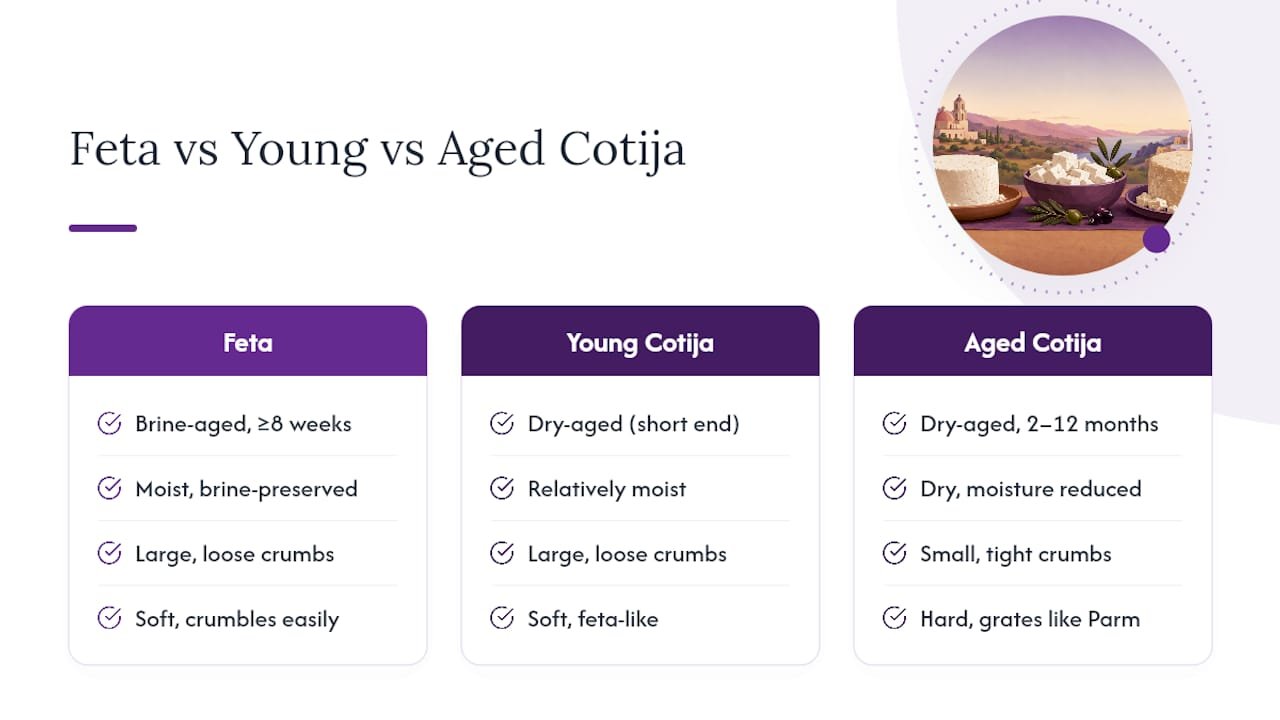
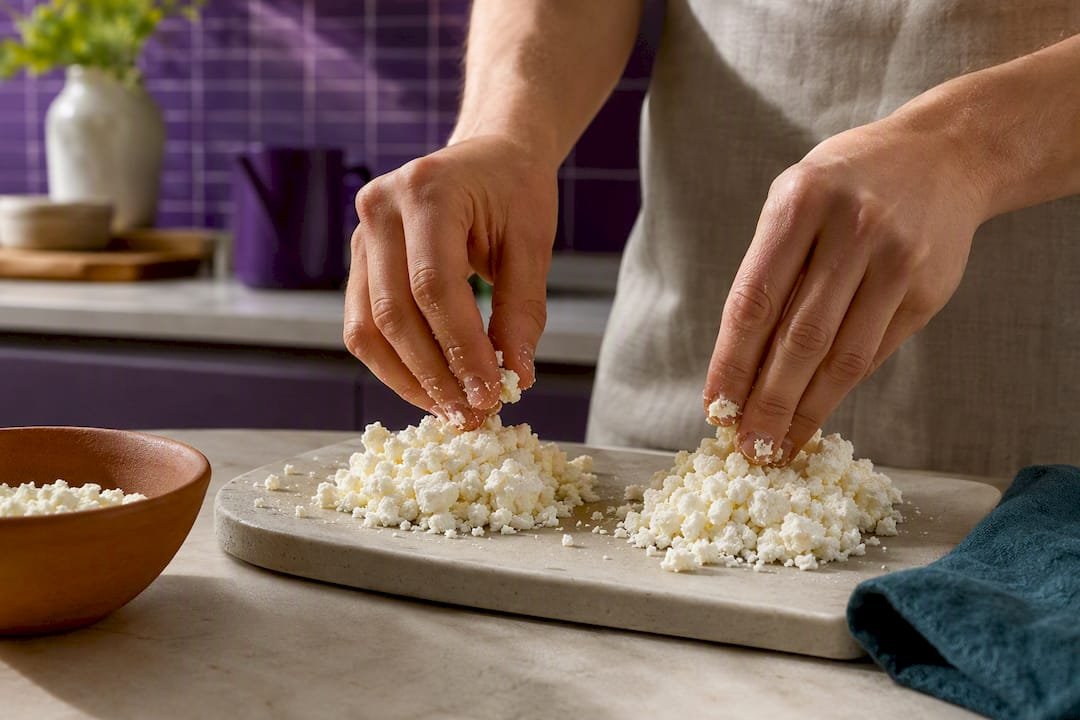
You can judge which cheese you’re holding just by looking and touching. Small, tight crumbs and a dry surface signal aged cotija or a hard grating cheese. Larger, looser crumbs that feel damp to the touch signal feta or young cotija. Taste tells you the rest: feta leans sour first, salty second; cotija leans salty and milky, with the sourness mostly absent.
How each cheese behaves in the pan, and how to swap smart
Heat treats these cheeses differently, and that difference decides whether your swap actually works. Cotija softens at the edges when it hits a hot taco or a bowl of beans, but it holds its shape. It never truly melts, since its granular structure comes from milling the curd before pressing and then dry-ageing it for months, a process the Wisconsin Cheese technical overview describes as building a finishing texture rather than a melting one. Feta softens too, but it goes creamier under heat instead of staying firm, especially in a hot pan or oven.
Three steps make any cotija substitute perform closer to the real thing:
- Drain and pat feta dry before using it as a finishing cheese, since its brine moisture will bleed into hot food and dull crisp textures.
- Buy a block, not pre-crumbled feta, and crumble it yourself right before serving so the pieces stay separate instead of clumping.
- Match ratio to job: use feta roughly 1:1 for topping tacos or elote, but reach for a drier cheese entirely when a recipe calls for grating.
Pro Tip: If a recipe wants that sandy, non-melting crumble cotija gives beans and tacos, don’t force feta into that role. Reach for ricotta salata or a fine grating parmesan instead. They dry-age the way cotija does, and they won’t turn creamy on you.
Best substitutes by use case
Matching the cheese to the job matters more than matching the cheese to the name. Here’s where each substitute earns its place, and where it doesn’t.
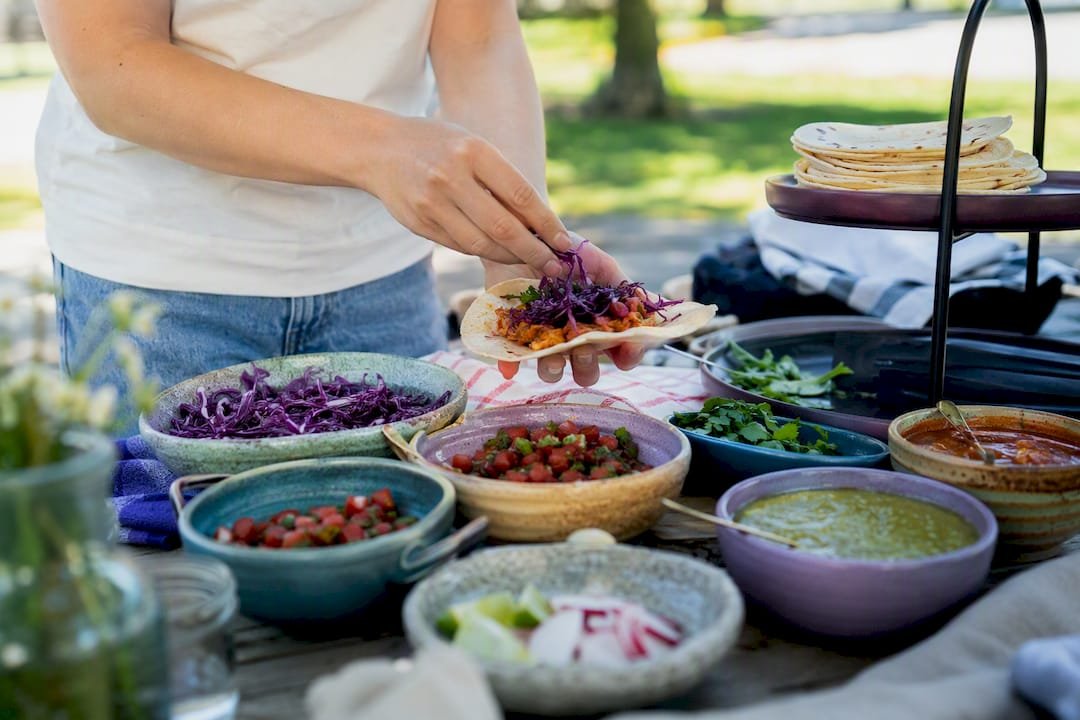
- Topping tacos or elote: Queso fresco or young cotija first choice; feta works if you want extra tang and don’t mind a bit more moisture on the food.
- Grating over beans or pasta: Skip feta here. Aged cotija’s dry, granular structure is closer to ricotta salata or Parmesan, both of which grate into fine, dry shreds instead of clumping.
- Salads and mezze spreads: Feta or queso fresco, depending on how much tang and salt the dish can take. Feta pulls a salad toward Mediterranean territory; queso fresco keeps it milder and more neutral.
- Emulsified or cream-based sauces: Don’t substitute feta for cotija here. Feta’s brine moisture throws off the sauce’s texture, and Bon Appétit notes that no widely available substitute fully replicates cotija’s specific flavour, so sauces built around it are the hardest place to fake a swap.
Fresh queso fresco deserves its own mention, since it’s often used interchangeably with feta in Mexican cooking whenever a milder, less tangy topping is the goal.
What to buy and how to store it
Shop by texture goal, not just by label. A block of cheese gives you control over crumb size and moisture that pre-crumbled containers simply can’t match, since those often carry extra moisture and anti-caking agents that change how the cheese performs once it hits a hot dish. Pre-crumbled feta is fine for a fast weeknight salad; a block is worth the extra thirty seconds of crumbling when texture is the point.
- Reading labels: Look for “fresco” or “queso fresco” for the mild, moist end of cotija; “añejo” or “aged” signals the hard, dry end that behaves like a grating cheese.
- Feta storage: Keep it submerged in its brine in the fridge; it holds well for weeks this way and dries out fast once removed.
- Cotija storage: Wrap it tightly in parchment or wax paper, then plastic, and refrigerate; it keeps for a couple of weeks once opened, longer if it’s the drier, aged style.
- When pre-crumbled is fine: Fast toppings where texture control matters less than convenience, like a quick weeknight taco bowl.
The Burrito Splendido kitchen take on this swap
We lean on Bothwell Cheese for finishing our tacos and bowls, and we buy block over pre-crumbled almost every time. Texture control matters more in a working kitchen than most home cooks assume. A block lets our line cooks crumble to order, so cheese hits a hot taco seconds before it reaches the pass instead of sitting pre-crumbled and sweating in a container.
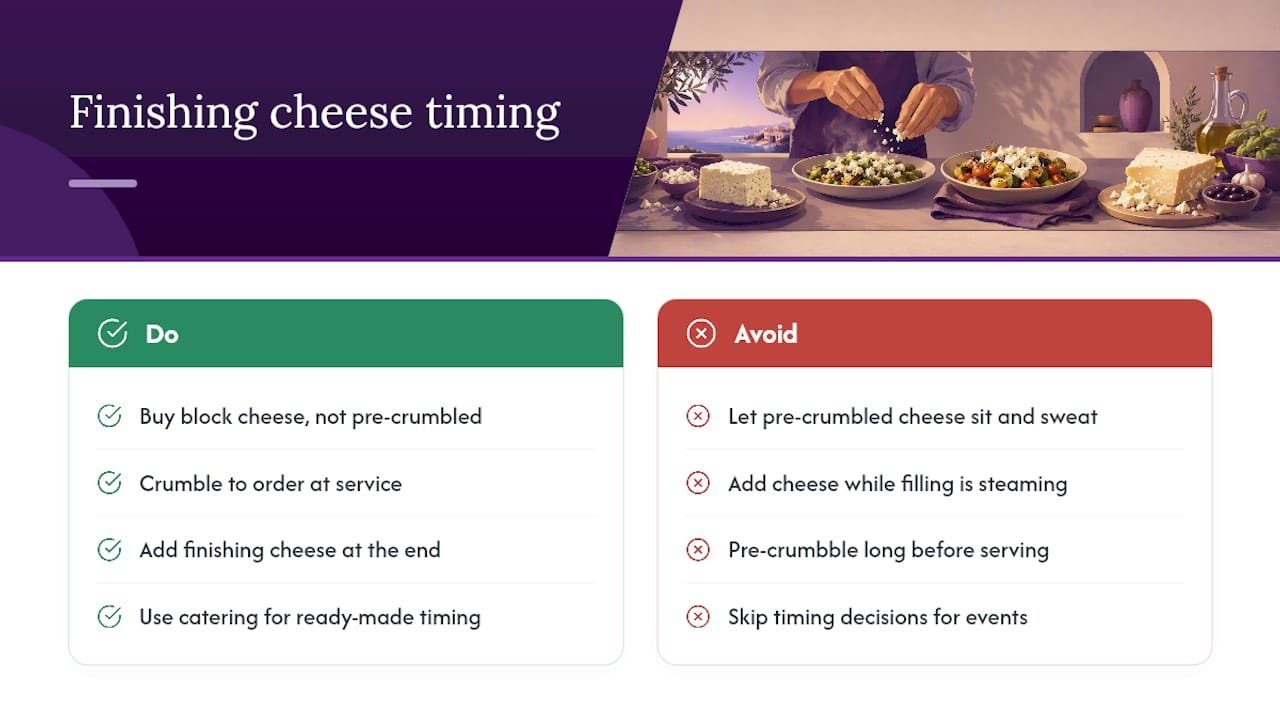
That timing habit is worth stealing for home cooking too. Add your finishing cheese, whether it’s cotija, feta, or a substitute, right at the end, not while the filling is still steaming. Our tips for fresh Mexican cooking at home walk through more of these small sequencing tricks, and our checklist for authentic tacos covers exactly when cheese should go on relative to salsa and protein.
If you’d rather skip the shopping and prep entirely, our Winnipeg menu puts these tradeoffs to work already, finished the way our kitchen has tested for years. For events or taco nights where you want the swap decisions made for you, Burrito Splendido catering handles the cheese, the tortillas, and everything in between.
— Austin
Sources
Facts on production and ageing in this piece come from Agriculture and Agri-Food Canada’s cheese sector profile, Bon Appétit’s cotija overview, Wisconsin Cheese’s technical note on cotija’s texture, and Wikipedia’s cotija cheese entry. For hands-on technique, our step-by-step guide to making tacos at home is a solid next read.
- Cheese sector profile — Agriculture and Agri‑Food Canada
- Cotija cheese — Wikipedia
- What is Cotija Cheese, the salty, crumbly, addictive cheese? — Bon Appétit
- Discover the versatile flavor of cotija cheese — Wisconsin Cheese