Call the restaurant directly, confirm their cross-contamination protocol, and choose build-your-own items over pre-assembled dishes. That single sequence covers the highest-risk gaps when ordering meals for allergies or managing any medically necessary restriction.
Before you place any order, lock down three things:
- Explicit allergen statement: Get a verbal or written confirmation of every ingredient in your chosen items, including sauces and marinades.
- Cross-contamination protocol: Ask specifically how the kitchen prevents allergen transfer, not just whether they “can accommodate” you.
- Avoid complex sauces and pre-made mixes: These are where hidden allergens live. Stick to whole-ingredient, made-to-order components.
Pro Tip: If a staff member hesitates, gives vague answers, or says “we’ll try our best,” ask to speak with the manager or lead cook. If the answers stay unclear, refuse the order. A safe meal is worth the wait.
Table of Contents
- How to order for dietary needs: your six-step checklist
- What questions should you ask when you call?
- How to safely customise burritos, bowls, and tacos
- Practical catering guidance for event organisers
- Medical restrictions versus lifestyle choices: why the difference matters
- How Burritosplendido handles your dietary needs
- Key takeaways
- Why dietary accommodations are worth getting right
- Place your Burritosplendido order for dietary needs
- Useful sources and further reading
How to order for dietary needs: your six-step checklist
A staged system reduces missed details and keeps your request consistent across every staff member who touches your order.
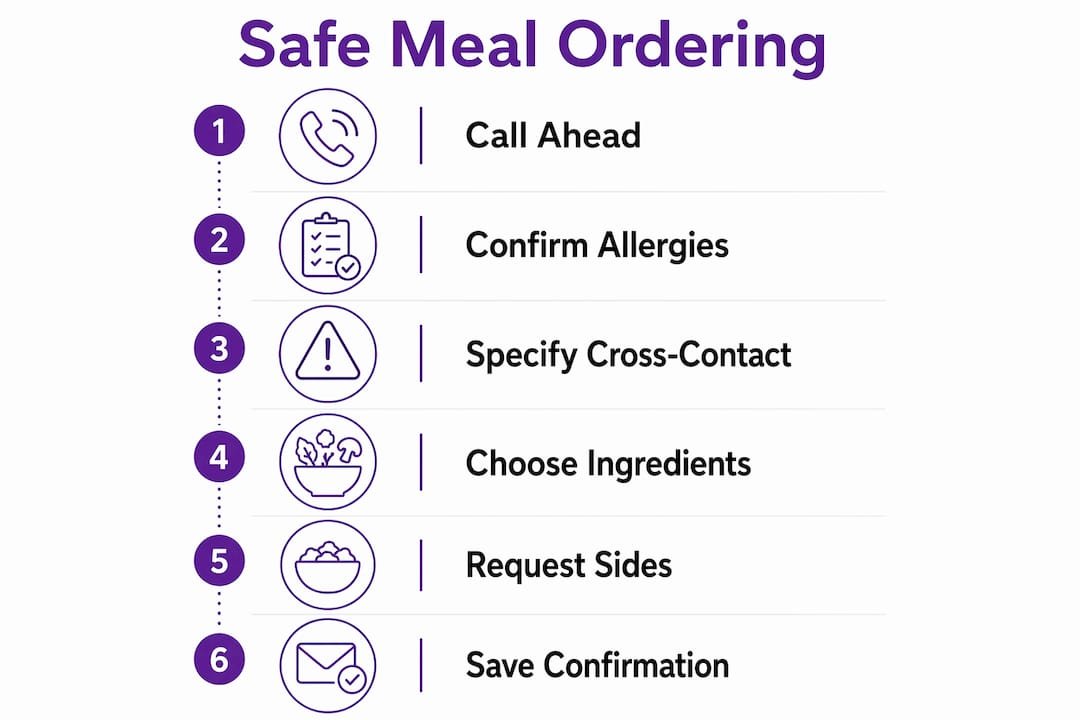
- Review the menu online first. Look for clear dietary labels (gluten-free, vegan, keto), build-your-own formats, and published ingredient lists. If the website lists nothing, that’s a signal to call before you order.
- Call the restaurant. Ask for the manager or a trained staff member. Confirm they have protocols for your specific restriction, not just a general willingness to help.
- Put it in writing. For individual orders, add detailed notes at checkout. For catering, send a written brief: list every restriction, the number of guests affected, and request a written confirmation back.
- Confirm lead times. Single orders with allergy-level needs should be confirmed the same day. Catering orders for groups with dietary restrictions need at minimum 48–72 hours notice; more complex events warrant a week or longer.
- Inspect on delivery or pickup. Check that allergen-free items are separately packaged and labelled. Never assume a sealed container is safe without a label confirming what’s inside.
- Have a contingency plan. If the order arrives wrong, do not serve it. Contact the restaurant immediately for a replacement or refund. For events, keep a small reserve of clearly labelled, individually packaged safe items on hand.
Pro Tip: For catering, reconfirm the full dietary roster by phone the day before the event. Kitchens sometimes miss online notes during busy periods — a quick call catches errors before they reach your guests.
What questions should you ask when you call?

The goal is specific, verifiable answers, not reassurances. Here’s how to open the call:
“Hi, I’m placing an order for someone with a [nut/gluten/dairy] allergy. Can I speak with your manager or the person who handles dietary accommodations?”
For event organisers, add: “We have [X] guests with [specific restrictions]. Can you confirm in writing that your kitchen can handle this for [date]?”
Once you have the right person, ask these questions directly:
- What are the exact ingredients in your [sauce/marinade/dressing]?
- Do you use a shared fryer or shared prep surfaces for allergen-free items?
- Is there a separate prep area or dedicated utensils for allergy-level orders?
- Have your staff received training on cross-contamination, not just ingredient substitution?
- Can you confirm this in writing or via email before I finalize the order?
The last question matters. Kitchens sometimes miss online notes during a rush; a written confirmation creates accountability.
Pro Tip: Screenshot or save any email confirmation. If an order arrives wrong, that record is your fastest path to a resolution.
How to safely customise burritos, bowls, and tacos
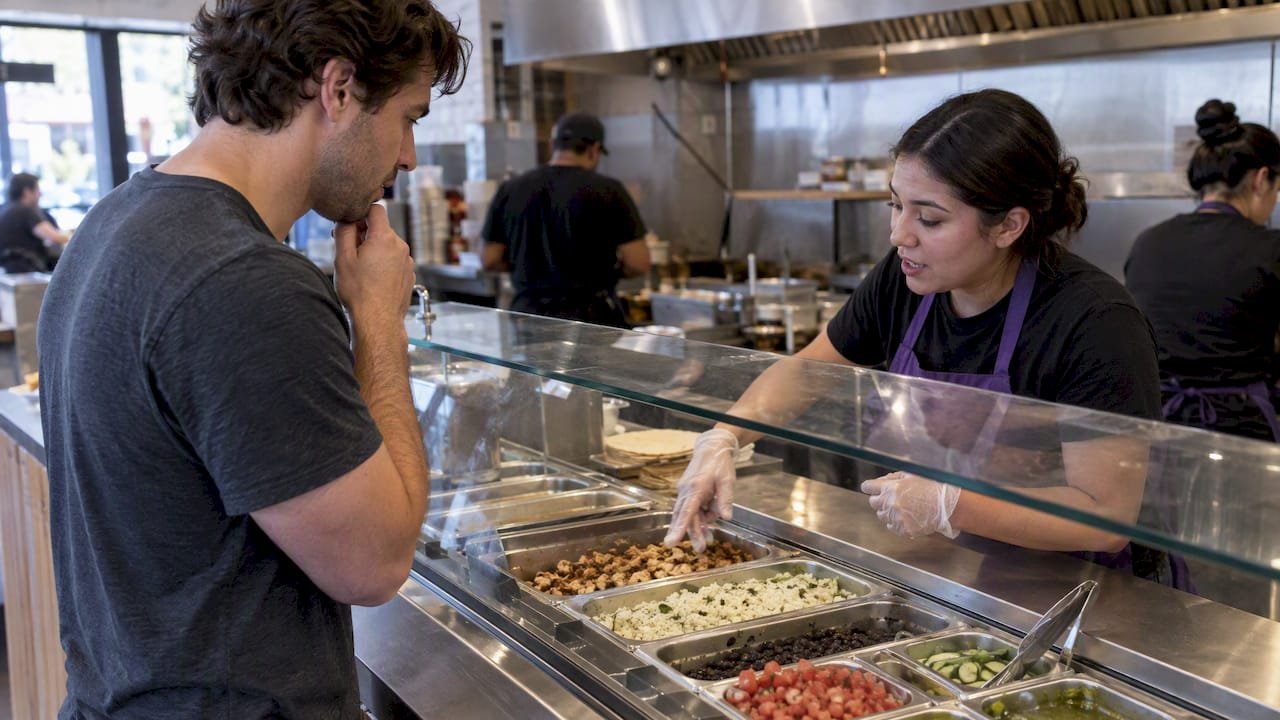
Build-your-own bowls and “naked” burrito formats are the safest starting point. Every component is visible, individually added, and easier to swap or omit. Pre-assembled dishes with layered sauces or pre-mixed fillings are where hidden allergens appear most often, particularly in dressings and marinades.
For gluten-free diners, corn tortillas are the straightforward swap. Flour tortillas typically contain wheat, so that’s a non-starter. At Burritosplendido, gluten-free soft corn tacos are sourced from La Cocina, and the gluten-free menu options are clearly identified. For vegan orders, skip the cheese and sour cream, confirm the beans contain no lard, and request salsa or fresh pico instead of cream-based sauces.
| Menu component | Safer choice | Higher risk |
|---|---|---|
| Tortilla | Corn (gluten-free) | Flour (contains wheat) |
| Protein | Grilled chicken, slow-braised beef, beans | Pre-marinated mixes with unknown sauce |
| Sauce | Fresh salsa, pico de gallo | Mole, chipotle cream, pre-made dressings |
| Cheese/dairy | Omit or request separately | Pre-layered in assembled dishes |
| Sides | Whole grilled vegetables, plain rice | Seasoned rice blends, shared-fryer chips |
Pro Tip: Request all sauces and dressings on the side, even for lifestyle-preference orders. It gives you control and removes the most common hidden-allergen source from the equation.
Practical catering guidance for event organisers
Lead time is the single biggest variable. For groups where one or more guests has a medically necessary restriction, contact the restaurant at least 72 hours in advance. For large events (30+ people) with multiple dietary categories, a week’s notice gives the kitchen time to source, prep, and label correctly.
A workable catering order for a mixed-diet group follows this ratio: roughly 25–30% of items as max-coverage options (vegan plus gluten-free, for example), 15–20% vegetarian, and the remainder standard. That structure covers most guests without requiring a separate dish for every restriction. For certified needs like halal or severe allergies, order those individually and label them clearly.
Packaging and labelling checklist on delivery:
- Each allergen-free item in its own sealed container with a label naming the restriction it covers
- Allergen-free items physically separated from standard items during transport and at the serving table
- Reheating and storage instructions included so on-site staff don’t inadvertently introduce cross-contact
- A written manifest listing every item, its dietary category, and the number of portions
Pro Tip: Assign one person at the event to manage dietary items. That person handles the labelled containers, answers guest questions, and keeps allergen-free food away from shared serving utensils. One designated handler prevents most post-delivery cross-contact incidents.
For a full planning framework, the dietary-friendly catering planner covers timelines and confirmation steps in detail. Corporate event organisers can also use a catering brief template to formalise the dietary roster before contacting any restaurant.
Medical restrictions versus lifestyle choices: why the difference matters
A vegan preference and a peanut anaphylaxis are not the same request, and kitchens know it. Lifestyle choices (vegan, keto, paleo) typically mean ingredient substitution. Medically necessary restrictions, including anaphylaxis triggers, celiac disease, and severe intolerances, require a different standard entirely: separate prep surfaces, dedicated utensils, no shared fryers, and staff who understand the consequences of a mistake.
Kitchens treat these requests differently in practice. Expressing a preference is not enough for a medical-level restriction. You need to ask explicitly about cross-contact protocols, not just ingredient swaps.
For medical-level orders, demand:
- Separate prep area or confirmed cleaning of surfaces before your item is made
- Dedicated utensils that have not touched the allergen
- No shared fryer (shared oil carries allergens even when the food itself doesn’t)
- Staff who can name the protocol, not just say “we’re careful”
- Epinephrine autoinjectors on site for the guest, and staff awareness of the emergency plan
Treat any uncertainty as a no-go. If a kitchen cannot confirm its cross-contact protocol clearly and specifically, that is your answer. The risk of a reaction outweighs the inconvenience of finding another option.
Carry two epinephrine autoinjectors and a written emergency action plan when dining out with a severe allergy. Photograph the plan so it’s accessible on your phone.
How Burritosplendido handles your dietary needs
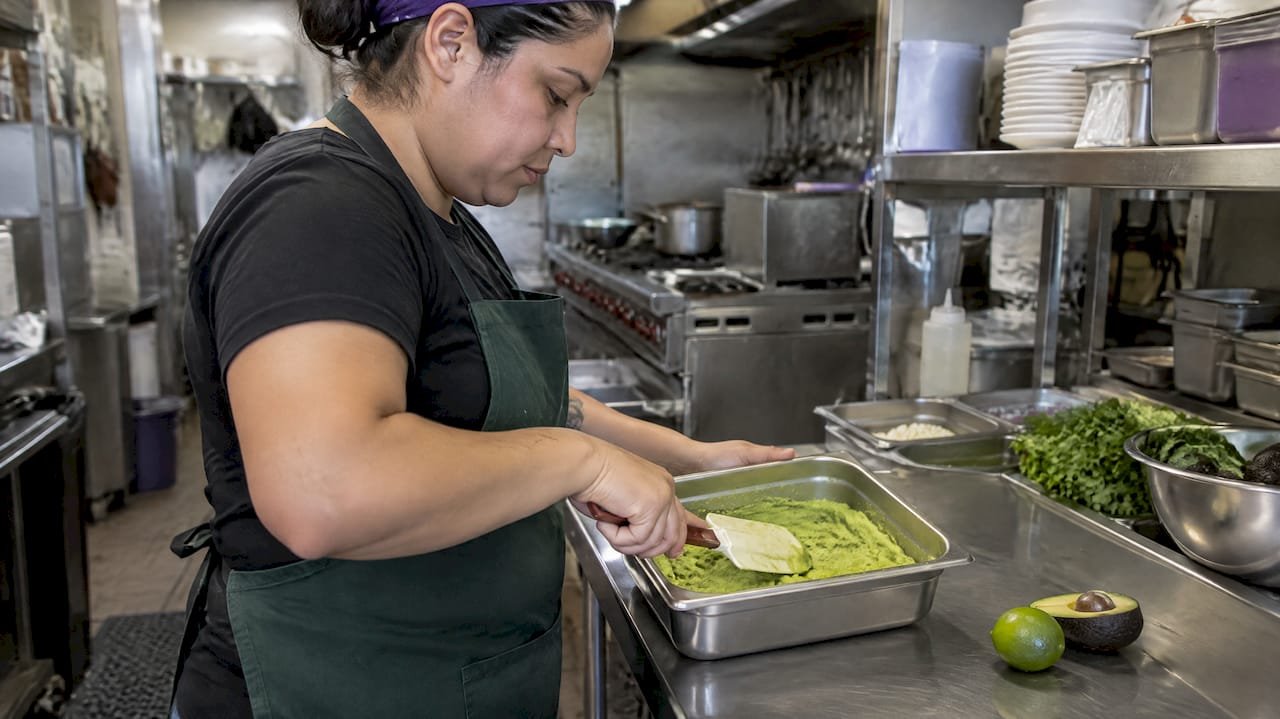
Burritosplendido operates as a deep-fryer-free kitchen, which removes one of the most common cross-contact vectors before you even place your order. Every item is prepared from scratch daily using locally sourced Manitoba ingredients, so the ingredient list is short, known, and consistent.
Concrete trust signals at Burritosplendido:
- Staff trained specifically on dietary needs and cross-contamination handling
- Written ingredient lists available for menu items
- Separate preparation notes and containers for allergen-level catering orders
- Clear menu labelling for gluten-free, vegan, keto, and paleo options
- Gluten-free soft corn tacos sourced from La Cocina
- No shared deep fryer
For individual orders, place your order online through the Burritosplendido menu, then call your nearest location to confirm the allergy-level details with a staff member before pickup or delivery. For catering, contact the team through the catering page and have your dietary roster ready: number of guests per restriction, the specific allergens involved, and your event date.
At Burritosplendido, the build-your-own format means every component is added individually, in front of you or documented in writing for catering. That transparency is the foundation of safe ordering for any dietary need.
The Burritosplendido menu navigation guide walks through gluten-free, vegan, and keto choices specifically, so you can arrive knowing exactly what to order.
Key takeaways
Safe dietary ordering comes down to three actions: call to confirm cross-contamination protocols, choose build-your-own whole-ingredient formats, and label or segregate every allergen-specific item on delivery.
| Point | Details |
|---|---|
| Call before you order | Online notes are often missed; phone confirmation with a manager is the most reliable safeguard. |
| Choose build-your-own formats | Bowls and naked burritos let you control every component and avoid hidden allergens in pre-made sauces. |
| Max-coverage catering ratio | Aim for 25–30% of catering items as vegan-plus-gluten-free to cover most guests with fewer special orders. |
| Label and segregate on delivery | Every allergen-free item needs its own sealed, labelled container and physical separation at the serving table. |
| Burritosplendido as local option | Deep-fryer-free, from-scratch prep, trained staff, and clear menu labelling make it a reliable choice for dietary-specific orders in Manitoba. |
Why dietary accommodations are worth getting right
Most articles on this topic treat dietary requests as a checklist problem. They’re not. They’re a communication problem, and the gap is almost always between what a guest assumes the kitchen understood and what the kitchen actually did.
The conventional wisdom says “just tell them your allergy.” That’s the floor, not the ceiling. The real work is asking the specific follow-up questions that reveal whether a kitchen’s protocol is genuine or performative. A kitchen that says “we can do gluten-free” but uses the same tongs for flour tortillas and corn tortillas has a protocol in name only.
What actually protects people is the combination of a build-your-own format (where components are added individually and visibly), a kitchen that operates without a shared fryer, and staff who can describe their cross-contact process without hesitation. Those three things together are rare. When a restaurant has all of them, the ordering conversation becomes much shorter and the risk drops substantially.
Manitoba organisers have a practical advantage here: Burritosplendido’s from-scratch, locally sourced model means fewer pre-made components and a shorter, more transparent ingredient chain. That’s not marketing language. It’s a structural safety feature.
Place your Burritosplendido order for dietary needs
Burritosplendido is the straightforward local answer for Winnipeg and Manitoba diners who need a restaurant that can actually back up its dietary claims, not just list them on a menu.
For individual orders with dietary needs, start at the Burritosplendido online menu, build your meal from clearly labelled components, and call your nearest location to confirm any allergy-level details before you arrive. For event catering, the catering request page is where organisers submit their dietary roster, group size, and event date. Have your list of restrictions ready: the team will confirm capability in writing and walk you through packaging and labelling for delivery or pickup. Contact your nearest location directly for same-week catering enquiries.
Useful sources and further reading
The following organisations publish reliable, medically reviewed guidance on dietary ordering and food allergy management:
- Food Allergy Research & Education (FARE): The leading North American authority on food allergy safety; their dining-out checklist is the most widely cited resource for individuals and organisers.
- American Academy of Allergy, Asthma & Immunology (AAAAI): Physician-reviewed guidance on dining with severe allergies, including epinephrine protocols and cross-contact definitions.
- Spokin: A community-driven platform with restaurant reviews and ordering scripts specifically for allergy-affected diners.
- Zerocater: Practical catering guidance for mixed-diet events, including max-coverage ordering ratios and labelling standards.
- Explaining inclusive menu options: A diner-focused guide to reading menu labels and understanding dietary icons at fast-casual restaurants.
For any medically necessary restriction, consult a registered allergist before dining out. The resources above are general information, not medical advice, and rules and protocols vary by restaurant and jurisdiction. Confirm current practices directly with your chosen provider.
Pro Tip: Ask your allergist for a printed chef card stating your specific allergens and required protocols. Hand it to the manager when you arrive or include a photo of it with your catering brief. It removes ambiguity and gives kitchen staff a clear, written reference.