House-made salsa is a foundational flavour-building tool, not a garnish. The role of house-made salsas in authentic Mexican cooking is to provide acidity, heat, and depth that balance rich proteins and brighten every bite. In culinary terms, these preparations fall under the category of “fresh condiments” or “table sauces,” but that label undersells them. Chefs like Luis Gómez and Maycoll Calderón describe house-made salsas as deliberate flavour components designed to complement specific dishes. Burritosplendido has built its entire kitchen philosophy around this principle, crafting salsas daily from fresh, locally sourced Manitoba ingredients to ensure every bowl and taco hits the right balance.
What is the role of house-made salsas in balancing flavours?
House-made salsas function as flavour counterweights. The acidity from tomatillos and fresh lime juice cuts through the fat in slow-cooked proteins like carnitas and barbacoa, preventing richness from becoming heaviness. That is a chemical reality: acid breaks down fat molecules on the palate, resetting your taste buds between bites.
Heat from fresh chiles works differently. It adds complexity by triggering a mild endorphin response, which makes the overall eating experience more engaging. The key is calibration. A well-made salsa delivers heat that builds gradually, not a sharp burn that shuts down your ability to taste anything else.
House-made salsas provide acidity, heat, and depth that bottled hot sauces simply cannot replicate. Commercial sauces are formulated for shelf stability, which means vinegar dominates and fresh flavour disappears. A house salsa made with Peak of the Market tomatoes and fresh jalapeños tastes alive. A bottled sauce tastes preserved.
- Acidity: Tomatillos, lime juice, and fresh tomatoes brighten fatty proteins like Carnitas and Barbacoa.
- Heat: Fresh serranos and jalapeños add layered spice that builds without overpowering.
- Depth: Roasted garlic, cumin, and charred chiles create a savoury base that ties a dish together.
- Texture: Chunky salsas add bite; smooth salsas coat proteins evenly for a more integrated flavour.
Pro Tip: Add salsa to a dish during the last 30 seconds of plating, not during cooking. Heat destroys the volatile aromatic compounds in fresh herbs and citrus that give house salsas their brightness.
Raw vs. cooked salsa: which one should you make?
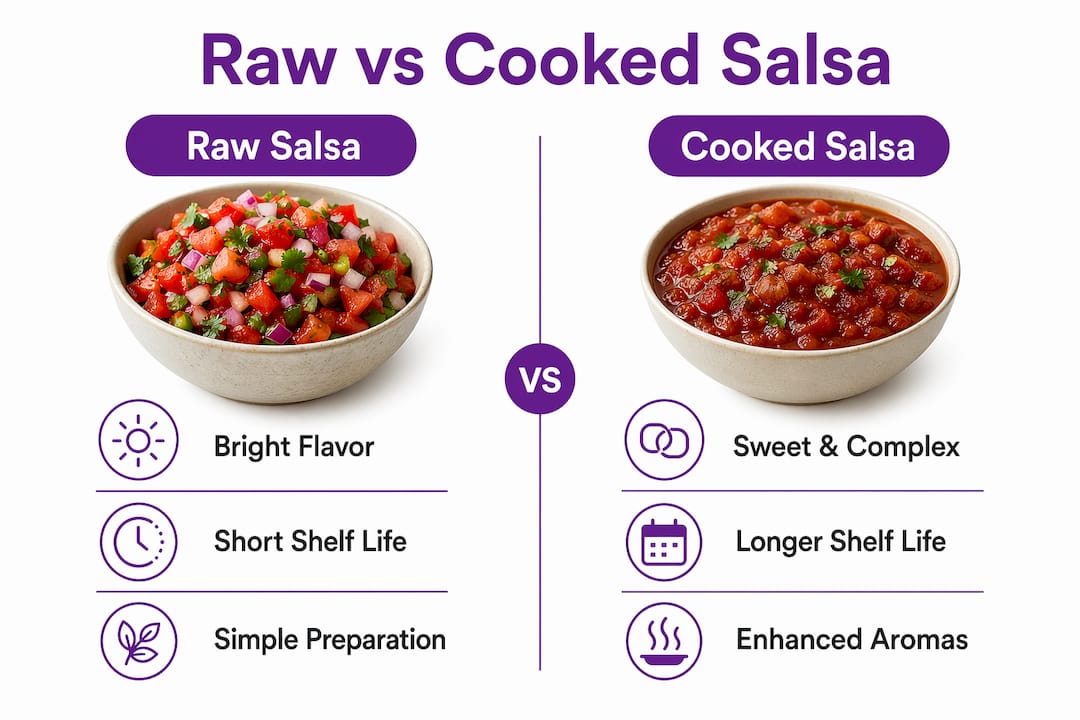
The choice between raw and cooked salsa is the most consequential decision in house salsa preparation. Raw salsas have a fresh, crisp texture and nutrient density but a shorter shelf life. Cooked salsas develop deeper, caramelized flavours, a thicker texture, and last longer in the fridge. Neither is superior. They serve different purposes.
Salsa cruda, also called pico de gallo, uses raw tomatoes, white onion, fresh cilantro, jalapeño, and lime juice. It works best on dishes where you want brightness to cut through richness: street tacos, grilled fish, or scrambled eggs. The raw preparation preserves Vitamin C and the sharp, clean flavour of each ingredient.
Cooking salsa caramelizes sugars, which enhances sweetness and complexity but reduces fresh brightness and some Vitamin C content. A roasted tomatillo salsa, for example, develops a smoky, slightly sweet depth that pairs perfectly with slow-cooked meats. It also holds up better as a sauce for enchiladas or a base for braised dishes.
| Type | Flavour Profile | Best Use | Shelf Life |
|---|---|---|---|
| Raw (pico de gallo) | Bright, crisp, acidic | Tacos, grilled fish, eggs | 2–3 days refrigerated |
| Cooked (roasted tomatillo) | Smoky, sweet, complex | Enchiladas, braised meats, dipping | 5–7 days refrigerated |
Pro Tip: For raw salsa, salt your diced tomatoes and let them drain for 10 minutes before mixing. This removes excess water and concentrates flavour without diluting the final salsa.
Why make house-made salsa at home?
The benefits of homemade salsa go well beyond taste. Preparing house-made salsa takes only 5–10 minutes of active time and costs less than commercial options when you use seasonal produce. That combination of speed and economy makes it one of the highest-return cooking habits you can build.
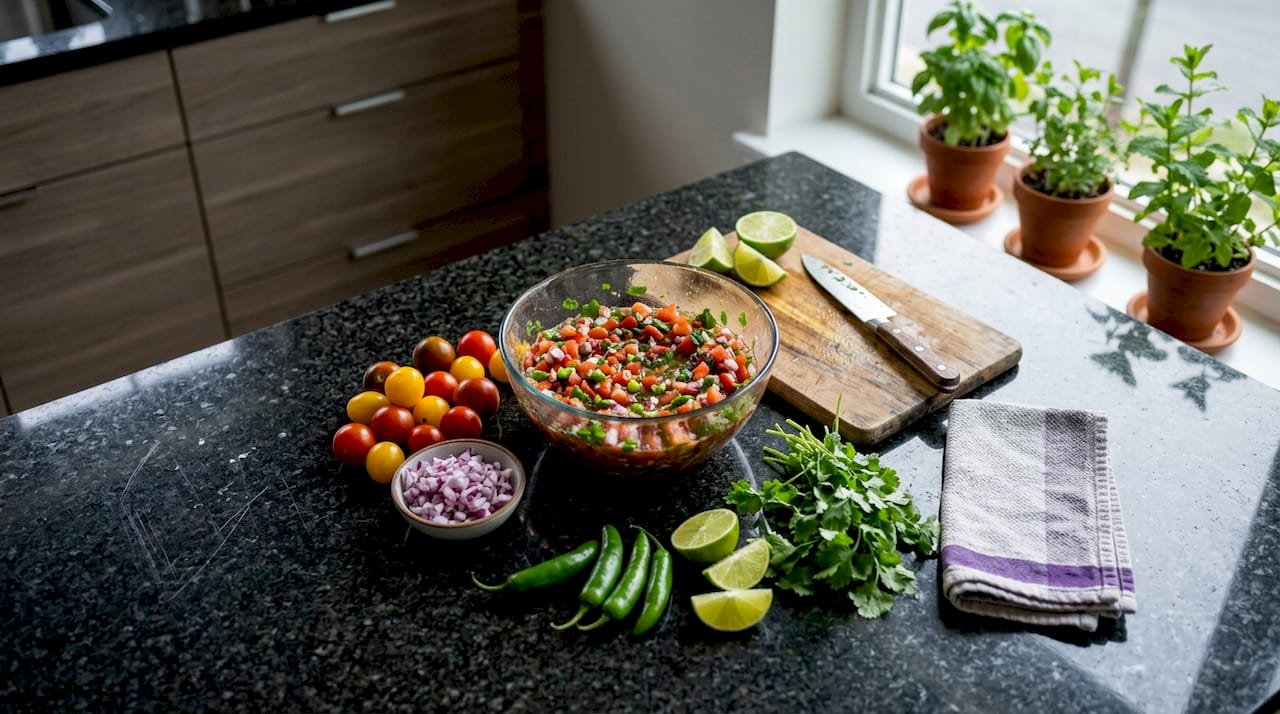
Homemade salsa produces brighter, fresher flavours compared to commercial versions, which often taste flat and processed. The difference is not subtle. Fresh tomatoes, raw garlic, and just-squeezed lime juice create a flavour profile that no jarred product can match, regardless of price point.
House-made salsas give you full control over freshness, spice level, and ingredients. That matters for home cooks managing dietary restrictions, allergies, or specific health goals. You can eliminate preservatives, reduce sodium, skip added sugars, and dial heat up or down to suit your household.
Here are four practical reasons to make salsa at home regularly:
- Cost savings. A batch of fresh tomato salsa made with in-season produce costs a fraction of a premium jarred salsa. Buying tomatoes, onions, and chiles in bulk during peak season and freezing extra batches extends those savings year-round.
- Ingredient control. You choose what goes in. No xanthan gum, no citric acid, no mystery preservatives. For cooks managing gluten-free, vegan, or low-sodium diets, this control is not optional. It is necessary.
- Flavour customization. Want a mango-habanero salsa for grilled chicken? A roasted garlic and chipotle version for beef tacos? Home preparation lets you build salsa varieties for meals that no store shelf carries.
- Culinary confidence. Making salsa from scratch teaches you how acidity, heat, and salt interact. That knowledge transfers directly to every other sauce, dressing, and marinade you make.
Popular house salsa recipes and how to use them
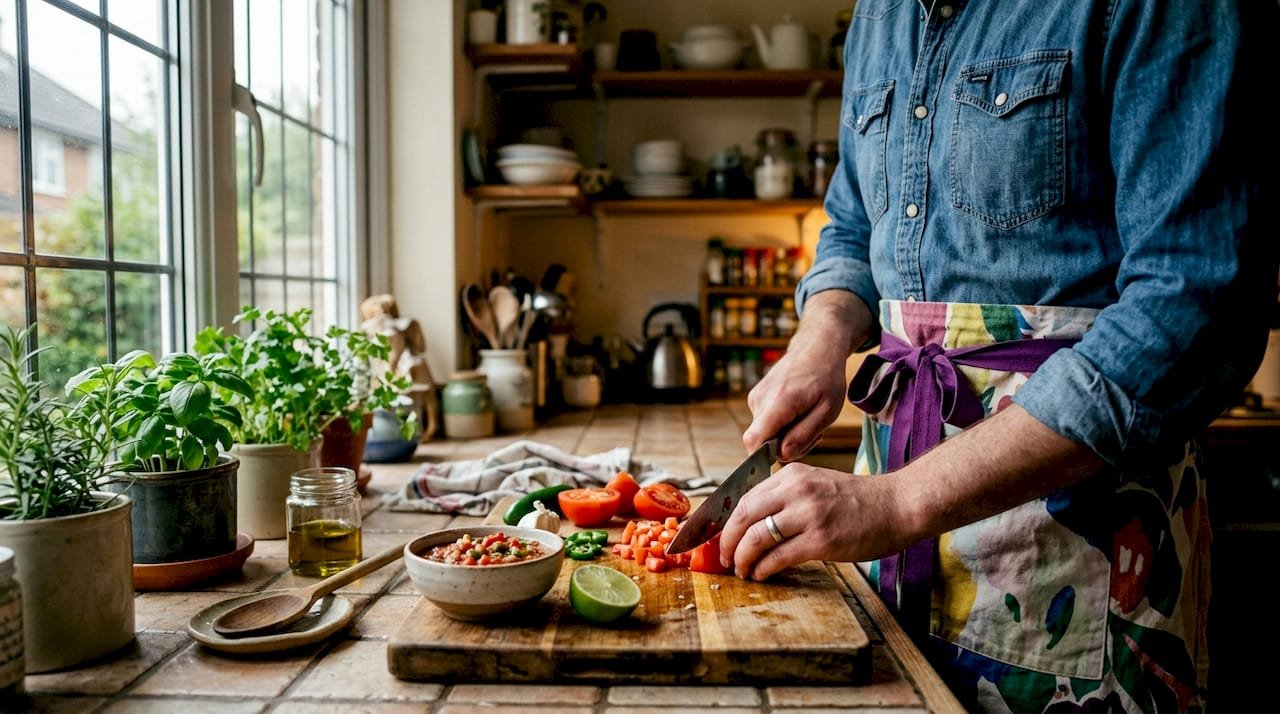
A basic fresh tomato salsa requires five ingredients: ripe Roma tomatoes, white onion, fresh jalapeño, cilantro, and lime juice. Dice everything finely, combine, season with salt, and rest for 15 minutes before serving. That resting time lets the salt draw out moisture and meld the flavours. The result is cleaner and more cohesive than a salsa served immediately after mixing.
For a roasted chile and tomatillo salsa, char tomatillos, serranos, and a half onion directly on a dry cast-iron skillet until blackened in spots. Blend with garlic, salt, and a small handful of cilantro. The charring creates a smoky depth that works beautifully with slow-cooked proteins like barbacoa or adobo chicken. Burritosplendido uses this approach with its hand-pulled proteins to ensure every flavour element in a bowl or taco has a clear purpose.
Pairing salsas with the right dishes makes a measurable difference in the final eating experience:
- Fresh tomato salsa pairs with grilled fish tacos, scrambled eggs, and quesadillas. The brightness lifts mild proteins without competing with them.
- Roasted tomatillo salsa pairs with carnitas, barbacoa, and enchiladas. Its smokiness mirrors the caramelized notes in slow-cooked meats.
- Mango or fruit-forward salsas pair with grilled shrimp, pork tenderloin, and soft corn tacos. The sweetness balances heat and adds a seasonal dimension.
- Chipotle salsa pairs with grilled chicken, burrito bowls, and roasted vegetables. Its smoky heat works across proteins and plant-based dishes equally well.
Seasonal ingredients sharpen every salsa. Summer tomatoes taste fundamentally different from winter greenhouse tomatoes. Using Peak of the Market produce, as Burritosplendido does, means your salsa reflects what is actually ripe and flavourful right now. That seasonal awareness is what separates a good salsa from a great one. For practical guidance on fresh Mexican cooking, building your salsa skills alongside other techniques compounds the results quickly. Culinary trends in 2026 also reflect this shift, with modern gastronomy increasingly prioritising house-made condiments as markers of kitchen quality and authenticity.
Key takeaways
House-made salsas are essential flavour tools that provide acidity, heat, and depth to balance dishes, and home cooks can make them in under 10 minutes with seasonal ingredients for better taste and full ingredient control.
| Point | Details |
|---|---|
| Salsas balance, not garnish | Acidity and heat in house salsas counterbalance rich proteins like carnitas and barbacoa. |
| Raw vs. cooked serves different needs | Raw salsas brighten tacos and eggs; cooked salsas suit braised meats and enchiladas. |
| Home preparation is fast and affordable | Active prep takes 5–10 minutes and costs less than commercial options with seasonal produce. |
| Ingredient control matters | Making salsa at home eliminates preservatives and lets you tailor heat, salt, and sweetness. |
| Seasonal produce defines quality | Using ripe, in-season ingredients produces flavour that no jarred product can replicate. |
Why house-made salsas changed how I think about cooking
The first time I understood what a salsa was actually doing, I was eating carnitas tacos and noticed that the tomatillo salsa was not just a topping. It was the reason the whole bite worked. The fat from the braised pork needed something to cut it, and the salsa’s acidity did exactly that. Without it, the taco was heavy. With it, every bite reset cleanly.
That realisation shifted how I approach salsas in Mexican food entirely. I stopped treating them as optional and started treating them as structural. A dish without the right salsa is like a sentence missing its verb. The ingredients are there, but the meaning is incomplete.
Salsa bars in modern Mexican restaurants have made this interactive, letting diners engage with their food by choosing which flavour profile completes their plate. That engagement is not a gimmick. It reflects a genuine truth about how salsas work. They are the final decision in a dish’s flavour architecture.
What I find most compelling is how accessible this knowledge is. You do not need culinary training to make a salsa that outperforms anything in a jar. You need ripe tomatoes, a sharp knife, and 10 minutes. The gap between a mediocre meal and a memorable one is often that small.
— Austin
Fresh salsa, better meals: what Burritosplendido offers
Burritosplendido has built its kitchen around the same principles this article covers: fresh ingredients, daily preparation, and salsas that serve a real culinary purpose. Every protein on the menu, from slow-braised Carnitas to hand-pulled Barbacoa, is paired with house-made salsas crafted to complement it specifically.

If you are planning a group meal or event where fresh, authentic flavours matter, Burritosplendido’s catering services bring that same from-scratch approach to your table. For home cooks who want to build on what they have learned here, the authentic taco guide walks through how to assemble tacos that let house-made salsas do exactly what they are designed to do.
FAQ
What is house-made salsa?
House-made salsa is a fresh condiment prepared daily from whole ingredients like tomatoes, chiles, onion, and lime juice, without preservatives or artificial additives. It differs from commercial salsa in flavour intensity, texture, and nutritional quality.
Why use house-made salsas instead of bottled sauce?
House-made salsas deliver acidity, heat, and depth that bottled hot sauces cannot replicate, because commercial products are formulated for shelf stability rather than fresh flavour. The difference in taste is immediate and significant.
How long does homemade salsa last in the fridge?
Raw salsas like pico de gallo last 2–3 days refrigerated, while cooked salsas keep for 5–7 days. Storing salsa in an airtight container and keeping it cold from the moment it is made extends freshness.
What are the best salsa varieties for meals?
Fresh tomato salsa suits tacos and eggs; roasted tomatillo salsa pairs with braised meats; chipotle salsa works with grilled chicken and burrito bowls; and fruit-forward salsas complement grilled shrimp and pork. Matching the salsa’s flavour profile to the protein is the key principle.
Can you make house-made salsa in under 10 minutes?
A basic fresh tomato salsa takes 5–10 minutes of active preparation time and costs less than commercial alternatives when made with seasonal produce. The speed and cost savings make it one of the most practical habits a home cook can develop.