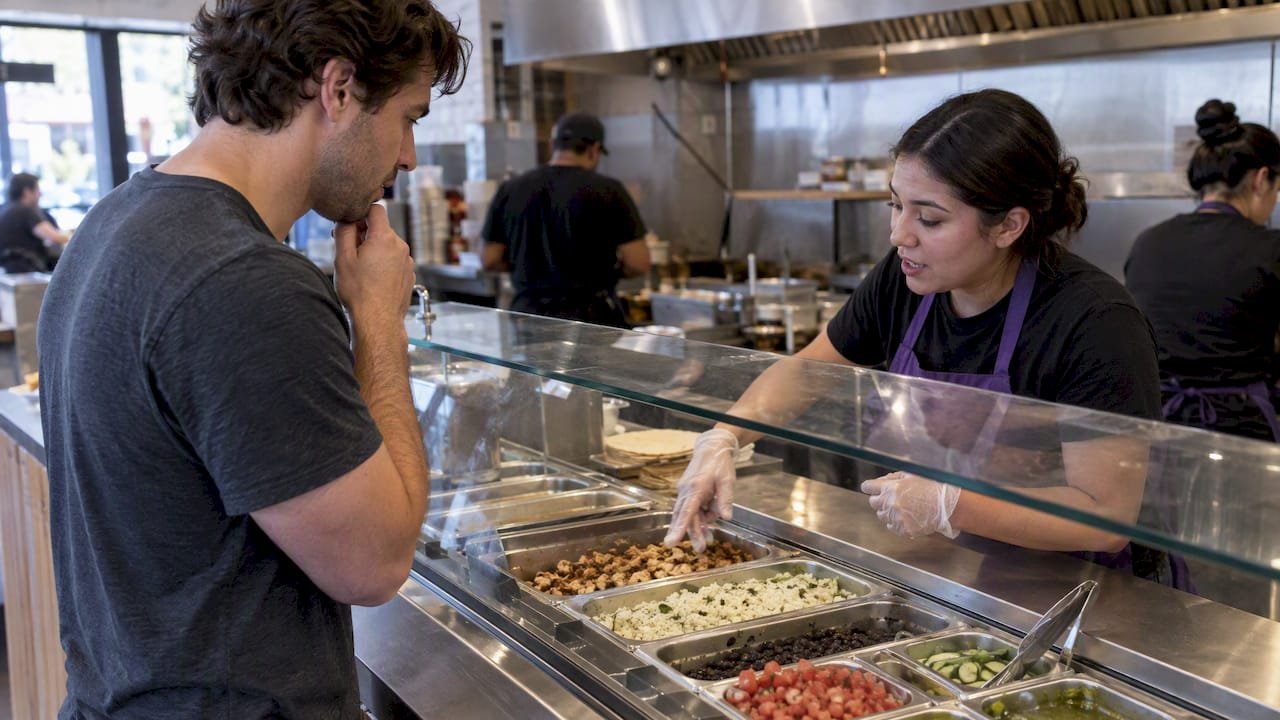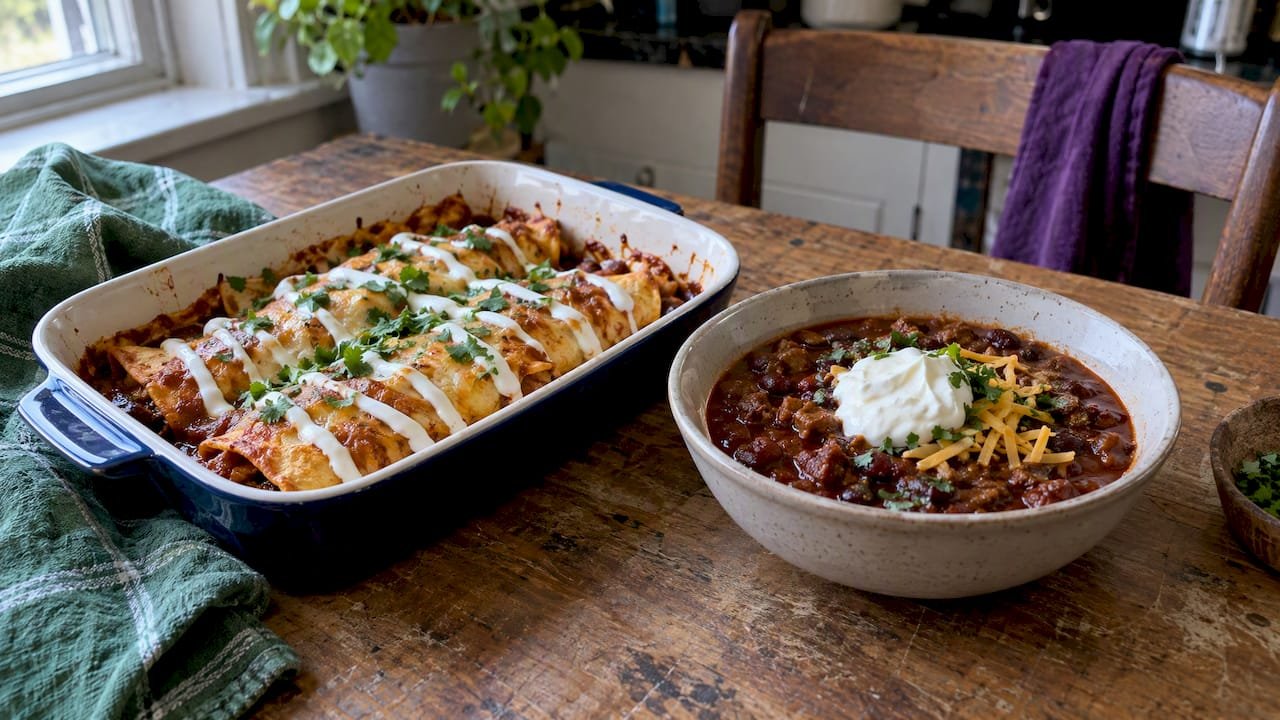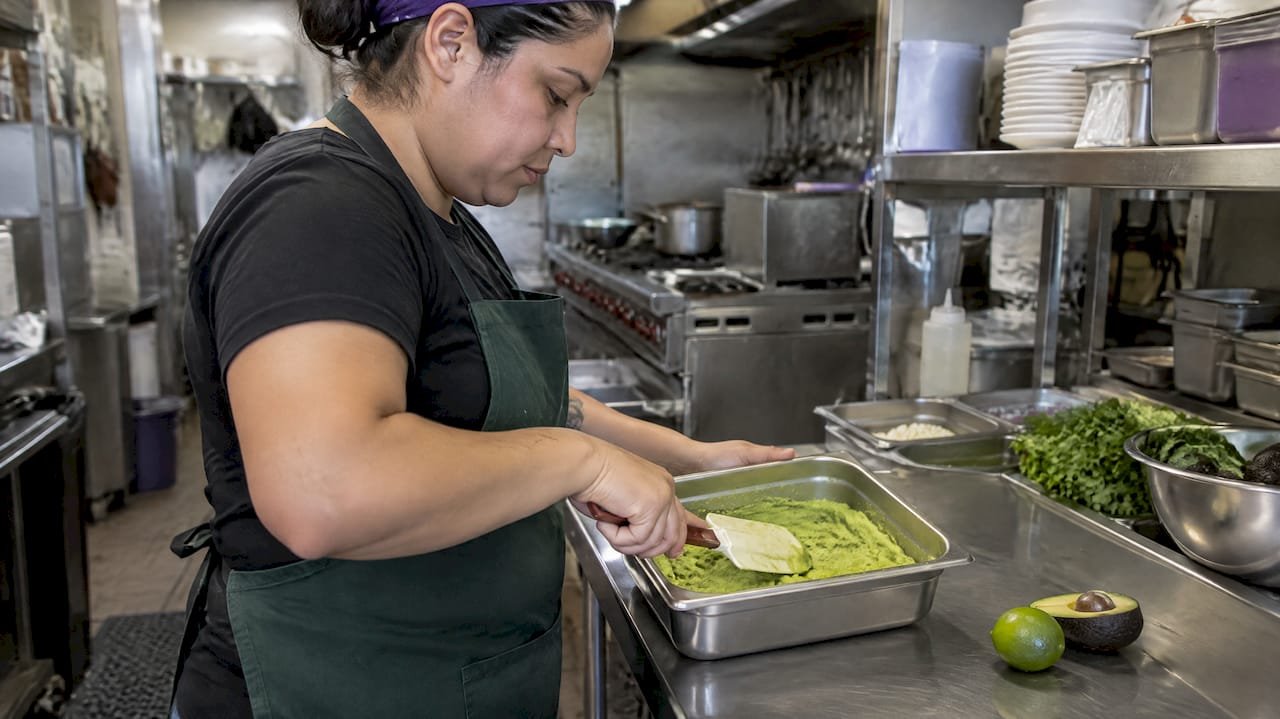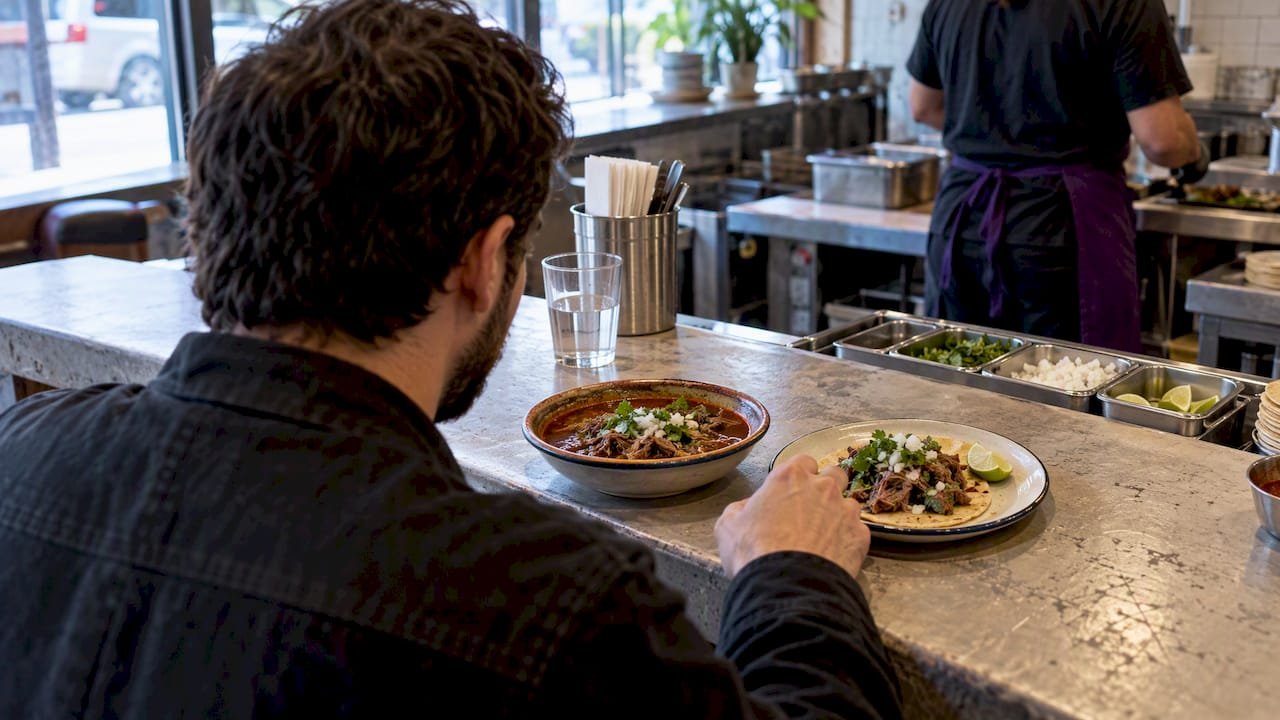
A community-focused restaurant is defined as a dining establishment that actively integrates with its local community through inclusive programming, ethical sourcing, and social support. The concept goes well beyond good food. These restaurants function as neighbourhood anchors, connecting diverse residents, supporting local producers, and upholding the dignity of every diner regardless of their financial means. The community focus in restaurants movement is reshaping how we measure success in the food industry, shifting the standard from table turns and profit margins to genuine social connection and long-term local impact. Burritosplendido, founded in Winnipeg in november 2012, is one example of how this philosophy takes root in a regional fast-casual setting.
What defines a community-focused restaurant?
A community-focused restaurant, known in the industry as a “community benefit restaurant” or “social enterprise eatery,” is built around a mission that extends beyond revenue. The most recognisable feature is an alternative pricing model. Taste Community Restaurant, operating since 2017 in Fort Worth, publishes no prices on its menu. Diners pay what they can, with no distinction made between those who pay full price and those who cannot. That design choice is deliberate: it removes the social stigma attached to receiving subsidised food.
The operational backbone of these restaurants often relies on nonprofit or community interest company (CIC) structures. Taste Community Restaurant holds 501©(3) nonprofit status, which unlocks access to grants, donations, and volunteer labour unavailable to traditional businesses. Running on 80% volunteer labour keeps costs low enough to sustain the pay-what-you-can model across multiple locations. That funding structure is not a workaround. It is the architecture that makes the mission viable.
Employment programmes for marginalised groups are another defining feature. 130 Primrose, a London restaurant staffed by formerly homeless people, provides culinary training and six-month employment stints to support social reintegration. The model pairs job skills with mentorship, recognising that workplace adaptation takes time and structured support. These restaurants are not charities wearing an apron. They are functioning businesses with a deliberate social design.
Key features that distinguish socially responsible eateries include:
- Pay-what-you-can or sliding-scale pricing that removes financial barriers without segregating diners
- Nonprofit or CIC legal structures that enable grant funding and volunteer integration
- Job training and apprenticeship programmes targeting people facing barriers to employment
- Local supplier partnerships that keep economic benefit circulating within the community
- Volunteer-integrated operations that reduce overhead while building civic participation
Pro Tip: If you are evaluating a restaurant’s community credentials, look for transparency in sourcing and employment practices, not just charitable donations. Real community focus shows up in daily operations.
How do these restaurants build social connection?
Community-focused dining marks a clear departure from isolated, delivery-only models. The physical space is treated as a social tool. The Long Table at Brimscombe Mill in England uses shared long tables to intentionally nudge strangers into conversation. That seating arrangement is not an aesthetic choice. It is a built-in social experience that contrasts with the anonymous, two-top dining typical of most restaurants.
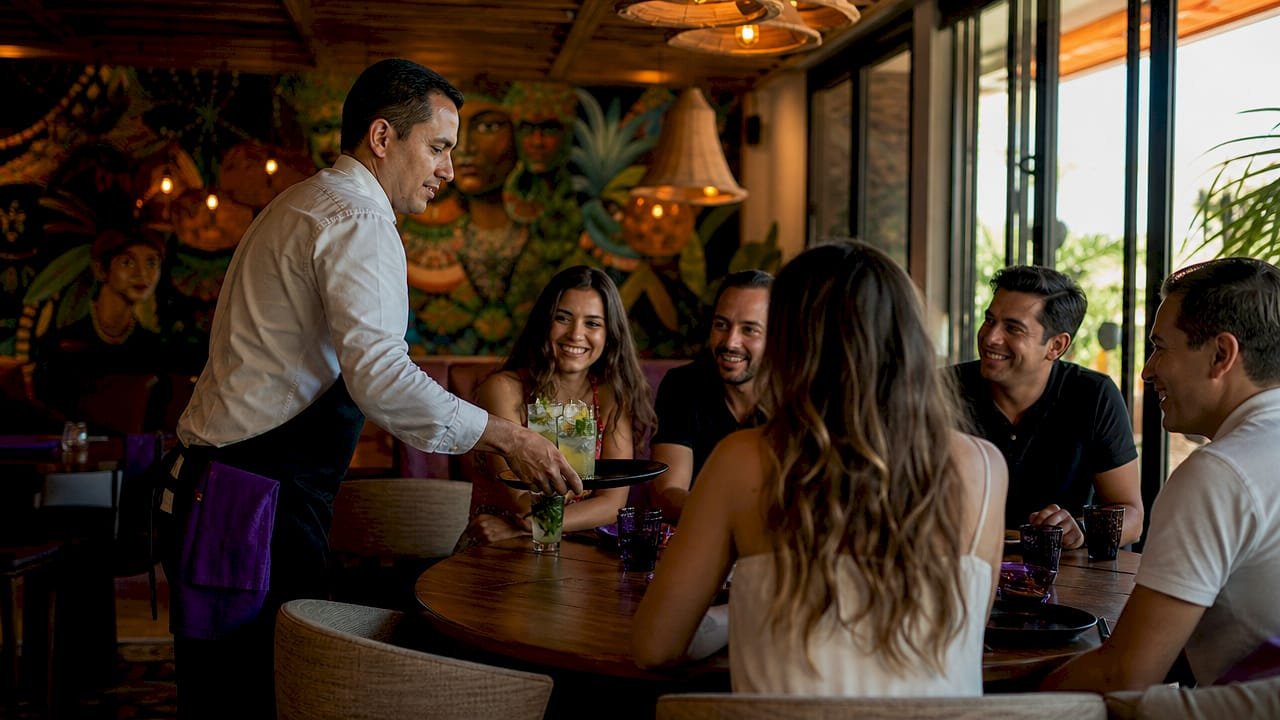
Programming deepens that connection beyond the meal itself. Community-focused restaurants regularly partner with local schools, nonprofits, and cultural organisations to host events that draw in residents who might not otherwise visit. Meal-sharing events, cooking classes for youth, and cultural food nights all serve the same purpose: they make the restaurant a reason to gather, not just a place to eat.
Inclusion strategies are central to the model. The most effective restaurants design their spaces and policies to welcome families, retirees, newcomers, and people experiencing financial hardship without making any group feel like a special case. As one industry observer put it:
“Radical hospitality requires shifting from fine dining to accessible food in neighbourhood settings to include families, retirees, and vulnerable populations — not as charity recipients, but as valued guests.”
Four practices that build genuine social cohesion in community-based dining:
- Shared seating arrangements that place strangers side by side and encourage organic conversation
- Partnership programming with local schools, cultural groups, and social service organisations
- Unified dining experiences where paying and non-paying guests share the same space and menu without distinction
- Seasonal and cultural menus that reflect the neighbourhood’s actual demographic makeup
The Long Table’s approach demonstrates that spatial design is as important as pricing policy. A restaurant can have the right values and still fail to build community if its layout discourages interaction. The physical environment either supports connection or works against it.
How do community restaurants respond during crises?
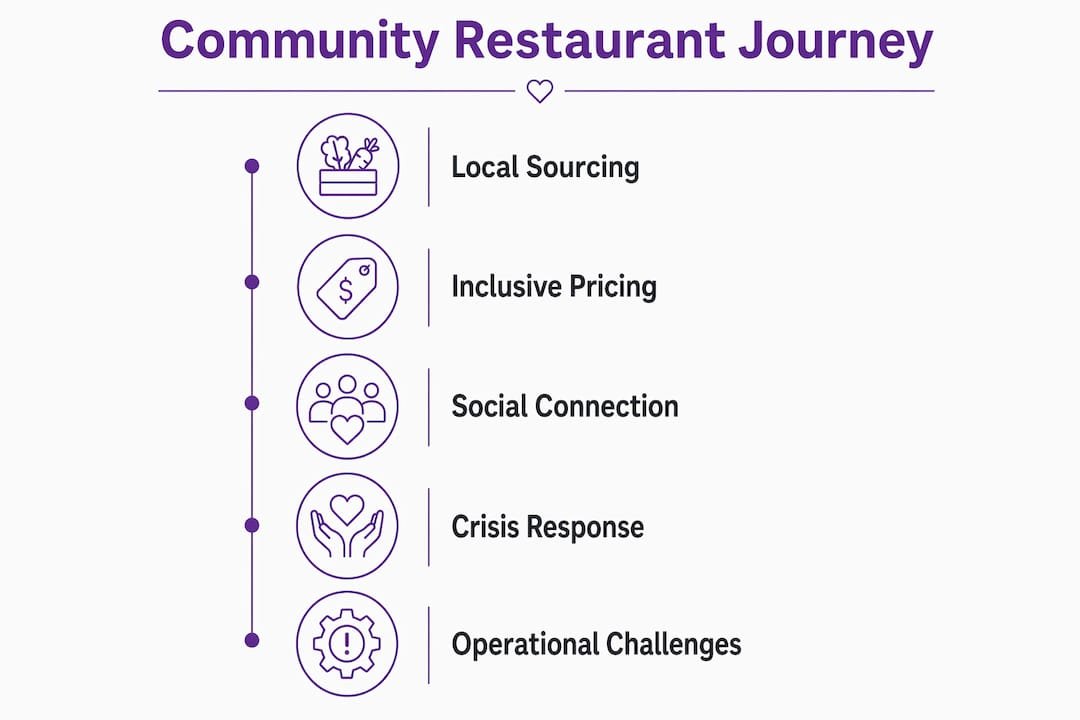
Restaurants with a genuine community focus do not pause their mission when a crisis hits. They pivot toward it. #TuloyPh, a restaurant in the Philippines, prepared 50,812 meals for disaster victims over five days in july 2026. That scale of response requires pre-existing relationships with donors, local farmers, and volunteer networks. A restaurant without those ties simply cannot mobilise that quickly.
The crisis-response capacity of community restaurants reveals something important: their daily operations are already structured for collective action. Volunteer rosters, supplier relationships, and community trust are not built in an emergency. They are accumulated over years of consistent neighbourhood engagement. When disaster strikes, those assets convert directly into relief capacity.
| Crisis response element | How community restaurants apply it |
|---|---|
| Volunteer networks | Pre-existing rosters mobilise quickly for relief cooking |
| Local supplier ties | Direct farm relationships enable rapid bulk food sourcing |
| Community trust | Established reputation draws donors and in-kind support |
| Flexible kitchen capacity | Mission-driven operations adapt menus and volumes fast |
| Dignity-centred service | Relief meals delivered without stigma or bureaucratic barriers |
Food dignity is a consistent thread across crisis responses. Community restaurants that uphold dignity in dining during normal operations carry that standard into emergency service. Meals are not distributed as charity handouts. They are served with the same care and respect as any other sitting.
Pro Tip: When choosing which local restaurants to support, ask whether they have existing relationships with community organisations. Those connections are the clearest signal of genuine, long-term commitment.
What challenges do community restaurants face?
Hiring and mentoring marginalised workers is the most consistent operational challenge. 130 Primrose’s model shows that six-month employment stints require sustained mentorship and social support to succeed. Kitchen environments are high-pressure, and workers who have experienced homelessness or long-term unemployment often need additional coaching to navigate workplace dynamics. The learning curve is steep, and turnover is higher than in conventional restaurants.
Financial sustainability is the second major pressure point. Pay-what-you-can models depend on a consistent flow of full-price and above-average payers to subsidise those who cannot pay. That balance is fragile. A shift in neighbourhood demographics, a drop in volunteer hours, or a loss of grant funding can destabilise the entire model within a single quarter.
Challenges that community-focused restaurants must actively manage:
- Volunteer retention: Keeping a reliable volunteer base requires ongoing relationship management and recognition
- Training investment: Mentorship programmes for marginalised workers demand time and skilled staff who can balance coaching with kitchen output
- Funding diversification: Relying on a single grant or donor creates vulnerability; successful models combine nonprofit status, community benefit funds, and earned revenue
- Community trust maintenance: Consistency in values and quality is non-negotiable; one high-profile failure can erode years of goodwill
- Scaling without losing mission: Growth that outpaces the volunteer and supplier network often dilutes the community focus that made the restaurant worth supporting
Local government and nonprofit sponsorship can provide a stabilising layer. In early 2026, Rockville, Maryland’s Global Bites programme involved more than 50 restaurants, while East Somerville deployed a $50,000 community benefit fund to provide meal vouchers for food-insecure residents. Programmes like these reduce the financial burden on individual restaurants while extending their reach.
How can you support community-focused restaurants?
Your patronage is the most direct form of support, but it is not the only one. Attending neighbourhood restaurant events, sharing menus with your network, and leaving honest reviews all contribute to the visibility that community-focused restaurants depend on. Local chefs and restaurants that source locally and engage their communities benefit enormously from word-of-mouth, because their marketing budgets rarely match those of chain restaurants.
Practical ways to deepen your engagement with community-based dining:
- Attend events and programmes hosted at community restaurants, from cultural nights to cooking workshops
- Pay above the suggested amount at pay-what-you-can restaurants when your means allow it
- Ask about sourcing and employment practices before choosing where to eat; transparency is a reliable indicator of genuine commitment
- Support local suppliers by buying directly from the farms and producers that community restaurants champion
- Advocate for inclusive menu options by choosing restaurants that cater to diverse dietary needs, as Burritosplendido does with its gluten-free, vegan, and keto-friendly offerings
Burritosplendido’s approach to supporting local producers illustrates how a fast-casual restaurant can embed community focus into daily operations. Sourcing pork from local Manitoba farms, poultry from Granny’s Chicken, and cheese from Bothwell Cheese keeps economic benefit within the province. That is restaurant community engagement expressed through purchasing decisions, not just marketing language.
Key takeaways
Community focus in restaurants is a deliberate operational model, not a marketing stance, built on inclusive pricing, local sourcing, employment programmes, and crisis-ready community ties.
| Point | Details |
|---|---|
| Alternative pricing builds inclusion | Pay-what-you-can models remove financial barriers without segregating diners. |
| Nonprofit structures enable the mission | 501©(3) or CIC status unlocks grants and volunteer labour that sustain community models. |
| Spatial design shapes social connection | Shared seating and community programming turn restaurants into genuine gathering places. |
| Crisis response reveals real commitment | Restaurants with deep community ties convert daily operations into relief capacity during emergencies. |
| Local sourcing multiplies community impact | Buying from regional producers circulates economic benefit and strengthens neighbourhood ties. |
Why community dining changed how I see restaurants
I used to evaluate restaurants almost entirely on food quality and service speed. That changed after spending time in spaces where the meal was clearly secondary to the gathering. Watching a pay-what-you-can restaurant seat a retired teacher next to a university student next to someone who had not had a hot meal in days, all at the same table, all treated identically, recalibrated what I thought a restaurant was actually for.
The most surprising thing I have learned is that community-focused restaurants are often more operationally disciplined than conventional ones. They have to be. When your margin for error is thin and your staff includes people rebuilding their lives, you cannot afford sloppy systems. The mentorship burden is real, and the financial model is genuinely fragile. But the restaurants that get it right are not running on goodwill alone. They are running on tight operations, deep supplier relationships, and a community that shows up because it feels ownership over the space.
The shift from ghost kitchens to neighbourhood anchors is not nostalgia. It is a correction. The early 2020s proved that speed and scale without connection produce restaurants that nobody mourns when they close. The ones people fight to keep open are the ones that made them feel like they belonged. That is not a soft metric. That is the whole point.
— Austin
Burritosplendido: community focus on every plate
Burritosplendido has built its Manitoba presence on the same principles that define community-focused dining: local sourcing, inclusive menus, and a genuine commitment to the neighbourhoods it serves. Every tortilla is pressed from 100% Manitoba-produced flour. Every protein is slow-cooked in-house. The menu covers gluten-free, vegan, keto, and paleo needs, because inclusive menu options are not an afterthought here.
Burritosplendido’s catering services bring that same community-centred approach to your event, whether it is a workplace gathering, a neighbourhood celebration, or a fundraiser. Fresh, locally sourced ingredients. Customisable for every dietary need. Built to bring people together around a table, which is exactly what community dining is supposed to do. Visit burritosplendido.com to explore the menu and book catering for your next gathering.
FAQ
What is a community-focused restaurant?
A community-focused restaurant is a dining establishment that prioritises social inclusion, local sourcing, and community benefit alongside food service. These restaurants often use alternative pricing models, employ marginalised workers, and partner with local organisations to strengthen neighbourhood ties.
How does pay-what-you-can pricing work in practice?
Restaurants like Taste Community Restaurant publish no prices on the menu. Diners pay what they can afford, and the model relies on a mix of full-price payers, donations, and volunteer labour to remain financially viable.
Can a community-focused restaurant also be a fast-casual restaurant?
Yes. Fast-casual restaurants can embed community focus through local sourcing, inclusive menus, and neighbourhood partnerships without adopting a nonprofit structure. Burritosplendido demonstrates this through its Manitoba-first sourcing and dietary-inclusive menu.
Why do community restaurants struggle financially?
The pay-what-you-can model depends on a consistent balance of full-price and subsidised diners, plus reliable volunteer hours and grant funding. A disruption to any one of those streams can create significant financial pressure quickly.
How do community restaurants support people during disasters?
Restaurants with established volunteer networks and local supplier relationships can pivot to relief kitchens rapidly. #TuloyPh prepared over 50,000 meals for disaster victims in five days in july 2026, drawing on community ties built through years of daily operations.