Catering for dietary restrictions means intentionally providing food options that accommodate medical, cultural, religious, and personal dietary needs so every guest can eat safely and comfortably. This practice sits at the heart of modern hospitality, and inclusive catering is now a defining feature of high-quality food service rather than a niche courtesy. The reasons to prioritise dietary accommodations span health and safety, legal compliance, social respect, and measurable business value. Understanding all of these reasons gives food service providers and event hosts a clear case for acting before a guest ever arrives at the table.
Why cater for dietary restrictions: the core reasons
Failing to accommodate dietary restrictions causes real harm. At the most serious level, a guest with a severe nut allergy or celiac disease faces a genuine health risk when their needs are ignored. Food allergies and religious dietary requirements are legally protected in Canada, and ignoring them exposes event organisers and food service operators to compliance risks and reputational damage. The Canadian Human Rights Act and provincial human rights codes require reasonable accommodation for disability and religion, which includes diet-related needs in many professional and public settings.
Beyond legal exposure, the social cost is significant. A guest who cannot eat anything on the menu feels excluded, and that feeling colours their entire experience. Ignoring dietary needs is now widely seen as a form of exclusion that damages brand reputation. The business case follows directly: guests who feel welcomed return, recommend the venue or caterer, and spend more.
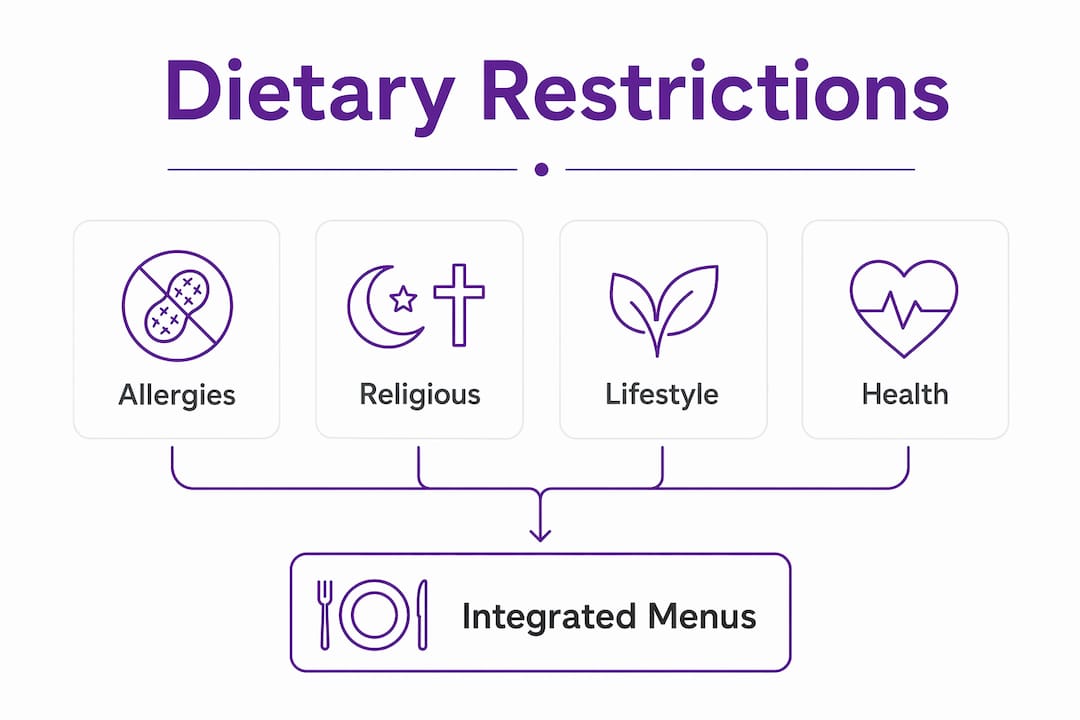
The reasons to accommodate dietary needs fall into four clear categories:
- Health and safety: Allergic reactions, celiac responses, and diabetic complications are preventable with proper planning.
- Legal compliance: Human rights legislation in Canada requires accommodation for medically and religiously driven dietary needs.
- Social inclusivity: Guests from diverse cultural and religious backgrounds expect their needs to be respected, not treated as inconveniences.
- Business value: Hosts and caterers who handle dietary needs well earn stronger reputations and repeat business.
Pro Tip: Collect dietary requirements at the point of registration or RSVP, not the day before the event. Early collection gives your kitchen team time to plan properly rather than react under pressure.
How does accommodating dietary needs improve guest experience?
Dietary accommodations improve the experience of every guest at the table, not just those with restrictions. Inclusive catering supports well-being and reduces disengagement, which matters whether the setting is a corporate lunch, a wedding reception, or a community event. When guests can eat freely without anxiety or embarrassment, they participate more fully in conversation and networking.
The method of accommodation matters as much as the fact of it. Traditional separate special plates highlight differences and can make guests feel singled out. Integrated menus, where dishes are naturally free from common allergens or clearly labelled for multiple dietary categories, promote cohesion and discretion. A vegan guest who receives the same beautifully presented bowl as everyone else feels included. A guest who receives a plain salad in a separate container does not.
Menu labelling is the simplest tool available, and it is consistently underused. Clear, accurate labels that identify gluten-free, vegan, halal, and nut-free options let guests make confident choices without having to ask staff repeatedly. This reduces anxiety and speeds up service. You can find practical approaches to inclusive menu design that work across event types and kitchen sizes.
Pro Tip: Train front-of-house staff to answer allergen questions confidently and consistently. A staff member who says “I think it’s fine” is more dangerous than no label at all.
What are the common dietary restrictions and how can catering address them?
Dietary restrictions fall into four broad categories, each requiring a different approach.
Allergies and intolerances cover conditions like peanut allergy, tree nut allergy, gluten intolerance, and lactose intolerance. These range from uncomfortable to life-threatening. Cross-contamination risks are often higher than the risk from the allergen itself, meaning labelling alone is insufficient without trained kitchen protocols. A gluten-free dish prepared on the same surface as bread is no longer gluten-free.
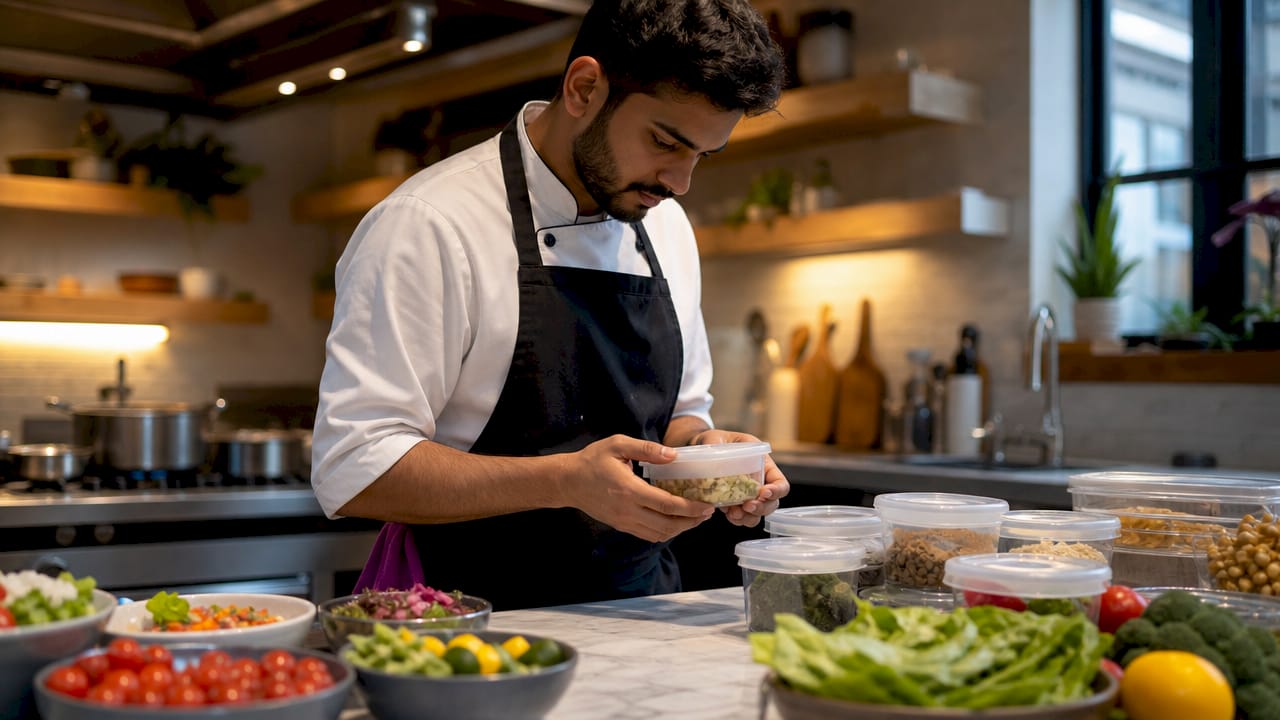
Religious and cultural diets include halal, kosher, Hindu vegetarian, and Jain requirements. Many planners assume basic vegetarian options satisfy religious needs, but halal and kosher requirements extend to sourcing, preparation methods, and equipment. Verification with trained staff is non-negotiable.
Lifestyle choices such as vegan and vegetarian diets are now mainstream. Offering a single token vegan dish is no longer sufficient. Guests following plant-based diets expect variety and flavour, not an afterthought.
Health-related needs include low-sodium diets for guests with hypertension, low-sugar options for those managing diabetes, and low-fat requirements for cardiac health. These are less visible than allergies but equally important to the guests who have them.
| Dietary need | Common trigger to avoid | Effective catering strategy |
|---|---|---|
| Gluten intolerance / celiac | Wheat, barley, rye | Dedicated prep surfaces; certified gluten-free ingredients |
| Nut allergy | Peanuts, tree nuts | Nut-free kitchen zones; clear labelling on all dishes |
| Halal | Non-halal meat, alcohol | Verified halal-certified suppliers; separate utensils |
| Vegan | All animal products | Integrated plant-based dishes; clearly labelled options |
| Low-sodium | Added salt, processed foods | House-made sauces; salt added at table only |
| Lactose intolerance | Dairy products | Plant-based alternatives; dairy-free labelling |
Integrated menus that naturally meet multiple dietary needs simplify kitchen logistics and improve the guest experience simultaneously. A dish that is naturally gluten-free, dairy-free, and vegan serves four guest categories at once without extra preparation.
Pro Tip: Build your base menu around dishes that are naturally free from the most common allergens. Customise from there rather than creating separate tracks for each restriction.
What practical steps can food service providers take?
Effective dietary accommodation follows a clear sequence. Skipping any step creates gaps that put guests at risk and increase last-minute costs.
- Collect requirements early. Send a dietary survey with every RSVP or booking confirmation. Ask specifically about allergies, intolerances, religious requirements, and lifestyle choices. Generic “any dietary needs?” questions produce incomplete answers.
- Brief your kitchen team in writing. Point-of-RSVP dietary collection is insufficient without binding briefs to kitchen teams and verified allergen protocols. A verbal handoff is not a protocol.
- Train staff on allergen awareness. Every person who handles food or speaks to guests needs to know which dishes contain which allergens and how cross-contamination occurs. This is not optional knowledge for front-of-house staff.
- Label every dish accurately. Use standardised icons for the most common categories: gluten-free, vegan, vegetarian, nut-free, halal, and dairy-free. Place labels where guests can read them before serving themselves.
- Implement cross-contamination protocols. Separate prep surfaces, dedicated utensils, and sequenced cooking times prevent the most common kitchen errors. Document these protocols and review them before each event.
- Use a customisable catering menu structure. Modular menus where guests choose components reduce the risk of errors and give guests agency over their own plates.
Common pitfalls to avoid include assuming vegetarian satisfies all non-meat needs, relying on verbal confirmation instead of written allergen records, and treating dietary requests as last-minute additions rather than core planning inputs.
How do you balance inclusivity with budget and operations?
The most persistent myth in catering is that dietary accommodations cost significantly more. Costs stem primarily from last-minute reactive catering rather than from serving inclusive menus. When a caterer scrambles to produce a separate vegan meal the morning of an event, that costs more in labour, ingredients, and stress than a planned integrated menu would have.
Proactive planning controls costs in several ways:
- Integrated dishes reduce duplication. A naturally gluten-free grain bowl serves guests with celiac disease, gluten sensitivity, and no restrictions at all. One dish, multiple needs met.
- Early surveys reduce waste. Knowing exact numbers for each dietary category means ordering the right quantities. Reactive approaches produce both shortfalls and surplus.
- Modular menus reduce complexity. Offering a set of components that guests assemble themselves, such as a taco bar or a bowl station, gives every guest control while keeping kitchen operations simple.
- Dietary-friendly catering planning guides help operators map their menu against common restrictions before the event, not during it.
Transparency and accuracy in menu labelling represent genuine hospitality. They create trust and welcoming spaces for all guests, and that trust translates directly into the reputation a caterer or venue builds over time.
Key takeaways
Catering for dietary restrictions is a core hospitality responsibility that protects guest health, satisfies legal obligations, and builds lasting trust with every person at the table.
| Point | Details |
|---|---|
| Health and legal risk | Ignoring dietary needs creates real health hazards and exposes operators to human rights compliance risks in Canada. |
| Integrated menus outperform separate plates | Dishes designed to meet multiple needs at once improve guest comfort and simplify kitchen operations. |
| Early collection prevents problems | Dietary surveys at RSVP give kitchen teams time to plan safely rather than react under pressure. |
| Cross-contamination requires protocols | Labelling alone is insufficient; trained kitchen procedures and dedicated equipment are non-negotiable. |
| Proactive planning reduces costs | Last-minute reactive catering costs more than a well-planned inclusive menu built from the start. |
Dietary restrictions as a measure of hospitality
The food service industry spent years treating dietary restrictions as an inconvenience to manage. That framing was always wrong, and it is now visibly outdated.
What I have seen consistently is that the operators who handle dietary needs well do not think of them as a separate track. They build their menus from the ground up with inclusivity as a design principle, not a retrofit. The result is a cleaner kitchen, a simpler service, and guests who feel genuinely considered rather than accommodated as an afterthought.
The trust that comes from getting this right is not abstract. A guest with celiac disease who eats safely at your event tells other people. A guest who gets sick, or who simply cannot find anything to eat, also tells other people. The reputational stakes are asymmetric, and the operational investment required to get it right is smaller than most operators assume.
The shift from “special plates” to integrated menus is the clearest signal of a mature food service operation. It shows that the kitchen understands its guests, not just its recipes. Embedding dietary inclusivity as a core principle rather than a reactive policy is what separates professional hospitality from basic food provision.
— Austin
Burritosplendido’s approach to dietary-inclusive catering
Burritosplendido was built around the idea that great food should be accessible to everyone. The menu at Burritosplendido covers gluten-free, vegan, vegetarian, keto, and paleo options, with staff trained specifically on allergen handling and cross-contamination prevention. Every item is prepared fresh daily from locally sourced Manitoba ingredients, including gluten-free soft corn tacos from La Cocina and produce from Peak of the Market.
The customisable format, burritos, naked bowls, street tacos, and quesadillas, means guests build their own plates from clearly labelled components. That structure makes dietary accommodation natural rather than forced. Burritosplendido’s catering services bring the same inclusive, from-scratch approach to events across Winnipeg and Manitoba, with menus that work for groups with diverse dietary needs without extra complexity or cost.
FAQ
Why is catering for dietary restrictions legally required in Canada?
Canadian human rights legislation requires reasonable accommodation for disability and religion, both of which can include dietary needs. Failing to accommodate medically or religiously driven dietary requirements in professional or public settings can constitute discrimination.
What is the difference between a food allergy and a food intolerance?
A food allergy triggers an immune response that can be life-threatening, while a food intolerance causes digestive discomfort but is not typically dangerous. Both require accommodation, but allergies demand stricter kitchen protocols to prevent cross-contamination.
How do integrated menus differ from separate special plates?
Integrated menus are designed from the start to meet multiple dietary needs within the same dishes, so no guest receives a visibly different meal. Separate special plates single out guests with restrictions and increase the risk of kitchen errors.
What is the most common mistake caterers make with dietary accommodations?
Collecting dietary requirements without passing them to the kitchen in writing is the most common failure point. A verbal handoff or an unchecked spreadsheet does not constitute a safe allergen protocol.
How can a modular menu format help with dietary restrictions?
A modular format, where guests choose from clearly labelled components, gives every guest control over their own plate and reduces the risk of cross-contamination from pre-assembled dishes. It also simplifies kitchen operations and reduces waste.