Street tacos are not simply smaller versions of the tacos you grew up eating at North American fast-food chains. That misconception leads a lot of food enthusiasts to miss what makes them genuinely special. Rooted in Mexican street food culture, the authentic street taco is defined by restraint, freshness, and a brilliant simplicity that lets quality ingredients do all the talking. Whether you are a curious home cook or someone who has just tasted their first real street taco and wants to understand why it was so good, this guide covers everything you need to know.
Table of Contents
- The anatomy of a street taco
- How street tacos are made
- Regional variations and classic fillings
- Street tacos versus Americanised tacos
- Why simplicity wins: The secret to memorable street tacos
- Experience authentic flavours at Burrito Splendido
- Frequently asked questions
Key Takeaways
| Point | Details |
|---|---|
| Authentic ingredients | Street tacos always use corn tortillas, simple toppings like onion and cilantro, and omit cheese and sour cream. |
| Distinct preparation | Warm, toasted tortillas and hot, freshly cooked meat set street tacos apart from Americanized versions. |
| Regional flexibility | Classic fillings are carne asada, carnitas, and al pastor, but local meat can be used for Canadian adaptations. |
| Simplicity matters | Minimalist toppings allow the quality of ingredients and the flavours of the meat to shine. |
| Canadian options | Canadian food enthusiasts can recreate street tacos at home with locally sourced meats and produce. |
The anatomy of a street taco
To better appreciate street tacos, it is essential to understand what makes them distinct from other taco styles. Most people picture a taco and immediately think of a large flour tortilla, a hard shell, shredded lettuce, sour cream, and a generous layer of cheese. Street tacos are none of those things. They are, as street tacos are defined, small, authentic Mexican-style tacos typically served on soft corn tortillas with simple, fresh toppings.
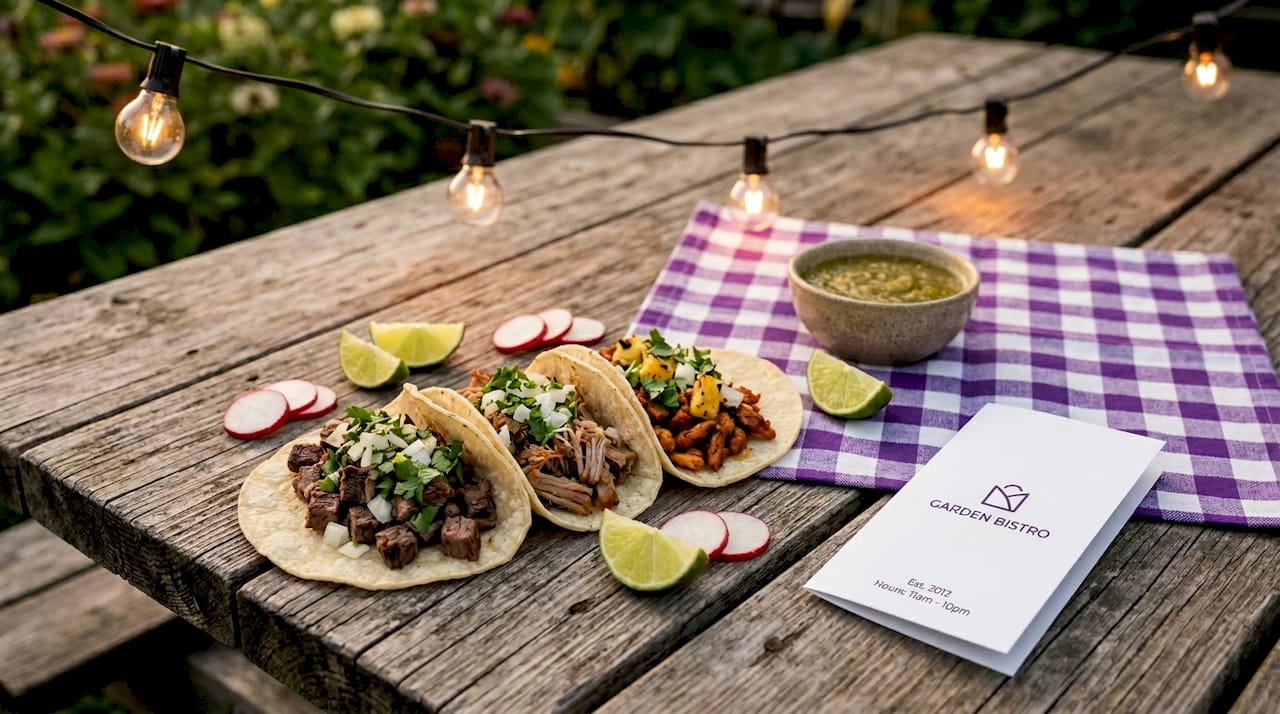
The corn tortilla is the non-negotiable foundation. It is small, usually 15 centimetres in diameter or less, and it is always soft. The importance of tortillas in Mexican cuisine cannot be overstated. A corn tortilla is made from masa, a dough produced by nixtamalisation, which is the process of soaking dried corn kernels in an alkaline solution to improve nutrition and flavour. The resulting tortilla has a slightly earthy, toasty flavour that flour simply cannot replicate. In Mexico, street vendors often double up two small tortillas per taco to prevent them from breaking under the weight of the filling. This practical detail tells you a lot about how these tacos are designed for real life eating.
What belongs on a street taco:
- Soft corn tortillas (doubled if needed)
- Freshly cooked, hot protein
- Finely diced white onion
- Chopped fresh cilantro
- A squeeze of lime
- A spoonful of salsa (red or green)
What does not belong:
- Shredded lettuce
- Cheddar or jack cheese
- Sour cream
- Large, oversized flour tortillas
- Hard taco shells
Guides commonly warn that flour tortillas, hard shells, and cheese or sour cream are typically not part of the traditional street taco template. This is not food snobbery. It is an acknowledgement that those additions were invented to suit a different palate and a different purpose. They change the balance of the taco entirely.
| Component | Street taco | Americanised taco |
|---|---|---|
| Tortilla | Small, soft corn | Large flour or hard shell |
| Toppings | Onion, cilantro, salsa, lime | Lettuce, cheese, sour cream, tomato |
| Protein | Simply seasoned, freshly cooked | Often pre-seasoned blend |
| Size | Compact, two to three bites | Large, a full meal in one |
| Eating style | Standing, on the go | Seated, plated |
Pro Tip: When shopping for corn tortillas, look for ones made with just a few ingredients: masa harina, water, and salt. The shorter the ingredient list, the closer you are to the real thing.
Understanding the anatomy gives you a reference point. Our home taco guide takes this further by walking you through how to build one at home with the same attention to detail. And if you have ever wondered what authentic Mexican food meaning actually looks like in a Canadian context, the answer often starts here, with a small corn tortilla and something honest on top.
How street tacos are made
With the street taco’s framework established, let us explore the step-by-step process of assembling one. The method is as important as the ingredients. Skip the technique and you lose the texture and flavour that make street tacos memorable.
A common street taco methodology is to keep the taco compact for on-the-go eating and to char or heat tortillas and cook meat hot and fast. That principle shapes every step.
-
Prepare your protein first. Season your meat simply, with salt, pepper, garlic, and perhaps cumin or chilli powder. Heat a cast iron pan or grill until it is very hot before the meat goes on. High heat creates a slight char on the surface, which adds a smoky, caramelised flavour that lower temperatures cannot achieve.
-
Rest the meat briefly. Once cooked, let the protein rest for two to three minutes before slicing or chopping. This keeps the juices inside the meat rather than spilling onto the tortilla and making it soggy.
-
Heat the tortillas. Place corn tortillas directly on a dry hot skillet or over a gas flame. Thirty seconds per side is usually enough. You are looking for light brown spots and a slight pliability. Do not use oil here. The dry heat brings out the natural corn flavour.
-
Build immediately. Working quickly, layer the hot meat onto the warm tortilla. Add a small pile of diced white onion, a pinch of cilantro, and a squeeze of fresh lime. Spoon a little salsa on top.
-
Eat right away. Street tacos are designed to be eaten immediately. The warmth of the tortilla, the heat of the meat, and the freshness of the onion and cilantro create a contrast that fades quickly if you wait.
“The best street taco is built in seconds and eaten in two bites. Every ingredient is doing exactly one job, and nothing is wasted.”
That idea of purposefulness is what separates a real street taco from an assembled-ahead, loaded-up version. Visit our taco assembly steps guide for a more detailed walkthrough tailored to ingredients you can find right here in Manitoba.
Pro Tip: If you cannot find a gas burner or cast iron pan, a dry non-stick skillet over medium-high heat works well for tortillas. The goal is toasted, not fried.
Regional variations and classic fillings
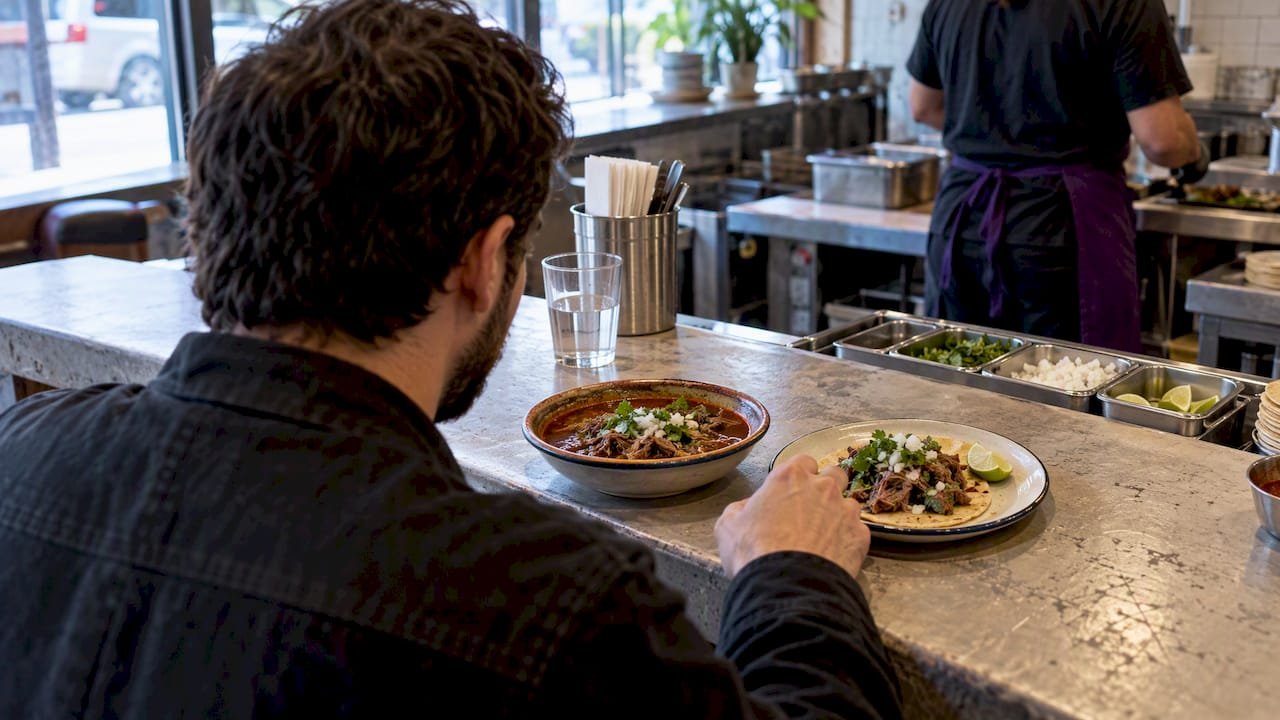
Street taco variation is where regional creativity meets a steadfast commitment to simplicity. This is one of the most exciting aspects of Mexican street food culture. There is no single official street taco filling. Instead, street tacos vary by region and by the particular meat, for example carne asada, carnitas, and al pastor, but the street identity is less about one single filling and more about the small, simple format and rapid service.
Classic street taco fillings:
- Carne asada: Thinly sliced grilled beef, usually skirt or flank steak, marinated in citrus and garlic. This is one of the most popular fillings across northern Mexico and Baja California.
- Carnitas: Slow-braised pork, cooked until tender and then crisped in its own fat. The texture contrast between tender interior and slightly crispy edges is what makes carnitas so satisfying.
- Al pastor: Spiced pork cooked on a vertical spit, similar in method to shawarma. The meat is thinly shaved and often served with a small piece of fresh pineapple on top. This filling has roots in Lebanese immigration to Mexico in the early twentieth century.
- Barbacoa: Traditionally slow-cooked beef cheek or lamb, often wrapped in maguey leaves and cooked underground. It is deeply flavourful, rich, and tender.
- Pollo asado: Simply grilled chicken, marinated in citrus and spices, then charred over high heat. A lighter option that is no less authentic.
- Pescado: Grilled or pan-seared fish, particularly popular in coastal regions. In Canada, this translates beautifully to freshwater options like pickerel.
| Filling | Origin region | Flavour profile | Best topping pairing |
|---|---|---|---|
| Carne asada | Northern Mexico, Baja | Smoky, beefy, citrusy | Pico de gallo, lime |
| Carnitas | Michoacán | Rich, porky, slightly crispy | White onion, cilantro, green salsa |
| Al pastor | Mexico City | Spiced, sweet from pineapple | Pineapple, onion, cilantro |
| Barbacoa | Central Mexico | Deep, beefy, earthy | Lime, salsa roja, onion |
| Pickerel | Manitoba adaptation | Mild, flaky, fresh | Lime crema, cabbage slaw |
The Canadian opportunity here is real. Local beef and pork from Manitoba farms carry genuine quality. When you cook a Manitoba-raised piece of pork shoulder low and slow and then crisp it in a pan, you have carnitas that are every bit as good as what you would find in a Mexico City market. Explore Canadian burritos for more ways to use local ingredients in Mexican-inspired cooking, or browse street food Winnipeg for inspiration on what authentic street food looks like close to home. If you are curious about how different formats compare, our look at Mexican burrito styles offers useful context.
Street tacos versus Americanised tacos
Comparing street tacos to their North American counterparts makes the uniqueness of the authentic version even clearer. The differences go beyond just size and ingredients. They reflect entirely different philosophies about what a taco is supposed to accomplish.
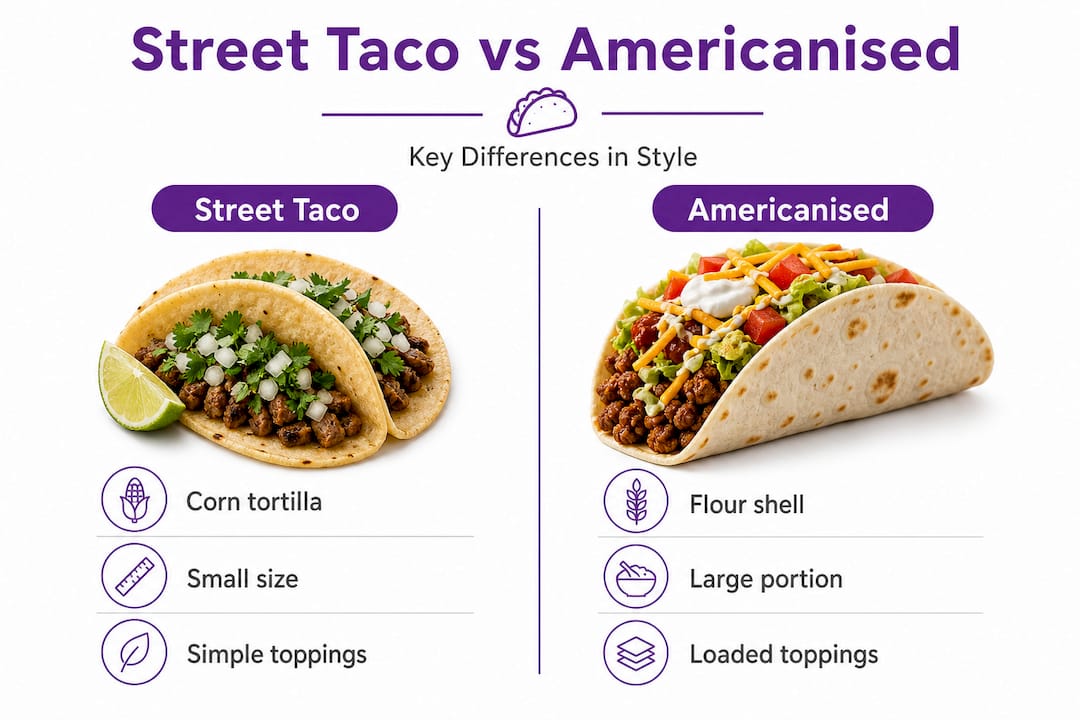
The Americanised taco emerged from fast-food culture in the mid-twentieth century. The goal was convenience, maximum satisfaction per bite, and a long shelf life for ingredients. Hard shells could be pre-made and stored. Shredded cheese was easy to portion. Sour cream added richness. None of those choices were about honouring the original form. They were about adaptation for a mass market.
Street tacos are defined by:
- Small size, typically two to three bites per taco
- Warm, soft corn tortillas with a slightly toasted flavour
- Hot protein cooked to order with a light char
- Restrained toppings: onion, cilantro, lime, salsa only
- Bold flavour from the quality of the protein itself
Americanised tacos tend to feature:
- Larger format, one or two per meal
- Flour tortillas or crunchy pre-formed hard shells
- Layered toppings including cheese, sour cream, and lettuce
- Protein that is often a seasoned mince rather than a specific cut
- Flavour driven by the toppings rather than the meat
Street tacos are defined by a balance of factors, including taco size and format, warm corn tortillas, hot meat, and restrained toppings, not by a single standardised ingredient list. That balance is what makes them work. Remove the corn tortilla and you lose the nutty base flavour. Remove the restraint on toppings and suddenly every bite tastes like sour cream. The simplicity is not a limitation. It is the design.
Understanding what makes Mexican food authenticity so meaningful helps you recognise the difference between something inspired by Mexican cuisine and something that genuinely reflects it.
Why simplicity wins: The secret to memorable street tacos
Here is an opinion worth sitting with: the reason street tacos taste better is not just about ingredients or technique. It is about restraint as a culinary value. In a food culture that defaults to more as the answer to everything, more cheese, more toppings, more sauce, street tacos insist on less. And that insistence produces something remarkable.
When you eat a carnitas street taco from a great vendor in Mexico, you are tasting years of knowledge about how pork behaves under heat, how citrus brightens richness, and how a single corn tortilla can hold everything together without dominating. Each ingredient is present because it earns its place, not because it fills space.
The same logic applies here in Canada. When you source a pork shoulder from a Manitoba farm, slow-braise it with orange and bay leaf, and then serve it on a warm corn tortilla with just onion, cilantro, and lime, the flavour of that local pork is the star. There is nothing to hide behind. That vulnerability is what great cooking requires.
We believe this is why our local ingredients in Mexican food approach connects so deeply with our guests. Manitoba-grown ingredients have a flavour that is impossible to fake, and the street taco format is one of the few preparations that lets that flavour speak without interruption.
There is also a broader lesson here for home cooks. If you find yourself piling on toppings to make a taco taste better, stop and ask whether the protein itself is actually good. Fix the protein and suddenly you need nothing else. That shift in thinking changes how you shop, how you cook, and ultimately how you eat.
Experience authentic flavours at Burrito Splendido
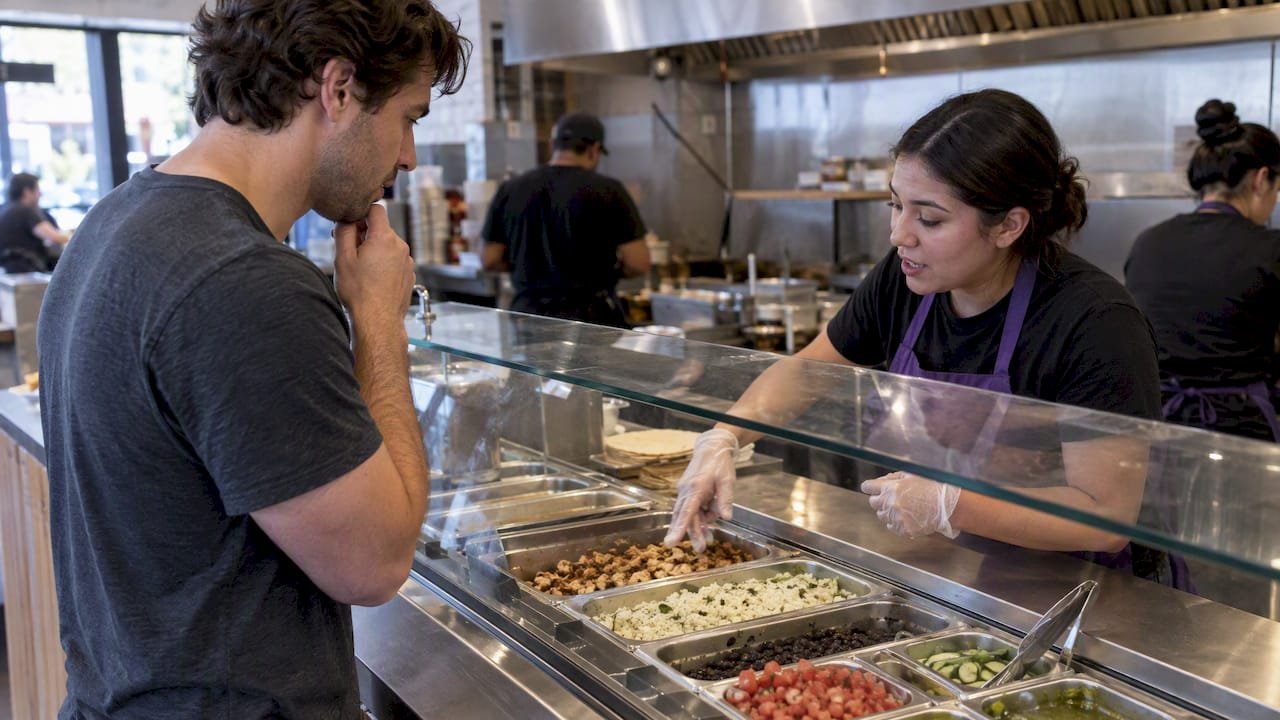
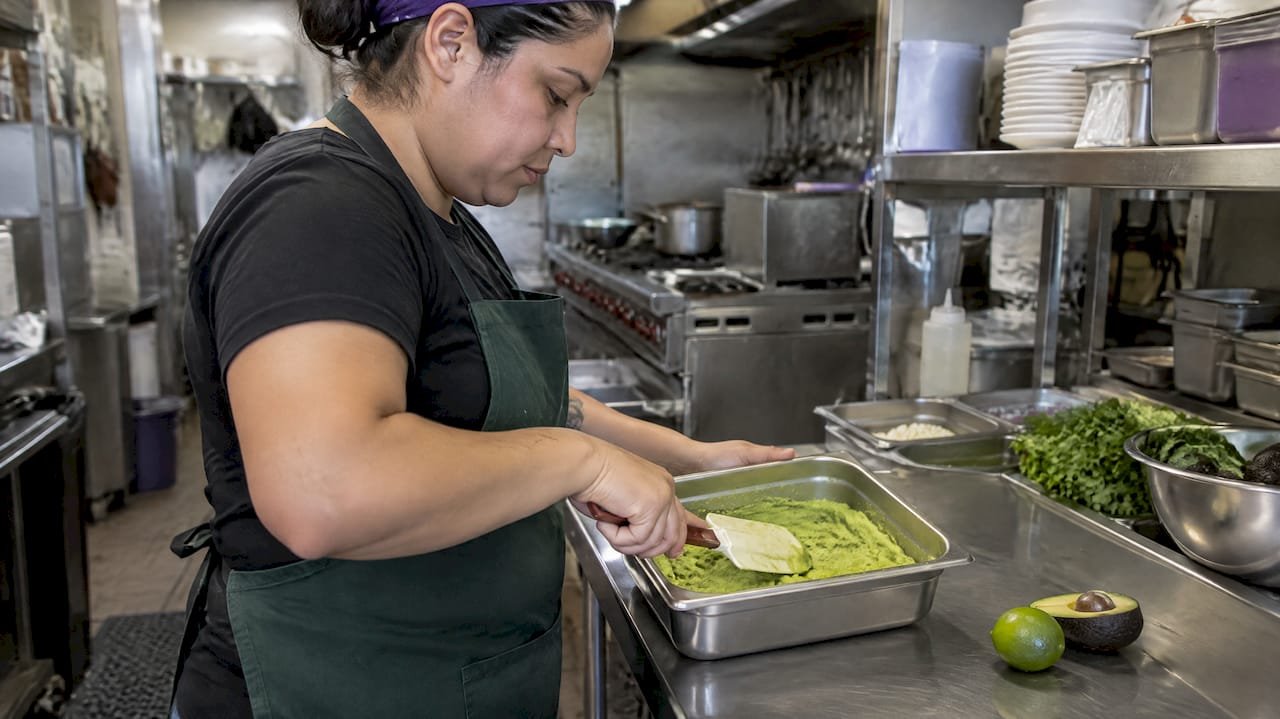
If this guide has sparked a craving for the real thing, you do not have to travel far to find it. At Burrito Splendido, everything on our menu is built on the same principles that define a great street taco: fresh, locally sourced ingredients, proteins slow-cooked and hand-pulled in-house, and a commitment to letting quality speak for itself.
Our street-style tacos feature proteins like Carnitas, Barbacoa, and Adobo Chicken, all prepared from scratch daily using Manitoba-raised meats. Gluten-free soft corn tacos are available for anyone who wants the most authentic base possible. Whether you are dining in at one of our Winnipeg or Brandon locations or looking to bring this experience to a group, our Mexican catering option makes it easy to share real flavour with everyone you know. Browse our healthy Mexican menus Manitoba for seasonal and dietary-friendly choices, and revisit our home taco guide whenever you are ready to try it yourself.
Frequently asked questions
What makes a taco a street taco?
A street taco uses a small corn tortilla, simple toppings like onion and cilantro, and usually features hot, freshly cooked meat for easy, on-the-go eating. As the format confirms, street tacos are defined by their soft corn tortillas and fresh, simple toppings rather than layered sauces or heavy additions.
Can street tacos be made with flour tortillas?
Traditional street tacos use corn tortillas, and flour tortillas are not typical of the authentic style. Guides commonly note that flour tortillas and hard shells are not part of the traditional street taco template.
What meats are most common in street tacos?
Carne asada, carnitas, and al pastor are the most classic fillings found across Mexico. Street tacos vary by region and filling, but these three are considered the standard-bearers of the style.
Why don’t street tacos use cheese or sour cream?
These toppings were not part of the original format and tend to mask the flavour of the protein. Cheese and sour cream are commonly identified as Americanised additions that fall outside the traditional street taco template.
How can Canadians make street tacos with local ingredients?
Use quality Canadian beef, pork, or chicken, source fresh corn tortillas, and keep the toppings simple. Canadian adaptations of street tacos work beautifully when the protein is sourced locally and the build stays true to the original minimalist approach.
Recommended
- Make authentic Mexican tacos at home: step-by-step guide – Burrito Splendido
- How to assemble perfect tacos in 12 steps: local flavours – Burrito Splendido
- Authentic Mexican street food: Top picks to try in Winnipeg – Burrito Splendido
- What ‘authentic’ Mexican food really means for Canadians – Burrito Splendido