Mexican food is one of the most beloved cuisines in the world, yet it is also one of the most misunderstood. Many Canadian cooks and food enthusiasts hold a fixed image of what “real” Mexican food looks like, often shaped by restaurant chains or travel memories. The truth is more fascinating: authenticity in Mexican cuisine is not a single fixed standard but an ongoing conversation shaped by communities, migrations, climates, and evolving traditions. In this article, we explore what authenticity actually means, why it matters culturally, and how you can honour those values right here in Canada.
Table of Contents
- How authenticity is shaped in Mexican cuisine
- Cultural heritage: Why Mexican cuisine is about more than flavour
- Regionality and adaptation: What makes a dish ‘authentic’?
- Sustainability and seasonality: Authenticity through local ingredients in Canada
- What most people misunderstand about authentic Mexican cuisine
- Explore authentic Mexican flavours with Burrito Splendido
- Frequently asked questions
Key Takeaways
| Point | Details |
|---|---|
| Authenticity is not fixed | Mexican cuisine’s authenticity adapts across regions, migrations, and eras, rather than following strict rules. |
| Culture and sustainability matter | True authenticity includes community, tradition, and sustainable local ingredients, not just taste. |
| Adaptation is part of tradition | Thoughtful ingredient swaps in Canada can respect authenticity when they uphold the essence of the dish. |
| Regional diversity is key | Different regions and families have unique takes on what is ‘authentic’ Mexican food. |
How authenticity is shaped in Mexican cuisine
Ask ten people what makes Mexican food “authentic,” and you will likely get ten different answers. Some point to specific chillies. Others insist on stone-ground corn tortillas or moles that take three days to prepare. Still others focus on family recipes passed down across generations. Each answer contains truth, but none is the whole picture.
The debate matters because it shapes how we cook, how we order food, and how we respect a living culinary culture. Serious food writers argue that Mexican cuisine continuously evolves across regions, migrations, and communities, making any single “authentic” benchmark both limiting and misleading. Pinning a cuisine to one fixed moment in time treats it like a museum exhibit rather than a living, breathing practice.
“Authenticity is not a destination you reach by following one correct recipe. It is a relationship between a cook, a community, and the land they inhabit.”
This perspective is not just philosophical. It has real, practical consequences. When Canadians seek out authentic Mexican dining in Canada, they deserve more than a checklist of ingredients. They deserve cuisine that respects process, community, and intention.
Consider how dramatically Mexican food varies within Mexico itself. A mole negro from Oaxaca has little in common with a cochinita pibil from the Yucatán Peninsula, or a birria stew from Jalisco. Each dish is “authentic” to its region. Each reflects local climate, Indigenous heritage, and centuries of adaptation. The very idea that one style represents all of Mexico erases enormous cultural diversity.
Here is a useful way to think about it:
- Authenticity as process: Is the food made with care, respect, and traditional technique, even if the ingredients shift slightly?
- Authenticity as community: Does the dish connect people to shared memory, celebration, or everyday life?
- Authenticity as place: Does the food reflect the land, climate, and season where it is prepared?
Pro Tip: Rather than asking “is this authentic?” try asking “does this dish honour the culture it comes from?” That question opens a much richer conversation and helps you appreciate both tradition and intelligent adaptation.
Rigidly demanding authenticity, without understanding its complexity, can actually do harm. It can dismiss the creativity of diaspora cooks who brilliantly adapt their food to new environments, and it can make newcomers to Mexican cuisine feel that they need special permission to engage with it. Authenticity should be an invitation, not a gate.
Cultural heritage: Why Mexican cuisine is about more than flavour
Understanding that authenticity is dynamic, it is also important to see its deep links with heritage and cultural values. Mexican cuisine carries within it thousands of years of knowledge about plants, ecosystems, and community life. Flavour is only the most visible expression of something far deeper.
UNESCO made this explicit when it recognised traditional Mexican cuisine as an intangible cultural heritage tied directly to living community practices, territory, and sustainability, not just taste. This recognition, granted in 2010, was groundbreaking. It acknowledged that a cuisine could be a form of cultural preservation as powerful as a monument or a manuscript.
What does UNESCO’s framing actually mean in practice? It means that traditional Mexican cuisine encompasses:
- The agricultural knowledge of Indigenous milpa farming systems (growing corn, beans, and squash together)
- The community rituals around food preparation and sharing
- The transmission of recipes and techniques from elders to younger generations
- The sustainable relationship between cooks and the natural environments that supply their ingredients
This is a very different way of thinking about food than simply evaluating a dish on taste alone. It places cuisine inside a web of relationships between people, land, seasons, and memory.
The contrast between this approach and commercialised versions becomes clear when you compare them directly:
| Element | UNESCO-recognised Mexican cuisine | Commercialised or copycat versions |
|---|---|---|
| Ingredient sourcing | Local, seasonal, regionally specific | Standardised, imported, cost-driven |
| Preparation method | Hand-ground, slow-cooked, traditional technique | Machine-processed, shortcuts normalised |
| Community connection | Embedded in family and community ritual | Individualised, transactional |
| Environmental relationship | Biodiversity-supporting, sustainable | Monoculture-dependent, high waste |
| Knowledge transmission | Oral tradition, apprenticeship | Written recipes without cultural context |
The distinction is striking. A taco made with hand-pressed corn tortillas, heirloom corn varieties, and slow-braised local pork carries far more cultural weight than one assembled from industrial flatbreads and processed fillings, even if both carry the word “Mexican” on the menu.
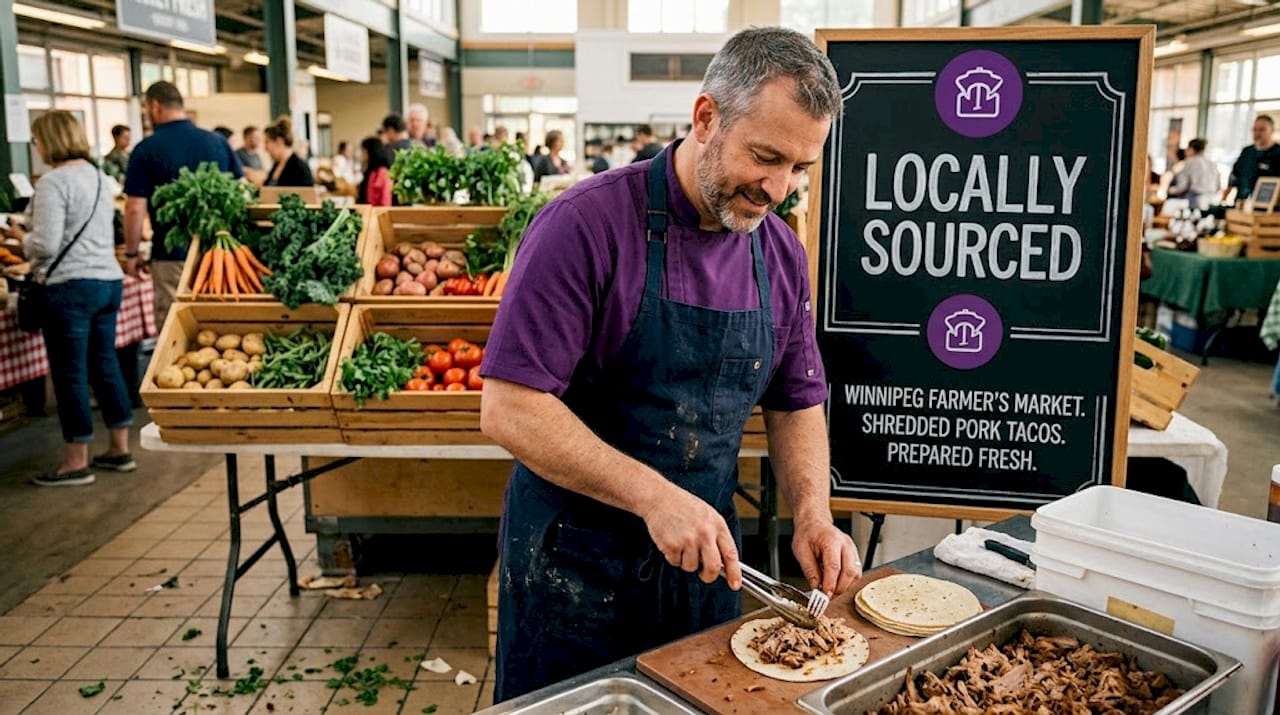
Using local ingredients in Mexican cuisine is not just a marketing claim. When done thoughtfully, it is an act of respect for the very values UNESCO identified: connection to place, sustainability, and care in preparation. For Canadian food lovers, this is an entry point, not a compromise.
Regionality and adaptation: What makes a dish ‘authentic’?
Cultural heritage is only part of the equation. Regional adaptation plays a powerful role as well, and nowhere is this more visible than in the ongoing conversation about Mexican food versus Tex-Mex.
Authenticity debates often hinge on regional differences and ingredient substitutions that come from geography and access. The line between “Mexican” and “Tex-Mex” was not drawn by culture alone; it was shaped by what ingredients were available on each side of a border, by commercial pressures, and by the preferences of new communities finding their footing. Neither is illegitimate. Both are the result of real people cooking with what they had.
Three clear ways that regionalism shapes authenticity:
- Climate and growing conditions: The ingredients that grow in Oaxaca are not the same ones available in Monterrey or Manitoba. Altitude, rainfall, and soil all influence what flavours a region develops. Authentic cuisine reflects this honestly.
- Migration and community adaptation: When Mexican communities settled across North America, they adapted recipes to available ingredients. This adaptation is itself a form of authenticity, preserving the spirit of a dish even when the letter changes.
- Trade and historical contact: Centuries of trade, colonisation, and cultural exchange have already shaped what we call “traditional” Mexican ingredients. Cinnamon, black pepper, and many citrus fruits arrived in Mexico from elsewhere. Adaptation is baked into the cuisine’s own history.
For Canadian home cooks, this creates a genuinely liberating framework. You do not need to source an exact variety of dried Oaxacan chilli to make something meaningful. What you do need is care, curiosity, and respect for the techniques and traditions behind a dish. Consider burrito craftsmanship as a local example of how regional adaptation can produce something genuinely excellent without pretending to be something it is not.
Here is a practical look at how common “authentic” Mexican ingredients can be thoughtfully substituted in Canada:
| Traditional ingredient | Canadian substitute | Notes |
|---|---|---|
| Fresh Mexican oregano | Dried Mediterranean oregano | Use slightly less; flavour is more intense |
| Epazote | Fresh cilantro with a pinch of dried epazote | Approximates the herbal depth |
| Tomatillos | Locally grown tomatillos (available seasonally) | Manitoba growers are increasing supply |
| Masa harina (specific variety) | Stone-ground local corn masa | Seek heirloom corn varieties where possible |
| Dried ancho chillies | Locally available guajillo or ancho from specialty stores | Widely available in Winnipeg markets |
Pro Tip: When you substitute ingredients, document what you changed and why. This practice connects you to the very tradition of adaptation that has kept Mexican cuisine alive across centuries and continents. You become part of the story, not outside it.
Sustainability and seasonality: Authenticity through local ingredients in Canada
Beyond regional differences, another key to meaningful authenticity is what you put in your shopping basket right here in Canada. The connection between authentic cooking and sustainable, seasonal sourcing is not a modern wellness trend. It is one of the oldest values in Mexican culinary tradition.
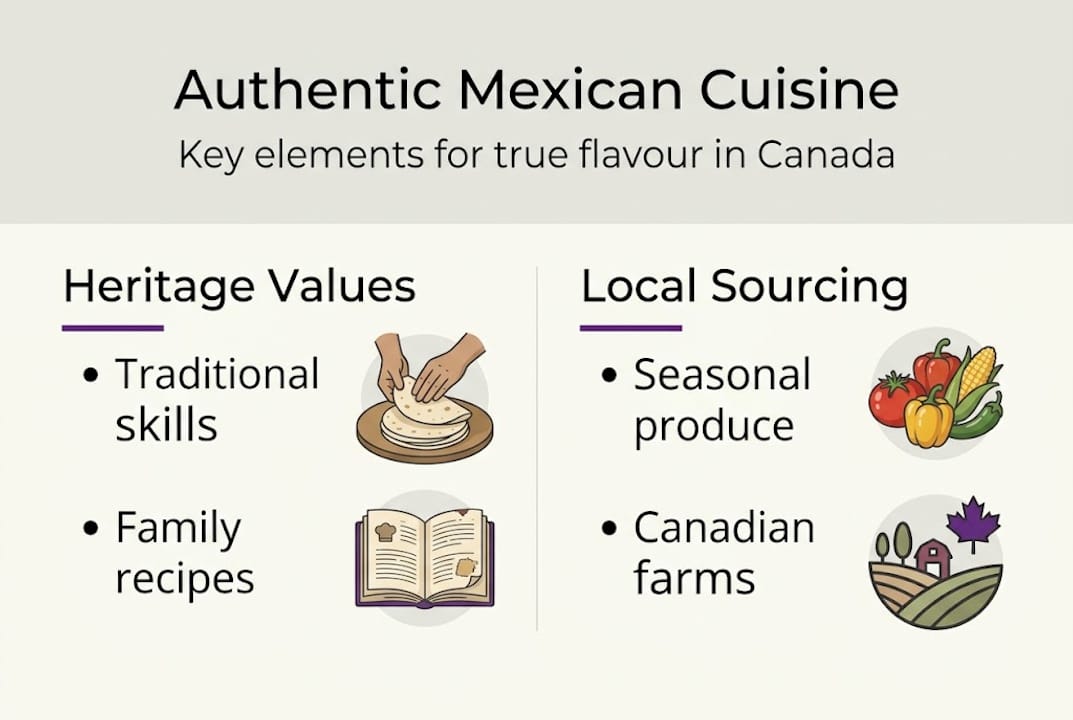
As chef Elena Reygadas has noted, authenticity and sustainability align when local, seasonal, and biodiversity-supporting agricultural systems and ingredient knowledge are maintained. This is not idealism. It is a practical recognition that the richness of Mexican cuisine has always depended on maintaining diverse, healthy growing systems.
For Canadian cooks, this principle translates directly into how and where you shop. Consider these local ingredient swaps that honour both authentic practice and Canadian seasons:
- Manitoba squash and corn in place of imported varieties for salsas, soups, and side dishes
- Local field tomatoes from Peak of the Market during summer months for fresh pico de gallo
- Prairie-raised pork for carnitas (braised pork), where slow-cooking technique matters far more than origin
- Manitoba pickerel or whitefish as an inspired, regionally rooted filling for fish tacos
- Local greenhouse peppers grown in Manitoba year-round for heat and colour in sauces
Each of these choices connects you to the same underlying values that make traditional Mexican cuisine worthy of UNESCO recognition: respect for place, support for farming communities, and cooking in harmony with what the land offers.
This is precisely the farm-to-fork approach that serious food culture champions, and it applies beautifully to Mexican-inspired cooking in Manitoba. There is no contradiction between using local Canadian ingredients and honouring Mexican culinary tradition. The contradiction only appears if you believe authenticity means frozen replication.
Pro Tip: Visit your local farmers’ market in late summer when Manitoba produce is at its peak. Build a salsa or a taco filling entirely from what you find. This practice, choosing ingredients based on what is fresh and local rather than what a recipe demands, mirrors the way great Mexican cooks have always worked.
For those exploring dietary friendly Mexican food, local and seasonal sourcing also tends to produce naturally inclusive menus. Fresh vegetables, legumes, and whole grains form the backbone of many traditional Mexican dishes, making plant-based and allergen-conscious cooking a natural extension of authentic practice.
What most people misunderstand about authentic Mexican cuisine
Here is the thing most food conversations get wrong: they treat authenticity as a quality control standard, as though there exists one true version of every dish, and every other version is a failure. This framing is not just inaccurate. It is actively harmful to the way we appreciate and engage with food culture.
Real authenticity is about intention, community, and relationship with ingredients. A cook in Winnipeg who sources Prairie-raised pork, slow-braises it with traditional spices, and presses fresh tortillas from Manitoba flour is doing something genuinely connected to Mexican culinary values. They are not pretending to be in Jalisco. They are applying the same principles of care and local rootedness that define the tradition in its home.
The most resilient cuisines in the world have always adapted. They have absorbed new ingredients, responded to climate, and travelled with migrating communities. Mexican cuisine is a stunning example of this resilience. Its depth comes not from rigidity, but from an extraordinary ability to remain meaningful across changing circumstances.
At Burrito Splendido, this understanding shapes everything we do. Our farm-to-fork ethos is not a workaround. It is a direct expression of the same values that make traditional Mexican cuisine worth celebrating in the first place. Canadians who embrace local adaptation, made with real skill and genuine respect, are not settling for less. They are participating in one of food culture’s great ongoing stories.
Explore authentic Mexican flavours with Burrito Splendido
Ready to taste these values in action? Burrito Splendido has been putting fresh, local, and sustainable sourcing at the heart of every dish since 2012.
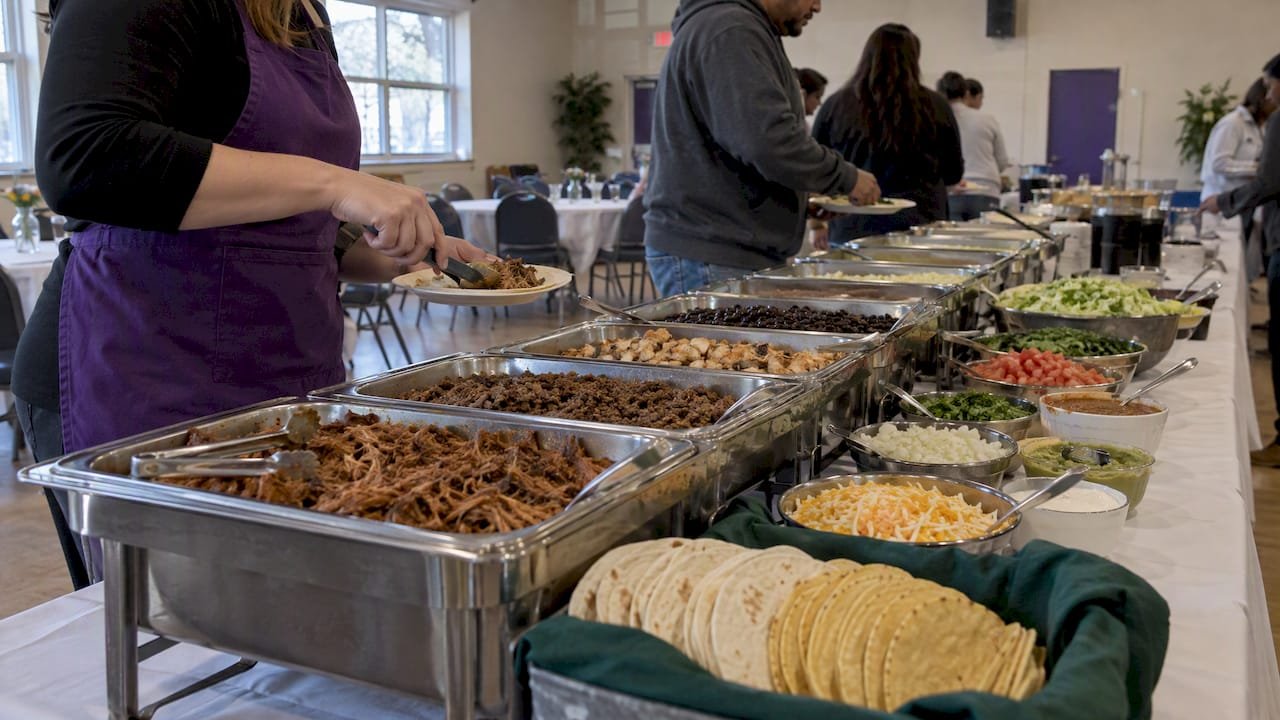
Our kitchens use Manitoba-grown flour for house-pressed tortillas, Prairie-raised pork for slow-braised carnitas, and seasonal produce from Peak of the Market to keep every meal connected to where we live. Whether you are building your first burrito bowl or rediscovering a favourite taco, you are eating food made with real intention. Explore our commitment to local ingredients at Burrito Splendido to learn more about where our food comes from, or plan your next gathering with our Mexican food catering options across Winnipeg and Brandon.
Frequently asked questions
What does ‘authentic’ really mean in Mexican cuisine?
Authenticity is not a fixed recipe but a living tradition shaped by region, community, and evolving foodways; it is better understood as a set of values than a single correct method.
How can I make an authentic Mexican dish if I can’t find all the traditional ingredients in Canada?
Use fresh, local, and sustainable substitutes while respecting the heart of the recipe, because authenticity and sustainability align when cooking connects thoughtfully with available local and seasonal agricultural knowledge.
What is the difference between Mexican and Tex-Mex food?
Tex-Mex adapts Mexican dishes using local North American ingredients such as flour tortillas and processed cheese, reflecting both commercial pressures and the ingredient realities of geography rather than any deliberate departure from tradition.
Why does UNESCO recognise traditional Mexican cuisine?
UNESCO values traditional Mexican cuisine for its roles in sustaining community practices, cultural identity, territorial connection, and environmentally responsible food systems, all of which go far beyond flavour alone.
Recommended
- Farm to Fork: Why Local Ingredients Make the Best Mexican Food in Canada – Burrito Splendido
- Craving Authentic Flavors? Why Burrito Splendido is the Top Choice for Mexican Food in Canada – Burrito Splendido
- Mexican Food Catering in Canada: How to Host the Perfect Fiesta – Burrito Splendido
- Burrito Splendido