Fresh tortillas are flatbreads made from either wheat flour or corn masa harina, cooked on a dry skillet until soft, pliable, and lightly charred. A proper step by step fresh tortilla guide covers four stages: ingredient selection, dough preparation, shaping, and cooking. Get these right and you produce tortillas that are genuinely better than anything sold in a bag. Burritosplendido presses its tortillas daily using 100% Manitoba-produced flour, which is proof that ingredient quality and technique together determine the result. This guide gives you the same disciplined approach at home.
What ingredients and equipment do you need for fresh tortillas?
The ingredient list for homemade tortillas is short, but each item does a specific job. Flour tortillas call for all-purpose flour, a fat, salt, and warm water. Corn tortillas use masa harina, salt, and water only. The fat choice shapes the final texture significantly.
Traditional lard gives flour tortillas the richest flavour and the most tender crumb. Butter adds a slight sweetness and works well for home cooks who prefer a familiar flavour. Vegetable shortening is a neutral substitute that produces a soft, consistent result. Each fat produces a noticeably different tortilla, so choose based on the dish you are making.
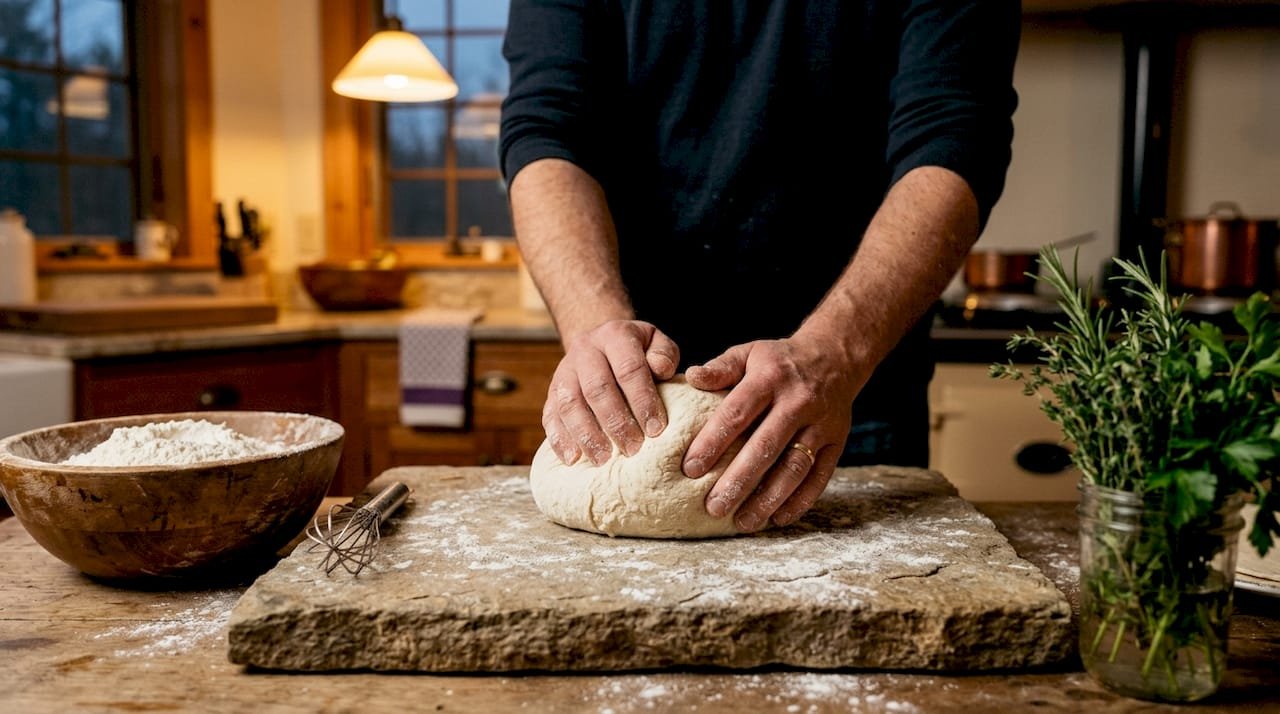
Equipment matters just as much as ingredients. A cast iron skillet or a comal gives you the dry, even heat that tortillas need. A tortilla press speeds up shaping and produces uniform rounds, but a rolling pin and two sheets of parchment paper work equally well. A kitchen scale is the most underrated tool on this list.
| Tool or Ingredient | Purpose | Notes |
|---|---|---|
| All-purpose flour or masa harina | Base of the dough | Use masa harina for corn tortillas only |
| Lard, butter, or shortening | Adds tenderness and flavour | Lard is traditional; shortening is neutral |
| Warm water | Hydrates the dough | Temperature affects gluten development |
| Kitchen scale | Ensures uniform portions | 35–45 grams per ball is the target |
| Tortilla press or rolling pin | Shapes the dough | Line with plastic or parchment |
| Cast iron skillet or comal | Cooks the tortilla | Must reach high heat before use |
Pro Tip: Cut two circles from a zip-lock bag and use them to line your tortilla press. The dough releases cleanly every time without sticking or tearing.
How do you prepare and rest tortilla dough for perfect texture?
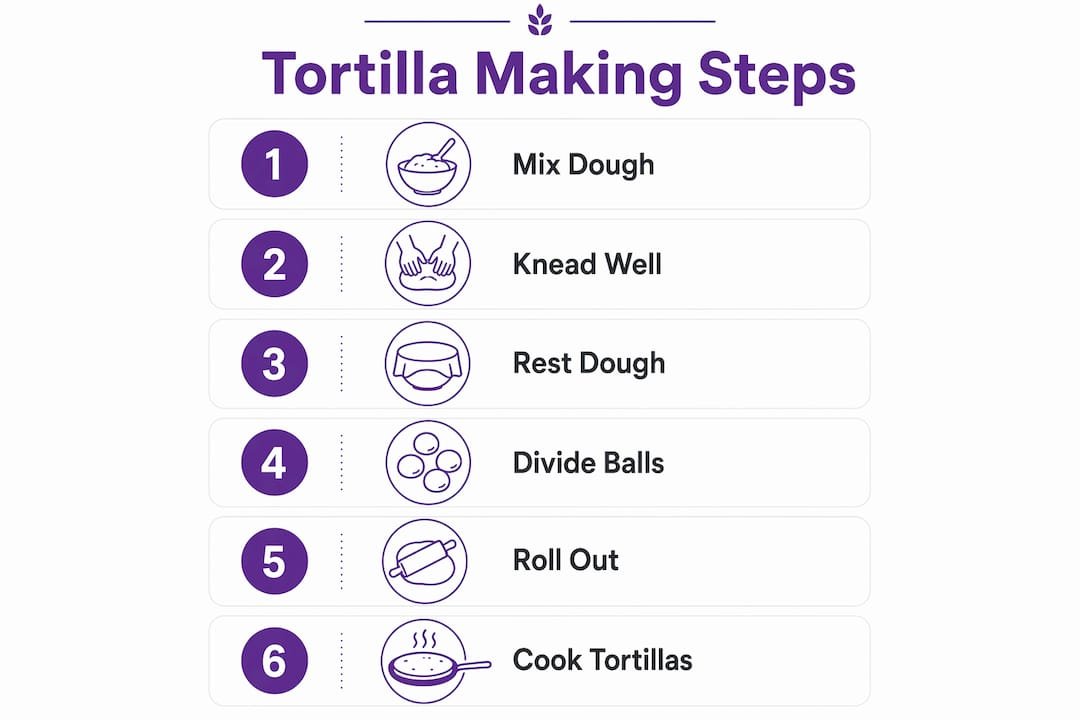
Dough preparation is where most home cooks either win or lose the batch. The process follows a clear sequence, and skipping any step produces a noticeably worse tortilla.
- Whisk your dry ingredients together in a large bowl. For flour tortillas, combine flour and salt. Add a small pinch of baking powder if you want a slightly lighter texture.
- Add your fat. Work it into the flour with your fingertips until the mixture resembles coarse breadcrumbs. Every bit of flour should be coated.
- Pour in warm water gradually. Start with three-quarters of the listed amount and mix with a fork until a shaggy dough forms. Add more water one tablespoon at a time.
- Turn the dough onto a clean surface and knead for 3–5 minutes until it is smooth, soft, and no longer sticky.
- Wrap the dough tightly in plastic wrap or cover the bowl with a damp cloth.
- Rest the dough at room temperature for at least 45 minutes. For the best result, rest up to 24 hours in the refrigerator.
Resting is not optional. Gluten tightens during kneading, and a tight dough springs back when you try to roll it thin. Resting allows the gluten to relax fully, which makes rolling or pressing effortless and prevents the tortilla from shrinking on the skillet.
Hydration balance is the single most important factor in dough quality. The target consistency feels like an earlobe: soft and slightly tacky, but not sticky. Dough that is too dry will crack at the edges. Dough that is too wet sticks to the press and tears during transfer.
Pro Tip: Before you divide the full batch, press and cook one small test ball. If it cracks, add a teaspoon of water to the dough and knead briefly. If it sticks, add a light dusting of flour. This tester tortilla technique saves an entire batch from going wrong.
How do you divide, shape, and press tortillas consistently?
Uniform portions produce uniform tortillas. Uneven balls mean some tortillas cook through before others, and thick edges stay raw while thin centres char. A kitchen scale removes all guesswork.
- Divide the rested dough into balls weighing 35–45 grams each. This produces tortillas approximately 15–18 centimetres in diameter and about 2mm thick.
- Roll each portion between your palms into a smooth ball. Place finished balls on a tray and cover with a damp cloth immediately. Exposed dough dries out within minutes and cracks when pressed.
- Open your tortilla press and lay one sheet of plastic on the bottom plate. Set a dough ball in the centre, slightly off-centre toward the hinge. Lay the second plastic sheet on top.
- Close the press and push the handle down firmly. Open, rotate the tortilla 180 degrees, and press again for an even round.
- If using a rolling pin, place the ball between two sheets of parchment. Roll from the centre outward, rotating the parchment a quarter turn after each pass.
Common problems at this stage are easy to fix once you know the cause:
- Dough springs back when rolled: The gluten has not relaxed enough. Cover the ball and rest it for another 10 minutes before trying again.
- Edges crack during pressing: The dough is too dry. Wet your hands lightly and knead the ball briefly before pressing.
- Tortilla sticks to the plastic: The dough is too wet or the plastic is too thin. Switch to a heavier zip-lock bag or add a small amount of flour.
- Rounds come out uneven: The ball was not centred on the press. Reposition and press again.
How do you cook tortillas for ideal puffing, softness, and flavour?
Cooking is where the tortilla either comes alive or falls flat. Heat management and timing are everything at this stage.
- Place your cast iron skillet or comal over high heat. Let it preheat for at least two minutes. The surface is ready when a drop of water sizzles and evaporates instantly.
- Transfer the raw tortilla to the skillet. To avoid tearing, peel one plastic sheet from the tortilla, flip it masa-side down onto your palm, peel the second sheet, then lay the tortilla on the griddle starting from the side closest to your pinky finger.
- Cook the first side for 30–45 seconds. You will see the edges begin to look dry and the surface will start to bubble.
- Flip the tortilla. Cook the second side for another 30–45 seconds.
- Flip once more. At this point, pressing the edges gently with a folded cloth seals in steam and encourages the tortilla to puff. That puff is a steam pocket forming inside the dough. It cooks the interior and produces a soft, layered texture.
- Remove the tortilla and wrap it immediately in a clean cloth or place it in a tortilla warmer. The trapped steam keeps the tortilla pliable as the batch finishes.
Pro Tip: A tortilla that does not puff at all is usually a sign the skillet was not hot enough. Do not rush the preheat. A properly heated surface is the difference between a soft, steamed tortilla and a dry, brittle one.
The total preparation time for a batch of fresh flour tortillas runs 30–60 minutes, not counting the resting period. Plan the rest into your schedule and the cooking itself feels fast.
What causes common tortilla problems and how do you fix them?
Even experienced home cooks run into the same handful of problems. Most trace back to hydration, resting time, or heat.
- Tortillas crack at the edges: The dough is under-hydrated. Add water one teaspoon at a time, knead briefly, and rest for another 10 minutes before pressing.
- Tortillas tear during transfer: The dough is too wet, or you are lifting it flat. Use the palm-transfer technique described in the cooking section to support the tortilla fully.
- Tortillas are stiff and chewy after cooking: The skillet was not hot enough, or the tortilla cooked too long on one side. High heat and quick flips produce softness.
- Tortillas shrink on the skillet: The dough was not rested long enough. Gluten that has not relaxed pulls the tortilla back to its original shape the moment it hits heat.
- Tortillas do not puff: Either the skillet is too cool, or the edges were not pressed after the second flip. Seal the edges firmly with a cloth on the third flip.
Skipping the dough rest is the most common mistake home cooks make. Chef Maricela Vega recommends a minimum rest of 45 minutes, with an overnight refrigerator rest producing the highest quality result. Prep the dough the night before and the next day’s cooking takes less than 20 minutes.
For home cooks navigating gluten-free tortilla options, the same hydration and resting principles apply, though corn masa harina behaves differently from wheat flour and benefits from a shorter rest of 20–30 minutes.
Key takeaways
Fresh tortillas require correct hydration, adequate resting time, high cooking heat, and immediate wrapping to produce soft, pliable results every time.
| Point | Details |
|---|---|
| Hydration is the foundation | Dough should feel like an earlobe: soft, slightly tacky, and never sticky. |
| Rest the dough without shortcuts | Rest flour dough at least 45 minutes; overnight refrigeration produces the best texture. |
| Portion by weight | Use 35–45 gram balls for consistent thickness and even cooking across the batch. |
| Cook on high heat | A properly preheated skillet creates steam puffing and keeps tortillas soft, not stiff. |
| Wrap immediately after cooking | A cloth wrap traps steam and keeps finished tortillas pliable while the batch finishes. |
Why the rest is the real recipe
The first time I made flour tortillas, I skipped the resting step because I was impatient. The dough fought back every time I tried to roll it, and the finished tortillas were thick, chewy, and barely pliable. I thought I had done something wrong with the flour or the fat. The problem was 45 minutes of patience I had not given the dough.
Fat choice is the second thing most guides underplay. Lard is not just traditional. It produces a genuinely different tortilla: more tender, with a subtle depth that butter and shortening do not replicate. If you have access to good-quality lard, use it at least once before settling on a substitute. The difference is worth experiencing firsthand.
The tester tortilla is the habit that changed my batches most. Pressing and cooking one ball before committing the whole batch takes two minutes. Those two minutes have saved me from dry, cracking tortillas more times than I can count. Adjust the hydration on the tester, not on the finished stack.
Imperfect tortillas are still worth eating. Uneven rounds, slight tears, and missed puffs are all part of learning the feel of the dough. The essential role of tortillas in Mexican cooking is not about perfection. It is about freshness, and a slightly lopsided homemade tortilla beats a packaged one every time.
— Austin
Fresh tortillas and authentic Mexican cooking go together
Burritosplendido has built its entire kitchen around the idea that fresh, locally sourced ingredients produce better food. Every tortilla served at Burritosplendido is pressed in-house using 100% Manitoba-produced flour, the same commitment to quality you are now bringing to your own kitchen.

If you want to take your homemade tortillas further, Burritosplendido’s authentic taco guide walks you through fillings, assembly, and the local ingredients that make Mexican cooking genuinely satisfying. For larger gatherings, the Burritosplendido catering programme brings that same fresh-pressed quality to events across Winnipeg and Brandon. Fresh tortillas are the starting point. What you build on them is the real story.
FAQ
How long does fresh tortilla dough need to rest?
Flour tortilla dough needs a minimum rest of 45 minutes at room temperature. Resting overnight in the refrigerator produces the most pliable, flavourful result.
What is the correct dough consistency for tortillas?
The dough should feel like an earlobe: soft and slightly tacky, but not sticky. Adjust hydration by adding small amounts of water or flour until you reach that consistency.
Why are my tortillas not puffing when cooked?
Tortillas puff because steam builds inside the dough during cooking. If yours are not puffing, the skillet is likely not hot enough, or you are not pressing the edges after the second flip to seal in steam.
What is the best fat for flour tortillas?
Lard produces the richest flavour and most tender texture. Butter adds slight sweetness, and vegetable shortening is a neutral option. All three work, but lard is the traditional choice for authentic flour tortillas.
How much should each dough ball weigh?
Each ball should weigh 35–45 grams for a standard tortilla roughly 15–18 centimetres across and about 2mm thick. A kitchen scale is the most reliable way to keep portions consistent.