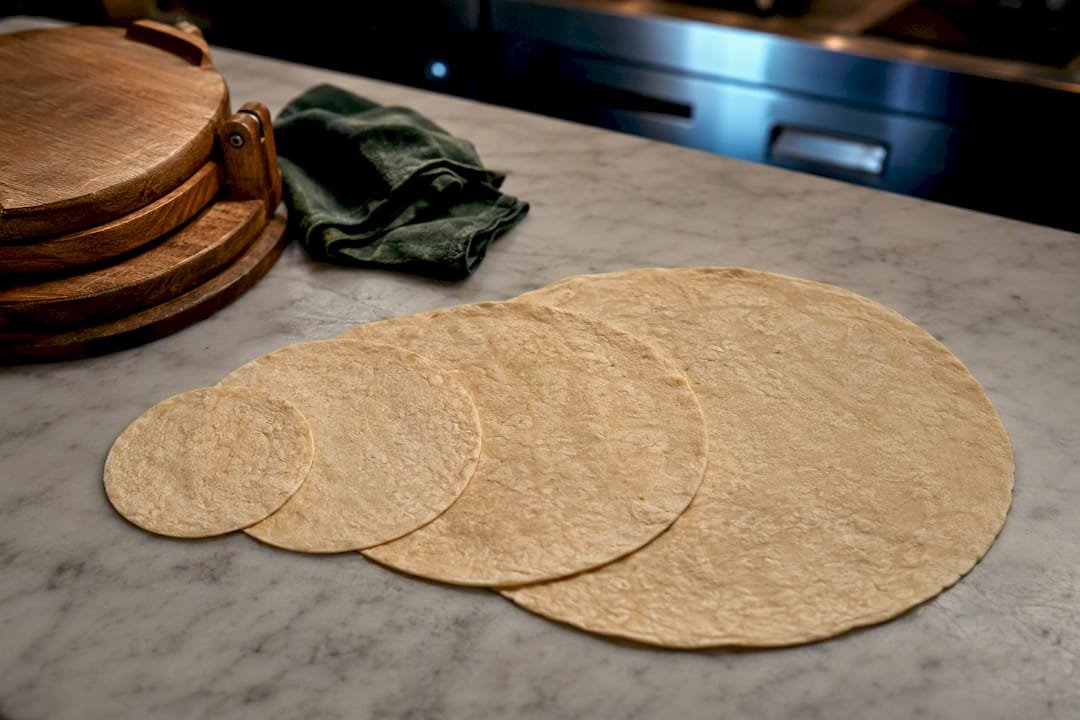
The tortilla you grab should match the food going inside it, not the other way around. Street tacos want 4 to 6 inches, standard tacos and fajitas call for 7 to 8 inches, quesadillas and wraps run 9 to 12 inches, and oversized restaurant burritos climb to 14 inches or more. The rule that ties it all together: pick the smallest diameter that still holds the filling without a tear or a blowout.
TL;DR:
- Tortilla diameters should match the food type, with 4-6 inch for street tacos and 14 inches or more for large burritos, to prevent tearing or spillage.
- Corn tortillas are limited to 6-8 inches due to masa’s lack of gluten, while flour tortillas can reach 12-14 inches because of gluten’s elasticity.
- Filling volume and moisture content are critical; large, wet fillings require bigger tortillas or multiple overlapping ones to prevent splitting.
- Store tortillas properly: keep unopened at room temperature, refrigerate after opening, and freeze for two to three months for best freshness.
- Using fresh, house-pressed tortillas can improve handling and reduce tearing, especially for larger or heavier fillings.
Table of Contents
- Tortilla size guide: the quick reference chart
- What size tortilla works for tacos, burritos, and other dishes?
- Corn or flour: how the dough decides the size
- How do you measure a tortilla accurately?
- Choosing tortilla size by filling volume and serving style
- Buying and storing tortillas the right way
- Why fresh, house-pressed tortillas matter
- One practical takeaway from the kitchen
- Sources
- FAQ
Tortilla size guide: the quick reference chart
Once you know the four broad size bands, matching a tortilla to a dish stops being guesswork. Most industry size charts organize tortillas into four tiers based on diameter, and each tier lines up with a distinct category of Mexican food.
| Diameter (inches) | Metric (cm) | Common name | Typical use |
|---|---|---|---|
| 4–6 in | 10–15 cm | Street/mini | Street tacos, appetizers |
| 7–8 in | 20 cm | Standard/taco | Soft tacos, fajitas |
| 9–10 in | 25 cm | Medium/quesadilla | Quesadillas, wraps, small burritos |
| 12 in | 30 cm | Burrito | Rolled burritos, loaded wraps |
| 14+ in | 35+ cm | XL/restaurant | Oversized restaurant-style burritos |
A foodservice diameter chart uses 15 cm, 20 cm, 25 cm, and 30 cm as its four reference points, which line up almost exactly with the 6, 8, 10, and 12-inch sizes home cooks already know from grocery packaging.
Thickness matters almost as much as width. A thicker press resists tearing under a heavy, wet filling like braised meat in salsa, while a thinner tortilla folds tighter and works better for anything meant to be eaten by hand in a few bites. Weight per tortilla tends to rise with diameter, so a 12-inch flour tortilla weighs noticeably more than an 8-inch one, even before you add filling.
Retail packaging generally follows typical patterns: smaller tortillas (4–6 in) are often sold in large counts per pack, standard sizes (7–8 in) come in moderate counts, and larger burrito sizes (10–12 in) are sold in smaller quantities per pack due to their size and weight.
Understanding the essential role tortillas play in Mexican cuisine helps explain why the size chart isn’t arbitrary. Each diameter evolved to solve a specific handling problem.
What size tortilla works for tacos, burritos, and other dishes?
Every classic Mexican dish has a diameter that suits it best, and the reasoning usually comes down to how the food is eaten and how much filling it carries.
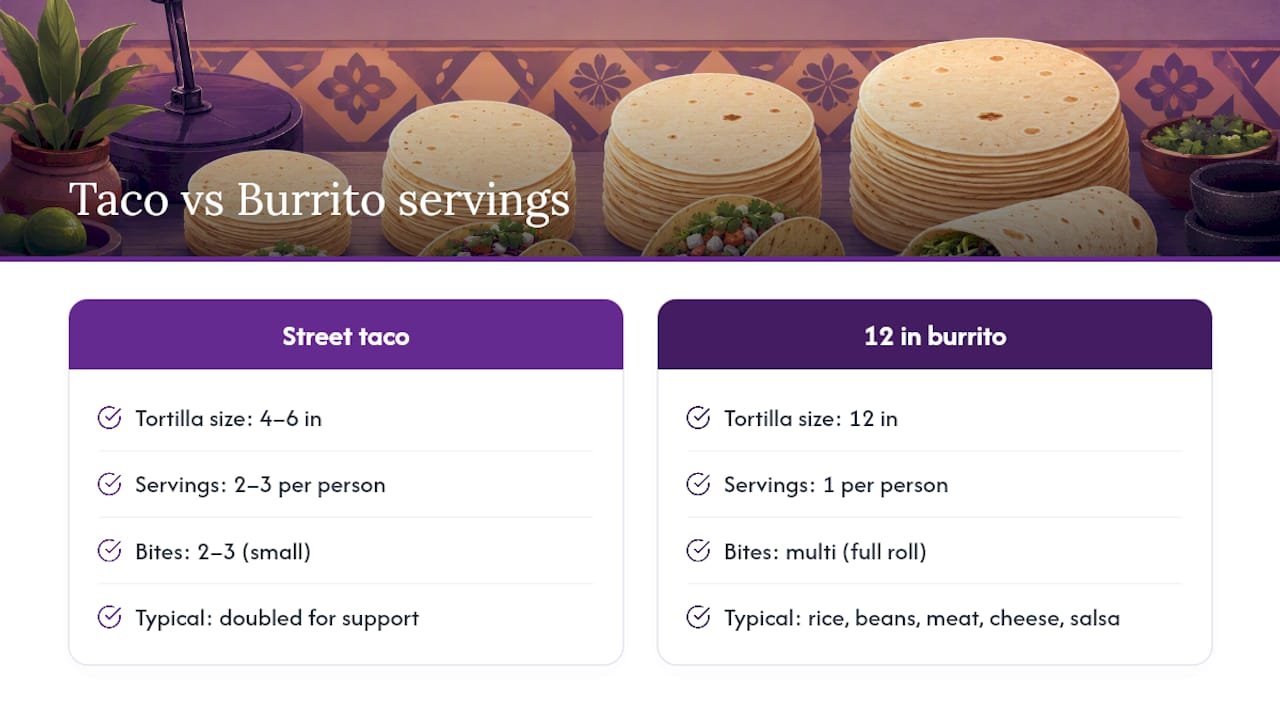
Street tacos run 4 to 6 inches. Vendors use this size because the goal is two or three bites, eaten standing, often doubled up with a second tortilla for structural backup. Our street taco guide covers portioning in more detail if you’re planning a batch at home.
Soft tacos and fajitas sit at 7 to 8 inches. This size gives enough surface area for meat, onion, cilantro, and a squeeze of lime without the tortilla folding shut on itself. Dish-by-dish recommendations consistently place fajitas in this bracket because diners assemble their own wraps at the table, and a slightly larger tortilla gives more room for error.
Quesadillas need 8 to 10 inches. Cheese and filling get folded in half, so the usable interior area is really half the total area. A 10-inch quesadilla folded shut gives you roughly the footprint of a small dinner plate once flattened, which is why bigger tortillas produce a more generously filled result.
Burritos and wraps call for 10 to 12 inches, sometimes larger for restaurant-style builds loaded with rice, beans, meat, cheese, and salsa. A 10-inch flour tortilla is the standard for a home-style burrito, while 12-inch is the norm once you’re stacking multiple proteins and sides. Add rice and beans to a chicken filling and you’ll usually need to bump up one size tier just to get a clean roll without splitting the seam. Our burrito nutrition guide breaks down how portion size and diameter relate if you’re tracking what actually goes inside.
Enchiladas typically use 6 to 8-inch corn tortillas, since they’re rolled individually, baked in sauce, and served with a fork. Size matters less here because the tortilla softens further in the oven.
Serving math helps too: plan on two to three street tacos per person, but only one burrito if it’s built with a 12-inch tortilla and a full complement of fillings.
Corn or flour: how the dough decides the size
Corn and flour tortillas aren’t interchangeable just because they’re both round and edible. The material itself limits how big a tortilla can get before it tears.
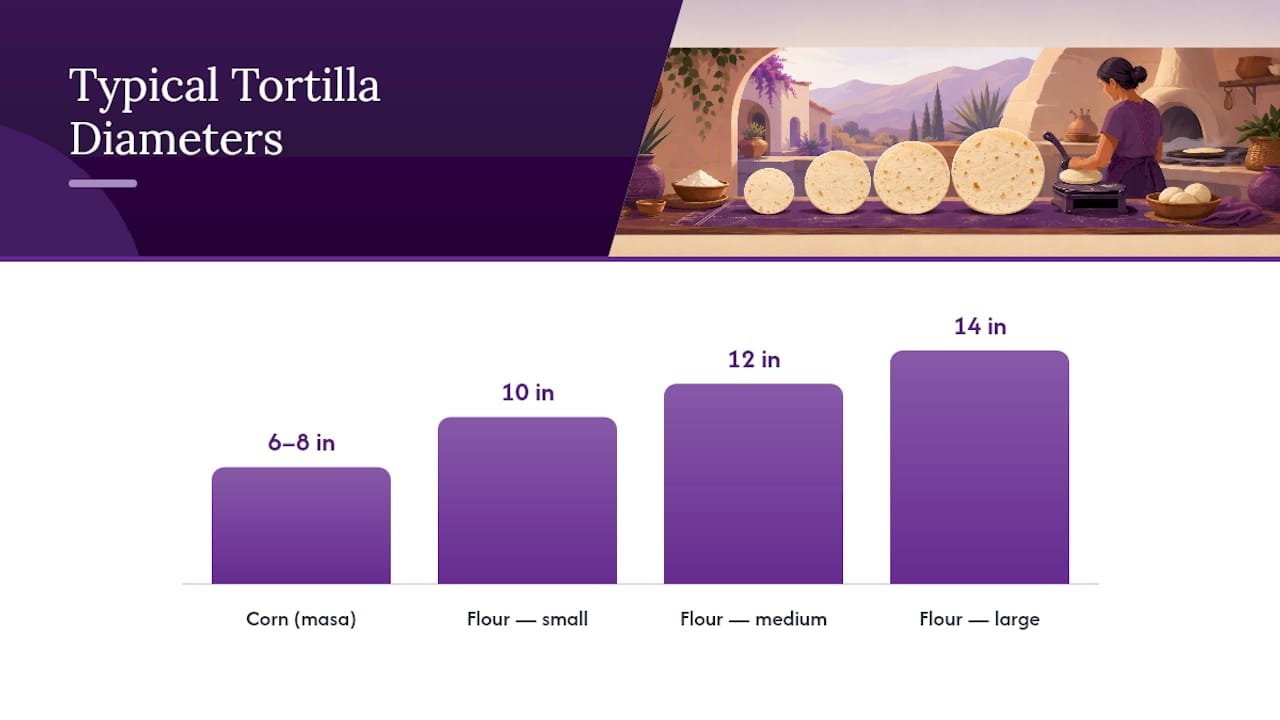
Corn tortillas are made from masa, a dough with no gluten network, which makes it far less stretchy. That’s why corn tortillas rarely exceed 6 to 8 inches commercially: press masa much larger and it starts cracking at the edges before it ever hits a griddle. Flour tortillas, made from wheat dough, contain gluten that stretches and folds without splitting, which is exactly why 10, 12, and 14-inch tortillas are almost always flour.
Quick material guide:
- Corn, small diameter: street tacos, enchiladas, tostadas.
- Flour, larger diameter: burritos, large quesadillas, wraps.
- Gluten-free alternatives: made from rice flour, corn masa blends, or cassava; these tend to behave more like corn, staying on the smaller side, though some specialty producers make gluten-free wraps in bigger formats using alternative binders. Gluten-free wrap options worth exploring if you need a large-format alternative.
Pro Tip: If you’re making tacos for a mixed crowd with dietary restrictions, keep corn tortillas warm and pliable by steaming them briefly. Cold corn tortillas crack; warm ones fold cleanly every time.
How do you measure a tortilla accurately?
Lay the tortilla flat and measure straight across the widest point, corner to corner if it isn’t perfectly round, since some brands press slightly oval. That’s the diameter listed on most packaging, though not every label states it in both units, so a quick conversion habit helps when comparing brands.
Handy conversions to memorize:
- 6 in = 15 cm
- 8 in = 20 cm
- 10 in = 25 cm
- 12 in = 30 cm
- 14 in = 35 cm
One thing that trips people up: diameter feels linear, but capacity isn’t. Surface area increases with the square of the radius, so going from a 10-inch to a 12-inch tortilla adds far more usable filling area than the 2-inch jump suggests. That’s why a “slightly bigger” tortilla often holds a noticeably bigger burrito.
Choosing tortilla size by filling volume and serving style
Most sizing mistakes come from picking a tortilla based on habit rather than what’s actually going inside it. A few working rules solve this fast.
- Start with the filling, not the tortilla. A cup or more of rice, beans, and protein needs at least a 10-inch flour tortilla to roll without tearing.
- Match diameter to handling. If the food is eaten by hand and walking around, stay small (4 to 6 in). If it’s sit-down, fork-and-knife style, larger diameters (10 in or more) are fine since structural integrity matters less.
- Account for sauce and moisture. Wetter fillings weaken tortillas faster, so size up or double-wrap when salsa or sauce is involved.
- Adapt with what you have. No 12-inch on hand? Use two 8-inch tortillas overlapped, or reduce the filling by roughly a third to fit a 10-inch comfortably.
A sizing checklist worth running through before you cook:
- What’s the total filling volume, roughly, in cups?
- Will this be eaten by hand or with cutlery?
- Is the filling wet enough to risk tearing a thinner tortilla?
- Am I using corn (smaller, less forgiving) or flour (larger, more elastic)?
Pro Tip: When a recipe calls for a size you don’t have, err smaller and reduce the filling rather than overstuffing a large tortilla. An underfilled 10-inch tortilla rolls cleanly; an overstuffed 8-inch one splits every time.
Buying and storing tortillas the right way
Retail packs generally follow the size logic already covered: smaller tortillas come in bigger counts, with 8 and 10-inch flour tortillas commonly packaged 6 to 8 per bag, while street-size corn tortillas often come 20 or more to a pack.
Storage rules that actually matter:
- Unopened, room temperature: most packaged tortillas last 5 to 7 days past the printed date if sealed.
- Opened, refrigerated: use within about a week, sealed tightly to prevent drying out.
- Frozen: both corn and flour tortillas freeze well for two to three months without a major texture loss.
- Reheating: a dry skillet for 20 to 30 seconds per side restores pliability far better than a microwave, which tends to make tortillas rubbery rather than soft.
Buy fresh, unpackaged tortillas when you can. They fold tighter and tear less than most shelf-stable versions, which becomes obvious the first time you try rolling a burrito with each side by side.
Why fresh, house-pressed tortillas matter
At Burrito Splendido, tortillas are pressed daily using 100% Manitoba-produced flour, and that changes how they behave compared to shelf-stable packs. Fresh dough with the right hydration folds tighter without cracking, which means a well-pressed tortilla can sometimes handle the same filling volume at a slightly smaller diameter than a drier, mass-produced one. Pressing thickness plays a direct role too: a marginally thicker press resists tearing under heavier fillings, giving more flexibility on size without sacrificing structure. If you want to see the process yourself, our step-by-step fresh tortilla guide walks through pressing, hydration, and fold testing at home.
One practical takeaway from the kitchen
If there’s one habit worth building, it’s this: stop defaulting to whatever size is in the pantry and start sizing the tortilla to the filling in front of you. Weigh or eyeball your filling volume first, then pick the smallest diameter that holds it without stress on the seam. Keep a small notebook, literally or on your phone, tracking which size worked for which filling. After a few tries, you’ll size tortillas by instinct the same way a good cook eyeballs a pinch of salt.
— Austin
Sources
- Tortilla Sizes and uses (WebstaurantStore)
- Tortilla Sizes: What You Need for Tacos, Fajitas, and Burritos (KimEcopak)
- Tortilla size chart and diameter guide (TortillaSupplier)
- Tortilla size guide (Lone Star Tortillas)
FAQ
What are standard tortilla sizes?
Standard sizes run 4 to 6 inches for street tacos, 7 to 8 inches for regular tacos and fajitas, 9 to 12 inches for burritos and wraps, and 14 inches or larger for oversized restaurant burritos, according to industry size guides.
What size is a 9-inch tortilla used for?
A 9-inch tortilla sits between taco and burrito territory, making it a solid choice for medium quesadillas, wraps, or a lighter burrito without a heavy rice and bean load.
What size is a 12-inch tortilla used for?
A 12-inch tortilla is the standard for loaded, restaurant-style burritos, since the larger surface area handles rice, beans, protein, cheese, and sauce without splitting during the roll, per foodservice sizing charts.
What dish is a 7-inch tortilla best for?
A 7-inch tortilla is the classic size for soft tacos and fajitas, large enough to hold a hearty portion of filling while still folding closed by hand for easy eating.
What’s the difference between taco and burrito tortilla sizes?
Taco tortillas run small, 4 to 8 inches, because they’re eaten folded and by hand, while burrito tortillas run 10 to 14 inches to accommodate rolled, multi-ingredient fillings that need a full wrap rather than a fold.
Ready to taste the difference fresh, house-pressed tortillas make? Order online from Burrito Splendido, or if you’re planning a group event, our catering menu brings the same from-scratch tortillas to your table.